A guest post by Adeleke Adesanya
____________________________
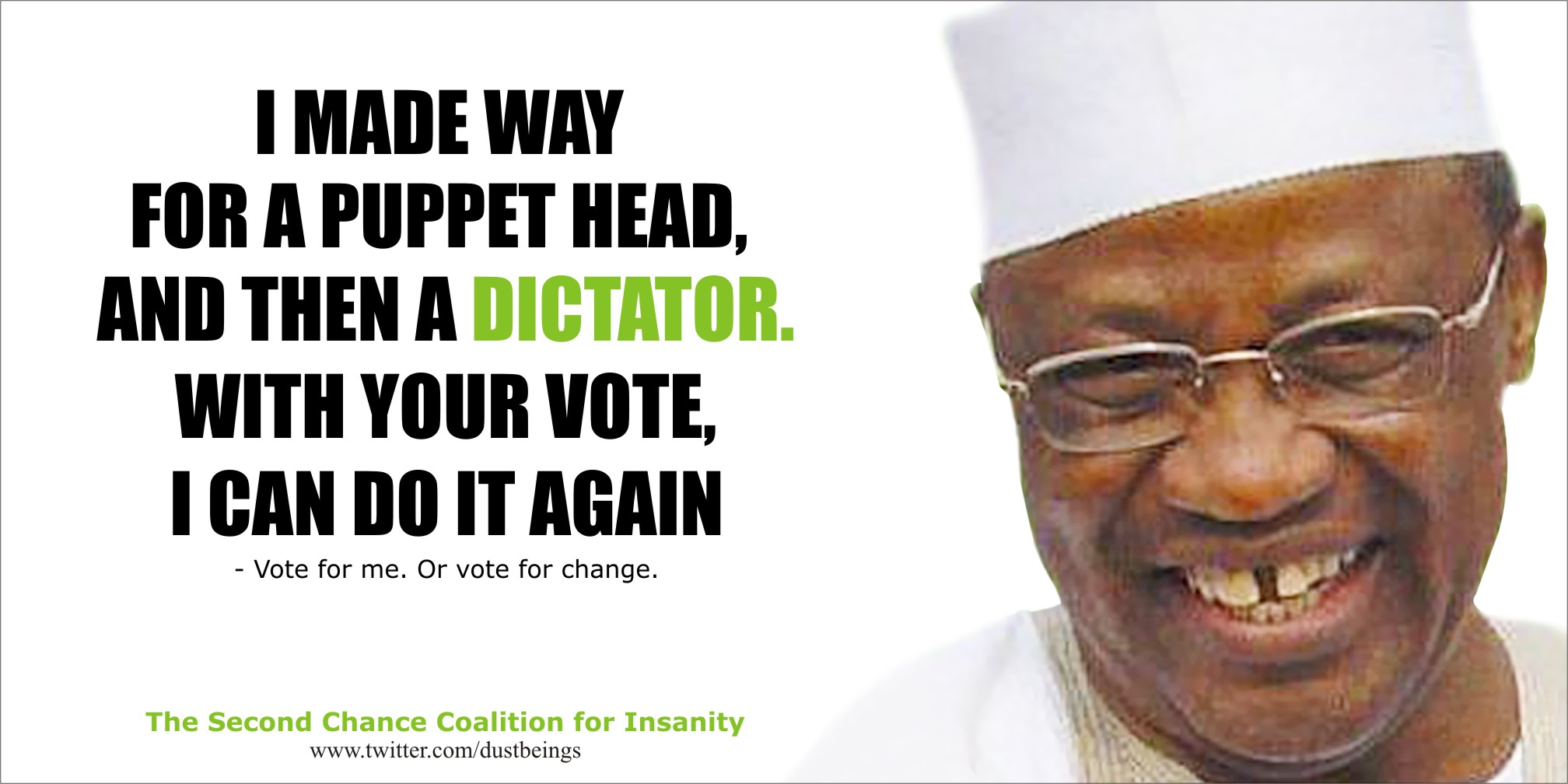
Nigerians hate to love IBB. For those who don’t know who IBB is, it is the nickname for former military ruler, Babangida. When you have learnt to love to hate someone for almost three decades, it kind of gets confusing. You hate to love him. You love to hate him. And in that confusion, you get a classically defined, part sadomasochist, part Stockholm syndrome relationship. But what is this hold that Babangida has on Nigerians? Or perhaps, what is the Nigerian fixation with this former dictator? Permit me to take you on a journey in history.
 Nigeria in early 1993 was a very complicated society, not as simple and straight forward as the Press like to think it is, nowadays. On one hand, there was a dictator who had promised several times to hand over power. On the other were pliant and corruptible politicians, willing to do anything for power. If the truth be told, many Nigerians agreed with Babangida’s policy of screening his successors. The political class was such a rotten lot that in exasperation, he (Babangida) declared, ‘I don’t know who will succeed me but I know who will not’. The political waters were so mucky, having been sullied by the latter day politicians, mostly opportunists who had made a fortune fornicating with the military, that those who know better, like the late Bola Ige , decided to ‘siddon look’ and abstain from partisan politics.
People forget that the military once decreed political parties into existence and these opportunists still jostled to contest, confident that once they entered office, the financial outlay incurred in fixing the elections would be readily recouped. They forget that Babangida commissioned the manifesto for both PDP and NRC, under which elections were held. Those were the heady days of sandwich politics when loafs of bread were stuffed with twenty naira notes at party conventions. After one election, it was said that the rigging was free and fair. If after their trysts together, the politicians had lost the respect of even their benefactor, Babangida, the ordinary Nigerian didn’t really care.
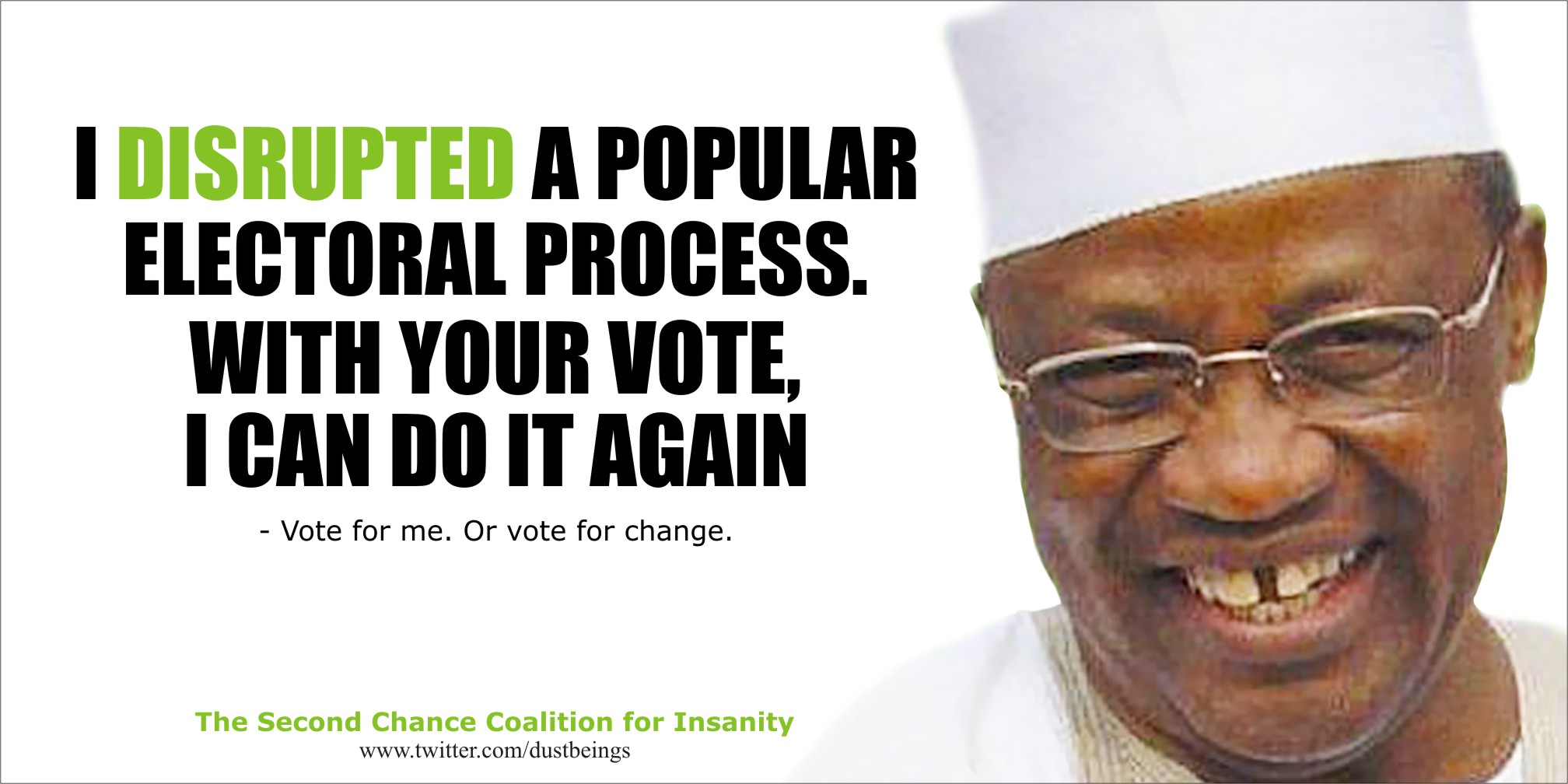 At a stage, a close associate of IBB and populist philanthropist entered the political equation. After apparently seeking Babangida’s blessing, he deployed the best political campaign money could buy, the kind we had not seen before and ever since. But there were doubts along the way that the military establishment will not change their mind. I recall that some days before the election, Beko Ransome-Kuti was, in a radio interview, expressed his conviction that the military was not ready to handover, that the elections would be cancelled. It then it dawned on me that it was all a nullity. There was no logical reason why the elections should hold. If IBB was a logical person, why should he change his mind then? What was the fundamental difference between Abiola and the others except that he had more money and loved reciting proverbs?
On the Election Day, I did not vote. I sat in my room and read Campaign for Democracy (CD) literature. I had a bet with a friend that the election would be cancelled. He never paid but I enjoy to this day, the satisfaction that I did not vote that day. It was much later that I learnt that the June 12 elections were also boycotted by MOSOP, triggering events that would lead to the death of the Ogoni 13 and later the Ogoni 9, including Ken Saro Wiwa. In between the many waves of crises that engulfed Nigeria, Babangida was able to engineer a political transition that ensured that for the next seventeen years, he and the military power block has chosen their successors, with little opposition from any section of the Nigerian society. These are the facts. Whatever opposition to the military power group has effectively crumbled over the years and Babangida is right to say there is no viable alternative it.
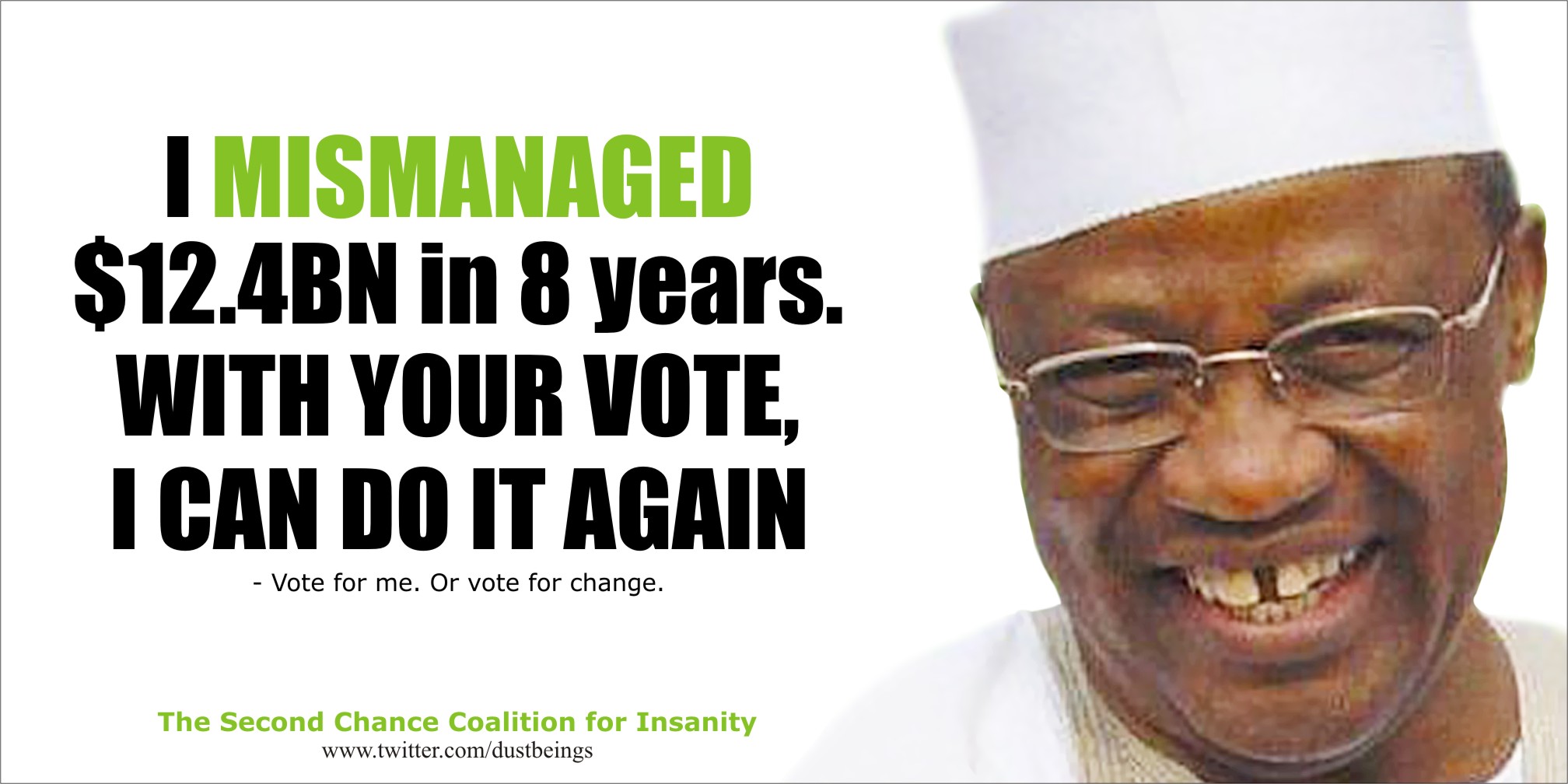 The sad fact is that, in the experience of ordinary Nigerians, the era of Babangida has become the good old days. Infrastructure has become worse, the standard of living has fallen, and little progress has been made in giving marginalized communities a sense of belonging. The energy sector is nearly comatose. To many, Nigeria today is clearly worse off than in Babangida times. Now, we could do the easy thing and blame it on him but frankly, should there not be a statute of limitations on the blame game? It has been 17 years! In that time, several civilian governors have proven that when it comes to embezzling, they could easily outdo the military.
And just like Nigerians were convinced to recycle Obasanjo, the refrain is now out for Babangida, again. I will be the first to argue that political jobbers are behind this campaign. Babangida is assumed to be mythically rich, in stupendous proportions. Nigerian elections are expensive affairs and a candidate of the caliber of IBB will be able to raise resources and favors that will assure his close disciples of a highly rewarding stewardship.
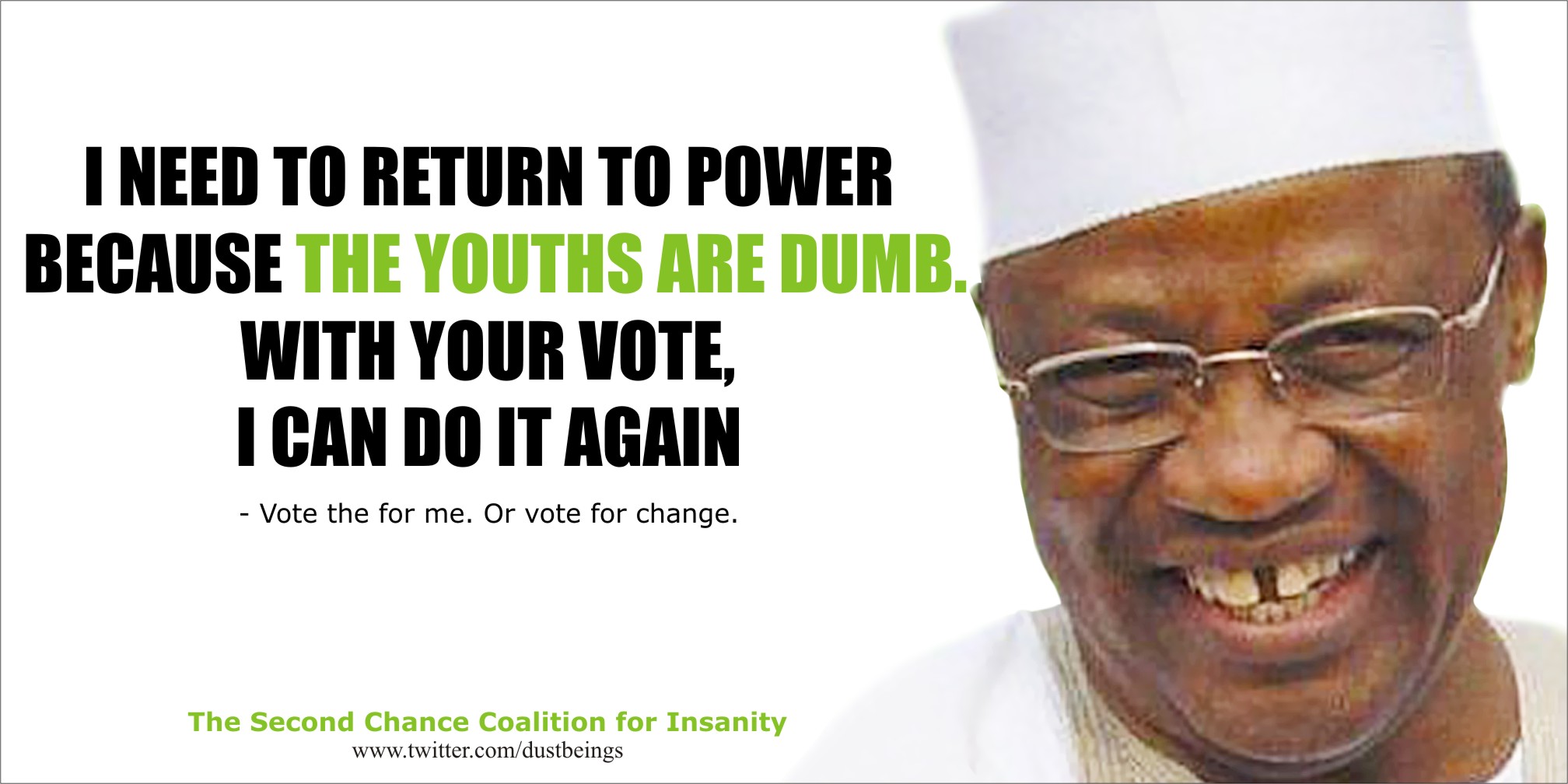 Then I read that President Jonathan’s posters are now all over Abuja, in spite of loud protestations from his (Jonathan’s) camp. We have heard that before, haven’t we, many times, the reluctant leader syndrome? Babangida taught them this shit, and 17 years later, they still can’t be any more creative. Little incidents like that bring us face to face with our fear that, should Babangida decide to effectively contest, he will meet no opposition. Babangida’s comment is just to send a signal to his constituency within the reigning power block that all is well. If all else fails, he will step back in.
____________________________
Pictures from DustBeings