WanaWana Celebrates Love, Sensuality and Feminine Agency

I was present at Rele Gallery Onikan on August 27, 2017 at the listening party organized for Wana Udobang’s sophomore poetry collection called In Memory of Forgetting. I have also spoken with the poet, in an interview published on Brittle Paper, about her work, craft, and opinion on the Nigerian literary scene. So I was glad to see that she has created visuals for a few of the poems in the collection.

This one is called “20”. It was released on September 20. According to the press release, ‘the video was filmed in Lagos at Freedom Park. The concept of “20” was developed by WanaWana, directed by XYZ, and features MTV VJ Folu Storms. The video artistically celebrates love, sensuality and feminine agency in a poem that has been described by one critic as “steamy and intense”.’

Enjoy.

You can get the album here: https://store.cdbaby.com/cd/wanawana, or at Salamander Café (Abuja), and at Terra Kulture and Rele Gallery (in Lagos).

“I Wrote This For You”: Mapping Triumph in the Midst of Pain

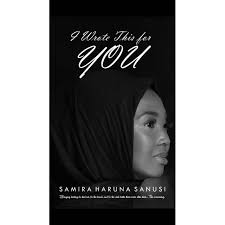
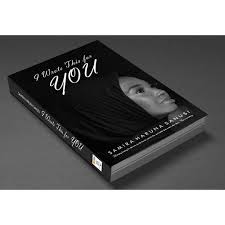
Samira Sanusi’s new poetry collection is a map of pain. Line after line, in her book I Wrote This For You (WRR/Authorpedia; 2017), the author traces a tough path through difficult memories like a hot iron through wax. It appears like an uncomfortable experience at first, one with a rebound of traumatic recollection. But what emerges, for sure, is triumph. Survival.

I first met Sanusi in Kaduna at the maiden edition of the Kaduna Book and Arts Festival (KABAFEST) where she was a guest on a panel discussing the issue of sickle cell anemia (full panel video here).  She had written a book called S is for Survivor detailing the path of her healing from a sufferer and victim to a survivor and warrior. After many years of suffering through medical trials, twenty-eight surgeries, and other travails, she was finally healed when a bone marrow transplant turned her blood from a sickle cell blood to AA. She is now the President of the Samira Sanusi Sickle Cell Foundation (SSSCF), an Abuja based NGO.

Until then, I’d never heard of the idea of a blood transplant changing one’s genotype. But I haven’t followed the advances in medical science in this regard. So the revelation, as well as the heartbreaking tale of her survival, was both thrilling and heartwarming. I wanted to read her book. In this collection, Samira opens up in the best way she knows how: in words, mostly written to self, documenting the painful process of this journey to survival and all the attendant doubts, setbacks, despair, joy, and hope.

I finished reading this book a couple of weeks ago but I didn’t have the time to put down my thoughts about it, many of which I wrote down in a notebook I’ve now had to dig out from under a pile of other books. Here, a few of my favourite and memorable lines.

“That you have seen worse, doesn’t

mean the hell I’m seeing is a second-hand fire.

My worse is valid, even

when your bad is worse than mine.”

This came at the beginning of the book which – to my embarrassment – I’d initially assumed to be another prose work from the author. Nothing on the cover prepared the reader for poetry, so the words that came at me from the opening pages seemed, at first, like the preface to something else until they led one into each other throughout the book. It would appear that she had been documenting her thoughts and feelings about her pain and process throughout her encounter with the sickle cell trauma.

“Keep your truth away from me.

You don’t know what lies I have to tell myself

to sleep at night.”

But don’t expect a clean arrangement either. The words flow into each other sometimes like aphorisms, separated by asterisks or other special characters. At other times, they appear as chapters carefully grouped together in a specified theme. But there were no chapters. Only verses. We walk through the lines as though experiencing the process and pain of the writer’s lived experiences.

Who she was addressing wasn’t always obvious, but that was never a prerequisite to understanding or enjoying what was offered in the most private of words. In baring herself this way, the author invites us to see her not as a perfect survivor but one who had only persistently endured, with her head held up high, but with a few notable scars to show.

“She was so beautiful, the way

She kept people from falling into

Pieces as she broke apart.”

In the book are several themes which sometimes morph into each other, even in contrast. There is self-loving sometimes with self-loathing. There is gratitude as much as bewilderment, there is surrender and sometimes defiance.

“If you ask me about my dreams,

I would tell you to watch me,

for I am living them.”

Sometimes, she talks to herself, either in pity or in a berating tone.

“Looking into your eyes

I can tell you went to war

And did not come back with yourself.”

And sometimes with a challenge:

“You must come back to yourself

to find you waiting on the couch,

hoping to kiss and make up. Begging

for another chance at self-love.”

In other matters, she hints at love, lust, rejection, and romance:

“The first time he touched me

I yelled ‘Don’t hold my hand and don’t touch my heart!’

He asked, ‘Who happened to you?’

‘Your access pass to come in and save me so they can call you

Hero is rejected!”

Feminism? It sure seems so. Yet a certain religious conservatism also present underneath the soft and vulnerable persona the author presents in this book seems to sometimes intrude to confuse us as to whether the narrator is a helpless character in a patriarchal space or a defiant voice against it. Evidence of both can sometimes be found.

“Whose idea was it to look

at a boy’s eyes, filled with tears

and tell them men don’t cry?”

And on another…

“Dear Arewa woman
You’re not just somebody with a body
You’re body, mind, heart and soul
They’re all yours to share, as you please.”

I enjoyed reading the work in all its rollercoaster of emotions, aspirations, reflections, and ruminations.

Parts of the book do sometimes let go of its aspirations to poetry and spread out in plain prose, towards the end. But even in them are relevant nuggets of inspiration directed at an imagined audience of readers, and sometimes at the writer herself. The result is a book that both defies categorization as much as it defines it, expanding the possibilities for artistic self-reflection. I have not read many books of poetry from Northern Nigeria. But if Samira’s offering is any indication of what to expect when vulnerability and a questing mind meet at the junction of a page of poetry, then we are in for a good time.

The irony of enjoying work written in pain isn’t lost on the reader of course. But the writer never intended it as an invitation to pity. Rather, it is a celebration of triumph, survival. Each verse in the collection, whether intended to please, to stimulate, or to instruct, comes across in a form that also delights in soluble bites. I look forward to reading more from this author, this warrior, in whose survival we have also come to discover beauty, grace, and strength.

Random Memory of A Pranking

My sister has written me a nice poem for my birthday. She is cute, always kind and loving; a rock for our family since I’ve been conscious of her. But in the poem, a line has stuck out to me: a description of me as a prankster. This is absolutely true, but the memory of some of my best work in this regard has eluded me for a number of years. Her reference brings it back with all the attendant chaos and delight in a notable example.

There was a time in Nigeria when “killer numbers” were a thing. A rumour, originated from where all popular beliefs originate, convinced everyone that a certain phone number (or set of phone numbers) had been calling random people. And on receiving the call, the receiver immediately (or soon after) dies. For some reason, this piece of “news” made the rounds, from radio to television to newspapers, with eye-witness testimonies from family and friends of victims of the killing spree.

So parents warned their children about receiving strange calls from these numbers. These numbers were sent around so people would have them saved on their phones, so as to be on alert. My Sister Lará stored hers as “Killer Number 1”, “Killer Number 2”, etc. I always found it funny, since I neither believed that such numbers exist that could transmit death nor that any of it was going to call me. What was more hilarious, of course, was how seriously she had believed the stories and stayed on alert waiting for the killer number to call her.

So, one day, I went into her phone and changed one of the numbers to mine.

And the next time we were talking about it at the dining table, I called her phone from under the table. Imagine the look on her face when “Killer Number” flashed on her screen.

“Mogbé, it is calling me!”

“Who is?”

“Killer number.”

“Ha ha, don’t be ridiculous.”

“I’m serious. Look!”

“What? You stored the number in your phone?”

“Stop laughing Kọ́lá. What should I do?”

“Hmm”

“And why are you trying to receive the call? Kọ́lá!!! Don’t pick the call!”

I did pick the call, of course, and seriously freaked her out.

Later I showed her the trick and she gave me the dirty eye of anxious relief. She may have hit me too.

But it was such a fun experience. Even funner in hindsight.

She has a blog here.

Reviewing the 2017 Nigerian Literature Prize Trio

I have just finished reading the third of the books on the 2017 Nigerian Prize for Literature shortlist, and I’m overwhelmed by the range, depth, and quality of their offerings. It is such an impressive collection.

When I started, last week, with one of the books, I was sure that I had found the winning work. But after having read the three, I’m no longer that certain. Each book brings to the table an array of class, style, content, beauty, and a lot of pedigree. Contrary to social media jabber, I can say that this is an impressive shortlist, each writer deserving of their place on it.

In the next couple of days, perhaps one per day, I hope to post my thoughts on each these books as I see them.

Needless to say, reviews and criticism of works selected for public fêting are essential to the growth of a literary industry. From Facebook to Twitter, we have seen no shortage of individual opinions on the Nigerian Prize, its shortcomings, and other matters. What we haven’t found are sustained conversations about each of the works shortlisted. Aside from book readings organized by Cora and sometimes by NLNG itself, there haven’t been many avenues to engage with the work and the writers themselves. Not even in our newspapers, except for scattered profiles and op-eds on the nature of prizes. And that is a shame.

One of the reasons the Caine Prize (and other prizes smaller than it) have earned such a reputation as important relevant prize institutions is the level of engagement that each of their annual prize seasons brings to literature and to the writers themselves. We can complain all we want about what NLNG is or isn’t doing, but as an industry of writers, much of the fault lay with us and our inability to engage in a constructive, intellectually satisfying way when it comes to book shortlists. It is not the size of the prize pot that brings prestige to a prize. It is the type of value that the conversations around the prize add to the standard of subsequent entrants which then hopefully spirals forward into an improved culture and tradition of writing across the country. Without critical attention on a sustained basis, we are equally as complicit in whatever downward spiral attends our inactivity.

Tomorrow on Lagos Island, I will be engaging the three writers in a televised interview. I intend to post the full videos here when they are ready. I also intend to talk with the prize administrators, as well as a member of the prize advisory on a number of issues that have been raised over the years about the prize and its role in shaping the writing culture around Nigeria.

But before then, watch out for my review of each of the three books on the 2017 shortlist.

___

UPDATE (September 25, 2017)

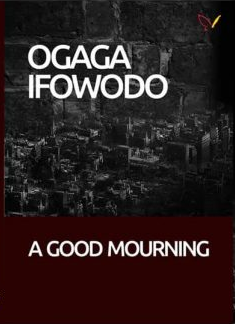
  • The first review is of Ogaga Ifowodo’s A Good Mourning. Read it here.


“Literature is Like Hot Amala” | Interview with the Saturday Sun

I spoke with Ọlámìdé Babátúndé of The Sun over the weekend about my work. Here is the interview, first published here.

___

It seems you have done more prose than poetry, is that deliberate or it’s just your forte?

I have actually written a lot of poems, mostly in English and some in Yorùbá. I just haven’t put them together in a book collection. I had a chapbook out in 2005 as soon as I left the university. I called it Headfirst into the Meddle. The second one, published in 2015 by Saraba Magazine, was called Attempted Speech & Other Fatherhood Poems. I’m currently completing work on a full collection for print, focused on the memory of my time in Edwardsville, Illinois.

But yes, these days, I’ve spent a lot of my time writing reviews of books I like (and hate), and writing essays on issues (especially about language) that I feel strongly about.

What are you working on next?

When I’m not racking my brain on the TTS-Yorùbá research, I am compiling a book of interviews with writers I’ve spoken to over the years. I think interviews are a forgotten art and it will be nice to have the voice of our artists showcased in other formats than just in their creative work. I am also working on a memoir of my time as a Fulbright scholar, which was an enchanting time with lots of interesting and important memories. I’ve put that off for so long. And then there a few other book and essay projects that I can’t talk about until they’re ready.

How imperative are reviews to a text for you as a reviewer because an author once said he did not care about whatever anyone had to say about his book and what should a good review be about?

I can’t prescribe what a “good” review should be about, but I can say what kinds of reviews I’ve enjoyed reading. And they include ones that give me appropriate context about the work and about the author. I’ve heard people say that they don’t care much about the author, that they just want to read about the work he/she has created. I don’t always feel that way. I am a social animal and I want to know as much about a creative endeavour as about the mind that created it. That’s also probably why I like the interview as an equally important means of engaging the writer’s mind.

What is the way forward to making literature and other forms of art more appealing to people particularly Nigerians?

Literature, like any other form of art, is like fine wine, or hot amala at a rare roadside buka. Those who want it will seek it out no matter the obstacles.

I bet one way is to ensure there are translations of works into local languages, how is that future looking in Nigeria?

I think one paragraph will not be enough to do justice to my thoughts on the gaping hole we have today in the production and consumption of literature in the mother tongue, particularly in Southern Nigeria. Translation is just one way. Actually writing, publishing, and distributing literature in Nigerian languages will be most ideal. And we can help that by no longer having our educational syllabi insist on “Literature-in-English” as a high school subject when we can simply have “Literature(s)”, which includes texts in as many relevant languages as the students can understand or tutors can teach. It’s to our shame that we have 500 languages and most of the texts that students read in our schools are in a foreign language, and by foreign authors.

In the nearest future where do you see Nigerian literature, what opportunities lie ahead regarding using cultural tools to effect positive changes in all facets of the Nigerian Economy?

As I said above, I’d like to see a more robust approach to literature in our schools. D.O Fágúnwà’s books are not only meant for the Yorùbá children’s minds. They should be taught both in the original text and in translation. Same for selected Hausa and Igbo literatures, etc. It is interesting to see a resurgence in the interest to read more indigenous Nigerian literature by foreigners and tourists than Nigerian citizens themselves. This shows that there is some economic potential in giving them attention. Some bold publisher has to start first. Or some rich philanthropist has to put money out in support of such an endeavour, at least at the early stages.

I’ve also, in the past, suggested that Nigerian Customs insist that products coming into the country that don’t have their instruction manuals written in at least one or two Nigerian languages should not be let in. Imagine what would happen if you export a Nigerian product to the US or China and write the literature in Yorùbá. They won’t let you in. So why do we allow that for us? A policy like that will create new job opportunities for Nigerian translators in the local language and signal that we take ourselves seriously.

Name some young and new generation of writers whose work you enjoy

I recently discovered Chika Jones’s spoken word poetry and I’m sold. He has a bright future ahead of him.

What does it feel like to be a poet Father and husband?

For what it’s like to be a father, I’ll refer you back to that chapbook of my poems I spoke of earlier. It’s called Attempted Speech & Other Fatherhood Poems and you can find it on the Saraba Magazine website. I wrote a lot of my first thoughts about the experience there. As a husband, my role is to support and protect my family, which usually has nothing to do with poetry.

I read how irked you got for the misspelling of your name when you first created an email account. Could this have led to your mission to intervene in the saving of Yoruba Language globally?

I’ve since realized that the peculiarity of my name will always get me into these types mess. The email incident was the least benign. But when I returned to the University of Ibadan after my Youth Service in 2006 to pick up my certificate, I found out that they had written “Olatunbosun” on it, instead of “Olatubosun” which is how it is written in full. This is a running problem I get into most often with Yorùbá people. Non-Yorùbá people tend to stick with what they see on the page and don’t feel the need to add the extra “n”.

To your question, no. My work in language and linguistics wasn’t motivated by that one incident. There are many, some of which happened when I was very young. I blame my parents for all of it, for their insistent that we speak Yorùbá at home, which in hindsight was a very important gift. My most pressing motivation, I think, is the reality that the advances in technology will contribute as much to the endangerment of our languages if we don’t make those languages compliant with them as whether our children are made to speak them comfortably at home and outside of the home.

Your Initiative Tweet Yoruba, to what extent has it saved the third most popular Yoruba language from becoming extinct as predicted by the Linguistic Association of Nigeria? And how did you kick off the YorubaName.com?

The #TweetYoruba and the YorubaName project are two sides of one coin. The former was started as a way to call Twitter out in 2012 for not putting any African language on the list of languages for which the platform was being translated. It was an advocacy to make a case for Yorùbá which largely succeeded. I say largely because even though the promise has been made to launch Twitter Yorùbá, it hasn’t yet seen the light of day.

YorubaName.com was started as a way to expand on my university undergraduate project through which I compiled about a thousand names into a compact disc along with audio and other metalinguistic elements. By making it globally accessible online, with a crowdsourced element through which people can submit their own names and improve the meaning of the ones in there, I figured that we could gather even more names and better provide a sort of an online platform for education and cultural reinforcement. It ties back to that intention to make sure that anything that we value in the culture, any intangible cultural heritage, can also be accessible on the internet, and is compliant with information technology.

Not just for Yorùbá but for Igbo, Hausa, Edo, etc. If we want a language to survive into the next century, not only must we speak them to our children and use them in various public domains, we must also make sure that modern technologies can read, write, and function in them.

This brought on the Yoruba text-to-speech initiative, TTS Yoruba. Please enlighten us on how this is to benefit the 30 million who speak the language?

The TTS-Yoruba project is a result of my own personal research curiosity. For a while, I’ve been bothered by the fact that Siri – that automated voice on the iPad – was available in languages with as small as 5 million people. Yorùbá is spoken by over 30 million people, yet the combination of people speaking Swedish, Norwegian and Danish is just 15 million in total. Yet Siri exists in each of these three languages. The question I’ve always asked is whether it just isn’t possible to create a computer-generated Yorùbá voice or people just haven’t tried. I know that people have been trying, so I wanted to see what I could bring, as skill, into the research question. And if we succeed, there are very many significant benefits and possibilities. Imagine, for instance, being able to use an ATM in your local language. Many old women in the villages would no longer have a reason to distrust banks. We could also be able to use to create automated talking systems that can, for instance, be used by disabled people to use their voices to activate their phones in their own language. You can get your texts read to you, etc. There are also economic opportunities. I imagine that mobile phone creators will want to pay for a technology that allows more people to use their devices because of the new language elements.

Winning the prestigious  Premio Ostana International Award for Scriptures in the Mother Tongue in 2016 is a big one, what other doors did this open for your career?

The Premio Ostana was a welcome recognition of the work we are doing to shine attention on the issues in mother tongue use in education, literature, and technology, etc. The Italian organisation which awarded the prize (Chambra D’Oc) has spent its time and effort seeking out and recognizing people and organisations across the world who work to promote a small, endangered, or minority language. They have done this as an extension of their own intention to celebrate their own minority language in Italy and France called “Occitan”. So, of course, I am proud to be affiliated with them and their goals.

As per open doors, I’ll say that I have kept my focus on doing the work at hand, and that’s more important as a tool for open doors.

In April , you took part in the Culture Summit in Abu Dhabi with other participants from 80 countries around the world to discuss how cultural tools can fit into global challenges and capture existing opportunities, tell us of your experience.

The programme was organised by Foreign Policy magazine as a way to engage cultural arbiters and practitioners across the world, to figure out what opportunities exist for the celebration and advancement of (sometimes marginalized) cultures through art and creativity. I was glad to be there.

One of the things I took away from the event is that there are people doing great things, sometimes with little financial incentive, all across the world. One of the things I hope I left the participants and organisers with is that the language question is an important one in opening doors to development. As long as we keep thinking that the universality of English has freed us from the responsibility to support and encourage the survival of minority tongues from all over the world, we are still doing a lot wrong.

Your favourite world destination so far is where?

It is mostly Ibadan, where I was born and raised, and where both my parents still live. I have also made a sort of home among friends and adopted families in Edwardsville and Minnesota in the United States. I visited Verona in Italy last year and I had a whale of a time as well. Being able to find particular things relatable and enjoyable everywhere I go is a gift I greatly cherish.

What’s your worst travel experience?

Any one in which I get a small legroom seat on the plane. My legs are very long and don’t do well in cramped spaces.

Thank you for your time and for doing Nigeria proud, staying the course to preserve our languages.

Ẹ ṣé. My pleasure.

____

First published in the Saturday Sun of September 16th, 2017