When the World Ends

One of my earliest curiosities must be tugging at my mother’s wrapper in a tenacious effort to get her to answer a simple question: who created God? I don’t remember how we got there, or how young I was, but I remember her replying “Well, you can’t understand now. Nobody understands. Just content yourself with the fact that He created the world. How He himself got created is beyond us.” I found it very unsatisfactory and resolved that she was not the one to trust with the big questions trolling my very young mind. Since then, or since many months before, the idea of God, Christianity and the way the world was formed, or will end, took on a sharp turn and ceased to make as much sense to me as it should have, considering the amount of exposure I had. It however never failed to keep me questioning, looking for right answers.

If God created us, and the world, then someone or something must have created him – I thought – or it all makes no sense. Of course, I later encountered evolution and its sharp contrast with the story of the Garden of Eden – except of course we agree that the Garden came after very many years of evolution and is just a metaphor for the very beginning of consciousness. The idea of an all-knowing, all powerful priest/pastor/preacher never made sense to me either as it always sought to cast them as possessing of something bigger and purer than us ordinary folks. It was an unnecessary distraction, as all I always wanted to know after meeting any one of those holy men was the ordinary detail of their lives. That always yielded enough to justify my constant skepticism.

And so one day in 1994, some rumour started that the world was going to end, and the whole country – at least my circle of friends – went into a frenzy. Then the day went by and nothing happened, as we already guessed it would not. It however confirmed what I’d always thought: no one knew jack about anything, but it didn’t stop them from making things up that suited their imagination. In this case however, mother had a different nugget of brilliance: “Rapture is individual, and it comes to you when your time on earth is up.” Finally, that made some sense. I had got the right response to throw at the silly circle of impressionable friends who believed that the world was going to end and we were all going to go flying into the sky all at once – in spite of time zone differences (This bit made it seem a little unfair, in my opinion. No doubt, the right time of the rapture would definitely fall during the sleeping hours of people in some countries.) In any case, that was that.



An Old Theatre House

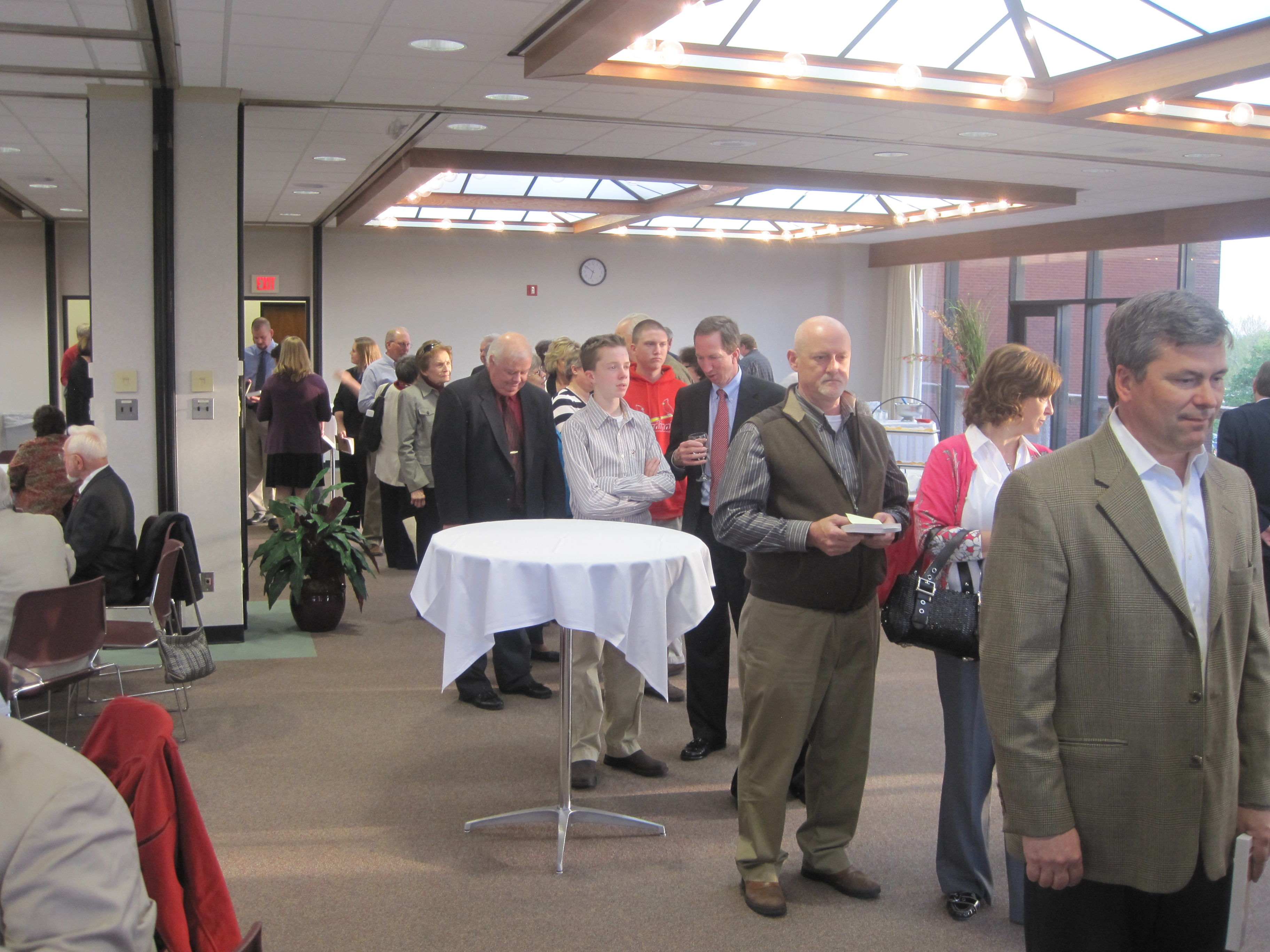
Downtown Edwardsville, today.

A Sad Day in America

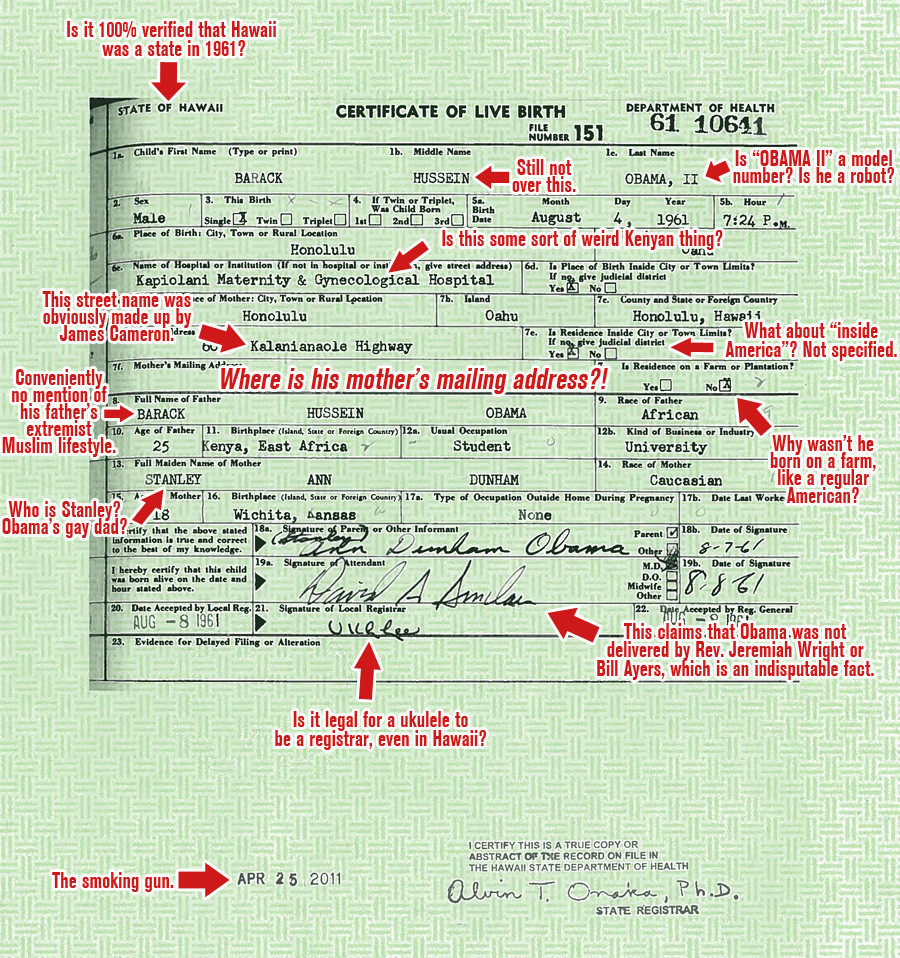
Today ended like a dream, a series of surreal hours that – one after the other – confirmed some of the worst fears of sane tolerant people. I’m disappointed like I’ve never before been in the political process and a certain intolerance best exemplified by what had just happened. It was unbelievable. The president of the United States had called a press conference, cutting into all live shows around the country, to show a final definite proof that he was born in the country as he had always said he was: a long hand birth certificate. It was the first of any president.

Obama's birth certificate in the eyes of a birtherFor me, this is sad on many levels, and race had a very large role to play. A few minutes after the White House released said birth certificate which they had got on request from the records office in Hawaii to put the controversy to rest, media mogul Donald Trump – also a contender for the next election – went to a press conference not just taking credit for the disclosure but also asking for the president’s college transcripts thus casting doubts on his qualifications as well.

I am a firm believer in the inner goodness of every human being in spite of their colour. I approached this country and people with the same open mindedness and was – like everyone else around the world – ecstatic and absolved when Obama was elected in 2008 in spite of what many considered his biggest obstacle: the colour of his skin. And then, from then, disappointed as to how every criticism of his policies seemed to come with something more than just a mere disagreement with economic policies. The press conference by Mr. Trump exemplified for me an unfortunate culmination of an underlying culture of intolerance.

First he said the president wasn’t born where he said he was, then he said the president had paid over $2m to prevent himself from having to show the document. A few weeks ago, he said he had sent investigators to Hawaii and he “couldn’t believe what they’re finding.” This, we found, was a lie, as Anderson Cooper found out after sending his own reporters to Hawaii. It turned out that Trump’s men either haven’t been there, or haven’t spoken to any relevant people as they should have. Yet he kept hyping the issue up for ratings in the media. Today, as the document finally surfaced, you would think he would back down. No, “we will get experts to examine it,” he said. For a moment there, I remembered another third world country – Ivory Coast – where Laurent Gbagbo had used a similar case of citizenship to keep his opponent away from the political process for many years. Many years, thousands of lives, and a brutal civil war later, we know where Gbagbo now sleeps, and in what bad shape his country is. It’s not the perfect analogy, but it’s not too far off either. The script is the same: “show us your papers and we’d let you play.”

I don’t think that many Americans realize just how bad this reflects on the country to the rest of the world, and that makes it a little more unfortunate. I’m not American and may never try to be one. But seeing how the country treats its own and one of its best leaves very much to be desired. This piece published today puts it in very good perspective. (Thanks to Nneoma for the link)

The Lovejoy Connection

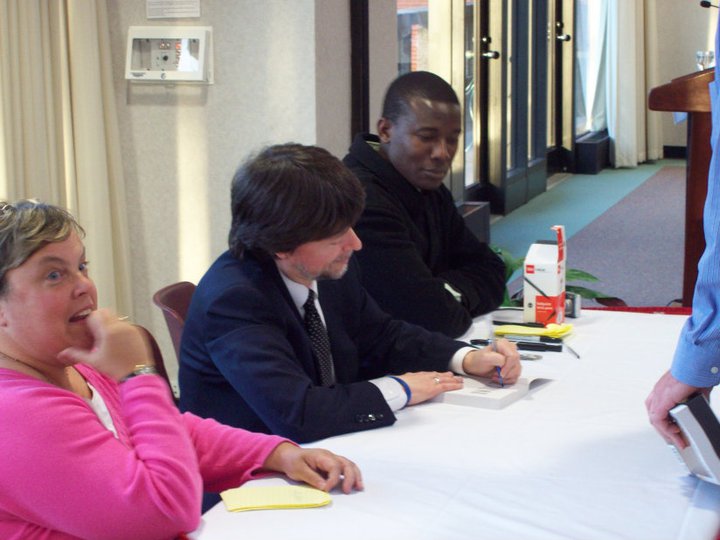
The story of the civil war in America is tied in some way to this state, and not just because of Abraham Lincoln. An abolitionist, printer and minister, Elijah Lovejoy who lived in Alton a few minutes away from here, was killed in 1837 for printing materials supporting the abolition of slavery. Sitting beside Ken Burns a few days ago, a woman of about seventy-five years old walked up to us with two books to sign for her grandchildren. She also had a concern: She works in a museum in Alton and she has been troubled by the conspicuous omission of Elijah Lovejoy from the history of the civil war. What did Ken Burns think of that?

In spite of the many people already in line waiting behind her, Ken took the time to talk to the woman, agreeing, and also insist that the woman be not cowed by the restrictions of revised history. It was important, he said, that the story be told to all the people that visit the museum that indeed Elijah Lovejoy’s story is as important to the beginning of the war as the first recorded gunshot. It was disingenuous that anyone would go to lengths to prevent that part of the story from being told, and Lovejoy could as well have been called the first white casualty of the civil war that began twenty-four years later. A few hours on during the Q&A sessions of his talk itself, the woman came back to the microphone with the same question, this time to the hearing of a larger full-house audience. She got the same response, again, this time along with everyone else: tell the story, and don’t let anyone stop you.

What I took away from the episodes was not just the respect for that level of persistence to get word out about an omitted connection in the larger story that has defined the American history. There was also the added thrill of connectedness: The main library of this university is named after the man. There goes another gap filling in my history lesson.

Meeting Ken Burns

The famous American Civil War documentarian and multi Emmy Award filmmaker Ken Burns came to campus today as a guest of the once-in-a-semester Arts & Issues event. Past guests to the event include the Count Bassie Orchestra, Frank Warren of Post Secret, poet laureate Maya Angelou among others.  The event, of course, sold out many weeks in advance, and this blogger was left at his wits end to find a way into the packed auditorium where the man who “more Americans get their history from than any other source” was going to be speaking. It looked like an impossible task in the beginning, but turned out well in the end. Let me see how best I can tell the story in very few words.

Okay, I can’t. It’s a long story. It started with a despairing email to the faculty of the foreign language department and ended with me sitting beside the visitor in an upstairs reception room and assisting him sign books for the scores of people who had come to see him talk, and listen to the way he has influenced American perception of history, especially the Civil War which started 150 years ago. He also looked young for someone who had been in the film business for more than thirty years.

I should probably write a longer post about the event itself, my perception of the man, and the power of storytelling, especially the medium of film. This has always been a favourite interest.