Browsing the archives for the Travelling category.

Across the West African Coast: Sierra Leone

by Yemi Adésànyà

The first mention of a 40 minutes ferry ride from the airport to the city elicited a skittish gasp from me. I wasn’t expecting a boat ride as the primary means of transportation from the airport, and I promptly enquired from my host if I could not be taken, as usual, in a car. It is amazing how living in Lagos, a city with generous water channels and opportunities for water transport, one has been conditioned to driving around in private cars, with boat rides anchored firmly to occasional leisure. Tales of boat mishaps hardly offer any encouragement; that, coupled with the ignominious fact of one’s inability to swim.

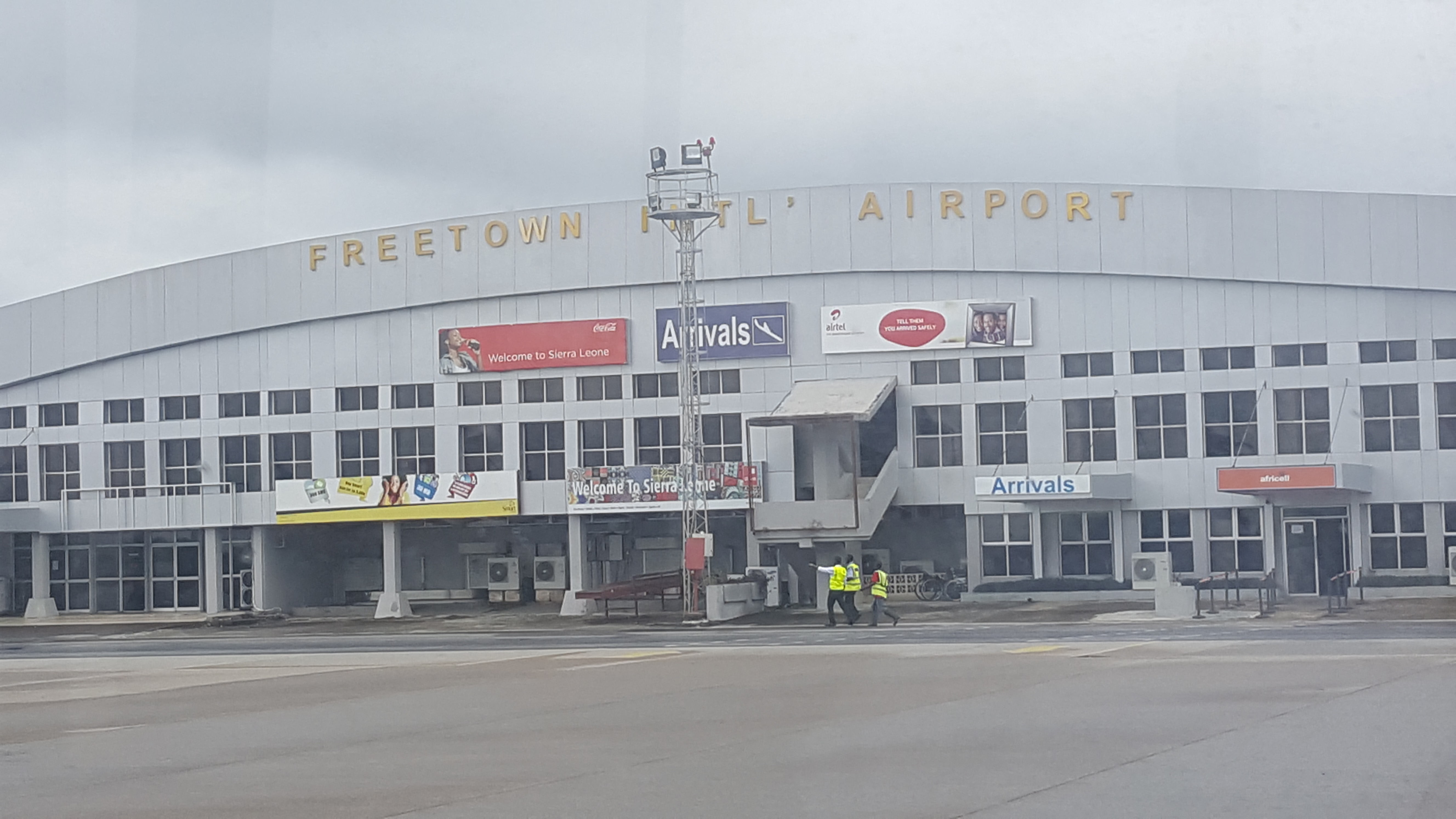
We landed at Lungi International Airport under the cover of a heavy downpour. My first encounter was with an immigration officer who, as usual of entry clearance officers, asked why I was in the country, when I planned to leave and where I would be staying. She must have figured it was my first time in Sierra Leone, and asked if my host was around to receive me.
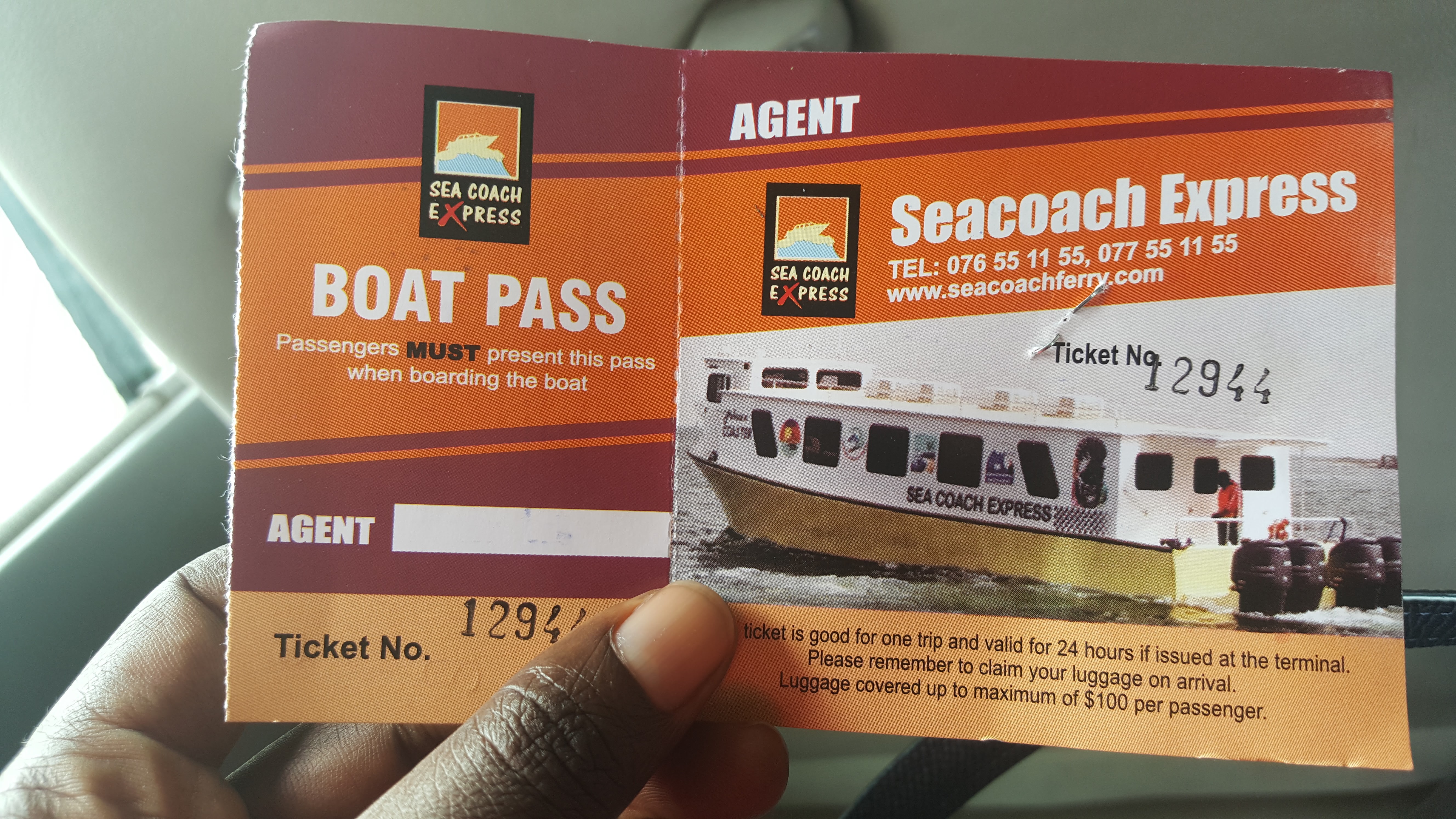
On learning that I was to take the ferry across to meet my driver at the jetty, what she did next was unexpected and certainly a first for this traveler: She got up and out of her cubicle, and led me to the ferry operator’s kiosk within the airport premises where she bought me a ferry ticket from the safest operator in town (I paid), asked if I needed a local sim card or currency. She only left after I was comfortably settled in the Civilian bus shuttle which was to convey us to the departure jetty.
I am still not certain if this was a typical Freetown kindness, if I would have been in any in any form of danger without her help, or if I was expected to offer some tip to convey my appreciation. I erred in favour of thanking her profusely for her kindness and help, not wanting to offend by assuming that she went through the inconvenience for a paltry tip.
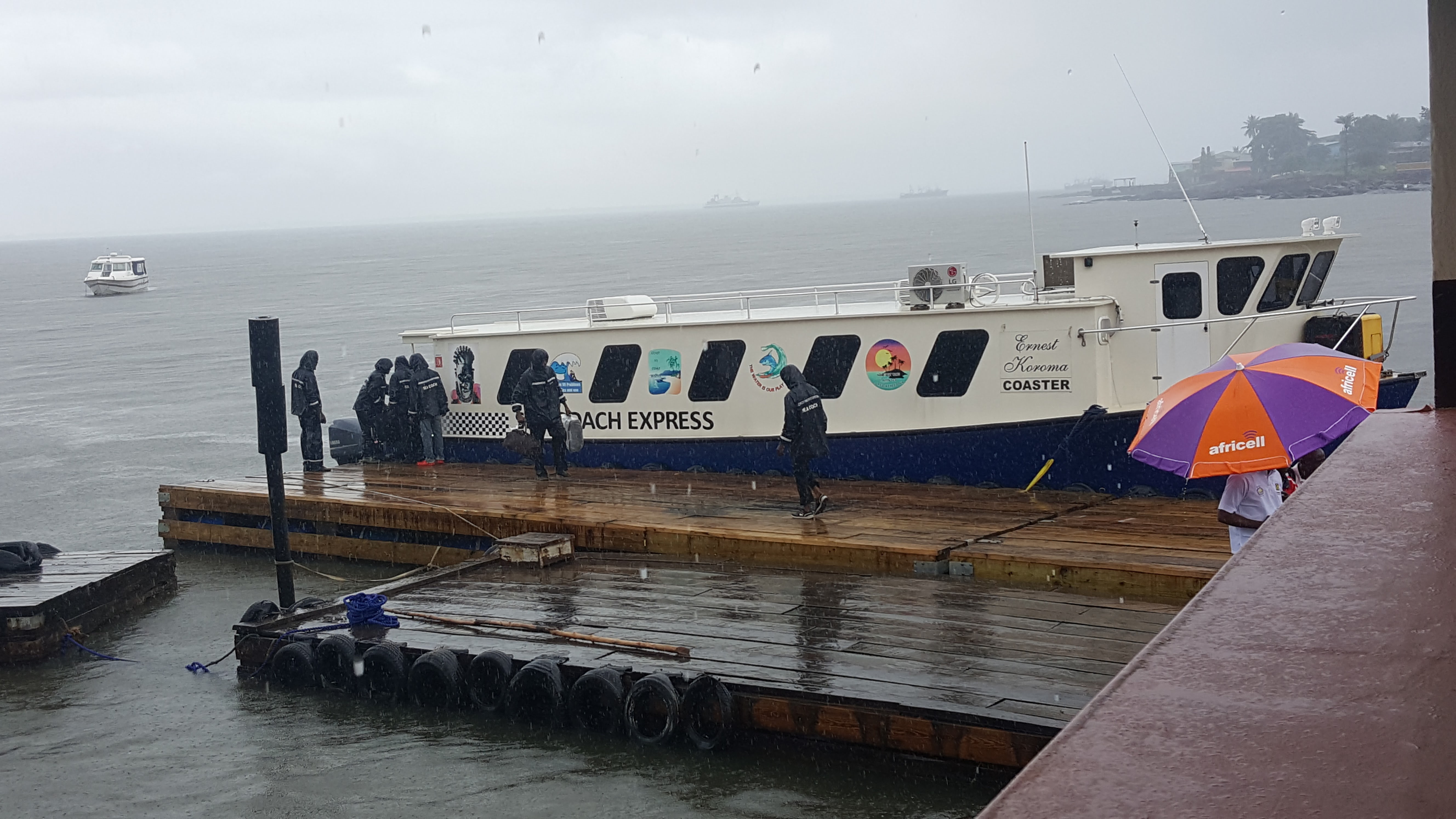
The Pelican Sea Coach ferry ride was thankfully unremarkable, it was enjoyable enough to be reminiscent of my leisure ride to the Statue of Liberty on a recent vacation, and a cruise to Burg al Arab in company of friends in a playful escape from another diplomatic drudgery.
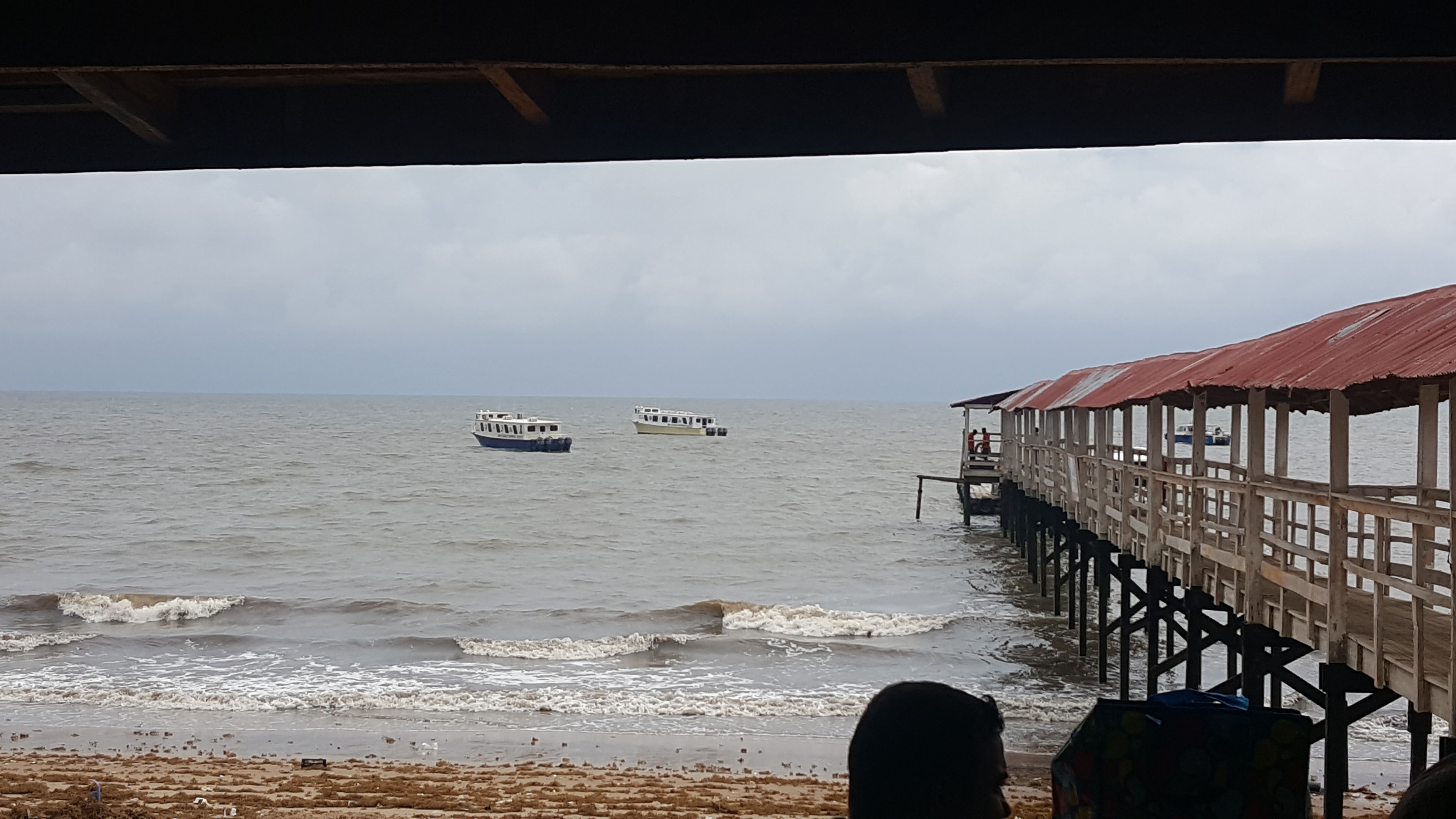
The sight at Lungi ferry jetty left so much to be desired. An embarrassing amount of debris floated on the brown sea-weed coloured waters, and freely littered the jetty. There is a case to be made for putting one’s best foot forward (given that almost everyone passes through the jetty on the way to the nation’s capital), next to Lungi airport, the jetty was another opportunity for Sierra Leone to do that. A comforting feature was free WiFi, available at the jetty and on the ferry. It was slow, but it worked, providing a needful opportunity for travelers to check in with their loved ones.
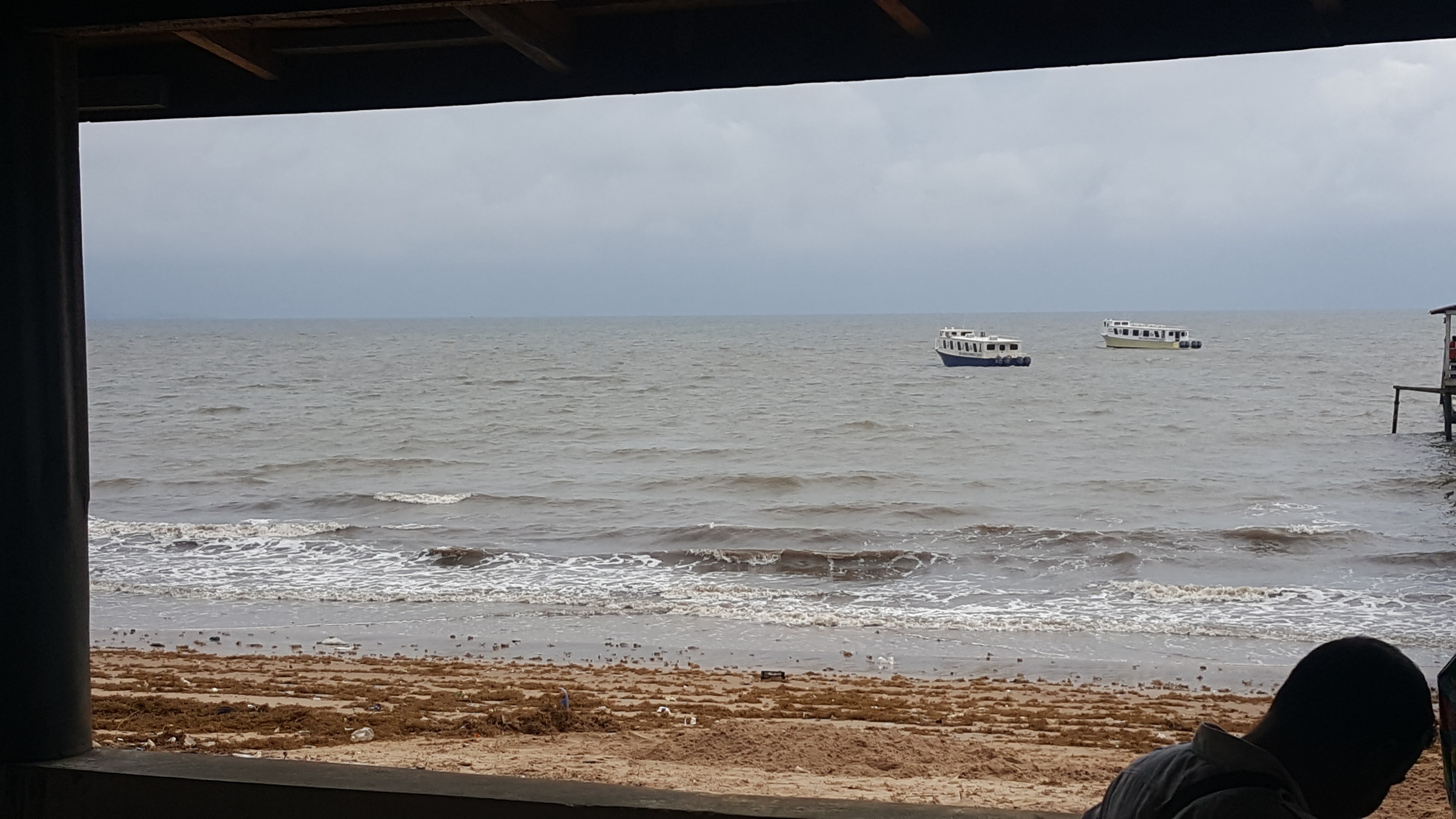
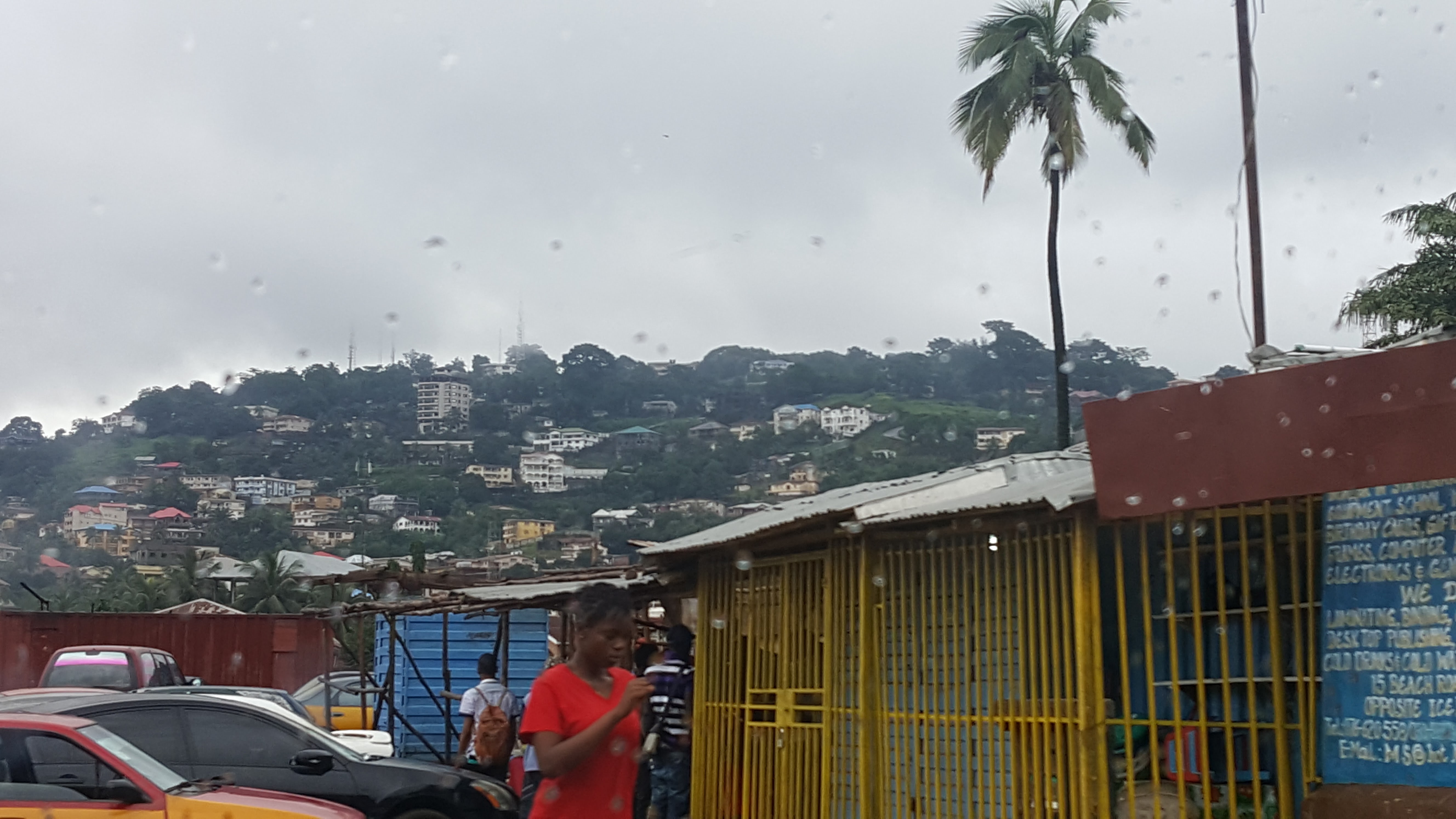
I spent the week at the Family Kingdom Resort along Lumley Beach in Freetown. It was a rainy week which exposed the city’s poor drainage system and lack of town planning. The first noticeable difference between my home city and Freetown was the smell of fish that permeated everywhere in Lumley; I was told the fishy smell emanated from a peculiar kind of sea weed. I soon got used to this minor implacable inconvenience, and ceased to be reminded of my long forgotten first trimester affliction of nausea.
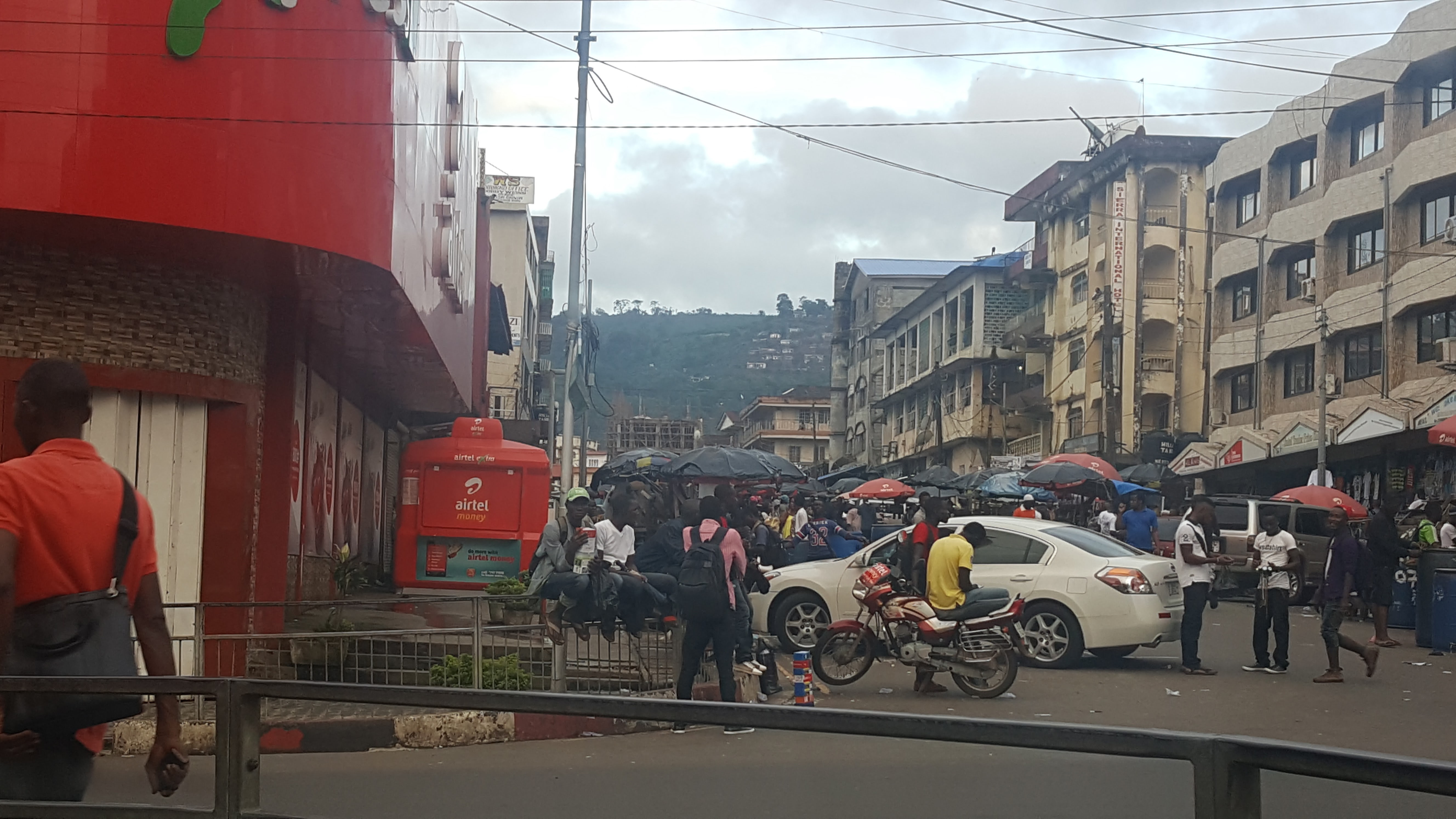
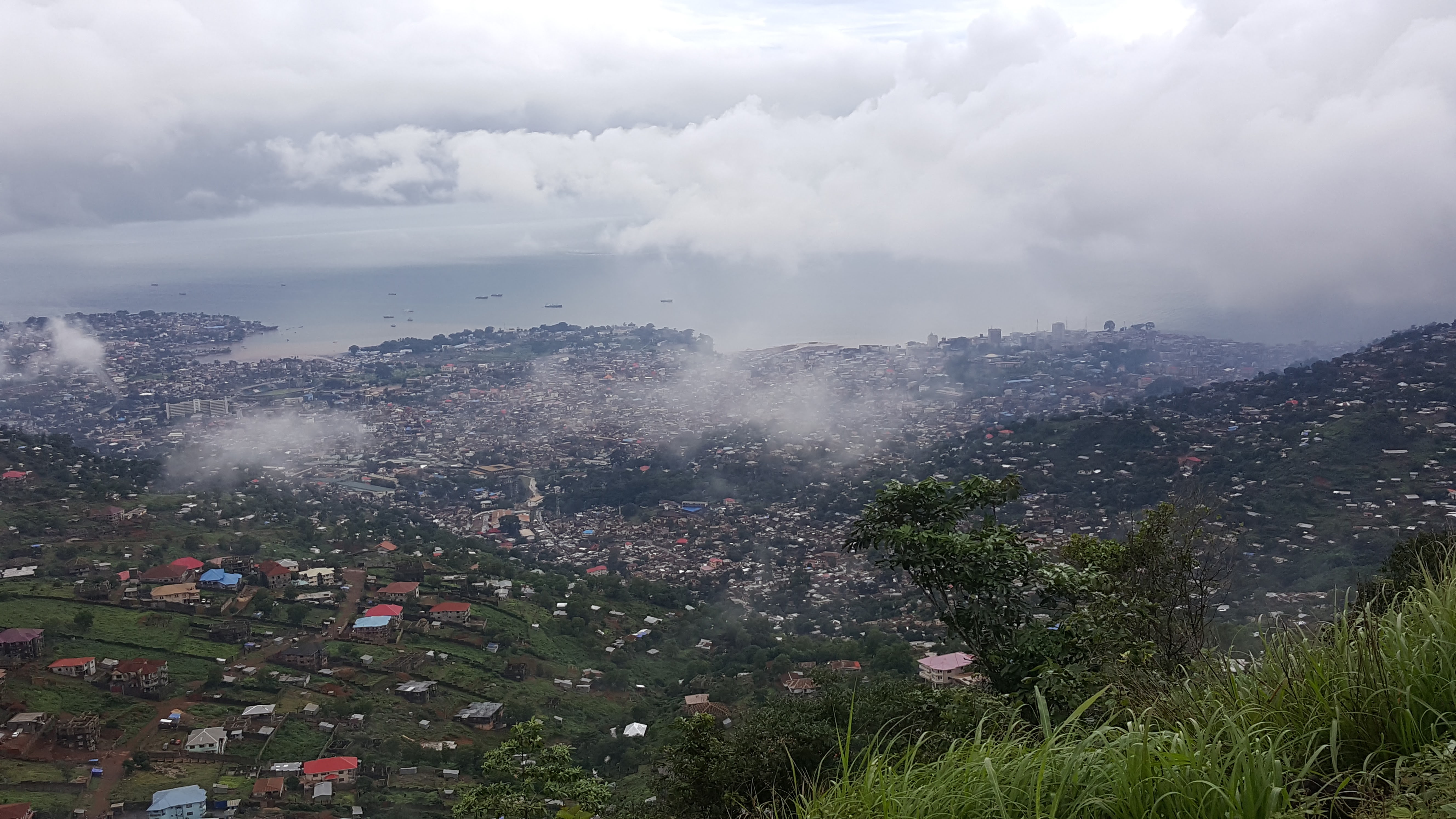
Saturday morning, before my return trip back home, offered an opportunity to see the city. My resident colleagues suggested a trip to Leicester Peak, for an opportunity to drive into the clouds for a one-shot view of Freetown. Geoview puts the mountain at 548 metres above sea level; it is the highest I have climbed, ranks at the 6th highest mountain in Sierra Leone’s Western Area and the 32nd highest mountain in the country. Perhaps with some idle time on my hands and hinds in the future, I could do some more mountaineering.
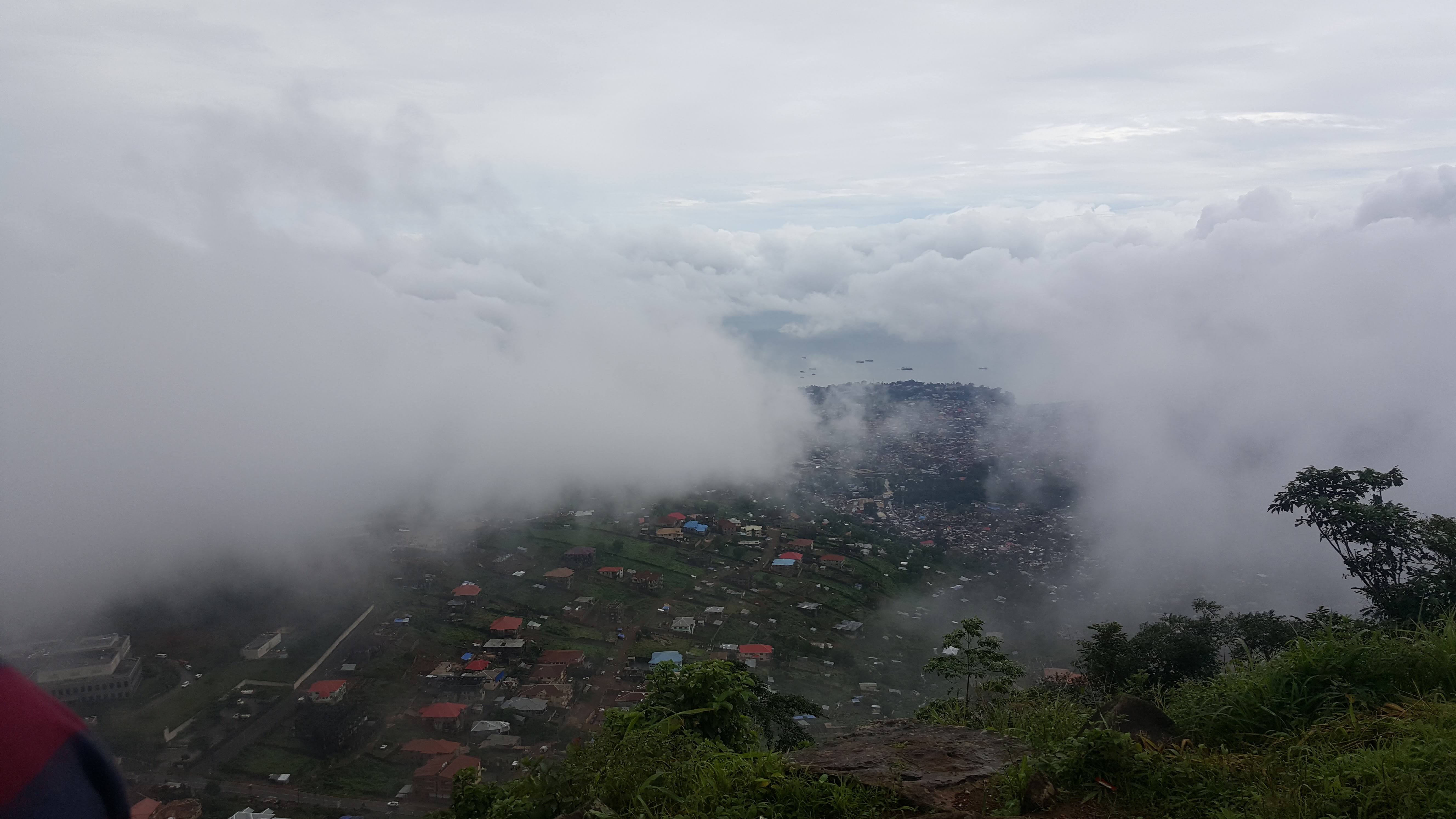
We spent about an hour looking down on everyone, taking photographs and watching clouds pass. None of us was particularly acrophobic, but we wondered, when some got too close to the edge for a grand photo shot, if a fall would be not be indubitably fatal. The view from Leicester Peak was breathtaking; one wonders how the other 5 mountains would be.
__________

Yẹmí writes from Lagos. 
Befriending Lagos: A Benin Story

By Stephanie Ohumu

It is October, in the year of Donald Trump, 2016. I have recently moved to Lagos.  On the first day of work, I start to live. I walk in, breasts uncased and participate in surprising normalcy. Wild and free breasts do not bother the people here.  This is how I know that I will be fine in this Lagos. Just fine.

img_20161026_162122My name is Stephanie and I am 20. Inside of my heart is mourning for Benin, where I have lived all my life. This isn’t a story you have not read before. If you can believe census figures,  Lagos is home to 18 million. Many of whom were  not born here.

Everybody comes to Lagos with stifled love for their birthplace and hungry yearning for the city that will make them. Yawn. This is about, well, fuck if I know.

I am living in Yaba. Alágoméjì, if you’re big on details. In a serviced apartment with flatmates on the same evolutionary level as me. There are no fights. Every day, I walk to work. It is just by the corner on Herbert Macaulay. At night, I walk back home. And sleep. This is my routine until, one morning inside of Slack, I sort of cease to be employed.

img_20161002_214230Now I have to move out of the apartment where the generator comes on at 9 and dies at 6. I move to Kétu. In truth, this is when I truly move to Lagos. To the yellow of marwas, renaming of bole (appaz it is called bọ̀lì here) and boarding calls to Ọbáléndé, repeated until you are certain that that Tekno song you can’t get out of your head was low key produced by a conductor at Toll Gate.

So far,  this is what Lagos means to me:

Proof.
That if you are mentally ill, the people in your head will relocate with you to new cities. Go to the doctor and start your treatment. Migration is not a treatment plan for bipolar.

An uncurled palm.
This is a space to trace lines of uninhibited passage. If you can walk it, walk it. Be, but only if you dare. Proclaim your batch number and run with it. Stop. Change your style. Be like that until the next stop.

Evidence of life.
screenshot-205In the very many heads of tired bodies awaiting the arrival of BRT buses. In the secondary school student occupying a world in Yorùbá to which my illiteracy bars me entry. The same one I will teach to check her Gmail as an assignment in a dingy café. Life is happening in this city of multiples, in multiples, daily.

And I am here. Existing in the pace of this place. One hurried foot and then the next. Power walking to catch a bus that will be replaced by another in a moment not because haste is required but because it is expected. I have just moved to Lagos and life is happening. So this is me, atop the uncurled palm, paying tribute to the city by living alongside it.

One month in mind.

On the anniversary of your migration, we remember the Benin girl you once were.

Signed,
Phoenix, for the Tenants in Her Head.

____________

Stephanie Ohumu is a writer who doesn’t understand why bios have to be written in third person. She currently lives on Twitter: @SI_Ohumu.

Across the West African Coast: Gambia

by Yẹmí Adésànyà


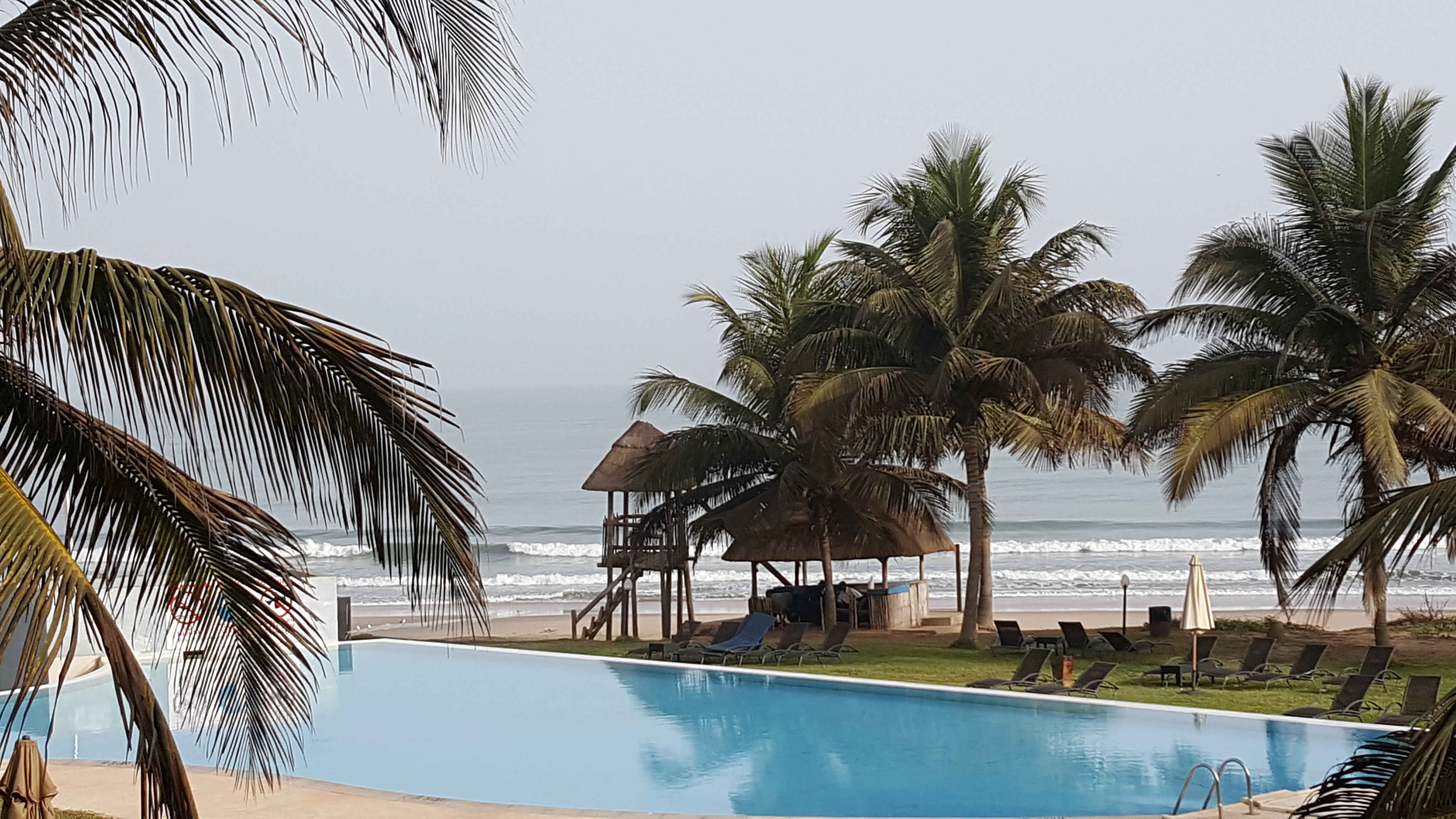
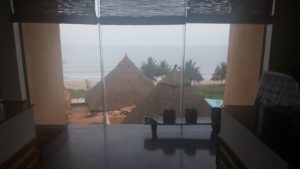
Gambia started on quite a happy note: a small serene country with clean beaches and monkeyed trees. I went to bed to the sloshing sound of the moiling Atlantic Ocean, drowning the indistinct chatter from drinkers at the outdoor pool-side bar. I loved Gambia at first sight.

gambia2

Work too started on a good note, and I quickly made my way to Timbooktoo Bookshop, aiming only to deliver a few copies of Musings of a Tangled Tongue as pre-arranged, but leaving the store with ten new books for my bibliophilic babies.

The despair that found me comfortably ensconced in Brufut was not brewed in Banjul. A part of me perished in Gambia; a part I had hitherto taken for granted, but nevertheless nurtured and savoured, since a time I have no surviving memory of.

My younger sister was due to have a surgery in Lagos, and my last communication with her the day before my trip was hope-laden: I would come see her and her new baby as soon as I returned. It was not to be. I returned to Lagos to the new baby only. My sister had died during the elective cesarean section. Nigeria had taken a huge chuck of my heart, and I was in Gambia suffocating. My howls were drowned by the obstreperous sea outside my window, with every wave of the tide washing away my dream of enjoying the city’s understated beauty. The waves, only the night before reminiscent of an alluring melody, had turned irreversibly to an immutable threnody. Olaitan’s death is a loss that cannot be licked by the lapse of time.

I was only counting down to departure after I was notified of this tragedy, life would never be the same.

gambia1Time went by quickly in Banjul, work took the day, while evenings sought comfort curled up in bed, taking depressing walks by the beach and eating only fresh mangoes; the surrounding beauty recessed to the background of a solemn promise that I would be back.gambia5gambia4

I ate the Gambian equivalent of Jollof rice too, on my first day at work; a disappointing presentation, and befitting mediocre taste. But I’m glad I got that out of the way, and quickly filed that experience away beside its Accra compadre.
When it dawned on me by Friday afternoon that my time was up in the city, I inquired of my colleagues about Gambia and if there was anywhere one could see in town. I was not in a good frame of mind, and needed a distraction, something else to remember the peaceful country by other than my muffled yowls.

gambia11

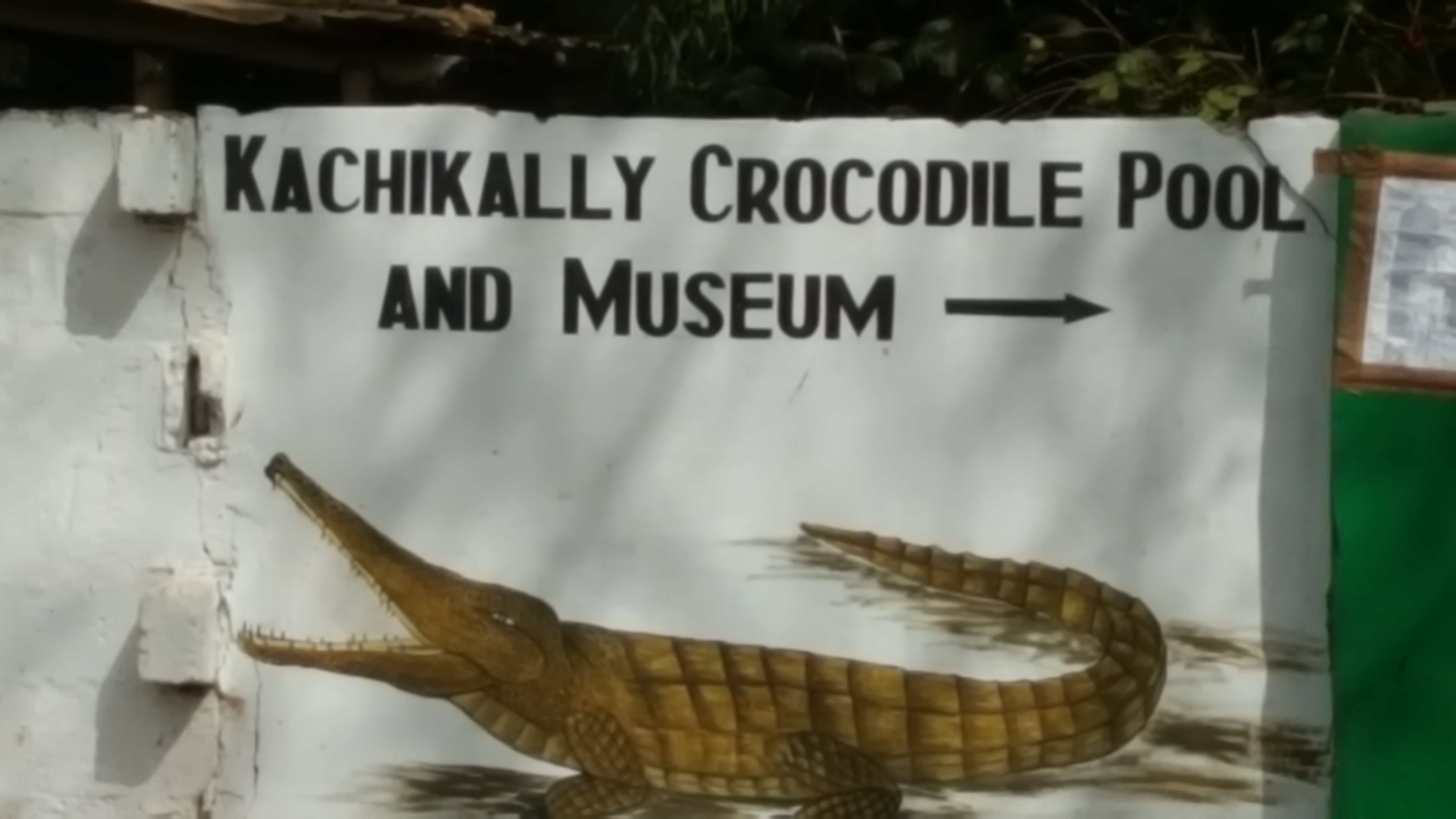
The Kachikally Crocodile Pool was the place everyone suggested, it wasn’t too far from the office and the incredible tales sounded exhilarating: harmless crocodiles living peacefully with locals! Some of them were said to have filed out of the pool once to pay homage to the deceased founder. And visitors could touch the harmless reptiles. This sounded insuperably menacing to me, but tickled my bereavement-sedated sense of adventure.

The crocodile pool was only about five minutes’ drive from the office; in the heart of Bakau village, an otherwise unremarkable residential settlement next to Banjul–Gambia’s capital city. The pool is owned by the Bojangs, a friendly family representative on sight to welcome us. Everyone in sight looked unperturbed, including the sun-bathing crocodiles. The pool is encircled with wire mesh; this was to keep humans out of the pool really, as there was sufficient allowance for the crocs to come outside unto the open dry land. Park attendants too were on hand, encouraging us not to run or panic.

gambia10True to the legend, the crocodiles appeared harmless, as least they were not hunting us; I touched one of them, eventually, after I was able to overcome my morbid fear of being eaten alive.
How To Look Crazy in Kigali

by Laila Le Guen

There’s nothing wrong with looking a little crazy on a trip. In fact, it can be a fun way to make friends. I know, I know, crazy is probably not what you’re going for. You’ve researched the weather and fashion trends, packed adequately and learnt three words of Kinyarwanda. You’ll totally blend in. Except…

Take it from me, looking crazy doesn’t happen on purpose and preparedness has little to do with it. There’s just a sort of disinhibition that happens when you smell the air of a new place that makes you giddy and you may sometimes act in ways locals consider eccentric, whether they let it on or not.

There’s plenty of places online where you can find tips on where to stay, what to do, what to eat in Kigali. This is a different – though equally thorough –  type of guide on quirky things to do and say in Kigali.

<center>Photographer: Gwendolyn Stansbury/ IFPRI</center>

Photographer: Gwendolyn Stansbury/ IFPRI

Enquire about safety

It only takes a year or two of living in Nairobi (or Lagos, I’m sure) for safety concerns to become second nature. I’ve learnt to never ride in a car without first checking if the doors are locked and I would not dream of walking around by myself after nightfall in an unknown neighbourhood, nor would I board a random taxi if I could help it. These habits die hard, even when you know that Kigali is generally very safe.

So here I am, on a weekday night at Sundowner in Kimihurura, enjoying a lasagna dish and pretending to read while in fact I’m distracted by the lights, the music and the hum of conversations coming from every corner of the pub. I had strolled to Sundowner before nightfall and found myself in a bind: should I walk back in the dark or take a cab to cover just 500m?

After requesting the bill, I debated whether to ask the waiter. I didn’t want to cede to fear but I also wasn’t going to take unnecessary risks in a city where I knew nobody. I figured there was no harm in asking, only the threat of awkwardness.

Awkwardness did occur when the waiter gently laughed at my incongruous question and assured me it was safe. So I walked back feeling tense the whole way, even though the most threatening presence was a bunch of barking dogs behind a closed gate.

When in Kigali, you can afford to chill. And that’s great, if you actually manage to put aside old habits and actually chill. I’m not saying muggings don’t happen, but your guard doesn’t need to be up all the time. Feel free to take a holiday from your high alert default mode, was the message Kigali residents kept reiterating.

Get on the bus

2-kigali-moto-dylanwaltersThanks to consistent signage and well-organised bus terminals, public transport routes are really easy to navigate in Kigali and I tried to use them as much as possible. I find the slow rhythm of the ride an occasion to breathe, to wander, to observe the movement of the city.

A visitor to Kigali, much like Kampala, won’t really need to use buses, as motorcycle taxis (moto) are inexpensive and so numerous that you’ll never wait long before catching one. So when I asked for information about bus routes to strangers at the bus stop and to my host, they inevitably looked bewildered. Why would I choose to take the bus and “waste” half an hour, when I could just hail a moto and have virtually no chance of getting lost?

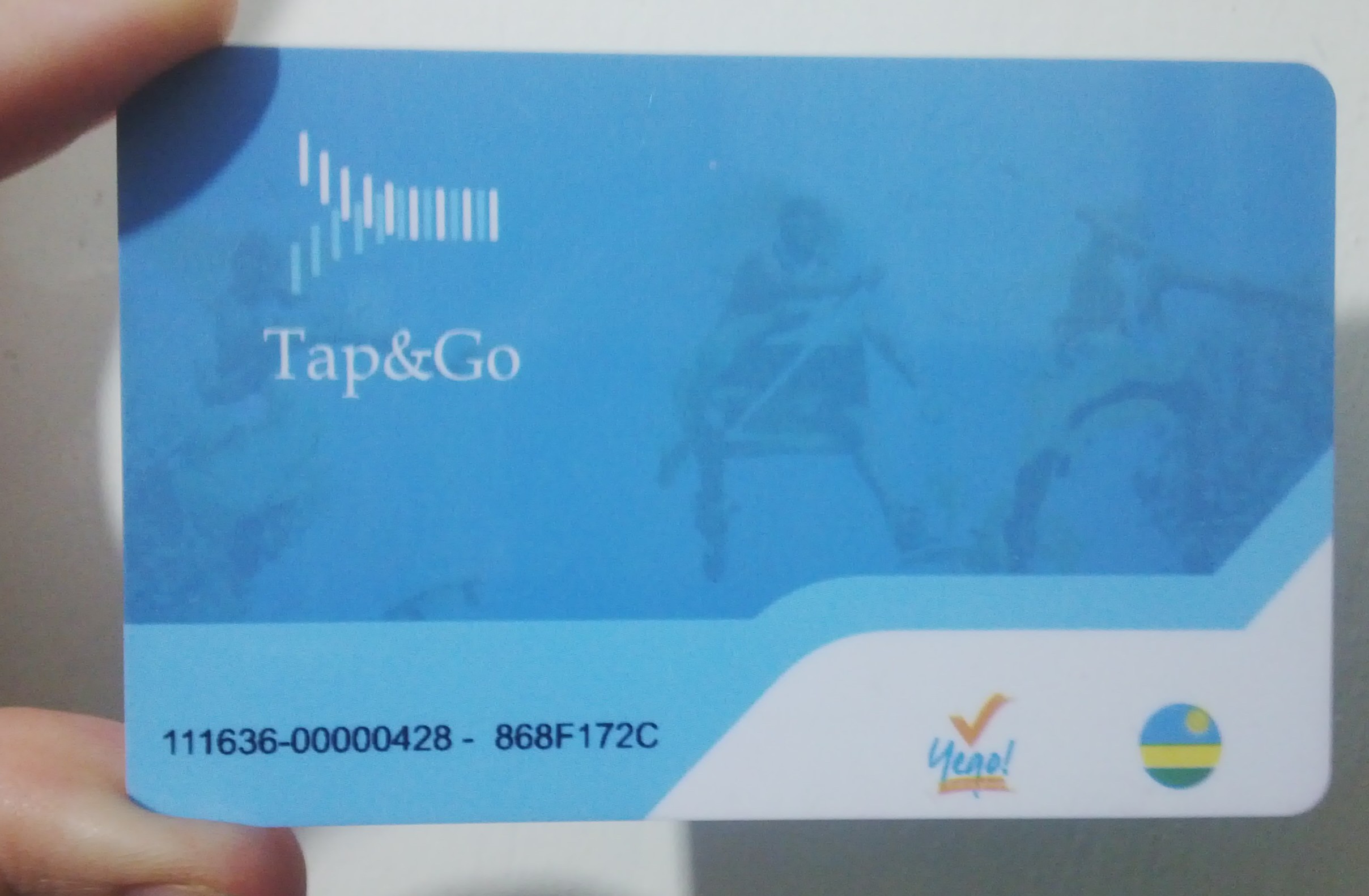
I could see how it sounded weird and irrational. For me, the joy of riding the bus is in the figuring out of the paths through the city, in the conversations you strike up with strangers, in the languages you overhear. And how else would I have experienced the prepaid “Tap&Go” card system used on many routes in the Rwandan capital?

Pavement passion

For three days, I explored parts of the hilly capital on foot and I did so with my eyes to my feet. Not to avoid potholes or puddles but because I couldn’t stop staring at the beautiful Kigali pavements. Just the fact of their existence in every part of the city filled me with joy.

I might have raved about them to every person who would humour me…

Pedestrians in Nairobi get the short end of the stick since pavements – where they even exist – are seen as a space open for dumping stones and rubble when they are not used as a parking lot extension. Most of the time, you’re walking on the roadside.

Kigali residents, I’ll say it again: your pavements are wonderful.

How much hadi la gare?

3-kigali-tapngo-laila-cc0-licenseSince I could never guess which language someone would prefer speaking and Kinyarwanda was not an option for me, I tried English, Kiswahili and French successively (not necessarily in this order). While this linguistic trio makes for strange multilingual introductions, it proved to be a winning strategy in everyday communication.

For moto rides, knowing basic round numbers in French is very helpful (you’ll be counting in hundreds, potentially up to a thousand). Even when we initially spoke English, the driver would often quote a price in French.

Kiswahili is also a good language to have in your toolkit. Many Kigali residents speak it and you’re likely to come across swahiliphone Congolese people as well, so do try it: reactions were always very warm and I found it quite easy to engage with strangers in Kiswahili.

Most of the time, the situation called for a mix of English, French and Swahili because things like ‘sauce provençale’ don’t really translate. Not to worry though: even if your only available option in this context is English, you’ll still be able to get by just fine.

Roju…what?

It took me all of two days to be able to pronounce the name of the nearest landmark to my guesthouse.

I had one of those retrospectively hilarious moments where it’s late at night and you’re trying to explain to the moto driver where you stay but, this time of all times, you have no language in common and the words that come out of your mouth don’t seem to find any resonance.

I kept repeating different versions of the name ‘Rojugire’ but the look of recognition never came. On top of that, we were both getting soaked under the pouring rain!

I ended up walking back with a kind stranger from the pub who happened to know the neighbourhood like the back of his hand because he had grown up there. While we huddled under his umbrella, he told me about the time he got mugged in Nairobi. It sounded like a variation on the universal East African travel story: I went to Nairobi and I got my phone stolen. We made nervous jokes about how unwise it would be to have a stranger walk you home at 11pm in Nairobi.

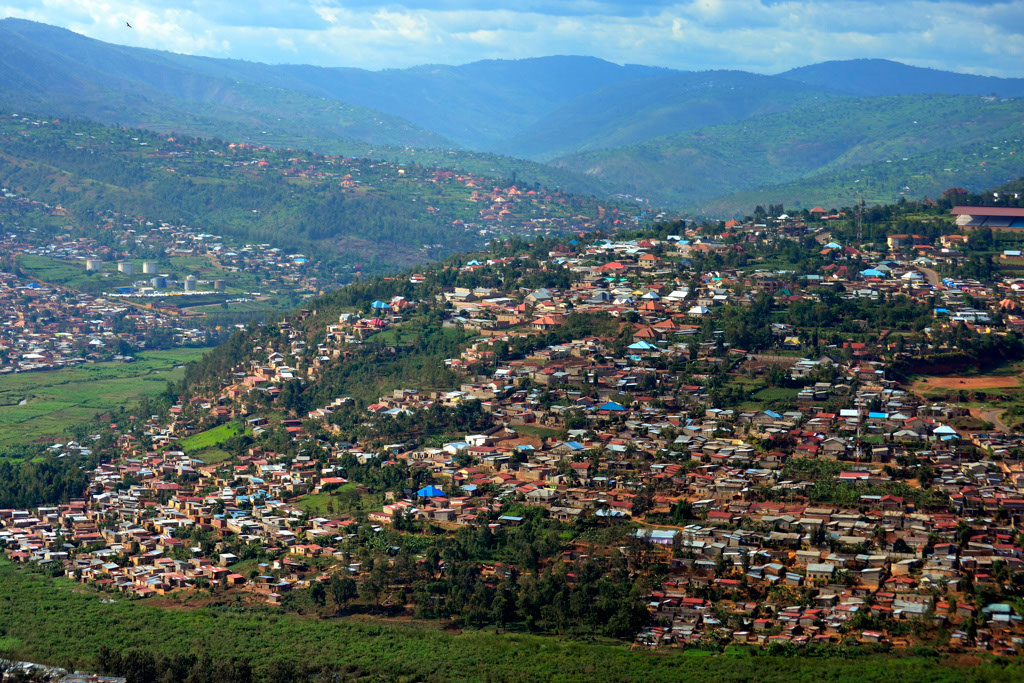
This trip was about contrast and wonder. Three days in Kigali is enough time to be charmed by perfect pavements and enjoy views over hill after hill, but not enough to to start noticing the flaws that would likely drive one mad after a year.

Do you feel like unleashing your own brand of crazy on Kigali yet? I sure hope so.

__________

Laila Le Guen is a 2016 aKoma Amplify fellow based in Nairobi. Growing up in France, her dreams of getting to know the world outside her small town were nourished by books from the public library. Her work has appeared or is forthcoming in Brainstorm, Aerodrome, Afrolivresque and Saraba.

Across the West African Coast: Ghana

By Yẹmí Adésànyà

It was work that dragged me across the coast of West Africa in delightful week-long bouts of adventure, each country exhuming different parts of me long hidden beneath the lacquer of a time-guzzling occupation. Some ports were more enchanting than others, workload and available time was not equally indulging, and thus my impressions are naturally skewed in favour of cities where my schedule permitted extra-metier experiences.

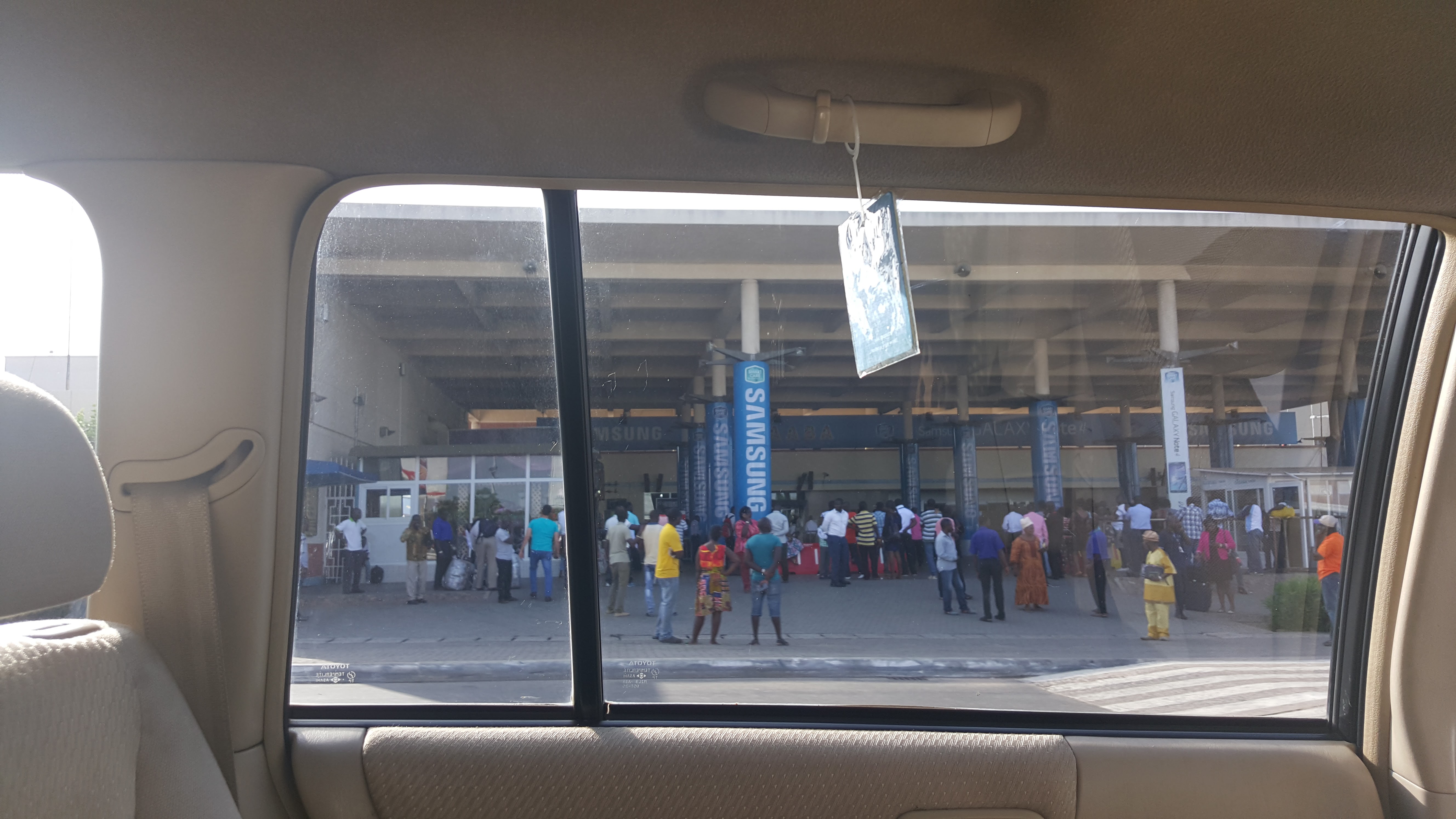
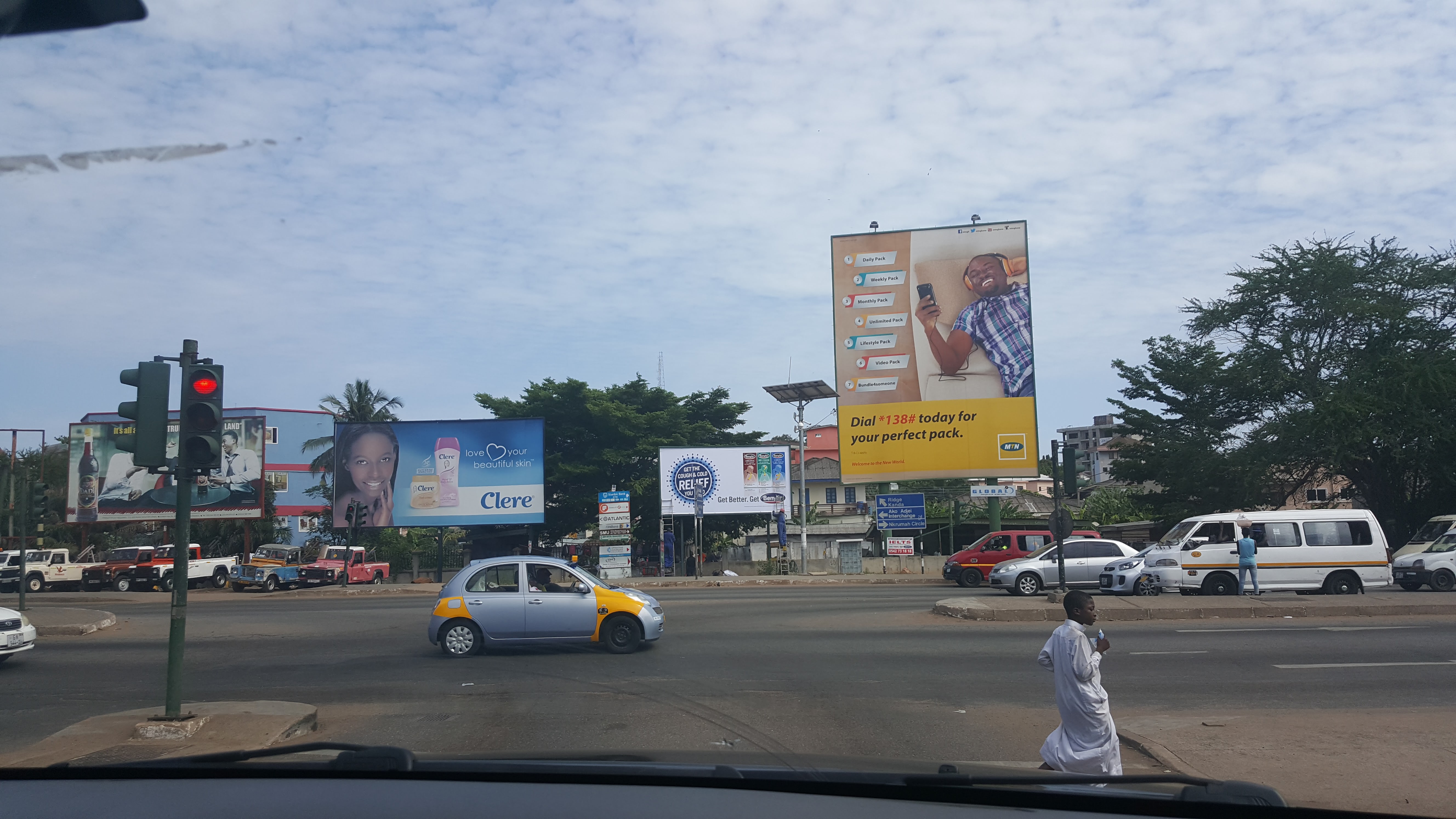
ghana1My journey started with Ghana, a colonial sibling of beloved Nigeria. Accra felt just like home: a buzzing commercial centre, invoking the unfortunately familiar and tiring spirit of boisterous vehicular traffic congestion, co-witnessed by hardworking street hawkers. My hotel was only a stone throw from the office, in Ring Road; there was not much time to play, I therefore did not see much of Accra. Ring Road is largely a business district, but my daily commute offered a view of the residence of one of the top opposition politicians, with campaign banners and billboards clearly marking his territory. So one might say the area is partly residential too.

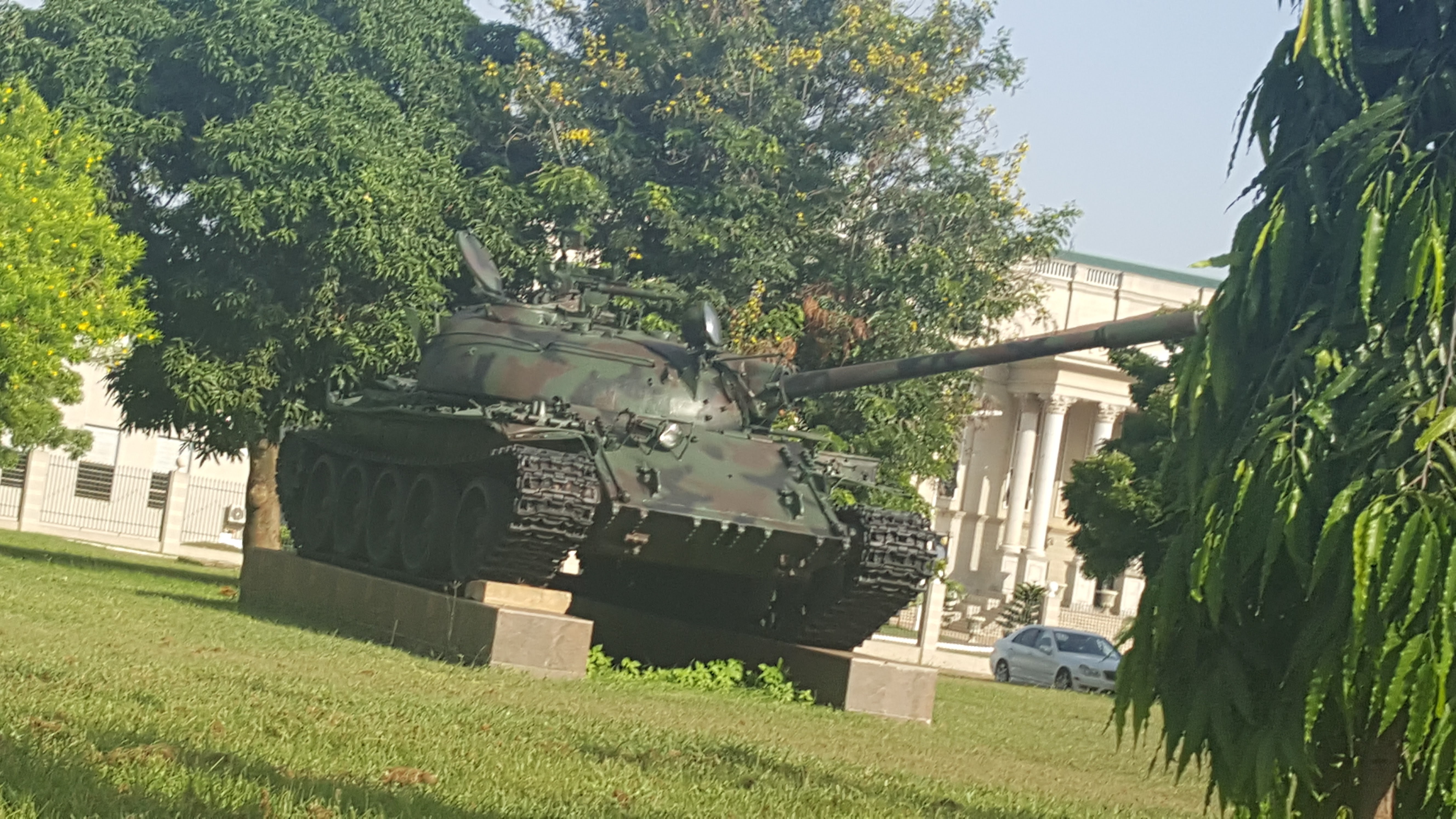
20160429_144618Any city that reminds me of Lagos meets with a kind of languid resignation and apathy, the kind in which I steeped for the duration of my visit.  I got a lousy shot of the state house (although my driver was not sure it was safe to take these photographs) and a stationary armored tank, but no other sense of adventure or curiosity was piqued in me. I made a mental note to opt for a hotel in a different part of town when next I visit, as I prefer relatively less densely populated spaces, with minimal noise.  I was later rewarded on one of these trips with two West African cities that felt like heaven to my Lagos-suffused soul.

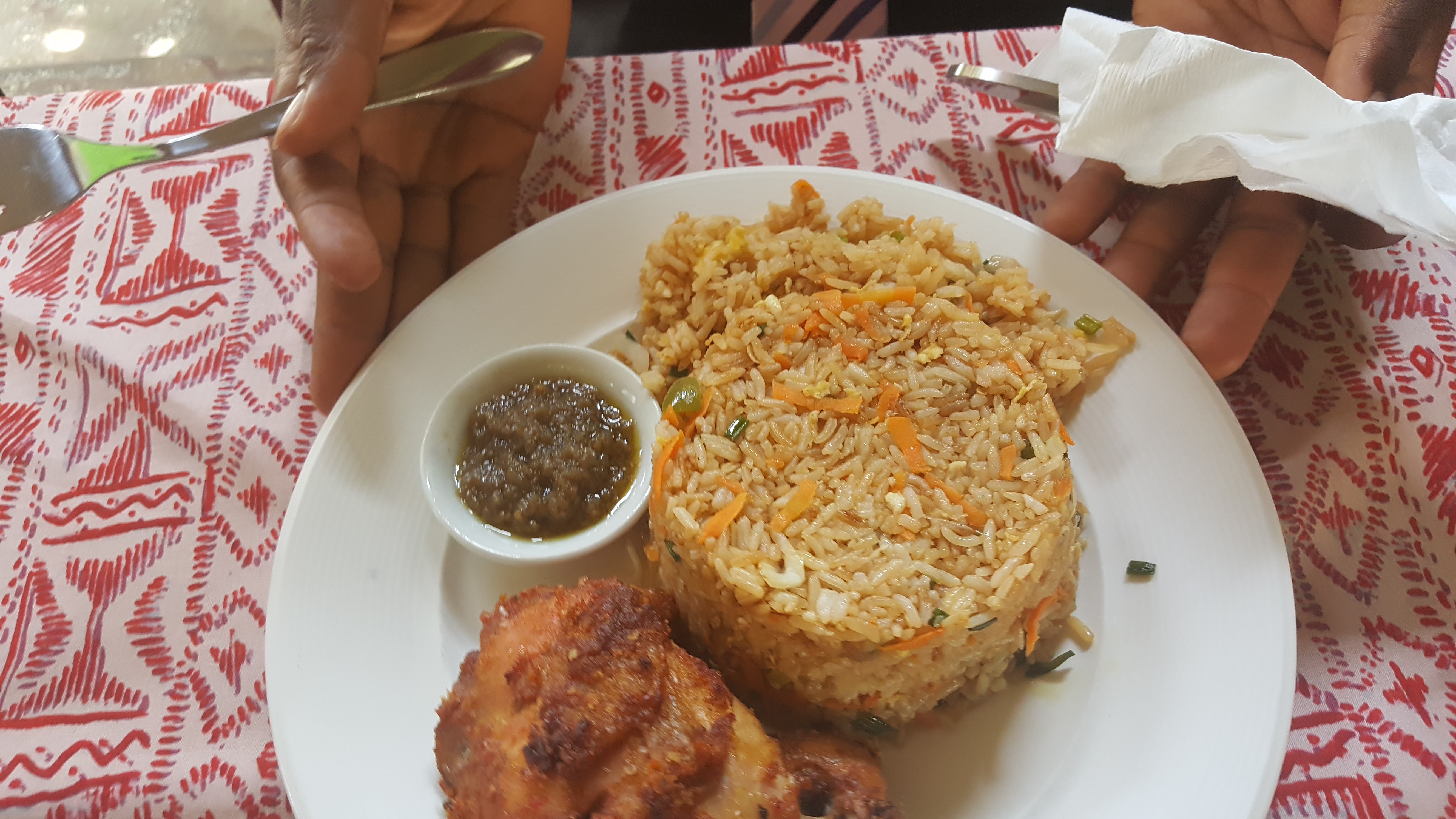
20160429_164403An interest that seemed of inexplicable significance, to my lunch buddy anyway, was a matter of immense national pride which I had made a mental note of witnessing, and documenting my observation and verdict. Many Nigerians have taken part in at least one light-hearted debate on the staple continental dish – Jollof Rice – and I had too, before my trip to Accra. I thought the Nigerian Jollof was better, just because, of course, but I had no objective evidence in favour of my bias. I had ample experience with the Nigerian flavor, and wanted to taste the Ghanaian, to have some closure. Well, I achieved that.

20160425_080640During my week-long desk-bound sojourn in the city, I was condemned to a food-evader’s utopia of monotonous lunch at the Swiss School, chiefly because it was close to the office, plus time did not permit any exploration anyway. I ate Jollof Rice in Ghana, and it was flat, and unlike the pill Posner took in Ibiza, no high followed. It was the second most unjollofesque rice I have ever eaten. Almost completely tasteless, inadequately seasoned, and what it lacked in tomatoes and salt, it made up for in excess pepper. As if that was not enough disappointment, the Zobo drink I enjoyed with my first lunch had taken on a more pungent taste by day two. Zobo the popular drink made by boiling dried calyxes of the hibiscus plant floweris big in Ghana, I was told by my colleague. What he forgot to mention was that it is not always harmless. The variant I was served on the second day shocked my palate to astringent displeasure and reminded me of the need to pay a closer attention to food labels in the future. Spicy ginger does not belong in Zobo drink!

20160425_130806I left Accra with a memento from the Ghana Art Centre market; a Djembe drum, delightful to my little music maker, and a regular reminder that one can sometimes find pleasure in interruption.