Browsing the archives for the Theatre category.

The Ṣóyínká Museum in Ifẹ̀

The new Ṣóyínká Museum in Ifẹ̀ wasn’t that hard to find, it turned out. Knowing that it is located across from the Vice Chancellor’s Lodge was a helpful tip that got us there. A straight road from the university gate, after just one turning, led us right through an open road guided by trees, grass, and lamp posts, and there we were.

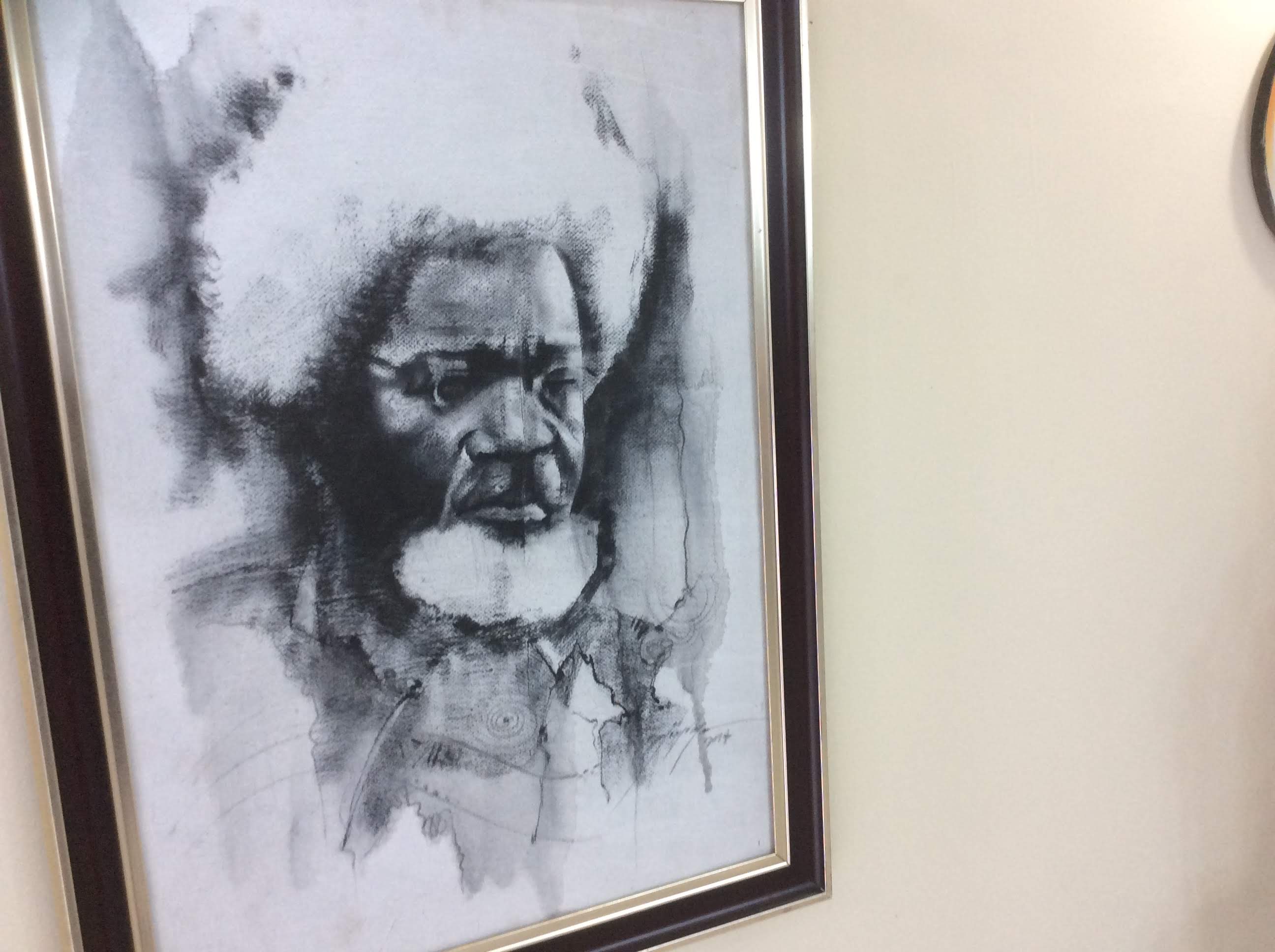
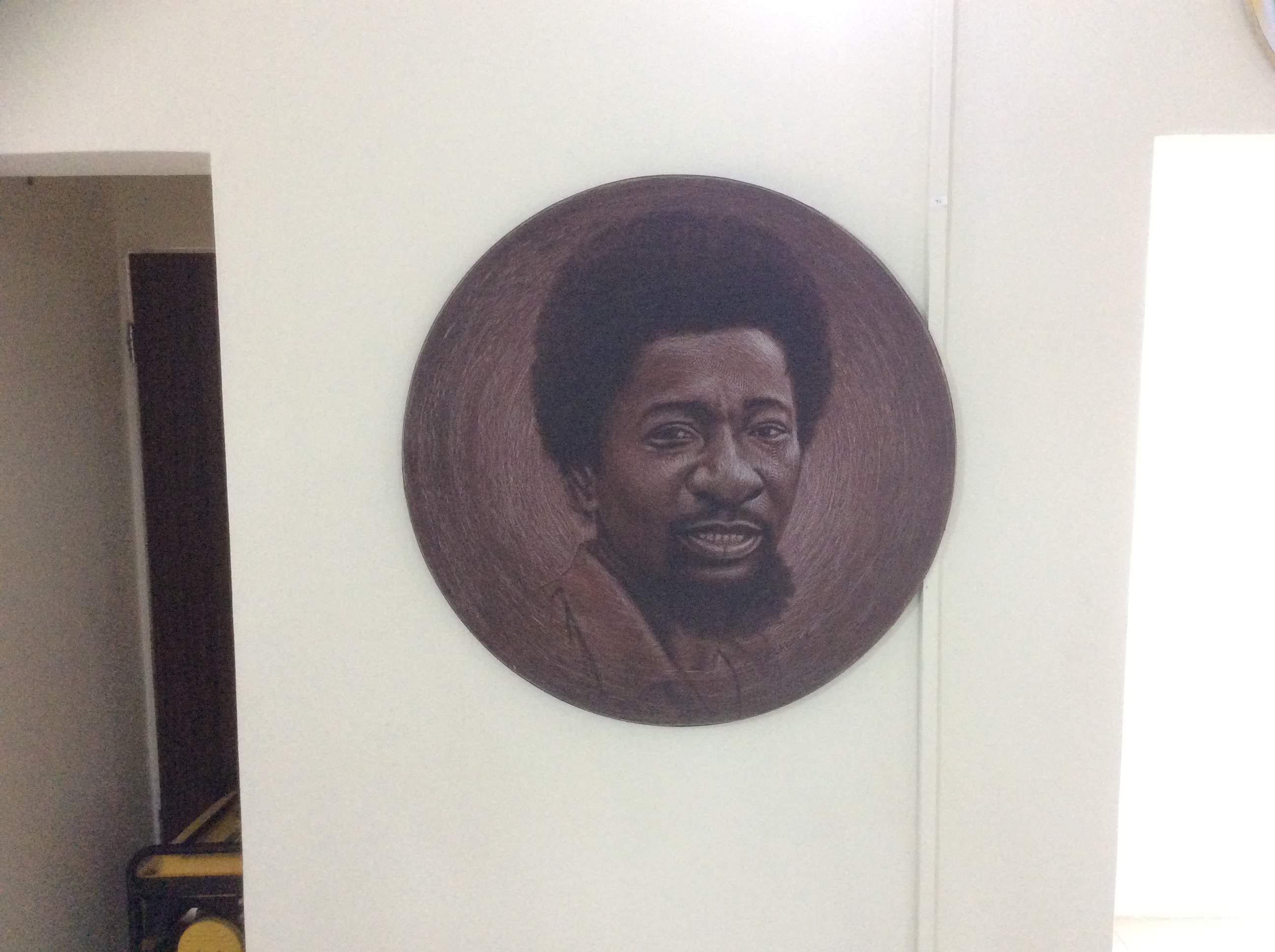
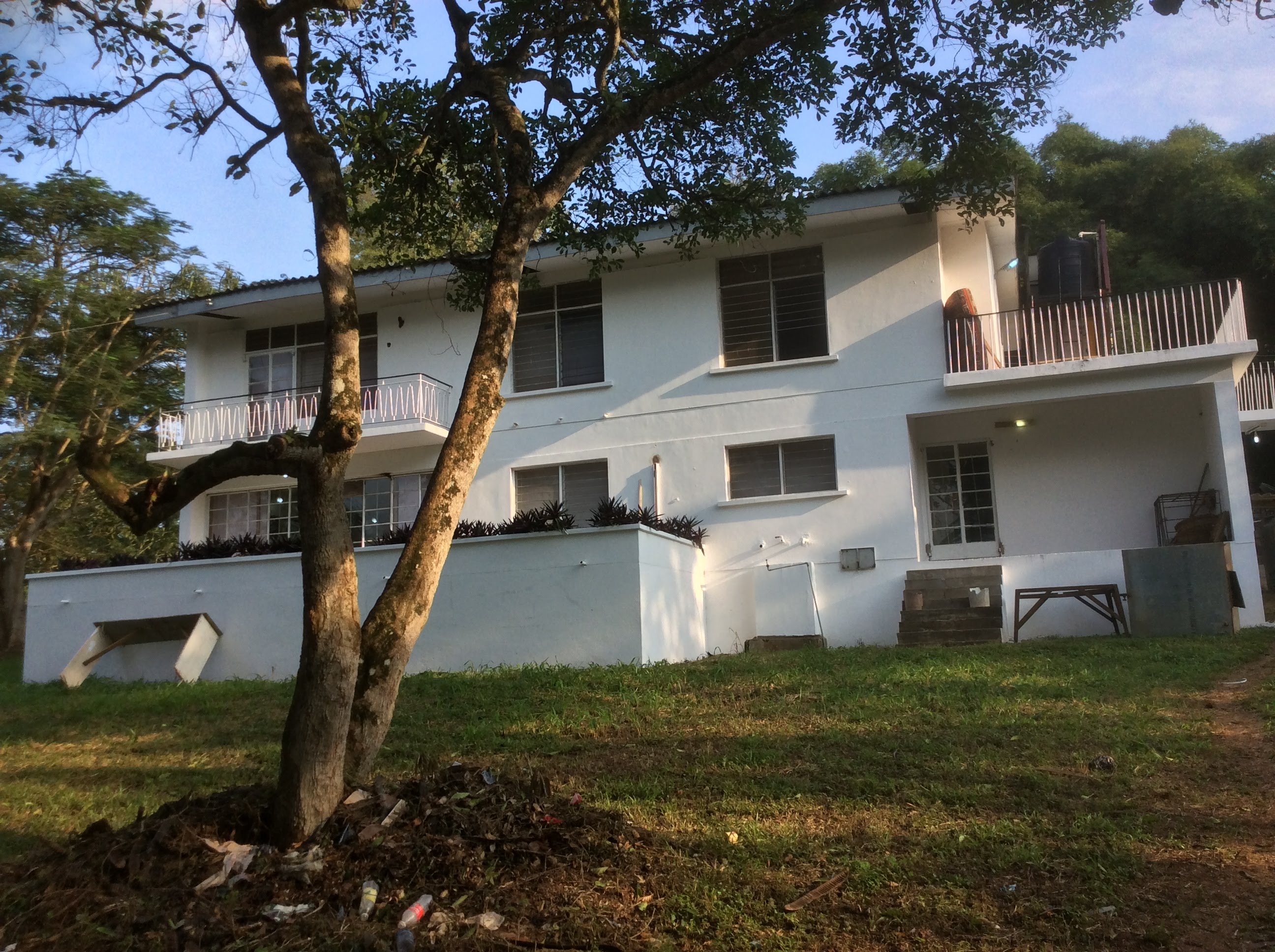
Located near the base of an impressive hill covered in thick foliage, the house, built in the simple but elegant style of other nearby structures created for the use of university staff, stuck out in white, decorated by murals portraying the Nobel Laureate in many different states. At the entrance, on top of a constructed covering, supported by metal poles, is a larger-than-life concrete bust of Ṣóyínká himself starting towards the Vice-Chancellors lodge.
The house used to be yellow (see old pictures here), like other buildings in these staff quarters. The new white painting and decorations are a distinctive feature to mark it apart as not just any other residential property in the area. The house has now been adopted by the Ògùn State Government as a museum and artistic/exhibition space about the life of Africa’s first Nobel Laureate in Literature and famous indigene of the state and former member of staff at the university. In itself, this is an impressive and long overdue endeavour. In other parts of the world, important buildings of this nature are regularly turned into historical sites, creating great cultural value, and bringing tourists from across the world, which in turn generates funds to keep the structures perpetually maintained, to serve as valuable institutions to the preservation of memory and values of the celebrated heroes.

[Read about my visit to the Mark Twain Boyhood Home in Hannibal, Missouri here here, and here]
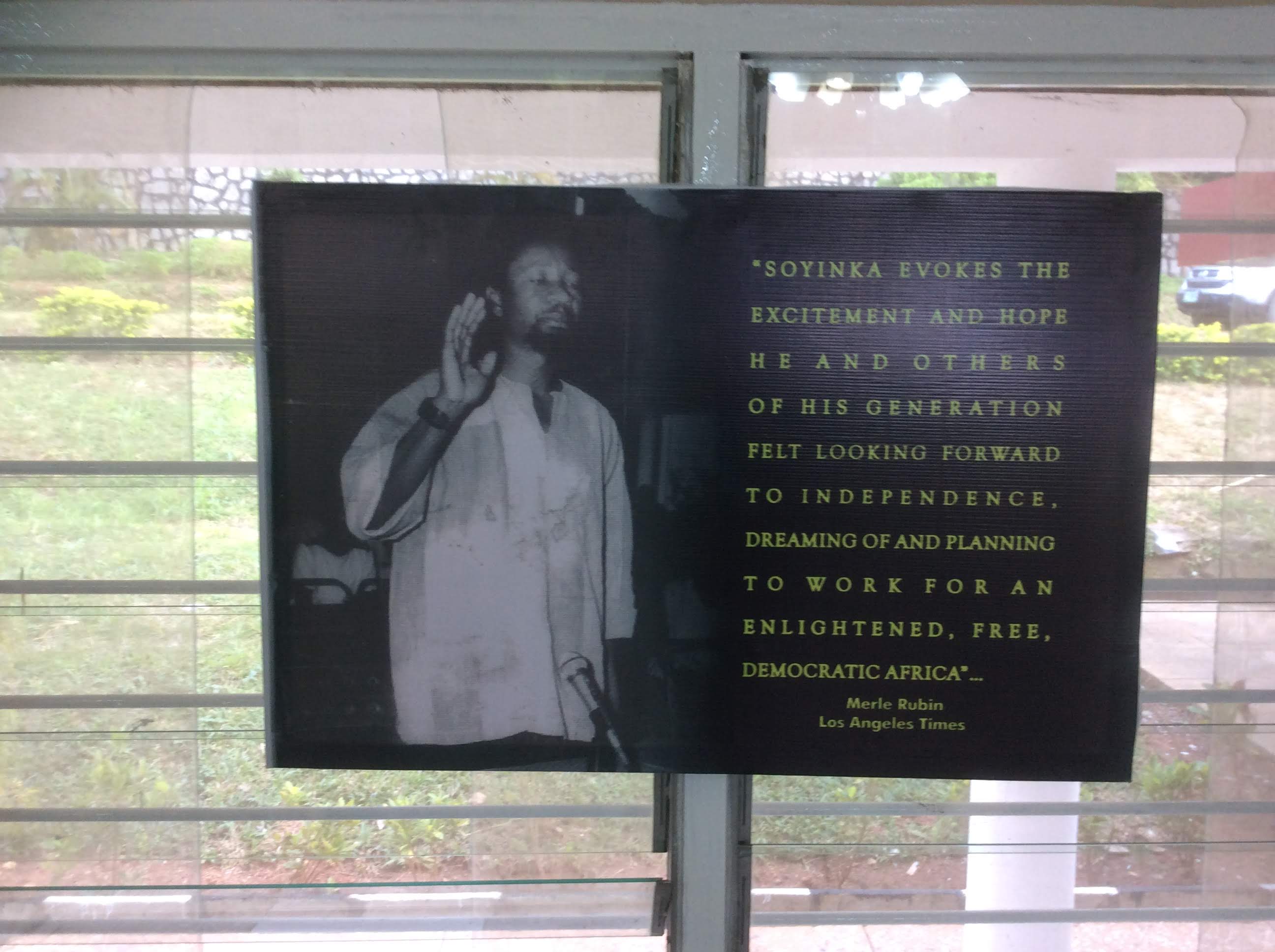
 

This location, I thought, was actually quite interesting. The rumours I grew up around had it that at some point in his career as a Professor of Theatre, WS was in the running to become Vice-Chancellor of the university himself. He has strongly refuted this in an email to me, writing “I have NEVER contested or even desired any administrative position in my entire career at Ifẹ̀ or any other institution in the entire world.” This makes sense, or it would have made for some awkward interaction with whomever had won the tussle living right across from him on campus.

According to the pamphlet handed out to us as we walked through, Professor Ṣóyínká left the University of Ifẹ̀ in 1986 after having “spent about 24 years” on the staff roll. That means he joined in 1962. I’ve found this record a little conflicting with the reality that the dramatist-professor was also the head of the Department of Drama at the University of Ìbàdàn from 1967, shortly before he was arrested for visiting the breakaway Biafra, to 1970, a few months after he was released from jail. So, either he first went to Ifẹ̀ (then located in makeshift buildings in Sango and Sámọńdà areas of Ìbadàn before this permanent site in Ilé-Ifẹ̀ was opened), then returned to Ìbàdàn and then went back to Ifẹ̀ after he left jail, or we have got the records wrong. It will be nice to have this all straightened out.
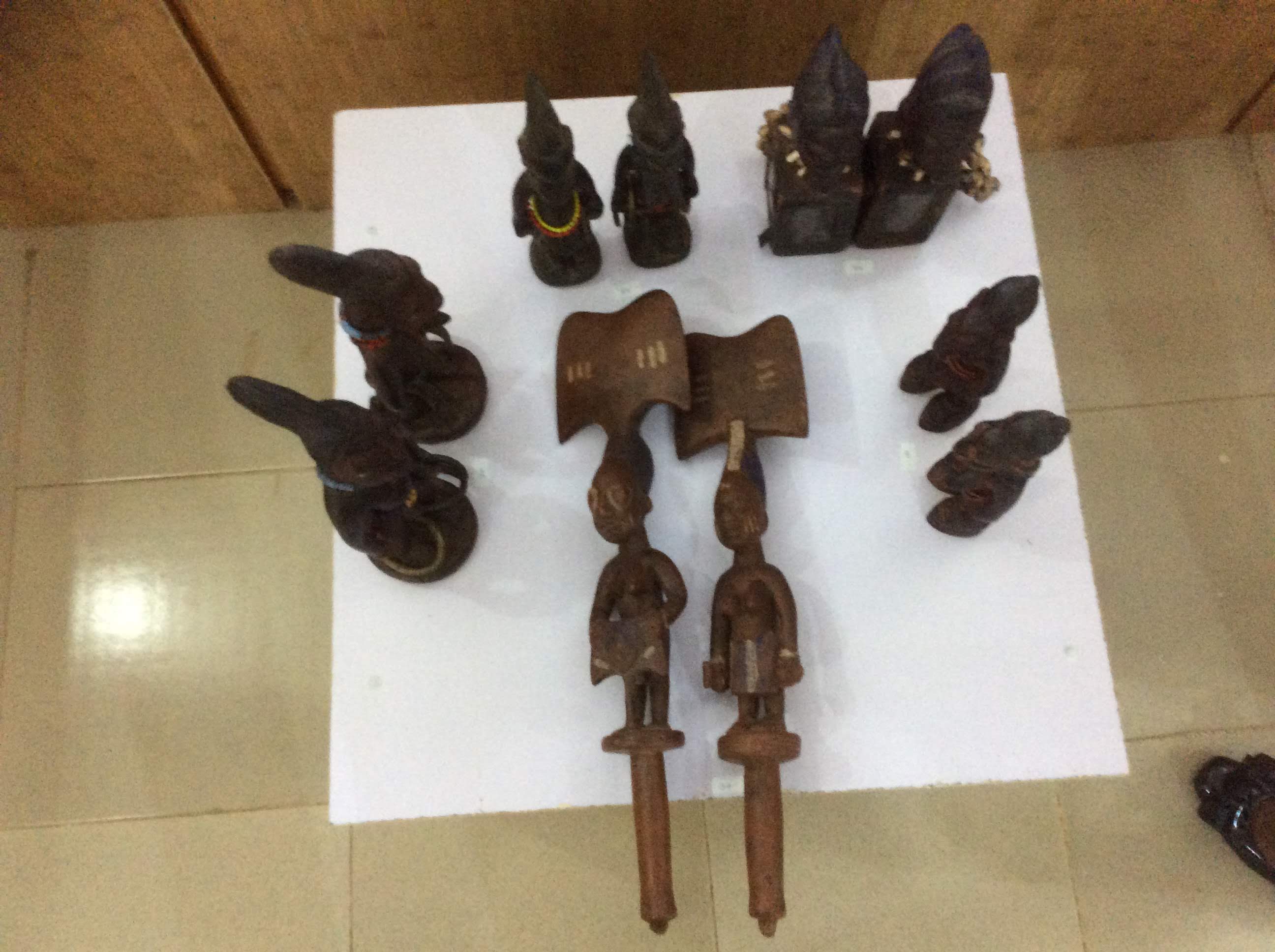
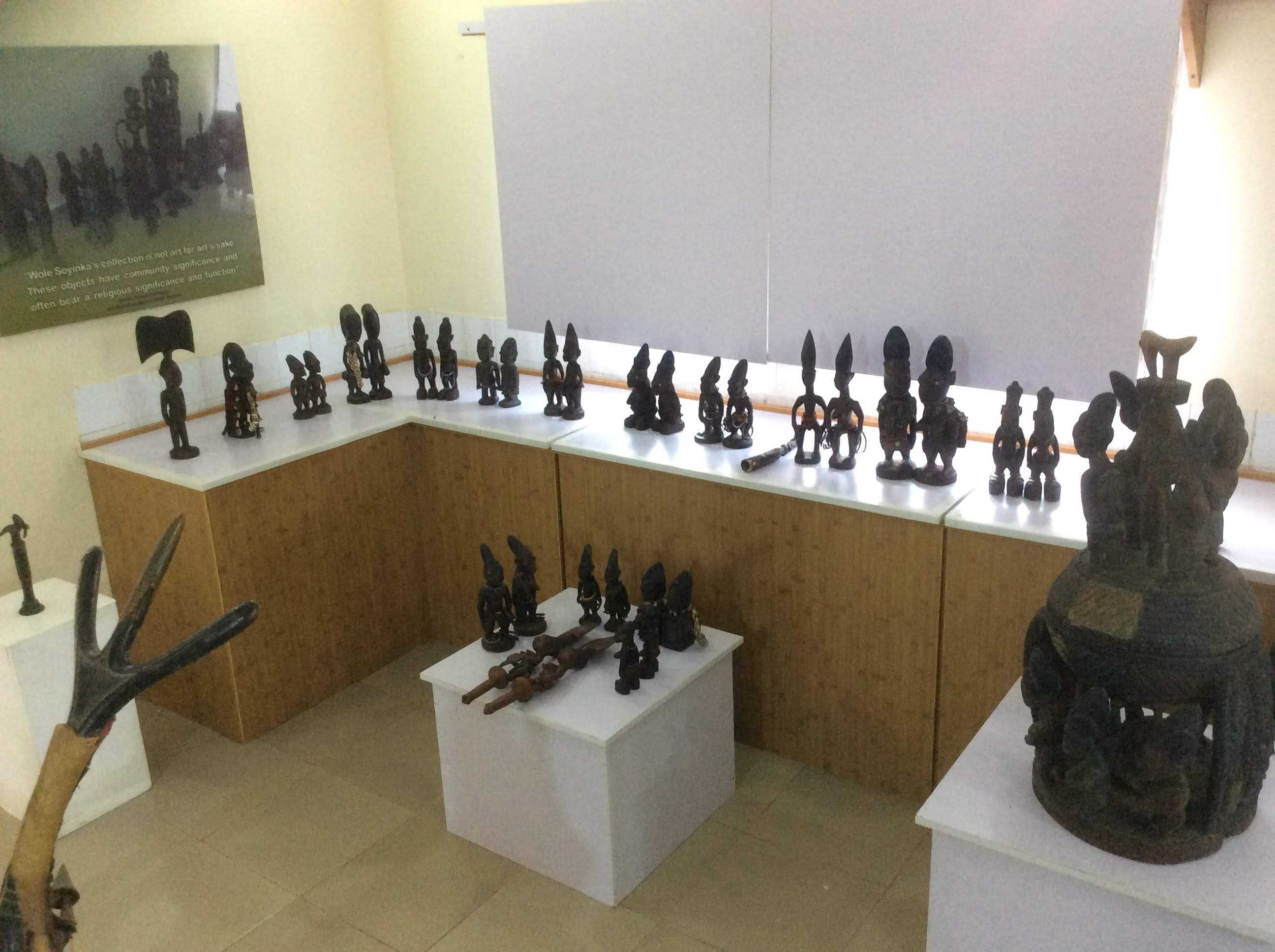
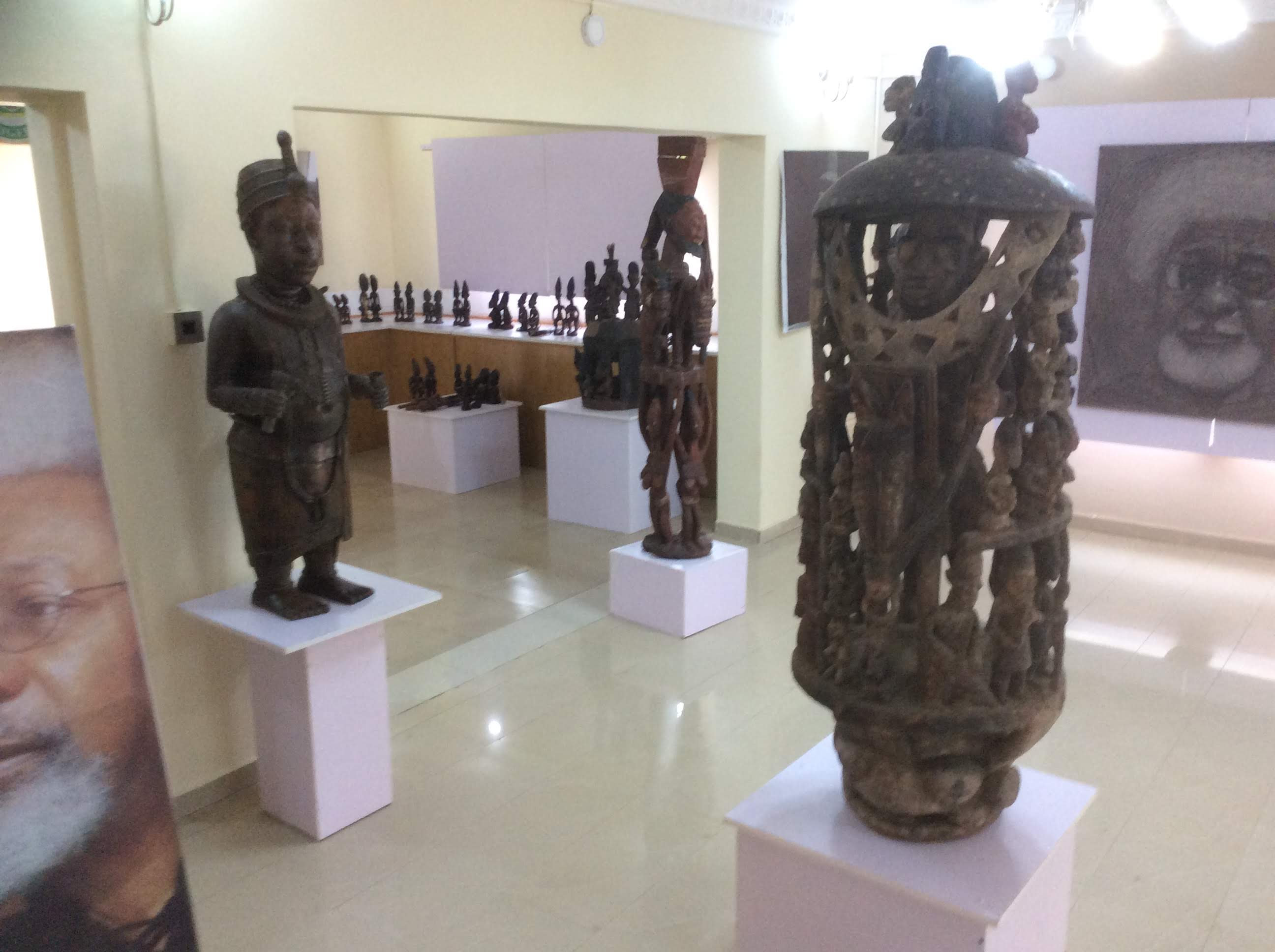
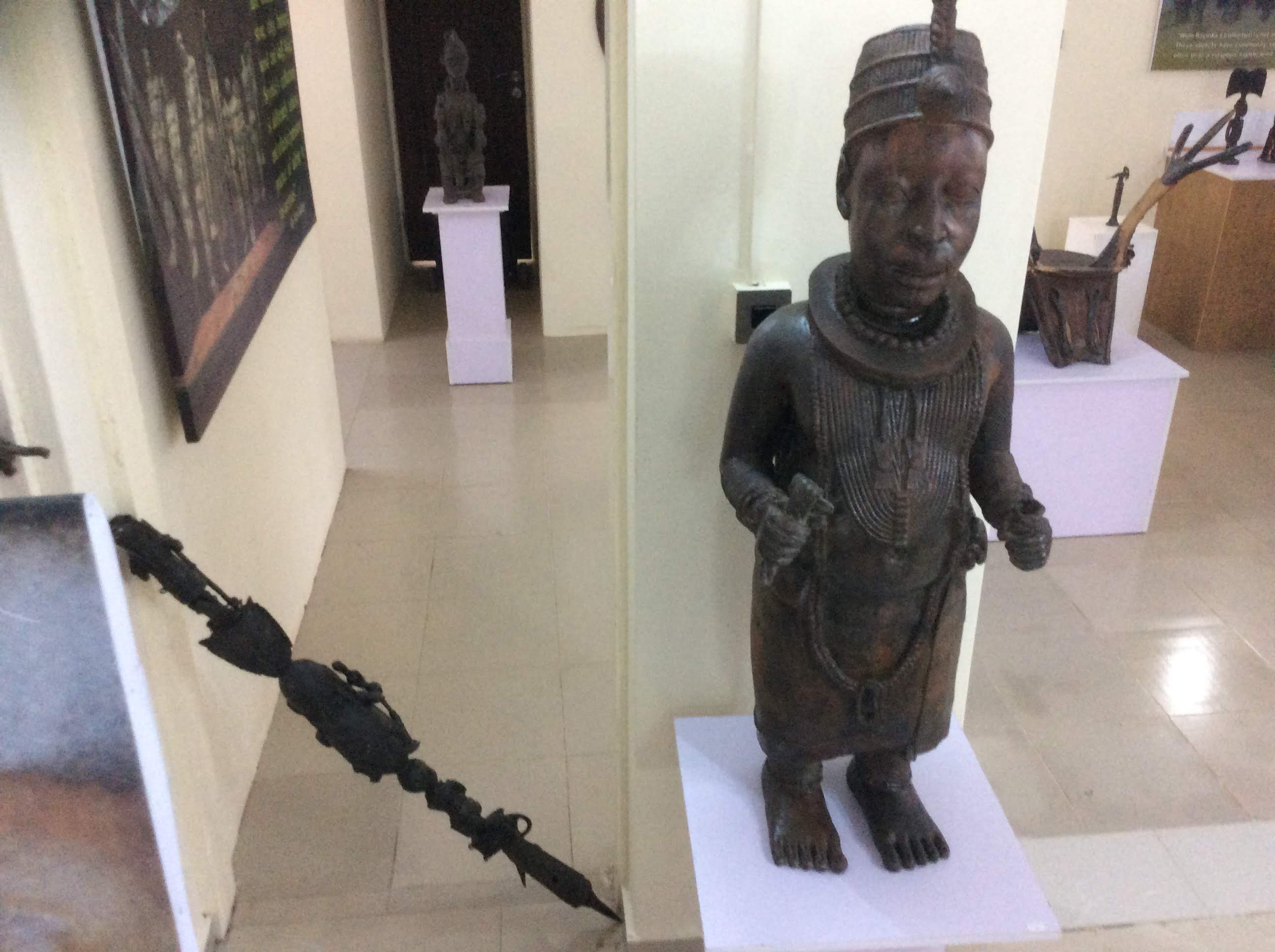
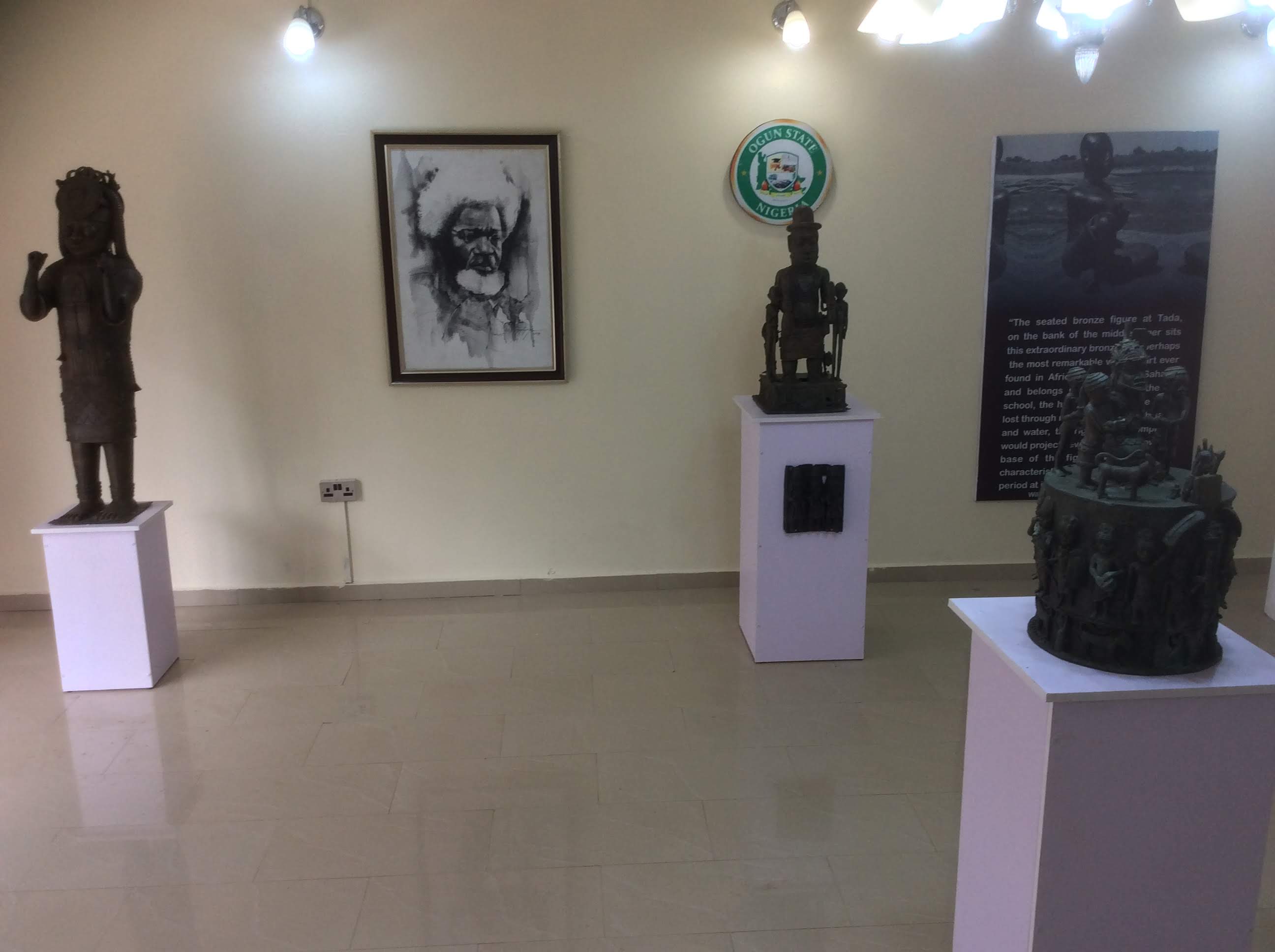
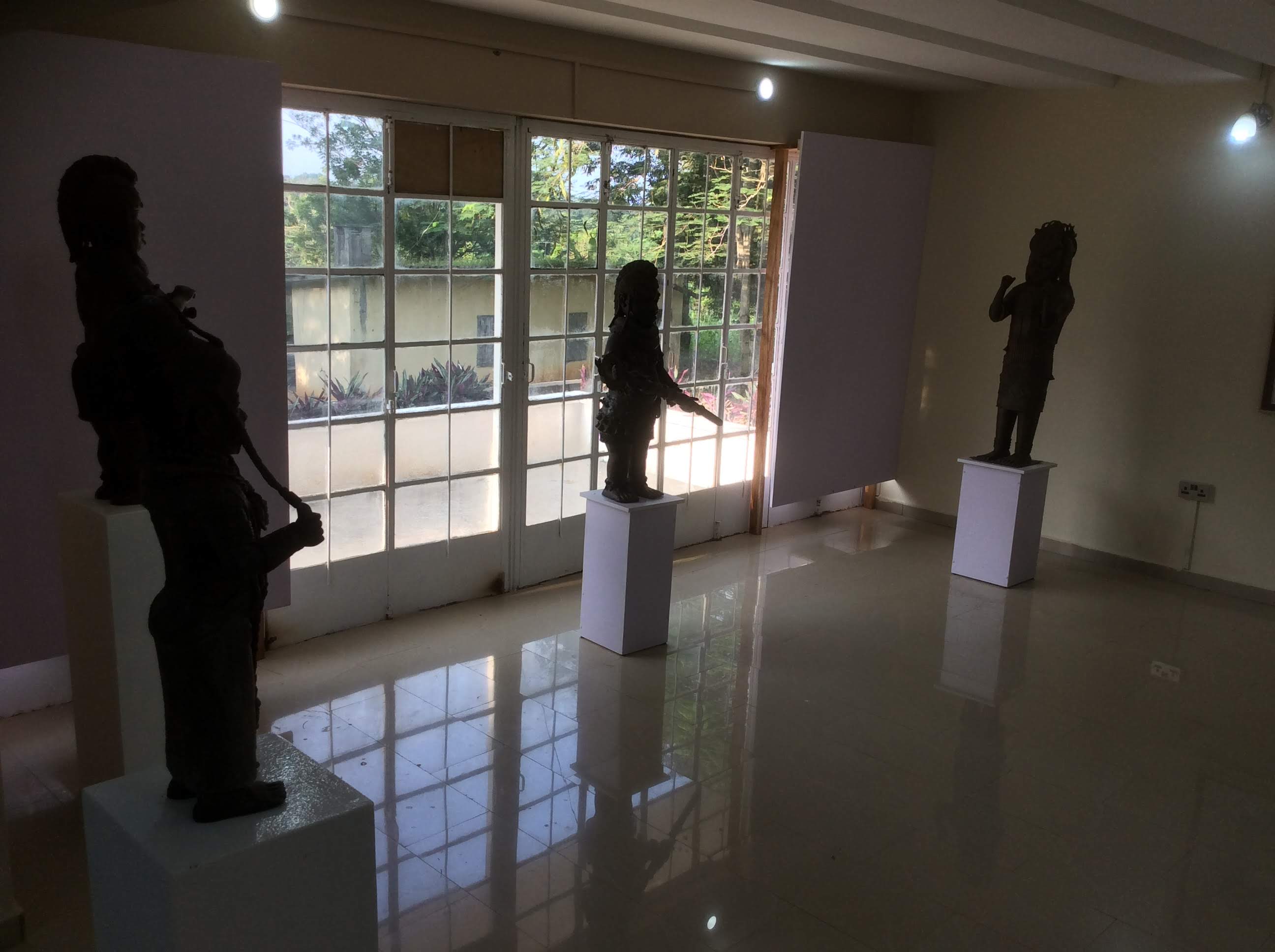
Speaking of records, the ostensible purpose of the Museum is to create ‘an academic and tourism destination’ around the writer’s life, work, and passions (including hunting), yet the only thing here, at the moment at least, are a collection of carvings and other artworks belonging to, collected by, or created around Wọlé Ṣóyínká. Nowhere in the building are directions to what each room used to be: this is WS’s former study. This is where he wrote The Road. This was his work typewriter for many years. This is the room where his children so-and-so used to live. And here is an old manuscript of Lion and the Jewel, with handwritten notations in-between the lines. etc. Maybe being in the presence of his artistic aura around the building and his art collections was supposed to be enough for the visitor. It wasn’t. There was a prevailing sense that a lot more context will need to be added to make it a true museum of the writer’s illustriious career.
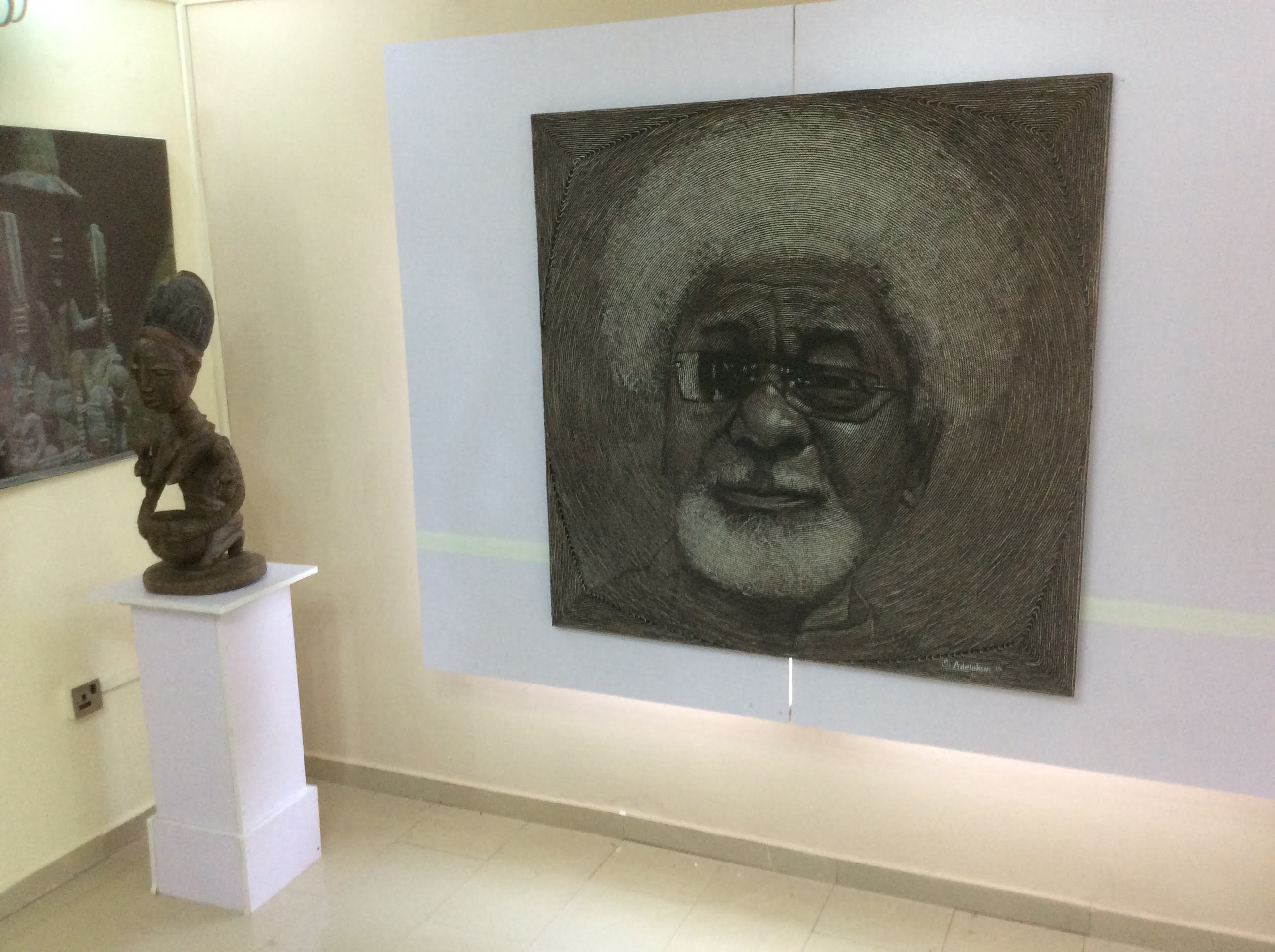
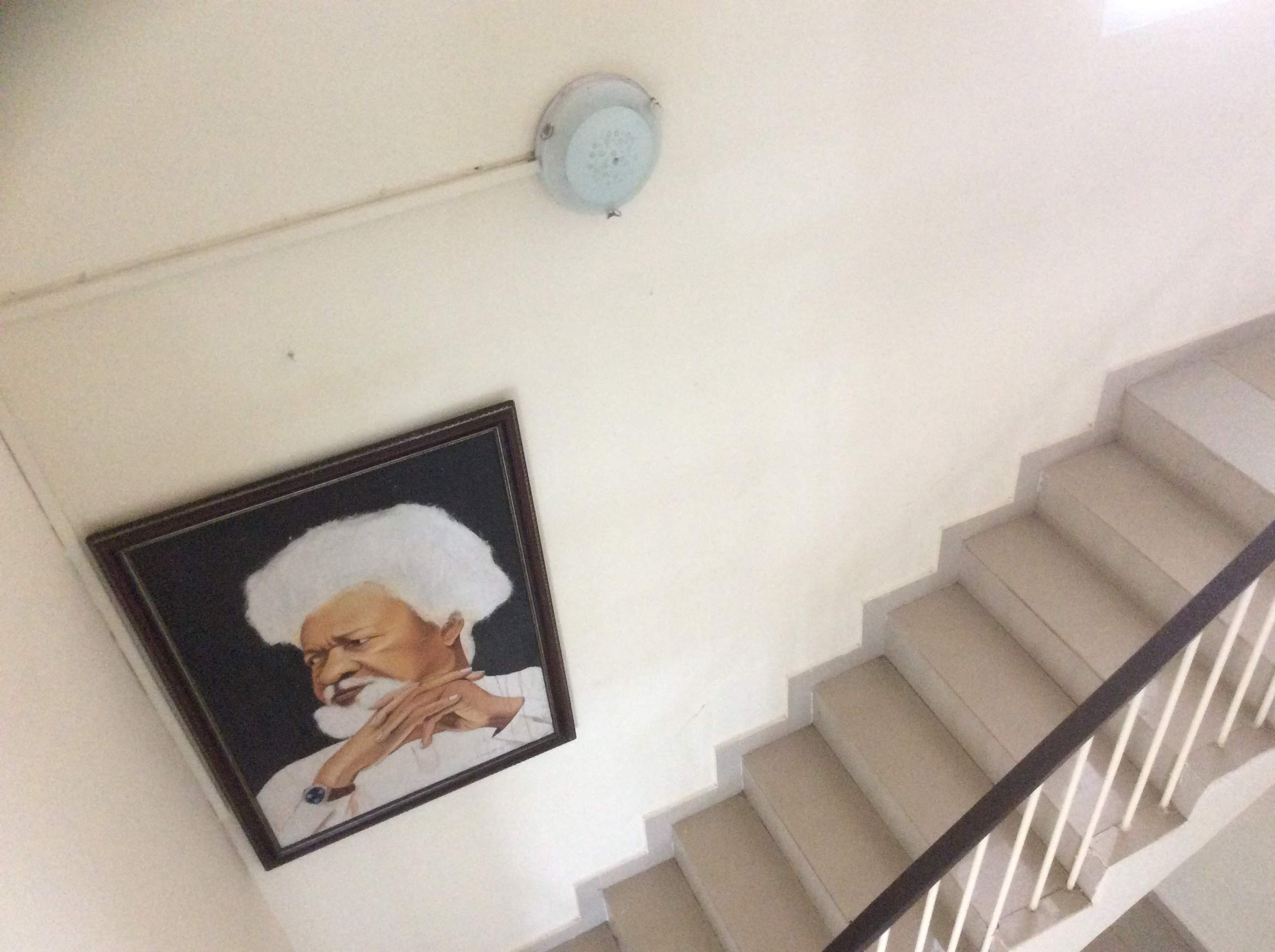
At the moment, it is simply an exhibition space, filled with an impressive collection of art from the many corners of Nigeria, collected and preserved over many years. Won’t it be nice to have the structure turned into a real-life manifestation of the creative imagination of the writer’s theatrical and poetic ouvre? At Hannibal, one could pretend to whitewash a picket fence just like Tom Sawyer did in the writer’s famous novel. One could walk around the museum, and around downtown Hannibal like a character in Mark Twain’s early works. One could also visit a gift shop and buy books and other collectables related to the author. The ‘Boy’s Quarters’ of this Ṣóyínká Museum would be a good place to turn into a gift shop if the desire so manifests. Or, perhaps, this will be the case only when Ṣóyínká’s childhood home in Abẹ́òkuta is finally acquired for a more permanent artistic purpose.
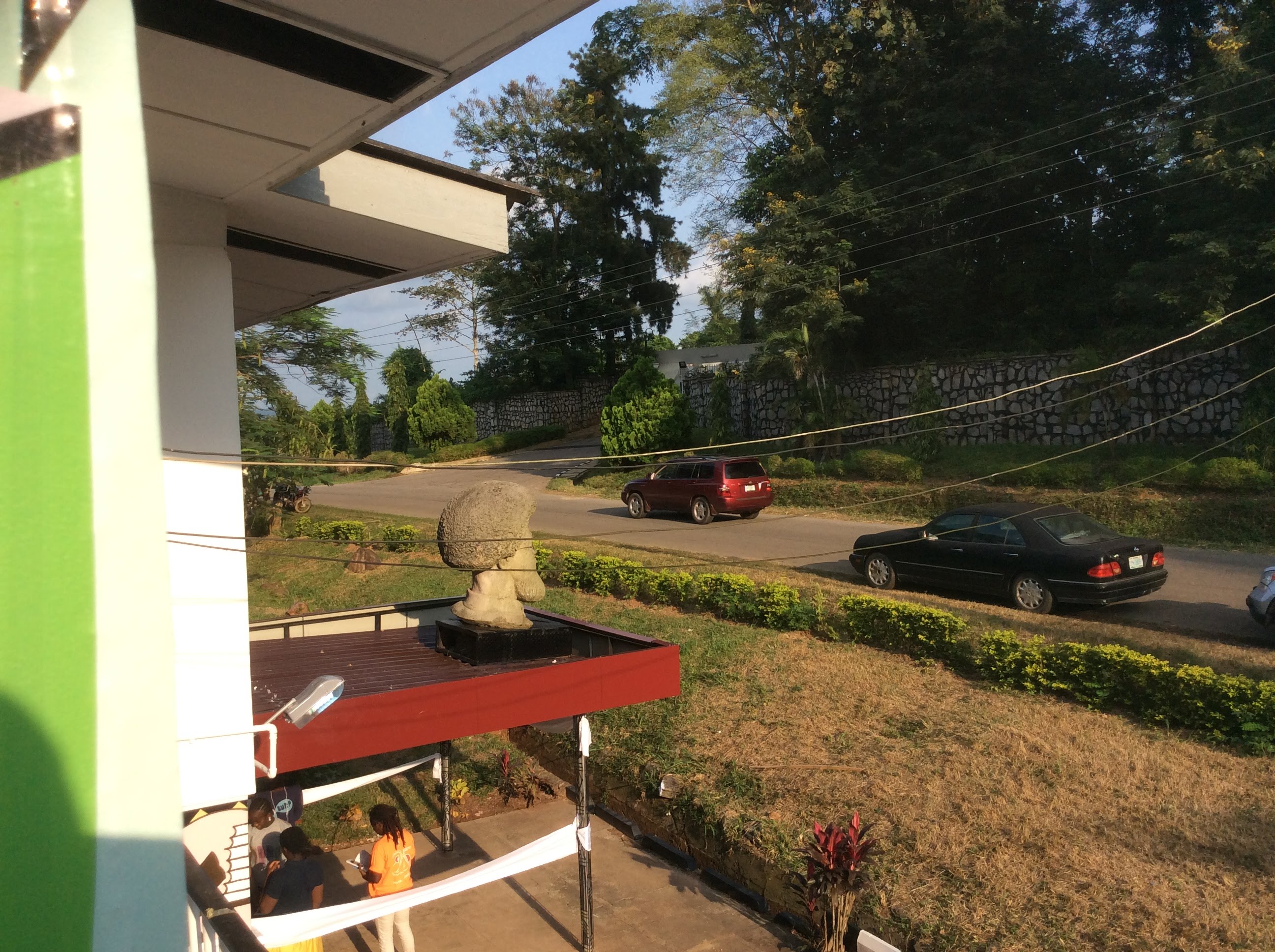
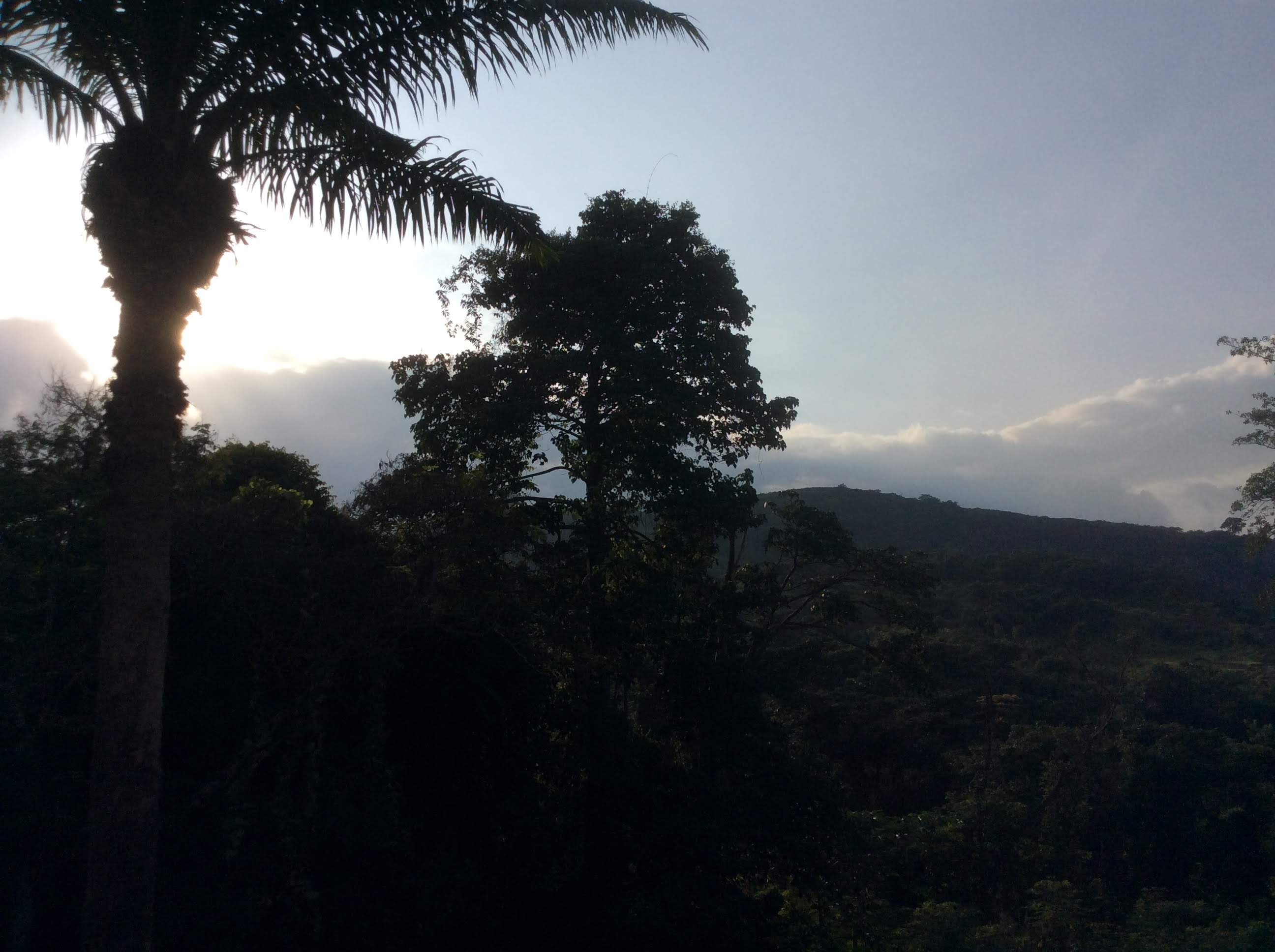
The grounds on which this museum building in Ifẹ̀ now stands will make a good venue for festivals, open literary fairs, and other artistic events. The view of the hills, glorious in the setting sun, is a delightful sight from the balcony, even when blocked by a lone palm tree that one can assume has had an illustrious life as a sater of creative thirst through the production of palm wine. One can easily imagine its former residents walking around it on cool evenings, setting traps for wild animals, or venturing into the adjourning thicket, up the hill, for a hunting expedition. Easily imagined as a venue for future writer residencies as well, there is a lot of understated potential for the project. One is glad, at least, that it has begun.

Wetin Dey? Nigerian Pidgin and Its Many Pikin

‘Better soup na money kill am’ | Good things don’t come easy

‘E don tey wey nyash dey for back’ | There is nothing new under the sun

‘Cunny man die, cunny man bury am’ | It takes a thief to catch a thief

‘Na condition make crayfish bend’ | Hard times encourage adaptation

Over 500 languages are spoken in Nigeria today, according to most accounts, although many of them are dying, endangered, or extinct. Three major languages spoken more widely than others are Hausa in the north (with about 70 million speakers), Igbo in the east (with about 24 million), and Yorùbá in the west (with about 40 million speakers). Other languages include Edo, Fulfude, Berom, Efik, Ibibio, Isoko, etc. Because of the multiplicity of languages in the country and the need to communicate among different ethnic groups, English, or Nigerian English, has served as a connecting tissue, but only in formal circles: schools, government, courts, etc. In the informal sector, however, where most Nigerians function every day, in the markets, on the streets, at restaurants, Nigerian Pidgin (NP) has emerged as a crucial and important feature.
Nigerian Pidgin doesn’t have its roots in English, but in Portuguese. In about 1456, when the first Portuguese ship reached Senegal via the Gambia river, to Sierra Leone about four years later, and other parts of the region in due time, they made contacts with famous kingdoms like Benin, Ghana, Mali, Songhai, etc. Benin at the time, now in present day Nigeria, was said to be one of the oldest and most highly developed states in the coastal hinterland.

To trade with these kingdoms and establish a cordial relationship beneficial to both parties, a mutually intelligible language had to be employed. It is unclear what kind of Portuguese these sailors spoke, but it is possible (and even likely) that they spoke a crooked and unrefined one, also befitting of that societal class of illiterate seamen. The contact of that pirate-type ship-lingo Portuguese with the language of the coastal Africans resulted in what eventually became Pidgin, and later Nigerian Pidgin.

At the time, however, it was a mere contact language, retaining elements of both cultures, enough to facilitate communication along with hand gestures and other universal signs. But it got the job done and helped cement the relationship between the seafaring Portuguese and the West African kingdoms. So that when the British showed up hundreds of years later, they found it easier to communicate with the indigenes, through a later variation of this language which, likely, had undergone sufficient evolution. This later contact with the British, via the slave trade, missionary invasion and colonialism further improved the intelligibility of the language, with English words added to supplement the earlier Portuguese ones.

The use of the word ‘pidgin’ in identifying the language as it exists in Nigeria today has added some confusion to understanding its current state. To linguists, a language is a pidgin only in the initial state of its creation, when it serves as the lubricating vessel of communication between two strange peoples (in this case, between the early Europeans and Africans). After a generation of contact, the language begins to evolve, with words and phrases from either language and others, introduced to flesh out the skeletons and give the language a unique character. At this stage it stops being just a ‘contact language’ and becomes a living one. We call this stage ‘creolisation’.

The creolisation of Nigerian Pidgin happened gradually, with the adoption of the language not just as a contact lingo with Europeans but as a native language of contact and of trade with other ethnic groups in Nigeria. This is the characteristics of the language that helped it become the most used language in the country by the time it got independence from the British in 1960. By then, coastal communities, though with other native languages of their own, had adopted NP as a full native language and spoken it among themselves and to their children.

The syntax of Nigerian Pidgin is similar to the local West African languages than the European ones. That probably explains why it used to be called ‘Broken English’, or ‘Broken’ for short, when it was perceived to be a language of the unschooled, unsophisticated people, a language spoken by those unable to grasp the complexity of English. To say ‘I am leaving’ in NP, one would say ‘I dey go’, which is a lean and simple rendering of that basic action. ‘I will be right back’ is rendered as ‘I dey come’. This simple syntax, covered with the fleshing of English, makes it easy to use by Nigerians who eventually adopted it as a local language.

However, Portguese still has some influence. Words like sabi and pikin, which came from Portuguese ‘saber/sabir’ and ‘pequeno/pequenino’, words for ‘know’ and ‘little child’ respectively, have remained in NP, to mark the true origin of the language. So, for example, ‘You sabi dat pikin?’ means ‘Do you know that child?’ As you’ll notice, the pronunciation has also evolved as well, so that a ‘th’ is pronounced instead as a ‘d’.

There are also many different dialects of Nigerian Pidgin today, depending on where it is spoken. Because words are borrowed from each of the languages that have influenced NP – words like àbí (a question marker) and ṣé are more common in the west, while words like nna and unu come from Igbo in the east. The Niger Delta has the highest concentration of NP speakers and here the version spoken is widely regarded as the most authentic form, sometimes as a first language. Places like Sapele and Benin are regarded as norm-producing communities, where the language has the most root and influence.

And of course, because of the diasporic migration of Nigerians to other parts of the world, there are more refined NPs spoken today across the world, from Peckham to Chicago, Houston to Baltimore. They are not markedly different from the Nigerian versions, except in accent, influenced by their new environments and company.

It is estimated that NP is the most spoken language across the Nigeria today, spoken as a first language by over 30 million people, and as a second language by the rest of the country (about 140 million). However, the language has never enjoyed the respect of the country’s elites. It currently has no official status and is neither used in education, or governance. But in the early 60s, through the efforts of early Nigerian writers in English like Wọlé Ṣóyínká, Chinua Achebe, JP Clark, Ken Saro Wiwa, and Cyprian Ekwensi, fully formed Pidgin-speaking characters were introduced to Nigerian literature. This helped elevate the language a bit more into the mainstream.

In Nigeria today, NP functions in informal capacity, lubricating contact and communication between people of all classes, gender, ethnic groups, and educational status. It is the language of the streets, and of uneducated market women in cosmopolitan cities. The flavour infused in each expression from the speaker’s original ethnic background continues to enrich the character of each individual output.

Where NP has dominated, however, is in the informal sphere of television and radio entertainment, in Nollywood and the Nigerian music industry, which reaches not just all Nigerians, but also most Africans. Fẹlá Kútì, the inventor of Afrobeat, played no small role in mainstreaming Nigerian Pidgin through many of his hits like Follow Follow, Trouble Sleep Yanga Go Wake Am, Teacher Don’t Teach Me Nonsense, etc. On the streets of Nairobi, Johannesburg or Accra today, one is likely to hear ‘Wetin dey?’, ‘Wetin dey happen?’ or ‘How far?’, or any one of NP’s common greetings (meaning: ‘What’s up?’, ‘What’s going on?’, ‘How’re you doing?’) even in the mouths of non-Nigerians. This has happened through the influence of Nigeria’s entertainment industry.

In 2009, a ‘Conference on Nigerian Pidgin’ at the University of Ìbàdàn proposed to drop the name ‘pidgin’ altogether, and call the language ‘Naija’, a nickname once reserved for referring to the country in an endearing way. This has not caught on beyond those academic circles, and it likely never will because of the tension between what the academic intervention represents (stiffness) and what NP truly is (dynamism). It is the jolly playfulness, accessibility and musicality of NP that continues to help convey the convivial spirit of Africa’s most populous country, along with colours and sound, to the rest of the continent.

________

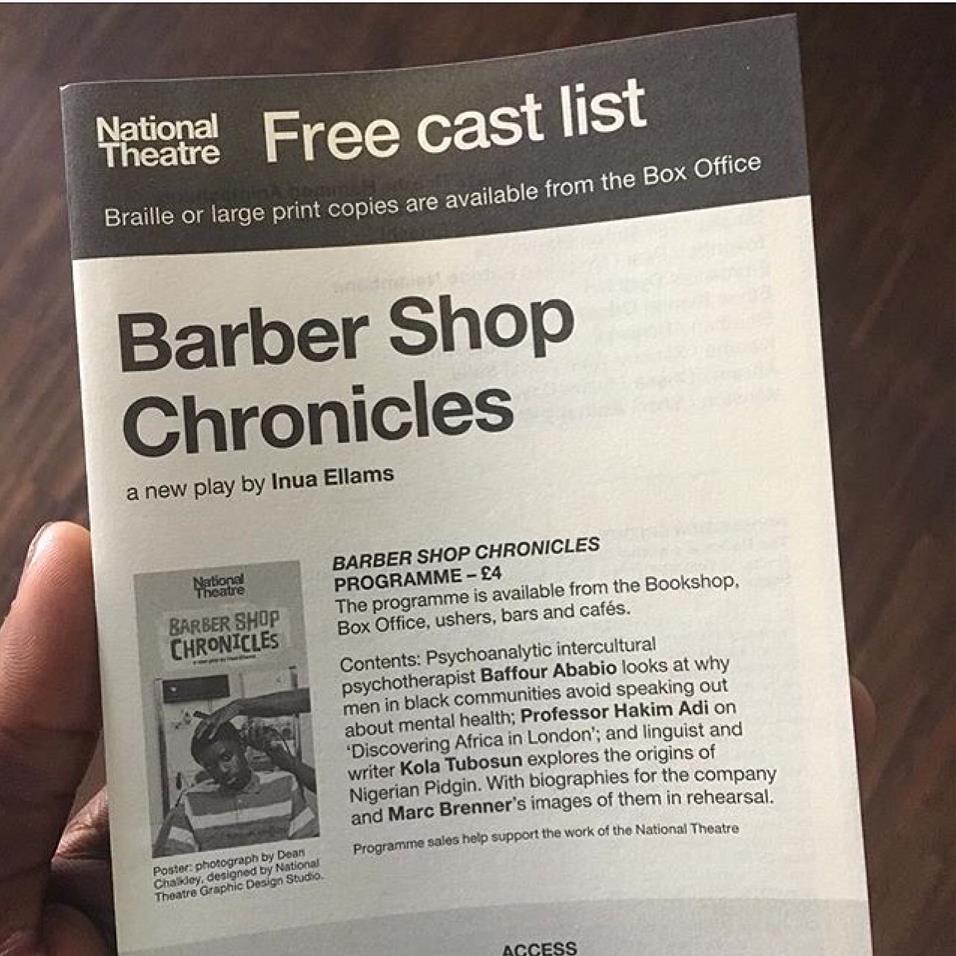
First published by the National Theatre, London, as companion to the play Barber Shop Chronicles by Innua Ellams, showing from May 30, 2017. The reference to Ken Saro-Wiwa and Fẹlá Kútì, added later, regretfully did not make it into the original text.

________

References

Book Signing for Sefi Atta’s “Selected Plays”

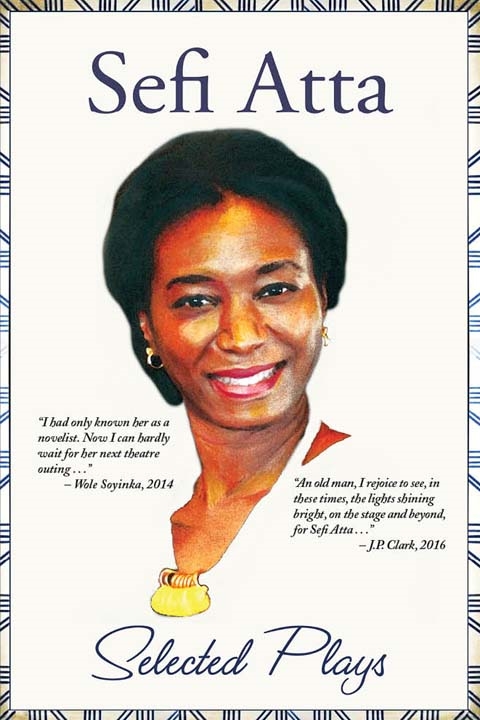
Save the date! On on Sunday, May 7, 2017, Nigerian writer Sefi Atta will be signing her new book of Selected Plays at the Art Gallery, Freedom Park, Lagos.

Those familiar with her work will know that the author has been known mostly as a novelist. Her third book Everything Good Will Come won the 2006 Wọlé Sóyínká Prize for Literature. Yet, her work credit includes a number of stage plays most of which have been produced and staged in Nigeria and overseas.

Credits for her work in drama include both for the stage and for radio. The Cost of Living (2011) and The Last Stand (2014) were produced at Terra Kulture in Lagos while An Ordinary Legacy (2012) and The Engagement (2005) were staged at MUSON Centre. The Naming Ceremony (2012) and Hagel auf Zamfara (2011) were both staged at the Theatre Royal Stratford East London and Theatre Krefeld Germany, respectively.

She has also done a lot for radio, including The Wake (2013) for Smooth FM radio, A Free Day (2007), Mákinwá’s Miracle (2004) and The Engagement (2002) all for BBC Radio.

The public book signing will take place from 5 p.m. to 7 p.m.

Three Days of Madness at the University of Lagos

By Péjú Láyíwọlá

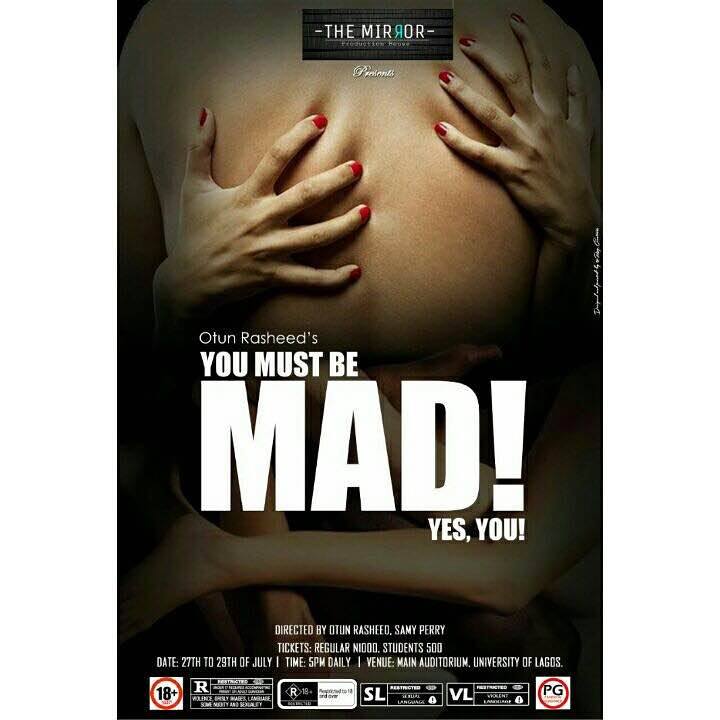
madI was first captivated by the posters and then I was warned not to watch the play because of the high level of vulgarity shown on stage. I braved it and opted to watch it on the second day of the three days that it was shown at the Main Auditorium, University of Lagos. Truly, if you survive the first few minutes of the play, you are likely to sit through this very captivating and bold attempt by a talented young playwright, Otun Rasheed, to shock, provoke, challenge, incite, and stir all manner of emotions through this breathtaking 70 minitues play. Given the very diverse critique of this play, one thing remains clear: sex is a tabooed topic in Nigeria. People prefer to talk about it in private spaces and not see themselves on stage.

You must be mad, Yes You! is the title of the play. While some might quarrel with the title, I think it is apt because really we live in a very mad world! It is a world full of paradoxes. The play was laden with foul language. The stark show of sexual pleasure and the rigorous scenes of obscenity and eroticism would make you cringe! But the message is loud and clear at the end: the level of promiscuity in the Nigerian society is high but largely ignored. Parents delude themselves by thinking their children are ‘holy’ and would not indulge in sex in this highly virtual and visual world of the internet. Infidelity, fornication, incest, pornography have become the order of the day. The level of incest within families is so high that you would be shocked. A few years ago, I attended a popular monthly camp meeting. When the altar call was raised, I was shocked at the number of people involved in incestuous relationship come out for prayers.

The cast comprised students of the Department of Creative Arts. Otun Rasheed is a lecturer in the department. What great mentorship! But does he represent the views of the Department or does he make any reference to it in any way? No! It is unlikely that such a play would see the light of day were it presented as an academic project. It is also not likely to receive a research grant. Yet, the academy should be a crucible for such phenomenal thinking.

Many thoughts crossed my mind while watching. Some of these discussed below reflect, in part, views of some of my colleagues when we discussed.

Why are people more likely to accept visual images of eroticism rather than a play with a similar theme? What role does sound and movement play in accentuating a message?

A bit of diversion: About eleven years ago there was a half nude life-sized female figure in the courtyard of the Visual Arts unit of the department. She was bare chested and wore a very well sculpted g–string that had a butterfly as motif on what I would consider the most significant part. A former Head of Department (also a visual artist) could not understand why that work should have been made. We all lived comfortably with the work for a long time. Over time there were signs of wear and tear on the nipples and lips of the figure. Several months later, the work collapsed. When I asked the students what happened they jocularly said. ‘She was raped and murdered last night and the case had been reported to the state CID’. Investigations are still ongoing till now.

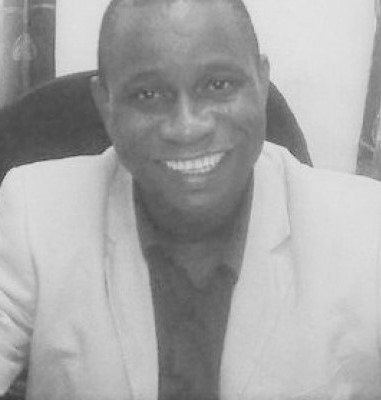
Ọ̀tún Rasheed. Photo taken from Encomium Magazine

Ọ̀tún Rasheed. Photo taken from Encomium Magazine

Religiosity and fanaticism becloud our judgment. I was told that some of the staff in solidarity rushed to watch the play only to run out after five minutes. They couldn’t handle it. Jesus! Armageddon! This is Satan at work! The devil is a liar! This playwright must be mad! Yes, Otun Rasheed is mad! We were told in our elementary theatre class that theatre is make-belief. Yet, there is a meeting point between reality and fiction. Outside the performance, can I look at the most vulnerable of the cast without casting my mind back to the acts of violation on stage? Perhaps the change of cast for each production helped mitigate this.

Tunji Sótimírìn is concerned about the very graphic scenes and the perception of parents who are only just accepting theatre arts as a field of study. Are parents likely to allow their daughters study theatre arts after seeing such a play? As a former Head of Department, I have come to realize that the passion for some of these students far outweighs the choices of parents. I have seen students cry when offered courses other than theatre arts. Every new entrant into the Theatre Arts Department believes, and rightfully so, that he/she would succeed and surpass the achievements of former alumni and alumnae of the department. Several of them abound – Moceda, Stella Damassus, Fẹ́mi Brainard, Mercy Aigbe, Dáre Art Àlàdé, Fẹ́mi Oke, Wọlé Òjó, Helen Paul, Ọmọ́wùmí Dàda, Sambassa, Sẹ́gun Adéfilá and others too numerous to list. The successful careers of their forbears in the entertainment industry looms larger than the sentiments expressed by some parents. We are thankful for such great mentorship since the days of cultural studies. Both students and lecturers have enjoyed such great tutelage from Prof Ẹ̀bùn Clark, Prof Dúró Òní, Prof Àbáyọ̀mí Barber, Prof Délé Jẹ́gẹ́dẹ́ , Prof Alagoa, Prof Anthony Mereni, Prof Bọ̀dé Osanyin, Alaja Brown and Túnjí Ṣótimírìn. It is from this tradition that Otun Rasheed has emerged.

Many questions arise, a number of which I cannot answer: What role does theatre play in the society? What was the message of this play. Was it meant to be a corrective measure? Must theatre always have a message? To whom was this play directed? What binaries does this play throw up.

There are many points at which this play succeeds:

a. The use of space was amazing. Like an owl, the audience found themselves turning three sixty degrees. Many of the cast were seated amongst the audience and the audience were literally brought onto the stage. The stage could not contain the depth of actions Otun Rasheed offered. I also like the use of light and the special effects on the stage particularly in the opening scene.

b. Great publicity. Every day was a new message urging you to watch the play. The t-shirts and posters added pep to the show. The visuals were simply amazing! Social media aided publicity for this pay. Gone are the days when crude publicity was done by hiring a rickety university based cab with speakers mounted on it, while announcement are made round the campus through unfiltered microphones.

c. There was great synergy between members of the theatre unit and the students in bringing this idea to fruition. For this, I congratulate both students and staff of the theatre unit. Otun entertains much as he shocks his audience. His main aim is to call for the censorship of plays just like it is done with films. His personal experiences of taking his under aged children to watch adult plays without knowing it inspired this work. You must be Mad, Yes you! was rated 18+. Tickets were not offered to underage undergraduates, but a few still managed the gain entrance. That is the very point this play tries to address. How careful can parents be in bringing up their kids? What should be told them and what should be left for them to discover on their own?

The play lasted for three days. In my mind, it lasts forever. The final day had the main auditorium full to capacity. My only regret was that the madness was not sustained for a full week. Much as I like this work of art, I would like the directors to temper some of the violent scenes, particularly those couched within the audience area.

Peju-LayiwolaI salute your courage Otun Rasheed for bringing this play to the university environment. I look forward to watching it over and over again. I hope it would be viewed in a more pubic theatre and receive the sort of commendation it deserves. Did I hear you say condemnation? It is left for you to decide because you must be the only sane person in this very crazy world.

_________

Péjú Olówu Láyíwọlá is an artist, painter, and sculptor. She lives in Ibadan. Full text culled and edited from her Facebook page, with permission.

Two Plays in Ibadan

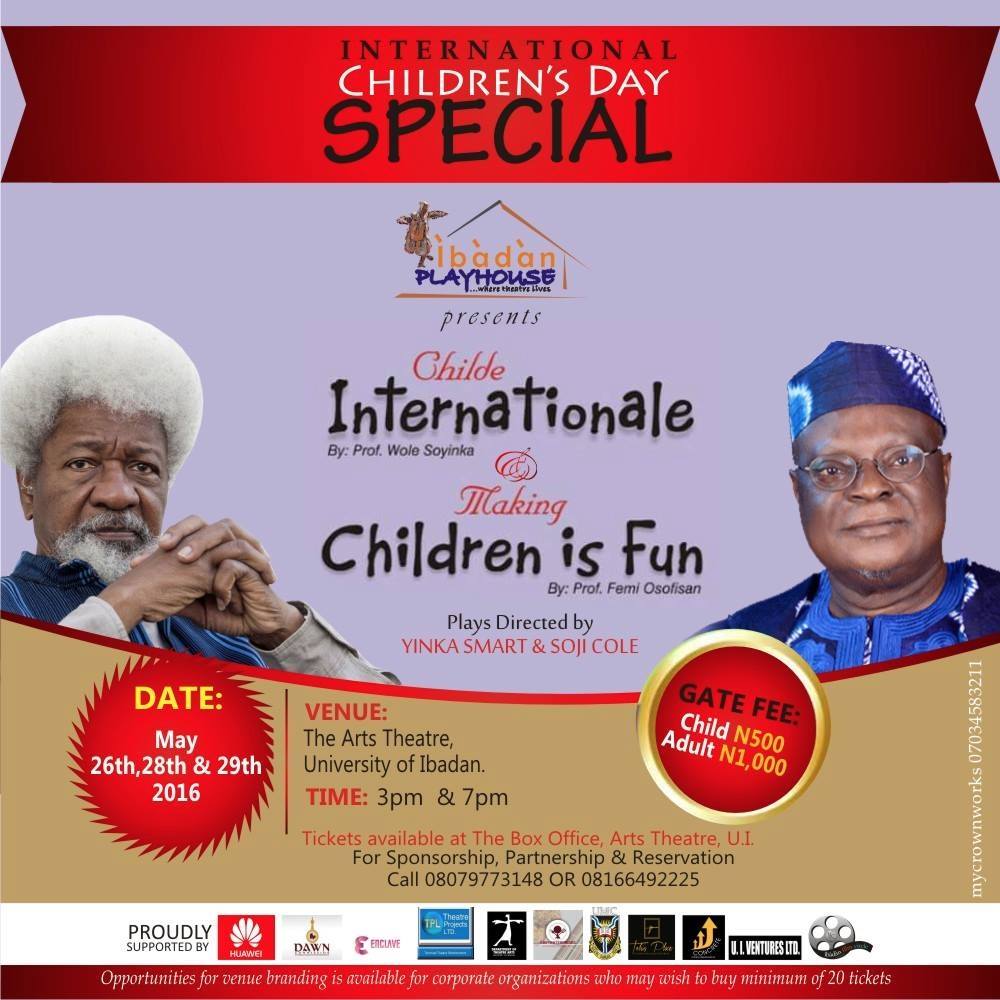
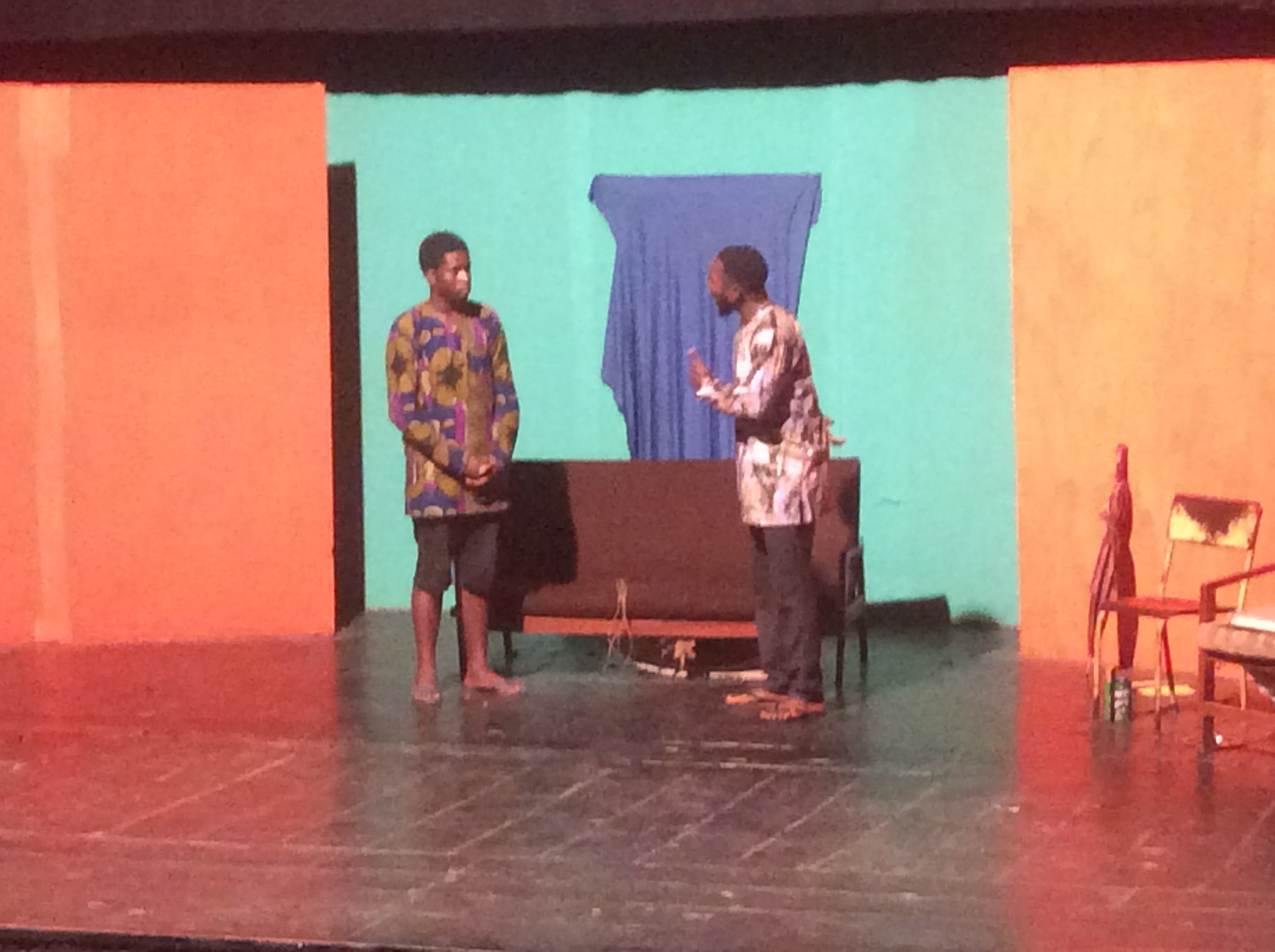
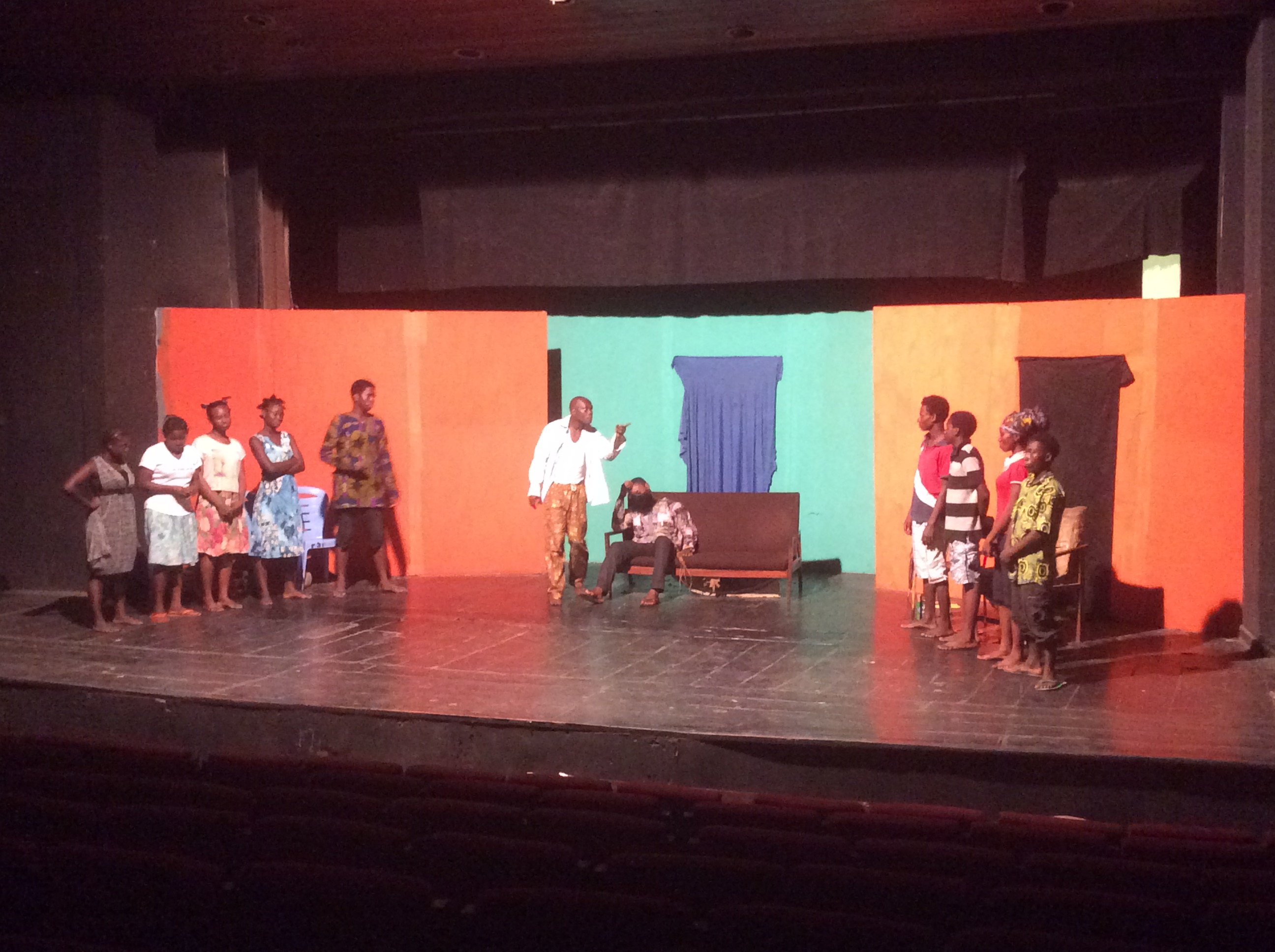
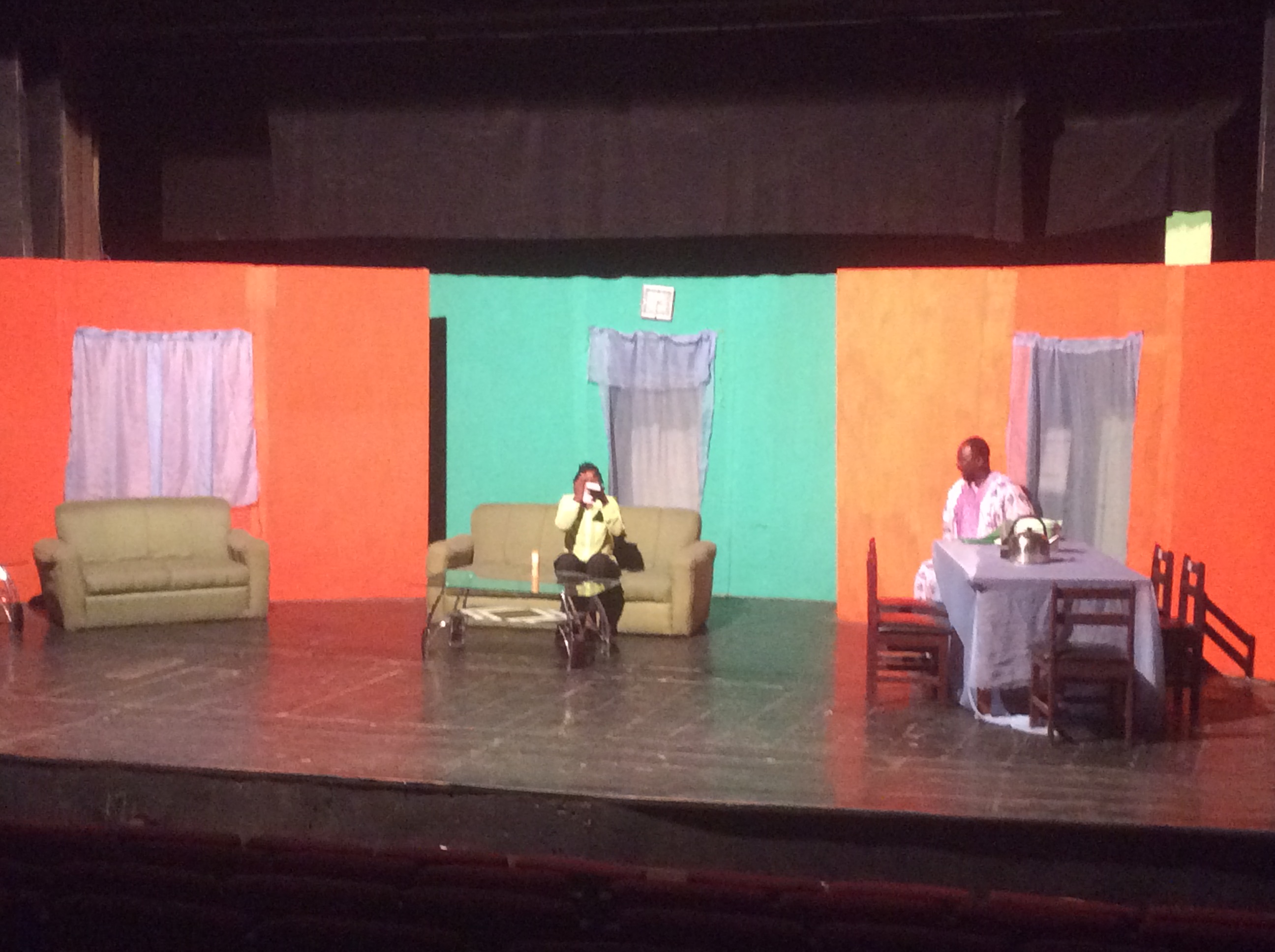
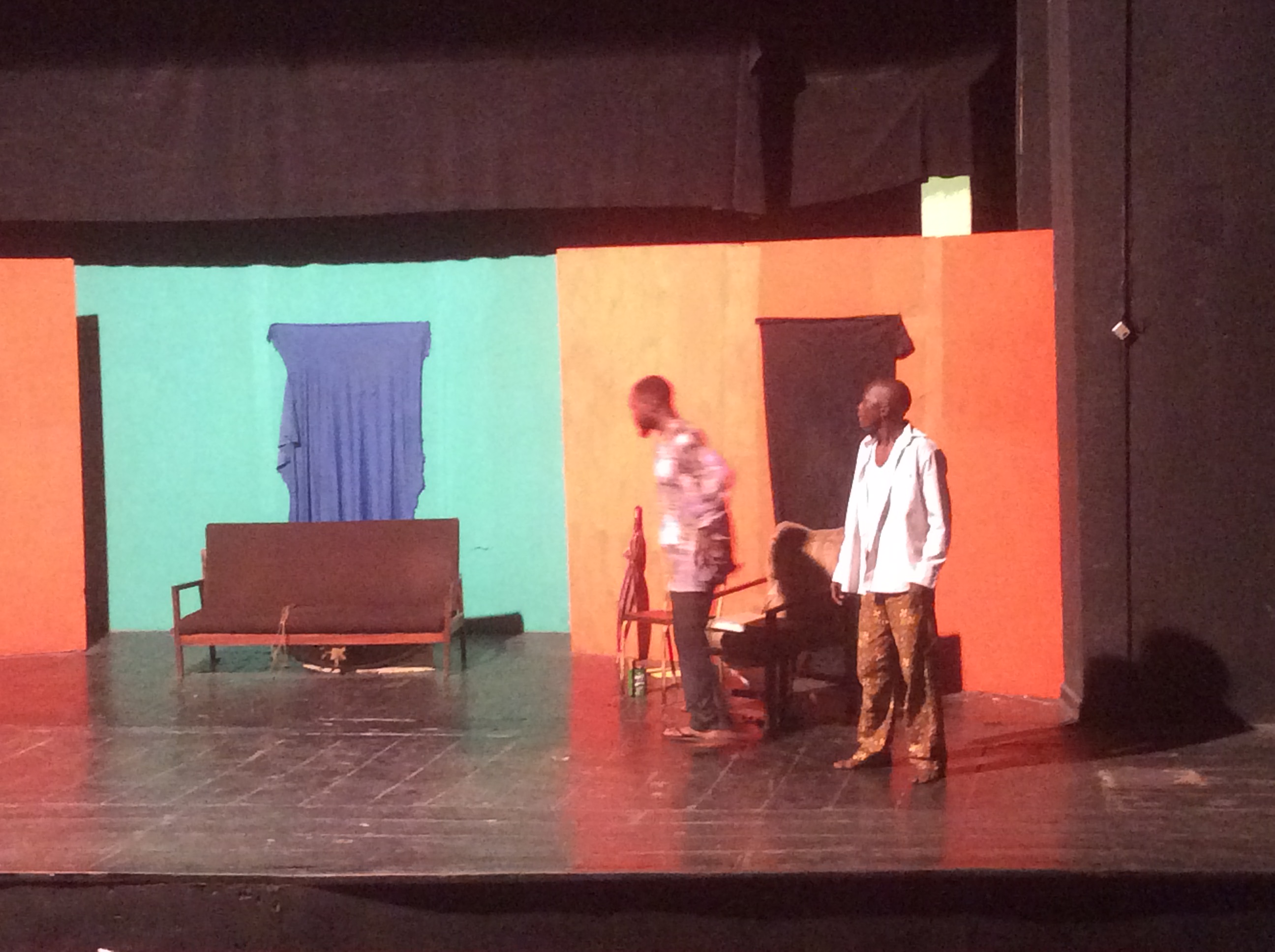
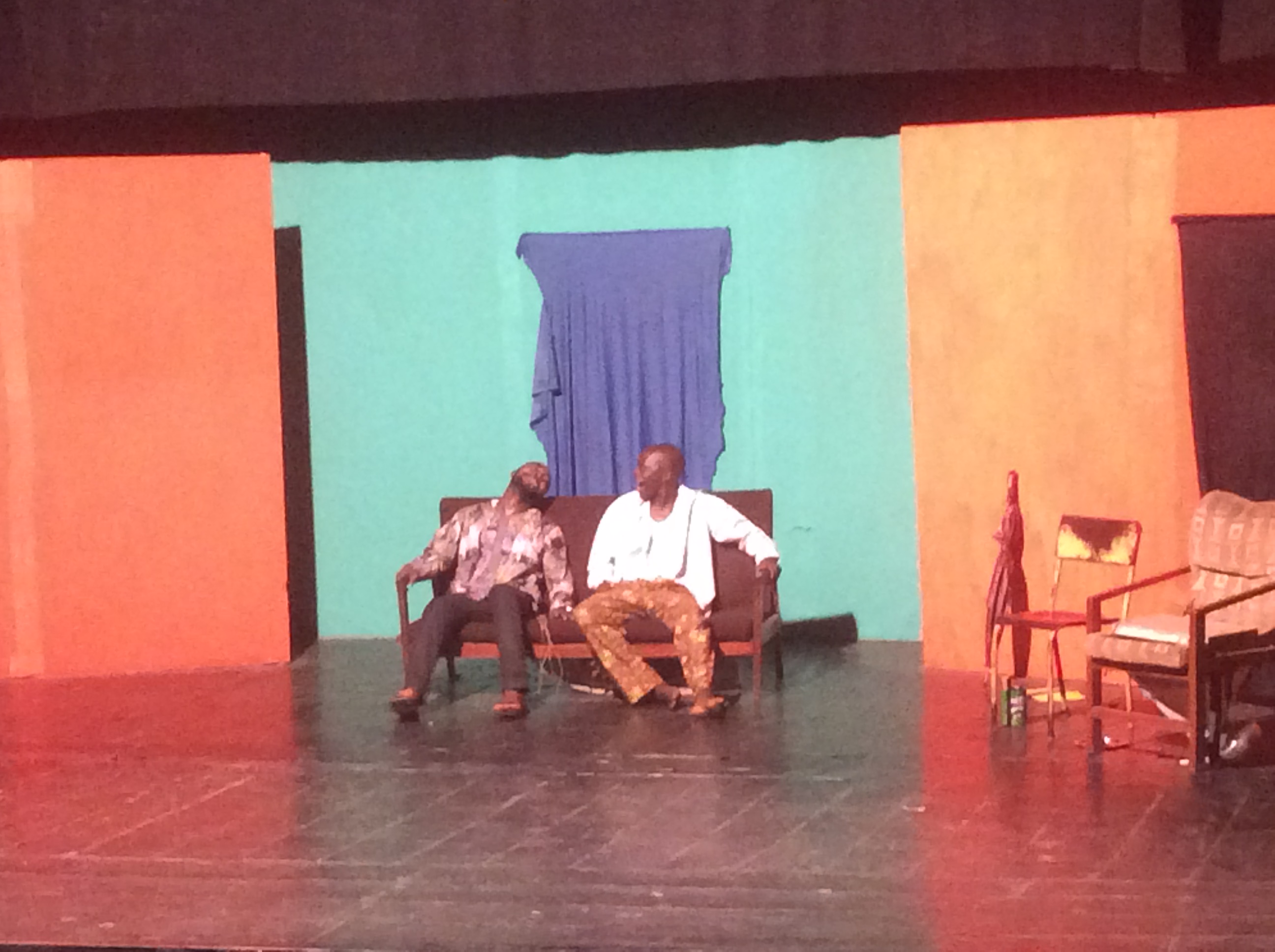
Ibadan PlayhouseI was at the University of Ibadan’s Arts Theatre last weekend to see the staging of two children-oriented plays by two of Nigeria’s best playwrights Wole Soyinka and Femi Osofisan. The plays were Soyinka’s Childe Internationale and Osofisan’s Making Children is Fun. The selection was in honour of the International Children’s Day, and was performed by the Ibadan Playhouse, a theatre company based in Ibadan, and directed by Yinka Smart and Soji Cole.

Both plays are unique in that they show their writers in their most accessible (and playful) format. This applies more to Soyinka than to Osofisan, but the duration of each play (less than forty minutes each) marked both works as more of skits/sketches and short interventions than heavy and serious work. But that notwithstanding, the works addressed serious social, political, and cultural issues of today and of the time when they were written.

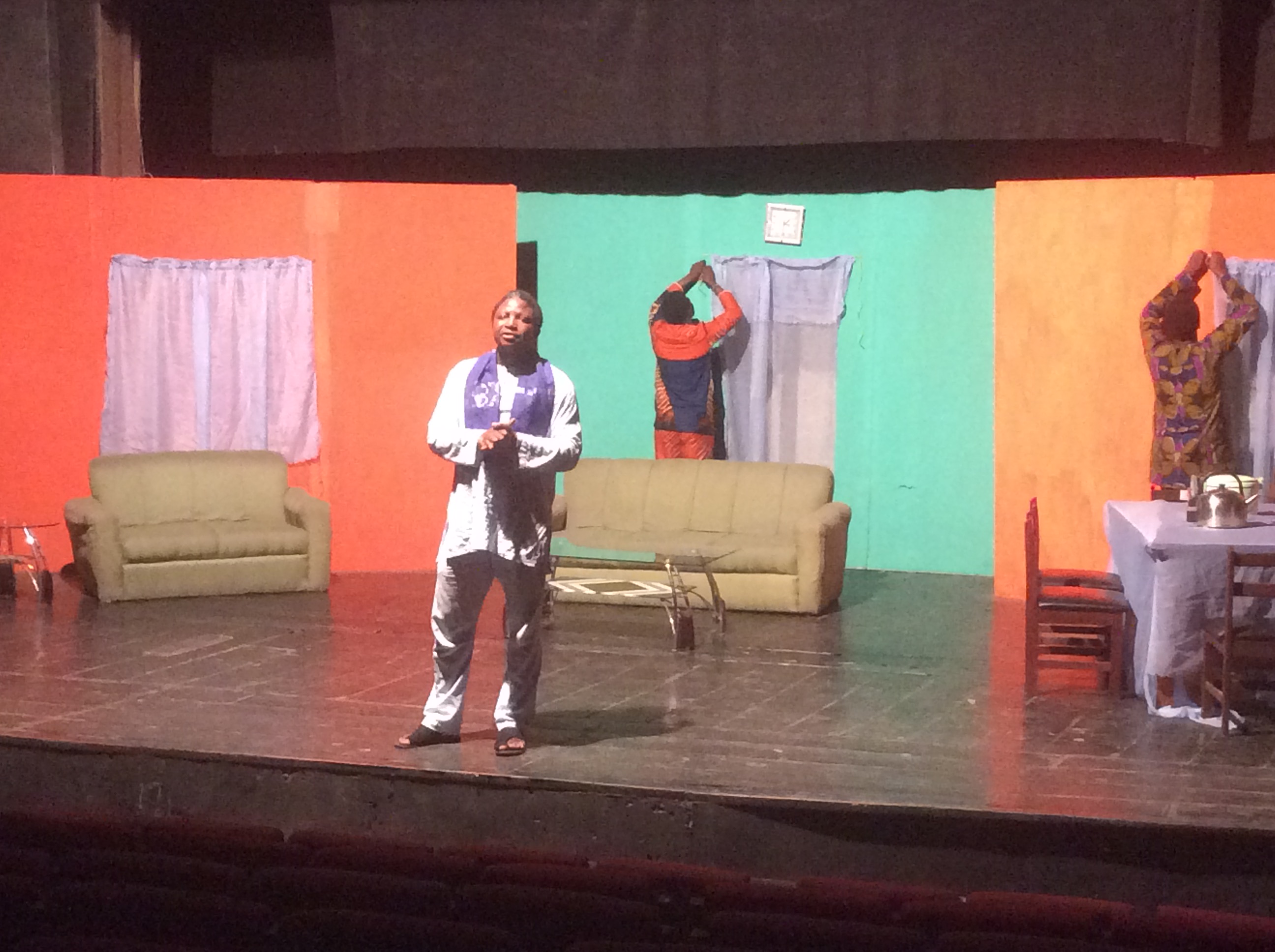
IMG_5393 IMG_5398 IMG_5403 IMG_5405IMG_5395 IMG_5396Speaking in-between the plays, as well as when the show was over, the director of the company, Mr. Ropo Ewenla, expressed appreciation for the presence of the audience, while speaking about the mission of the theatre company. Not only was it created to recreate a culture of theatre-going in Ibadan and around the country, the company is also on a mission to bring plays of significance to the audience at affordable gate fees. But more than that, he spoke about a mission to use the vehicle of drama to reach the less advantaged in the society.

Children from orphanages around Ibadan are invited regularly to attend command performances and martinées for free. Secondary school children are also invited to watch performances at reduced rates, and the theatre company hopes in the future to go out regularly to perform in Nigerian prisons as a way to humanise the inmates and workers. Definitely something to laud and to support.

My experience at the University Arts Theatre both as a student and as a regular visitor to the university has always been a fun and stimulating experience, and this was no different. I strongly commend what the Ibadan Playhouse is doing. They can do with even more (corporate, moral, financial) support.