Browsing the archives for the Soliloquy category.

10 Reasons to Like the Next One Year

In response to 10 Reasons to Like the Last One Year
10. Nigeria, parents, friends, family…

9. Iyan, amala, ogufe, pepper soup, palm wine, plantain chips, ewedu and gbegiri, egusi

8. France, Jos, Kenya, Ghana, Calabar, Obudu, Abuja, South Africa…

7. An exhibition of photographs.

6. A new academic degree.

5. Agbero, danfo, conductor, go slow, Third Mainland Bridge, Beere-Oje-Agbeni-Ogunpa, Agbowo UI…

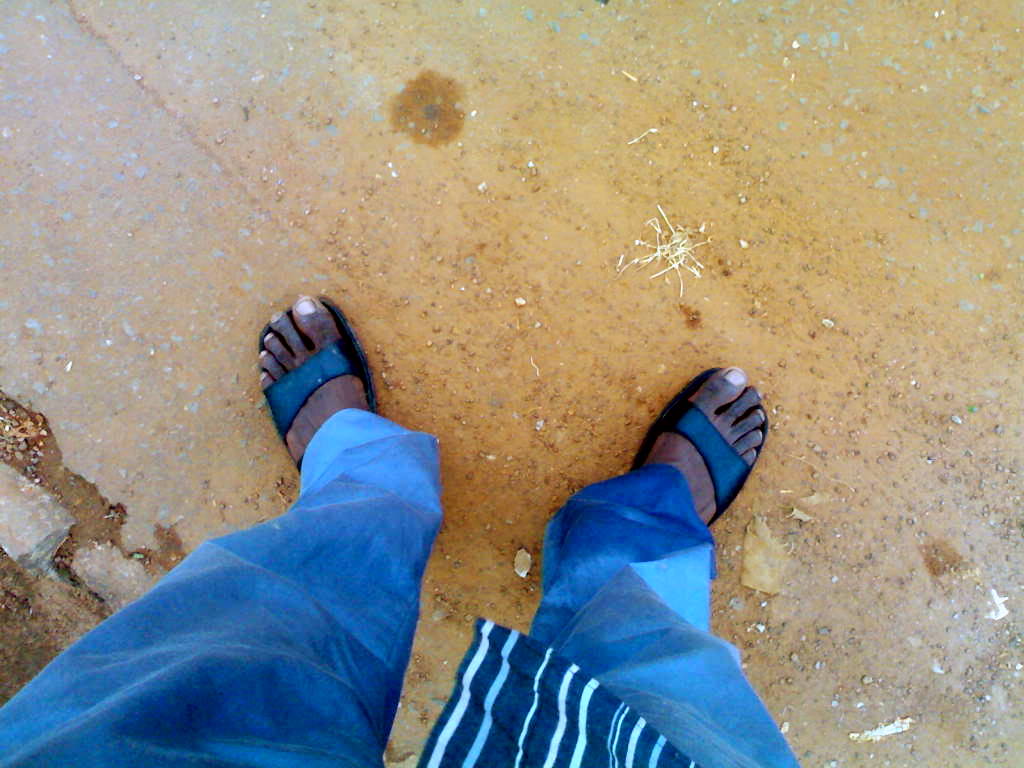
4. Sunshine, heat, University swimming pool, rain, mosquito nets, “wetin you carry”, NEPA, sandals.

3. MTN, Multilinks, PHCN, Starcomms, 25-in-one pirated movie DVDs, soccer.

2. Generator, iPnx, KTravula/iGwatala, Twitter, poetry, books, prose, short stories, short films.

1. Freedom 🙂

PS: Happy Birthday Laitan. You are loved dearly. Agba ti n de o. Here’s to let you know how glad I am to have you as a kid sister. Have a splendid year. Love, KT

10 Reasons To Like the Last One Year

10. The nice new people I’ve met and loved.

9. The new foods I’ve learned to eat and cook.

8. The new places I’ve been. Boston, Providence, St. Louis, Principia, Carbondale, Chicago, Maryland, NY…

7. The number of pictures I’ve been able take of sites, strangers and structures.

6. The knowledge and experience I’ve gained in interacting with students, strangers and situations.

5. The bike trail, the school bus, the traffic lights, the metro.

4. Snow, Cougar Lake, thunderstorms, earplugs, snow boots

3. Voicemail, karaoke, free movies, iPod, invitations, basketball.

2. Electricity, internet, KTravula, twitter, poetry, books, prose.

1. Fulbright 🙂

Blasts From The Past

Here are seven more favourite posts from the past. Enjoy

Connecting with a Certain Past (2) (September 8, 2009)

Is Oyinbo a Derogatory Word? (August 27, 2009)

And there Was (No) Light! (August 17, 2009)

A Short Foodlist of Ps (August 28, 2009)

10 Reasons Why Cougar Village is a Village (August 31, 2009)

10 Reasons Why Cougar Village is NOT a Village (August 31, 2009)

Culture Shock (February 10, 2010)

Questions and Answers

Q: When exactly in May do you leave for Nigeria, and what is your flight itinerary?

A: I don’t know. When that day comes, a helicopter from the White House is going to land near the KTravulake, commando style, and smuggle me out before anyone knows, and drop me right at the base of the Statue of Liberty in NY where a boat will ferry me to the JFK airport. From then the Air Force Ten will pick me up and drop me into France since all commercial airplanes are no longer flying in there because of the volcanic ash clouds. After a few hours in the streets of France speaking poor French and confirming to myself once and for all that all the French I claim to speak is nothing but trash African Vernacular French, I will hop onto the Air France Concorde plane brought back from retirement just for my sake, and fly home into Lagos’s unsuspecting but hot embrace. French expressions learnt so far: “Voulez-vous coucher avec moi?”, “Je t’aime”, “Tu est belle.” and “Merde!” Why none of these have to do with getting directions, finding the nearest restaurant, or getting out of trouble is beyond me. My French friends are the most mischievous kind. From the sound of them, I know I’ll be getting into trouble. Ah, wish me luck. I’m gonna need it. 🙂

Q: What is the ONE experience that you will miss the most about the United States. I’d like to know.

A: Beside access to fast and stable internet and electricity access, it must be the opportunity to ride my bike every day on the bike trails around Edwardsville. Somehow, I wish I could change that about Nigeria’s high dependence on fuel and motorized vehicles. If we could only develop the bicycle transport system and make laws to construct paths for bicycle users. The sad fact is that there are no good roads for vehicles either, so bicycles are not a priority. And that is sad, considering how much we pay for fuel, and how much of the environment is destroyed by continues gas emissions, and how more affordable, and more sustainable a bicycle is as a means of transportation. The groups http://www.bicycles-for-humanity.org and http://bikesfortheworld.org are currently involved in securing used and unused bikes from people in developed countries, and sending them to developing countries. How could one claim such for the many thousands of elderly, poor or simply interested people in Nigeria who could have otherwise benefited from the programme if the environment in which they live does not even support a safe use of such a simple and yet effective means of transportation? Sad.

Here’s an article on cycling in berlin (thanks to Loomnie.com)

A Different Kind of Hoe

This is my post #400.

I have now lost count of how many times I used a perfectly clean English expression only to later discover that it meant something totally different in American English. Once upon a time, the “black book” was a place to write names of people you don’t like. But while telling a story of my first really brutal treatment in the hands of a woman bus driver in Edwardsville, I mentioned in passing that she had now entered my black book, and my students’ eyebrows went up. A black book, I was later informed, is a book where men wrote the name of their objects of desire. Surely that was new to me, and I immediately corrected myself. If I had a black book, the woman bus driver won’t be in it, definitely. Nine months ago, the only time you’d ever have heard me use the word “flashing” would be while remarking that someone had been calling my mobile phone without allowing me to pick it up before hanging up. In Nigeria, as in many other countries, that is “flashing”. I’m now aware – as I have actually been for a while even before coming here, from watching American movies – that flashing doesn’t have much to do with phones at all as with body parts. No, I don’t want to be saying that anyone has been flashing now. No sir, that’s why I have a voicemail. 😀

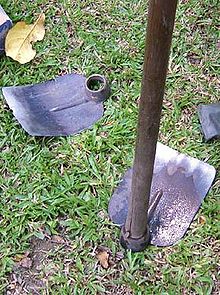
“This is a hoe.” Picture from Wikipedia

The influence of the mass media and their obsession with sex may have done irreparable damage to the innocence of words today. It is nows harder than ever to communicate without the risk of saying something totally different. Growing up in Nigeria in the eighties and nineties, I remember vividly that soda (soft drink) covers used to be called “crown corks” and that on radio during promotion, the jingles always were something like “Look under your corks and you might win a gift of…” (Hint: Nigerians typically don’t pronounce the ‘r’ in these kinds of words). Even to me today, that doesn’t sound to the ears as innocent as used to before, as neither is the use of pussies or doggys to refer to pets. Whatever happened to the language?

I am thinking of these things today only because during yesterday’s class, I was asked to tell the students the meaning of Ìwé kíkọ́ láìsí ọkọ́ àti àdá kò ì pé o and other lyrics of the song that they had learnt for the past three weeks from the class tutor. I painstakingly wrote out the translation on the blackboard (“learning from books without hoes and cutlasses is not a complete education”) and then suddenly realized that I could be wrong to assume that they all knew what kind of farm implements used in rural areas in Nigeria. The song itself came out an old culture of farming, and the grown folks who composed it had hoped to remind the young ones that farming is just as important as schooling. And so I asked, pointing to the writings on the wall. “You know what a cutlass is, right?” They didn’t. “What about a machete?” They did. “Alright, the cutlass is almost like a machete, and it’s used to cut down trees and to farm.”

And then it came. “What about a hoe?” Silence. Giggles. Laughter. Stares of horror.

He mentioned a hoe!

Then someone said, “yes” he knew what it was. I was at first relieved, until a few seconds later when I discovered that he actually didn’t, and it was my turn to be shocked. He definitely knew what he knew. And what he knew is neither used on the farm nor is supposed to be used in decent speech. Sigh. This is what has happened to my beloved English language. Oh, but how exactly did we get here? I’m going back to speaking only Yorùbá from now on, except that when written without sub-dots, the word for hoe in my language doesn’t fare better either on the scale of cleanliness.