Browsing the archives for the Soliloquy category.

Finding Chris Abani

To know Chris Abani is to love him. I spent about an hour today at the Lagos International Poetry Festival interrogating the affable Nigerian/British writer about his life, his work, his vocations, and a few other matters. It was our first ever sit-down conversation about anything, although I had known and admired him for a while, read his work, and exchanged pleasantries when we’ve met at other literary events (last year at the Aké Arts and Book Festival, for instance).

But this time, at a formal setting, I had looked forward to being able to learn a bit more about what motivates him as an artist, and to do it within the stipulated hour. It turned out to be a conversation that was as enjoyable as it was challenging. His reputation, drive, and breath of literary production span an impressive and sometimes intimidating stretch. He is a full-time writer in California, but also an apprentice babaláwo, publisher (and curator of a number of poetry competitions and chapbooks with Professor Kwame Dawes), and author of many award-winning books including Graceland (2004).
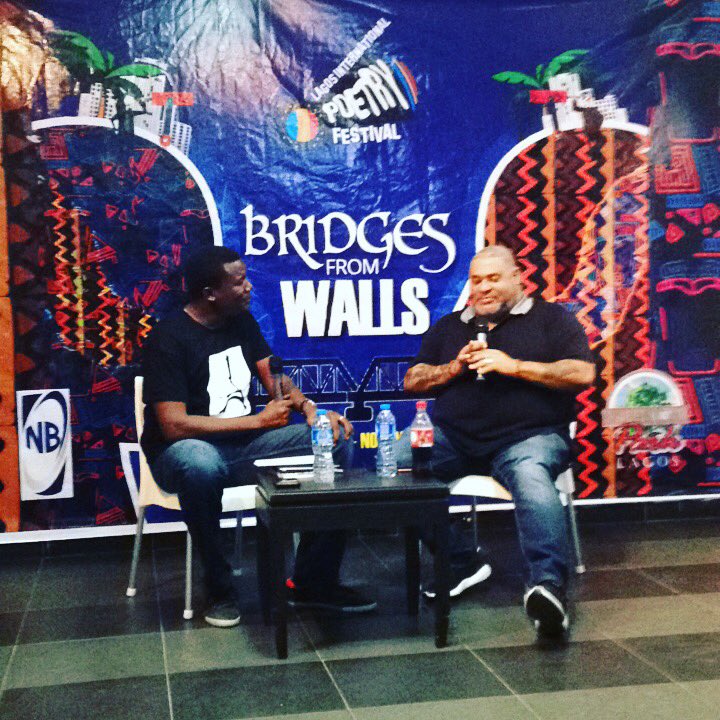
There were a number of questions, but one of the most enjoyable parts of the conversation for me was a detour on the true definition of literacy in an African environment. Too often, we have defined literary competence, and even a state of being culturally literate, as merely being able to understand the translation of terms from one language or culture to the other. Whereas, what is true literacy is being able to successfully occupy the full extent of being in that culture and maybe another as well. He mentioned an example of listening to a performance either of the chanting of the Odù Ifá or a poetry performance in Afikpo, where he was born and raised, and being able not just to understand what is being said, but successfully occupying the spiritual and mental state in which the work was conceived and performed. The nearest familiar example from my end would be a literate Yorùbá citizen, listening to a cultural performance with a dozen other not-as-literate people, and having a better, more enhanced experience of the same work of art just because of a capacity to understand the meaning of each talking drum pattern played under each public chant. In Yorùbá traditional art, there are sufficient depictions, as a satire on the importance of this skill, of novice or despised chiefs or kings dancing glibly to a drummer’s feverish patterns without knowing that the drummer was actually insulting them through the delightful ambiguity that the tonal patterns of the Yorùbá talking drums provide.

Chris Abani is a truly literate and competent artist in this way, which greatly helped the conversation along. One hour suddenly felt like a few good minutes. But the writer, in spite of his many achievements, also carries himself in a way that is relatable – which is what you’ll expect of someone still intent on learning the very many ways of being, and of existing as a true and competent artist.

I may have ruffled him a bit with an elephant-in-the-room question about a once controversial portion of his biography relating to his imprisonment in Nigeria in the eighties which, a few years ago, put him in the crosshairs of some Nigerian writers who accused him of not just fraud but sabotage: he was portraying Africa in a horrible light for foreigners for his own artistic advancement, and deserved censure. It was an argument that played into the big contemporary hoopla about poverty porn and the perception of Africa in world literature as a nest of ills. In Abani’s response, he gave as strong a defense as one can find for the freedom to be private about elements of one’s life story especially in the face of what he thought was an unfair and relentless attack, and anger at those who he said had tried, though unsuccessfully, to damage his name and livelihood in their blood lust for his scalp through a witch-hunt disguised as a defence of autobiographical fidelity, or the country’s honour. It made sense to me, and I was glad to have given him a chance to defend himself on the topic in a public forum.

What he is known for today, along with his impressive literary output, is his work with the African Poetry Book Fund with Professor Kwame Dawes where dozens of new African writers are discovered every year and published in chapbook and box sets which are sold all over the United States and around the world. His explanation on the breadth of work that the Fund does was thorough and detailed. How he is able to cope with that work along with every other thing he does is one of the wonders of his impressive career.

In the end, I was greatly impressed by the writer as an artist, an important and talented voice in the African writing space, as well as a bearer of important stories.
2017: Optimism as Resistance

It’s some of the first few hours of 2017, a year that has taken too long to come. I’m watching, on Netflix, a serial on Queen Elizabeth and the House of Windsor titled The Crown. It’s an engaging series of stories around the style and life of the reigning British monarch and her life on the throne. I had intended to watch just a few episodes of the show, and now it seems that we’d watch the whole damn thing in one sitting.

It’s not such a bad entrance into the new year. There’s red wine here, and palm wine, and fried beef, and rice with Yorùbá stew. On one of my laps is the head of my wife and partner. Our son is fast asleep at home and won’t see us till later in the day. We are guests in someone else’s house.

Yet, it doesn’t feel like the beginning of a new year. Except for some firecracker noises about three hours ago, it has been quiet outside. Inside here is laughter and occasional arguments. But it is a soft, happy, party of family sharing happiness and warmth. There are no rowdy street scenes. No grand announcement of the beginning of a new year. Just a quiet and respectful progression into what had been long overdue.

Yesterday, we spent some time watching Adéyẹmí Afọlayan’s old movie Kádàrá, featuring some of the now notable faces in the Nigerian movie industry. The ending was a little disappointing, but the overall experience of spending the evening in the company of family and watching something from the early 80s compensated for that discomfort. It’s easy to forget that this is the year that Donald Trump officially becomes POTUS and gets the nuclear codes.

In Nigeria, the recession hasn’t eased up. The administration of President Buhari, which came in with a huge promise and a mandate from a wide swathe of people, is fast losing that trust. In Turkey yesterday, over thirty people were killed in a terrorist attack. And the problems in the Middle East don’t look like they are close to being solved soon. A one-state solution in Israel, anyone?

And so, since we’re still here, the resistance continues. Optimism? Well, a cautious one. But optimism anyway. Happy 2017, everyone.

A Day in Turin

turin

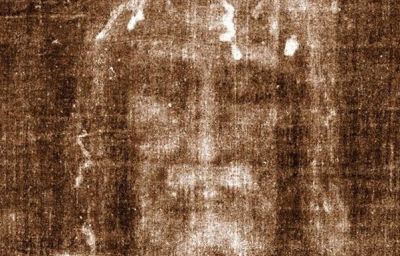
Image of the “face” on the Shroud of Turin from CatholicDigest.com

My impression of Turin, from never having ever visited it, was limited to an article in the Reader’s Digest from 1984 called The Shroud of Mystery by J.H Heller. Not just an article, however, but a specific image of a piece of linen cloth with an imprint of a face said to belong to none other than Jesus Christ of Nazareth. Reading the piece as a young teenager in the early 90s Ìbàdàn was as exciting as it was disturbing. Having the pleasures of discovering reading as a worthwhile endeavour come with the unpleasant imprinting of an intriguing yet disturbing image didn’t seem at the time like a fair deal compared to all the fun my other friends were having. It compensated later, if only slightly, by the usual pleasures that reading brings (learning the meaning of “shroud”, for instance) and the stimulating dimension of that particular story: after Jesus died and was wrapped up, his body fluids/sweat/embalming liquids ensured that the outline of his face and body left indelible marks on the covering shroud. The result was this Shroud of Turin, hundreds of years old, showing the outline of a dead man with puncture marks on his wrists, blood marks on other parts of his body, etc, which the article suggested proved the biblical story to be true and intriguing scholars and theologians forever.

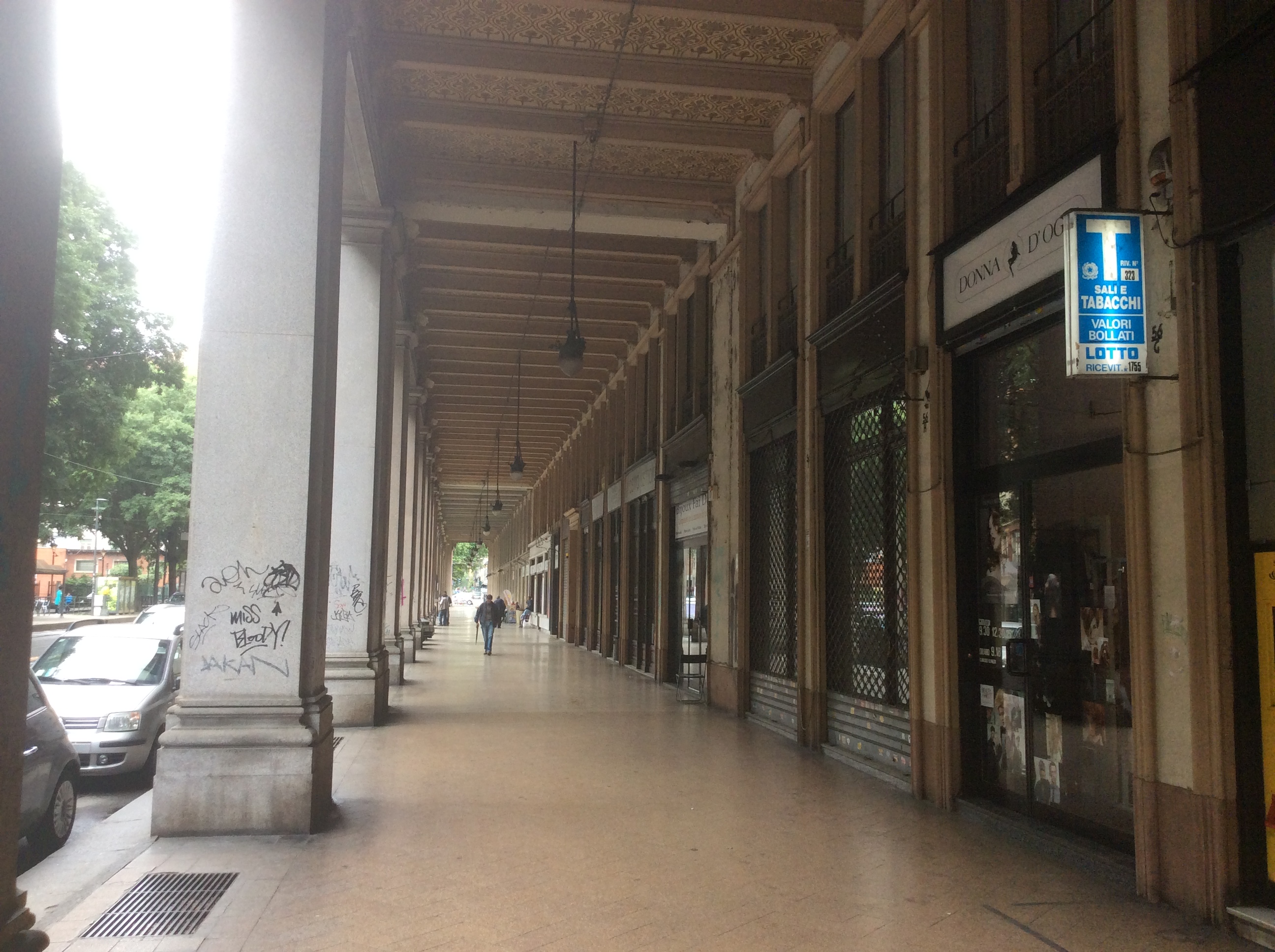
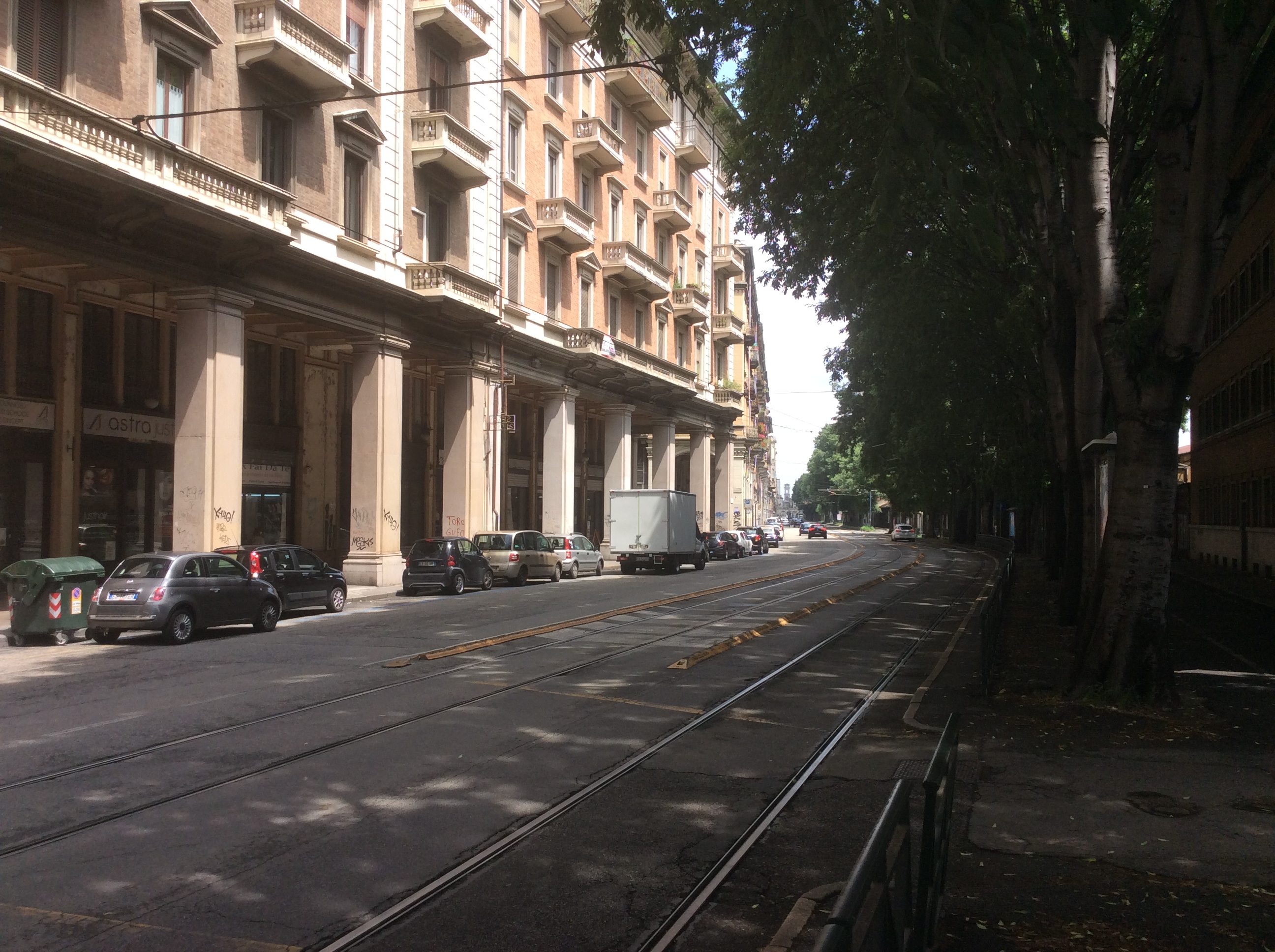
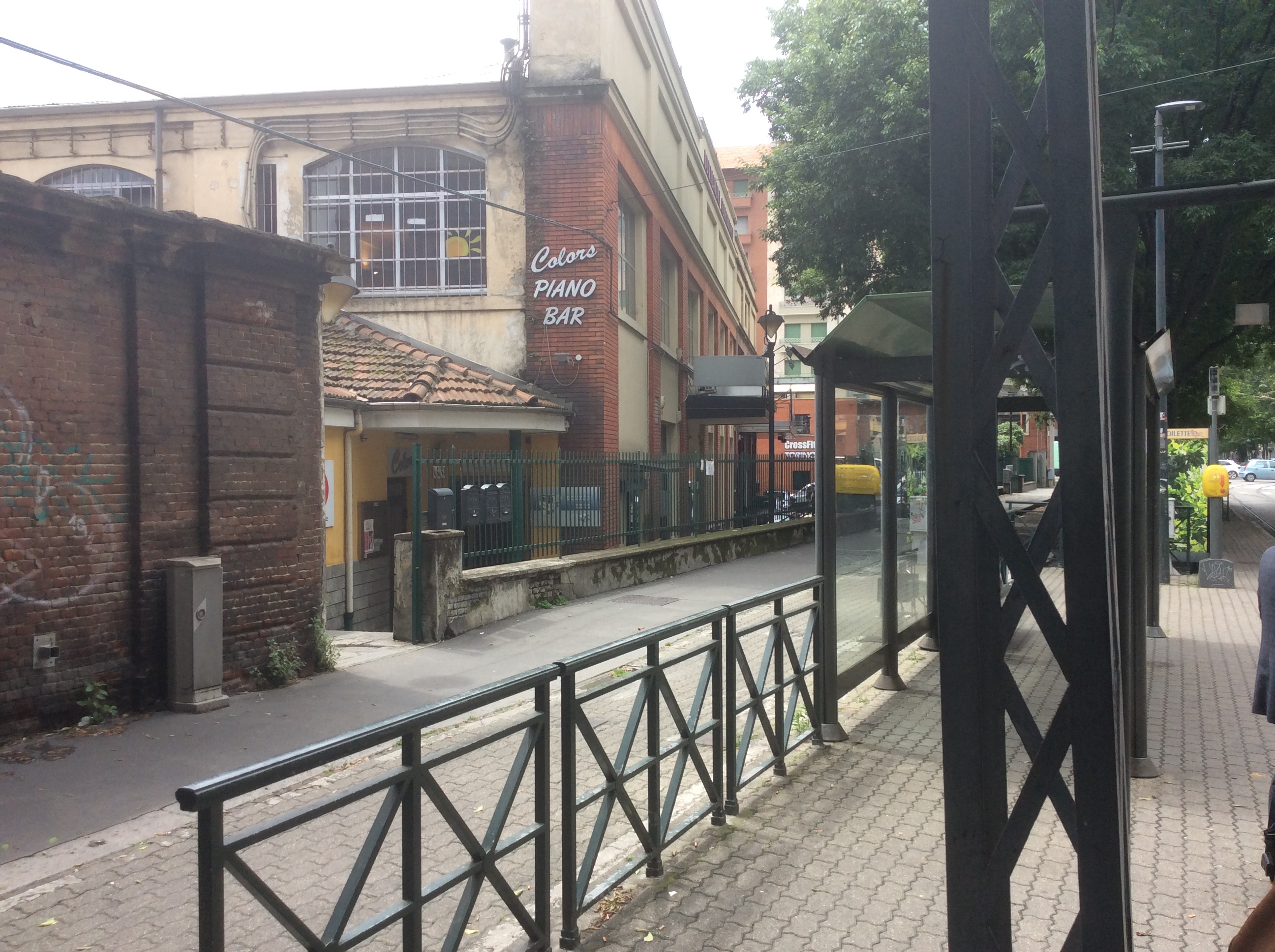
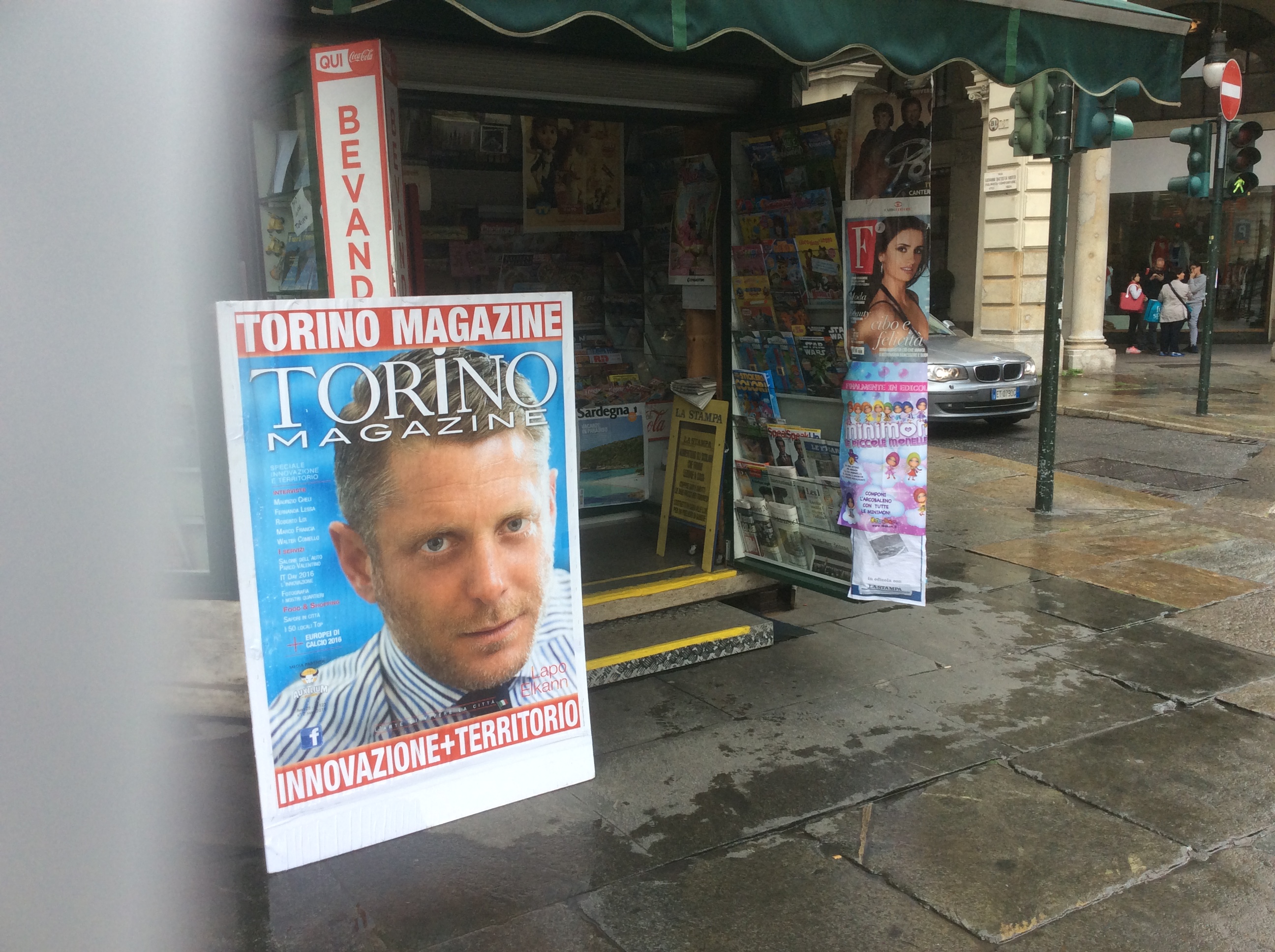
IMG_5667IMG_5669IMG_5668IMG_5682Recent carbon dating on the cloth has now rendered that conclusion false. The shroud shows a dead man alright, but it certainly wasn’t the Jesus, unless Jesus was born in the 1000s – 1300s.These scientific discoveries haven’t slowed down the perception of the cloth as being divinely ordered, however, as people still spend hundreds of thousands of dollars every year to see it either as a tourist curiosity or as a religious symbol. In any case, the deed was done: this famous death-mask of a man from many years ago continued to add an unwanted dimension to my teenage nightmares.

IMG_5740Whenever I heard of Turin from then on, all that came to my mind was the image of that shroud – a holdover of idolatory in European Christianity, perhaps, as an item significance to validate one’s faith, and to hold on to for as long as possible, generating tomes of research articles, arguments, and tourism dollars in the process. In any case, I’ve always wanted to see it for myself. So when I found myself bound for Italy earlier in the year, one of the places I wanted to visit was Turin. I was in luck, as these things have often turned out for me: my plane into Italy was to land in Turin, from where I would be moved by car to Ostana, just two hours away. Even if that individual trip didn’t provide enough opportunity to explore the city, its relative closeness to my destination meant something of even purely nominal significance.

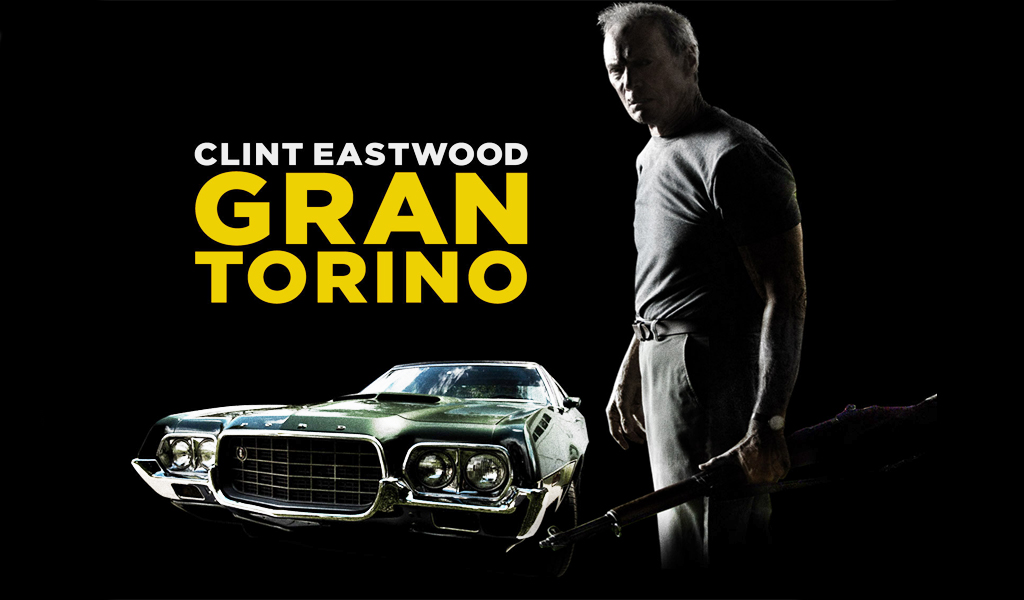
torinoThere was also something else that I’ve always connected to Turin, but that came much recently: a 2008 movie by Clint Eastwood, set in America, and featuring a cranky old Midwesterner and his Hmong neighbours. It was called Gran Torino, named after a Ford car of the same name, which had got its name from the Italian pronunciation of Turin. Both the movie, with its story of redemption, personal sacrifice and cooperation and its soundtrack, possessed a kind of sublime beauty that was also notably memorable. According to Wikipedia, ‘the car was named after the city of Turin considered “the Italian Detroit”.’

So, it already began to seem – right from the beginning of my trip to Italy, that a number of my travel obsessions would collide with appropriate reality on the ground.

That didn’t happen, however.

The Shroud, it turns out, now comes out only once in a couple of years. Perhaps due to wear, or due to a need to create scarcity so that each outing, like of a notable masquerade, is special and memorable, those in charge of the piece of cloth only show it off once in a couple of years. And whenever that happens, according to residents, it is like a carnival: the city is full of tourists, pilgrims, and all curious visitors of all sorts, all trying to get a glimpse of the memorable fabric, and ready to pay whatever the gate fee is required at the time. “You should consider yourself lucky,” a friend said “that you aren’t here during that time. The city would be too busy for you to enjoy. And the lines to see the shroud are always very long and you have to book in advance.” It was probably all for the better.

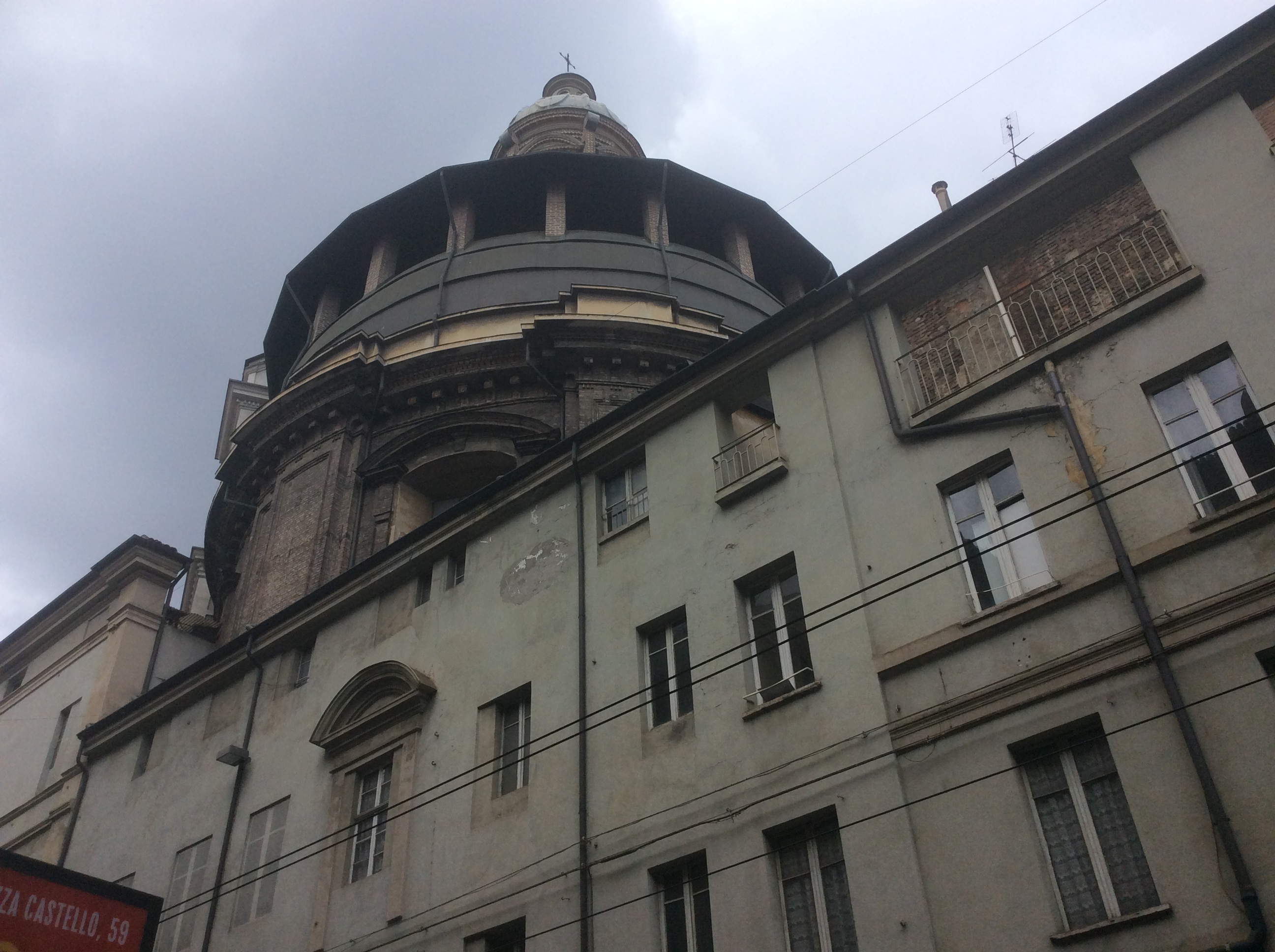
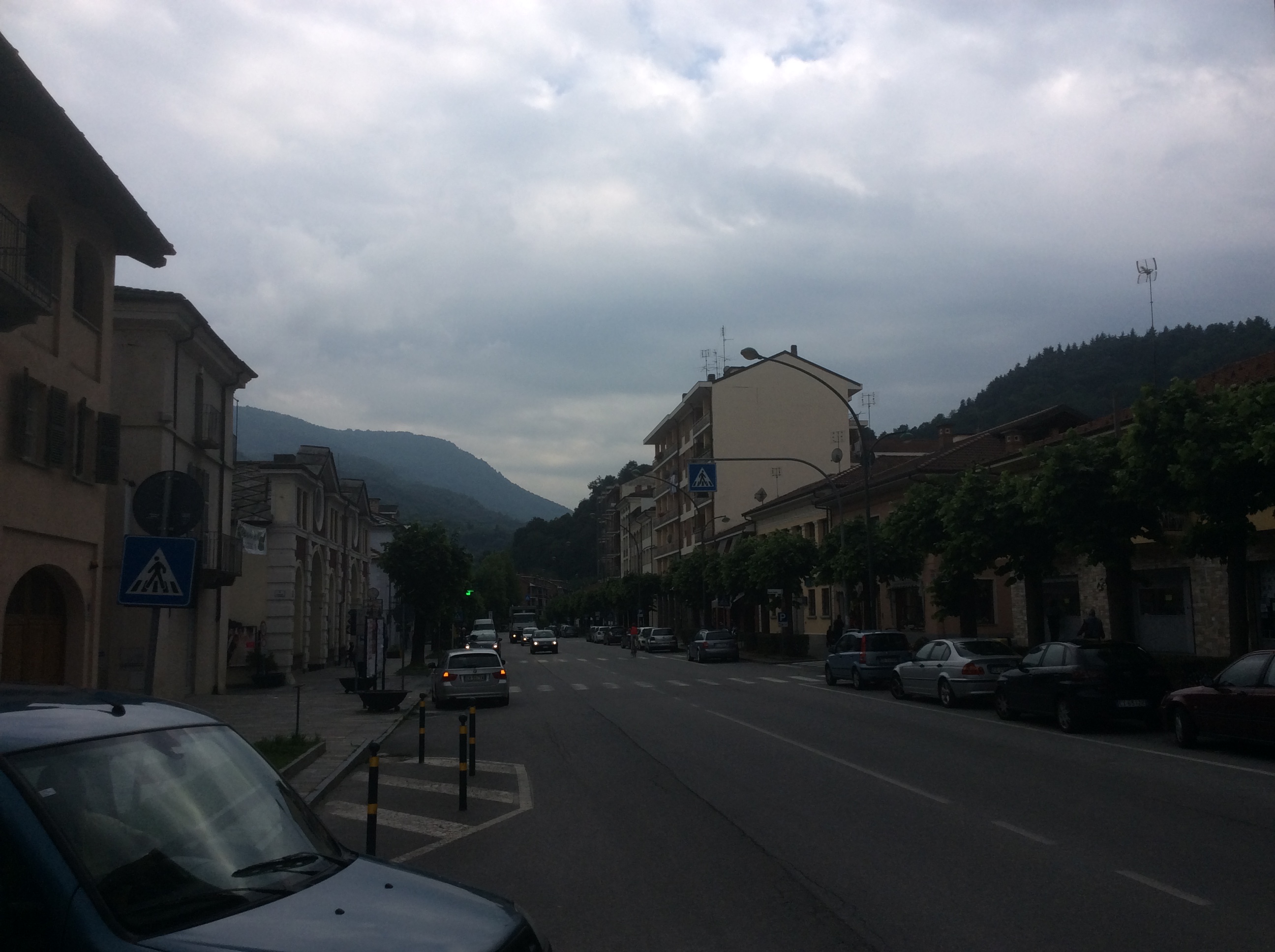
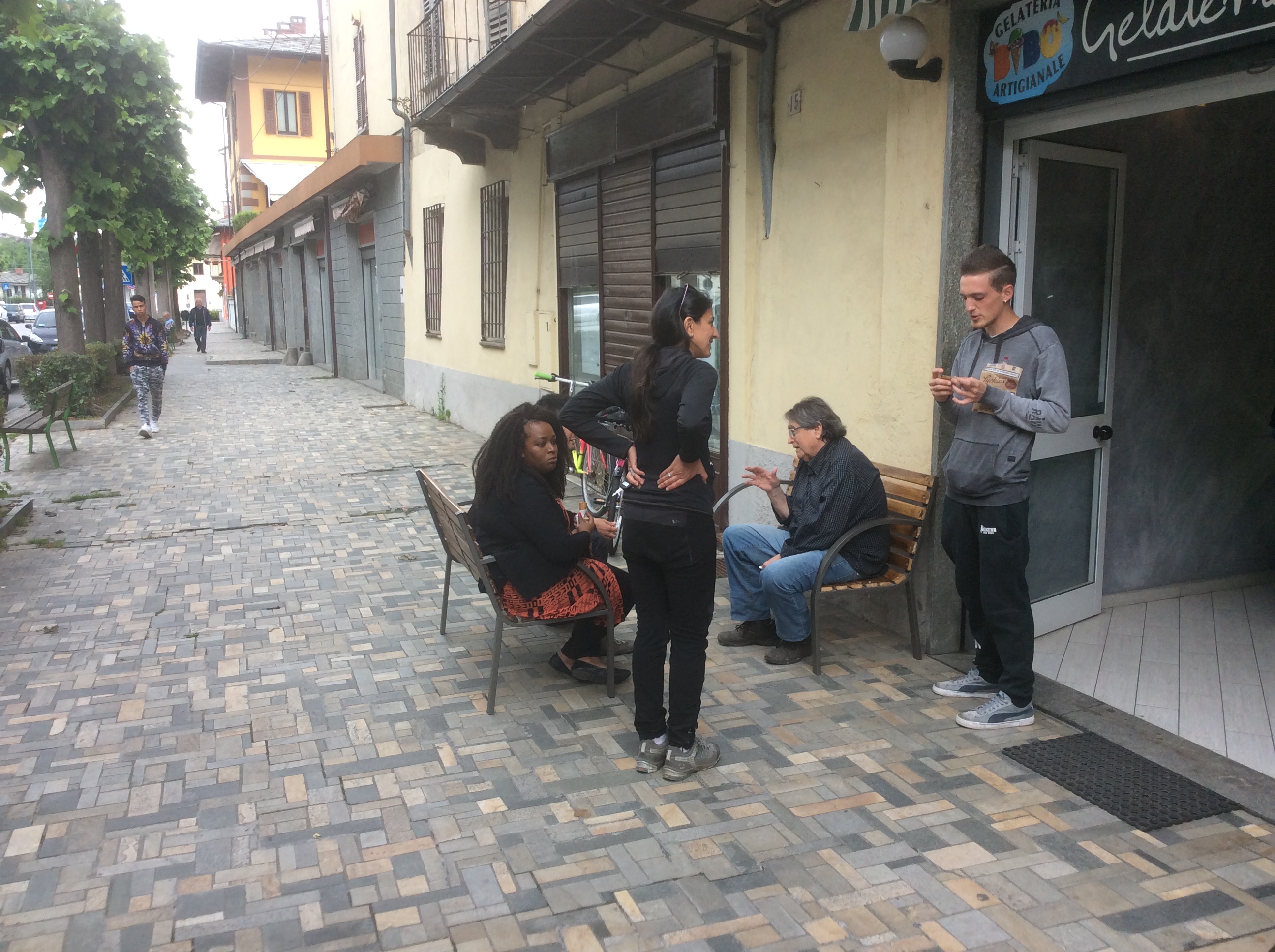
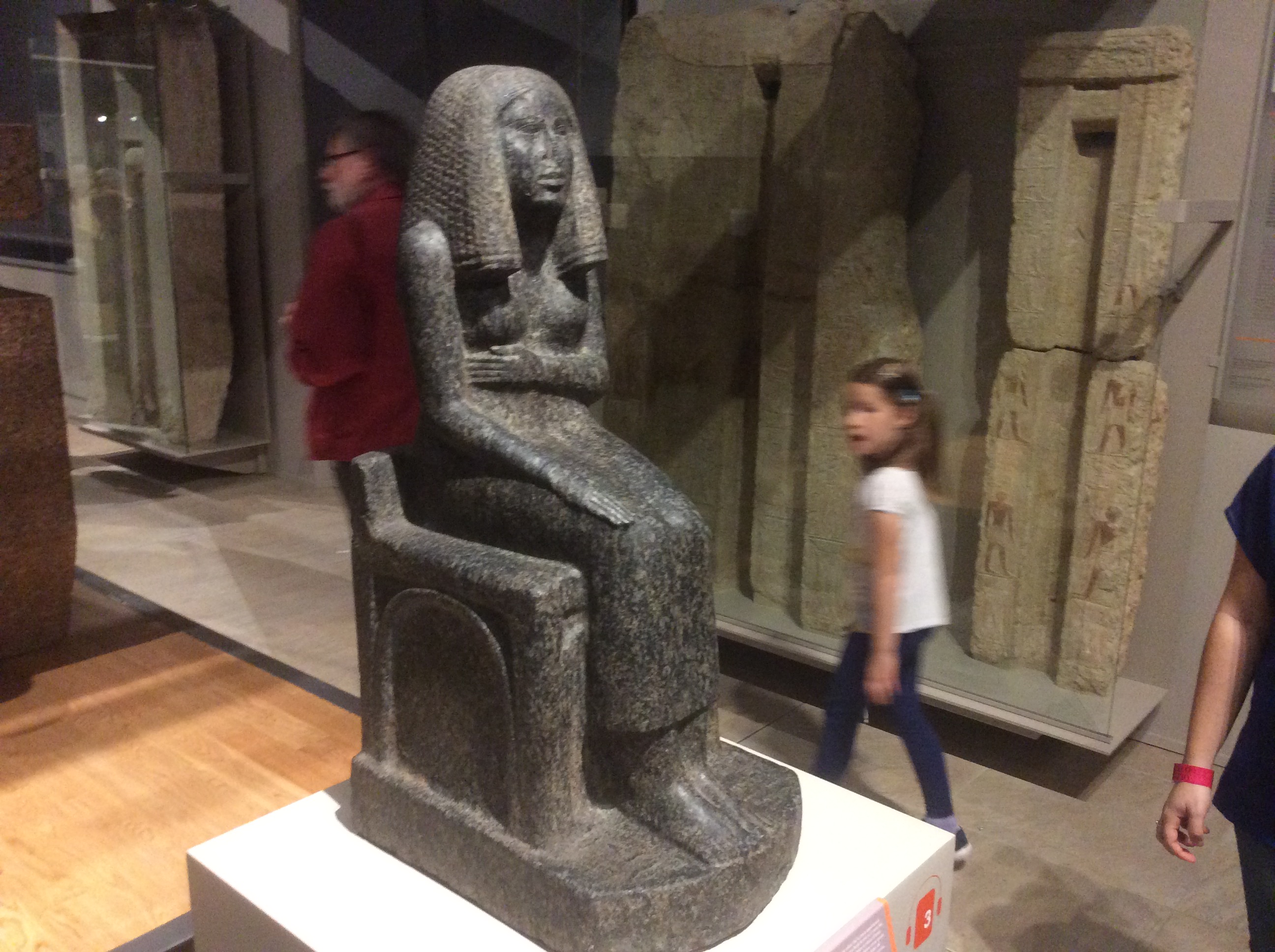
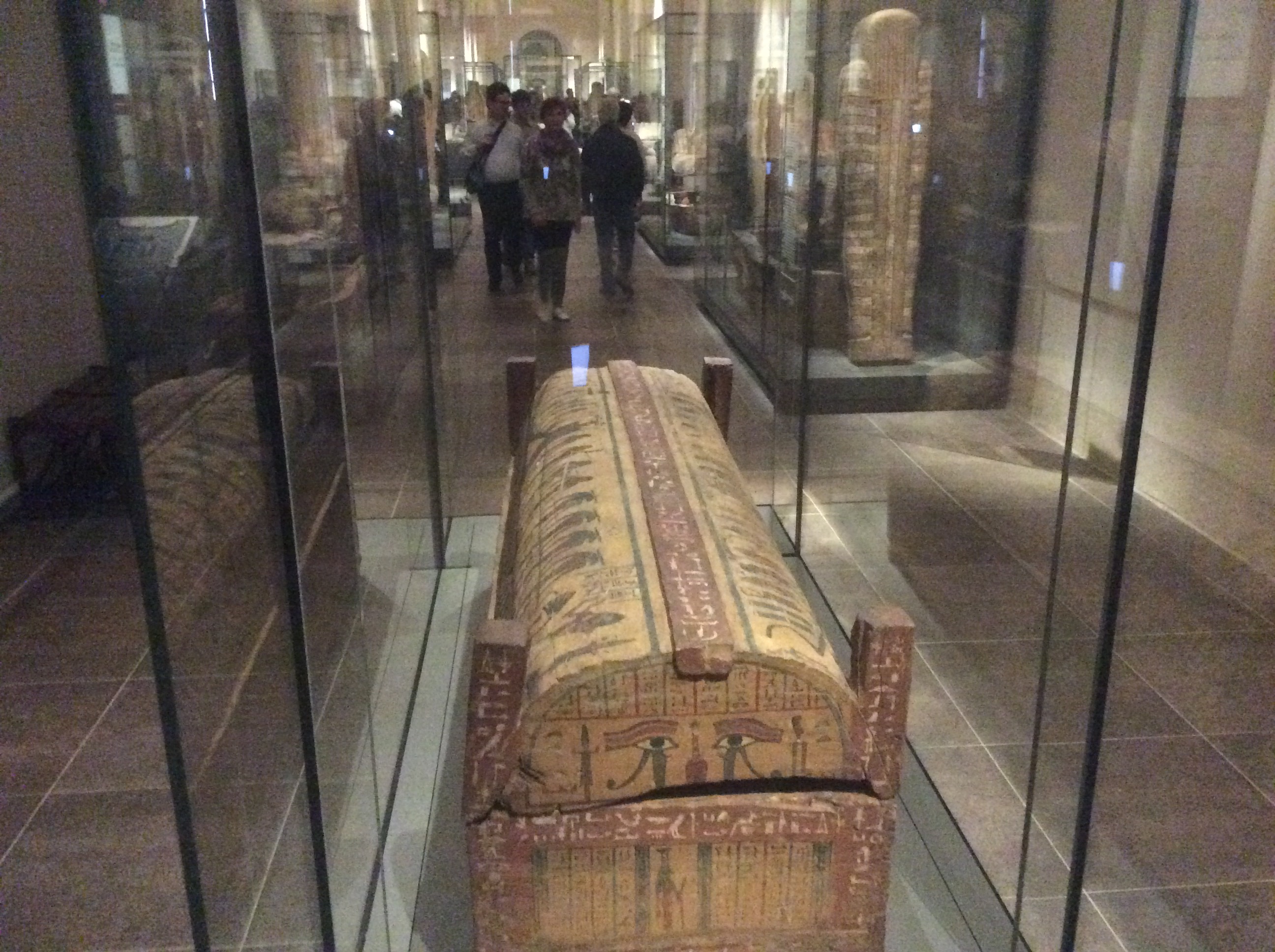
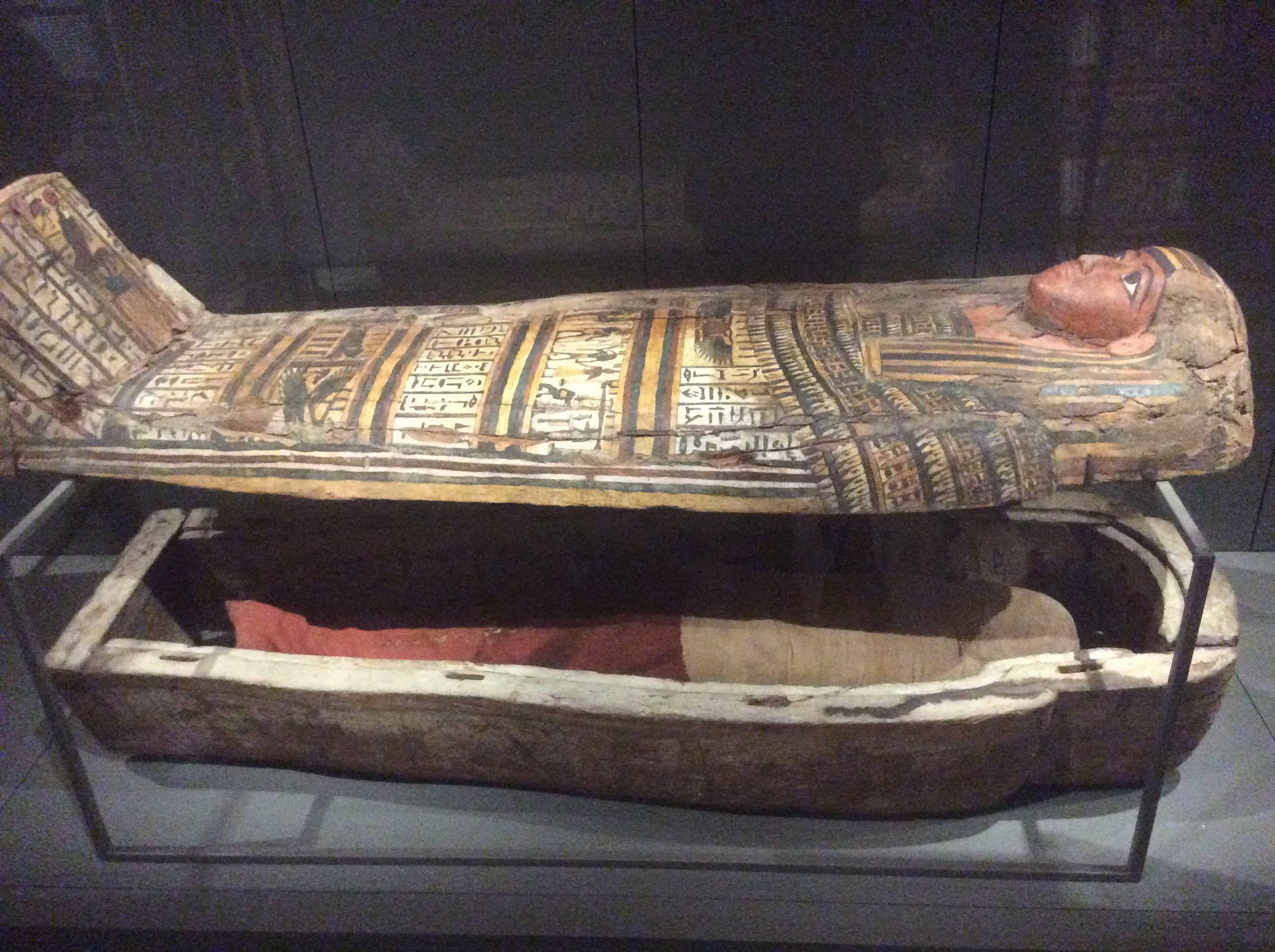
IMG_5675IMG_5750 IMG_5754 IMG_5722IMG_5696 IMG_5703 IMG_5704IMG_5752What I was rewarded with in the end was something more: a whole day spent exploring another part of Torino which I hadn’t heard of until my trip. The city, it turns out, boasts of the second biggest Egyptian museum in the world: the Museo Egizio, which hosts more than 30,000 artifacts and receiving over half a million visitors last year alone. More on this later.

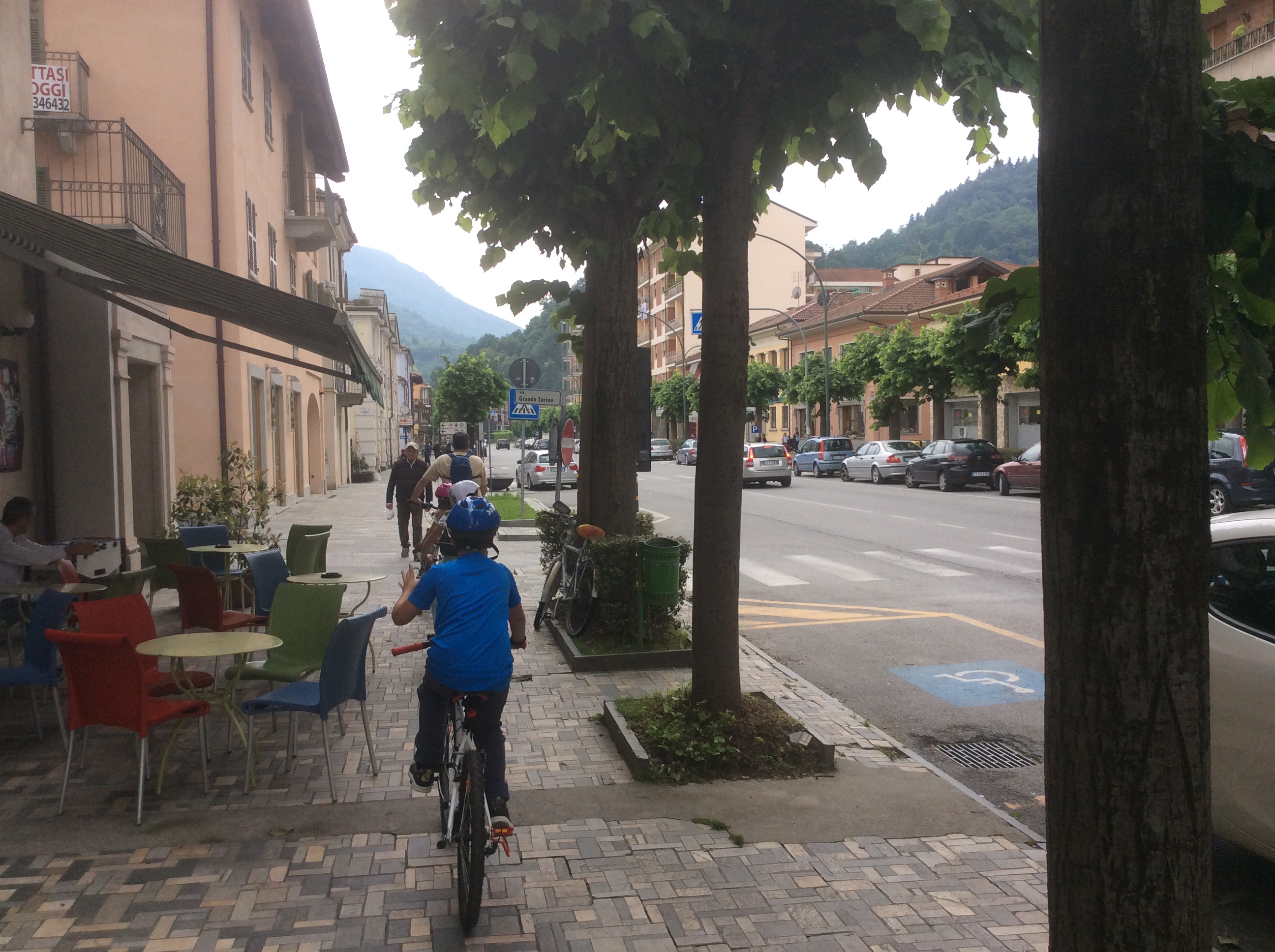
That, and a memorable commute all the way from Ostana through the city of Turin in delightful company, getting lost, interacting at close quarters with a small but stimulating company, rushing through an expansive exhibition at the museum in less than two short hours, another commute to the airport to drop off (and pick up) a guest, a stopover at Barge (a midway point) for delightful pizza, and then a quiet ride home.

Without the shroud, it was still a most charming introduction to a city of so many mysteries. Perhaps more so because of its welcome absence.

On the Demise of Decorum

2015-12-07 08.37.49 I realised, on my way back from the coronation of the Ọọ̀ni of Ifẹ, last Sunday, that I’ve never attended a properly-planned public event in this country as an adult. Be it a wedding, a naming, or an engagement ceremony, or even an official governmental or artistic event, the evidence from my trip down memory lane has left plenty to be desired, particularly as regards planning and implementation. True a few have come very close to proper organisation, but they have been too far in-between to be the norm. Either we Nigerians are terrible event planners in general or we are just terrible audiences of otherwise well-planned events, both leading to undesirable consequences.
First, the invitation card to the coronation of the spiritual head of the Yorùbá people had shamefully incorrect diacritics on the names of the new king – an unforgivable faux pas tolerable only because of our erstwhile collective tolerance of that kind of cultural laxity and mediocrity. Heck, we are numb already to books and newspapers printing Yorùbá (or Igbo) names without appropriate tone-marks, even when the editor of such publication claims to be an educated Nigerian individual. In an alternate universe, whoever was in charge of this royal invitation would be fired, pilloried, and barred from any future participation in any cultural events relating to the king. But our “educated” newspaper and book editors still collect salaries while putting their stamp of authority on the idea that this kind of (cultural and linguistic) certitude counts for nothing. Shame on us.

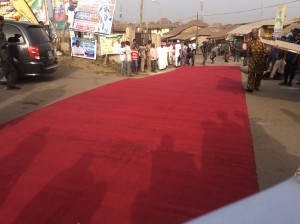
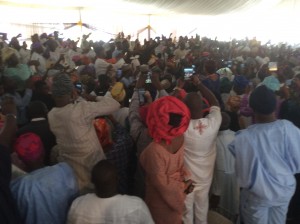
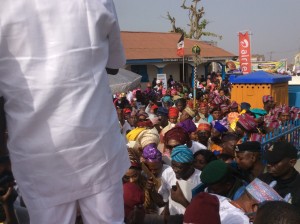
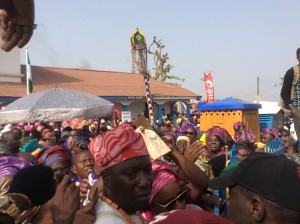
2015-12-07 09.41.46 2015-12-07 09.50.09And secondly, an event slated to host royal dignitaries from around the world started almost as a free-for-all as royalty and “common” men jostled together in a crowd to make their way through a narrow gate into the hall. At one point, I spotted the king’s own father himself being pushed and shoved with the crowd, and having to prove himself to be who he is. It was the same situation for the mother of the princess and other numerous otherwise dignified guests who had to fight through what seemed like the eye of a needle, even while holding  a VVIP invitation card. At one point in the crowd, one spots the staff of office of the Olúbàdàn of Ibàdàn – an otherwise important instrument of office that should pave way for its bearer without questions. For almost an hour, the staff and its carrier remained nestled within the throng (pictured).
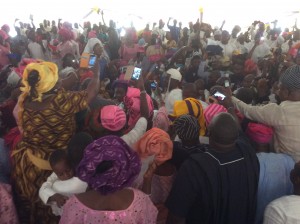
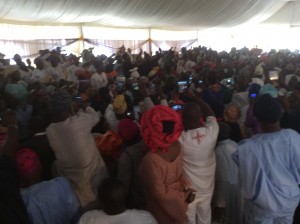
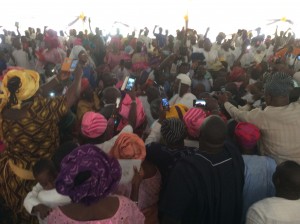
2015-12-07 12.49.53-3 2015-12-07 12.49.38 2015-12-07 12.49.53-1 2015-12-07 12.49.40By the time the Ọọ̀ni made his way into the hall, not only was his path blocked by indecorous photographers, well-wishers and other media practitioners wishing to take his photos, the whole hall seemed, at once, to have turned into a barbarous throng, with everyone standing on their seats with phones and devices at the ready to take photographs. Our modern interpretation of this phenomenon might excuse it as a sign of the king’s importance in our imagination, or our celebration of his ascendance -Fair point? – rather than a more unflattering suggestion: that it is a display of our lack of decorum at such events. One wrong footing and one of these amateur photographers would fall, deservedly, and land either on the king’s head or by his feet. And even without that, the walk from the entrance which should have taken less than a minute took over fifteen minutes: a newly crowned king pacing himself through an artificially-constructed hedge of human nuisance.

A while ago, on a flight back from the United States, I found myself in Paris, at the Charles De Gaulle airport, on the last leg of the trip. And for one moment, something that hadn’t occurred to me on any other part of the trip suddenly came to embarrassing prominence. The airline announcer had taken the microphone to announce that boarding would now commence to Lagos. But before the first few words had landed out of her mouth, a loud and cacophonous shuffle began, seemingly out of nowhere, involving only the Nigerians who a few seconds earlier were sitting quietly and minding their businesses. As if a shortage of airline seats had just been declared and an order placed that only the first at the gate would be flown to Lagos, my countrymen hustled and shoved themselves into what eventually became the queue. It has happened in other instances too, like two seconds after touching down, even before the seatbelt signs are turned off. My countrymen jump out of their seats and immediately proceed towards their luggage, as if they were going to disappear after just a few seconds of waiting.

Those who have cared about the matter have blamed much of this on our cultural conditioning. But I’ve been to Kenya and the situation is way different, from private comportment to general orderliness in public spaces, proving that it certainly isn’t an “African” conditioning. It’s a Nigerian issue, celebrated in other instances as our unbound boisterousness. In instances like this however, and in many others where acculturation should otherwise show itself as decorum, we have terribly failed, and we need to find our way back.

Guest Post: My Clicker

by Adaeze Ezenwa


I’d like to get a camera, not one of those high-tech contraptions with dials and buttons intended to confuse and confound. I’d want one that is just a simple shutter and lens operation but will make me some stunning pictures. I would not take pictures of people, they do not interest me. I might take pictures of babies though, just because they haven’t learned to be self-conscious before the camera. Their essence would shine through because they aren’t concerned with making a fine picture or in my capturing their most flattering side.

Animals are more appealing to me, goats especially. I’d take pictures of goats, cows and monkeys, no cats or dogs because I do not like either. Then I’d take pictures of houses, interesting houses. I’d find the most fascinating houses, no house built within the last twenty-five years would qualify. In Sapele I found the most beautiful colonial houses, I’m glad that they haven’t been torn down for space to make the monstrosities that are the stamp of the nouvelle rich. I’d travel from town to town and find houses worthy of my clicker, I’d print them in the widest photo paper and hang them everywhere.

 Nigeria is an art treasure trove and my camera would bring a huge portion to life. From the wood carvers of Epe who make the most exquisite carvings of canoes and Ẹ̀yọ̀ masquerades to the Bronze castings of Benin and Ifẹ̀ and the beautiful, beautiful patterns that our weavers produce on clothes that are almost too beautiful to wear. I’d show you the street painters of Lagos who put the Picassos and Monets of this world to shame and the extravagant poetry and glass works of Bida craftsmen. Have you seen the wall art that decorates most Northern palaces? Fret not, my camera will show you all that and more.

I’d go round the country looking for rocks and hills and jaw dropping landscapes. Finding the most beautiful plants and flowers would be my delight, my pleasure and perhaps my salvation. From the tiny sunflowers that line the road to my grandfather’s house but strangely do not grow around the house, to the pale pink hibiscus that makes me wonder if it’s a mutation or a deficiency that bleached the flowers from the variety that produced the bright red blooms that I used to wear in my hair and that has drawn my eyes in every part of Nigeria that I have visited. Not forgetting the Ixora from which my brothers and I sucked the nectar even though we didn’t really like it. We did it because we didn’t want to seem like we were snobbish Lagos children in our hometown, we didn’t know that we would never belong even if we sucked all the Ixora in the world. Ixora might have nectar but they do not hold a candle to the fresh flowers of the Hibiscus that deliver a burst of tangy and sweet when you chew them. The dried flowers make the drink you know as zobo, that red liquid that will stain your tongue and clothes, the same one that southerners are prone to make with ginger. Please stop that nasty habit.

  And the rocks? I’d travel from Ọ̀rẹ̀ to Okpella to Jos and Kaduna in search of hills clothed with the most diverse vegetation you could think of. I’d bring images of majestic rock sides polished by thousands of years of rainfall and of depressions in the earth that makes the houses look like match boxes and the people like ants. Wouldn’t you like to see the green that decorates the rain forest? All the shades of green and a dusting of light brown will give you a peace that words cannot describe and the plenty snails and other bush creatures that make Bendel the home of bushmeat.

Then I’d take pictures of the soil, the light brown sand of the Savannah that drinks up any liquid with a speed that will startle, the rich loamy soil of my hometown that pulses with life and brings only one word to mind- fertile. Then I’d go to Enugu and show the world the baby rocks and monstrous pebbles that the people there call soil. From Benin we’ll see images of that rich red clay that coats everything with a reddish patina before coming to Lagos the city I was born where I’d show the aptly named potopoto. That clingy blackish mass that SUVs like to spray on hapless pedestrians, it’s not surprising that the first thing a Lagosian wants is wheels and metal roof with four windows and a windscreen.

I’d love to take pictures of the sky, of the blue sky dotted with pretty white clouds that remind of Mary’s little lamb. Or the days when the clouds are a duller shade of white and seem heavy without promise of fruit. People of the earth would describe such weather as cloudy, I wouldn’t use such a mundane term. If I could, I’d capture the play of colour that makes the evening sky its canvas. Most of all, I’d like to take a picture of the sky just before a storm- the kind of storm that you’d instinctively know that your umbrella is hopeless against. I’d show you the papers and nylon bags whipped by the frenzy of the wind, show you the sky black with surging rage and the bands of lightning that provide the most amazing contrast you’ve ever seen. Then when the first drops of rain come down, I’d take pictures of the thick fat drops as they hit the earth. Thick and fat like the ones dotting the windscreen of the bus I’m currently sitting in. I am in Benin-city and it always rains here, if I had a camera I’d show you the patterns formed by the raindrops.

I want a camera, will you buy me one?


___________

Adaeze is a writer who recently started referring to herself as one. In another life, she studied pharmacy at the University of Benin and had high hopes of becoming the next Dora. Now she sits in front of her laptop and writes about the everyday trials and joys of a single sistah in Lagos. She still lives with her parents and brothers and she’s married to Jesus.