Browsing the archives for the Opinion category.

The Emptying Vessels of Lagos

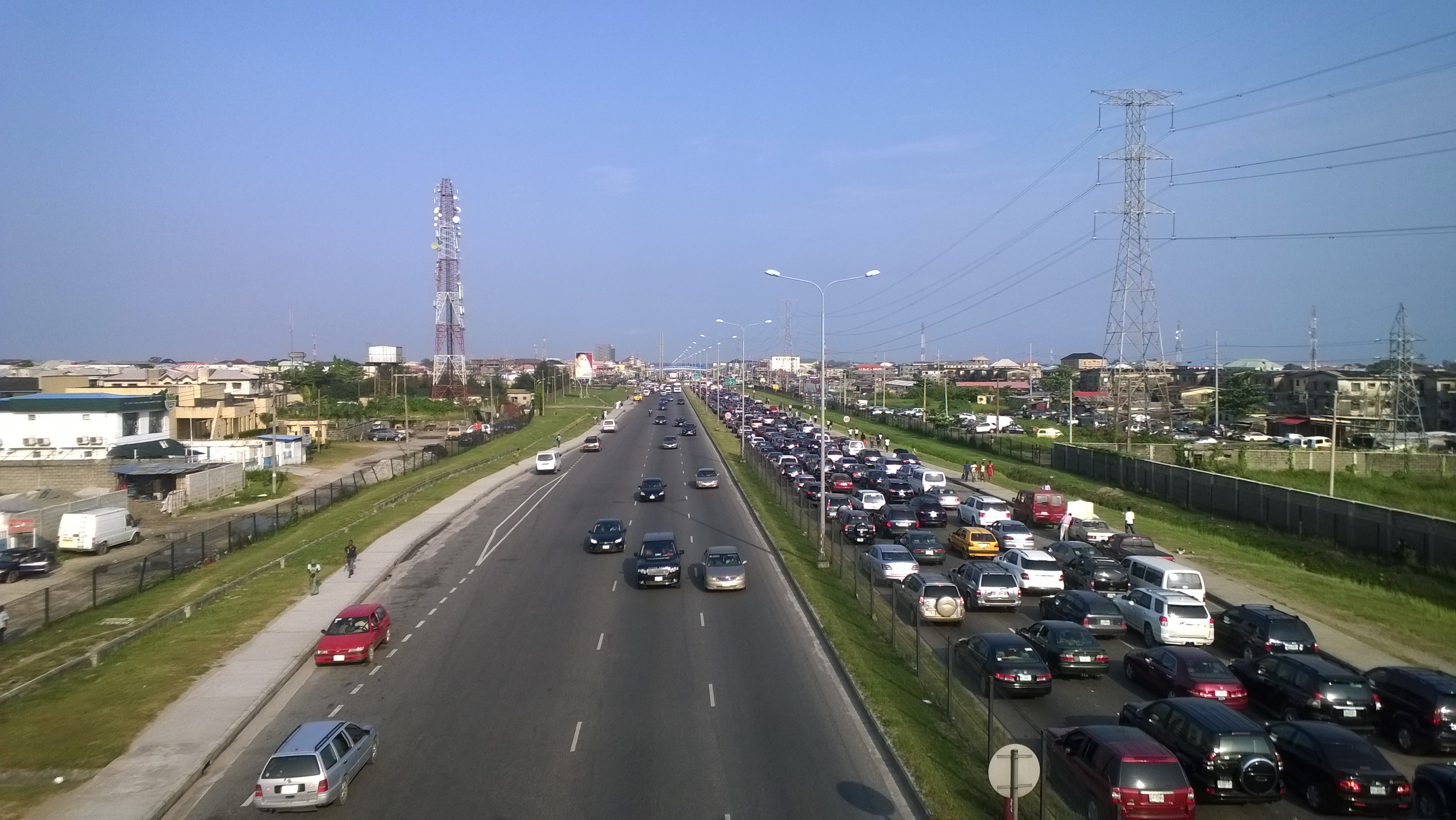
On my way to work the other day, at the Oando Roundabout, one of the many along the Lekki-Epe expressway, I overheard a couple of traffic cops complaining about the drivers on the road. They spoke loud enough for drivers in each of the cars nearest to them on the road to hear, if they paid attention, as I did. They gesticulated as they spoke, complementing each other’s point within the same discussion. By the time I got close enough to them within the creeping traffic, all I could hear was “See them, all these cars, there is just one person in each of them!” I recognised it immediately as the same sentiment I’d harboured for a while, about the typical unwillingness of Lagosians to carpool. I also noticed that, like many of the drivers on the road that morning, I was also alone in my vehicle.

The Lekki-Epe expressway is a tar stretch of 49.5 kilometres starting somewhere around old Maroko (now called Sandfill) and ending, across the Lagos Lagoon at Epe. The road was constructed in the 80s during the last civilian administration before the military took over in 1983, but expanded recently when civilian rule returned to Nigeria in 1999 during the tenure of Bola Ahmed Tinubu. The expansion turned what was, at the time, a narrower town road into a wider stretch able to accommodate more vehicles commuting everyday to work at the Victoria Island end from deep into the Lekki peninsula. Lekki itself, like Manhattan in the United States is as much a peninsula as it is a mix-bag community of mostly middle and upperclass people (but with a considerable mix of lower class, indigenous people, itinerant service workers from out of state, and other ethnic Lagosians).

IMG_3368_1

The House on the Rock Church, Lekki (pictured left, by the flag) was constructed with millions of dollars, and caters to the creme of Lekki middle and upper class Christians.

To claim to “live in Lekki” for most Lagosians and Nigerians is to claim a status that marks one as different from the masses. The image conjured is usually one of affluence: two to three cars for one family, a big house fully owned or at least rented at a high cost, a job in a prestigious bank or financial institution at the Marina or Victoria Island end of the Lagos island, and children who live either abroad, or who attend some of Nigeria’s most expensive schools. The perception is however unwarranted, of course, as many who live in Lekki (and yet work in low paying jobs, live in streets that get flooded whenever it rains, and typically take public transportation everyday to get to work) will attest. There are many “Lekkis”, from Lekki Phase 1, where the rich supposedly stay, and where rent for a three bedroom apartment start from two and a half million naira ($12,500) per year, to Jakande, halfway on the expressway, where rent is a little more affordable, but still higher for many average Nigerians (800,000/$3500) to Sangotedo, and beyond where many who can’t afford more than 400,000 naira per year ($2000), and lower, take residence. Like Manhattan, living on the Upper West Side is not the same as living in Harlem. Same borough. Different experience. (Certainly, different expenses).

WP_20141116_004

On a typical evening, as in the morning for the other side of the road, hundreds of cars stretch as far as the eyes can see. (Photo taken at Jakande area)

What is true and indisputable about the peninsula today however was what was confirmed to me on that morning ride: there are too many cars on the road. In a recent news report, the number of private cars on Lagos roads was put at 600,000, with another 120,000 accounting for motorcycles. This is for a state of a population of about 9.013 million people. I don’t have a figure for the number of public transportation we have on the road, and we don’t know just how many of these vehicles ply the Lekki-Epe expressway, but what we see every day on the way to work, where a trip that should otherwise last for six minutes (Igbo Efon to Ikate, to use the example of my route) on a Sunday usually takes fifty minutes on a Monday morning, and the number of people we still see at bus stops every morning looking for rides to work way past the 8am opening hours, tell us that there is not an efficient ratio between the number of cars available and the people who need or use them. The is so much wealth, but little value.

WP_20141116_006

Another view of the road at around 4pm in the afternoon. Motorists, most of them private cars, carrying less than two people in many cases, file behind each other for stretches of kilometres.

The Ibeju-Lekki local government that covers most of the area accessible to this expressway has a population of 117,481, out of which one can guess that more than a quarter of the adult residents have private means of transportation sometimes for themselves and for their spouses (and in some cases another one to pick up and drop off their children in school). This, ordinarily, shouldn’t be a problem in a free market, capitalist, democracy. The problem comes from what this has meant for city planning, the climate, sustainable development, ease of access for commuters, the road itself, and wellbeing in general.

Living in big cities has likely always had its drawbacks much of which relate to the level of noise and environmental pollution. In the case of Lagos however, much of it seem preventable and at the same time sadly inevitable. By having too many cars on the road most of which have the passenger seats empty, traffic jams increase, preventing most people from getting to work on time (except they have to wake up as early as 3.30am, like many of my colleagues do, thus reducing their quality of life, and costing companies millions of naira every year in wasted work hours otherwise spent in traffic, morning or evening), we pay a price in more ways than one. The traffic jams affect everyone including those in private transportation. A road that can currently take four to five cars at its widest, wear and tear increases as well as other maintenance expenses accruing to the state due to use, and may even break down into disrepair. More than that, more cars equal more carbon emission, damaging the atmosphere and endangering inhabitants, many of whom are already unhealthy from a sedentary lifestyle encouraged by private cars. 

There are many solutions to the problem, but the state government will need to step up. For one, the Lekki-Epe Expressway, by now, should have ceased being the only access road across the Lekki peninsula. A beach-side road from Victoria Island, said to have been under construction for a number of years, needs to be completed as soon as possible. So are the number of inside connections that can take a commuter from Lekki Phase 1 to Ajah without having to get on the expressway. These routes haven’t been developed because the government hasn’t invested enough in making the constructions needed to connect these barely motorable inside roads. And, away from cars, where are the safe bicycle routes that commuters can use, satisfying one’s exercise and transportation needs at the same time? New York has more people, and more cars, yet there are spaces for cyclists to ride. Where are the large commercial ferries subsidised, perhaps, by the government, to move large quantities of people from Epe to Victoria Island without fuss? Where are the trams and in-city trains? Also, what about policies that encourage carpooling where, for instance, cars with at least three people inside it will get a free or reduced pass through the toll gate, or at worst expedited passage?

From my experience as a commuter without a private means of transportation, I can attest to the goodness of a number of Lagos residents many of who will stop to give strangers a free (or even reduced cost) ride towards their destination early in the morning or in the evening. I have given many such free rides myself, particularly when it rains. However, this is not, and should not be enough. There have been other solutions, including the new ride-share services like JeKaLo and GoMyWay which are both Nigerian solutions to allow the private owner to carpool with vetted strangers for a small fee. I haven’t used either of them so I can’t speak to their safety or otherwise, but their continuing success through use points to the fact that they are meeting a need and solving some of the problem. Services like Uber, Lyft, etc are also playing a part in reducing the number of private cars on the road by allowing their owners use them for public transportation during their free hours.

We need many more ways of solving a problem that seems – with the number of newly imported cars entering the city every month – to be on the way to only get worse. As for me, I’d keep taking occasional opportunities to trek and explore the outdoors, saving car fuel in the process and stretching my legs. I’d say let’s look away from cars totally, but this is Lagos, the city of statuses and egos. That would take a very long time.

_________

All photos courtesy of the blogger

Surviving SIUE – A Cheat Sheet

Over the last couple of years, I’ve received mails from young people who have gained admission into Southern Illinois University Edwardsville, are about to travel, and are interested in tips that can help them survive in the institution. I’ve often had to write them long emails answering particular aspects of their requests. Today, I want to put much of my thoughts on the matter here, in order to help many more that might stumble on the blog while looking for information about the school and the city. (I wrote something similar, earlier, for Fulbright FLTAs heading to the US, if this is your category).

____

First off, congrats on your admission into SIUE. You should be proud of that. If you are also lucky to have got one of the many tuition waivers available for exceptional students, even better. Congratulations. What this means is that all you’ll have to worry about is feeding, housing, and transportation. To have the tuition burden taken off is a big relief. If you’re also extremely lucky enough to already have a Graduate Assistant (GA) position that also pays you a stipend of about $8.50 per hour for 20hr work per week, along with the tuition waiver, then even better. You are one of the luckiest students. All we have to do now is talk about the school, the environment, the people, and other interesting details. If you don’t have any of these grants and you still have admission to SIUE, let me address you first, below.

As a student, one of the things that could help take your mind of the stress of studying is a tuition waiver and/or scholarship. Most schools have this for exceptional students who apply for it. SIUE is no exception. I know a couple of friends who have applied and received this scholarship/waiver/grant without knowing anyone in the University. They merely applied on the website, followed up, and were selected because of their record. If you still have the time, go here and see if there’s one you can apply for. GA positions are usually advertised on the school website as well. With those, you get to work for the school in different capacities (either as a research assistant to a professor or a food attendant at the school food court. There are many others in-between), and get a stipend of up to $850 per month. Ask about these before you travel.

About the School: Much of what you need to know about SIUE can be found on the school website or on Wikipedia. Located in a conservative part of Illinois (at the bottom left end), most of the students in the school are from Illinois and neighbouring areas. Some of them have actually never travelled out of the Southern Illinois region before, which once surprised me. According to Wikipedia, 9.68% of enrolment comes from other foreign students. Out of this, there are Indians, Chinese, Taiwanese, Korean, African and European students. However, notwithstanding the seeming insularity, the presence of SIUE brings a multicultural presence to the area, and you will be surprised at how knowledgeable a number of the people you meet are about the world.

About Classes: I studied Linguistics/Teaching English as a Second Language in the Department of English, so my knowledge of class and studying is limited to that and the Department of Foreign Languages where I taught for one year as a Fulbrighter. If you’re familiar with this blog, you probably have an idea of my experience both as a student and as a teacher. The summary is that the classes are thorough, the teachers are patient and knowledgeable, and the master’s program is usually a combination of stressful and interesting times, as you’d expect from anything worthwhile. It helps a lot to talk to teachers about whatever is bothering you, ask questions rather than assume, and always turn in your assignments as at when due. Avoid plagiarism in all cases. This can cost you grades and your reputation.

Social and Care: SIUE has something called the International Hospitality Program. You should read about it. They’re also on FB. What it is is a group of (usually retired) family men and women interested in social good who volunteer themselves to be host families for international students. They do not really “host” you in their houses for the duration of your stay, but they invite you out, send you birthday cards, give you occasional rides to town, among other small conveniences. You’d be surprised at how much of a relief that usually is for a student living far away from home. One of the things that made my first night on campus one of my most memorable was the package left for me in my apartment by members of the IHP. My host family was a couple with an Indian father and a white mother, both Americans. They eventually became like real family inviting me out on occasions, sending me Christmas cards, etc. I am still good friends with their children, even across the distance.

Accommodation: For university housing, I’ve always expressed my preference for Cougar Village. I like it because it is a “village” in the true sense of it, but it’s also a small town, depending on what indices are used. It has a post office, a beautiful lake, a police presence, a regular bus schedule, fast (and complementary) internet and cable, heating and air conditioning, and a number of interesting features. I have many fond memories living there. However, I should say that the fact that I had a scholarship (for at least one year of my study) made it easy to stay at Cougar Village. The cost might be too prohibitive for many. In that case, having accommodation in town is advisable. You should ask around, preferably from international students associations. They will be able to tell you where you can get decent housing at affordable rates off campus. As most students also realise, sharing an apartment with a colleague/fellow student/friend is also a smart way to save money since both of you can share the costs of the amenities you consume.

Outdoor Social: Being a small town has not robbed Edwardsville (and the greater St. Louis area) of its fun. There is (or used to be) a small bar downtown called Stagger Inn where you can get very good toasted raviolis (my favourite snack) for under $10. The beer is good and you have a range to choose from. It also usually has a live band at least once a week. Close to it is Erato Bar where you can get the best mojito in town. If you crave Asian food, there is a Wasabi Sushi bar at 100 South Buchanan Street. There is also (was, at least, when I was there) a Chinese buffet in the same complex where you can eat-all-you-can for about $10. My favourite place for wine is an old winery about five minutes drive from downtown where you can taste the different types of wine before buying. I hope it’s still there. I think it is. Just found the homepage. You’ll find many more by going online for reviews, or talking to people. If you don’t go to town a lot, the Skywalk Cafe on campus located above the space between Founders Hall and Alumni Hall has one of the best wraps I’ve ever had. The food there is not bad for a student who has to shuttle between one class and another.

Transportation: In Edwardsville, as in most parts of the United States, it helps to have a means of transportation. Mine for about a year was a bicycle given to me by my adoptive father. I looked a lot awkward riding it around campus, particularly with a Nigerian cap on my head everywhere I went, but I loved it because it freed me from having to always wait for the bus. It also helped me discover Edwardsville by myself, depending on no one but a city map. In the winter, it may be a little tricky to remain on a bike, but thankfully the buses that go from campus to Cougar Village also made allowance for the bicycles in front of the bus. In any case, the situation of the roads will determine when is best to ride. The best alternative, of course, is to have a car. But since this is not an option open to every student, many of who have to pinch pennies to survive, I’d say go with the bus. It cost about a dollar to move from one place to another. The buses also go to almost everywhere, so you won’t get lost. The best thing about the bus is that it is usually air conditioned and is a good place to read or do people-watching, if that’s your thing.

Food: Like I said earlier, there are a number of good restaurants to visit if you can. Otherwise, cook at home. It’s cheaper and you have control. For my Nigerian/African brothers, some American foods can take getting used to, but it’s not big enough a deal to turn you off totally. Try things out and you’ll discover what you like and what you don’t.

Academic/Intellectual Resources: The Best Small Library in America for 2010 is located in Glen Carbon, about twenty minutes drive from campus. If you ever have the chance, pay it a visit. It’s a beautiful and resourceful place. I wrote about it once too, for the now defunct 234Next newspaper. I reprinted it here. You can find the pictures here. Otherwise, the Elijah Lovejoy Library on campus is a good enough place for research, studying, and any other intellectual enterprise. But if you live downtown Edwardsville and you want a place to use, the Edwardsville Library is also very good, and accessible. If what you want are non-academic intellectual clubs, ask around. I know of the Eugene Redmond Book Club in St. Louis. Google it. There are also a few open mic poetry readings around town that might interest you if you’re into poetry and such.

Other Dos/Don’ts: I can’t think of much. It’s a beautiful and lovely town, with nice and lovely people. Make friends, don’t be afraid to ask questions, and have fun. Before you know it, two years (or whatever number of years you need to spend) will be over, and you’ll be sad to leave. You’ll miss the deer and the ducks, the walkways and the lake. There are probably many more things you need to know that I can’t remember here. Don’t worry. Whenever you need to know it, you will. Most importantly, have lots of fun. And oh, don’t forget to keep plenty quarters on you at all times ;).

Good luck!

Why I Believe Almost All African Languages are Endangered

Guest Post by Luis Morais


Languages as cultural and social institutions of their peoples can either flourish, evolve and thrive or stagnate, degrade and die. There are several causes and factors that contribute to the death of a language, we could simplify things by stating that languages either die by the force of oppression (from man or nature) or by assimilation: when speakers start using a foreign language more than their own, up to the point that the dominant language swallows the regional language.

UNESCO rates how far a language is to extinction by quantifying the number of new young speakers learning and using it actively both inside and outside their homes. It is a straight-to-the-point system but it exclusively evaluates language “health” from the perspective of its spoken use without a deep consideration of how actively the regional language is used as a tool for knowledge creation instead of the dominant foreign language and how motivated regional speakers feel to preserve the knowledge acquired from previous generations.

Most African languages nowadays are safe from violent repression and technically considered alive due to the numbers of their many speakers. Nevertheless, since the world trend is that we will grow more and more dependent on digital technologies, we must consider the growing pervasiveness of the digital and online world in Africa either as:

  1. An opportunity for African languages to gain their space in the online world and thrive in the digital age;
  2. Or, where languages fail to establish an online and digital presence, the speeding up of the assimilation process where the local language is pushed out of yet another environment by the dominant language with the side effect of further eroding local speakers’ opinion of the language as useful and relevant for the digital age.

Knowledge is much wider than gadgets, corporations and factory plants

This article expands the focus of language health and longevity from new speakers learning the language and number of oral speakers to how actively the local language is used to create and preserve knowledge in the digital age. So that we are clear, whilst some view knowledge as exclusively what corporations, academic institutions and factories churn out every year, we base our argument on the fact that knowledge is much wider than that.

Within every language a trove of knowledge is to be found in the form of myths, poetry and literature, gastronomy, spirituality, herbs and natural medicines, philosophy and untranslatable concepts, music and new sounds, art, child upbringing methods, moral concepts, ways to govern and live in society, forms to express feelings and everything else.

In the oral tradition of Africa, it potentially resides a) the basis of the advances we enjoy today, b) the leads to future breakthroughs, c) but most importantly the blueprints of a sustainable way of life in this broken planet. This knowledge, essential and valuable as it is, must be preserved for the sake of the hidden lessons we might still learn from them.

If one thing, and one thing only, Africa should learn from Europe is fostering one’s own local languages

Although Africa is the home of the oral tradition, the historical evidence also shows that Africans from all over the continent have also been writing and recording their knowledge for centuries. Nevertheless, be it in Arabic, Medieval Latin, French or English, Africans from the past and present seem to have produced more physically recorded knowledge in the crusader’s and colonist’s language than in their own local languages.

In Europe, local languages stand a better chance to co-exist (instead of competing) with dominant official languages. Although the pressures of assimilation from other majoritarian European languages are still present, local languages and minority national languages in Europe have possessed a localised digital infrastructure compatible with knowledge creation in the local language for some time now.

The results are clear:

  • Catalonia as an autonomous region in Spain with 7 million Catalan speakers, boasts a book catalogue of 56.000 titles. Despite having suffered government repression in the past, nowadays the Catalan language is digitally accessible and content can be easily found online.
  • As another notable example, Iceland, with a population of a bit more than 300,000 people publishes 1,500 books in Icelandic every year.
  • In the case of Yiddish, one can easily find online book repositories with more than 10.000 free titles.
  • In the UK, there is plenty of literature produced in Welsh (430.000 speakers), Irish (2.5 million speakers) and Gaelic (87.000 speakers).

Regional and linguistic identity has always been a European theme, backed by a lucrative regional cultural industry generating millions of Euros. In the African context, it is difficult to foresee how regional languages expect to thrive in the digital age unless regional speakers find the localised tools and motivation to use their local languages in the digital space.

Why aren’t we producing more digital content in African languages?

We contemplate a future where our descendants will learn more of their identity and culture from digital and online sources. These future generations will likely listen to their oral tradition in YouTube, dance to their drums in iTunes and read about their myths in Wikipedia. These future generations will be more and more engaged in living a digital life and used to accessing and sharing information from digital sources.

In order to create local knowledge for these future “digital & online” generations, we first must allow regional language speakers to use their languages whenever and wherever they want. This is hardly possible in Africa today simply because the basic tools such as local keyboards and local digital language features are hard to find if not nonexistent.

Most African languages have poor access to digital aides such as language glossaries, text-to-speech databases, auto-correction and auto-suggestion features amongst other incredibly simple digital advances such as OCR, the technology that allows words in a picture of a book page to be recognised as words.

In simple terms, one can’t create knowledge in their local language without fully accurate and functional language tools.

As a personal example, being a speaker and writer of Brazilian Portuguese, I battled with keyboards to write in my native language when I came to the UK. Portuguese characters such as “ç” and accented letters such as “ã”, “à”, “ê”, “ó”, “ü” were impossible to type in a UK keyboard and for months I didn’t create much in my own language, reluctant to write it in a way that was orthographically wrong and open for misunderstanding.

In order to write in my own language, I tried several workarounds in the first years. I spent time cutting and pasting the accented characters from Brazilian websites into my writings; I installed intrusive virtual on-screen keyboards; and at a time I imported a European Portuguese keyboard which took a lot of physical space since my family still needed the UK keyboard around.

Just when I started using customised keyboard layouts on my UK keyboards then I was able to write from my coração (heart). Just then, I felt intellectually liberated and started creating knowledge in my own language.

Conclusion

Whilst typing machines epitomised the colonist’s oblivion (if not plain hostility) to local language and culture by locking knowledge production to a keypad in the colonist’s language, soft keyboards, computer keyboard layouts and digital language aides give the local speaker the freedom to produce knowledge in as many languages as they want or need.

The technology is here and has been available for some time, nevertheless in order to give regional African languages a fighting chance in the digital age, more needs to be done in order to create easily accessible regional language tools that allow one to exercise their regional language and culture with full digital language support.

I link the low usage of local languages to produce digital and online knowledge to both technological and social reasons:

  1. There are insufficient localised input tools that allow one to write in their local language correctly.
  2. Attempts to write the language with an incompatible input tool generates imperfect language content without the right characters, accents and tonal marks.
  3. Content created without the right orthography dilutes the language. For not being standard it is harder to find in search engines.
  4. The lack of digital language tools such as glossaries, dictionaries, OCR, auto-correct and auto-suggest features amongst others demotivate less experienced speakers of the local African language.
  5. By seeing their local language under- and misrepresented in the digital and online world, speakers don’t feel their regional language is relevant for the digital age.
  6. By being forced to make more effort to write in their regional language correctly, speakers decide not to use it as often as the dominant language to avoid the extra work.

Once the barriers above are removed and local digital language tools are created, part of the mission to allow African languages to represent themselves in the digital world will start to be accomplished in the form of the unblocked production of regional language content. In other words, make the tools for localised knowledge production accessible and everything else will follow.

________

Luis Morais writes from Brazil. This article was first published on LinkedIn here.

________

Bibliography/Further reading

Google’s Vint Cerf warns of ‘digital Dark Age’
http://www.bbc.co.uk/news/science-environment-31450389

How do I address you? Forms of address in Oko – Uchenna Oyali
http://academicjournals.org/article/article1379410255_Oyali%20pdf.pdf

Is Yorùbá an Endangered Language? – Felix Abidemi Fabunmi & Akeem Segun Salawu
http://www.njas.helsinki.fi/pdf-files/vol14num3/fabunmi.pdf

An Endangered Nigerian Indigenous Language: The Case of Yorùbá Language – Temitope Abiodun Balogun
http://nobleworld.biz/images/6-Balogun_s_Paper.pdf

African Languages in a Digital Age, Challenges and Opportunities for Indigenous Language  Computing. Don Osborn, HSRC Press.


Raising Money: The Dictionary Experience

There are many ways to fund a project, I’ve realized. One can work hard, save up for many months, and then put all that savings into the choice project, ignoring family and other more important commitments in the process; or one can ask friends and family for a raise, promising that the money will not all go down the drain of sometimes unrealistic dreams. This is usually a good idea if they are not, at the moment, committed to something else more important themselves. Usually very rare. Or one can apply for a number of grants in the world, promising to make one’s dreams come true.

Most grants however are specific. I got a MacArthur-sponsored grant in 2005, for instance. It came with a stipend of $600 for all of six weeks, with a paid trip to Moi University in Eldoret Kenya for a “Sociocultural Exchange”. The Fulbright of four years later came with a monthly stipend of about $1200 but one had to pay for lodging, and feeding in the United States (totaling usually up to around $800) such that by the end of the program, there was just enough to buy an iPod Classic, a hand-held camera, and a few gifts for hordes of friends and family back home.

Some grants require that the grantee do a couple of things (like write a book, for instance), or stay in a particular location for a period of time. Or do work in a certain area for a period of time. In most cases, except one is already established in that field, it’s hard to find a grant that fits conveniently. That was why when sometimes last year, while pondering a way to continue and expand a project I started as an undergraduate in the University of Ibadan “A Multimedia Dictionary of Yoruba Names”, I constantly ran into a wall of doubt as to the possibility of raising enough funds (and finding enough interested people) to get the project moving. The model I had submitted as an undergraduate project was of just a thousand names borne by Yoruba children, with their meanings and (for the first time) audio pronunciations done by Yoruba speakers. For 2005 Department of Linguistics at the University of Ibadan, it was an impressive work. For a 2015 adult with access to more efficient technology and crowd-sourcing, it was less than a tip of the iceberg.

IMG_6625I didn’t have enough savings to start the project on such a scale that I envisioned, and I couldn’t think of any grants that could fund it. Even the Fulbright Alumni Innovative Fund (for past Fulbrighters), as diverse as it is, was limited to a number of categories which doesn’t accommodate a project focused on lexicography and language documentation. There is the MacArthur Genius Grant, a suitable and appropriate grant that makes no demands on the grantee but rewards them (with $650,000 over five years) to be able to achieve their dreams without the drag of a 9-5 job in a busy city. Problem was, one needed to be nominated, and the folks who nominate are usually not known to anyone but the MacArthur folks. Finally out of options, the idea of crowd-funding struck me, just as quickly as the imperative to use 2015 as a year to proceed with the dictionary idea in the first place. I’ve had some contact with Indiegogo before now, but only through friends who had asked me to donate to their project. I’d also heard of Kickstarter, GoFundMe, GlobalGiving, and a couple of other crowd-funding sites. I did a little search on all of them and found Indiegogo most appropriate. Unlike Kickstarter, they don’t send all the pledged amount back to the owners if the goal is not reached. They do take 5%-9% on all the funds raised though, which makes sense when we realize that they’re also in business to make a profit.

So, on January 6 (a not-so-smart date to start a fundraising drive, when one considers the expense that usually goes into the Christmas holiday period), I launched the Indiegogo campaign, open for 60 days. Yet, in spite of the inauspicious beginning, the idea resonated with a lot of friends, family and colleagues with whom I shared it, and they gave, surpassing my expectations. It may also have had something to do with how obnoxiously I pestered a couple of them who promised to donate and then promptly went AWOL :). More importantly, word about the project got out and many people who had nurtured similar ideas about documenting the Yoruba experience but lacked the means or network to do so wrote to me to volunteer their time and services. It has been the best part of the whole experience. There have also been other not-so-encouraging ones: colleagues who matter-of-factly expressed their unwillingness to support either because I’d never supported their projects in the past (even without my knowing it) or because they had their own projects that also needed financial attention. In all, I learn a lesson in human relation, fundraising (I wonder how politicians do it. Explains why I’d never be one), drive, and persistence.

There are now about 15 days to go until the fundraising effort is over. But yesterday, I realized that this is only a start. Yes, I do want to create a Yoruba Dictionary of Names, and the dream is now more realer than ever, thanks to a number of known and unknown people. I however also want to create a Lexical Dictionary of Yoruba containing all the words in the language, also crowd-sourced, and also multimedia and internet based. There is no excuse for the absence of such a document online and such app in mobile phones of interested people all around the world. I want to translate more work from English into Yoruba (I’ve still not completed the one I’ve been working on for years), and render more work from Yoruba into English, and into audio. I want to work with as many people as are willing to make Yoruba relevant to the next century in information technology. The industry for mother tongue education, and documentation is one that is huge and waiting to be tapped. Yes, we are translating twitter into Yoruba, but that can’t be all. Where’s Facebook? Instagram? Google? Where are machine translations? Where is Siri Yoruba? And to do all of these will take more than the $5000 that we are now on the path to raising. We need more.

Yesterday, I applied for the TED Prize 2015, a prize worth a million dollars to support any dream from anywhere in the world. A total stranger had sent me a link to it via Facebook, believing that I have a shot. I scoffed for all of one second and then sobered up. If life has taught me anything, it’s that more than hard work and persistence (which usually pays), taking a chance on oneself is also usually a good idea. I have also begun to look for any other grants that can support a dream of creating a thriving ecosystem of mother tongue education and use in Nigeria. Not just limited to Yoruba, by the way, but the over 500 languages in the country.  It might happen, or it might not, but it will not be for lack of trying. There is a future worth pursuing. From the kind of enthusiastic support I’ve seen from the Dictionary fundraising, one also within reach.

Goodluck, Gridlock, Gone!

We’ve been at this stage before, in Nigeria, a couple of times in fact: a government welcomed with wary but open arms gradually wastes all the goodwill it has once enjoyed on one distraction or the other until it eventually runs out of favour with the electorate. Then it begins to panic and seeks means to prevent itself from being thrown out. First the strategy looks benign, then gets desperate, and eventually destructive in a way that almost takes down the whole country with it.

Looking back to much of the crises of administration in Nigeria’s history, this has been the pattern: Akintola in the defunct Western Region, Yakubu Gowon in the seventies, Ibrahim Babangida during the June 12 crises, Sani Abacha afterwards, and Olusegun Obasanjo with the Third Term Agenda. In all these instances, the common denominator is an eventual disgracing of the principal, and the ushering in of a new administration. In a few cases, it comes with loss of lives, properties, and the well-being of the country. Babangida’s hubris ended with a transitional government and a coup d’etat. Sani Abacha’s, with the bite of an apple.

Yesterday, the administration of Mr. Goodluck Ebele Jonathan joined the infamous list of Nigerian rulers incapable of looking away from the lure of interminable power. A man ushered into office on the huge enthusiasm and hope of all Nigerians in 2011, after two years as a substitute for a dead principal, has now finally come full circle as nothing but the same old power-hungry model we’ve known too well. Yesterday, 11 hours after major news outlets broke the news, the chairman of the electoral body INEC announced that he has been arm-twisted into postponing elections previously slated to hold on February 14 to a later date six weeks away. The excuse made no sense, and people saw through it immediately. But that didn’t stop the emperor with no clothes.

Yesterday, before the announcement was made, military men were seen patrolling Lagos and other major states around the country, ostensibly to keep the peace (that wasn’t threatened), but in reality to put the nation under an atmosphere of intimidation which usually helps to allow rigging when called for. A leaked audio tape from a previous state election in Ekiti state shows how the administration had used the Minister for State for Defense and other government officials to bully security operatives into allowing them a free hand to manipulate the outcome of the election. By pretending that a state of unease exists in ALL the parts of the country (and not just the NorthEast where Boko Haram has finally taken root after six years of half-hearted security response by the government), Mr. Goodluck gets a chance to again use the agencies of state for ends not beneficial to anyone but himself and his merry band of political opportunists.

We have been here before, and the situation always ends the same way: disgrace and dishonour. It is true that the coming election will be between a civilian and a dictator. More than ever before, Nigerians are committed to voting out the dictator as soon as possible. Six years is long enough.