Browsing the archives for the Opinion category.

East St. Louis (Illinois) Sesquicentennial: Ten Talking Points

by Eugene B. Redmond, February 23, 2011 . . . Re: 150th Birthday Celebration, April 1.

1.         we arrive, we arrive

we cross-fertilize

we derive, we survive

2. For a thousand years, Native Peoples (“mounds” builders) inhabit both sides of the Mississippi River. In “Illinois,” these “Mississippians” build the largest city in “America” (circa 1250 AD)—with a population exceeding that of London at the time. (Fast Forward: “Native” culture survives/pervades Metro East today via mounds, namesakes (sports teams, rivers, streets) museums (lectures/tours), conferences and annual pow wows.)

3. 1600-1800: After French Jesuits settle in “Cahokia” (late 1600’s), other Europeans follow, including Captain James Piggott, who operates the first Mississippi River ferry business (1790’s). A few hundred Africans are among settlers. (Fast Forward: During the 20th Century, ESL’s “Piggott” Avenue nurtures Scotia Calhoun Thomas (entrepreneur), James Rosser (college president) and Jackie Joyner-Kersee, among others.)

4. 1800-1860: Flood of Immigrants. Belleville incorporates as a city (1850). ESL, evolving through name changes, social and economic processes, is overwhelmed by flooding and a tornado at mid- and late-century. City becomes industrial/commercial center. Fledgling “Negro” self-help groups, one-room schools, churches and settlements (like Brooklyn and Quinn AME Church ) are created. (Fast Forward: Brooklyn is renown for its Harlem Club where Duke Ellington, Shirley Brown and Albert “Blues Boy” King perform.)

5. 1861: From “Illinois City” to “Illinois Town” to “East St. Louis” . . . the “Village” is born on April 1.

(Fast Forward: ESL, criss-crossed by railroads, is second after Chicago in RR and meat packing industries.)
6. 1861-1900: Civil War begins. U.S. transitions from agriculture to industry, driving a commercial-industrial revolution in ESL. 1871: Creation of National Stock Yards. Eads Bridge opens (1874). First mayor, John Bowman (1865), is assassinated in 1885. Centennial of St. Clair County is celebrated (1890). Captain John Robinson leads battle for schools (for “coloreds” plus Lincoln and Garfield); “Negro” lodges, churches (Macedonia, Mt. Olive, St. John A.M.E.) and professionals increase. ESL’s population rises to nearly 30, 000 (with several hundred African Americans). (Fast Forward: During 19th and 20th Centuries, ESL is “transfer” point for goods and soldiers. John Robinson Elementary School and Homes open on Bond Avenue. As a “ premiere avenue for Blacks during the 1920’s,” according to Jeanne Allen Faulkner, Bond is also home to mid-20th Century Lincoln High School and the Cosmo Club where Chuck Berry’s career is launched.)

7. 1900-1925: More flooding. Meat packing industry moves to town of National City on ESL’s northwest end and, like Monsanto (Sauget) on the southwest flank, incorporates as a separate entity, depriving ESL of a rich tax base. In 1917, a gumbo of social, political, economic and racial factors causes the Race Riot. (St. Louis [MO] Chapter of Urban League is formed the year after the Riot.) Of U.S. cities with populations of 50,000-plus, ESL is the second poorest. Even so, it is among fastest growing cities in the country: Its population doubles every 10 years (reaching 75, 000 in 1930). 1924: ESL NAACP chapter is organized.

8. 1926:  Miles Dewey Davis III is born in Alton (IL). The Davises move to East St. Louis in 1927.

9. 1926: In sympathy/empathy re: victims of the Riot of 1917, Duke Ellington co-writes/records “East St. Louis Toodle-Oo.” … The song later appears on a Steely Dan album, Pretzel Logic. [Throughout 20th and 21st Centuries, movies, TV shows, books, ballets/stage plays (like Katherine Dunham’s Ode to Taylor Jones III and Frank Nave’s East Boogie Rap) and publications, such as Drumvoices Revue, focus on ESL.]

10. 1926-present: After struggles for jobs and freedom, equal housing and education (Black-based and citywide schools); after “Miles/tones” and “Negro firsts” like the Paramount Democratic Organization and Dr. Aubrey Smith’s election to the Illinois House of Representatives (1930’s); after creation of “Negro” newspapers, being named an All American City (1940’s-1960’s) and more floods, the rest is history . . .

_________

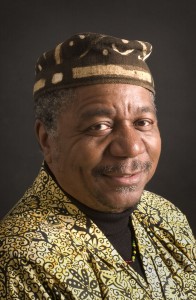
Eugene B. Redmond is the poet laureate of East St. Louis founder of the EBR Writer’s Club and a retired professor of English from SIUE.

Caught: Osama: Dead!

The first thoughts in my mind is that the family of victims of 9/11 may finally get some deserved closure. And then the thought of what may have happened if evil didn’t exist, if there was no need to blow up the US embassies in Nairobi, or the WTC in 1993, or the twin towers in 2001. I still remember where I was then – in the dormitories of the University campus in Ibadan – as friends scurried to bring me to the television. It was evening in Ibadan and CNN was breaking the news, along with footage, of planes hitting the world trade centre.

What would have happened if a rich Saudi son had used his strength, industry, leadership and organizational style to a more productive use, say, trade. Or entertainment. Or even just a normal spiritual or educational leadership. How different would the world have been? There is nothing extraordinary about living in caves. Men have done it for centuries. The idea intrigues, even. A set of men with deeply held beliefs living out of the box of their privileged upbringing in search of spiritual, or mainly normadic, experience. I know I would have loved to go on one of such expedition.

How did violence against innocent people on a large scale even become such a worthwhile venture? And how did the man supposedly smart enough to have evaded capture all this while not have been smart enough to see the big picture: that the world is bigger than the little thoughts in the mind of a handful of hateful nomads riding in the desert. As slowly as the wheel of justice grinds, it always catches up in the end, somehow. His death is not a victory for America as it is a victory for humanity, and justice for all. It is perhaps also a call to introspection, although the cynic in me still nags on the futility of such news as this – as significant as it is – to eradicate evil on the surface of the earth. I’m glad he got what he had coming to him, Osama. Can’t we all now just get along?

Wen E Go Come: Of Creoles

Linguist John McWhorter comes to the defence of the African American Vernacular English (also called ebonics) as a distinct dialect of English with its own complex grammar – rather than an abberation – in this rather enlightening podcast on NPR. Recent discussions in my sociolinguistics class have focussed on the big controversy about the language (as it should be properly called) and teaching and cultural attitudes in the United States. Is the slang (as some have pejoratively called it) coming over to challenge the dominance of real English? And what exactly does it mean to make provisions for acknowledging its status (AAVE) as a language in the classroom when there exists a whole lot of other learners (like genuinely disadvantaged white kids) who have to take instructions in standard English, without any special preferences. It is fascinating, the discussions.

The part that gets me thinking however is how this relates to the language situation in Nigeria at the moment, with pidgin (which should appropriately be called a creole actually, since pidgins are more defined by simple grammars and spoken only by first contact generations alone) still being relegated to a low status position in a society from where it has evolved into its own place over many years. With an equally complex and systematically observable grammar, form and lexicon, the language has become a lubricant in the multilingual dynamic of our nation with its over 500 languages. The situation is not any different from what is happening in the US, at the moment, in fact. The codification of language usually takes informal means, and after a few generations become standard in their own place with or without government sanctioning. It has happened with AAVE as it has with Nigerian Pidgin, Jamaican/Haitian patois, among others. All that remains is the right institutional sanctioning to make them more relevant in official discourse. PS: Nigerian Pidgin could also do with a new name of its own.

Discoursing Translations

I spent a few hours last week in the house of an American colleague, Tom Lavallee, who teaches Chinese here. He had invited me and a few other friends for an evening of Chinese food and conversations in his St. Louis home. His partner is a Chinese woman who works as a writer as well as a translator from Chinese into English.

The conversation soon turned to the matter of writing, and the challenge of translating from one language to the other. What is lost in translation? What remains? How authentic is that product of translation in representing the original thought of the writer? Who makes the call of how translations should turn out? How much is taking too much liberties with original ideas? Where does translation end and improvisation/adaptation begin? They were interesting questions for me not only because I’d considered them many times myself before, but also because I discovered, a few years ago, that the translation of George Orwell’s classic book Animal Farm into German was not uniform because the translators belonged to different ideological camps during the cold war. I have spent countless moments pondering the literary tricks that would be needed to render something so clearly anti-socialism (or at least anti-leninism) as anti-capitalism. But then, that is the power of translation – which thrives on running an original idea through the conduit of the mind of a removed second reader-writer.

I’ve read a few Chinese literature in English. We discussed the ideas behind Soul Mountain, the famous novel by Gao Xingjian, translated by Mabel Lee into English. It is a travelogue of some sort incorporating elements of soul-searching autobiographical non-fiction, fiction, vignettes, ethnographic writings, musings, jottings, poetry, and story fragments. One of the challenge of translating from Chinese must also include rendering an idea of communality into an English-speaking culture of individualism. But therein lies the pleasures of translation – a special brand of serving that is not totally belonging to one culture, and not totally transformed into the other. In language learning, that would be a sort of “interlanguage” – a language that is neither the first nor the second language. What we read when we read something translated into English from Greek or Latin, or Arabic, is neither those languages, nor is it English. The ideas are most times successfully conveyed in the target language, but not enough to prevent literary/language purists from a snobbery that insists on the original as the most authentic standard bearer. And they are sometimes right. Yet, the “interlanguage” of translation carries in itself an original and yes authentic voice.

Garcia Marquez is famous in English speaking Africa even though we don’t speak Spanish. Vargas Llosa will be too soon enough, for good reason. How much did we lose if we did at all reading in English? Does it ever matter? Does my friend from Morocco have a better and richer literary experience than me because he speaks Tamazight (his local language), Arabic (his national language), and French (his country’s official language) and English and is thus able to read many more literature in original languages? If I read Naipaul in English and he reads it in French, what have I gained that he hasn’t? Does an Indian reading Naipaul or Rushdie (in English) gain something more? After all, they are co-sharers in the cultural conditioning that produced the texts? If I read Onitsha by JMG Le Clezio in French, do I gain any more or less than those who do it in English? After all, the writer is French. But then, after all, I am Nigerian, and the story in the book are based on the writer’s adventures in the Nigeria of the 60s. For those who have read George Orwell’s 1984 in German, or in Japanese, how does the writer translate words like “newspeak” and “thoughtcrime”. Does it make the same compact sense as it does it in English?

I first read Plato On the Trial and Death of Socrates in the early 2000s and what struck me the most was how beautifully it was written. It was a translation. Plato did not write in English. A few of the other plays we read as undergrads The Frogs by Aristophanes, Oedipus Rex by Sophocles, and Wole Soyinka’s notable translation of D.O. Fagunwa’s classic novel into The Forest of a Thousand Daemons all struck me as bearing very distinct literary styles that stand in their own stead as authentic study of thoughts in translation. The last time I read Plato On the Trial and Death of Socrates was late last year in Edwardsville, and I was greatly surprised at how insipid it read compared to the one I read back in Ibadan. The conversation on the dinner table went back and forth within these many areas of literary translation and I learnt as much as I grubbed. By the time the evening was over, all I wanted was a financial grant to go live in a small house by river and complete all the pending translations I have been working on for many years.

The last time we conversed, I sent them a long Yoruba to English translation of some of my father’s poetry. Half insecure in my experimentations (I’d completed the translation in 2005 and haven’t worked on it since then), and half wondering if any of the beauty of oral literature is lost when they become text, I was pleasantly surprised to read as a response to it, an email from my colleague: “That is a lovely, rich and absorbing poem,” it read “I have read it twice and found myself drawn in so many directions, wishing I could climb its hills, listen to its music more closely and roll around in its musky earth – love is a vast world, mysterious and ordinary and always full of pungent flavors and astonishing depths and heights.  I would like to read more.” See? Maybe all that is lost to translation should be the expectations we bring to it from our knowledge of the depths of the original. A few hours later, he sent me a work-in-progress Chinese to English novel translation excerpt that he and his partner (the writer) had been working on. I found it a delightfully splendid read. And I don’t speak Chinese.

Good literature will always speak out, in whatever tongues it finds.

American Mean Time

Universal time used to be determined at a village of Greenwich in the United Kingdom, and everything was measured against it. I never could figure it out and I grew up wondering why Nigeria was always one hour ahead of the BBC clock. Later in the Geography class, I figured out why. It had to do with the equator or something like that. Then one day I came to America and found out that there is something called Universal Time (UTC). Again, like the old British hubris, Americans expected everything in the world to be measured in relation to that so called universality. A few weeks ago, I had scheduled a phone interview with Rosetta Stone and it was due to come at 2pm (UTC). All I saw was the 2pm, and I planned my day accordingly. I was sitting by my desk at 1pm when the phone rang. It was the representative of the company, and they were calling for the said interview. Good thing I was not still in the shower at the time. What I didn’t bother to wonder at the time was why I seem always to be one hour away from the standard or universal time.

There are other things that have changed. Yesterday I scrolled through a list of the world ranking of universities. In the 60s and 70s when the now ruling leaders and of the Nigerian society were going to school, schools in the United Kingdom and the Soviet Union among others in Europe were the leading citadels of knowledge in the world. A few people came to the United States to study. Now, according to the list, the first dozen or so universities in the world are universities located in the United States. I scrolled down for a bit before locating my own institution somewhere down on the list, and it was enough to inspire a little urge for schadenfreude at the other ones a little farther down the list. But then, it could be worse, we could be one of the British universities who used to occupy the pride of place in the top list of world class universities. Now, they are somewhere scattered on the list, sometimes even farther lower than Taiwanese, Japanese, Swiss and Swedish institutions. I will not try to hazard a guess as to why.

Chuks is a MacArthur foundation scholar from Nigeria now here in the US. He has his own ideas of why it is a better alternative to go to school in the US in today’s world, beyond the common knowledge that its universities are ranked far higher now more than before. The system of learning and studying are such that the student is built to become independent in thought and research. What is wrong with European schools? “I know of the British schools,” he’d say, “and the system is built in such a way that you get to regard the professor as some repository of knowledge – a person high up there who knows everything and who should not be challenged – rather than a colleague like you who only happens to have read more, and spent more time on the field studying the same things that are available to you if you work just a little bit harder.” Chuks has never studied in the United Kingdom.  The system in Nigeria is a mixture of both, with a slant towards the British, naturally, and unfortunately. I have been fortunate to have experienced the impatience with professors in Nigerian class who believe that just by the virtue of their age, experience or qualification, that they were beyond questioning or challenge. I have also been lucky to have met the right ones who would fix appointments with you in a bar so that you could both examine academic ideas over glasses of beer. I have met egoistic teachers who disallowed you from entering their class only because you didn’t scurry into the class when you saw them coming. I have also met those who set their evening classes under a tree just for a change of perspective. The progress in my academic development is mostly due to the inspiration and positive reinforcement of those good ones, and my rebellion against the hubris and negative reinforcement of the bad ones. At least, I survived.

Or so I think. The biggest misconception about the teaching and learning system of the American classroom today – at least from developing countries that I have some experience of – is that the presence of books and the internet makes it easy to get through. Well, it is true only to the extent of the student’s adequate balance of time and responsibilities. This takes me back to my title. American mean time refers not just to the new role of America’s very engaging, individualistic, and absolutely absorbing educational system in the world of academics. I am using it to refer to its absolute mercilessness when a student dares to take up more courses per semester than necessary. (Yes, this post is about me again). I have personally come to see the benefit of a more relaxed, yet ultimately absorbing schedule that allows the student to get all that is needed in, within a realistic time table that puts the least manner of stress on their mind. I do believe that I have become a better student of language due to the work of the past one year. And thanks to that is due to all my teachers, both the brilliant, open-minded ones, and the empty and needlessly hard-assed ones. At least I learnt something. Perseverance will get you through everything. Or almost everything. Brilliance (or modesty) plus an innate curiosity will compensate for the rest.

But maybe a few decades from now, we’d be talking about Chinese/Japanese Mean Time. Who knows?