Browsing the archives for the Opinion category.

The Art of Witness and Peace in Bosnia: Ways people have remembered and reconciled since the the war

This was written by guest blogger Sean Amiri who also works as a radiology technician and writes on the subject of top online universities.

In the close to 20 years since the beginning of the Bosnian War, much has happened. Thousands have been massacred, international forces have intervened, peace agreements have been negotiated, individuals have been tried for war crimes, refugees have fled. Yet, in the midst of this difficult story, it is inspiring to know that people have resisted against the brokenness and destruction that consumed the conflict. Here are two examples of how human spirit and creativity have used art to remember and reconcile the war from its very first year until today.

Witnesses to Evidence

The seige of Sarajevo began in April 1992. Six months later, in the shelled and rundown Sujetska Cinema, a gallery director and eight artists gathered to create something as a witness to the conflict. From that October to April 1993, the artists collaborated on a series of works inside the hidden hallways of the cinema, where Sarajevans frequently passed through to escape snipers outside. The gallery director, Mirsad Purivatra, and the eight artists – Nusret Paši?, Zoran Bogdanovi?, Ante Juri?, Petar Waldegg, Mustafa Skopljak, Edin Numankadi?, Sanjin Juki?, and Radoslav Tadi? – created a living testimony to the war they themselves were living.

The exhibit was themed around and subsequently named Witnesses to Evidence, after Nusret Paši?’s piece. The exhibit was invited to represent Bosniz-Herzegovina at the 45th Venice Biennale, but because of the wartime blockade, the artists and their works were unable to travel. However, later in the spring of 1994, they could finally leave. Witnesses was brought to exhibit at the Kunsthalle in New York, and the schedule was ideal. At the time, international audiences were gathering in New York to discuss the aftermath of the Bosnian conflict. More attention was being given to the consequences of the war.

What many found compelling about Witnesses was not so much its representation of the war, but more so the sense of obligation it passed on to its viewers to act as witnesses to history. After he saw the exhibit in New York, Johannes H. Biringer, an artistic director and the author of Performance on the Edge: Transformations of Culture, wrote a commentary about what the artists had done:

“They build meaningful compositions of the human spirit and intelligence in midst of the war’s insanity,” Birringer stated, “Thus they become also witnesses of our indifference; their irony and resiliency shame us. Their work also proves that it is neither impossible nor frivolous to make art in the time of war; perhaps making art in such a time is as necessary as finding food and shelter and healing the wounded.”

Most Mira

A little over a decade after Witnesses exhibited in New York, Bosnian-born Kemal Pervani? and social researcher Lea Esterhuizen founded Most Mira, a charity organization based in Britain and Bosnia. Most Mira means ‘Bridge of Peace’ and fittingly, the organization’s mission is to build understanding and tolerance among youth in Northwest Bosnia by means of creative community arts.

Imagine this: 500 Bosnian, Serb, Croat, and Roma kids frolicking around for a week dancing, playing games, playing music, painting, writing, and singing. It’s a picture in stark contrast to war. That picture is of the Youth Festival that Most Mira has organized since 2009. And now, the charity’s energetic and innovative Trustees and Action Team are in preparation to launch this year’s festival scheduled for May 16-20, five days of workshops in art, drama, circus skills, dance, music, media, and performance. With May approaching, they’re in the last leg of the hunt to recruit volunteers, the ones who really make the festivals possible. Though, the point of it all reaches far beyond the fun and games. In a fragmented society shadowed by the war’s aftermath, what Most Mira and these volunteers do is help continue the work of remembrance and reconciliation that began in Sarajevo all those years ago.
News from Home

The following conversation – or something very close to this – took place on the way from Lambert airport a few days ago. In the car were three of us: An American professor/director of international programs, a Nigerian professor of technology visiting our campus (and the United States) for the first time on a MacArthur Foundations scholarship, and me. What united us was our interest in Nigeria. All of us had lived there at one point in our lives and are connected strongly to her in some way or another.

“When was the last time you went home, K?” the new Nigerian asked.

“I was just there in the summer,” I replied. “That was just a few months ago.”

“Nice. Do you plan to come home sometime?”

“Yes, of course. As soon as I’m done with whatever I have to do here. But it is also important that I have something concrete to do over there. I wasn’t very impressed with the situation before I left.”

“Oh no,” He said. “Things have really improved. The new president is really doing things.”

“He is? That’s interesting, because all I’ve heard these days are very unflattering things. Bombs, do-or-die politics, and campaigning with convicts.”

“No. He is really doing things. Electricity has really improved. Even education. He is bringing professors from here (the US) back home to help shore things up. We will need all hands on deck when you are done. You should come back home.”

Here the American professor contributes. He is impressed by the news of progress. I remained skeptical.

“I’m surprised that all you hear are the good news,” I said. “I’ve followed the situation in Nigeria closely and I do not think that Goodluck stands any chance in the next election except for the power of incumbency. I have not seen or heard any thing about progress. I do know that last week when one convicted member of his party was released from prison, his presence was conspicuously felt – along with the ex-president – at a church service thrown to welcome him back. It was a celebration of corruption if you ask me.”

“Oh no. He is a smart man.” The guest replies again. “All those corrupt people are close to him now because they are afraid of what he will do to them when he wins the election.  He is a strategist. Don’t believe all you read.”

“I don’t really care for smart men but smart institutions, or things would never change.”

The conversation went on for the stretch of the forty-five minutes it took to drive from the airport back to school. I was lost in contemplation of what could be the cause of a stark difference between what I read from ordinary commentators, citizen journalist, academics like this new Nigerian, and real pundits online about the state of my country. I have not been impressed with the Goodluck charm as I probably should have been, and have been known to show a certain interst in the prospects of ex-Military ruler Buhari and his vice Bakare, for some strange reason. For one more reason, some of my otherwise smart friends have taken to volunteering for his campaign organization. How could this have been?

Being stuck here means that even if I want to, I can’t cast a vote. All I have is an opinion, and a chance to scoff at faux optimisms. It is very possible that our guest was saying all he could to paint the country in the best of lights, especially because of the presence of an American.  It is highly unlikely, I thought, for things to be all good and rosy without there being a way for outsiders to see it from this distance. From where I stand, the current president is just as much a savvy politician with love for his hold on the position as everyone else. How that translates to progress for the country, I have not yet seen. But then, we still get to have elections.

In then end, I return to my couch skepticism. It is not like changing our leaders will make our lives miraculously better. It at least provides a way to spend otherwise idle time, and a chance to have a say in how the process turns out.

Attention Egypt!

In a blatant crackdown on the right of people to protest, assemble, and demand for democracy and a better standard of living, the government of Egypt led by the 83 year old dictator Hosni Mubarak has turned off internet and mobile phone access in the country. Since yesterday night, citizens of the country have been unable to access the internet or use their phones to communicate with anyone outside the country. This is one of the most draconian measures taken so far in an effort to stifle protest rather than budge and give the people what they want. What will come next is predictable, the government will find it easy to shoot, kidnap, and round people up without word of it getting out to the outside world. This is unacceptable.

The protests springing up in the middle east and other parts of the world today represent citizens being fed up of the way things are run. First it was Tunisia where citizens rose up and sent a dictator fleeing. Now the heat is on Egypt, and this heated protests are led by young people. We’ve also heard of similar uprisings in Yemen. It is a fundamental right of citizens to be heard and for their grievances to be listened to. To have them shot at, arrested and punished for doing so not only makes the uprising justified, it makes it even more imperative. The United States, unfortunately, has not been unequivocally supportive of the people’s right to remove a non-democratic government that has been in power since almost thirty years. Come on, what ever happened to choice, to democracy and a representative government!?

My colleague here from Egypt has become worried since yesterday when all contact with her family in Egypt was cut off by government crackdown on the tools of global communication. Who knows what the government is doing to them now? I call on all people who hate dictatorship and government brutality and who love freedom and self aspiration to support the call on President Mubarak to support the aspiration of the people for better government and more freedom or resign his position and flee the country like his fellow dictator in Tunisia. Not only has he planned to remain in government for the rest of his life, he has even begun to prepare his son as a replacement when he eventually passes. Well, from what we see of people’s responses on the streets of Egypt, it looks like that is not going to happen after all. Or is it?

There is a planned protest of Egyptian students and friends here on campus today, and I plan to attend. Take that USA!


Our Generation is a Running One

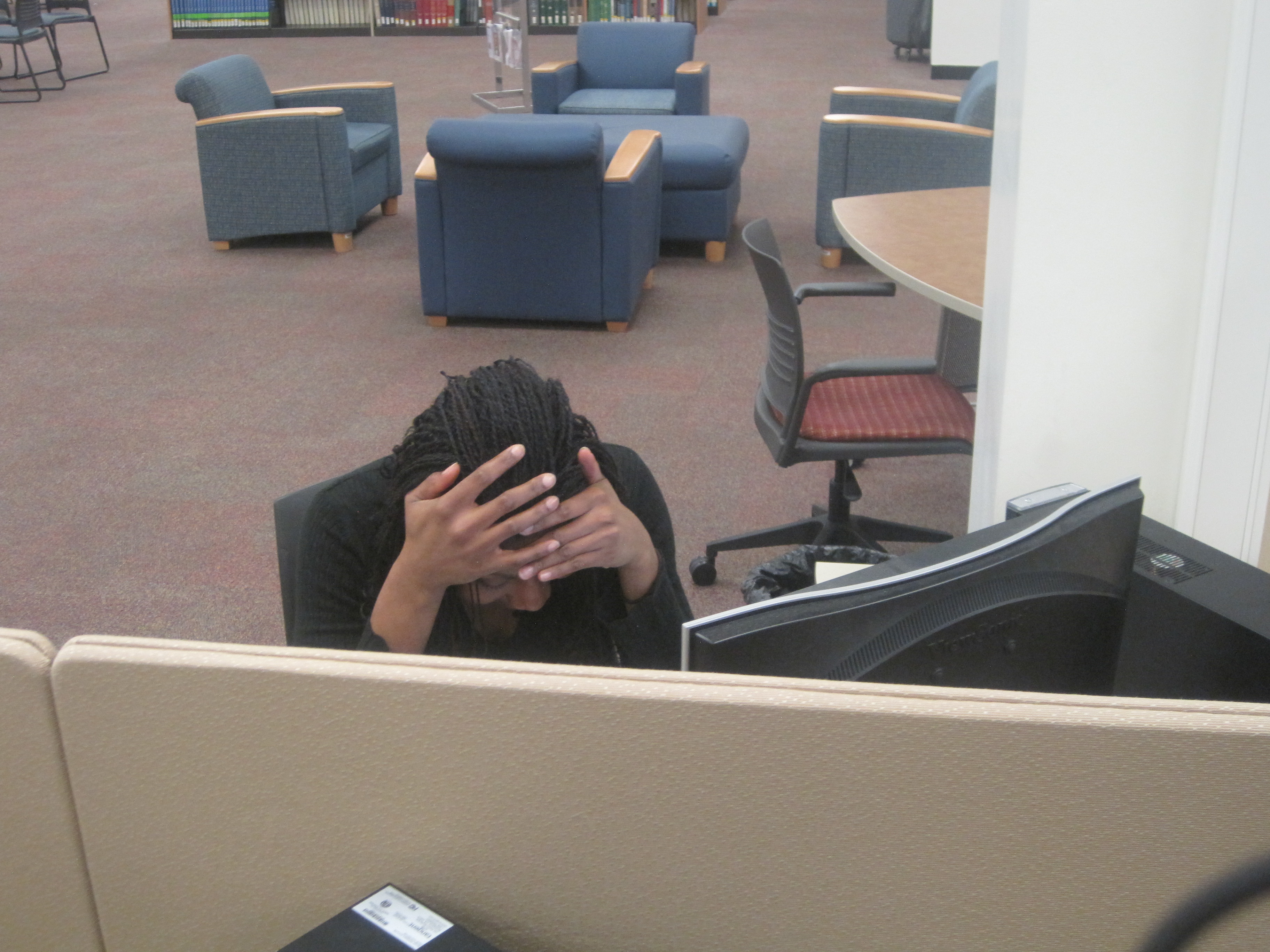
What do I have? Where am I? Where am I headed? These are three main questions that I always asked myself when things looked bleak. There was a stretch of two years not too long ago when I asked myself the same question everyday of the week and every hour of the day while running after very many things that provided not just a way to remain active, but an escape from the tedium of asking. Years later, when many of those endeavours paid back beyond expectation, I became grateful for the chance just to ask them, even in the dark of despair when there was nothing else to do. I’ve been grateful for those moments ever since although I would never hope to relive them.

Today, prompted by many running conversations with a few people, students wondering where their life is headed in these sea of expectation and uncertainty, I want to tell a little of my story and hope that it moves them to do something, or just keep moving – whichever works – as long as they do it with all focus and the realization that everything done with a passion and the best of one’s efforts will always be rewarded, sooner or later, in some form or the other. And a realization that every experience has something to teach that would be useful for the next stage of life.

Our generation is a running one, moving, searching for its own true relevance. In the dark days of those years when the world seemed closed down around my head, I thought about so many things that I could do to avoid waking up everyday to face the bright morning sun that seemed ever so promising, yet not forthcoming with anything but a quandary of many superficial exits. Yet somehow, I got through it. How, I can’t say now, except that one day, it all passed away along with its dark clouds of self doubt and despair. I woke up, and it was sunshine again, with the beautiful colours of a new day. Then I took a shower. (Haha, kidding!)

Many students today in the different areas and levels of school work are worried about the prospect of their future. They are not alone. I remember just how depressed I was in the last weeks of my undergraduate days, wondering just what the world had for me. All of a sudden, I was heading out of this cocoon into a bold new world with its own brand of rules and expectations. The only buffer between that exit and the big bad world was a mandatory national service. A year after the national service – actually many months before – I relapsed into the same state and wondered if anything more than gloom would come out at the end. With nothing but hope, resilience, tenacity and the willingness to endure the long nights, I somehow trudged on doing whatever I could, and here I am.

I guess the only thing else to say is that when life boxes you into a corner is usually the best time to get up and fight. Sometimes it seems impossible and totally hopeless. The good news is that it isn’t. I can call myself a living example. (Knocks on wood.)

Of the Englishes

The Urban Dictionary defines “Just sayin'” as “a term coined to be used at the end of something insulting or offensive to take the heat off you when you say it.” Here is the example that comes with the definition:

Jordan: Anna you have really let yourself go.

Anna: What the hell! What is your freaking problem?!

Jordan: Just sayin’

Anna: Oh well in that case, I suppose its okay.

Jordan: Friends?

Anna: Fer Sure.

There is a phrase in Yoruba that translates to just that. It’s often just used as “I’m just saying my own”, or in plain English, “I’m just giving my own opinion. Don’t crucify me for it.”  Now we have the Urban Dictionary for telling us what we already know. In other news, the expression “What is doing this one?” will be a perfectly correct Nigerian English expression of exasperation at someone/something that you don’t understand. What’s wrong with him/her?

Those of you not on twitter would have missed the trending topic of a few days back, titled “English Made in Nigeria.” Check out more of them here before they disappear from off the internet. If you can sort through the pidgin rubble, you’ll come away with some golden gems, like: “She’s my senior sister” meaning “older sister.”