Browsing the archives for the Opinion category.

Nigeria: The Petroleum Storm

On January 1, 2012, the Nigerian government announced the removal of oil subsidies that have hitherto kept gas prices in the country to below fifty cents per liter. To citizens of the world’s sixth largest exporter of crude oil, government subsidy of gas prices is one of the inalienable advantages of belonging. Other basic government amenities in the country are virtually non-existent. Power supply is abysmal. Security of lives and property is terrible. Roads are bad, and the educational system is not one of the continent’s best (as it was a few decades ago).

Like I said on twitter two days ago, and as everyone knows, the problem is really not the fact that the subsidy was removed. It was the way in which it was removed: abrupt, and total, plus the fact that no one in the country trusts that the money that will accrue to government from this increase in fuel prices will be used to improve social amenities and the life of citizens. Nigeria is probably the only large exporter of crude oil without access to stable and affordable electricity, good roads and an affordable healthcare system. It is disgusting.

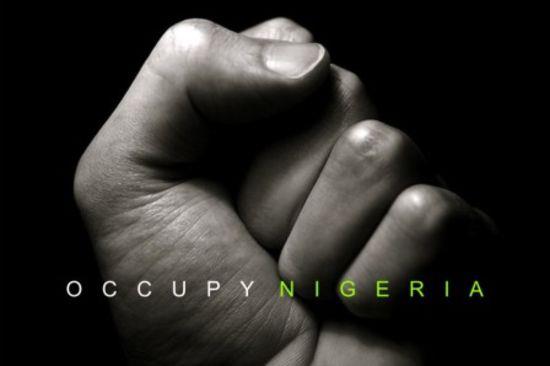
So here it is: today all around the country, students, workers, middle and working class people are storming the streets to protest the price hike and to demand that government restores some (if not all) of the subsidy. A government so insensitive to the pain of its citizens as to increase fuel prizes to over 200% on the first day of the year deserves all the outrage it gets.

The Mayans Have It

I’ve been trying to find the right words to sum up this year. When I look back, there is an enormous bank of memories (some of them very personal) that I carry. There is that very first day of the year spent in the good merry company of my a friend, a Fulbright colleague, and my friend and fellow blogger Clarissa (and her husband). We had the most delicious cake, a great food, and a merry time into the night. Then there is that delightful trip to Chicago in July which changed my life in a remarkably delightful way.

It was this year when we protested against Mubarak using social media. I wrote this poem for him in January a few days before he was actually kicked out. Fun times. Little did I know that other tyrants would fall after him: Gaddafi, Osama, Laurent Gbagbo, and Kim Jong Il. Two of those dying tyrants were mentioned in the title of the poem. If I was a betting man, I could be rich by now. I also remember 2011 for The King’s Speech, one of my most favourite movies of all time.

This year, I met Ken Burns and Niel deGrasse Tyson – two brilliant writers opinion makers. I also visited Joplin in what will remain one of my year’s most enduring memory. I’ll also remember the year for losing my last surviving grandmother in January, then an aunt in March. Not very happy feelings about that. In 2011, the St. Louis Cardinals won the World Series, a surprise. I did not write as many posts this year as I did in previous years, deliberately. Academics have taken much of my attention, inevitably. Thank you for forgiving :). Now, if we listen to the Mayans, all the remaining negatives on the world’s plate point only to one conclusion: this will be our last New Year celebration. (I haven’t seen that movie 2012, but I’m very familiar with its apocalyptic premise).

So here we are: Iran on the way to nuclear armament, the US selling new arms to Saudi Arabia, a small but skilled group of homicidal religious maniacs are blowing people up in Nigeria with the hopes of setting up an islamic government, Syria is on a murderous rampage on its protesting citizens, Egypt is unstable, and the Isreali-Palestinian conflict is not any nearer to resolution than it was fifty years ago. If the Mayans are to be believed, whatever needs to happen will begin to happen when the new president of the United States takes office in November 2012. Ron Paul? That’s a scary thought. But by then, I will be as far away from this place as possible, most likely in the arms of someone I love. Is there a shuttle service out of this planet?

So, there it is, a sum of my thought for the dying year. My favourite posts in the year was The News Paradox (and perhaps Advances in Indigenous Language Technology). Cool visits: Lewis and Clark.

May the coming year bring a smile to your face.

What were your favourite memories, posts, news?

A Nigerian Tragedy

There comes a time when talking about the same kind of tragedy, or idiocy, over and over again becomes a futile act. Once is an aberration, twice is a trend. When it happens a third time, it has definitely settled into a most horrific pattern. I speak, of course, of the terrorist acts in Nigeria committed by a small radical Islamist group*, as well as the inability of the government to respond in a satisfactory way. It has almost become an annual Christmas idiocy.

In 2009, just around Christmas, the idiot from Katsina Abdul Mutallab got on a plane from London headed for Detroit, and almost took all the lives on an airplane. He put the country’s name on the world map for terrorism, and the outrage from citizens was unprecedented. “He doesn’t represent us”, we shouted, as the United States placed the country on a terror watch list. In December 2010, a bomb blast in Jos killed about 32 people and wounded dozens more (along with another one in October sponsored by the Movement of the Emancipation of Niger Delta, to mark the October independent celebrations). This year, bombs placed strategically in churches where faithfuls were celebrating the Christmas holiday has now claimed another number of innocent people.

However, beyond the deserved rage against the deranged people to whom violence is an acceptable way of making a point, and the gross ineptitude of a government unable to provide adequate security for the citizenry when they need it the most, I have realized that what should be most deplored is also the lack of fast and competent emergency response. A common sentence to all the news about the recent attacks is a variation of this: “Nigeria’s Emergency services acknowledged they didn’t have enough ambulances immediately on hand to cope with the wounded.” If the government entrusted with the security of the country could not provide that security, it should at least provide emergency help whenever crises happens. This one did not, and thus the tragedy. I am outraged.

NEMA should either be made efficient, or be disbanded and its funding money given to non-governmental organisations that will provide real emergency response whenever citizens need help. It is anyone’s guess how many lives would have been saved if there was prompt emergency response by capable people on the ground rather than finger-pointing and vain tough-talking rhetoric by an incompetent government. When I’m in an accident and dying on the street, I do not want my government on television saying “(this is) a dastardly act that must attract the rebuke of all peace-loving Nigerians… These acts of violence against innocent citizens are an unwarranted affront on our collective safety and freedom” as Mr. Jonathan did last week. I want a president that directs all emergency vans to my help as soon as possible. I don’t know about you, but I would appreciate that a whole lot more.

* The crises in the country are not caused only by radical Islamists. Other radical minorities like the said Movement of the Emancipation of the Niger Delta (MEND) have also been credited with many acts of violence on innocent public structures, and killed countless innocent people. Then there are vehicular accidents, maternal mortality, and armed robbery. An undeniable fact is the decline of that country into chaos. A more heartbreaking one is the ineptitude of government response either in prevention, and in crises management.

PS: There is a new KTravula poll on the right sidebar. Please tell me what you think. —->>

On Poetry as Science

One piece of prose floating from the fading memory I have from reading Czeslaw Milosz’s Visions from San Francisco Bay occasionally come back to haunt me in my still moments. It asks amidst a whole lot of other questions what the purpose of words are beyond their ability to convey meanings. In one recent interview with Stephen Colbert, Astrophysicist Neil deGrasse Tyson compares the inconsequentiality of our presence on this planet to that of a billion (and some) bacteria living in the walls of our intestines whose number is equal to almost three times the number of all human life that ever existed and died. Like those bacteria, he suggests, who live without the mental capability of understanding the dimension of their inconsequentiality when compared to six billion other intestines walking the earth (with the multibillion units of bacteria they carry in them), we may not possess the mental flexibility to understand our insignificance (along with our equally possible random relevance as evidenced by our current existence).

Milosz asks as if to himself what makes it so that words, in their utmost insignificance beyond immediate use, lends themselves to entendres, rhyme and poetry. Did there exist on some magical plane a predestination for the word “apple” to become the symbol of ultimate taboo, pleasure and sin? In which realm of serendipity did “gain” and “pain” acquire the paradox of their rhyming complementarity. Sure computers may not write poems now (and I have no doubt that this is false), but the lexical matrix of today’s world endows us with a gazillion ways of expressing thoughts in inventive ways. The order in which I have written the last couple of sentences in this post (with almost a 100% certainty) is an order in which these words have never ever been arranged and never will anymore by anyone else. There is something to that. The process of writing poetry, for me, taps into the science of this randomness. The art resides in the chance of success – that moment when meaning, form, and words meet at the tip of the writer’s hands. See below:

I balanced all, brought all to mind,

The years to come seemed waste of breath,

A waste of breath the years behind

In balance with this life, this death.

from W.B. Yeats’ An Irish Airman Foresees His Death

This concise beauty, and an underlying deceptive simplicity that wows, has always defined for me one of writing’s unreachable bars; the place where science, art and meaning collide with the earnest needs of the present.

Conversations with Neil deGrasse Tyson

America’s most famous astrophysicist dropped by campus today for an event of the SIUE Graduate School. Dr. Neil deGrasse Tyson is the director of the Hayden Planetarium in New York City and the recipient of the NASA Distinguished Public Service Medal, the highest award given by NASA to a non-government citizen. He is also the author of The Pluto Files and Death by Black Hole (and other Cosmic Quandaries).

His talk, titled “Our Past, Present, and Future in Space” focused on the regression and eventual end of the US space program, and the contribution of public and political apathy to this end. Those who have heard him talk will already be familiar with his worldview: a passionate defense of imagination and a unified, inspiring public policy for science. The end of the space program, according to Mr. Tyson, is one of the worst things to have happened to America in a long time not only because of the now total absence of motivation among young people, but also because of how the general apathy has now negatively affected the status of the country in the world. In a preview to the visitor’s speech, Dean Aldemaro Romero of the Faculty of Arts & Sciences had this to say: “While I was growing up in Venezuela and told my parents that I wanted to be an astronaut, they told me ‘You have to be either an American or a Russian.’ Now, many decades later, as an American citizen, I have found out that to go to space, I’d either have to be Chinese or Russian.”

There was a lot more. The maps of the world, when plotted on a chart on the basis of resources spent on science (and, on another chart, on the basis of scientific progress/development in the last decade) shows the African continent virtually invisible. What concerned Dr. Tyson however – as well as the members of the audience – was the shrunken shape of the American map as well. Even Brazil, and Japan, on this map showed far more encouraging progress, to the dismay of all who have previously believed this country as being on the farthest frontier of future advancements. Many things are wrong, among which is the absence of a political will and imagination.

At the reception party arranged for him, I asked for his opinion on the absence of scientific advancement in Africa, and whether the frontier had irrevocably moved westwards. He disagreed, opining instead that like every great civilization had come and gone, the continent would have its turn again at some point in time. There is a particular initiative at the moment in South Africa, he said, where scientists have begun training young high school students in order to be able to produce the next big scientist (of the stature of Albert Einstein) and a Nobel Prize in Physics from the African continent. What did he think of Physicist Richard Feynman? “He’s as brilliant as he has been described,” he replied.

Known among young people in America today as the man who relegated Pluto from the status of a planet to that of a mere floating astral rock, Neil has contributed to the progress of modern science and astrophysics in popular culture than most people in the world today, and continues to do so. It was quite an enlightening event. His autograph on my copy of his book simply read: “To Kola, welcome to the universe.”

His book, The Pluto Files details in a fun manner the arguments and debates surrounding the relegation of the former planet Pluto, including also letters from angry young children and cartoons from the media weighing in on the many sides of the relegation debate.

Previous guest speakers at the Arts & Issues events here include Maya Angelou, Ken Burns, and the Basie Count Orchestra. I recommend this video, by the way, Dr. Tyson in conversation with Stephen Colbert. (H/T @loomnie)