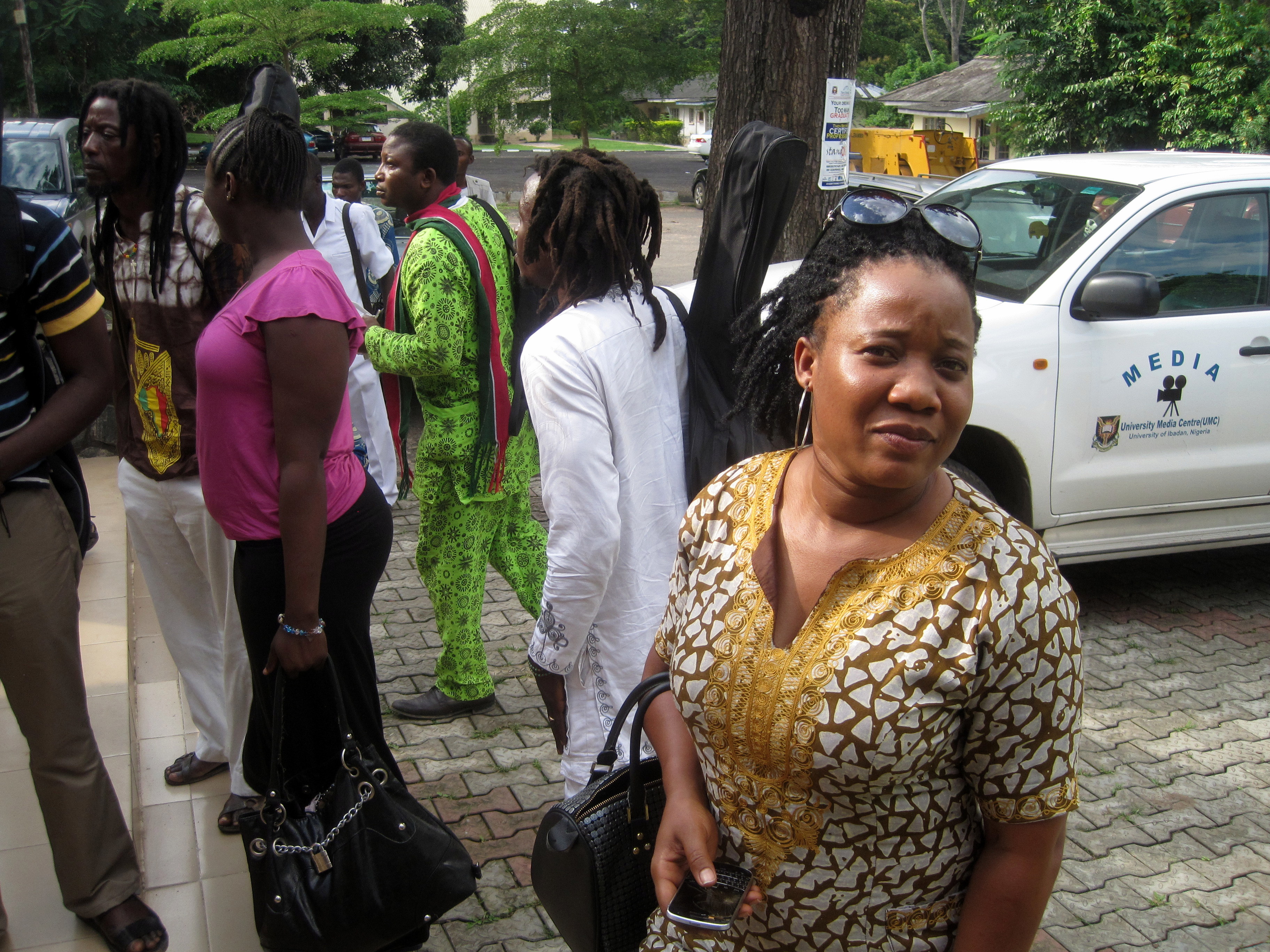
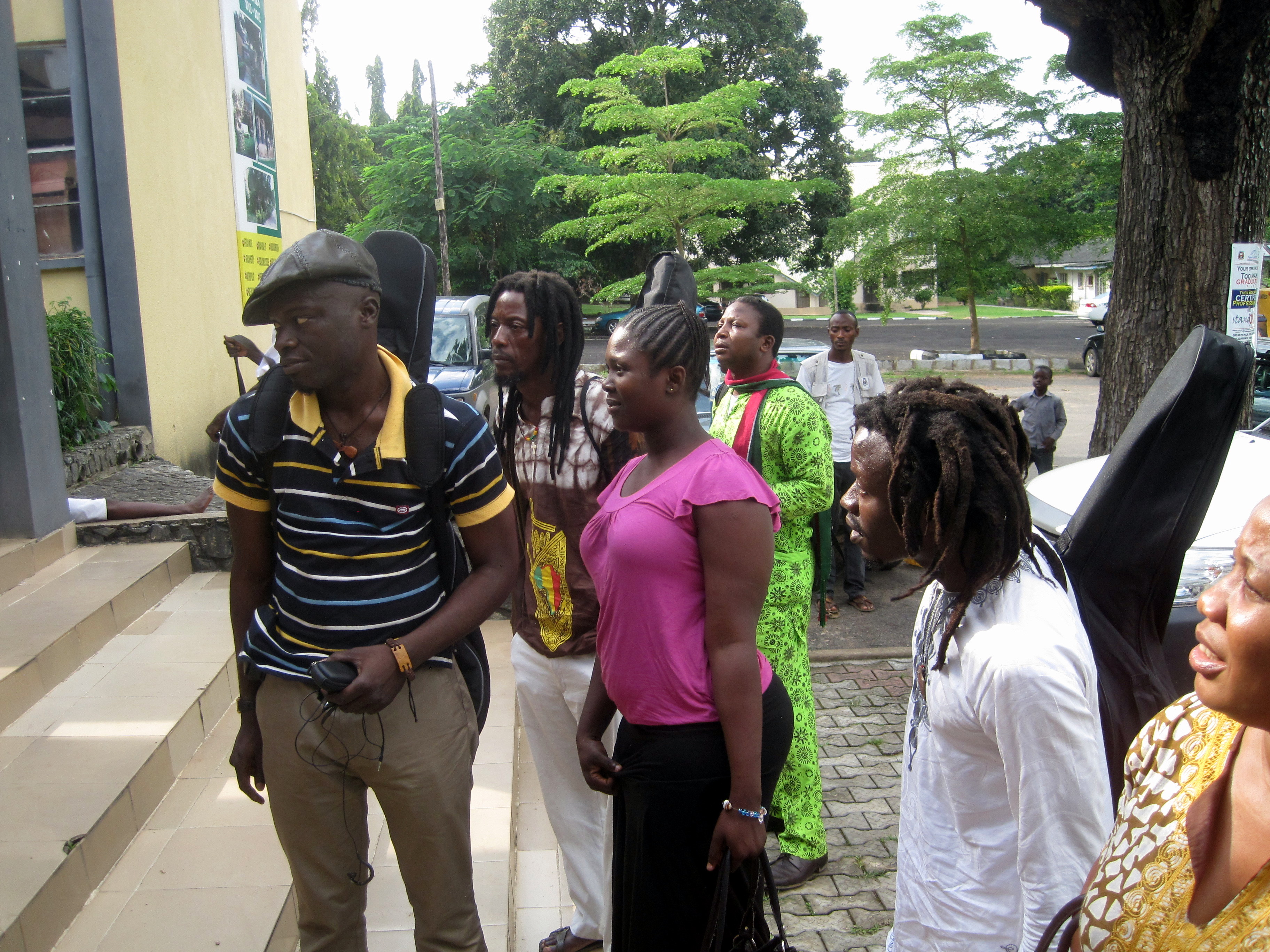
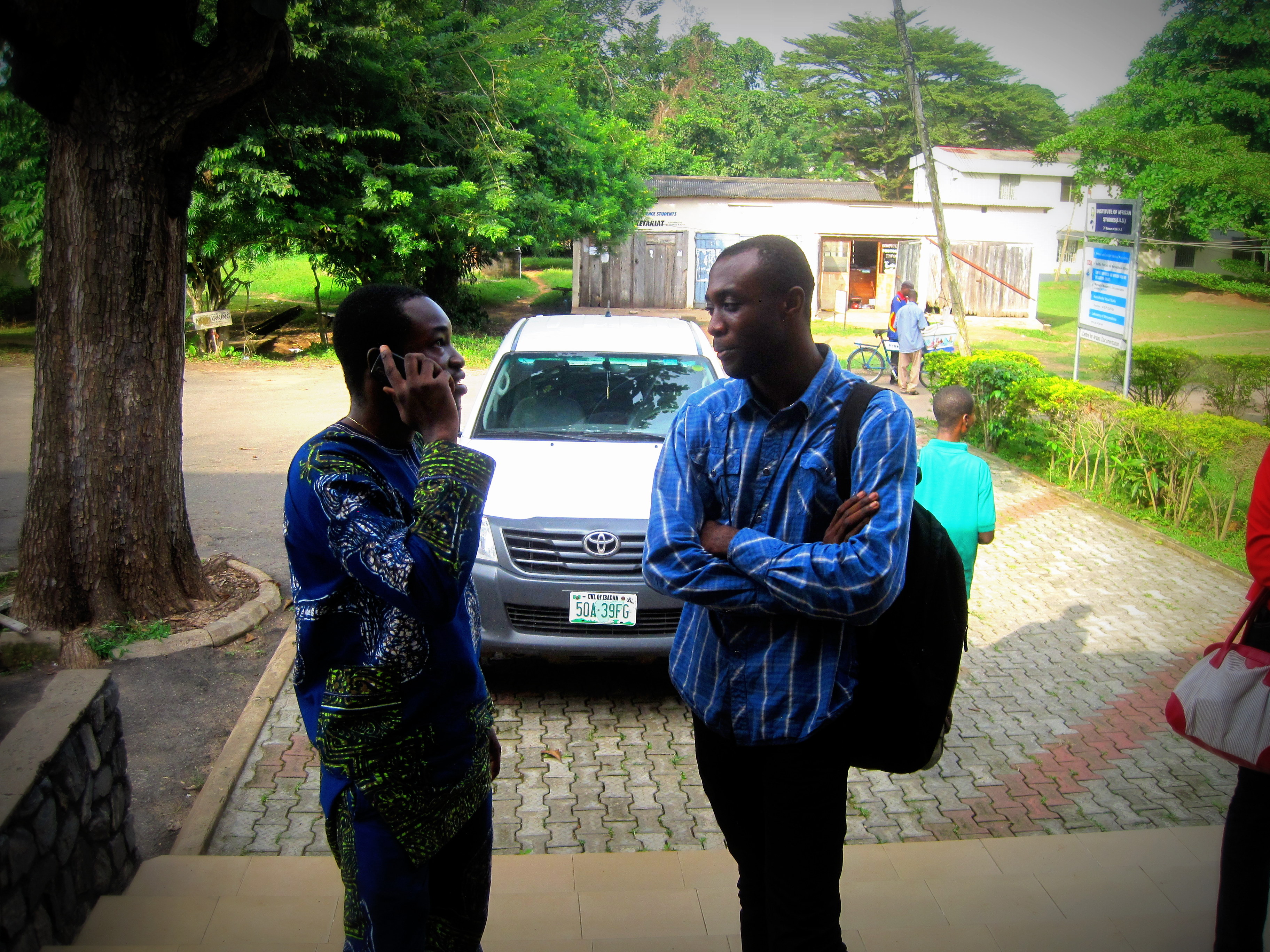
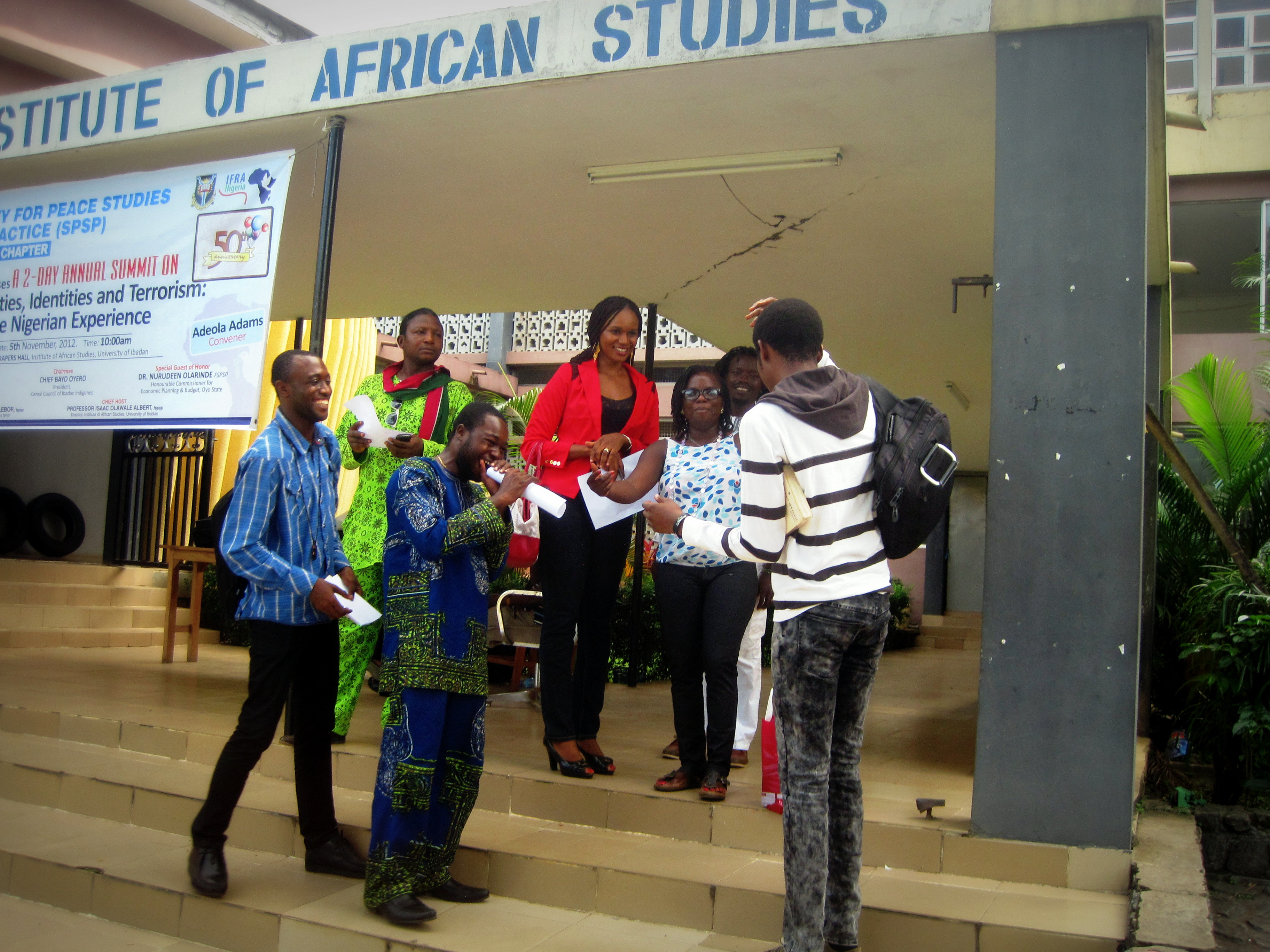
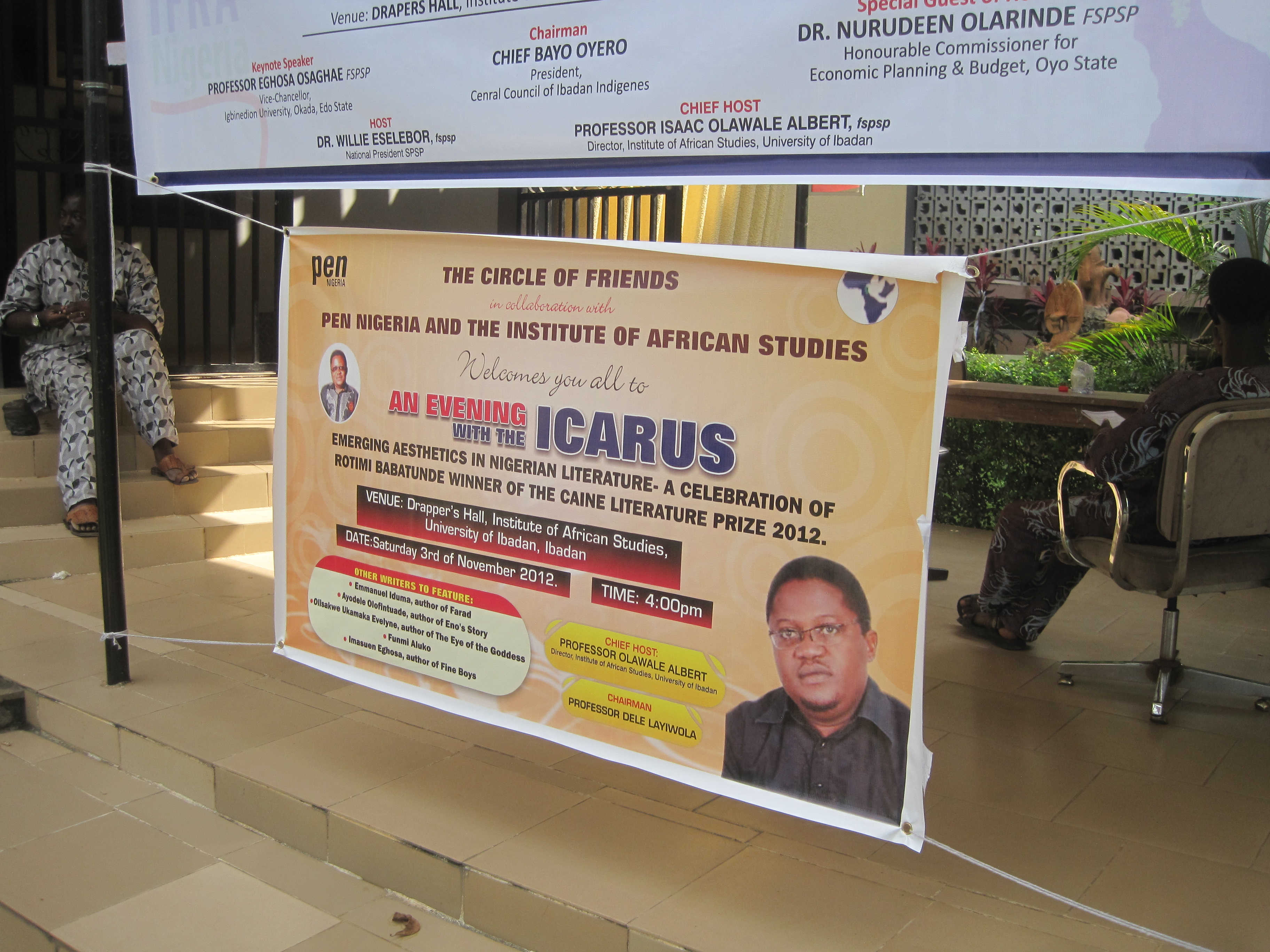
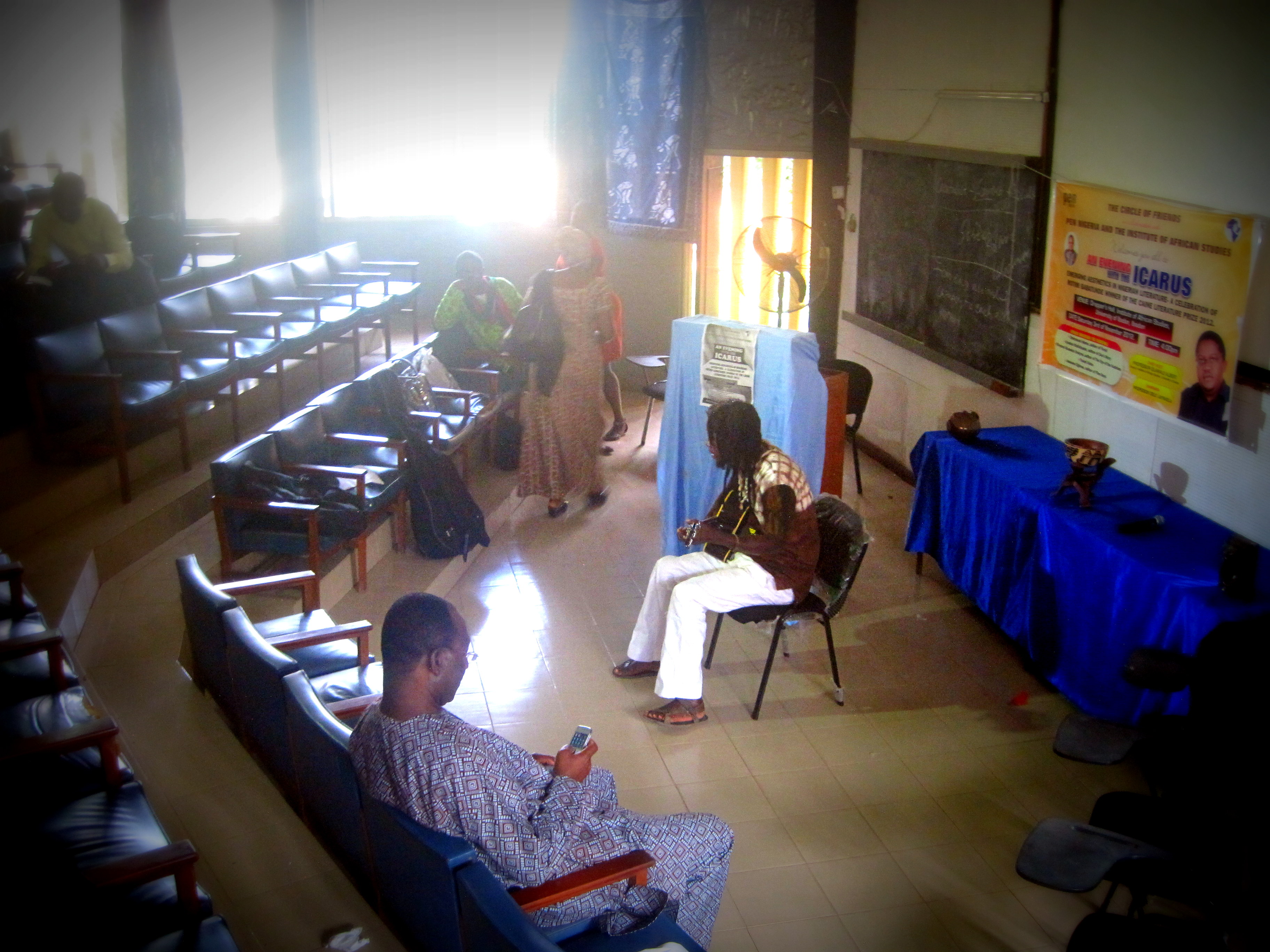
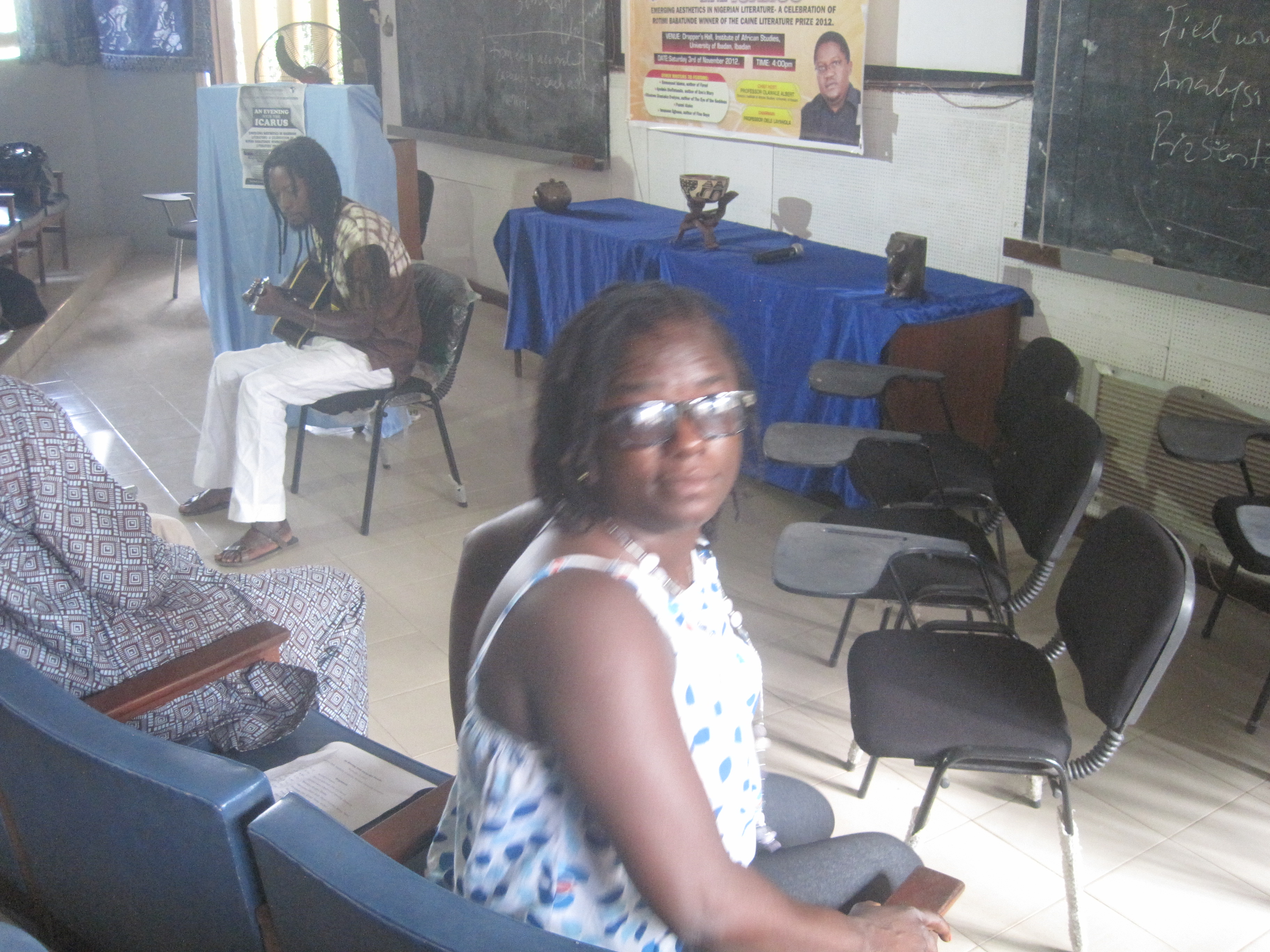
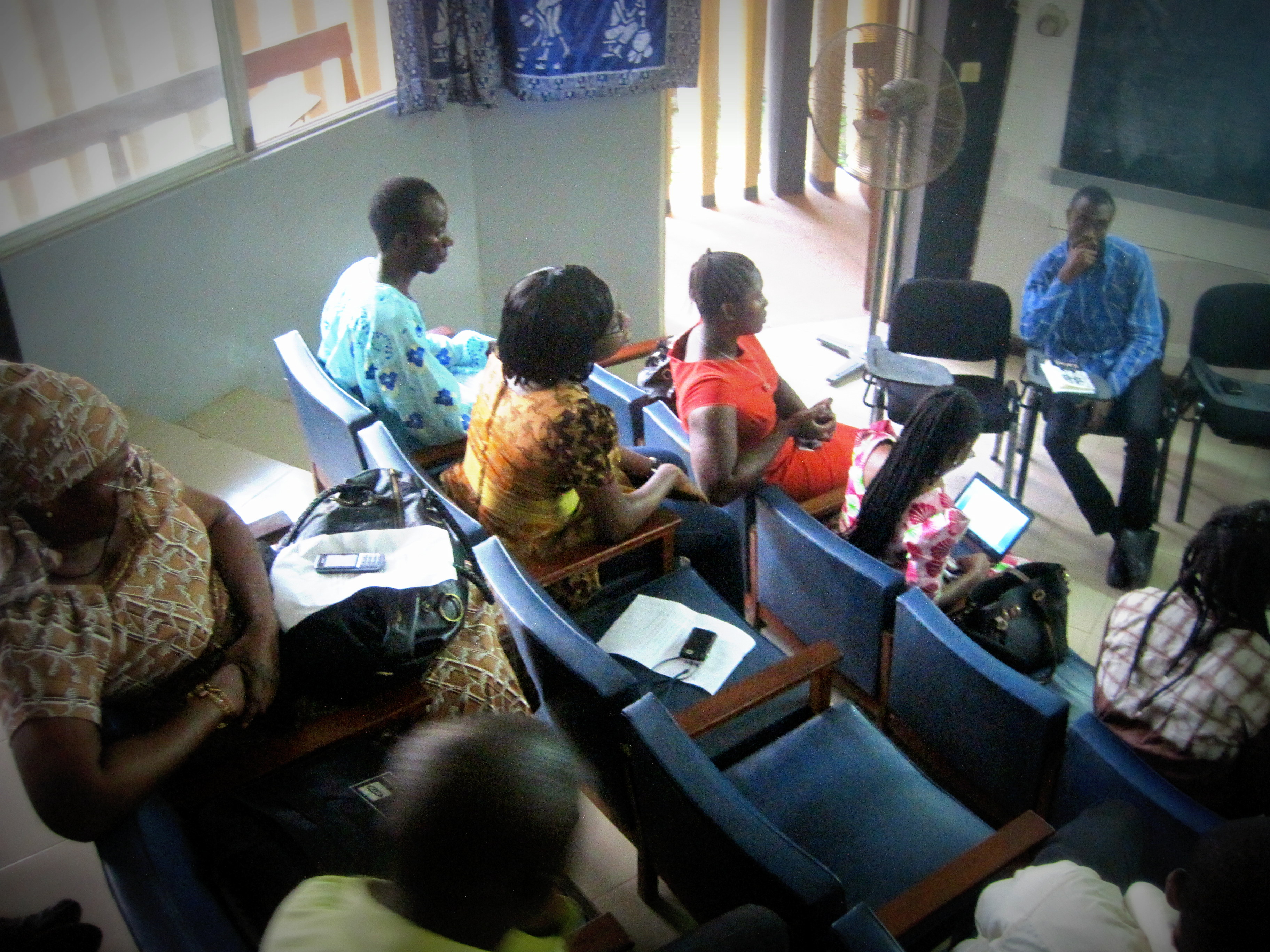
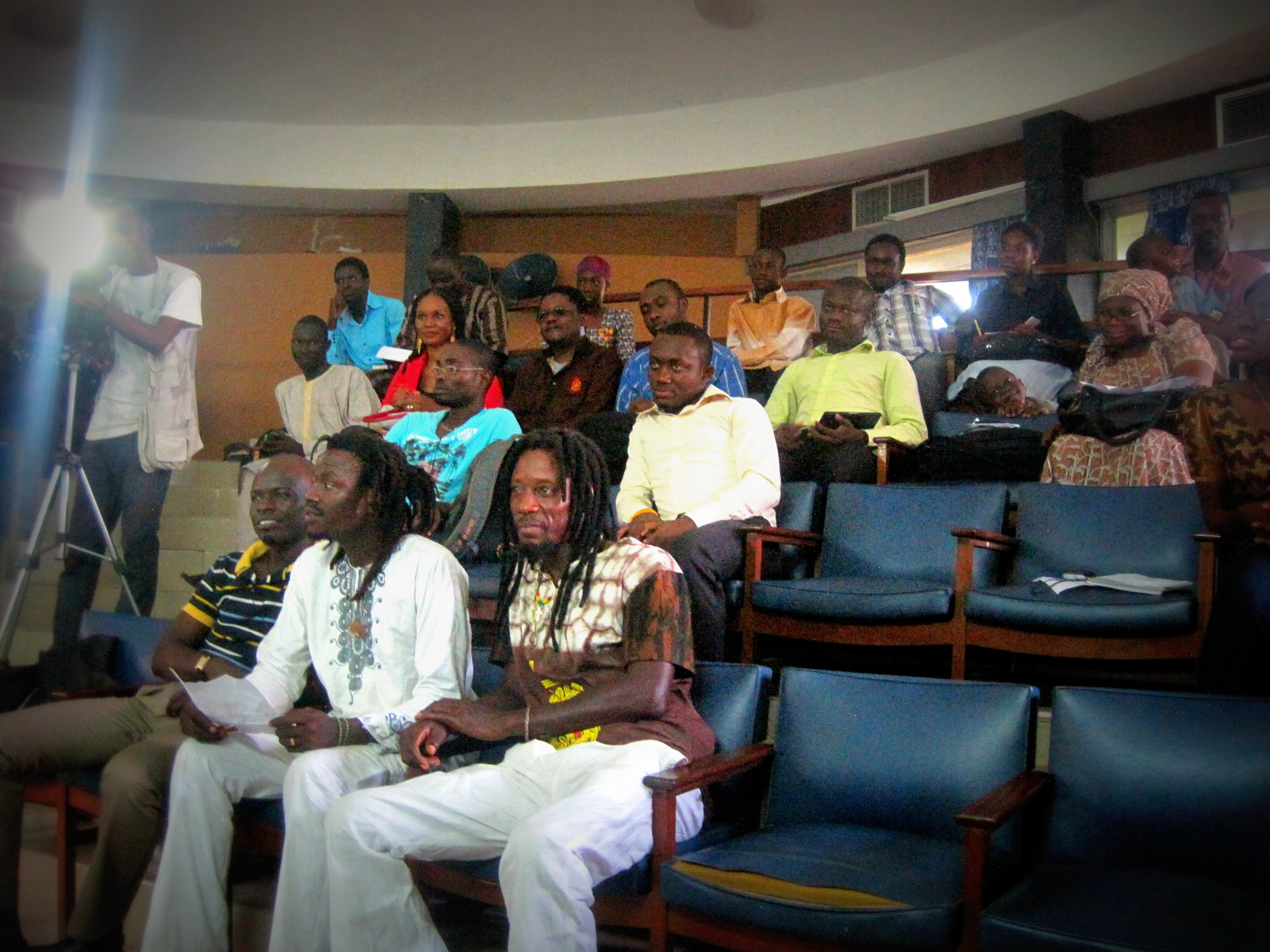
 Ibadan, November 3, 2012, at the event to honour the winner of the 2012 Caine Prize.
Photos from the event.
Browsing the archives for the Opinion category.
Ibadan, November 3, 2012, at the event to honour the winner of the 2012 Caine Prize.
Photos from the event.
As a symposium participant in an event at the Draper’s Hall, University of Ibadan, at the weekend to celebrate the work of Rotimi Babatunde, winner of the 2012 Caine Prize for African Writing, I made a few points regarding the distinguishing features of Rotimi’s work, and the opportunity it offers for emerging writing. More importantly, the way it conforms to the already established trends in great storytelling.
In craft, Bombay’s Republic distinguishes itself by being able to re-tell a story already told in a longer form in Biyi Bandele’s Burma Boy in a different form, and from a different angle. This is not an easy feat. As a contribution to history, the work also moves between fiction and real life in a way that is not only authentic, but also affecting. Like Eleshin Oba in Wole Soyinka’s famous Death and the King’s Horsemen, and Okonkwo in Chinua Achebe’s Things Fall Apart, the main character in Bombay’s Republic lived at a crossroads of a certain time in history and automatically assumed the perils and rewards of such serendipitous existence.
 As a contribution to language, I made note of my most fascinating discovery, made close to the end of the story, that the author had not used quotation marks at all throughout the text of the short story. That I discovered this towards the end of the piece only added to the interesting point that unlike what prescriptive grammarians would have us believe, our brains usually process text in chunks rather than as individual pieces of written information. Quote marks, as good as they are, and as aesthetically pleasing their presence on the page might me, fade in significance if a story can still be told, brilliantly as was in this case, without any use for their now rather annoying presence.
The event was hosted by a Committee of Friends, including Yomi Ogunsanya, Ropo Ewenla, Benson Eluma, Iwalewa Olorunyomi, et al. Other participants included Sola Olorunyomi (Author of Fela: Afrobeat and the Imagined Continent), Benson Eluma, Tade Ipadeola, Niran Okewole, Jumoke Verissimo (Author of I Am Memory), Biyi Olasope, Remi Raji (President of the Association of Nigerian Authors, and poet), Ayodele Olofintuade, and Olisakwe Ukamaka Evelyn.
Yesterday, the signature legislative achievement of the Obama Administration – the Healthcare Reform (also called Obamacare) was upheld by the Supreme Court in a 5-4 vote. Among other things, it prevents insurance companies from dropping people from insurance who have a pre-existing condition. It keeps children on their parents’ healthcare plan until they are twenty-six. It basically fundamentally changes the way healthcare has been provided in the United States – a success that has eluded many presidents for many years.
I spied a few newspaper headlines today to see how the people on the ground relate to the ruling. I was only in Iowa, so my perspective is limited to a swing midwestern state. The USA today as well as an Iowa newspaper were basically optimistic, cautiously celebratory while advising that rather than repeal it as Republicans and other conservative groups have sworn, they should work to improve on the parts of the law that they find objectionable. Returning to the chatter on cable news tonight, what I find is that this is going to be an uphill task.
I’m only a foreigner anyway, with just a little knowledge of the country’s history spanning a few generations. I know however that the divisiveness and polarization of the nation’s politics is as old as Lincoln and as young as Monica Lewinsky. What is most stunning however is that this much of a fight is going to be waged over the right of people to have access to affordable and patient-oriented healthcare like the rest of other developed countries. In a hundred years from now, no matter who wins the final battle to be waged on election day in November, those alive in the world would be able to look back and see how – like the time of slavery – a group of privileged people were willing to stake the future of the country for a chance to get their way and keep the status quo.
On the one hand, I’m now confident of the historical place for the president for his fortitude and perseverance, on the other hand, I fear for a country in which this kind of fight becomes elevated to national attention. America, you fascinate me.
This post, originally intended to be titled “Mitt Romney Hates Me” in response to the decision of whoever manages his Youtube channel to ban me from leaving any further comments after I spent last week debating with some of the commenters on one of his videos. There’s something else in the news however that is a little more disconcerting than being banned from further debate by someone who wants to be the president of the country that champions free speech and democracy. It is about the so-called investigation in the corridors of power about someone in the Obama administration leaking “sensitive” foreign policy information.
It began about a week or more ago when two consecutive New York Times articles came out one of them boasting that President Obama has a “Kill List” of wanted terrorists marked for death by the US drones that he personally supervises. The other talked about an extensive cyber war conducted by the administration and Israel in which computer systems in Iran were targeted with debilitating viruses. Responses to the two articles were mixed. The response to the Kill List article was definitely very mixed, and very weird. Republicans and other right-wing conservatives who had tried to paint the president as otherwise soft on terror suddenly found themselves faced with a well-done reportage that showed that the commander-in-chief had actually been personally conducting a strong, brutal, foreign policy. The Left however, the otherwise human-right touting base of the president who beat up on George Bush for being such a hawkish man who misled the country into war in which innocent lives (and of some bad people too, no less), kept curiously quiet. They found no contradiction whatsoever in the image of a president who won the Nobel Prize for Peace in 2009 personally supervising the killing of suspected terrorists not yet convicted of any crimes.
Therefore, in a weird twist of fate, logic, and political identity, Democrats silently cheered that their president finally locked down the foreign policy cred (nevermind that his supervising of the killing of Osama Bin Laden already wrote him into the history of decisive leadership), while Republicans – otherwise usual supporters for whistleblowers who leak government information that show abuse/misuse of power – are now up in arms, jumping up and down, and making loud noises that the leaker of the said information should be found. Why? Because the leaked information made the president look good. Of course if the information “leaked” to the New York Times had included some embezzlement or some sort of information, these same Republicans would have been the first to find ways of protecting whoever the person is, touting him/her as a hero.
So, here’s where we are. The biggest developing news on TV today (bipartisan, nevertheless) is about the call for a private investigation, not – as you would imagine – to examine the rationale for the president himself personally supervising the life/death decision on who lives or who dies in Yemen, Afghanistan or Iraq tomorrow, but to punish whoever made that information public. The Republicans making the most noise about the call for this panel do not care much for those accused bad guys (and the innocent collateral deaths accompanying it), but they hope on some level that the investigation would lead to the president himself, and he would thus be embarrassed. Again, not so that the killings would stop or become more open, but so that he would be painted as a weak, narcissistic leader. The president himself, calling the insinuations that he purposefully leaked classified information “offensive” is investigating the leaks so as to plug it, and not really to stop or modify the draconian policy that made some mockery of his 2009 Nobel Prize and his earlier stance on the policies of the George Bush administration.
It all just seem weird to me. But what do I know. I’m just one naive observer. But all liberal observers now keeping quiet would do best to remember that Obama won’t be president forever. The spy and killer drones however, and the capability for government abuse, will.
There were about six recent past issues of The Economist outside my door when I opened the door this evening. My supervisor and mentor had left them there. And although I’d read many of the stories in them online already, holding the glossy prints still left a mixed feeling of the times. As with books I had bought (and been given) sometimes reluctantly, one big problem will be where to put all of these when it’s time again to move.