Browsing the archives for the Observations category.

The Cross and the Crescent: A Short Story

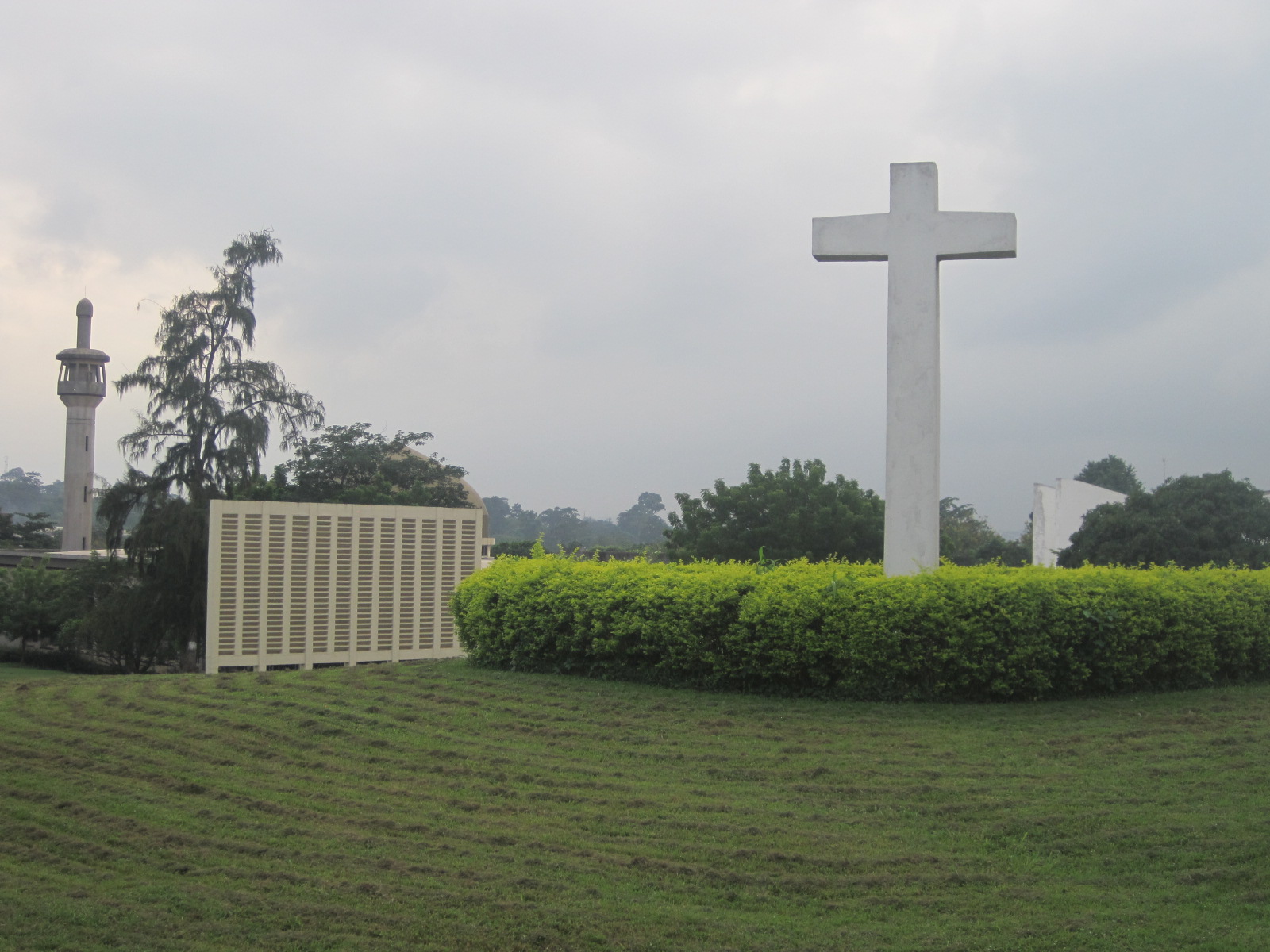
Once upon a time, there lived a cross in front of the Chapel of Resurrection in the University of Ibadan. The cross had been there almost since the University itself started, perhaps due to the fact that colonialists had preferred religion as one of the ways of controlling the  empire. Even in the Faculty of Arts, one of the first departments in the University was Religious Studies. The others were English, Classics and (I’m guessing British) History.  In any case, at considerable distance from the building of the Chapel itself, a cross stood as a symbol of the predominant religion, and everyone went their way.
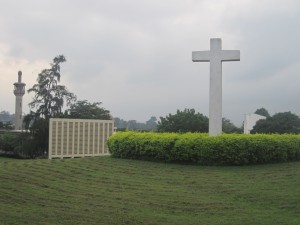
Then one day, half of the grounds on which the Chapel had stood for years became parceled out to make way for the other now predominant religion in the University, this time, Islam. It made a lot of sense that administration allowed the freedom of worship within academic grounds. It was only logical that such a space be made around the same spot as the Chapel perhaps to make it easy to just call the area “Religious Grounds/Centre.” If you have a sense of humour, you may want to push it further and say that it will make it easier for God to hear everyone at once without having to leave the one place. So the Chapel stayed in its place, and so did the cross at the junction, almost adjacent the Catholic church building across the road. The mosque was a few metres down the area and the rest of the grounds remained open for practise of any form of spiritual contemplation and students have been known to go there to meditate or simply to get away from the bustle of the school area.

One day however, somebody in the adjoining mosque had a bright idea. The cross that had stood in its place for many years had become an obstruction – a sort of spiritual hindrance to their clear view of Mecca where they turned whenever they prayed. Never mind that it was not sited as an afterthought to the mosque, or that it was not really blocking anyone’s view (since, while praying in the mosque, it is really quite impossible to see the cross outside). For the brilliant Moslem student in the academia of those days, there was something inherently discomforting in bowing down in a mosque sited close to the emblem of a (perhaps rival) religion. The solution: demolish the cross or get it transferred to somewhere else. The mosque was there now and nobody had a right to place an obstacle to its religious independence even at such symbolic level. Of course the Chrisitians were not going to have any of that. Either the mosque is relocated, or the worshippers must respect the presence of their respectable symbol of faith since it had been standing in that position perhaps even before the mosque was sited. A true story. God, at that time, if he wasn’t the one pulling the ropes, must have had a cause to break into a smile at this point.
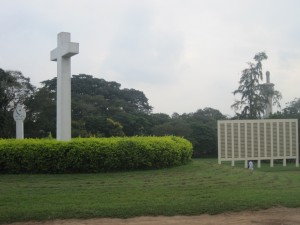
Guessing as can only be possible now from such a considerable time distance from those times, I can only try to picture what the scene must have been like: Christian students writing in campus magazines flaming articles to condemn the Moslems obvious intolerance, and vowing to defend the cross (both literally and figuratively) from vandalism, and the Moslems rallying after the champion of their cause in order to have their way – which they did in the end. Well, not totally. A compromise was reached and another plinth was erected close to the controversial cross. This time, it bore the crescent and the star, and it stood within considerable sight of the mosque, the chapel and the old cross. To “block out” the sight of the cross from the mosque, a large crate of concrete was also erected between the contumacious symbol and the Islamic praying grounds. All those buildings are still there today including the crate of concrete, and, to quote Soyinka on the matter “no earthquake has (yet) been reported within those holy grounds.” There are many more layers to the issue, of course, one of which was that that particular fight polarized the University and ruined old alliances, even within groups of people who believed in neither religion. Such was the level of intolerance that even pacifist on campus started gearing up to fight on one side or the other. The Cross and the Crescent in their heat of the passion contest for the hallowed right to – even if only symbolically – exist simply forgot about all the others and were ready to turn all hell loose if their point of view wasn’t respected.
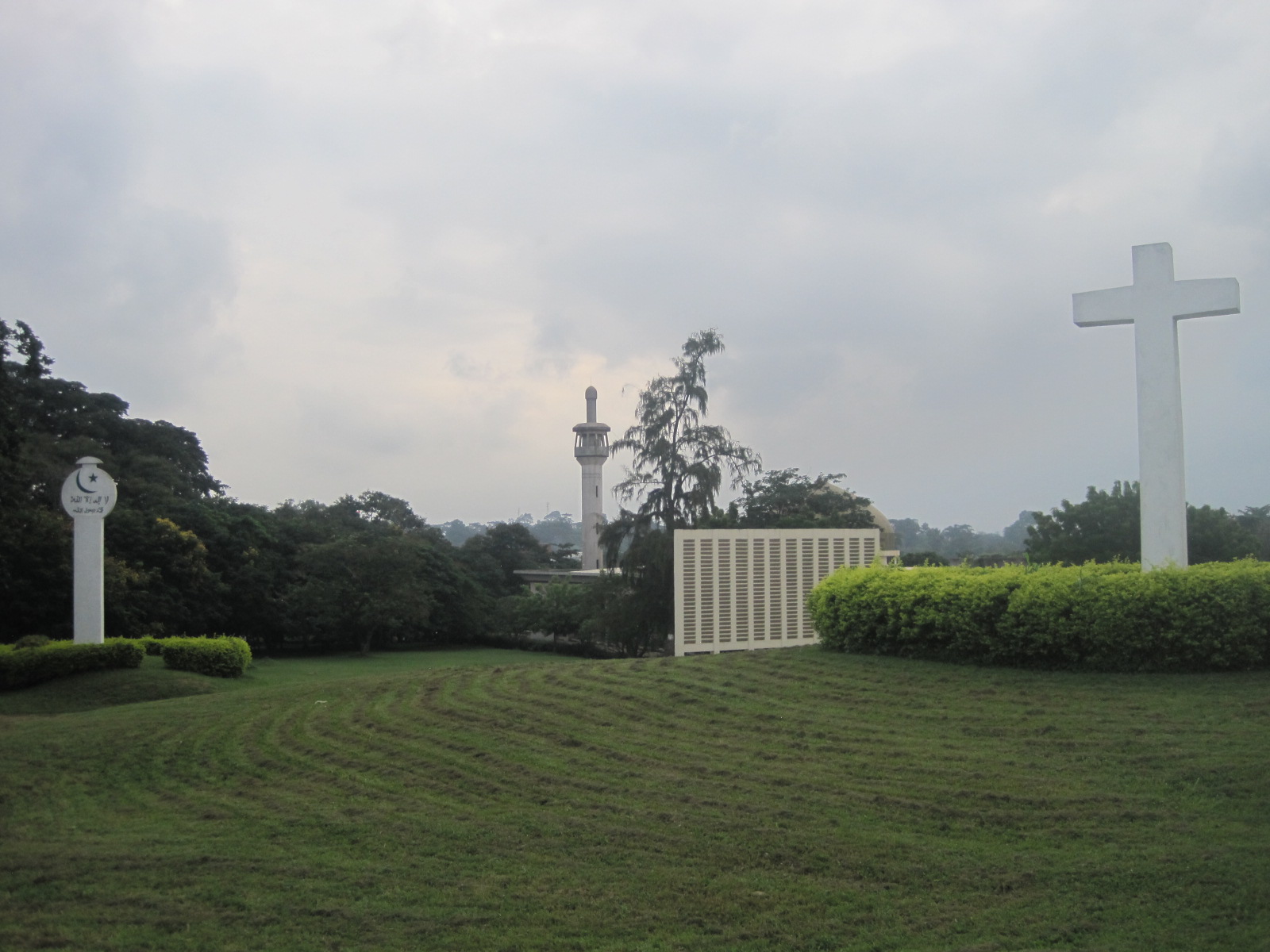
Luckily, academia survived it – as much as it could – and all has remained calm ever since. Walking through the religious grounds a few weeks ago in company of a (Nigerian) visiting medical researcher from Connecticut, I took these pictures and took time to narrate the story which she, and many people I’ve told afterwards, hasn’t heard before. I promised to blog about it but didn’t make the time to do so until now, and what a time it is. The United States – or at least its airwaves – has become if not multiply polarized because of the testy decision to site a mosque a few blocks away from the old site of the World Trade Centre where in 2001 some fatalistic zealots had committed one of the world’s horrible crimes in the name of religion. On the face of it, it is insensitive, but a little paring will reveal it as only a testing of the true values of the country. Fifty years from now, I believe it would probably have become just another one of those moments in the development of a just and tolerant nation. But for now, let us watch but with our emotions in check, especially for the sake of those who have neither interest nor investment in the matter. I have heard families of victims of the World Trade Centre bombings say that the mosque is a fitting tribute. I’ve also heard from other families who say it is an insult. Nobody has heard from the dead, or from those who might still die if the intolerance is allowed to blur a simple distinction between a place of private worship by moderate and law abiding citizens and a shrine to terrorism sponsored by a faceless terrorist group in the caves of Helmand (where US forces shoot to kill every day). I heard that a Fox news commenter has also vowed to start a gay bar close to the mosque “to cater for the needs of Moslem men.” See? Freedom.

Maybe there is, or maybe there isn’t, a lesson for the divided American opinions in this Nigerian example, and in the paraphrased words of a writer: “Tolerance doesn’t proclaim itself or weave itself into conditions. It’s in itself evident.” Or maybe the answers are not really in religion, or sentiments, but in the constitution (which itself is just common sense); or in the examination of our own individual prejudices, and a sometimes thorough delineation of who the enemy really is. To me, this case appears as such a little test of the enduring values of the society that is America. But of course it is also just a local matter between the owner of the parcel of land, and the owners of the proposed mosque. Nothing to kill ourselves over. It has no bearing on the next direction of the cosmos in which we are all just a very little part: Jews, Hindus, Christians, Atheists, Moslems, Sikhs, pagans and all whoever else!
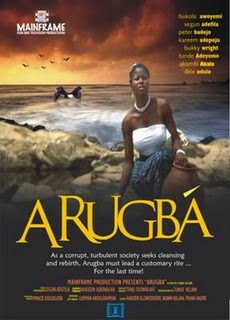
Arugba

Set against the background of a corrupt society, the story of the votary virgin designated to “carry the calabash” for one last time before settling down into matrimony is enticing on its face. Add to that the intrigues of puberty and University life, the corrupt and often lecherous leaders (many of who have real life equivalents in Nigerian politics), historical figures in short cameos, and a multi-award winning director known for equally engaging films, and you have a winner, right? Yes, if you are a skillful playwright looking for a nice plot to use in writing the next bestselling play. No, if all you want is a screen flick that tries very hard to please everyone (UNICEF, Cultural experts, Movie buffs, Local language activists, suckers for love stories laced with music, and pretty much everyone else).

What I’m trying to say here, of course, is that I wasn’t much impressed with the movie except with the super acting by the seasoned actors (Lere Paimo, Kareem Adepoju, Bukky Wright, Peter Badejo, and the new Bukola Awoyemi), the song Afi fila perin , the major plot (which is the cleansing of a town as tied to the symbolic act of the virgin votary), and the picture quality. Everything else seemed distracting, especially the flashbacks. The sub-plots looked like poorly-handled attempts to situate everything in this quasi-imaginary world in which the events took place in the events of our real life. We see Obasanjo. We see Bola Ige. We see Abiola. We didn’t need to see them, but we did. Nothing else in the overall plot of the movie prepared or compensated us for the distraction. And even the love story which is the major subplot did not always convince. It surely didn’t live up to the standard of Ajani and Asake in O Le Ku handled by the same director.

The flashbacks were the main distraction. I did not see the point in keeping the details kidnapping attempt on Adetutu till the end. It should have been enlightening then, but it wasn’t, because we had already consoled ourselves – having seen her hale and hearty – that she had already survived in one piece; and the minor intrigue of the women who wanted her removed on the rumour that she had been raped did not really impress. What about the king’s inglorious offer to Adetutu earlier in the beginning? We didn’t know much about it until the end, for no justifiable reason. Other distractions included the sub-sub plot of the Islam and Christian adherents at the beginning and the end, Adetutu’s jealous rival (played by Kafat Kafidipe), the Oral Rehydration Therapy that eventually never saved a child from dying, the jealous housewives in the king’s palace, the spirits seen at the beginning and at the end coming out of the (supposed) Osun river to play with Adetutu (when we know for a fact that the story is not science fiction) among many others. I’m an ardent fan of Mainframe, but here, I see only minor resurrections of what we liked about Saworoide, Koseegbe, Campus Queen, and even O Le Ku. But that’s where the love ends. At the end of the movie, I did not stand, smile, ponder and send a text to my friends to go get a copy. I merely rewound it to listen to the song Afi Fila Perin many times again, then go to bed.

Now, this is what I suspect: there were too many consumer constituencies to cater for by this offering. And in the end, it ruined what could have been the best story since Death and the King’s Horseman (which is not even a movie yet, as it should be) – a classic meeting of tradition with “civilization” and the fallouts thereof. So many possibilities… Maybe if Tunde Kelani had written the story himself, or at least passed it through the hands of Akin Ishola, Bamiji Ojo, Wole Soyinka, or Bayo Faleti…

There, my KTrotten Tomatoes! Two stars out of five. Okay, maybe three. Maybe.

Blog Recommendation

Kinna Reads http://kinnareads.wordpress.com/

A blog written from Ghana on issues relating to reading and literature. From the blog description: “On this blog, you will find a good mix of  reviews and commentary on novels, short stories and poetry.  I love poetry, can’t live without it :) Basically, this blog reflects my reading life.”
(Thanks Tayo for the link)

The End of the World

There are some things I probably shouldn’t be thinking about, especially since they usually don’t lead anywhere beyond the ceilings of my room and the rotating fan. I dose off, wake up again and worry about other things. One of them is the issue of the rapture, or the end of the world, as we were earnestly taught as kids by zealous pentecostal pastors. It is different from the real “End of the World” as prophesied in the book of Revelation where everything is destroyed and “no stone is left on another”. Actually, when I think about it, they are both very different views of the same event, and pretty confusing. The world ends. Time stops. The sun goes dim. In one other account, things get pretty messy and everything is destroyed. In the other, Christ shows up in the sky, and “all eyes (shall) see him.” (Rev. 1.7)

Actually, it is the “all eyes shall see him” part that has often got me pretty confused, and for good reason: The world is not flat. Maybe technically, the bible didn’t mean that all eyes would see him at the same time but the preachers who preached to us before the age of reason made real sure that that was the impression we got. He would come like a thief in the night and he may catch us doing bad, bad things. So we ought to be careful, and clean, and holy at all times. Well, were that possible, there would have been no sinners in the world. No sin, in fact, and no wars, and everywhere would be happy. Unfortunately, we have crushes (which until I was around 18 I thought was a sin), we lust after people, we have affairs, we lie, we steal and we cheat if it suits our purposes. If I’d known that even preachers had crushes, I’d have had a better luck with the first crush of my adult life whom I met in a church. 🙂

So I’ve figured it out, that part about all eyes seeing him. The Lord, if he would come to the world again, would have to deal with the issue of time zones which would really ruin his surprise. If the world were flat, he may appear to all at the same time, and there will be no hitches. But thank providence for CNN and 24 hour cable, as soon as he lands anywhere on this planet, we will begin to have “Jesus spottings” on TV and twitter, and people of the other parts of the world where he has not appeared will have enough time to prepare for him, repenting of their sins, kissing their girlfriends for the last time, or generally being silly in preparation of his coming. In any case, he could turn out to have a better sense of humour than we credit him for. Or maybe he will turn out like the Jehovah’s Witnesses have described him, gentle and wise, come to make peace on earth so we can all live happily ever after. I’d love that, because I’d really really hate the Statue of Liberty to be destroyed by his coming before I have a chance to get to its crown.

PS: The story of the white cross in that picture, and the crate of concrete beside it is an interesting one for another day.

Summer is Over. Is It?

I’ve never seen summer. I’ve seen spring, along with beautiful green leaves all around an equally beautiful campus. I have seen winter, and snow whitening the land as if to prove a certain point to all foreign-born residents. I’ve seen fall, with leaves brown and restless, flowing with the cooling wind. But summer? No. What on earth is it?

Is it like hell, with an absolutely unbearable temperature which keeps people mostly indoors and all public parks free of visitors? Or is it like the oven? Is it like Kano, the reputed July heat that causes meningitis or just like a milder version of the microwave. Do the leaves shrivel? Do they sway? Are they beautiful or are they grey?

I’m not here to write poetry, so tell me what it looks like. Did I miss anything in my absence from the scene of action? Well I left that place in the middle of May just when the almighty summer was supposed to have begun. If I return there now, what will I find? Fall, no doubt. Summer would have escaped from my grasp once again. What did I miss?

The highest temperature here was around 29 degrees Celcius. That would be like 84 in America. There was this rumour that temperature in America was up to 90 in some places. Oh my, that would be like the temperature in Maiduguri on a regular afternoon. That means that my American friends could actually come and spend their summer in Nigeria. Go figure. Much of this country is actually cooler than 29 during this period. And it rains too. Oh, the rains! I should be glad I’m here.

Alright, I will return to that place, but not until the famed summer is over. Is it, yet? I like Fall. I like brown leaves that remind me of the leaf covers of eko and moin-moin made by old women in Ibadan villages. I like the way they look in photographs too. Who wants a hot summer when they can spend cool raining seasons in Ibadan, Lagos, and all over Nigeria eating spicy food, playing uncle, buying fuel in jerry cans, making day and night calls, killing mosquitos and generally playing he traveller?

And by the way, when I return to the States, let no one ask me how I spent my summer. I did not. You did.