Browsing the archives for the Observations category.

Daydreams and Questions

“What do you eat back home? No, what meals? What is the nutritious content? What utensils do you eat with? Do your children play with barbies, What is the rate of HIV/AIDS? Do you ride a car? Do you have cars? What kind? What of your roads? Of what kind are they? What’s your government like? You run a socialist government, right? No? But your medicare is government run, right? Not as efficient as we have here. You can go to the hospital and get treated without having insurance. Yes? No? Do you like Obama? How did you speak English? Just what is like in Africa where you’re from?”*

Beaten paths of childhood dreams and games on a once dusty road, I return to the noises of the street from where I come. It lay bare in the eye of the sun, with drumbeats of restless feet, and hope on thumping hearts. It seems distant, but also sometimes close by in the eyes of the little children I encounter within the walls of this new land: adventure, love, curiosity, precociousness, love, hate, impatience, impetuousness… Their parents dote on them with love and protection, as they should, in hopes of a more hopeful day ahead. It looks the same to me, I think, and smile back at the little shy girl on the lap of her father. She inherits a large world of new dreams and places to see, and taste.

Behind my childhood home, about half a mile towards the more silent parts of the neighbourhood is a railway line that divides the city into two. I’d stand by its side, looking towards each direction from where locomotive trains blare their horns early in the morning as they move coal and some other market goods around, and dream. The rail goes as far as eyes can see, into where else its makers destined it and on the regularity of black but shining tracks. It recedes beyond my reach all the time, and along with the dusty sweat on my brow carry with them a dream of a place far beyond the reach of limits. It is here. It is even farther beyond. Out through the window of the child’s eye, I see that dream of the past and the adventures of coming days.

Winter Came Early

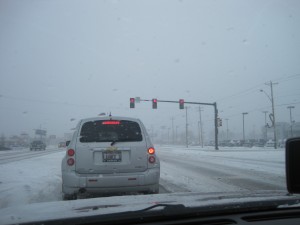
Soft floury flakes drown the land for as far as eyes can see. It was night, hours after the brightness of day had already packed up into the soft bosom of the sky. Flakes, snow flakes like the luminous slivers from heaven’s dinner table, fill the land with a breath of steam. One year ago as I walked out into the night under a snowing sky, I had wondered at how nice it all looked falling down with deliberate steadiness. It was the beginning of a new season and I remembered Jim Reeves. It was also the beginning of a new experience that brought with it the pleasure of seeing the world wearing a different look. I would get bored from it after a while, but the novelty was always quite unquantifiable. I would whip my camera out and start shooting.

It snowed all through the night, and I woke up with the whole ground covered in fluffs of white and muck. White when the snow resisted all attempts to put its glory under the rubber of the car tyres, and mucky when technology succeeded and trampled it under dark and merciless feet. It is not yet Christmas, but the face of the season is now irredeemably changed. I remember another memory from movies of youth and the overwhelming thought of how nice it must be to live where it snows all year around. If only one could live in such a place, how nice would it be – with lights, snowmen, Christmas trees, and long open land of white.

I may tire of seeing white in a few weeks, but I won’t lose the pleasant feeling that comes with the season of fluorescence.

National World War II Memorial

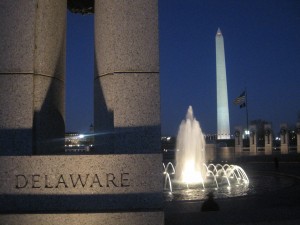
Looking through pictures I took during my famous walk through Washington DC in December 2009, I realized that I had in fact visited the National World War II Memorial. Two weeks ago, I visited the National World War I Museum in Kansas and had been wondering if indeed there was one dedicated to World War II so that I could go visit it sometime. It turns out that I have actually done so. The only thing I can say is that the experience did not come close to that of being in the Museum at Kansas City which is bigger and has more to see. This could explain why I could have seen it last year without noticing what it was.

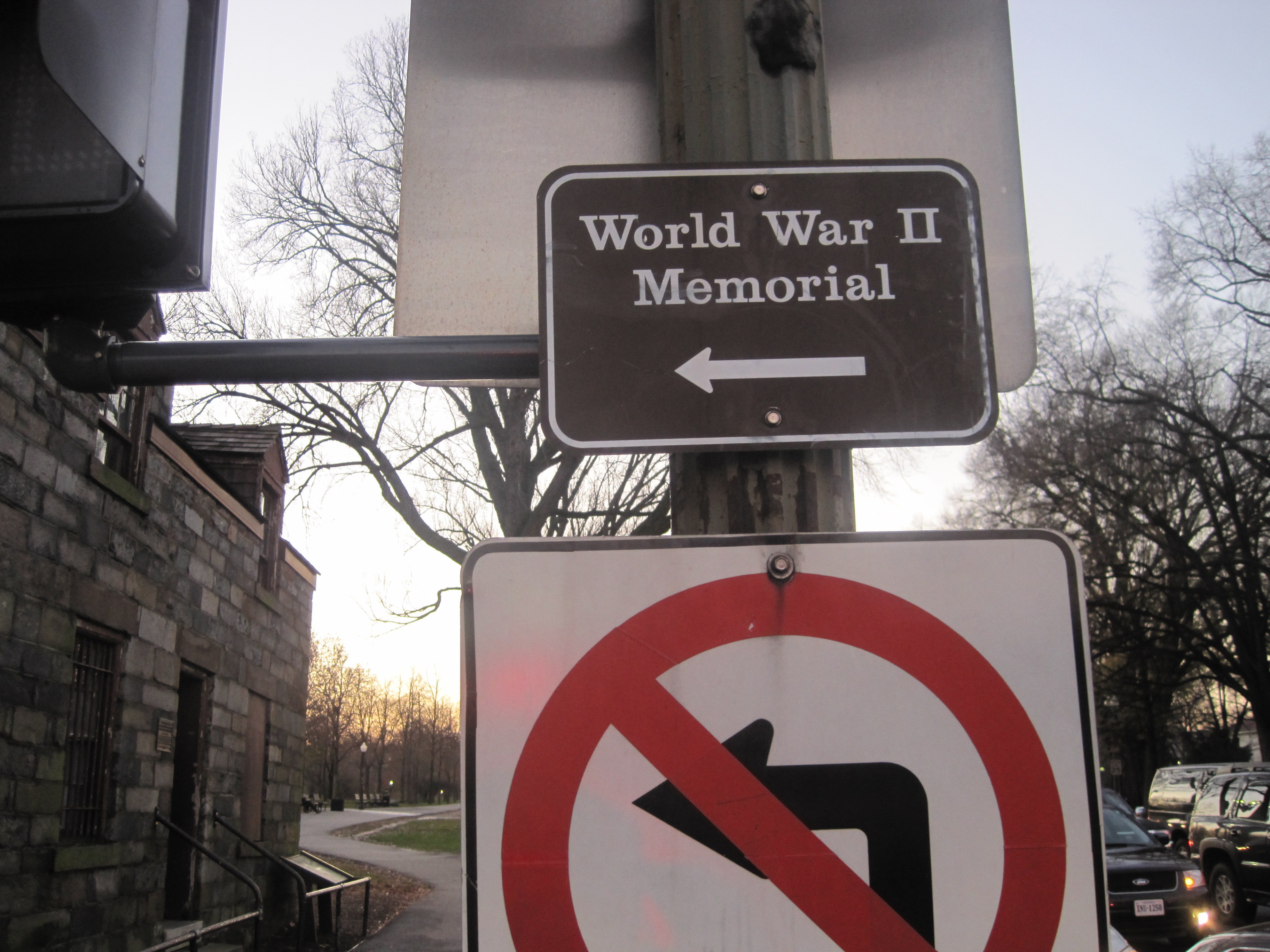
It was night though, and I was already being pummeled by the a brutal cold to return to my hotel room on time to check in for the conference I’d gone there for. I was however egged on by a stubborn desire to complete my trek to the destination – the Lincoln Memorial where Martin Luther King had delivered his “I Have a Dream” speech many years before. Thinking about it now, I do not remember seeing the WWII Memorial on my way to the Lincoln Memorial at all (even though I remember taking this picture of a sign that pointed towards it.).

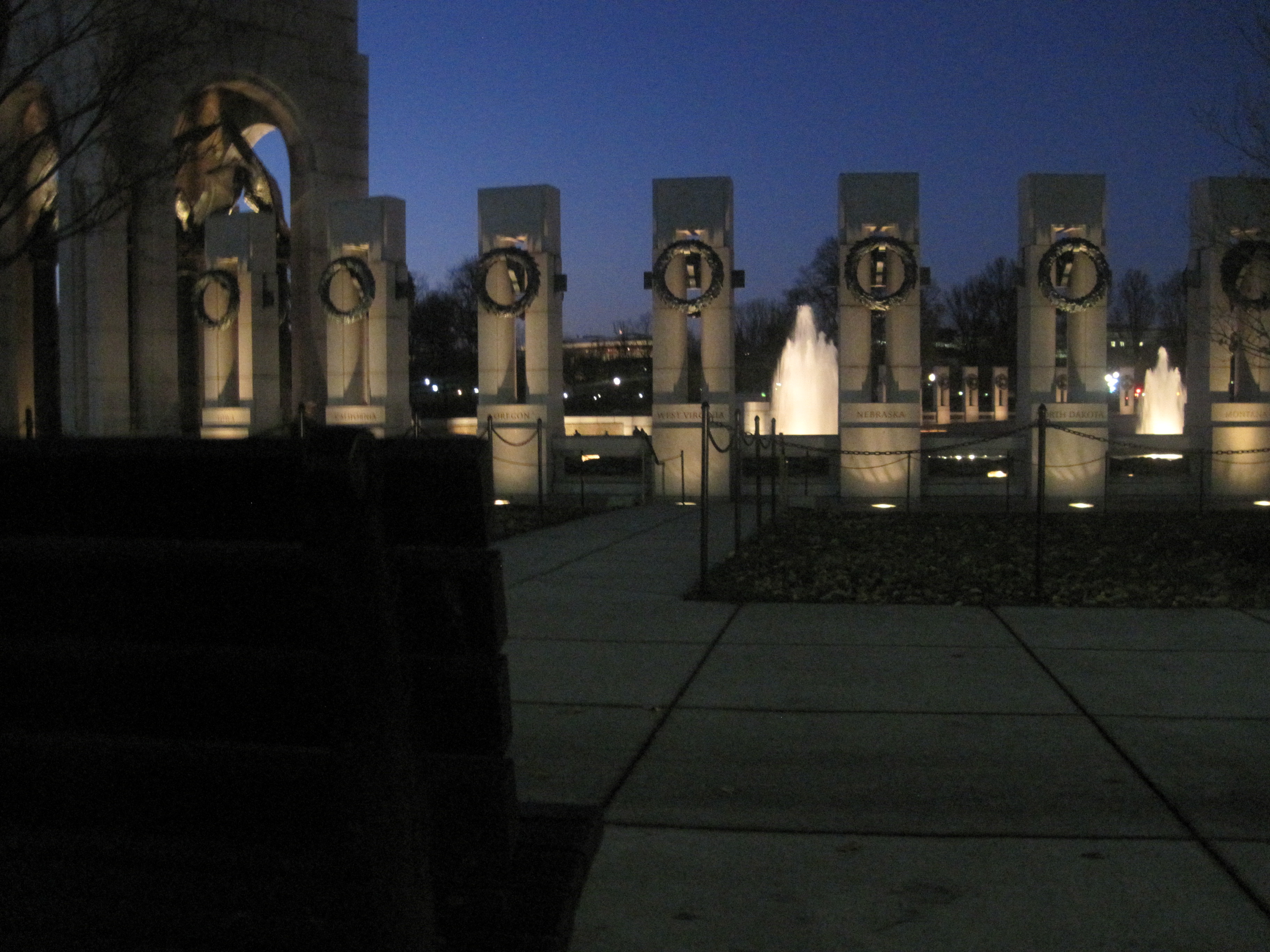
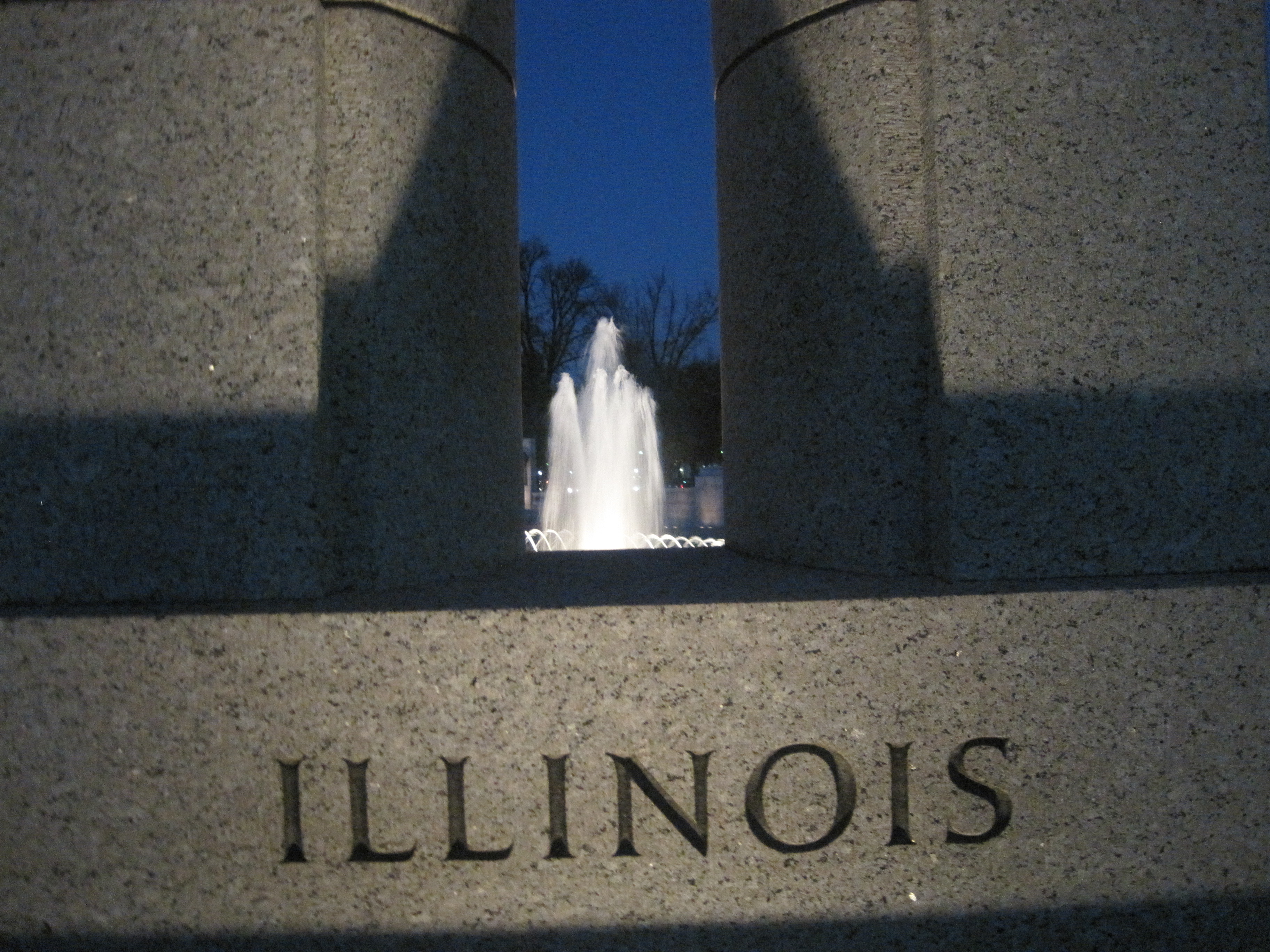
However, on my way back I remember walking through the cove of lights surrounding a fountain and pausing to admire its beauty. There were very large pillars of like shapes standing around in a big circle. The warm glow from the lights there made it look like a night gathering of hunters in an East African jungle. I thought there were fifty pillars, because on each one of them was written the name of a different state in the United States. I managed to take a few pictures of the states I recognized, and moved on. I didn’t know that where I was standing was the newly constructed National World War II Memorial. I could not have guessed it from the appearance either. Nothing from the looks of it made it even remotely suggestive of that kind of theme. It was an open space just across the road, facing the Washington Monument. It was however a charming experience.

It was my pleasure then to realize a few days ago that I’d actually (almost) already completed my tour of duty as regards the two major world wars and their memorials in the country. It only took me one year to find it out, and it comes with fond memories of my visit to the nation’s capital. Reading up the wikipedia entry on the WWII Memorial in Washington, one of the criticisms of the memorial that seemed to rhyme with my own reflection on passing through the structure was the fact that the pillars standing there were named after the states rather than fallen heroes/soldiers from the war. Of course, a closer reading of the article also suggests that there is a wall within that complex which was erected for the purpose of honouring them. It has 4,048 gold stars, each star representing 100 soldiers that died in the war.

When next I find myself in the capital, I hope to pay a second and most detailed visit. Until then, I’ll keep scouring the internet for links to more places that have relevance to the Second World War. I have already found two, one in Massachusetts near Boston, and the other in New Orleans.

Remembering Feynman

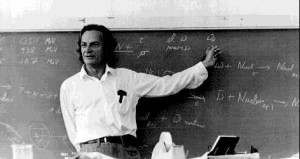
I strongly recommend Richard Feynman’s book Surely You Must Be Joking, Mr. Feynman! for anyone interested in the appreciation of the world and the little beautiful things in it. Not able to tell you why I’m thinking about him right now, I found his recollection of his childhood and professional life to be one of the most pleasurable one I’ve ever read. I can say for a fact that his was one of the best books I’ve ever read. And the last time I read this book was more than five years ago. He also wrote The Pleasure of Finding Things Out and What Do You Care What Other People Think.

Written from transcripts of interviews recorded over a long period of time, the man walks through the many curious instances of his precociousness, from learning the secret of mathematics to learning to pick locks and safes. At some point in the later parts of my teenage years, I almost learnt to pick locks too, picking after the physicist. I failed terribly. It was the early days of internet in Nigeria and I desperately craved its promised access to the information highway, and I would do almost anything to get usernames and passwords of uncles and friends without their permission. I failed at that too, eventually, and I remember the very many nairas, savings from my first real (also poorly-paying) job at a computer service centre, which I spent surfing the internet and learning new things along the way. Who knew that a day would come when everyone had internet on their computers for 24 hours every day. As far back in 1997 in Nigeria, that looked like a faraway fantasy of a future.

The book by Feynman also takes us back to the beginning of the research into developing the atomic bomb, and all the mischief he caused on site of the research facilities at Princeton, and as a professor at Carlton and MIT, picking locks and leaving clues for his scandalized superiors.  He claimed to be the only person to see the bomb tested with his own eyes through the UV shield of a car. All the other people wore glasses. (He also worked at Los Alamos at some point later). Beside the lucid and very absorbing prose and his story telling abilities, Feynman comes across as an eternally curious being not limited to his field (of Physics) or any field at all in his approach to understanding the world. After the crash of the space shuttle “The Challenger”, he broke down the hard details of a scientific error for the common man on TV at a public hearing, and cemented his reputation forever. Whenever I think about my outlook on the world, I think about how much of it I owe to the kinship with the spirit in Feynman’s book. I also immediately begin to look for the phone numbers of my friends who have always pawned my copy every time I buy a new one.

From the love of the science of language, to syntax, to computer programming (which I learnt at some point during the idle times after my secondary school), to learning to play musical instruments, sing, laugh, ride bicycles, almost crash my parents’ car, mess up my cousin’s hair at some point with the barber’s clipper as an experiment (and getting deservedly pummeled for it later on), and learning to draw, to paint, to write, to learn languages, and mostly to explore the many awesome areas of life as it tosses them my way, I have learn to live life to the full. We have less than 24 hours of it at our disposal every day, but it’s amazing just how much pleasure each discovery brings. If I ever become famous, I want to be like Richard Feynman, a wonderful down-to-earth physicist and a great teacher whose ideas changed the way we looked at the world, but who himself never stopped being just a man, with a regular (although many times very mischievous) taste and sensibilities.

Image from http://www.brew-wood.co.uk/physics/feynman.htm

Meeting Sarah Palin & Other Stories

It is actually a small country, if one considers the fact that in just the two nights that we spent in Kansas city a fewspecial celebrities of the American space decided to show up there as well. First there was the famous college basketball finals game between Mizzou (Columbia University, Missouri) and the Jayhawks (of the University of Kansas). The event brought much of the midwestern lovers of college basketball to Kansas City where the event took place, and they remained there till the next day when Mizzou won. On Saturday was Usher Raymond the musician who on a nationwide tour. Yesterday afternoon, there was news of perhaps the biggest fish of the weekend: former Alaskan Governor Sarah Palin. She was in town to promote her new book America By Heart.

The town of Andover in Wichita, Kansas, where she was visiting was two and a half hours away, westwards. We didn’t go there to see her as we had first planned, but that was only because of the constraints of time. By Saturday night, about a hundred people had already arrived to stay the night out in the cold in front of the store where she was billed to sign books on Sunday, and the line to see her stretched eventually to about 500 people. Even if we had set out early on Sunday, we might not have stood much chance of seeing her and getting back home on time. We went to Independence (MO) instead on the way home to visit the President Harry Truman home, museum and Presidential Library. That turned out to be a good decision. We learnt about his life and his love for his old country home even when he was president and how people would always gather in front of his home every time he returned from Washington. President Truman was the successor to Franklin Roosevelt, and he was the one who ended the Second World War after dropping the bombs on Japan.

In the last three days, I learnt more about the World War I and it’s implications for World War II and other future conflicts than I’ve ever learnt from reading books or from conversations. It was a holiday well spent.