This year was exciting, and exacting. But as far as this blog is concerned, it was a year of many journeys. So, especially for new (and returning) readers, here is a review of the year, by date and by the popularity of particular post. Were there anyone you particularly enjoyed? Why? Were there anyone you loved but I didn’t include? In any case, here they are. Enjoy.
_____________________
January 2: One of the most popular posts on this blog On the Origin of Names was published. It would later be reproduced on a few other online and print publication. On January 22, I published “A Short History of My Face.“
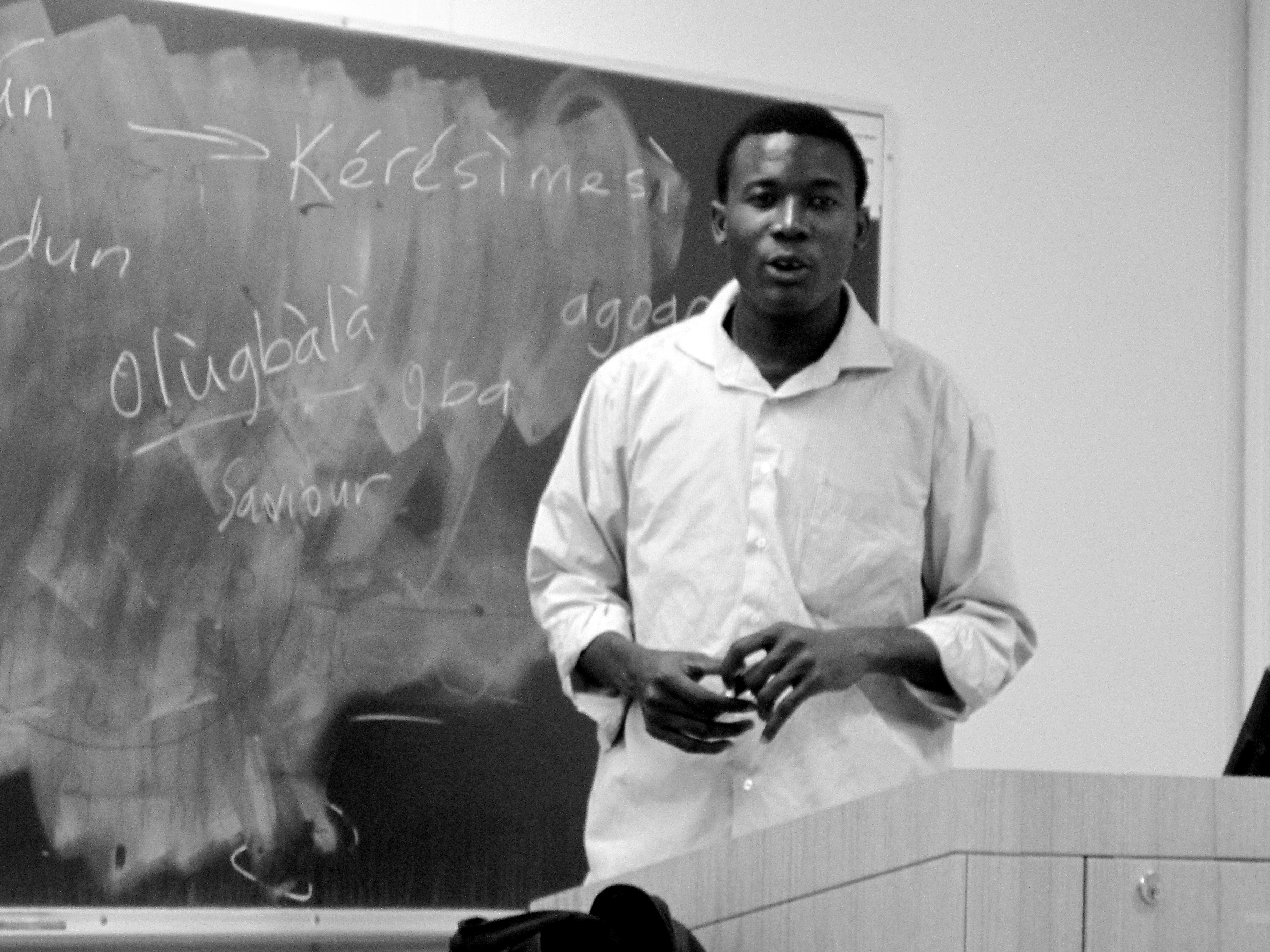
February 3: “Exploring Yoruba Through American Eyes” was a report of my now famous talk to students, faculty and friends for the Cultural Exchange Month. On February 4, we raised about $25o for Jos. February 9, I wrote a guest post for Clarissa’s blog titled “Barking in a Foreign Language”. On February 14, I went to the Mardi Gras in St. Louis. I also wrote an account of the festival for a Nigerian newspaper and it was published on February 19. February 19: Wrote Western Union Rocks/Sucks. In response, a Western Union representative responded. February 21: Meeting Paula Varsavsky.
March 21: Sauce for the Gander: a look at the geese on Cougar Village campus, their threat to students, and the human threat on their own existence. March 25: wrote to Western Union a passioned letter asking them to make money transfer free to Jos, Nigeria as they did for Haiti which had also suffered a tragedy. March 27: “Of the Radio Days“, a look back on my experience with radio presenter as a teenager.
In April, I recorded a few karaoke tracks and called them KTravula remixes. I posted two of them on the blog. There was Killing Me Softly (on April 2) and Slipping Through My Fingers (April 7). On April 6, we won the battle to make Western Union slash their money transfer fees to Nigeria. For two days, WU agreed to have everyone pay only half price to transfer money. My 400th post was published on April 20. It was titled “A Different Kind of Hoe”, a look at the use of language, and entendres across cultural lines.
May 1, I published a Youtube video of my class students singing in Yoruba. They even threw in a rap session for good measure. Relive that post here. On May 3, I published a picture post of a time lapse picture I took of a spot behind my Cougar Village apartment. May 6, African Roar was published. My short story “Behind the Door” was one of the eleven stories in it. May 8, a report about my teaching at SIUE was reported in the Alestle, a campus based newspaper. May 9 was my last night in my apartment as a Fulbright Foreign Language teacher. On May 14, I published “Full Circle”, my last post in the United States at the end of the Fulbright Programme. On May 16, I landed in Lagos, Nigeria. May 25: This blog was nominated for 11 categories in the Nigerian Blog Awards. May 29, I Visited my old University in Ibadan.
June 5: A Case for Blogging. June 8, I went to Badagry in Lagos to see the slave relics in the town. I wrote a comprehensive travel report of that very moving and sometimes disturbing experience for 234Next. It was published here on June 21. Writing it was one very moving and angry experience resulting from the visit itself. June 11, I published a few more pictures from the Badagry trip. June 13, I published a critic of the language use in Wole Soyinka’s The Strong Breed. The post pulled a few punches, but no one successfully refuted the point it raised. On June 20, I interviewed writer Ivor Hartman on the motives and prospects of his new publishing collective.
July 1, I Decided to return to the US. July 2: Wrote “Nomads” about the many itinerant girls on the streets of Nigeria. July 8, travelled to Ife, then on July 12 to Ilorin (where I visited the Ilorin National Museum), then on July 15 to Kaduna in search of answers to a few pending curiosities), then July 16 to Abuja (where I visited the National Mosque and the National Assembly on July 18), to Kaduna (on July 18), to Zaria (on July 19), to Lafia and Obi (on July 21), then finally to Jos (on July 22, a few days after another deadly attack where I spoke with a few people on the current situation in the town in “A Lunch in Jos”.). The month ended with a poem I wrote evocative of my experiences on the road. It is aptly titled “Be Like the Road Itself” (July 31). The poem was published in Sentinel Nigeria Issue #3 (August 2010).
August 9, I wrote On the Origin of Names – The sequel. August 16, I wrote an essay on the history of religious intolerance and compromise with a focus on the University of Ibadan. It was titled “The Cross and the Crescent: A Short Story.” August 20: I returned to the United States. August 28, after living “under the bridge” for a while, returned to Cougar Village. On August 29, I attended the Festival of Nations in St. Louis.
September 28, I began work as a volunteer at the International Institute in St. Louis.
October 2: Laughing At Myself. On October 16, we found ourselves visiting the Cathedral Basilica of St. Louis, a Synagogue and a Mosque on the same day. We had only planned to visit the Cathedral. Between October 23- 25, I visited Pulitzer Art Centre, the St. Louis University and the Scott Joplin Home (Missouri) on a search for the art hotspots in St. Louis. I was not disappointed. On October 29, I went to Hannibal to visit the Mark Twain Boyhood Home and Museum in company of a good friend. It was a two and a half hour drive to the place, and it was a pleasant experience.
November 1, I wrote my Halloween post about a party I went to wearing dashiki. There were three highlight posts in November. One was on How to Survive on a Fulbright Stipend (November 3) which seemed to have helped new Fulbright aspirants by the number of visitors that Google brings here to read it. Then there was the non-fiction narration of a part of my childhood (November 11). Because of the response to that, I’ve been writing more privately on my influences and memories. The last was “Saving the Words” a short expose on the death and survival of language through the words that are their vehicle (November 14). The post was reproduced in many places online including two Nigerian newspapers, with due credit, but all without permission. Between November 26th – 29th, I visited the Churchill Museum at Fulton, Missouri, the National World War Museum (Kansas City, MO) and Oklahoma Joe’s in Kansas in company of three other friends.
December 2, I wrote about my influences from Richard Feynman. December 8, got my first parking ticket in St. Louis (most appropriately) after driving a current Fulbright teacher of Arabic to the airport. The post that got most views is The Pleasure of Swallowing (December 19), of course: an ode to food and the art of it. And let us not forget “Of Books and Used Books” (December 20) where I made a point of my disgust for physical libraries because of the nuisance they cause to physical space, and how having access to used books makes it easy for people like me to get to read what I like to read. I also set up a wishlist for those who might be willing and able to send me anonymous gifts of those books (which I intend to read, and review on this blog) or any other item.
________________________________
There, the journey so far. One book, one short story, many reprints, many works in progress, plenty photographs and over seven hundred blog posts later, we’re still here. May the next year bring more rewards, and many more interesting discoveries, and people.
(Please take a moment to vote in the new poll on the right. I’d like to know which posts interested you the most this year. Thank you.)
 In November, I read another blogpost about a man who was going through Africa on a bicycle from London to Cape Town. Along the way he passed through many African cities and he wrote about them. The one that interested me the most was obviously his post about entering Nigeria for the first time. For someone coming with a British eye on a bicycle, what does he see? How does he see it? More, how interesting is it to travel through such a large continent on a bicycle? What was the desert like? What of the shores and the mountains? What about the weather?