Browsing the archives for the Review category.

“Never Look An American In the Eye”

In my last book review, I lamented the dearth of travel writing books by African authors. I have since been scolded for failing to reference a number of other old and new works that tackle the subject matter, so I’m currently looking for Isaac Delano’s The Soul of Nigeria, Babatunde Shadeko’s The Magic Land of Nigeria, Noo Saro Wiwa’s Transwonderland, and Eavesdropping, a collection of essays and travelogues in America by Deji Haastrup.

But one of the example works I pointed to as examples of contemporary works detailing honest and intimate travel experiences of travel was Okey Ndibe’s Never Look An American In the Eye (Soho Press. October, 2016). I have now finished reading a review copy of the work and I can say that it was a thoroughly delightful experience. Having lived in America for a while myself, I am always interested in reading accounts of others who have lived in the country, experienced in ways similar to or different from mine. But with this book, except that both of us had entered the United States for the first time at twenty-eight years old, the experiences could not be any dissimilar, which added a lot of excitement to its reading.

okey

Out October 11, 2016

The title comes from a piece of advice given to the author by his uncle in the village. He, the uncle, not having experienced America in any other way except from the plot of Westerns shown on Nigerian screens where eye contact was the ostensible cause of major conflicts that resulted in lots of gunfire, decided that his nephew on the way to America needed such a good prep. As we know now, from our experience with Americans, the opposite turns out to be true. This leads to a number of awkward, interesting, and hilarious scenarios, one including contact with law-enforcement.

The book is a collection of connected stories about the author’s life in Nigeria and his migration to America. Okey Ndibe is currently a columnist for a number of Nigerian publications. He is also the author of two well-received novels Arrows of Rain (2000) and Foreign Gods Inc (2014). He had arrived in the United States first as a maiden editor of a new international magazine, in the late eighties, before he achieved these later successes, but during which time he was already an accomplished reporter for a major Nigerian publication. In the US, after his stint as an editor, he became a student, and later, a reluctant but ultimately appreciative citizen. The book covers all these periods in his life with tales that paint the picture of an individual with an expansive curiosity and a healthy sense of humour towards misfortunes and uncertainties. The stories follow each other in an unsual order which was slightly disorientating, but ultimately successful in pushing the story forward towards a fitting end. Read to find out why.

As a memoir, it’s an engaging work filled with optimism, written in a style that is neither pretentiously grand nor mindlessly plain. As literature, it is clever in its deceiving simplicity. As travel writing, it is a welcome addition to a trove of like-minded works by Africans traveling around the world. It is a work accessible without being insipid, serious without being morose, and honest without being overexposing or patronising. The handling of his contact and relationships with legends of African literature Wọlé Ṣóyínká and Chinua Achebe deserves credit for its normalcy and honesty. We see them both as humans, chasing human pursuits, and vulnerable to human frailties and human disappointments.

It balances an important narrative about migration, culture, disappointments, love, and restlessness with an outlook that is both sunny and measured. I don’t want to say “circumspect” because that presupposes an unwillingness to take risks. What the work is is the opening of doors into a time in the life of its author which also coincides with a significant time in the life of a country he was leaving behind and the one he eventually adopts. There was no risk to be taken or avoided as far as the writing goes. The story needed to be told well, and it was.

___

The hardcover is 224 pages long, but doesn’t feel like it. The book will be released on October 11, 2016 and can be pre-ordered here. I will be speaking with the author in a public Book Chat in the next Aké Festival in Abẹ́òkuta this November. If you’re in the area, do drop by to hear him answer a number of questions I’m deliberately keeping away from this review :). Go buy/pre-order the book.

Travel as Life: A Review of Route 234

I haven’t read many books about travelling around Nigeria written by Nigerians. No doubt they exist (and readers should please recommend some for me in the comment section). I have however read many about traveling in other parts of the world. Tẹ́jú Cole’s (2016) essay collection comes to mind as well as Wọlé Ṣóyínká’s memoir You Must Set Forth At Dawn (2006). There is also America Their America (1964), an “autotravography” by J.P. Clark which caused controversy for what critics thought was a narrow and judgmental view of American values. Recently, there is Okey Ndibe’s Never Look An American In the Eye (2016), an autobiography, and many more.

There are however many more narratives written about the country, and about the continent, by visiting (foreign) journalists, writers, novelists over the years. Karen Blixen‘s Out of Africa (1937), JMG Le Clezio’s Onitsha (1991) and VS Naipaul’s The Masque of Africa (2010) come to mind easily. But so does this one. The overall impression of such books has always been the worry that they rarely depict reality as is, but only as perceived by the visiting foreigner, which – to be fair – is the whole purpose of the subjective narrative. I expect that the impression of America I’ll get from reading travel notes from an African visiting the US in the 1960s will give me an idea of America through that writer’s perspective of events as they unfold to him/her.
fullsizerender-6-1

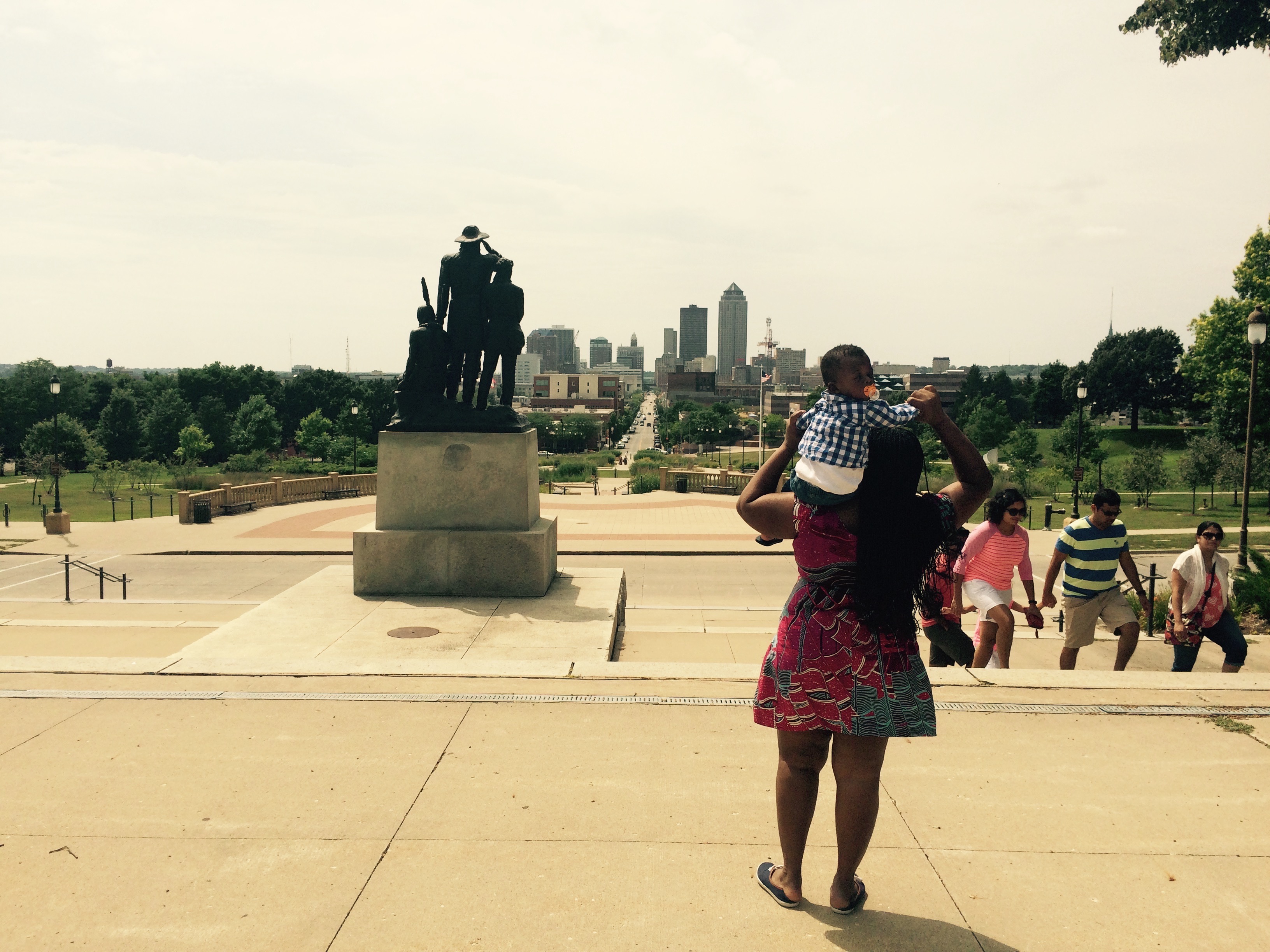
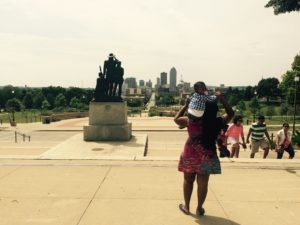
At the Des Moines Capitol, Iowa (2015)

Even in the online space, one might easily find blogs written by foreigners about travel around the continent than one might of blogs by Africans of travel experiences in their own continent. (This is changing, of course. You’re reading this on a travel blog managed by an African, after all). But why is this the case? Human civilization itself is an experiment in travel, documentation and adventure conditioned by necessity, curiosity and sometimes nationalism. We have always left our comfort zones for new experiences. And, as archaeology and anthropology tell us, we have always documented those movements, even unconsciously, in hieroglyphics, and oral poetry, tribal marks, and lately in writing. In the 21st century Africa, the prevailing narrative is that travel for leisure and travel writing is a Western chore, done by the privileged few, and those conditioned to it by their profession in journalism.

Reality, unfortunately, seems to bear it out for the most part except in some rare cases. Olábísí Àjàlá was a Nigerian student who found himself in the United States at age 18 in the late 1940s. Having failed to succeed as a medical student at DePaul University, Chicago, he decided to travel through the country to Los Angeles, on a bicycle and document his experiences along the way. Through deportations, skirmishes with authorities, short Hollywood career (including meeting then actor Ronald Reagan), many short-lived marriages, children, and global fame, through the fifties, sixties, and seventies, he became the patron saint of all adventurers, and an icon in popular culture for African travel. Being called Ajàlá Travels in Nigeria today is a homage to his larger-than-life reputation. He also wrote a book An African Abroad.* 

So why is it that unless in rare cases Africans are not known globally to document our adventures in writing, or is it that we are just generally averse to travelling for its own sake? My friend and scholar Rebecca Jones has been asking this question for a while. In a conference she facilitated in Birmingham earlier in the year, the Call observed:

“For a long time study of African travel writing in the West has focused on Western-authored travel writing about Africa. But this has ignored both the long heritage of the genre amongst African and diaspora authors. African travel writers have traversed both the African continent and the rest of the world, writing about encounters and differences they meet in their own societies and others. They have engaged with colonialism and the post-colonial world, have produced ethnographic description, reportage, poetry, humour and more. They have traversed genres and forms, from the Swahili habari written at the turn of the twentieth century to Yoruba newspaper travel narratives of the 1920s, from accounts of students and soldiers abroad, to newspapers and today’s online travel writing.”

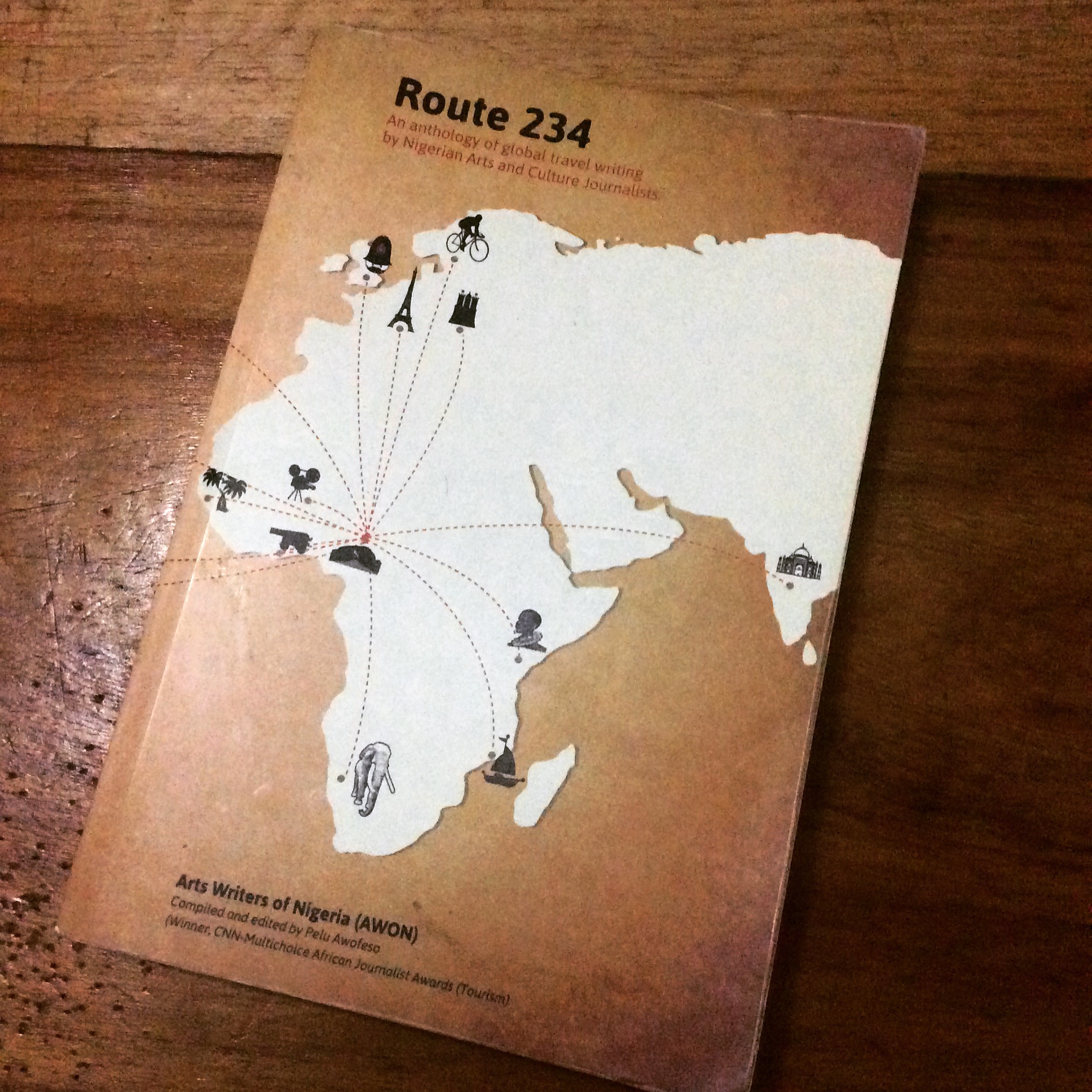
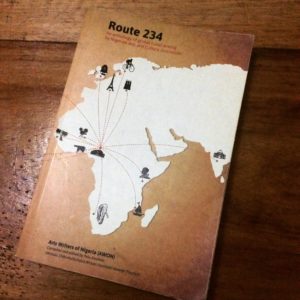
Aside from this blog, there are quite a few other ones online with focus on travel as an African hobby, done especially without the express purpose of becoming a travel “journalist” working for a media house, but for its own sake. Why are there not more. Africans, after all, travel as much as everyone else. Is it that we don’t care about documenting our experiences the way that others do? I have just finished reading Route 234 (2016), an anthology of global travel writing by Nigerian arts and culture journalists, compiled and edited by Pẹ̀lú Awófẹ̀sọ, an award-winning culture journalist. It is a delightful read of many fun, scary, heartwarming, and diverse experience of Nigerians in many different local and international situations. The contributors are however many of the continent’s known arts and culture journalists. This fact will not help our subject matter, but it shouldn’t remove from the value of the book as a necessary work and a delightful read.
image

Route 234(2016), edited by Pẹ̀lú Awófẹ̀sọ̀

According to the editor, the idea for the book came from a private listserve conversation among these culture/travel writers earlier in the decade about documenting some of their travel experiences. It took many years before the idea finally became concrete.  The 211-paged book lists Kọ́lé Adé-Odùtọ́la, Olúmìdé Ìyàndá, Ọláyínká Oyègbilé, Èyítáyọ̀ Alọ́h, Mọlará Wood, Steve Ayọ̀rìndé, Pẹ̀lú Awófẹ̀sọ̀, Jahman Aníkúlápó, Túndé Àrẹ̀mú, Nseobong Okon-Ekong, Akíntáyọ̀ Abọ́dúnrìn, Ayẹni Adékúnlé, Fúnkẹ́ Osae-Brown, Sọlá Balógun and Ozolua Uhakheme as contributors. The scope of the travel experiences documented therein covers Los Angeles, Atlanta, Bahia, Juffureh, Accra, Plateau, Nairobi, Durban, Pilanesberg, India, London, France, Frankfurt, Nice, and Holland.

One of my favourite narrative in the work is Mọlará Wood’s “Farewell Juffureh” (page 35), covering a visit to Alex Haley’s ancestral hometown in the heart of Gambia as well as Nseobong Okon-Ekon’s “Trekking the Mambilla Plateau” (page 93). In both, the reader is vividly guided through experiences that must have been much more intense and affecting than words could capture. Some of the others detail culture shocks at visiting a new place for the first time and re-setting their opinions and expectations preconceived from a distance (“Accra Mystic” by Jahman Anikulapo, page 79) while some focus on their immediate task; covering a film festival, for instance (“Film, FESPACO, Ezra” by Steve Ayọ̀rìndé, page 61). A heartwarming one by Ṣọlá Balógun (“The Good Samaritans of Nice”, page 181) describe an experience common to many frequent travellers: being stranded in a strange city after a missed flight.

What the book represents overall is an intervention in a space where much more effort of this nature is needed. But travel isn’t, and shouldn’t be, the preserve of just culture writers and journalists. Writing about it shouldn’t be either. Tourism isn’t a big deal in Nigeria today because of lack of government (and private sector) care, yes, but also because of a seeming lack of interest in the populace itself. As I argued in this recent piece on a visit to historical locations in Ìbàdàn, commercial attention will come when governmental and private sector intervention takes the first step:

“I think back to a recent experience, in Italy, where tourism has built a thriving industry of restaurants, malls, and gift shops around notable structures that tell the country’s history, real and fictional, and how much value that attention (and tourist dollars) has brought to the country. Old churches and abbeys, ancient arenas in Verona and the Colosseum in Rome, among others, are all just ruins of a certain past. But they have been preserved and well branded in order to attract foreigners and their resources. Even a fictional character, Juliet, from Shakespeare’s Romeo and Juliet, has a touristy structure built in her honour, called Casa di Giulietta.”

Travel is fun. And even when it is not, it is always an enlightening exercise. As Mark Twain said in The Innocents Abroad (1869), “travel is fatal to prejudice, bigotry, and narrow-mindedness, and many of our people need it sorely on these accounts. Broad, wholesome, charitable views of men and things cannot be acquired by vegetating in one little corner of the earth all one’s lifetime.” That same perhaps can be said about travel writing, if not as a way to reflect on one’s adventures, as a way to keep said experiences in the memory of the world.

The book is a delightful read, but much more is needed.

_________

There are many other stories like this, no doubt. Ravi on twitter has pointed me out to “Sol Plaatje’s sea travel piece” (by which I assume he means this bookMhudi, an epic of South African native life a hundred years ago), and Rebecca, in the comment section, to a few more published narratives, also of a few years back. Their input also reminded me of Olaudah Equiano’s  equally notable memoir. There are many more like these, I agree. My point is that there are not many more, and certainly not as many notable ones as there should be).

For more reading
Tope Folarin on Accessibility

topefolarinIn this long but compelling essay in the LA Review of Books, Nigerian-American writer and winner of the 2013 Caine Prize Tọ́pẹ́ Fọlárìn discusses the challenge faced by new African writers trying to gain international recognition and being judged against a standard of “accessibility” set by selected role models.

The long essay slash book review is written in a smooth and accessible – he won’t like that word – style that sustains interest from beginning to end, making a valid argument against a single-story stereotyping of African stories that inevitably happens because of a conditioning of taste by the gatekeepers of the profession.

Here’s an excerpt:

It can be said that black artists who live in the United States or produce art that is consumed in the United States are “expected” to create certain kinds of art, but the reason these expectations exist is because some black artist has produced a pioneering work that, for any number of reasons, garners significant attention and is thus perceived by a predominantly white Western audience as the height of black achievement, the precise standard that every other black artist in the same field must strive to achieve in order for their work to be accessible to an audience that otherwise knows next to nothing about the community the black artist has emerged from.

I don’t know whether his conclusion in the essay point more to the laziness of popular culture that chooses instead to anoint one messenger in every generation and move on rather than spending time sampling every offering for a varied taste, or whether there indeed a nefarious effort against the thriving of a diverse minority voice from around the continent. What he insists on however – as the crux of the essay – is that thriving as a prominent voice in African literature often requires a combination of luck, accessibility in the right kind of way, and talent, not necessarily in that order.

Still worth a read.

_______

Photo: DailyMaverick.co.za

A Diligent Retelling: Reading Teju Cole’s Essay Collection

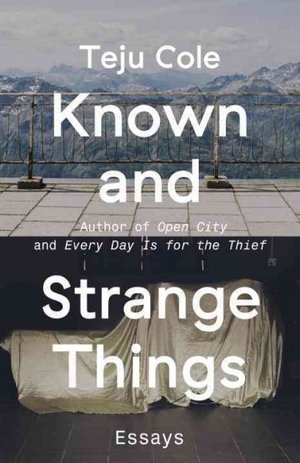
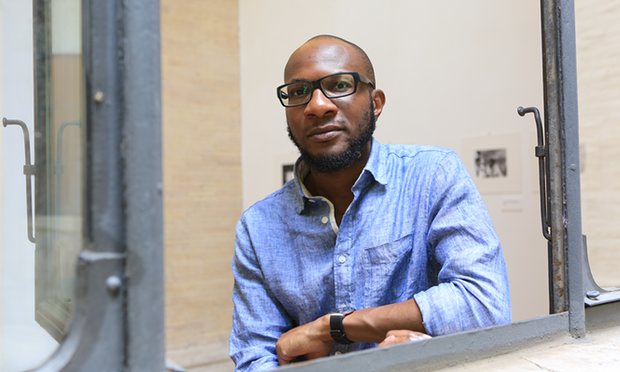
KnownAndStrangeI’ve been reading Tẹjú Cole’s Known and Strange Things among other commitments. The book is a collection of published and unpublished essays by the acclaimed author of Open City and Everyday is for the Thief, two books noted for their essay-like forms that brilliantly blur the lines between travel writing and fiction. As a travel blogger, I can relate. He also follows in the tradition of many other writers famous for documenting their travel adventures in their literary output. The book is a compact curation of his own writing journey from many publications in which a number of them had first appeared.

In one of the essays in the book, Cole famously follows James Baldwin to a city in Switzerland in order to re-live that writer’s experience in the sixties while he was working on Go Tell it on the Mountain and to reflect on what may have changed over the course of time. In another, he documents his meeting with V.S. Naipaul in New York, being awed by him but not too much as not to be aware of the man’s occasional condescension that comes out at unexpected moments. “He speaks so well,” Naipaul says of the African author and we glimpse from the skill of retelling that it wasn’t that much of a compliment. In An African Caesar, the author does a nuanced review of a theatre presentation by the Royal Shakespeare Company at the Brooklyn Academy of Music, but doing it against the background of other ironies and coincidences riding on the lives of Shakespeare, Caesar, Abraham Lincoln, and the all-black cast.

In the preface, Cole pays homage to one of his (and my) favourite tongue-twisters from Yorùbá (“Ọ̀pọ̀lọpọ̀ ọ̀pọ̀lọ́ ni kò mọ̀ pé ọ̀pọ̀lọpọ̀ ènìyàn l’ọ́pọlọ l’ọ́pọ̀lọpọ̀”) to illustrate his rootedness in his home culture properly balanced with his accommodation of other cultures and values. In another part of the chapter he expounds this more clearly:

“There’s no world in which I would surrender the intimidating beauty of Yoruba-language poetry for, say, Shakespeare’s sonnets, or one in which I’d prefer chamber orchestras playing baroque music to the koras of Mali. I’m happy to own all of it. This carefree confidence is, in part, the gift of time… I feel little alienation in museums, full though they are of other people’s ancestors… I am not an interloper when I look at a Rembrandt portrait. I care for them more than some white people do, just as some white people care more for aspects of African art than I do…”

The tongue-twister was, impressively, left un-italicized as have typically been the case in most books published abroad. It was, however, not properly tone-marked as Yorùbá words usually ought, and as I did above. Neither were any Yorùbá names referenced in the work. My initial assumption is that this is the publisher’s error, typically paying less attention to proper diacritical marking on non-English words. But elsewhere in the book (Furtwängler, Tété-Michel Kpomassie, Florian Höllerer, Tomas Tranströmer, Galápagos, etc) names belonging to other people in accented/tonal languages were properly accented with no eyebrows raised. Here, my initial elation at the central featuring of Yorùbá in this work was greatly punctured, and now awaiting sacrificial appeasement and repair. In 2016, we should no longer be apologetic about insisting on proper writing of African languages in literature. The writer, certainly, at this height of his literary career, stands in a great position to influence this change.

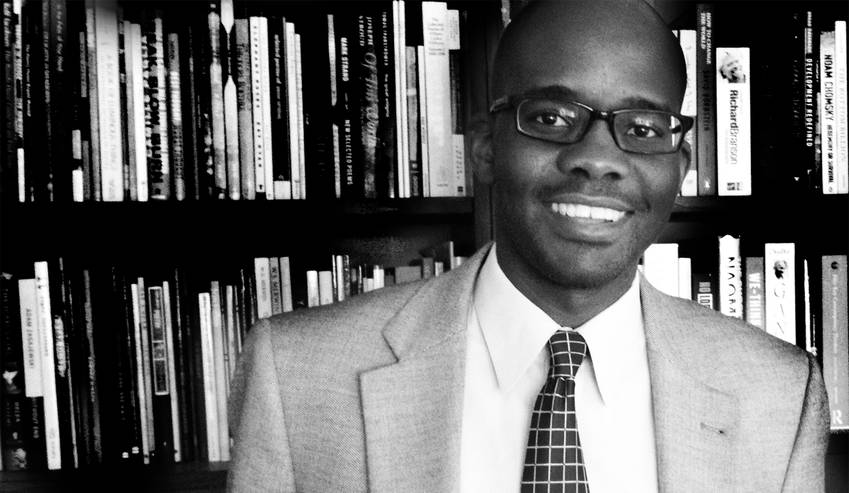
tejuMy favourite essay in the work yet is an essay titled Unnamed Lake which is a stream-of-consciousness-type narrative on the complexity of perception, art, and the role of memory. It is one I’ll also read again for its layered presentation that offers new gem each time. I like it also for its use of mixed metaphors from French/Algeria (Derrida) to Germany (Wilhelm Furtwängler), from Australia (the Adnyamathanha people) to Nigeria (Major Patrirck Chukwuman Kaduna Nzeogwu), from Bangladesh to Hiroshima (President Truman). The other essays more grounded in recognizable reality of the author’s work history: reviews (Wangechi Mutu), polemics (The White Saviour Industrial Complex), satire (In Place of Thought), and interview (A Conversation with Aleksandar Hemon), etc, are equally enchanting, and serve a purpose of providing a wide appraisal of Teju Cole’s worldview.

What are essays good for? Setting an agenda, making a point, codifying for a coming generation thoughts, ideas, arguments, and questions plaguing a specific time? Mr. Cole’s collection touch on many of these as a timely intervention not just for identifying his own outlook on the world – though this is relevant – but also for leaving a mark identifying this place and this time as his point of visiting. Like a traveler in the desert on the way to somewhere else choosing for a while to make artistry from the sand under his feet not only to delight himself (and how discomfiting would that be in a scorching desert?) but also to amaze overhead flyers and future visitors to the place with his own creative interpretation of what he had experienced.

In that way, essays are not that different from memoirs, which tap into memory and creative writing to attempt an understanding of the past through the narrative lens, except that they tell more than they show, opening to us directly the thoughts and opinions of the writer. What we take away is more than knowledge of the subjects and places we walked through with the writer, but also something about the writer himself. Known and Strange Things tell us that the brilliant Teju Cole is curious in his approach to life, attentive things that connect us with those who have gone before, of different colors, cultures and tongues, and diligent in his retelling of (or at least his arguments about) what makes them memorable or relevant, allowing us to walk in his shoes page by page. That makes the book an engaging, and important, read.

____

Photo credit: TheGuardian.com

Three Days of Madness at the University of Lagos

By Péjú Láyíwọlá

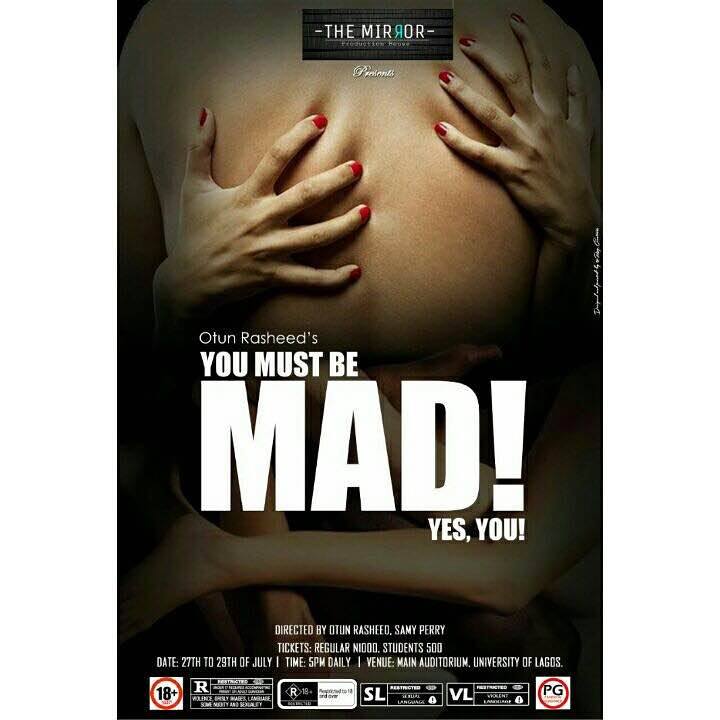
madI was first captivated by the posters and then I was warned not to watch the play because of the high level of vulgarity shown on stage. I braved it and opted to watch it on the second day of the three days that it was shown at the Main Auditorium, University of Lagos. Truly, if you survive the first few minutes of the play, you are likely to sit through this very captivating and bold attempt by a talented young playwright, Otun Rasheed, to shock, provoke, challenge, incite, and stir all manner of emotions through this breathtaking 70 minitues play. Given the very diverse critique of this play, one thing remains clear: sex is a tabooed topic in Nigeria. People prefer to talk about it in private spaces and not see themselves on stage.

You must be mad, Yes You! is the title of the play. While some might quarrel with the title, I think it is apt because really we live in a very mad world! It is a world full of paradoxes. The play was laden with foul language. The stark show of sexual pleasure and the rigorous scenes of obscenity and eroticism would make you cringe! But the message is loud and clear at the end: the level of promiscuity in the Nigerian society is high but largely ignored. Parents delude themselves by thinking their children are ‘holy’ and would not indulge in sex in this highly virtual and visual world of the internet. Infidelity, fornication, incest, pornography have become the order of the day. The level of incest within families is so high that you would be shocked. A few years ago, I attended a popular monthly camp meeting. When the altar call was raised, I was shocked at the number of people involved in incestuous relationship come out for prayers.

The cast comprised students of the Department of Creative Arts. Otun Rasheed is a lecturer in the department. What great mentorship! But does he represent the views of the Department or does he make any reference to it in any way? No! It is unlikely that such a play would see the light of day were it presented as an academic project. It is also not likely to receive a research grant. Yet, the academy should be a crucible for such phenomenal thinking.

Many thoughts crossed my mind while watching. Some of these discussed below reflect, in part, views of some of my colleagues when we discussed.

Why are people more likely to accept visual images of eroticism rather than a play with a similar theme? What role does sound and movement play in accentuating a message?

A bit of diversion: About eleven years ago there was a half nude life-sized female figure in the courtyard of the Visual Arts unit of the department. She was bare chested and wore a very well sculpted g–string that had a butterfly as motif on what I would consider the most significant part. A former Head of Department (also a visual artist) could not understand why that work should have been made. We all lived comfortably with the work for a long time. Over time there were signs of wear and tear on the nipples and lips of the figure. Several months later, the work collapsed. When I asked the students what happened they jocularly said. ‘She was raped and murdered last night and the case had been reported to the state CID’. Investigations are still ongoing till now.

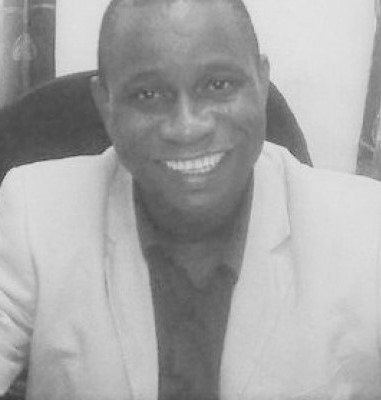
Ọ̀tún Rasheed. Photo taken from Encomium Magazine

Ọ̀tún Rasheed. Photo taken from Encomium Magazine

Religiosity and fanaticism becloud our judgment. I was told that some of the staff in solidarity rushed to watch the play only to run out after five minutes. They couldn’t handle it. Jesus! Armageddon! This is Satan at work! The devil is a liar! This playwright must be mad! Yes, Otun Rasheed is mad! We were told in our elementary theatre class that theatre is make-belief. Yet, there is a meeting point between reality and fiction. Outside the performance, can I look at the most vulnerable of the cast without casting my mind back to the acts of violation on stage? Perhaps the change of cast for each production helped mitigate this.

Tunji Sótimírìn is concerned about the very graphic scenes and the perception of parents who are only just accepting theatre arts as a field of study. Are parents likely to allow their daughters study theatre arts after seeing such a play? As a former Head of Department, I have come to realize that the passion for some of these students far outweighs the choices of parents. I have seen students cry when offered courses other than theatre arts. Every new entrant into the Theatre Arts Department believes, and rightfully so, that he/she would succeed and surpass the achievements of former alumni and alumnae of the department. Several of them abound – Moceda, Stella Damassus, Fẹ́mi Brainard, Mercy Aigbe, Dáre Art Àlàdé, Fẹ́mi Oke, Wọlé Òjó, Helen Paul, Ọmọ́wùmí Dàda, Sambassa, Sẹ́gun Adéfilá and others too numerous to list. The successful careers of their forbears in the entertainment industry looms larger than the sentiments expressed by some parents. We are thankful for such great mentorship since the days of cultural studies. Both students and lecturers have enjoyed such great tutelage from Prof Ẹ̀bùn Clark, Prof Dúró Òní, Prof Àbáyọ̀mí Barber, Prof Délé Jẹ́gẹ́dẹ́ , Prof Alagoa, Prof Anthony Mereni, Prof Bọ̀dé Osanyin, Alaja Brown and Túnjí Ṣótimírìn. It is from this tradition that Otun Rasheed has emerged.

Many questions arise, a number of which I cannot answer: What role does theatre play in the society? What was the message of this play. Was it meant to be a corrective measure? Must theatre always have a message? To whom was this play directed? What binaries does this play throw up.

There are many points at which this play succeeds:

a. The use of space was amazing. Like an owl, the audience found themselves turning three sixty degrees. Many of the cast were seated amongst the audience and the audience were literally brought onto the stage. The stage could not contain the depth of actions Otun Rasheed offered. I also like the use of light and the special effects on the stage particularly in the opening scene.

b. Great publicity. Every day was a new message urging you to watch the play. The t-shirts and posters added pep to the show. The visuals were simply amazing! Social media aided publicity for this pay. Gone are the days when crude publicity was done by hiring a rickety university based cab with speakers mounted on it, while announcement are made round the campus through unfiltered microphones.

c. There was great synergy between members of the theatre unit and the students in bringing this idea to fruition. For this, I congratulate both students and staff of the theatre unit. Otun entertains much as he shocks his audience. His main aim is to call for the censorship of plays just like it is done with films. His personal experiences of taking his under aged children to watch adult plays without knowing it inspired this work. You must be Mad, Yes you! was rated 18+. Tickets were not offered to underage undergraduates, but a few still managed the gain entrance. That is the very point this play tries to address. How careful can parents be in bringing up their kids? What should be told them and what should be left for them to discover on their own?

The play lasted for three days. In my mind, it lasts forever. The final day had the main auditorium full to capacity. My only regret was that the madness was not sustained for a full week. Much as I like this work of art, I would like the directors to temper some of the violent scenes, particularly those couched within the audience area.

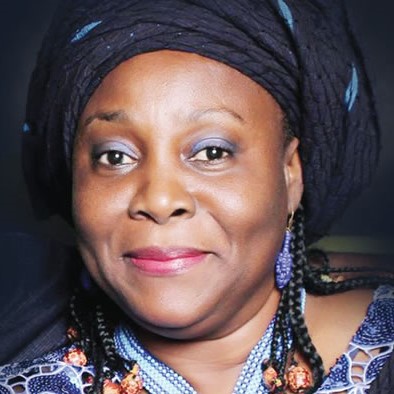
Peju-LayiwolaI salute your courage Otun Rasheed for bringing this play to the university environment. I look forward to watching it over and over again. I hope it would be viewed in a more pubic theatre and receive the sort of commendation it deserves. Did I hear you say condemnation? It is left for you to decide because you must be the only sane person in this very crazy world.

_________

Péjú Olówu Láyíwọlá is an artist, painter, and sculptor. She lives in Ibadan. Full text culled and edited from her Facebook page, with permission.