Browsing the archives for the Literature category.

A Prize is Only As Good As Those Who Enter

Photo credit: Cornell.edu

Lizzy Attree has a PhD from SOAS, University of London, on “The Literary Responses to HIV and AIDS from South Africa and Zimbabwe from 1990-2005”. Her collection of interviews with the first African writers to write about HIV and AIDS from Zimbabwe and South Africa was published in 2010 by Cambridge Scholars Publishing, and is entitled “Blood on the Page”. In 2010 she was a Visiting Lecturer in the English Department at Rhodes University in South Africa and from 2002-2009 she organised literary tours of African writers in the UK funded by Arts Council England such as the Caine Prize 10th Anniversary Tour in 2009.

She was appointed Administrator of the Caine Prize in 2011 and was made Director in 2014. She will teach African literature at Kings College London in 2015 as a temporary Lecturer. She sits on the Writivism Board of Trustees and is the co-founder of the Mabati-Cornell Kiswahili Prize.

________

In 2011, you took over as administrator of the Caine Prize for African Writing, from Nick Elam? How did you chart the path to the Directorship?

I took over from Nick Elam (who along with the Trustees founded the Prize) as Administrator of the Caine Prize in August 2011, having worked for a year alongside him to learn the ropes. Before that I had organized a separately funded Arts Council England 10th Anniversary tour of Caine Prize Winners and Shortlisted Writers in 2009 which was very successful and that lead to being offered the job as Administrator. I was made Director earlier this year because my role shifted. I was undertaking a more managerial role which involved strategic decision making and fundraising.

How would you rate the success of the Caine Prize, in meeting its original goals?

The idea for the Prize began long before I was involved, in 1999, when it was established in memory of Sir Michael Caine, who had been Chairman of the Booker Prize. It was prompted by the absence of a well-promoted prize for African Writing and a desire to create a broader awareness of African writers and African fiction. Now, fifteen years later, I think the Prize has been instrumental in recognising, valuing, rewarding and promoting writing from Africa. This is what attracted me to the Caine Prize in the first place. Having lived and worked in South Africa (researching at UWC and teaching at Rhodes University), I met incredibly gifted authors who deserved better exposure both on the continent and beyond.

Earlier this year we initiated an external evaluation process and found that the Caine Prize is making an important contribution to the number and quality of opportunities for writers of African descent, and that over the past 15 years, publishers, journalists, academics and the reading public have become much more aware of new African writing since the Prize was founded in 1999.

I think to a certain extent the Caine Prize has met the goals it originally set out to achieve in bringing African writing to a more prominent position internationally and particularly in the UK where you’ll find a much healthier selection of African writers on publishers’ lists, who sell, and who even get shortlisted for the Man Booker Prize! But of course the Prize sets itself new goals each year, otherwise there would be no point continuing. The Caine Prize aims to get bigger and better each year.

What is your assessment of the state of writing in Africa today? How do you rate the impact of the Caine in shaping that state, and what do you expect to see 20 years from now?

I hope I’m not still Director of the Caine Prize in 20 years time! Everyone has to move on, but I expect in 20 years time there will be far more Prizes on the African continent and that the literary industry will hopefully have become completely self-sufficient with a bigger audience, and active readers and writers producing and consuming work independently. There is always room for external validation and international prizes, but it’s not the purpose of the Caine Prize to remain dominant forever. I have taken great pleasure in providing advice, when solicited, to other Prizes, like the Baobab Prize, the Brunel African Poetry Prize, the Commonwealth Writers Prize, the Miles Morland Foundation Scholarships, the Kwani Manuscript Prize, Writivism, the Etisalat Prize, and even the Windham Campbell Prize in order to help shape their remits and share Caine Prize experiences in everything from judging, dates of announcements, fundraising to publicity. Writing in Africa today is very healthy and exciting. There is still a huge lack of publishers, particularly of commercial and literary fiction (particularly online). The professional support of literary editors and translators would make a huge difference to the quality of books produced and this is something we work to improve, on a friendly basis, with Goretti Kyomuhendo at African Writers Trust and others.

How does the Prize get its funding?

The Caine Prize raises money every year to support its work and receives support from a range of different organizations. At present the Prize is principally supported by The Oppenheimer Memorial Trust, The Miles Morland Foundation, the Booker Prize Foundation, Sigrid Rausing & Eric Abraham, Weatherly International plc, China Africa Resources, The Beit Trust, Exotix and CSL Stockbrokers. Other funders include The British Council, The Lennox and Wyfold Foundation, the Royal Over-Seas League, the EU Culture Fund and Kenya Airways. We also get support from generous individuals such as John Niepold, Adam Freudenheim and Arindam Bhattacharjee.

How have you managed to stay relevant as a top fiction prize on the continent?

I think the quality of winners and shortlisted writers speaks for itself; the Prize is only as good as those who enter, and those who make into the final five. The work they go on to produce after they have been shortlisted means that we can point to a record of having helped to identify and promote writers who are now recognized far and wide.

There have been a couple of changes made to the administration of the Prize since you took over, from compensating the judges to giving cash prizes to all the shortlisted writers. Why did you think this was important? Are there other changes to come?

As far as I know the Judges have always been paid. Yes, the new £500 Prize for shortlisted writers was added this year as a way of celebrating 15 years of the Caine Prize. It is hoped, funding permitting, that we will be able to continue awarding this Prize to the shortlisted writers, who deserve a financial reward for the quality of their writing and the publication of their stories in the annual Caine Prize anthology.

Other changes I have made are an expansion and formalization of our co-publication arrangements with publishers in Africa. The Caine Prize had longstanding arrangements with three African publishers, who co-published the annual anthologies of short stories produced at the workshops, Kwani? in Kenya, Jacana Media in South Africa and Cassava Republic in Nigeria, have now been joined by FEMRITE in Uganda, Sub-Saharan Publishers in Ghana, Bookworld Publishers in Zambia, ‘amaBooks in Zimbabwe and LANGAA in Cameroon. All of these publishers receive a print ready PDF free of charge, with which they produce the anthology and sell at local prices. At present co-publishers keep any profit for themselves, and I am happy for them to use that to re- invest in their business and continue to support Caine Prize publications, however if sales were to become very high then we have agreements in place to pay a division of royalties to authors.

Last year we were approached by a French publisher Éditions Zulma who published a collection of six stories by Caine Prize winners and shortlisted writers in an anthology called Snapshots – New Voices from the Caine Prize in October 2014. The stories were translated by Sika Fakambi and writers were paid 300 Euros each for their stories. We hope that the existence of a French edition of Caine Prize stories might enable us to make links with a French West African publisher who might co-publish Snapshots next year and Zulma intend to publish another six translated Caine Prize stories in 2015. There is also interest from a German publisher. I’m interested in finding an Indian co-publisher if possible, and even a Chinese publisher, but also to encourage Arabic and other African language translations of Caine Prize stories. I’m still very keen that we shortlist a story in translation in the next five years.

Visits to schools is something I instituted in 2013 while the Caine Prize workshop took place in Uganda. This was expanded and continued in Zimbabwe this year and will continue for the foreseeable future as the experience was enjoyed and appreciated by all involved. Accounts of some of these visits are available on the Caine Prize blog.

This year the shortlisted stories were all recorded as podcasts so that readers could also listen to the stories direct from our website via soundcloud. We hope to continue doing this. We are also improving our website, slowly, so that it will have more visual and sound content. I have tried to keep up with all 55 shortlisted writers’ activities since 2000, so that has become an extensive resource on the Winners page of the website. The blog we have developed has also been an interesting source of different views on the Prize from judges, workshop participants and myself, as well as other contributors and I’m keen to keep this going if possible and to encourage debate as a consequence.

A partnership with the NGO Worldreader was initiated by Nii Parkes, and we have gone on to invite Caine Prize winners to donate their stories to Worldreader so that they will be available on their free mobile phone platform across Africa. And the comic books mash-ups that Emmanuel Iduma and Bunmi Oloruntoba at 3Bute created for us with the shortlisted stories in 2012 were a fantastic innovation that I’d like to encourage in future. The use of new media to transform literature in to different forms will be key to encouraging a new generation of readers and writers to remain engaged in the digital age.

Another addition I have made to the annual programme is to encourage invitations from African literary and book festivals for Caine Prize writers. This began with a street corner conversation with Mervyn Sloman owner of the Book Lounge in Cape Town as he began planning for the first Open Book Festival in 2011. We fundraised together to make it possible for NoViolet Bulawayo to attend that year, and subsequent winners Rotimi Babatunde and Tope Folarin in the years that followed. The only obstacle this year was that Storymoja in Nairobi was the same weekend as Open Book, so instead we flew Okwiri Oduor in a few weeks earlier to do a book launch of The Gonjon Pin at the Book Lounge with Henrietta Rose-Innes and fellow 2014 shortlisters Efemia Chela and Diane Awerbuck (who all live in Cape Town). Okwiri was then invited to the Mail & Guardian LitFest in Johannesburg. I intend to ensure the Caine Prize winner is invited to Open Book in Cape Town next year and hope that our expansion to include invitations to Storymoja in Kenya and Ake Arts and Book Festival in Nigeria will continue to be honoured, as long as the dates allow and the winner themselves can fit it into their busy schedule. I have also been lucky enough to be invited to some of these literary events on the African continent, including the Casablanca Book Fair in Morocco earlier this year, which celebrated ECOWAS member states and their publishers and where I made important links with the Berlin Literature Festival Director, and North and West African publishers. I believe this led directly to Caine Prize winners Tope Folarin and Yvonne Owuor being invited to Berlin in September 2014.

Basic developments like joining Twitter, creating a better Facebook presence and participating more actively in social media have all been things we have instigated since I took over, just to keep up with the times.

Is there really a restriction on the language of entries? With the language diversity in the continent – and the abundance of multilingual translators – why do the stories still have to be originally written in English before it can be accepted?

Many people misunderstand this rule. The stories submitted DO NOT have to be written originally in English, but if they are entered in translation, there has to have been a published English translation of the story. If such an entry were shortlisted, the Prize money would be split between the translator and the author.

Notable critic Ikhide Ikheloa has a recurring charge that the name of the Prize be changed to “Caine Prize for Writing” rather than the “Caine Prize for African Writing.”

There are few other prizes for ‘African Writing’ or African literature. This is part of the Caine Prize criteria, and the reason the Prize was founded, to promote and support African writing/literature. Again, I think the term is misunderstood to refer to style when in fact it is about origin.

In an interview you gave a couple of years ago, you said “North Africa already has a well- established literary scene and prizes that reward writers from that region”. If that concession has already been made (however non-consciously) to exclude a part of the continent, then what’s the point of the “Africa” in the name of the prize? (I concede also that that’s probably not the reason for Ikhide’s own objection)

It is not a non-conscious exclusion; it was an attempt to explain why the Caine Prize receives so few entries from North Africa. We continue to seek and encourage submissions from all over Africa and from all its 55 countries.

There is another impression that never seems to go away about Caine as a prize awarding institution, for instance, from my interview with Aaron Bady (from July 2013), where he says that the Caine “has the baggage of being an extremely British institution that is in the business of awarding prizes for African authenticity, and there really isn’t a way to do that without imposing an artificial conception of what that is on African writers.” Is this a charge that keeps you up at night? And how have you rationalized, or responded to it?

Not really. It is a British institution and cannot pretend to be anything else but the Prize does not award a Prize for ‘authenticity’ but for excellence in writing/in literature. The judges have, for the most part been African and change every year. I don’t think anyone can tell writers what to think or write and this is certainly not the objective of the Prize. If you think about it, the stories the Caine Prize receives have already been (for the most part) edited and published. Perhaps we should be asking fiction editors and publishers all over the world how and why they choose to publish certain stories about or from ‘Africa’ or ‘African writers’?

Recently, Binyavanga, who won the prize in 2002 says “it (Caine Prize) just isn’t our institution… what is happening is you people are allowing the Caine Prize to receive funding and build itself as a brand and make money and people’s career there in London…”. He has made a few other disparaging comments in recent times, on twitter. Last year, Chimamanda Adichie’s asked in an interview, “…what’s all this over-privileging of the Caine Prize, anyway?” Continuing: “I suppose it’s a good thing, but for me it’s not the arbiter of the best fiction in Africa. It’s never been.” How do you respond to these comments, knowing that Adichie has been on the Caine Prize shortlist and Wainaina has actually won the prize?

I consider both writers as colleagues and I believe they are entitled to their opinions. I however strongly disagree with some of what has been said publicly about the Caine Prize. The idea that the Caine Prize receives funding and makes money and careers in London is false; the Caine Prize is a charity and it is therefore illegal for it to make money. All the money that is raised is spent on delivering the Prize and the workshops each year. We do this on a very modest budget of approximately £100,000 a year. I work 2 days a week. There are no other employees other than a web designer and a PR consultant who are contracted annually to specific roles. All the board members, patrons, trustees, the Chairman and the Deputy Chair person are unpaid, and give their time freely and generously in support of the Prize.

Of course we build the Caine Prize brand with press clippings and media coverage, and we fundraise on the basis of the success of the Prize in the work that it does, but these funds are not funds that would otherwise be accessible to writers, publishers, and organizations on the African continent. In fact, one of the reasons we struggle to raise money is because donors would rather give money directly to causes on the ground in Africa, and of course it is even harder to convince donors who have money for philanthropic causes that writing or literature is something worth supporting, when there are opportunities to build a well, start a school, educate or rehabilitate women in Darfur or the Congo. We fill in application forms and report on our spending not only to donors, but annually to Companies House and the Charity Commission in the UK, and our accounts are available to view on www.charitycommission.gov.uk.

The Caine Prize does not claim or pretend to be “the arbiter of the best fiction in Africa”; it judges five outstanding short stories from amongst the hundred or so entries it receives each year and chooses a winner who receives £10,000 and often goes on to secure a book deal with a reputable publisher. This is no small thing, but it’s not the barometer for all that is good in the world!

Before preparing for this interview, I had no idea about your work in HIV/AIDS advocacy.

HIV/AIDS in literature is my area of expertise and I think HIV/AIDS is still an important and complex issue that requires action globally to prevent its spread. Writers are important sources that policy makers and general readers can refer to, in order to better understand the complexity and impact of HIV and AIDS on the individual, on a human level. And by that I mean on the level of desire, sex, love, intimacy, contagion, empathy. I believe writers, thinkers and artists can help people become more empathetic, and think of the patient not as a threat or as a source of infection but as a human being who deserves love, respect, compassion and treatment.

Does your interest in advocacy influence, in any way, the choice of stories in the shortlist of the Prize year after year?

Contrary to what people may believe I am not involved in shortlisting! This process is performed solely by the judges each year. I simply provide them with the eligible shortlisted stories. And, once again for the record, they are not given ANY criteria with which to judge the stories, they are just expected to use their own literary faculties. Their records as writers, thinkers, artists and academics should speak for themselves. And after all, literary tastes are subjective.

I read about the Caine Prize Short Story Surgery. Can you tell me more about it?

The Port Harcourt One Day Short Story Surgery is a one off, for now, and was devised with Port Harcourt Book Festival as part of the celebration of their 2014 UNESCO World Book Capital status. Candidates were selected from 46 eligible entries of unpublished short stories between 1,500 and 2,000 words. The aim of the workshop is to explore and discuss the short story form and give one-on-one feedback and advice to the 15 selected candidates. Some reading will also be assigned in the week beforehand and the workshop is led by Ellah Wakatama Allfrey, Abubakar Ibrahim and Stanley Kenani.

I’ve also wondered for a while whether the Caine Prize ever thought of opening its doors to unpublished stories. Maybe a junior category, of sorts. What do you think?

Yes it’s a question that is often asked, but I think the Caine Prize is more likely to expand to include novels than unpublished short fiction at present. We just don’t have the capacity (with one staff member) to sort through the sheer volume of unpublished entries we would receive. Any expansion is subject to fundraising and is not on the horizon at present. Writivism is already dealing with unpublished short fiction, running a Prize, publishing an anthology, running a festival and workshops all over Africa. Samuel Kolawole is also running Writers Boot Camp, through Writers’ Studio, which still needs to raise a great deal of money on indiegogo to fund the November events in Cape Town. I’m sure there are other organizations that could fundraise to run a similar competition, indeed local publishers are probably already or should be scouting for this kind of work to find the next works they will publish. This work can only really be done locally and from the grassroots.

I know that you have the Caine Prize workshops in African countries. Have you thought of having Caine Prize dinner on the continent as well?

The question of the dinner raises all kinds of issues, mostly related to fundraising and administration. The first Caine Prize was awarded to Leila Aboulela at the Zimbabwe Book Fair in Harare in 2000, and the second to Helon Habila at the Nairobi Book Fair, but as the influence of book fairs began to wane there were no longer such viable public opportunities to award the Prize in Africa. With the current rise of literary festivals at the moment in different African countries it is possible that a celebration could be held in Africa, or even an award, as the NOMA Prize used to award its prizes in different countries each year. But at present, simply raising money and soliciting invitations for Caine Prize writers to attend literary festivals in Africa is a priority because these are aimed specifically at the writer and promoting their work.

Also, when will Nigeria host its own Caine Prize workshop?

We very much hope that in the next few years it will be possible for the Caine Prize to fundraise for and hold a successful workshop somewhere in Nigeria. It’s absolutely necessary that the Caine Prize comes to Nigeria since there have been three Nigerian winners, and Nigerians are shortlisted almost every year. The other thing to think about is that there already a number of brilliant workshops taking place in Nigeria. At the moment, we are looking at countries from whom the Prize receives less entries. That’s why we have held workshops in Cameroon (2011) and Ghana (2009) and could well go to Gambia, Senegal or Benin before Nigeria!

Personally, what is your vision for writing in Africa?

I don’t have a vision as such, I imagine and hope that writing in Africa will continue to grow and be supported locally and nationally by readers, publishing houses, magazines, the internet, mobile phones, radio, tv, government departments of culture and education and develop a literate, canny audience who can read and write freely about the world they live in and which we share. I hope to see more success and international publication for writers I admire like Nthikeng Mohlele, Yvonne Owuor, Rachel Zadok, Yewande Omotoso, Rotimi Babatunde and George Makana Clark, as well as more transference of African stories on to the silver screen.

And when you hand over as the director of the Caine Prize, where do you see yourself, professionally? I know that you got your PhD on “The Literary Responses to HIV and AIDS from South Africa and Zimbabwe from 1990-2005”. Have you given up on scholarly work?

I think scholarly work gave up on me! It was difficult to find a job in the UK in my niche area of research. I still write academically, unpaid, when I have time, and I try to be an active book reviewer, and peer reviewer for both academic journals and creative writing manuscripts that cross my path. I even examine the occasional PhD thesis when asked. I would like to write another book and have a project in the oven about African Footballers.

I will also be teaching an MA Course in Conflict, Memory and Resistance in African Literature at Kings College London next semester, covering a colleague’s maternity leave, and teaching a second year undergraduate course in both Francophone and Anglophone African Writing, whilst still working for the Caine Prize. I sit on the board of trustees for Writivism, which grows in strength year on year, and I am in the process of setting up the new Mabati-Cornell Kiswahili Prize for African Literature with Mukoma Wa Ngugi. There’s a lot going on. I don’t think pure academic work would ever satisfy all my interests. I still have an ambition to turn Yvonne Vera’s novel Butterfly Burning in to a film one day and of course I have a family to raise!

___________

This interview was first published in Aké Review 2014

Jumoke Verissimo Shares Her Views on Writing

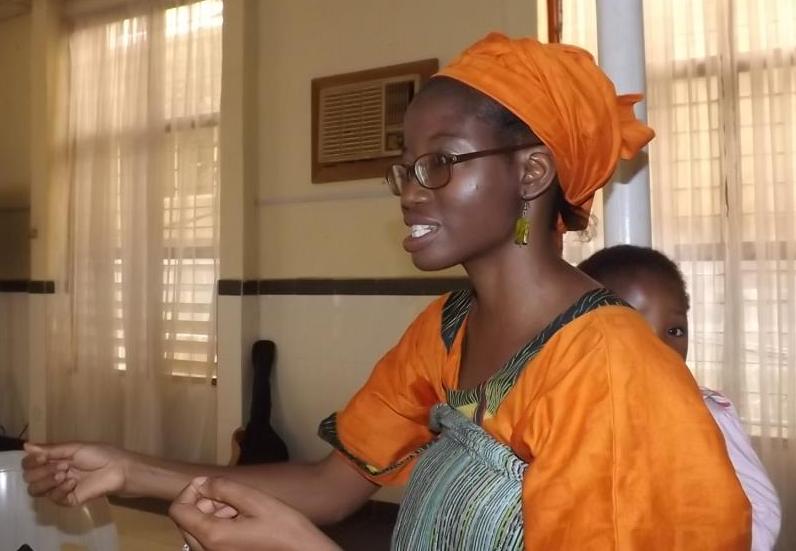
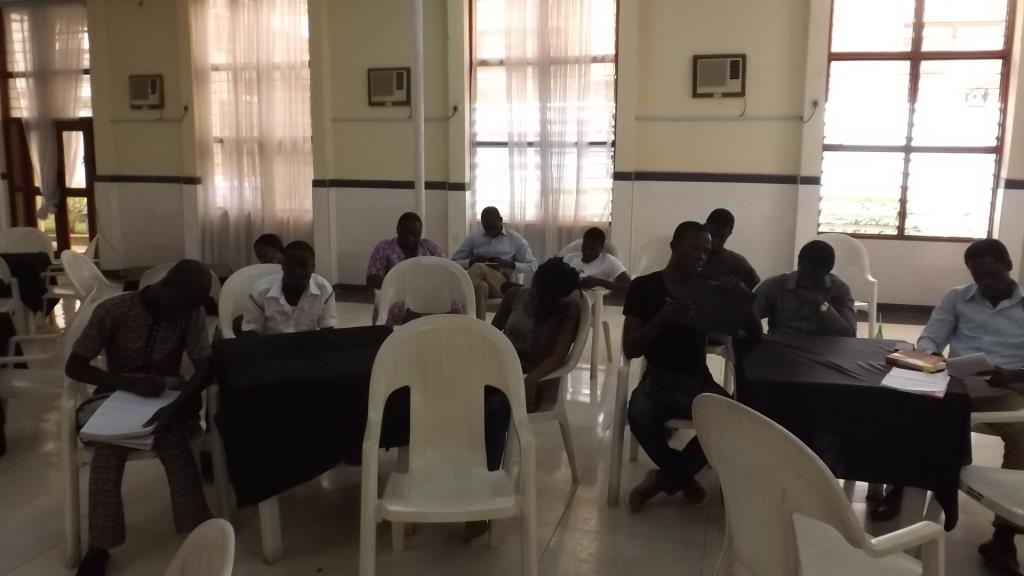
Jumoke VerrisimoFor a lot of young writers and aspiring writers, it was a platform to learn one or two tricks in the writing craft. The reknowned poet, Jumoke Verissimo with support from WriteHouse Collective and PEN Nigeria had opened a creative workshop for poetry last month. The second edition of the workshop which held on Saturday, 20th of September delved into the idea of experience as a vehicle for poetry and the use of metaphors.

Participants were given a class work to write out what ‘experience’ means to them in few words, these lines were analysed by Verissimo.  She said during her teaching ‘Deep into yourself, narrate or express experience based on your own personal life’. Referring to the lines of one of the participants, she said ‘now he has dug into his own life, perhaps there are things he wished he could achieve, so those six words analyses his own life’.

DSCF3872Jumoke asserted that there is absolutely nothing like a ‘writer’s block’. She said that if one could generate a first line based on personal experience, a second line would ‘flow from the bones’ and a third line will be accomplished easily. Other participants were actively involved as they contributed to the analysis of each other’s work.

Verrisimo said poetry is not far-fetched, it is borne out of the things that are available to our consciousness and experience.  She said ‘usually what comes to mind when you want to write poetry is to look for that which is not readily available’ instead of looking at things that are part of us.  She read from the works of African poets like Kofi Awoonor, Jared Angira and Wole Soyinka from the book, Poems of Black Africa, also poems of Caribbean poet, Derek Walcot.

DSCF3872Verissimo delved into metaphors as a form of experience, ‘you need to make a metaphor of your life, you place two things that are different and try to make a connection between them.  As a poet you have created that metaphor, and then we will begin to see our lives, through that metaphor.  Verissimo said. She also recalled her stint with Farafina ‘I remember working for Farafina, and the day we were working on the magazine and we were trying to contact Mr (Igoni) Barrett to send us a story then and he said that ‘he wrote poetry first before he began to write stories’. She said ‘poetry helps you as a writer of prose, metaphors helps your imagery and interpret an experience’.  Participants were also encouraged to create metaphors spontaneously in order to sharpen their creative prowess.

‘You have to express the experience you gather in a way that the reader touches the experience’.  In the poem building process that the workshop participants were involved in, Jumoke interjects ‘the poem becomes an experience for the reader and the reader becomes an experience for the poem-People want to interpret their lives but they are lost on how to do it, poetry assists them to do so’


“It is a Golden Age to be a Writer” – Idada

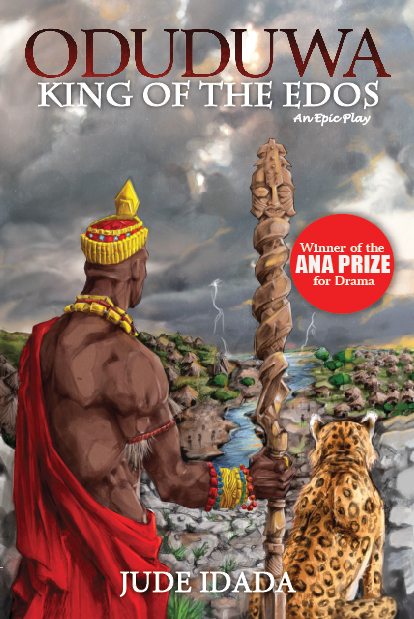
Jude Idada is an award-winning screenwriter, author and playwright. His epic play, Oduduwa, King of the Edos won the 2013 Association of Nigerian Authors’ Prize for Drama and has been short-listed for the 2014 NLNG Nigerian Prize for Literature. In this conversation with Servio Gbadamosi, Idada discusses the work, shares some of the back stories that fuel his creativity and comments on critical national issues.


You have written prose, poetry and drama—the three genres of literature, all with significant strength. How does it feel straddling the three genres? Which of the three would you consider your favourite genre?

I will say that writing for me is first and foremost second nature. The genres of expression is more or less that which best captures most completely the theme I am exploring and espousing, coupled with it having the capacity to enthrall the reader most effectively.

In terms of the feeling it gives me, I will say, it is empowering, like a surgeon who has the choice from a plethora of knives to do his work. It enables choice, and choice of course is a weapon of freedom.

I had primarily started writing prose at the age of seven, completing my first novel at the age of nine. I think it has a foundational sentiment to me, even though that which naturally comes to me is drama, but in terms of my favourite genre both as a creator and consumer, I daresay is prose because of its ability to explore and express without the confines of multiplicity of characters, time and space.

Your epic play, Oduduwa, King of the Edos captures the endless struggle between convention and logic and reflects on man’s continued search for meaning and relevance in the world around him. How much of the book would you describe as fiction, and how much was gleamed from your research into pre-existing origin narratives?

OduduwaBookFrontCoverOwing to the time explored in the play and the pre-existing narratives concerning that time, I had to deal primarily with oral tradition which owing to the paucity of facts was itself mythical. Therefore, in the play, there is fiction, which was the thread that weaved the dramatic narrative together and then there was faction, which was the weighted narratives from both parts of the divide, parts being the Edo and the Yoruba belief pantheon.

That being said, the existence of the main personages and locations of the play would by and large be accepted as real, since oral tradition in itself is not completely fake, and thus was a mode of storing and transferring information in the days of old, sometimes surviving to these times in the forms of the storytelling of the griots of Gambia and Senegal.

In the light of this, the comparative dramatic analysis of both narratives of the Oduduwa personage was done using the “what if” model… what if you believe this, because of this… and this was a two–sided exploration using widely accepted beliefs as the base information or knowledge pool.

Suffice to say that the ratio of veracity and mendacity of the play is a grey area, being that the play is an amalgam of cultural truths, anthropological truths, and archaeological truths. It also contains accepted truths, believed truths, assumed truths, common truths and dramatic truths.

The play was awarded the 2013 Association of Nigerian Author’s Prize for Drama and has been short-listed for the 2014 NLNG Nigeria Prize for Literature, what would you say has been responsible for the success of the book?

I would humbly posit that it is the humanity of the play and the believability of the characters, their motivations, challenges, strengths and weaknesses. It does not pontificate or pick sides but dramatically forwards a “what if” analysis of two competing belief systems, asking the reader or the viewer to think deeply and widely with an open mind.

I ask this because of the play’s attempt at drawing congruence between the diverse oral narratives on the origin of the protagonist, Oduduwa. Could it be that the age-long debate and controversies surrounding Oduduwa’s ancestry have somehow drawn attention to the book?

The controversy itself as occasioned by the stormy reception accorded the writing of the memoirs of the Oba of Benin, I Remain, Sir, Your Obedient Servant birthed the writing of the play, so since it is a debate that will rage for time unknown, there will normally or naturally be interest in any material that sheds more light or espouses the contending issues of the argument. So, yes, some of the interest in the play surely stems for the debate concerning the origin or identity of Oduduwa, but I hope that the play in itself would overtime rise above the debate and hold its own as a piece of good theatre, both in the written form and as performance art.

An earlier version of the play was staged at the Arts Theatre, University of Ibadan in December, 2007; are we going to see the play on stage again anytime soon?

Yes, there are advanced plans to stage a command performance that will hopefully tour some cities in Nigeria, but before that, a stage reading is being planned in Lagos.

At the beginning of the play, we are confronted with the language of judgement, war and bloodshed while at the ending, we are filled with peace and our faith in humanity’s ability to redeem itself is reassured. At this turbulent period in our national life, what does this portend for our nation?

OLYMPUS DIGITAL CAMERAPrimarily it seeks to reassure us that we are not bound to the failings of our past, neither is our future wholly predicated on the worst in us. But if we band together, learn collectively from our mistakes, we can through tolerance, understanding and love for one another, find a way to the light of redemption through the darkness that has befallen us.

It shows us that traditions and cultures that are hinged on the learned experiences of the past has its value, but these should also be subject to the dynamics of change, because that which does not work should be set aside for that which works- notwithstanding the sentimental value it holds to the people. Since culture itself is a total way of life of a people that is dictated by the demands of the times, when the time changes, culture should follow suit. Therefore, for us as a nation to be able to shout Uhuru, in the foreseeable future we must look inwards and weed from ourselves the cantankerous habits or practises that has pulled us behind, divided us and caused us to fall into a developmental inertia. We must embrace the inclusiveness, oneness and pragmatism that are hallmarks of a successful nation, so that at the end of our struggles, we can say, yes our past had its pitfalls, but through our logical reasoning and progressive introspection we have surmounted  that which has hindered us, and now our future is secured, because we have learnt who we once were and its failings, we know who we currently are and our challenges and are assured with a certainty who we want to be and its infinite possibilities.

I ask because of the argument about the role of literature and the arts in society. Beyond the essential duty of interrogating our past, present and forging a vision for the future, how else can writers and artists help in driving change in developing countries like Nigeria?

I believe it transcends the creation of art, but the living out of our creative postulations. We must not only use our pens as warriors but also use our lives as examples. As Professor Wole Soyinka and his likes have done, we must step into the ring of social discourse and engage, we must march with the oppressed and champion the marginalised; we must defend the rights of the ostracised and engender the culture of tolerance of the individual natures and the collective desires.

Just as we see Arundhati Roy stand in front of the fray and confront the institutions of power in India, or Nadine Gordimer not only talk the talk but also walk the walk in South Africa. Gabriel Garcia Marquez also confronted the engines of capitalism on behalf of the poor in Colombia, we as writers or artistes must do same in Nigeria. We must not only be seen basking in the glow of the success of our works but actively living out the fight for the preponderance of the best in us and the success of our socio-political and cultural realities, as we want to know it.

As a documentarian, you will agree with me that there is paucity of documentaries made by Africans. Most of what we have as documentaries of our past, and even our present, are made by people and firms outside the continent. Ironically, our movie industry keeps flourishing. What are the factors responsible for this and how do we begin to bridge the divide?

Documentaries unfortunately do not enjoy the mass appeal of fictional cinematic narratives and thus exist as a scholarly or educational pursuit, which in itself is a niche industry, which implies a very low return on investment. This explains why the consumption is low and the practice is even lower in the Nigerian landscape.

Funding for documentaries is also largely external and primarily provided by Non Governmental Organisations who are more interested in exploring issues that pertain to us, than we are about ourselves. This is a sad commentary but a very truthful one.  In cases where it is funded locally, it is commissioned by corporate bodies and the subject matter revolves around their own activities, ambitions but rarely on issues of national concern, thus the consumption is limited to their clients, shareholders or employees, this does not grow the field of national consumption.

To bridge the gap, we have to realise that the funding has to be non-profit geared, be both government and private industry generated. Quota systems have to be created in the broadcasting policies which includes television and cable, so that there is a home for the documentaries produced. Censorship of such documentaries must be informative and not punitive, so that relevant issues can be explored.

Companies must begin to be assess and promote documentaries by their social corporate governance and how they engage on issues that do not necessarily reflect on their products but on the collective well-being of the society, so it is not enough to sponsor talent shows but what you do to educate and enlighten the citizenry.

It will be foolhardy to believe that people will gravitate towards documentaries as they do to fictional motion picture, because there is nowhere in the world that this obtains. But there is a dearth of documentaries in Nigeria and this is an anomaly that must be addressed, but the salvation rises squarely on the government and private institutions, for once funding and platforms of distribution are created, the filmmakers will gravitate to this medium of artistic expression.

How has technology and new media impacted your creativity? Have you any fears that the growing adoption of mobile hand-held devices will impact negatively on our reading culture and social interaction?

I can no longer write long hand neither can I physically go through a dictionary or a thesaurus… the ease of writing is phenomenal and very well welcomed… research is easier, collaboration is done with much ease… the mode of sharing and distribution of your work is right there at your finger tips and you do not face the constraints of time or space… the world has become my oyster… it is a golden age to be a writer.

That being said, there is no gainsaying the fact that there is a reducing number of readers of traditional literature because of the competing mediums of entertainment. The challenge however is that the fad of “being scholastically dumb is cool” and that is being championed by the youth of today.

Hence as a writer while I am exploring the use of multi-media to make my work interactive, I have to also make sure my works transverse media, genre and the issues and language are accessible and relatable, knowing full well that the ones who must read will read, the ones who have not been exposed to the joy of reading might read, and the ones who do not read or have no interest in the power of the written world, will not read.

What authors have had a major influence on your writing career? What advice do you have for young, upcoming writers?

Being that my writing began at an early age, my formative writing skills were formed by voraciously consuming the works of Enid Blyton, Roald Dahl and the multitude of writers of the Pacesetter series. I then advanced to the Heinemann African Writers Series. That being said, I discovered a new academic level of interest and cultural congruence in the prose of Chinua Achebe, the drama of Wole Soyinka and the poetry of David Diop, but I soared as an eagle when I first read Ben Okri’s Famished Road and discovered a unique voice and the world of magical realism. When I read the works of Marie Correlli, I discovered the genius of combining high art with accessible art. Through several years of reading Ian McWan, I found the electricity of live dialogue and slowly began to find my own voice, a voice that has resonated through all the media I have used.

I would not be voluble in my advice, here I go, writers read widely and voraciously, write incessantly and rewrite even more. They develop a thick skin and believe in themselves because many a disappointment will people your way. Trust your voice and polish it. Find your style and champion it; find your conviction and live it out. Most importantly embrace the dynamics of the age, and use it to your advantage, for no one fights a battle in these times without the ferocity of a bayonet.

On Saraba’s Solitude

In one of the stories in the latest issue of Saraba Magazine (#16), the author goes to movie cinemas because of the opportunity provided by its dark and quiet space to rest hands on his partners’ laps. In another, a writer paints a harrowing picture of solitude expressed best through “writing her bones”, as she puts it; a painful but therapeutic process where every experience is an opportunity for reflection as well as escape, and where artistic output and expression is a solution as much as a problem. In another, a writer describes the haunting experience of a domestic accident with a little child that ends with a quirky and sardonic anti-climax, while another piece recounts, in a series of verses like enchanted incantations of many stories, a journey through a writer’s head during “a decade of madness”. And through the work that populate this edition of the magazine dedicated to the concept of solitude, the reader is taken in a multiplicity of mental directions.

AVPageView 8202014 120629 PM.bmpThat is the fiction.

In the poems and accompanying artworks, the editors’ selections show adherence to the widest interpretation of the theme. A disabled on woman on a wheelchair, with sample selections of food recipes all around her (Rosi Martez) portray solitude as much as a middle-aged black man sitting on a distant chair in an otherwise social environment (Moustapha Dime). So does a young man holding an open book, and a pen, pondering what next to write in an inconclusive paragraph, or a gypsy woman with a musical instrument or walking staff. What they have in common, beside their aesthetic appeal that invites the beholder to further exploration of ideas beyond the first contact, is a simplicity that complements everything else in the issue. This is a familiar style for Saraba issues: a minimalist approach that projects brilliance in its modesty and understatement of its internally throbbing energies.

To have put this together as the editors have from across their physical distance from each other is a feat creditable to today’s electronic bridge of solitude: the internet. Dami Ajayi is now a jobless medical doctor in Lagos, while Emmanuel Iduma is on the road with the Invisible Borders roadtrip from Lagos to Sarajevo. Together, they have created a thriving brand and a viable platform for new voices in creative and artistic expression around the continent.

I skimmed the poems, but not all. Even a most perfunctory glance, conditioned by a short attention span, or a recent conditioned apathy to poetry reveals gems in stanzas like this:

To ask a poet about solitude
is to speak about lost moments
and untold stories of life
scribbled on brown sheets, old letters
hanging on the wall

As he plays the piano for his departed lover
in a room where cobwebs hang like portraits on old walls;Saraba-logo-e1355435770738-300x89
where cockroaches exchange dreams with old manuscripts

beneath the mattress where
a suicide letter lies
waiting to be read:

only the words survive
as time carries the burden
of memory like a scarf on a cobra’s head

(Gbolahan: 8)

And with that, the feast is complete, deliciously served. Not in the least diminished by sharing, the rest are thus left, best repackaged as it should be, by the selfless re-gifter of all good things. You will take it slow, as I did – to the consternation of my pressuring editors, and enjoy in soluble bites. There’s something for everyone.

The Issue can be downloaded here.

At NAL’s Convocation and Investiture

IMG_2850 IMG_2851 IMG_2854 IMG_2862 IMG_2868 IMG_2869 IMG_2873 IMG_2879 IMG_2882 IMG_2883 IMG_2884 IMG_2885 IMG_2886 IMG_2887 IMG_2888 IMG_2892 IMG_2899 IMG_2900Today at the main auditorium of the University of Lagos, the Nigerian Academy of Letters (an elite organisation of the most prestigious professors in liberal arts, language, and linguistics, at the top of their field), had its Sixteenth Convocation and Investiture of New Fellows. The Convocation speech was delivered by Professor Francis Egbokhare, in a speech titled “The Second Pledge: The Ethical Dimensions of Citizenship and the Challenges of Nation Building“.

The new fellows into the organisation were Professor. Festus Agboola Adesanoye and Professor Philip Adedotun Ogundeji, as Regular Fellows; Professor Olabiyi Yai, as an Overseas Fellow; and Dr. (Mrs.) Virginia Anohu, Ambassador Oladapo Olusola Fafowora and Olori (Dr.) Olatokunbo Gbadebo as Honorary Fellows. The oration was read by Professor Olu Obafemi, while the programme was moderated by Professor Dele Layiwola, the secretary of NAL.

NAL was founded in Ibadan on 14 November, 1991, with Professors Ayo Bamgbose, Chinua Achebe, J.F. Ade-Ajayi, A.E. Afigbo, Adeboye Babalola, J.P.Clark-Bekederemo and Wole Soyinka as founding fellows. It was founded as an apex organization of Nigerian academics and scholars in the Humanities to promote, maintain and encourage excellence in all branches of humanistic studies.

Aside: Of the founding fellows, only three of them are still living. Today, a moment of silence was held in honour of a recently departed foundation fellow, Professor Emeritus J.F. Ade-Ajayi, NNOM who died on August 11, 2014.