Browsing the archives for the Literature category.

Sailing Young Imagination

When I started teaching in Lagos, in 2012, on return from Edwardsville, one of the things I had in mind was finding a way to combine my passion for literature with my training and vocation as a teacher and linguist. First through a series of “Meet-A-Writer” events where we brought practising writers to meet and interact with the students, and also through excursions to events to fire up students’ artistic sensibilities, I succeeded to a reasonable extent. One of the highlights of the last Ake Arts and Books Festival, for me as a guest and as a guide to the students of mine that I brought along, was the ride home listening to the literary and creative aspirations of the students and their prospects for the future.

Gradually becoming disenchanted with the overall purpose of teaching English language as a compulsory subject (and a medium of instruction) in a post-colonial society, the idea of literature as a flight of fancy and a window into the mind and creativity of young adults became something more interesting, and certainly more rewarding than teaching grammar in a language compelled by law, sustained by an illusion, and limited in the true sense of the capacity to genuinely express the true identity of the continent. There’s an irony here, of course, in the fact that these literatures, for now, are also expressed in this same “limiting” language. But that’s a story for another day.

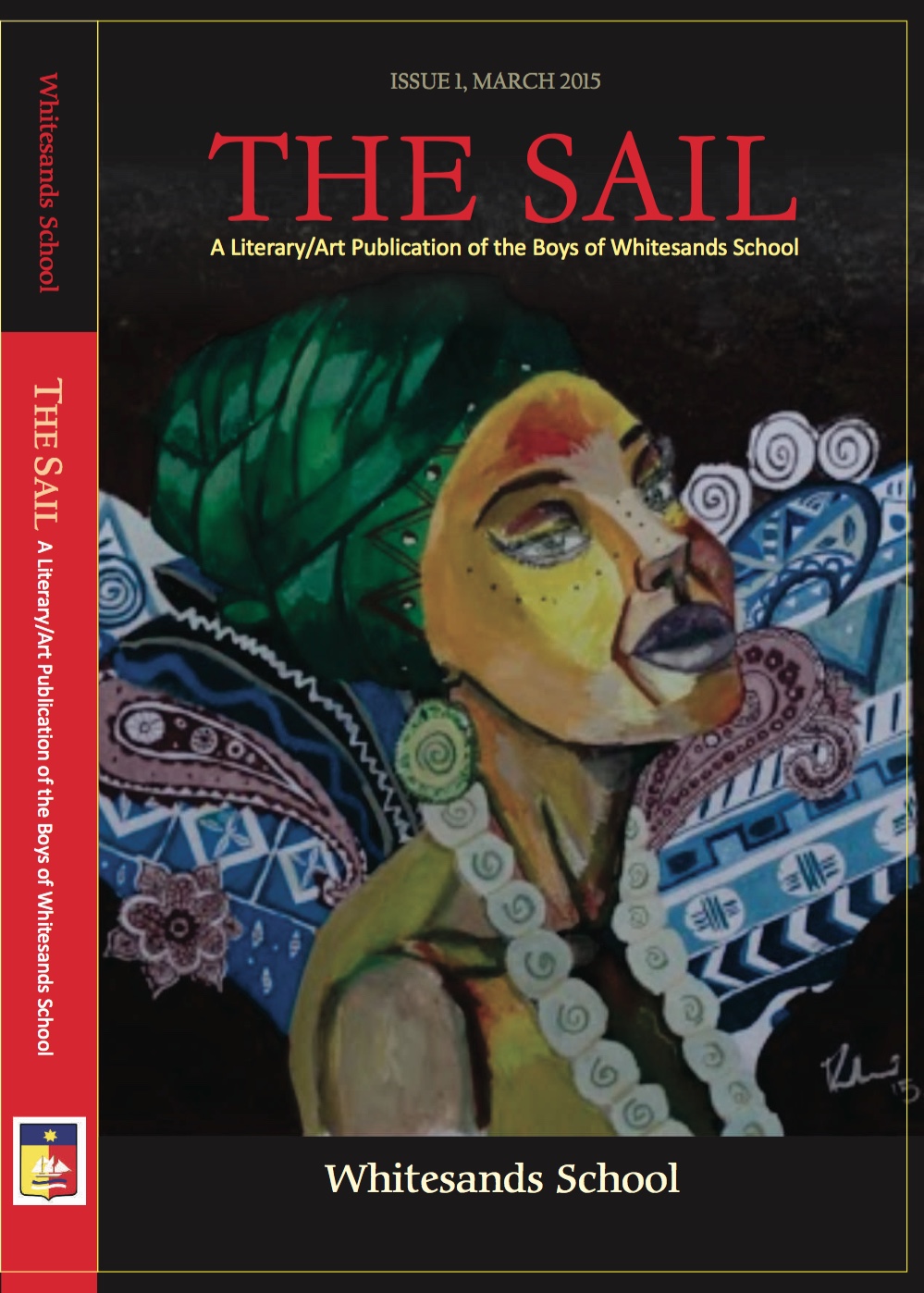
FrontLast year, an idea I’ve had for a while on the possibility of harnessing students’ creative energy in a book form found enthusiastic audience with the school administration. The result is an 86-paged anthology of students’ work in poetry, prose fiction, drama, essay, and visual arts, published by Whitesands School and Feathers & Ink publishing house in Ibadan. Along with the privilege of being in the book, a few of the students are also being rewarded with positions when their work is compared with the others. We were also privileged to have prominent literary practitioners in Nigeria read and judge the prizes beforehand. For this first edition, these judges were Chika Unigwe and Tade Ipadeola, both previous winners of the Nigerian Prize for Literature (worth $100,000). In short, it was a thoroughly emotionally and intellectually stimulating experience for the teachers and the students.

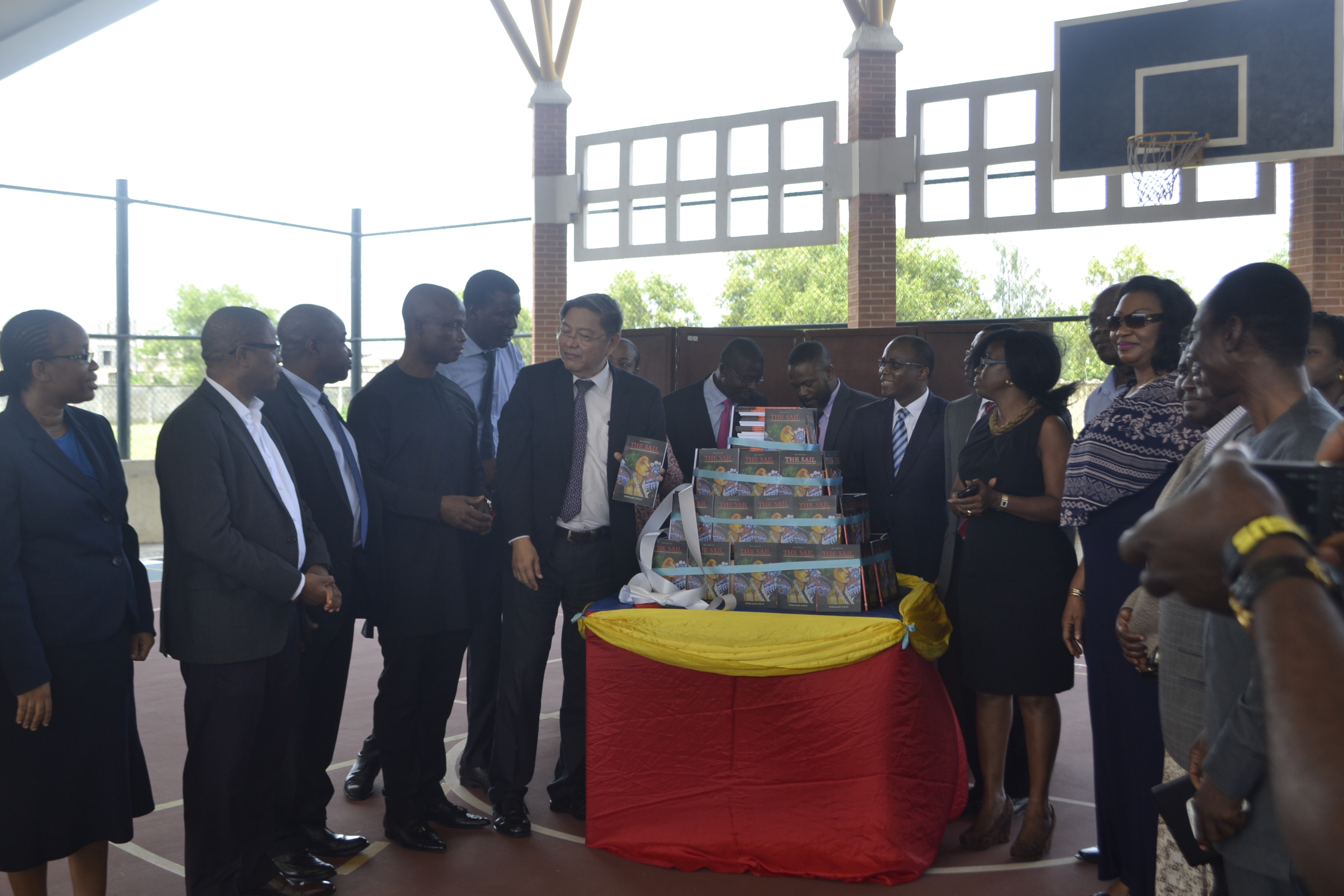
_DSC0871The book was publicly presented on June 25 at the school, with parents of winning students present. The book is also being given to all the over 400 students in the school as an incentive to working hard to be selected for the next edition. From what I’ve heard, it is having precisely that effect. For the students whose work appear in it as well, there’s an obvious air of pride and accomplishment. In the next couple of weeks, the book should also be on Amazon and other internet outlets for free download. From what I’ve heard as positive reviews of the project, even the idea itself is ripe for scaling. Given adequate sponsorship, there’s plenty more dimensions in which this can go. For now, however, the pride of being able to accomplish something this little with substantial impact is unquantifiable. Read Tade Ipadeola’s review.

_DSC0758Here’s one anecdote that almost brought me to tears. Yesterday, the vice-principal of the school called to tell me of the decision of a parent of one of the students to pull out the child. As a dual citizen of the United States and Nigeria, the parents thought it was time for the child to relocate and join his other siblings. Not having told the boy before now, he was devastated, but not for an obvious reason. According to the father, the child expressed regret that having missed a chance to be published in The Sail: Issue 1, he had already started working towards entering as many creative work as possible so as to get a chance for the next issue (due January, 2016). Now, that dream is being taken away from him, without an agency to influence the process.

I have been dejected, and then extraordinarily buoyed, by the sadness of that story for the last 24 hours. It’s almost enough to compensate for everything else wrong with the compulsion in English language learning.

Judging Panel for 2015 Etisalat Prize for Literature Announced

Lagos, Nigeria; June 23, 2015: Fastest growing and most innovative telecommunications company Etisalat Nigeria, has announced members of the judging panel who will decide the winner of the 2015 Etisalat Prize for Literature. The judging panel will be chaired by Professor Ato Quayson a Professor of English and inaugural Director of the Centre for Diaspora Studies at the University of Toronto; completing the panel is Molara Wood, writer, blogger, journalist, critic and editor and Zukiswa Wanner, author of The Madam and Men of the South.

Commenting on the choice of judges for the prize, Chief Executive Officer, Etisalat Nigeria, Matthew Willsher stated that Etisalat carried out extensive research and consultation in deciding the choice of judges for this year, and also expressed the belief that the selected judges will bring their experience to bear on the Etisalat Prize for Literature. The judges, he said, will have the responsibility to develop the long list of nine novels as well as a shortlist of three novels before finally selecting a winner. Submission of entries are ongoing, having opened June 18, 2015 and would close on the 27th of August 2015.

The Etisalat prize is designed to foster writing in Africa, bring exciting new African writers to the attention of a wider audience, and promote a reading culture within the continent while also telling the African story. The winner will receive a cash prize of £15,000 in addition to a fellowship at the prestigious University of East Anglia, UK under the mentorship of the award-winning author, Professor Giles Foden. The winner will also receive a sponsored three-city book tour. In addition, the two other shortlisted writers will receive a sponsored two-city book tour to promote their books. The Etisalat Prize for Literature also supports publishers by purchasing 1000 copies of the shortlisted books for distribution within the continent.

This prize accepts submitted works which must be a writer’s first work of fiction with over 30,000 words, and published within the last 24 months. The Etisalat Prize will also launch the online based flash fiction prize later in the year to engage the rising stars of fiction.

Rules and guidelines for entry are available at prize.etisalat.com.ng

Profile of Etisalat Prize for Literature Judges

Professor Ato Quayson

QuaysonProfessor Ato Quayson is Professor of English and inaugural Director of the Centre for Diaspora Studies at the University of Toronto. He studied at the University of Ghana and the University of Cambridge and was also a Fellow of Pembroke College, Director of the Centre for African Studies, and on the Faculty of English at Cambridge.  He was the 2011/12 Distinguished Cornille Visiting Professor in the Humanities at the Newhouse Centre at Wellesley College; he held research fellowships at Wolfson College, Oxford (1994/95) and at the Du Bois Institute for African-American Studies at Harvard (2004).  He is a Fellow of the Ghana Academy of Arts and Sciences and of the Royal Society of Canada.


Molara Wood

Molara WoodMolara Wood is a writer, editor, journalist, blogger and critic. A former art columnist for the Lagos Guardian, she won the inaugural John La Rose Memorial Short Story Competition; and received an award from the Commonwealth Broadcasting Association. As Arts and Culture Editor of NEXT Newspaper (2008 to 2011), she steered a groundbreaking weekly supplement on the arts. More recently she served as Special Assistant on Documentation to Nigeria’s former President Jonathan. A culture activist, she is involved in many artistic projects in collaboration with groups and organisations, including the Africa Movie Academy (AMA) and the Africa International Film Festival (AFRIFF). She is the author of Indigo, a collection of short stories.

Zukiswa Wanner

ZukiswaZukiswa Wanner is the author of the novel The Madams (2006) shortlisted for the South African Literary Award’s K. Sello Duiker Award; Behind Every Successful Man (2008); Men of the South (2010) shortlisted for the Commonwealth Best Book Africa Region 2011; London Cape Town Joburg (2014). Her short story The Dress That Fed the Suit was selected as one of the top 20 stories in South Africa’s 20 years of democracy (1994-2014) and she was selected as one of the top 39 sub-Saharan African writers under 40 (Africa39). She co-edited the African-Asian anthology Behind the Shadows (2012) with Indian author/editor Rohini Chowdhury and co-authored the Mandela home biography 8115: A Prisoner’s Home (2010) with the late veteran photographer, Alf Kumalo.
Wanner has facilitated writing workshops in South Africa, Uganda, Denmark, Germany, Zimbabwe, Kenya, Tanzania and Ghana. She sits on the board of the continental writing initiative, Writivism.

Kola Tubosun joins “WE THE HUMANITIES” Platform as Curator

PRESS RELEASE

25/02/2015, Lagos, Nigeria—Kola Tubosun: linguist, teacher and writer at Whitesands School, Lagos, Nigeria, will be joining the international humanities Twitter account, We the Humanities, as next week’s guest curator.

@wethehumanities is a rotation-curation account which offers a central platform for discussion and news of the humanities in all its forms. It is open to anyone working in or with the humanities in any form, and hopes to follow the success achieved by the science platform, @realscientists.

IMG_0395Kola is a linguist and aspiring lexicographer with years of work in language teaching and language documentation under his belt. He will be tweeting about mother tongue use, language endangerment, and particularly a subject that is dear to him: Yoruba language use in Nigeria. He is currently building a multimedia dictionary of Yoruba names at www.yorubaname.com . Kola can be found on twitter at @baroka, and on his blog at KTravula.com

Co-founder Jessica Sage (@academicjess) comments: “The We the Humanities project engages with people from around the world, exposing them to humanities research, experience and ideas they perhaps didn’t know existed.  Each week a new academic or practitioner takes over the account, tweeting about their work and provoking conversations about the diversity and importance of the humanities.  We really look forward to Kola Tubosun running the account this coming week, and in particular his take on linguistics, second language use, and Yoruba language.”

We the Humanities, which is now in its second year, has attracted tweeters from across six continents, ranging from professors to Masters students and from museum curators to musicians.  The discussions engage with more than 2400 followers from across the world, including everyone from lifetime specialists to the mildly curious. The account has developed to include a blog and events listings, housed at http://www.wethehumanities.org.

Kristina West (@krisreadsbooks), co-founder of WtH, adds: “We encourage anyone working within the humanities who might be interested in curating the account to get in touch through the website. We aim to create a vibrant, international community to raise awareness of the diversity, relevance and challenges that encompass what is called the humanities.”

~ends~

Contact details:

Jessica Sage, We the Humanities: tel: +44 (0)7731840380, e-mail: j.sage@reading.ac.uk

Kristina West, We the Humanities: tel: +44 (0) 7525 009744, email: k.j.west@pgr.reading.ac.uk


About We The Humanities:


A rotation-curation Twitter account showcasing the creativity and diversity of the humanities and reiterating the fact that the humanities are more widely important than current public funding suggests.


Like most things on Twitter, it began with a seemingly innocuous tweet.  On 5th January 2014 @academicjess asked a few people “Does anyone know of a humanities equivalent to @realscientists & if not would you be interested?” and it snowballed from there.


It is currently just being administrated by Jessica, Kristina and Emma Butcher (@EmmaButcher_).


Disclaimer: The views expressed at the @wethehumanities Twitter account are those of the weekly guest editor and not those of the administrator or previous/subsequent curators. The views expressed on the blog are the views of named posters and not those of the administrators.  


Memories from Ake (i): Okey and the Students

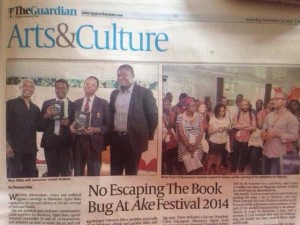
Last week, between November 18 and 22, writers and thinkers converged on Abeokuta for the second edition of the Ake Arts and Book Festival. It was also my second time of participating in the event, but the first as a guest. For some reason, the organisers thought it important this year to involve a linguist with but a finger or two in the literary pie in a festival of poets, writers and other makers of creative ideas. (Fake modesty out of the way, it was a beautiful, engaging, and stimulating event of which I was glad and proud to be a part). On Thursday the 20th, I gathered fourteen students from Whitesands School where I currently teach English, along with a colleague and award-winning journalist Bayo Olupohunda, into the school bus and headed to Abeokuta.
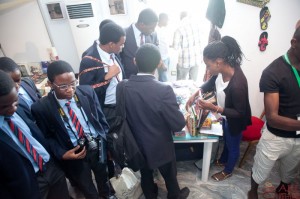
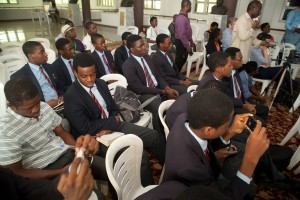
IMG_734910443236_885590758127197_8532045416560099830_oIMG_7317IMG_4475The drive to the quiet rockhill town north-east of Lagos has always been a delight, at least the second leg of the journey that begins on the Abeokuta-Owode Road. The Lagos-Ibadan expressway is still under construction and subject to surprises in the form of potholes, narrowed lanes, broken down vehicles, and diversions. For someone meant to host a Book Chat at 10.30 am on that same day, the choices are limited. One either leaves Lagos as early as possible so as to avoid all traffic-related delays, or sleep in Abeokuta in one of the luxurious hotel rooms already booked for guests at the Festival. If one is a teacher in a high school, traveling with students who have been brought to school by their parents and need to be returned to school on the same day; and particularly if one is a husband of a working wife, with a nine-month old baby who one would terribly miss if one were to take the second choice alone, the choices become hard.

We were supposed to head out of the school by 8.am, but by almost nine o’ clock, we were still stuck in Ikoyi traffic. By even the most conservative calculations, we were starting to be late. I began to worry that I might miss my session. The author I would be chatting with, notable columnist, journalist, professor, and novelist, Okey Ndibe, had just returned from the United States a couple of days earlier. How could someone from the US arrive earlier in Abeokuta than someone who lives in Lagos? How disappointing. Lola Shoneyin (poet and author, organiser of the Festival) would be even more disappointed, I thought, as I urged the driver to speed up as much as he could within sensible limits. By 9.30, Lola started tracking me via text messages. I assured her of my location, and pleaded that if I didn’t show up on time, my panel be swapped for someone else’s. She assured that if the worst happens, we’d postpone it for an hour. A few minutes later, a tweet went out that our book chat would begin at 11.30am. That was a relief.

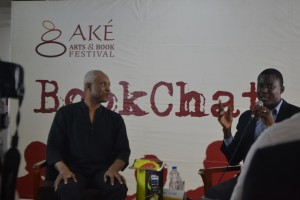
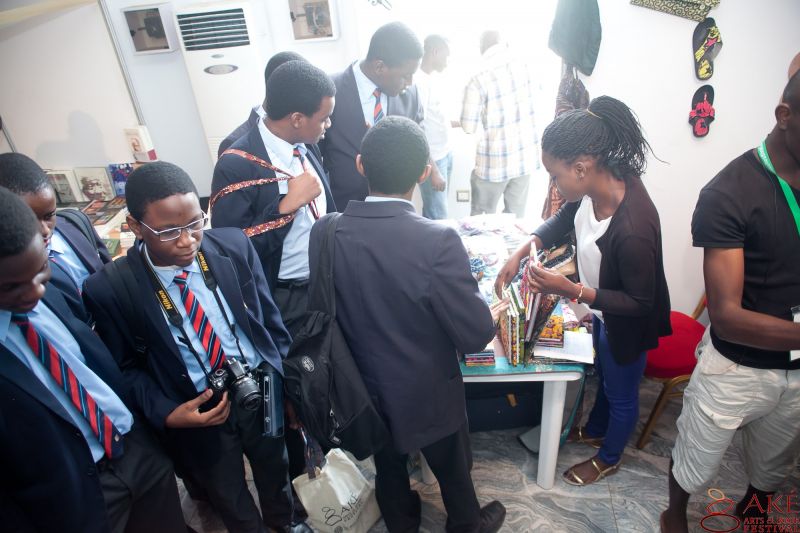
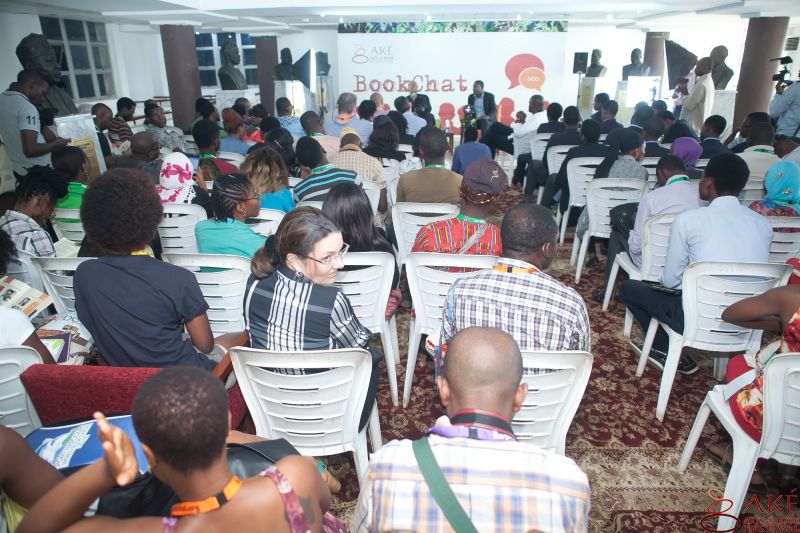
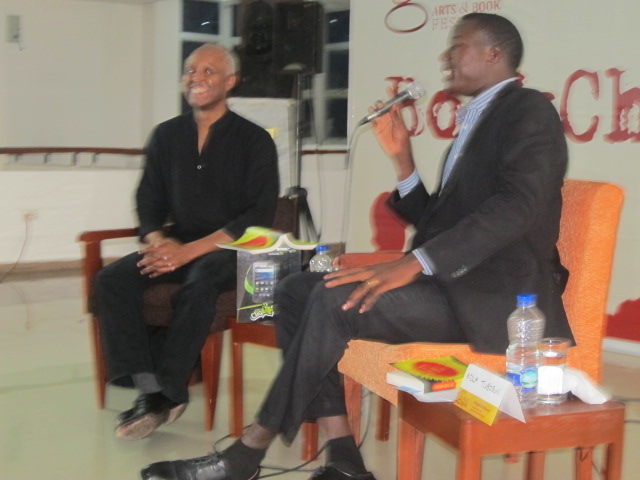
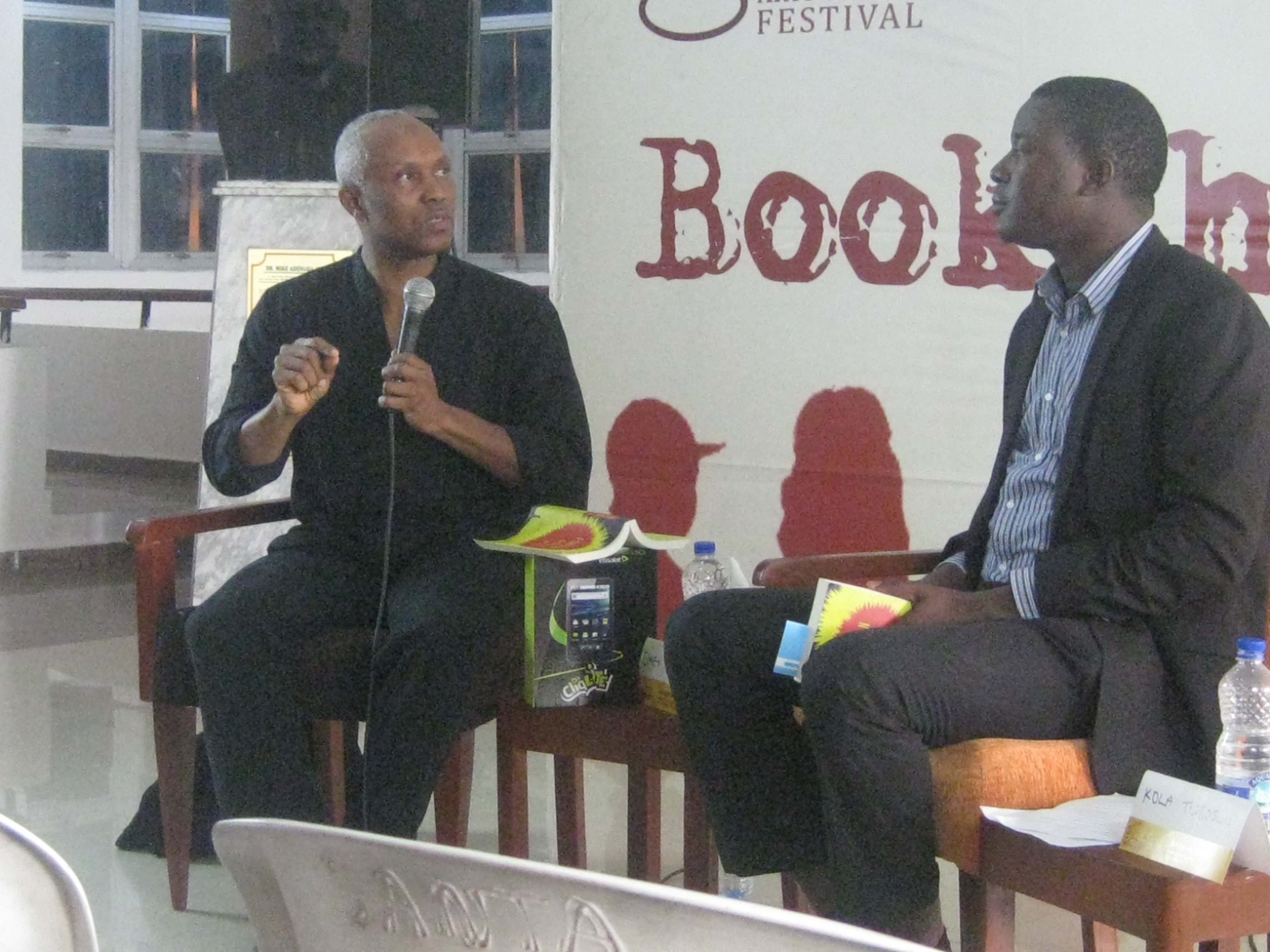
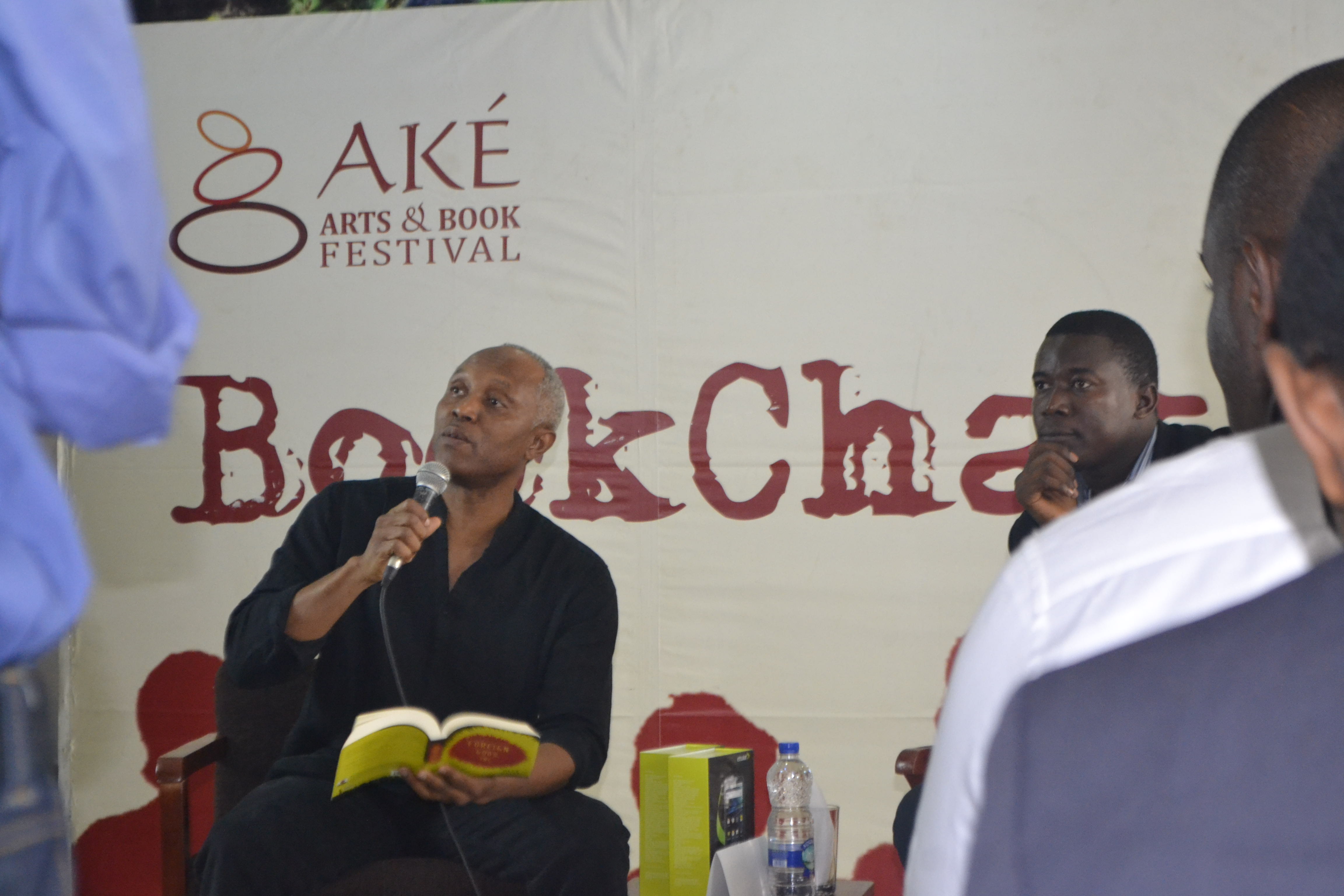
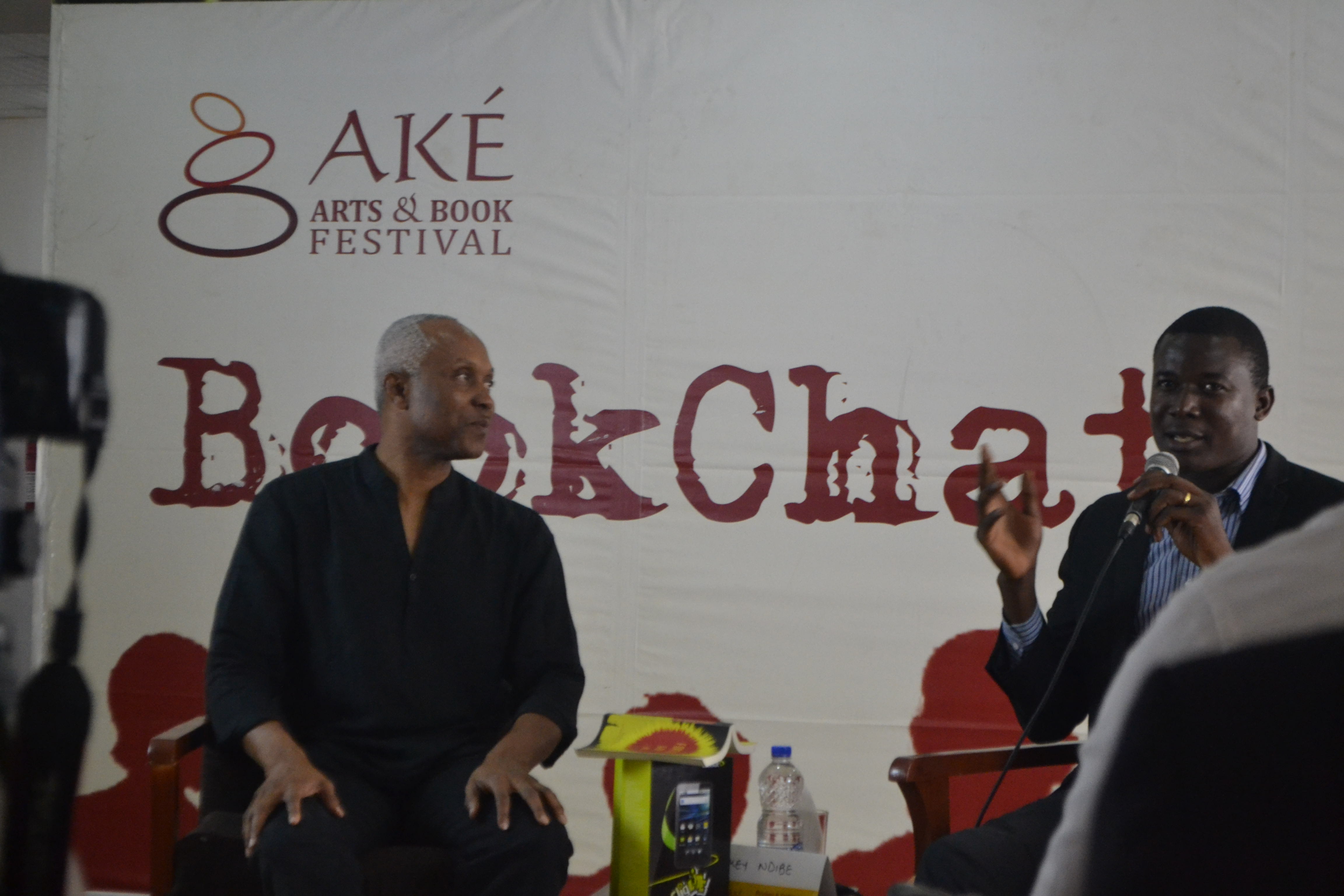
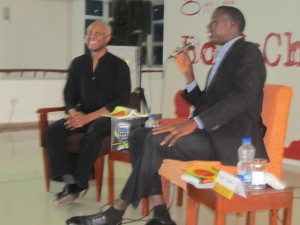
We arrived at the June 12 Cultural Centre, venue of the event, at about a quarter to eleven. Fifteen minutes later, I was in the hall meeting Okey Ndibe for the very first time. Weeks before, I read everything I could find about him on the internet. Some I’d read before, some I was reading for the first time. His life, work, and opinions have made him an interesting person and personality in the Nigerian literary and political space for a very long time. Conversations with other friends and colleagues about him have also guided me into a number of relevant points of inquiry. Our Book Chat was going to be one hour of conversation in front of a room full of writers and festival goers. Okey is a simple but dignified man, as his poise, dressing, and personality immediately showed. While he chatted with a few other folks around the hall, I glanced at a few of the questions I had prepared. His latest book Foreign Gods Inc is a fast-paced thriller of many layers of social and political commentary. I had two copies, one on my kindle, and one hard copy which a couple of my students had developed an attraction for on the way to Abeokuta. On arrival at the venue of the Festival, Lola Shoneyin hinted to the students that two of them would win an electronic tab for thoughtful questions. 
IMG_4527IMG_0774_DSC0131

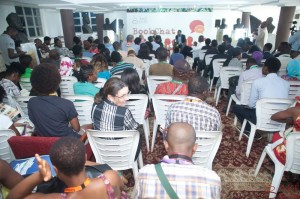
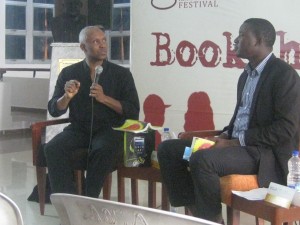
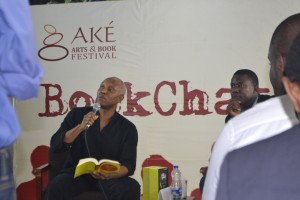
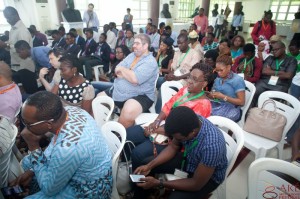
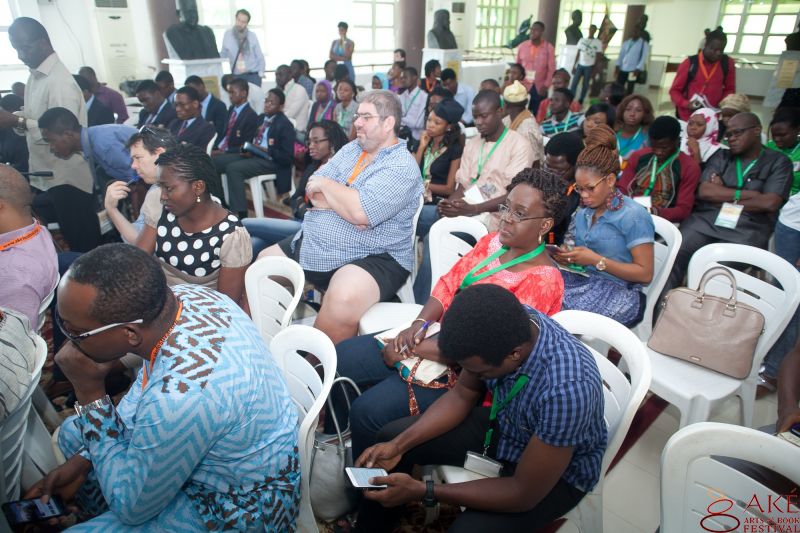
_DSC0121One hour went by like a flash. As I’d been told of him, Okey Ndibe engaged each question with the thoughtfulness and breeziness of a seasoned professor, with humour, friendliness, tact, dynamism and thoughtfulness. Why did he dump on James Hardly Chase so much? What does he mean by Achebe saving him from Chase? How did he meet Chinua Achebe and what was the relationship over the years? What does he mean by Nigeria not having a real national character? What is “an ethnicity of values” anyway? What influenced him to write Foreign Gods Inc.? Any influences from the real life event in Soyinka’s autobiography of having to sneak into Brazil so as to kidnap a supposed stolen god? How would Professor Ndibe like the book read: as an ethnographic material on African people, or as a migrant literature, like Chimamanda Adichie’s Americanah? How has the reception been so far? Would he like to read a part of the novel to the audience? By the time it was over, the seats had been filled, and the applause was genuine. I had a great time, and so did the students. Questions were asked, by the students and by other members of the audience, and we were done. Two students won tablets for their questions (and the rest were mad at me for not calling them when their hands went up. We resolved it on the way back to Lagos).

***

A few other questions went unasked, because of time: What’s the relationship with Christopher Okigbo and his family? He was afterall the keynote speaker at the Ohaneze Ndigbo event in Belgium in honour of that important poet about two years ago. Okey, being a young boy during the Biafran War, remembered a little of it, detailed in his essay My Biafran Eyes, how deep was that experience in shaping his upbringing? What does he think about language use in African literature? As a child of a culture with dying languages all around, how does he think that this can be reversed? Which writer in his generation does he consider an influence? What of older generations? And younger ones? He’s working on “An African Doing Dutch in America” – a memoir. What can he tell us about that? When will it be published? What was his experience as a Fulbright scholar teaching at Unilag? What inspired his first novel Arrows of Rain? He currently teaches fiction and African literature at Trinity College in Hartford, CT. What’s it like there? Has he stopped being harassed by the SSS at the airport?

***
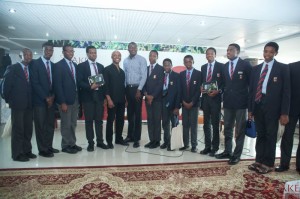
IMG_7331IMG_7271FB_20141129_15_27_57_Saved_PictureThe students split up and attended one more session. In the session involving the president of the Association of Nigerian Authors (ANA) Professor Remi Raji and author Yejide Kilanko, which was well attended, one more student won a tablet for his thoughtful question to the author. He seemed very pleased. Their day being sufficiently made, not only by their winning of electronic tablets but the idea of meeting and chatting with world-famous authors and learning a few things they hadn’t heard about before, they headed to lunch downstairs by the festival bookstore before heading back to Lagos. There a few of the students met with some other writers, chatted them up about stuff, took autographs, bought books, and generally took in the festival air.

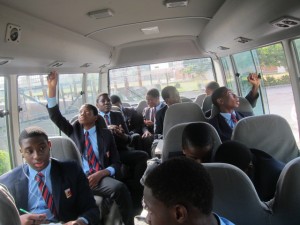
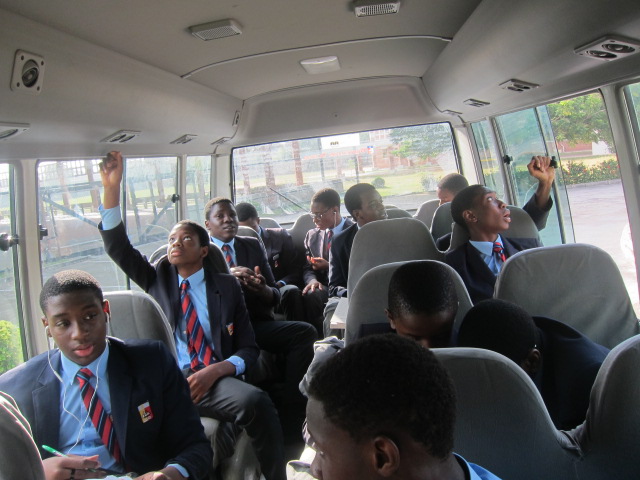
In the bus on the journey back, conversations ranged from the shock of realizing that their English teacher was a relevant enough person to have been invited to take part in a book festival (“You never told us that you were a writer! What book have you written? Aren’t you Mr. Olatubosun? Why does it say Kola Tubosun on the guest list? How did you know Okey Ndibe, Lola Shoneyin, and all these people? Do you know Wole Soyinka too? Where is Wole Soyinka anyway? Why isn’t he ever here when we’re around? among others) to the choice of theme in writing (“I write too, you know, but I never knew that one could be famous by writing African stories”, “Are you serious that people will buy your work if you set it in the Nigerian environment rather than abroad?” “I never knew that. All my characters have English names.” “How do I get published?” “Would you read my work?” “Can I come next year? Alone?” etc).

The most heartwarming comment followed later, halfway into the trip homewards when lethargy and torpor had us all but sprawled around the seats: “If I don’t make it into the final list of students coming here next, or after I leave school a couple of years from now, I’ll try to find my way to the next Ake Festival, or another one in the future.” Seems like a comment that the organisers will thoroughly enjoy. In the end, the decision to bring them along seemed like a great idea.

____________

Photos courtesy of self, Akefestival.org, and Chidera Ezeokeke, and Tamilore Ogunbanjo
Memories of Ake (ii): Of Pathways and Puffery

Were one to ask the organisers of the Ake Festival, and the two  hosts lucky to have handled the book panels involving General Olusegun Obasanjo and later Professor Wole Soyinka, whether there was a collusion to ask these notable guests similar and complementary questions, the answer would certainly have been a “no”. I’m sure of this because I asked.  However, in a series of pleasant yet notable coincidences, the presence of these two giants of Nigerian history not only made immediate news, but also filled a couple of gaps in our knowledge of the country’s history as relates to their individual roles.

A few questions, below, were asked in different ways of the two guests whose appearance came days from each other:

1. What was with that telephone “that never rang” in General Obasanjo’s bedroom in Ibadan? How did Soyinka know about it anyway? And what the detail of the interaction between these two individuals at this time. To Soyinka, it was a meeting to simply relay a memorized message from Victor Banjo. For Obasanjo, it was an attempt by a dramatist to further a military cause, however clandestinely.

2. What do you think personally about Biafra? Any need for apologies on behalf of the Nigerian government, not for the resulting war itself and his role, but for the Northern pogrom that caused it? This question led Wole Soyinka to an anecdote in which he told an interrogator, during his incarceration in the late 60s that “Biafra will not be defeated” while referring to the idea and his captors thinking of the physical, geographical entity. It however led the general to a long and winding history retelling that basically uses the unfortunate ethnic configuration of the officers involved in the first coup in January 1966 to justify the pogrom against the Igbos that began in July of the same year.

3. What do think of the country’s leadership? How do you approach leadership? To Obasanjo, the president performed “below average”. This made news straight away. To the Nobel Laureate, all that matters in public service is sincerity. Not absolutism, necessarily, or “holiness”. But sincerity of purpose, and conscientiousness.

4. What do you think of gay rights in Nigeria? Should gay people be jailed as the new gay law prescribes? The general went on a long spiel about his “conservative” and “Christian” credentials, then told us why we can’t have “that” in Nigeria. There is no polygamy in the West, after all. Why let “them” prescribe what we can proscribe? To the Nobel Laureate, it’s not really black and white. But mostly, “who am I to decide what consenting adults do? It’s frankly not my business, until a certain part of the public performance of that relationship needs a seal of state…”

If it is true that life thrives on binaries (think Jay-Z and Dr. Dre, East Coast or West Coast, Beyonce and Kelly Rowland, Beyonce and Rihanna, Tupac and Biggie, Jesse Jackson or Al Sharpton, Mandela or Mugabe, Wole Soyinka and Chinua Achebe, Wole Soyinka and Ali Mazrui, Wole Soyinka and Olusegun Obasanjo! For some reason of birth (they both have strong familial roots to Abeokuta), public service (both have been strong influences in Nigerian public life since the early sixties),  controversy (Soyinka was arrested after returning from the break-away Biafra in the late 60s, while Obasanjo was said to have been instrumental to that arrest. Obasanjo was also said – by himself, mostly – to have won that war for Nigeria), they have both been some of the two most important figures in Nigerian political and public life, for good or for ill. Certainly, they have also been some of the two most famous Nigerians to have called Abeokuta home and they have also mostly been on opposite sides when they are not working in an unlikely alliance for a common purpose.

In one of such alliances, described in Wole Soyinka’s memoir You Must Set Forth At Dawn, the playwright had solicited for the help of the then head of state General Obasanjo in keeping a diplomat from Brazil in Nigeria for the duration of Wole Soyinka’s own trip to that country in order to retrieve what he thought was an original mould of the a famous Nigerian statue. Things went bad halfway into the trip, and the General reneged on his promise to secure the diplomatic end of the deal for reasons attributed in the book to the man’s unreliable nature. This nature was the oft-quoted characteristic with which Wole Soyinka repeated hit the former president a number of times during a conversation with him on the last day of the Festival. Most times, it was obvious that the word “unreliable” or “crafty” was a code for “dishonest” and “self-serving.”

One big regret for me from the Festival was succumbing to the pressure from the organisers to scuttle a panel I was moderating, a panel discussing language in literature, which had already reached a crescendo-pitch right before the Q&A when word came in that the former President was in the premises, and that his protocol requires that all guests be seated in the Book Chat hall before he comes in. We had a choice: to stay and enjoy our discussion, or to disperse in order not to miss his Book Chat. The latter won, due to a number of circumstances, one of which was that the publisher of the former president’s new memoir My Watch was on that panel, and he had to usher in his author. For a number of us who had never seen him in person, there was also a slight curiosity of listening to whatever new thing the former president had to say. And he did have a lot. The language panel dispersed grudgingly, and fifteen minutes later, we were all seated at rapt attention listening to the man who could be said to have ruled Nigeria three times: twice as a civilian, and once as a soldier.