Browsing the archives for the History category.

Ibadan: Of Towers, Hills, and Neglect

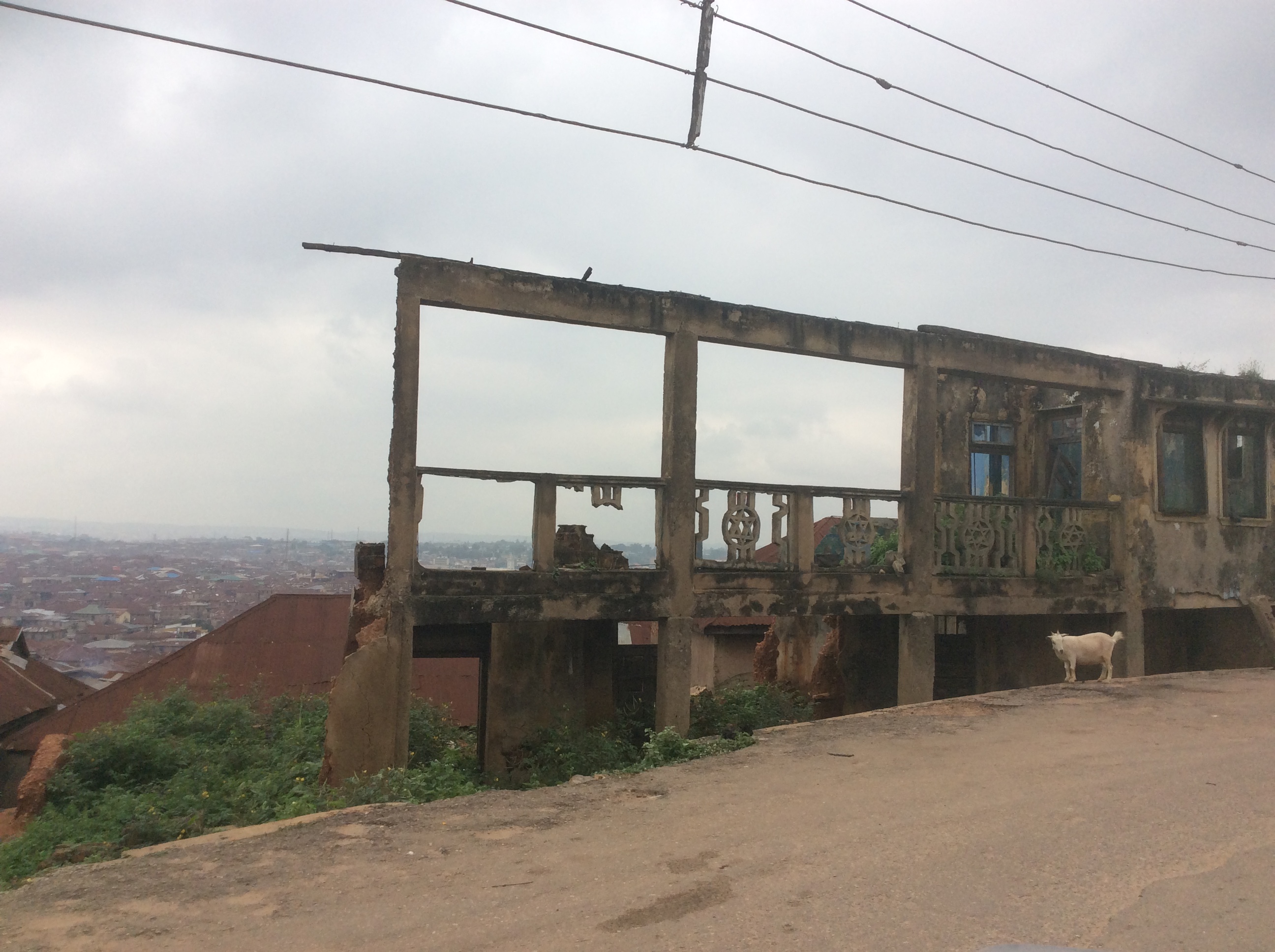
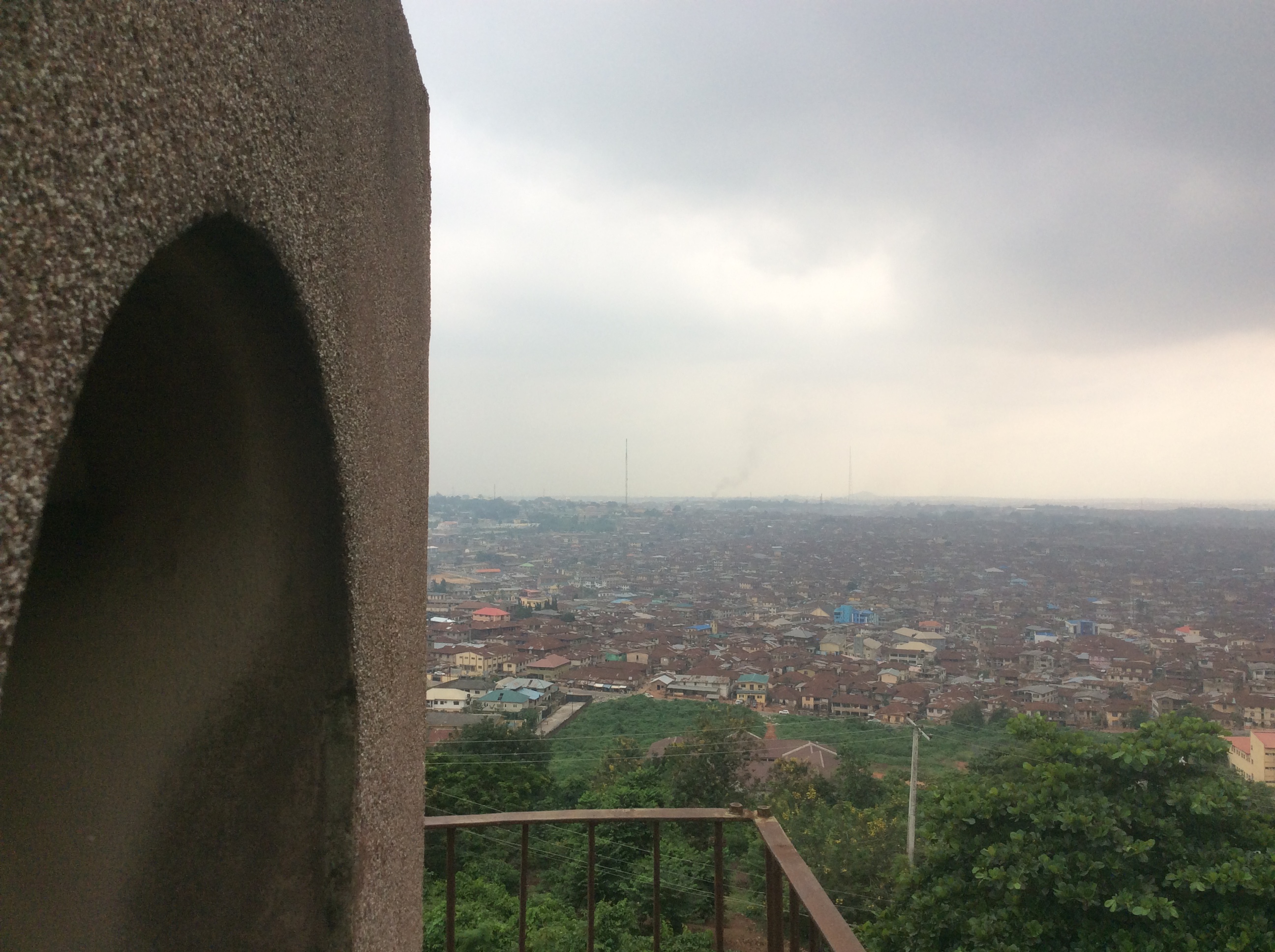
There are many stories in every step up Òkè Àarẹ in Ibadan, each as diverse as the other, but each visibly telling of the city’s ancient but colourful past. One of the notable things the city is reputed for, other than its famous brown rusty roofs all of which can be seen at a glance from here in its old glory, is its imposing hills and the lasting reputation they have on the city and neighbouring towns, stretching even into lore across generations. Òkè Ààrẹ (the chieftain’s hill) is just one of such hills, named after its most famous resident, Ààrẹ Látòòṣà whose old palace lay behind a prominent courthouse on the hill. Òkè Ṣápátì (Shepherd Hills), Òkè Páàdì (The Padre’s Hill), Òkè Màpó (Mapo Hill), Òkè Àdó are some of the others, each with stories of their naming and history.
IMG_6355

A view of downtown Ibadan from Òkè Ààrẹ on the way to Bower’s Tower.

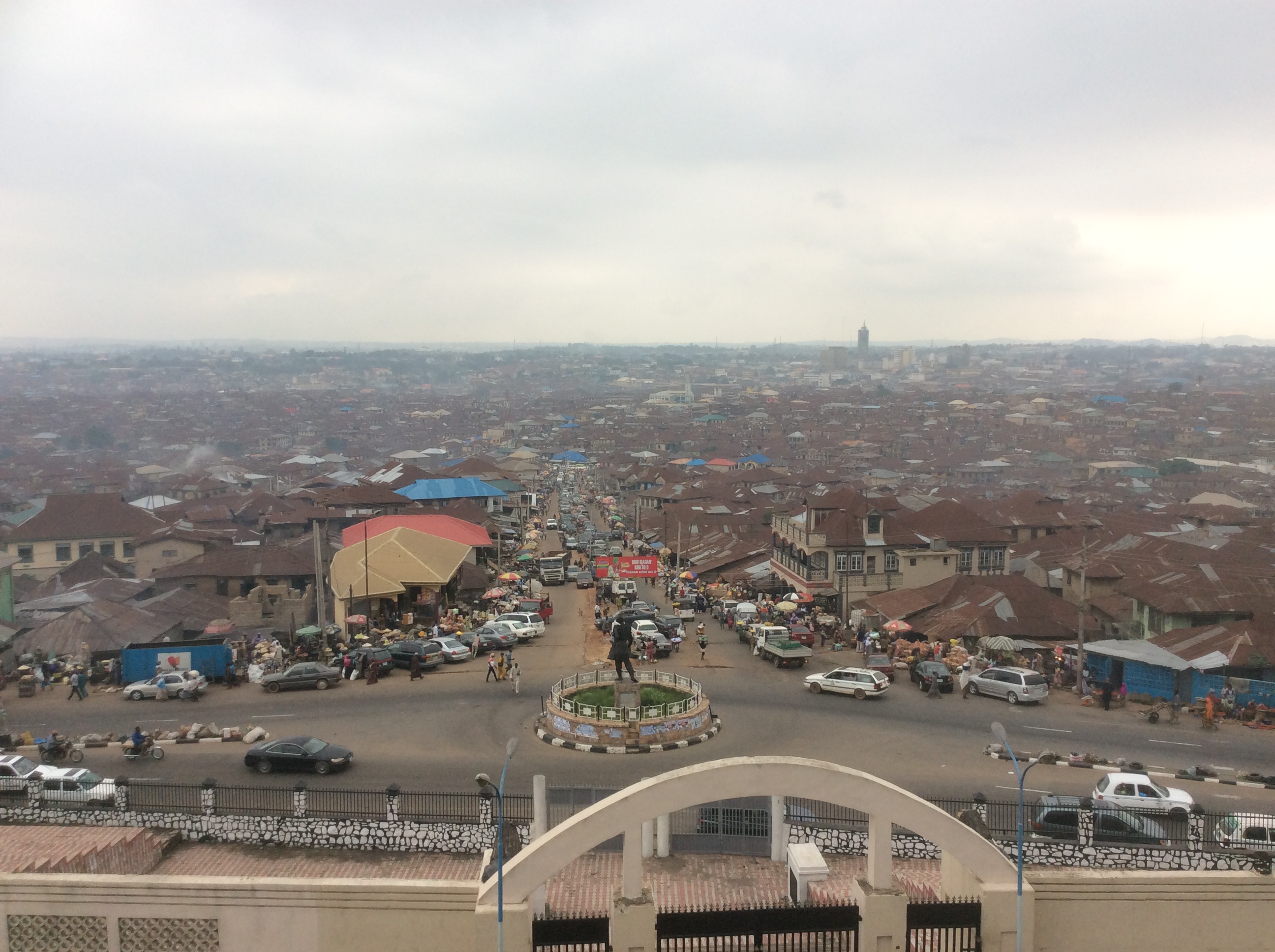
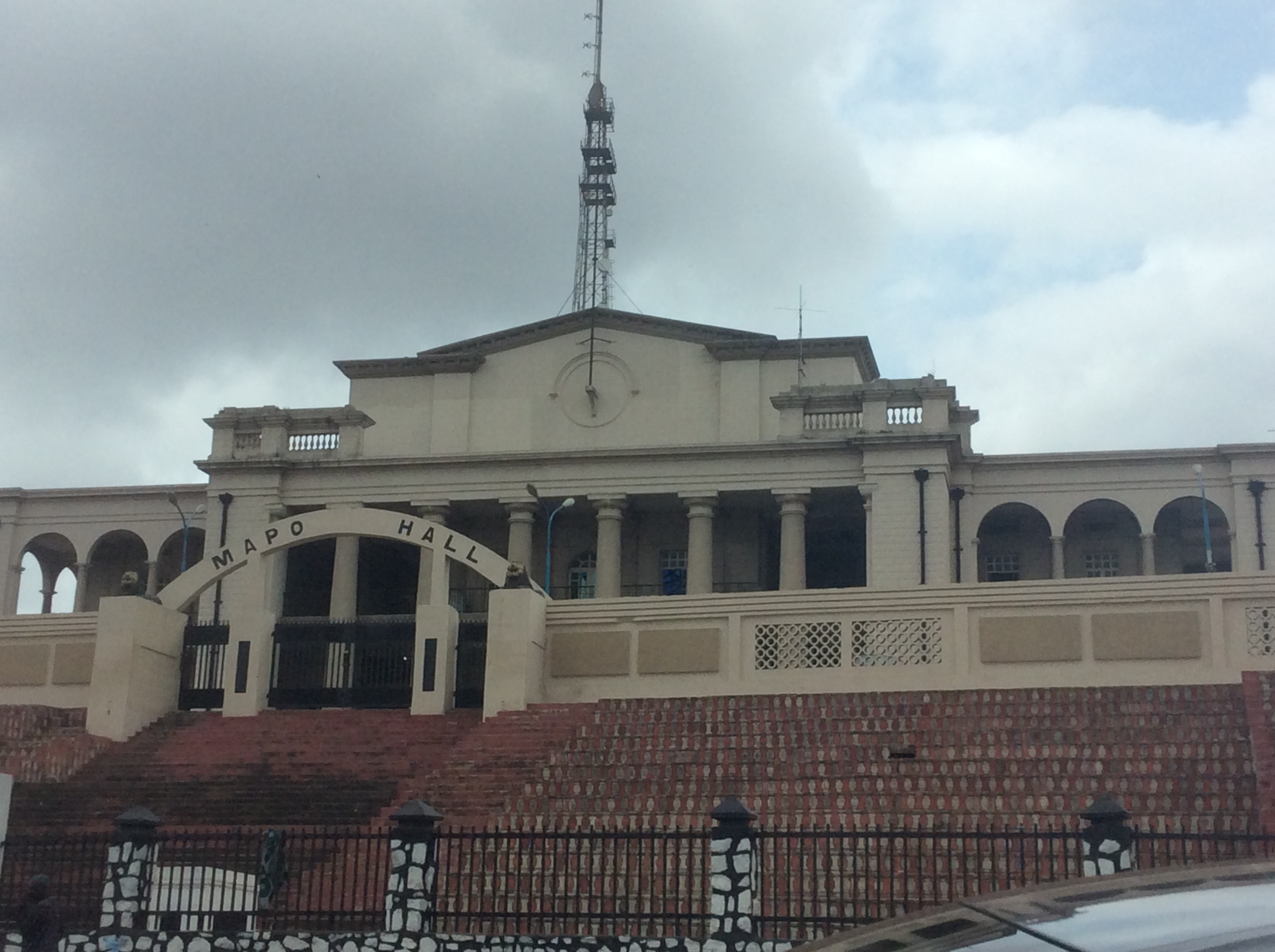
Some of these hills have increased in reputation over time because of modern (or colonial) additions, in structure, that have cemented (no pun) their statuses as more than just natural attractions. Mapo Hall, for example, is a town hall/courthouse built to Victorian style, in 1925-1929, right on top of Màpó Hill, from where the visitor can see almost all of Ibadan to all directions.
IMG_6438

A view from the top of Mapo Hall

Its reputation as a symbol of colonial justice where tax evaders were jailed has transmitted into culture and lore. As the popular song says about owó orí (taxes) goes, “Awọn àgbà tí ò san… wọn ń bẹ l’átìmọ́lé ní Mapo.” Over time, its role in post-colonial Nigeria has evolved, now remaining only as a vintage venue for occasions of private citizens, weddings, and other public events, most notably the coronation of every new Olúbàdàn, which is perhaps the biggest event it hosts at least once in every few years.
IMG_6511

Mapo Hall: a view from the front.

From deep in the neighbouring valley in Bẹẹrẹ Market, reputed for its throng of market men and women selling their wares almost onto the road in defiance of coming traffic, Mapo Hall is visible at a distance, perched on top of the hill to the left like an ark. In colonial times, when it was perhaps the only visible structure of its colour and stature, one can only imagine the psychological imposition its presence alone had on citizens’ mind.

The only other notable sight from this spot is the Látòòṣa Courthouse – on the opposite end of the horizon, even slightly elevated than Mapo itself.

IMG_6505

On the horizon to the left, on Mapo Hill, is Mapo Hall. Top of the hill to the right, on Òkè Ààrẹ, is the Látòòṣa Courthouse complex with an accompanying tower.

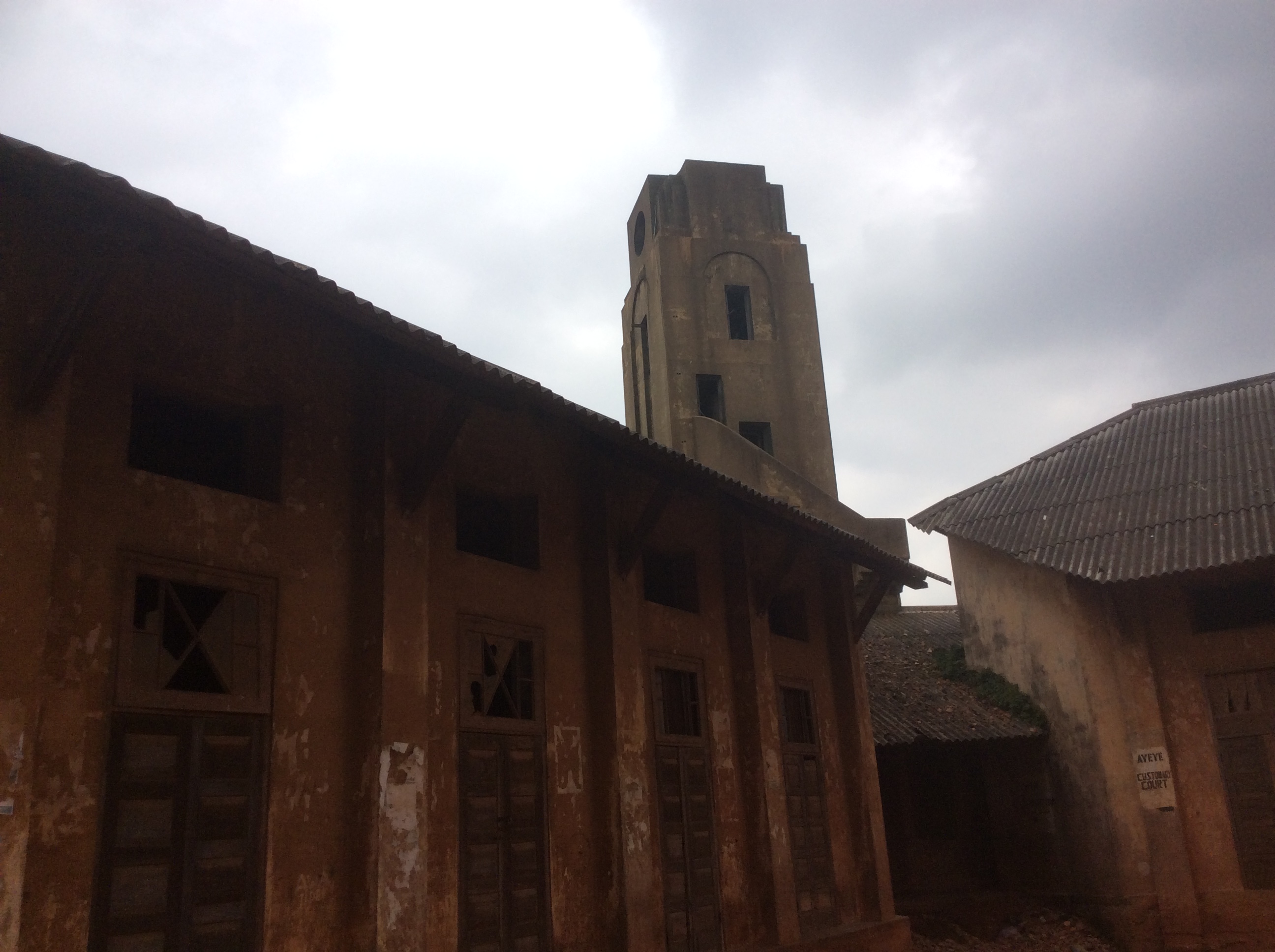
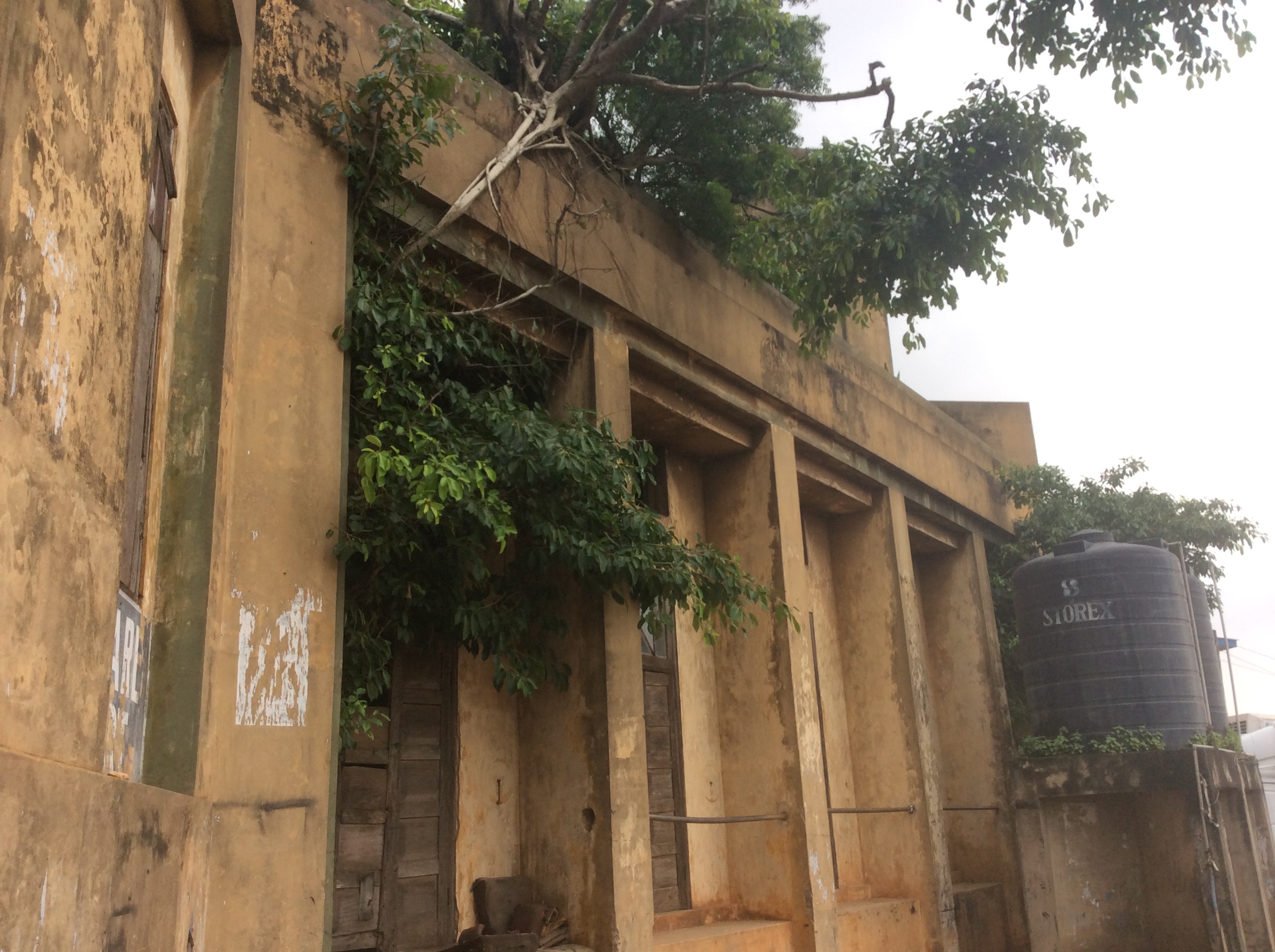
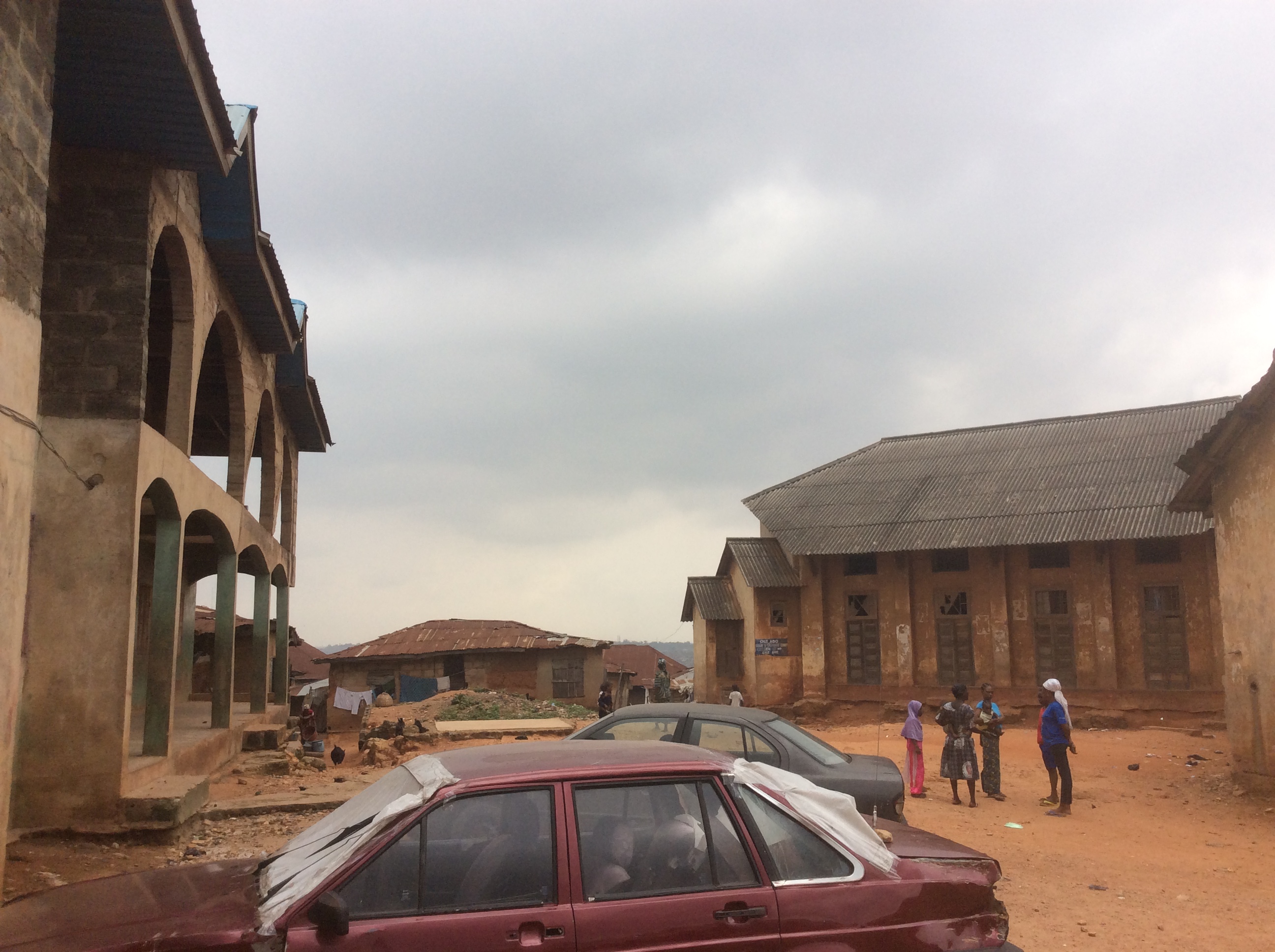
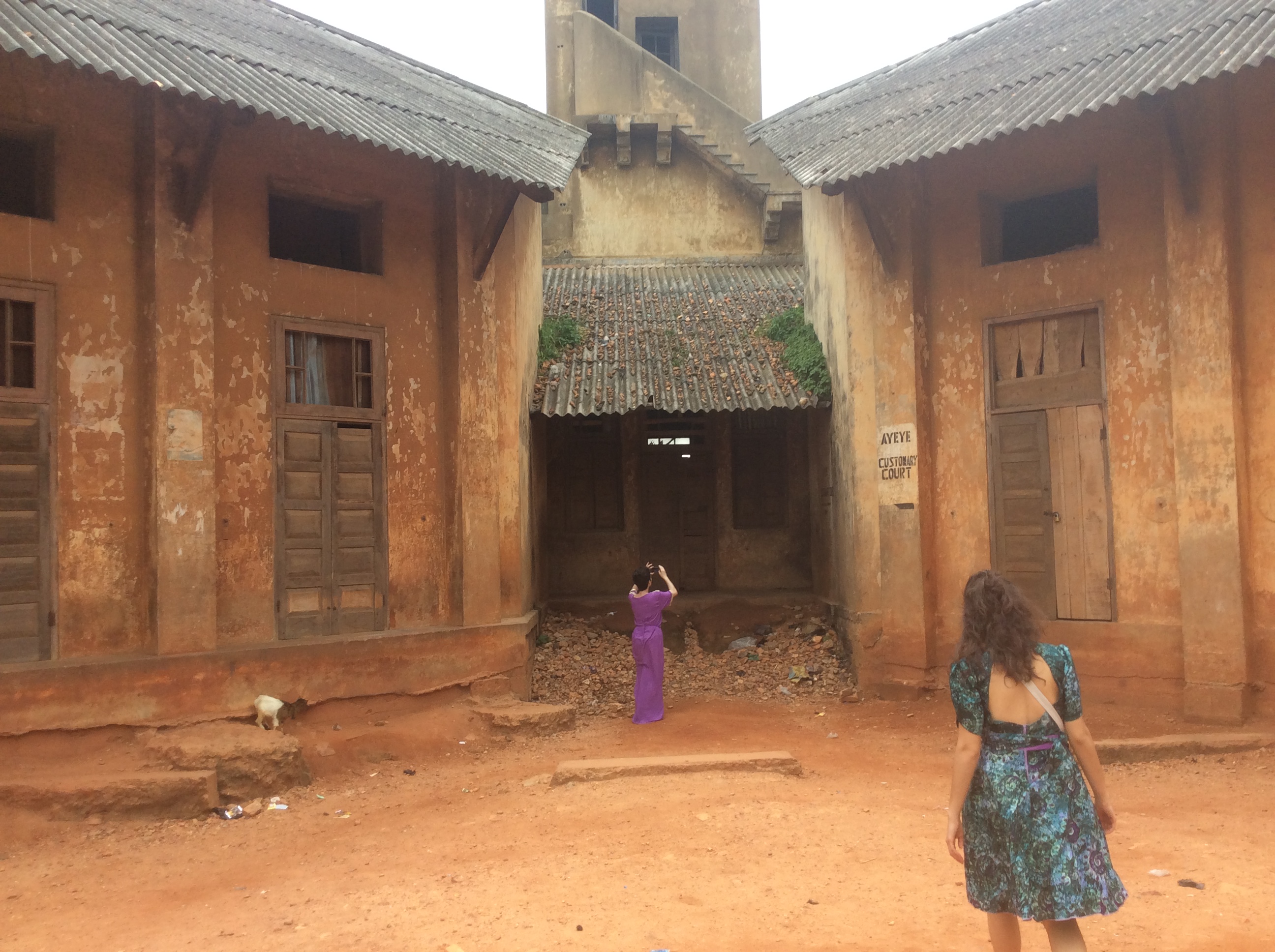
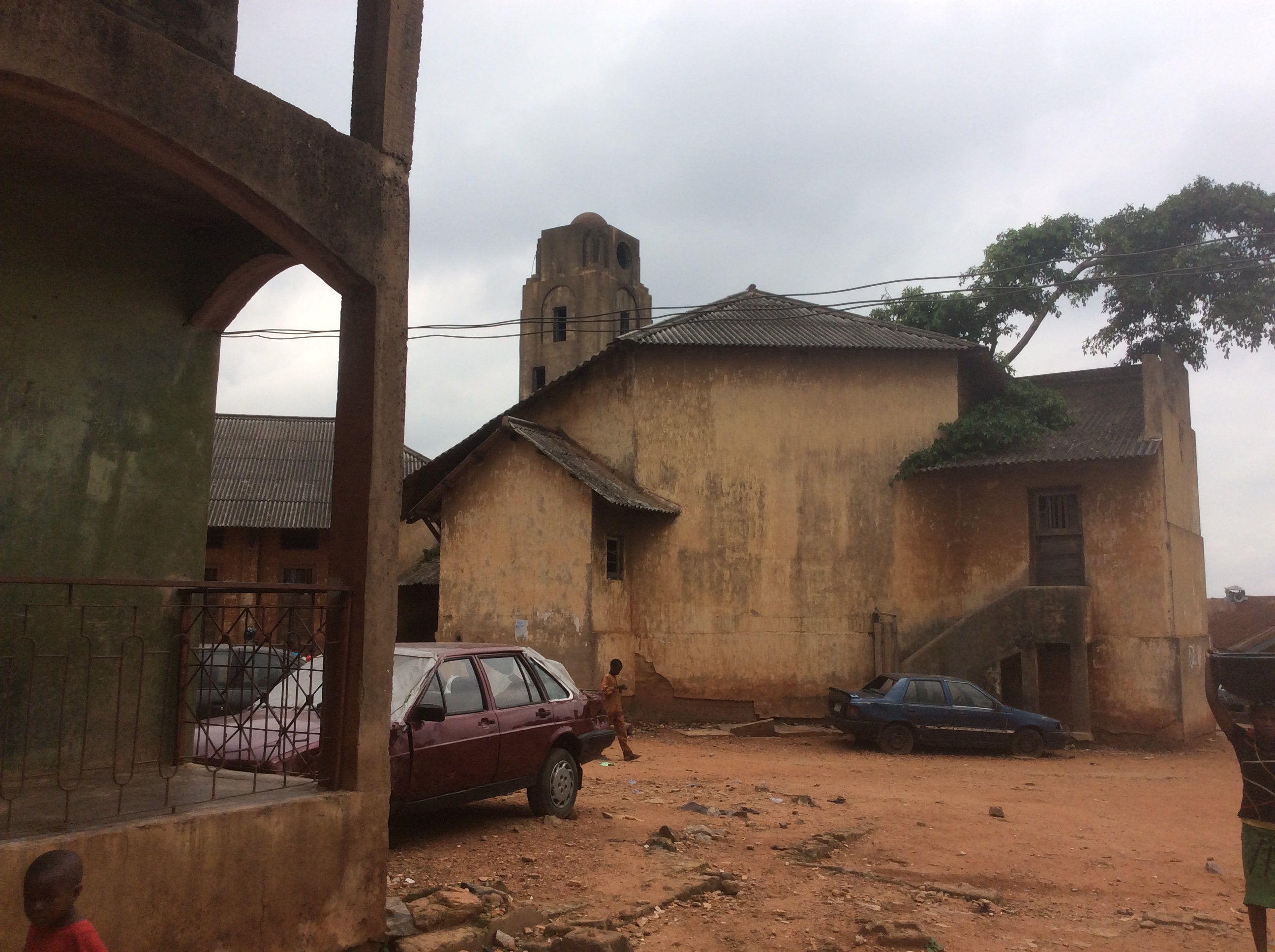
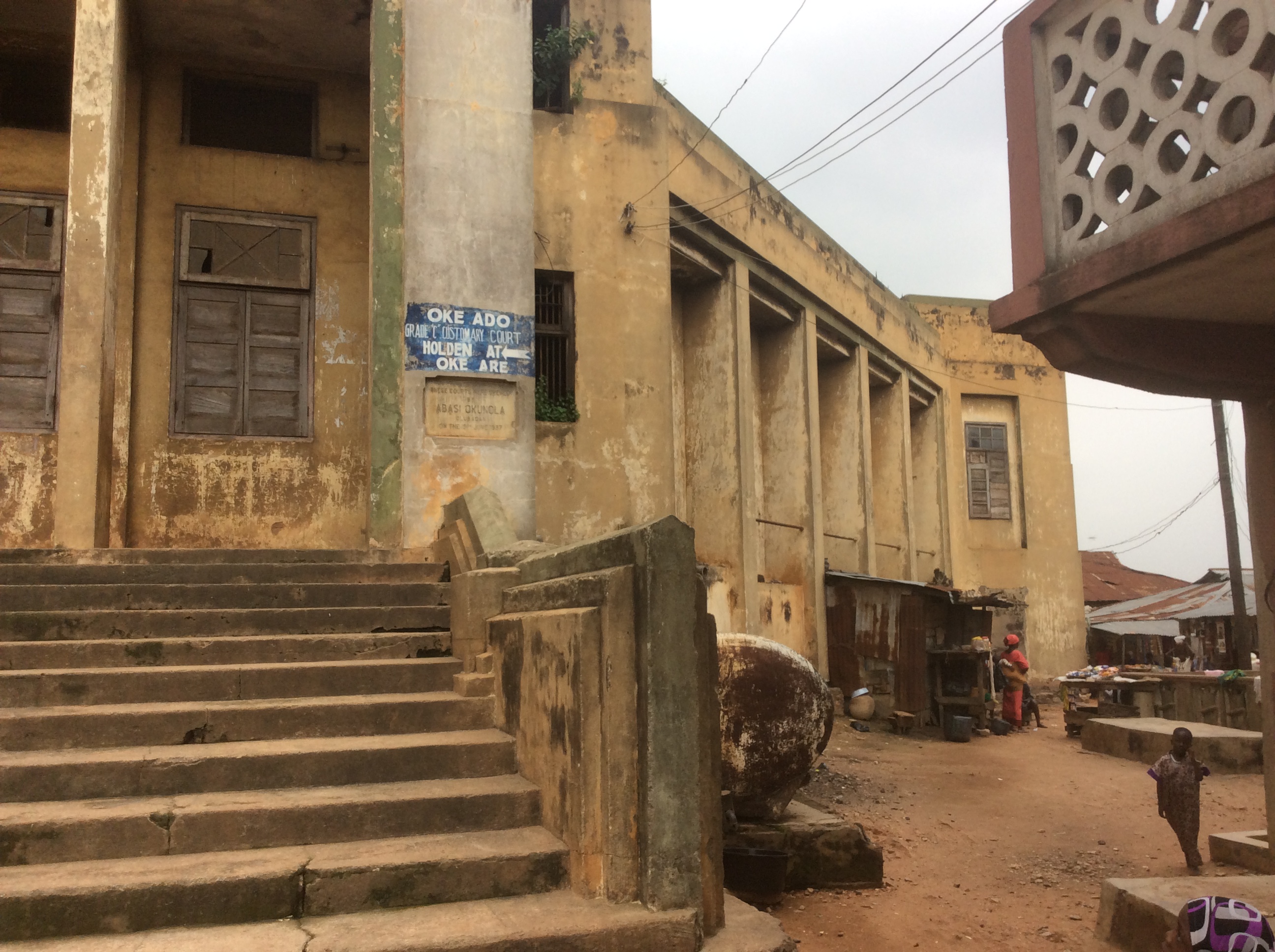
This courthouse structure was opened, according to the plaque on its walls, on June 13, 1937, making it slightly younger than Mapo Hall. Certainly less grandiose, but not less imposing especially on surrounding areas. It does boast of something that Mapo Hall doesn’t, however. That is a tower that has made a lot of people confuse it with Bower’s Tower which is located about a mile away. On this visit, and as one assumes on all visits to this place, there was no guide present to inform visitors of the role of this tower courthouse in the administration of the city. One had to only assume, from its size and location, that it was built for a significant administrative purpose.IMG_6331
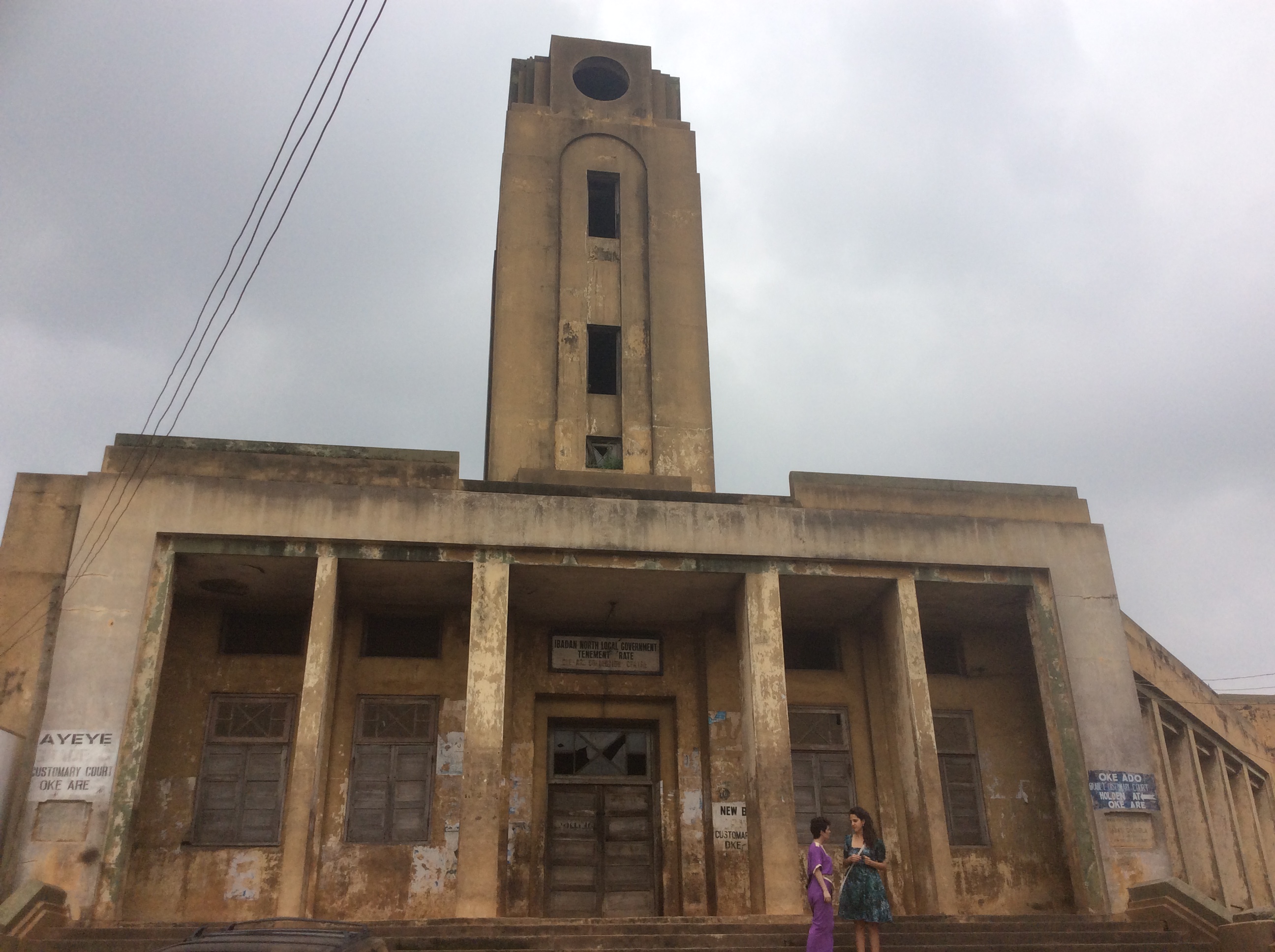
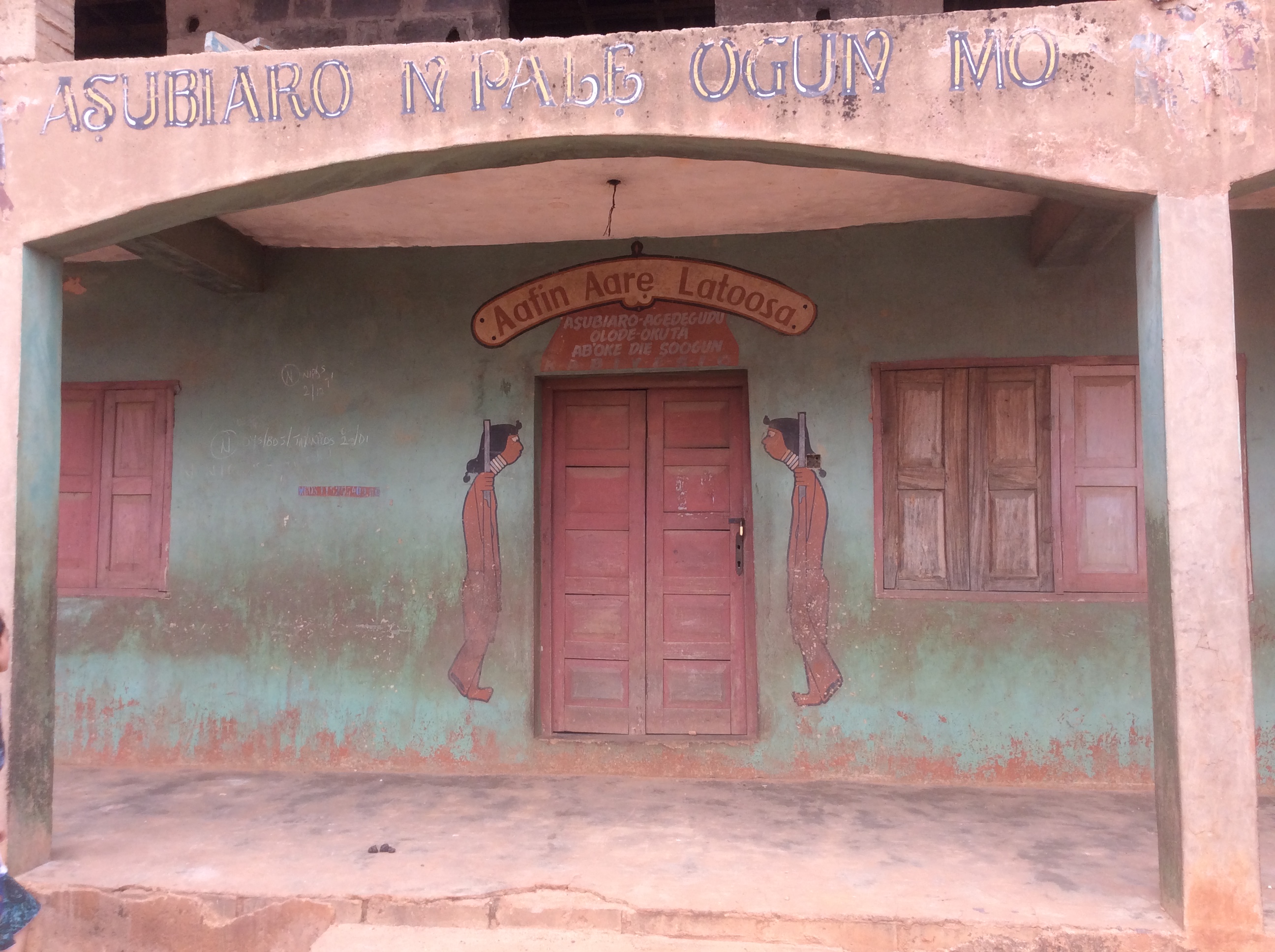
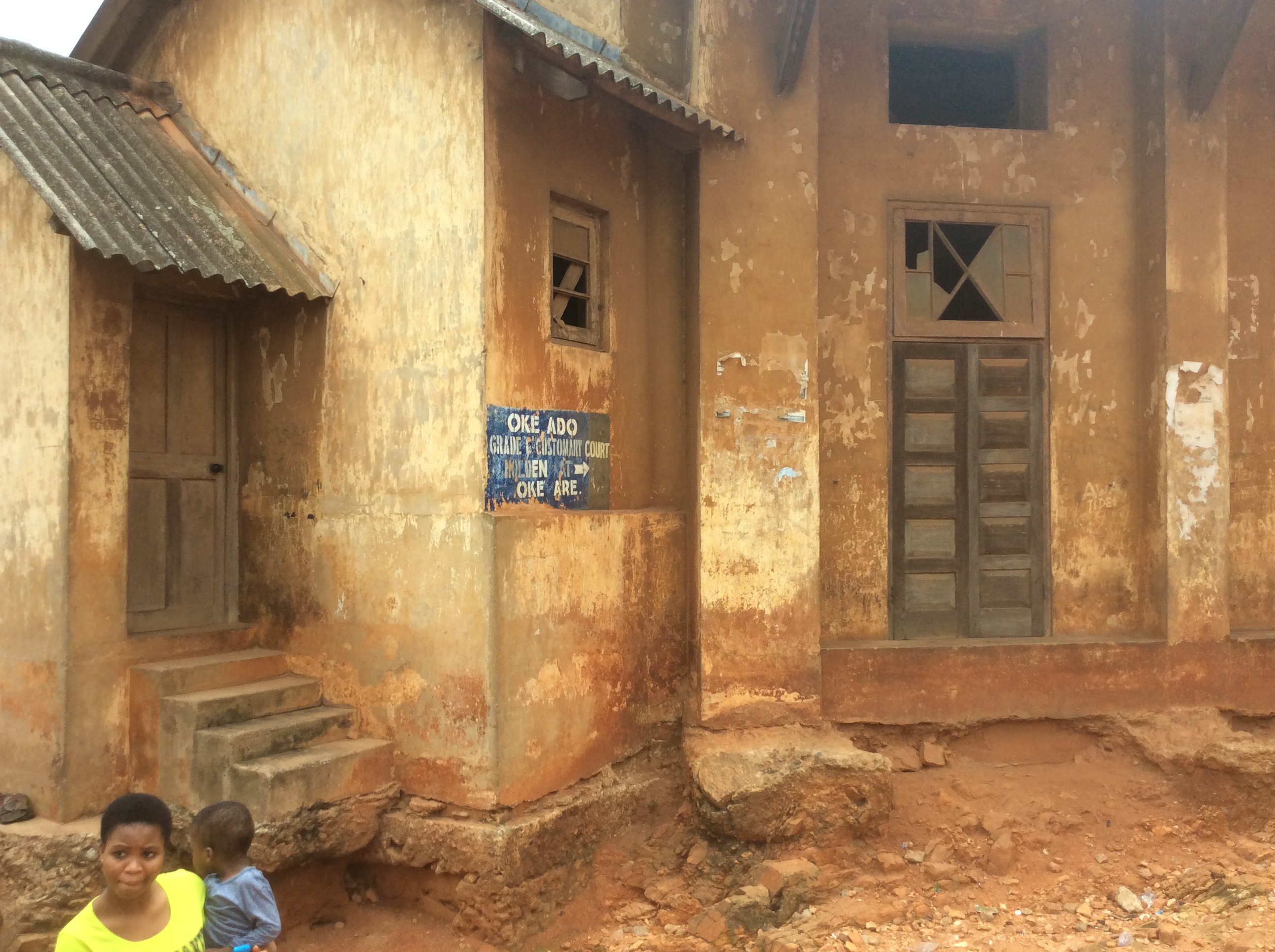
Worn out by time and mismanagement, the walls tell a story of neglect. There are signs on the building informing users of the current use of the house: “Oke Ado Grade ‘C’ Customary Court”, “New Bodija Grade ‘C’ Customary Court” “Ibadan North Local Government Tenement Rate Collection Centre”, “Ayeye Grade ‘C’ Customary Court”, etc. For a building of such multipurpose use, care has certainly not been taken. I think back to a recent experience, in Italy, where tourism has built a thriving industry of restaurants, malls, and gift shops around notable structures that tell the country’s history, real and fictional, and how much value that attention (and tourist dollars) has brought to the country. Old churches and abbeys, ancient arenas in Verona and the Colosseum in Rome, among others, are all just ruins of a certain past. But they have been preserved and well branded in order to attract foreigners and their resources. Even a fictional character, Juliet, from Shakespeare’s Romeo and Juliet, has a touristy structure built in her honour, called Casa di Giulietta.

We haven’t done anything similar with ours, and it doesn’t look like we care.

The location of the Courthouse couldn’t be more auspicious. Right at the back of the building is the site of Ààrẹ Látòòsà’s old palace, now nonexistent, replaced with a modern but still crumbling edifice.
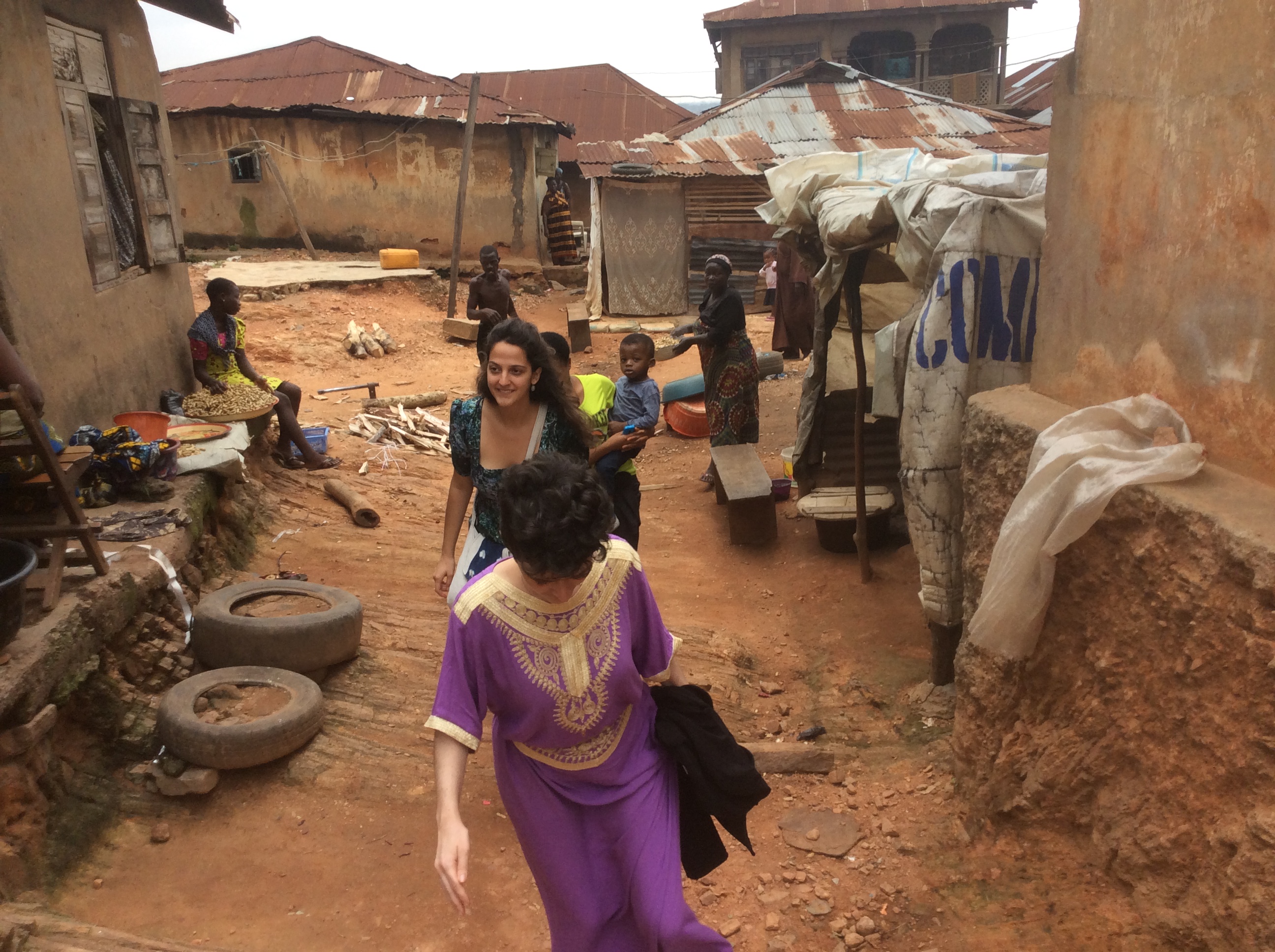
IMG_6329 IMG_6333 IMG_6334 IMG_6339

IMG_6335 IMG_6342 IMG_6347 IMG_6345IMG_6337 IMG_6344Who was Ààrẹ Látòòṣà, and to what did he owe the fame that got him to have had a whole hill named after him? According to Ibadan history, Ọbádòkè Látòòṣa was a generalissimo of Ọ̀yọ́ empire from 1871 to 1885 (not to be confused with his son Ba’ale Shittu Latosa who reigned as head of Ibadan from 1914 to 1925). Like most Ààr̀ẹ Ọnà Kakanfò before and after him, Ààrẹ lived and died fighting, conquering or being conquered. He was noted to have been the person who curbed the excesses of Ẹfúnṣetán Aníwúrà, a notorious slaver who ran roughshod over Ibadan in her days. But Látòòṣà’s reputation was cemented fully when he committed suicide after a certain dishonour had befallen him in the presence of his subjects. More about that here.

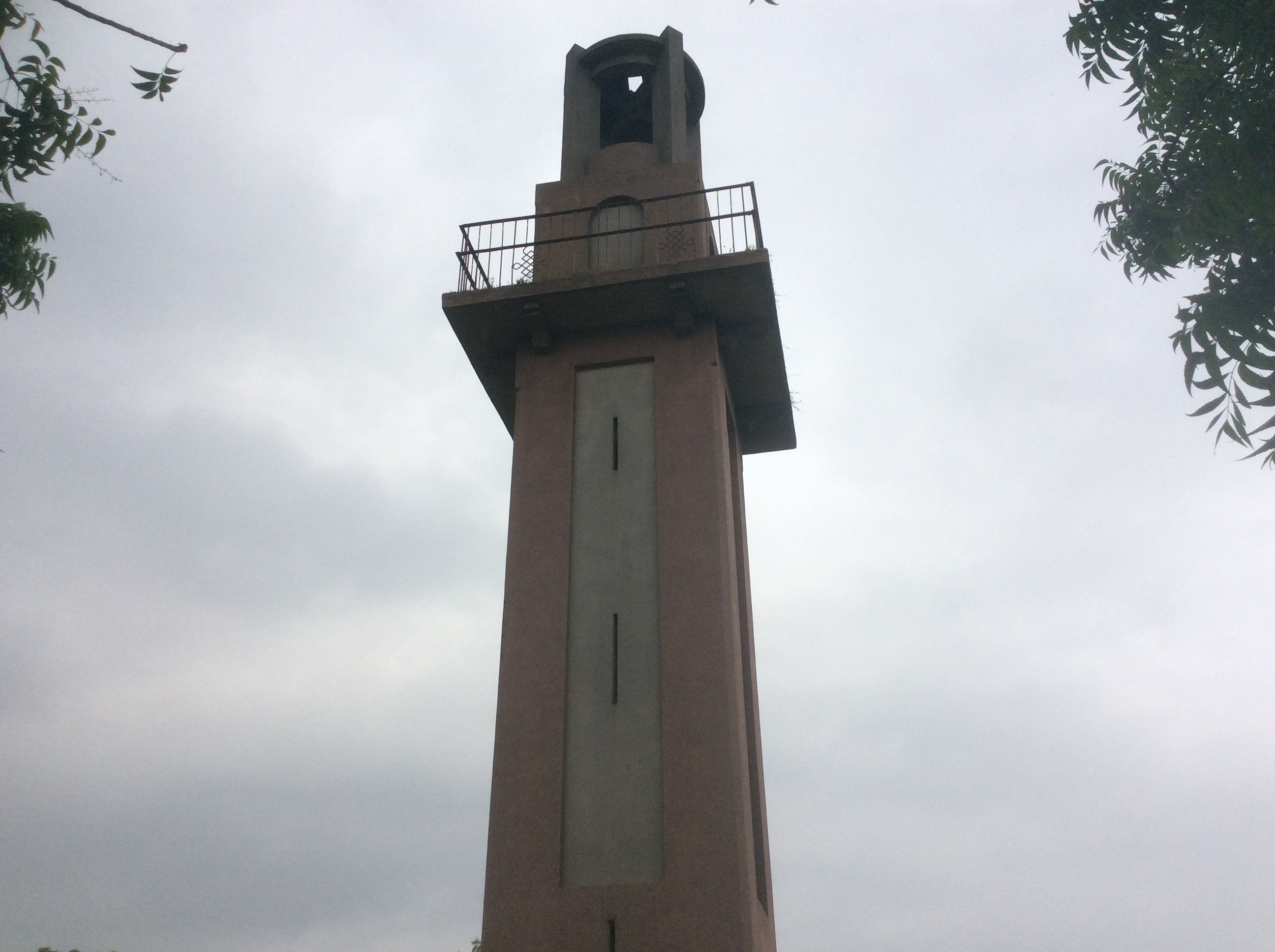
Bower’s Tower, further down into Òkè Ààrẹ, was opened in December 1936 in honour of Captain Ross L. Bower who was the first British Resident and Travelling Commissioner from 1893 to 1897. Along with the Courthouse, the Tower is the only second vantage structure from which one can observe all the city’s land areas. The similarity between the tower structures are notable as is their differences. Bower’s Tower was constructed with an observer in mind, perhaps with a pair of binoculars at hand, looking on at the majesty of the land spread before him/her. The Courthouse tower, placed right above the court itself, seemed removed from visitors to have been constructed as a place for regular access. It looked more like a clock tower than a viewing point.
IMG_6393

Bower’s Tower

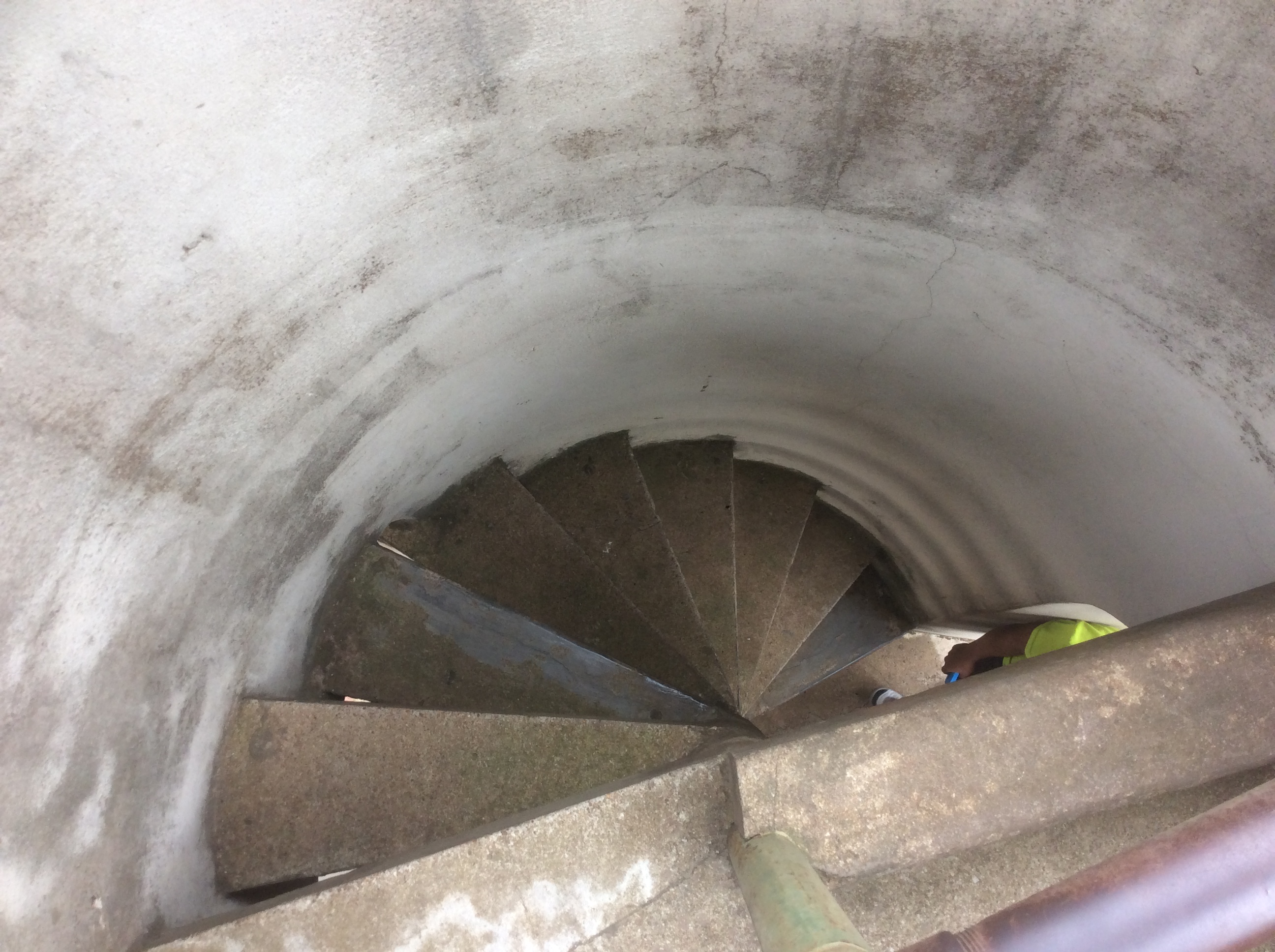
The view from on top of the tower is sublime, but getting there is usually the first challenge. It’s spiral staircase, built into such a small structure, could easily repel a claustrophobic guest. Also, the wear and tear from decades of neglect has turned it into a disaster waiting to happen. That won’t happen, I was told by a middle-aged man who now runs the place and guides visitors around the premises. The Tower has been commissioned for repair by the state government. Before the end of the year, the new private management would have taken over and made some significant changes.
IMG_6387

The common Ibadan word ‘Láyípo’ comes, among other things, from the spiral staircase within this tower.

There are many more structures around this old Ibadan that tell stories of its ancient and modern past. Finding, curating, and branding them for the reinforcement of culture, history, and tourism, will be a worthy endeavour for both private and public initiatives. But will it ever come?
IMG_6381

What would one need to do, as a private citizen to support the work of the state government in turning these sites of historical significance to self-sustaining money-making ventures not just for commercial ends but also for the sustenance of important stories and the encouragement of sight-seeing as an important part of modern/city culture?
Of Nigeria’s Real Founding Fathers

I just finished reading this long (but totally worth it) piece by Dàmọ́lá Awóyọkùn, on the life of some of Nigeria’s founding fathers. Correctly, the piece begins by dismantling the myth that the triad of Awólọ́wọ̀, Azikiwe and Bello were the founding fathers of modern Nigeria, giving credit to where it is due to those who fought and survived slavery in order to birth a new country “bound in freedom.”

Here’s an excerpt:

Meanwhile as Crowther spoke about the horrors of slavery, a lady minimally dressed and too unassuming to deserve interruption of the narration came in and she listened to him with breathless attention. There was no voice speaking for the slaves in West Africa until the British rescued Crowther, gave him dignity, gave him culture and education and he became a voice, the voice. And when the Prince spread the map on the table wider to see Lagos, it blew out the candle light. As Crowther wrote in his autobiography, the Prince then said, “Will your Majesty kindly bring us a candle from the mantelpiece?” Then  it dawned on Crowther the unassuming woman who had joined them earlier on was Victoria, Queen of the United Kingdom and Empress of India.
Wrote Crowther: “On hearing this, I became aware of the person before whom I was all of the time. I trembled from head to foot, and could not open my mouth to answer the questions that followed. Lord Russell and the Prince told me not to be frightened, and the smiles on the face of the good Queen assured me that she was not angry at the liberty I took in speaking so freely before her, and so my fears subsided.”   After bringing the candles, the Queen then asked about what she can do about the slave situation in Lagos, Ajayi Crowther said seize Lagos by fire by force.  Captain Labulo Davies, the second of the founding fathers, was a lieutenant on HMS Bloodhound the flagship of the fleet that bombed Lagos.

There are many stories of this nature that need to be told and told again of people whose efforts gave (and continues to give) us the freedom we currently enjoy, linking the colours of the present to the struggles and sweat of the past. Why is Ajàyí Crowther not on the Nigerian currency again?

Read the full report here.

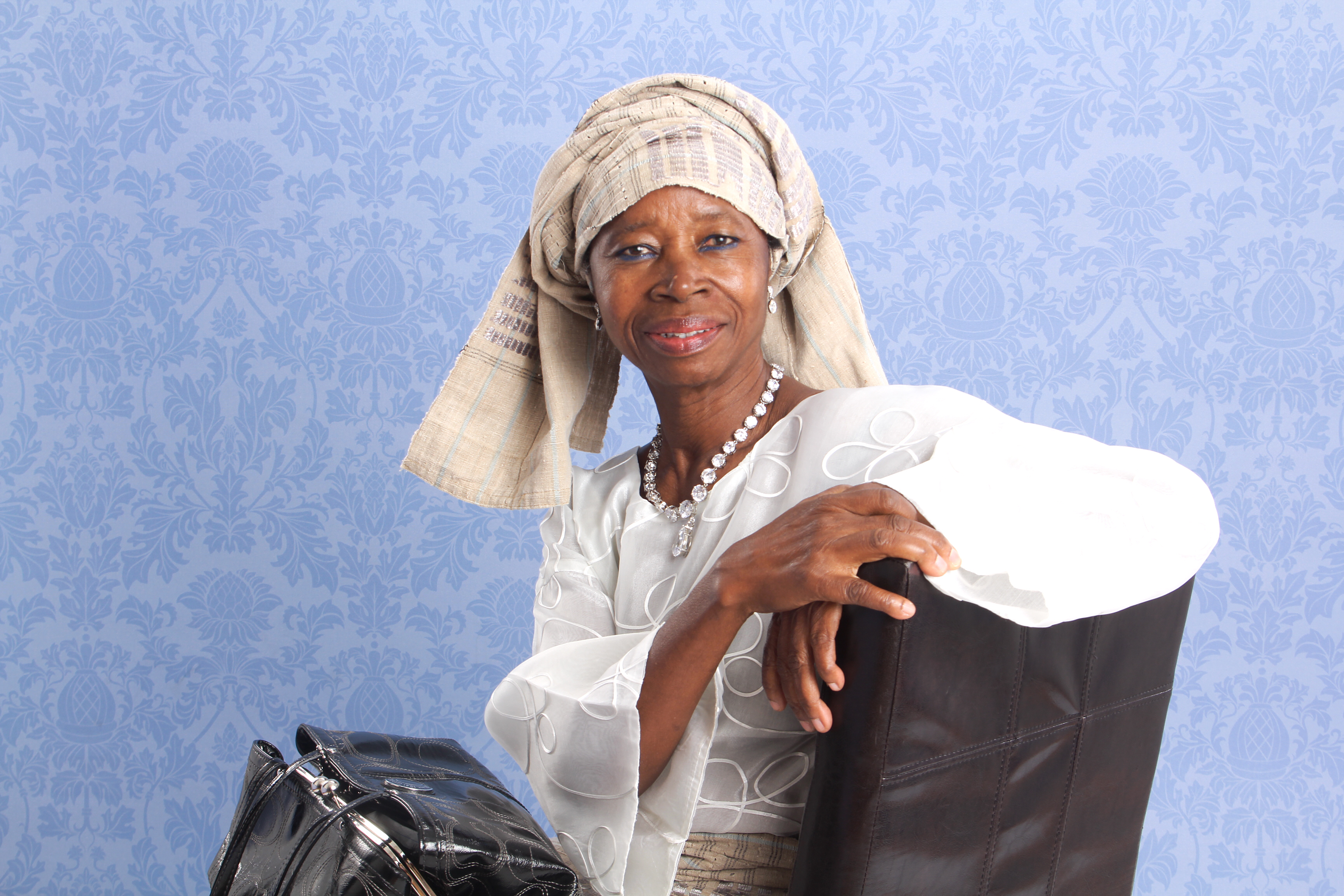
Memory Lane with Tọlá Adénlé

by Tèmítáyọ̀ Ọlọ́finlúà

Mango, Christmas and avocado trees; old houses, some refurbished, others abandoned; line the street that slopes downwards.

“Tayo, please wait for me at the gate with 4A,” she had said on the phone, her English laced with a tinge of Ondo/Ekiti accent and spiced with some Yoruba words. Tola Adénlé—or Mama Tọ́lá Adénlé, as her name is saved on my phone—came to me first in an online article that filled me with the desire to meet her. After some Facebook messages and phone calls, I am waiting to meet her.SANYANhybrid sitting

At the gate, my mind wandered: what will she look like? Will she bounce around like her cheery voice jumped on the phone? When she opened the gate, she had a warm smile, a green top and a pair of cream pants on. I knew she was the one. She needed no introduction—the face matched the pictures. The texture of her real voice similar to the texture of her “phone” voice. She welcomed me into the house.

“Feel free to look around.” And there was a lot to see. Almost every corner of the room was lined with pictures—largely family; hers, her husband, her children, her children and their husbands, and their own children. She calls them the Adénlé clan.  

“Life is about memories. Keeping memories, that is all life is about,” she says.

I get a tray with tea and snacks; then, we settle outside on two chairs. “That’s Dr. Adénl遒s chair,” she says, referring to her husband—hydrogeologist, Dr. Adénlé. It is a good view: trees and houses, in competition. The house on the other side of the fence used to be theirs.

“Either it got too big for us or we got too small for it,” she says.

Then, we settled into the chat, not an interview. She had insisted that it should be as informal as possible. She would email me pictures, so no need for a photographer. I was reluctant to record. It would be just nice to drink from her deep wells of knowledge.

“This will not just be about you asking me questions. I would also ask you questions,” I agreed. She wanted to know why I chose the freelancing route; how I survive; my background. I told her.

It was my turn to know more about her. But not so fast.

“I should give you an autographed copy of Emotan Magazine,” she said “In fact, let me do it right now.” She gets up immediately and returns with the copy. Emotan was the third woman’s magazine published in Nigeria. This edition was published in September, 1977. So, yes, it is a collector’s item.

When she returns, I ask about her urge to get things done “right away”. Is it out of fear that she may leave it undone or that she may forget—a result of old age?

“It is not fear. It is just that I hate to be reminded to do something that I promised to do,” she says. Neither is it a fear of age, as age is a fact of life.

Dr. Adénlé soon arrives, but before he left us, she does introductions. Tells me a little bit about them—how they like things small, even though they are both from large families. He is the son of a late Ata-oja of Osogbo; she is a daughter of a prominent family in Iju, Ondo state, the Adámọlẹ́kuns. Their wedding had under 30 people in attendance at a Cathedral Church in January 1970. Other things, I find out myself: a soft whistle is one of them calling the other; that she is particular about everything—the chair she sits on; the plate she eats from; her daily carbs intake; the number of steps she takes daily; the turquoise of her earrings matches the nail paint on her toes. He does not care much about such particularities. That when she tries to remember something, he assists—like the name of her Editor at Daily Sketch: Sola Oyègbèmí. The Adénlé couple cannot stand chaotic Lagos—they both resigned from jobs there at different times before they met in the 60s. They fit well into each other, ball and socket.  

We talk about other things: writing, publishing and Nigeria. Writing is her gift that she must continue giving. She did not know this initially. She had written a letter to the editor of West Africa Weekly, an old magazine from Florida in 1971. She quotes some lines from the letter. Writer, Kọ́lé Ọmọtọ́sọ́, a PhD student back then at the University of Edinburgh, read the letter and told her that she seemed to have the gift of writing.

“But you will need to read a lot,” she said he had told her.

And that was how she kept honing the skills—from a letter to a magazine; she served at Daily Sketch, Ibadan as a corper; then, she became the Woman Editor at Daily Sketch. She reels off names of her colleagues at the Daily Sketch. She shared a table with Tunde Thompson, who would face Buhari/Ìdíàgbọn’s harsh military rule judgement with the infamous Decree 4. It is interesting that Thompson supported Buhari for president in the last election. It was after the Sketch experience that she started Emotan as a Woman’s Bimonthly. The magazine which was published out of Bodija, Ibadan, had a readership of about 15, 000. It soon became a monthly. It attracted writers, readers and adverts from every part of the country, even from West African countries. Its articles remain relevant even decades after. One subscription page of the magazine reads: when you miss a copy of Emotan, you miss good company. True then, true now. In 1985, after several editions, it was time to rest Emotan.

For someone who moved to Ibadan for the first time in 1966, and has lived there on and off, since then, I ask her what she thinks of the city now.

“Like Nigeria, Ibadan is chaotic. And it is not because the people are not skilled enough to transform the city. S’e b’oye kilu ma improve ni?” She asks rhetorically.  She says that this “lack of progress” is connected with the maniac rush for wealth rather than ideas that can transform the society.  “It is only here that you ask people what they want to become and they say: millionaire, as if it is an aspiration. Many have fallen into the default mode of most Nigerians—not caring about what they leave behind, only rushing after money.” She laments that this is the reason many do not create things that will transform the nation. Warts and all, Ibadan remains her favourite city.

She does not understand the Nigerian craze to keep acquiring things they will never use. Neither does she understand the reason why parties seem like drugs for people to get excited; take a fix today and wait for the next one to feel high again.

“True happiness should come from within. From doing things that make you happy. Not from organising big parties for people—half of whom you do not know. “Every wedding is now a society wedding; every burial is a state burial,” she quotes an older Nigerian industrialist’s words from a 1985 speech to the Ibadan Chamber of Commerce. She speaks of her long-held belief in Buhari as the one who can sanitise Nigeria of corruption, a belief that accelerated the birth of her blog, in 2011 as stated in the early posts.

In 1988 during Babangida’s presidency, her family joined Nigeria’s [then] mythical “Andrew” and moved back to the States. Since then, it has been between the United States and Nigeria. She also maintained a column with The Comet on Sunday, and later, The Nation on Sunday until 2011 when she started her blog.

Her love for aso-oke, the traditional Yoruba textile which she fell in love with after wearing it for the first time as a bridesmaid in 1965, led to her developing some categories of the textile on her blog. The different categories became so popular that a book, AṢỌ ÒKÈ YORUBA: A Tapestry of Love & Color, A Journey of Personal Discovery, was published in January, 2016. It chronicles her journey of discovery of Aso-Oke, the textile’s history, Yoruba’s sericulture past, occasions that call for aso oke, modern uses of the textiles and many interesting details of this contribution by the Yorubas to world’s textile technology. The book is laced with several pictures, many of them taken by her husband. It takes one on a journey into the past of the textile and whets one’s appetite about its future. The book will be available on amazon.com, through her website, and on her 70th birthday on April 2.

Having spent seven decades on earth, written two biographies, mothered four amazing daughters, held down a magazine for almost a decade, written a collection of short stories, Adénlé still has expectations for the future.

“One must always have expectations. Or else one dies. May not be physical. There is always a mountain to climb.” One thing is certain, Adénlé will be busy giving her gift of writing to her world.  

There is no slowing down for Tọ́lá Adénlé. She might have been born in the age of the dinosaur, to quote her words, but she uses today’s tools. She whips out her tablet and begins to type. “Let me do it right away.” She had promised to send me an invitation card for her 70th birthday and her picture that accompanies this piece. I wonder about this woman who is from the past yet grounded in the realities and intricacies of today—how many 70-year-olds maintain websites where they curate their work? You can read Adénlé’s work on hers.

She autographs my copy of the first edition of Emotan. I will keep it and show my children. I will tell them the story of a woman who dreamed up a world for other women; of how she came to me in an online article and how her story inspires me to run my own race.

“Do what you like, that is how you make progress. Follow your passion, that’s where your success will be.” Her words will not leave me even as I now advance upwards on a street lined with mango, Christmas and avocado trees; old houses, some refurbished, some abandoned.  

_____

TemitayoTèmítáyọ̀ Ọlọ́finlúà is an award-winning essayist who has completed writing and communications assignments for various organisations such as Global Press Institute, Mania Magazine, Saraba Mag and Facebook, to mention a few. Her work featured in various publications, online and in print.

Some of her writing awards include Finalist, African Story Challenge, Technology and Business Cycle (2014);  Second Prize, Peter Drucker Challenge (Manager’s Category), 2014; First Prize Winner, NEPAD Essay Contest, 2013, among others.

She currently curates content for lifestyle website, www.liveinibadan.com that focuses on the city of Ibadan. You can read some of her works here, here, here and here

A Walk from Iga Idunganran

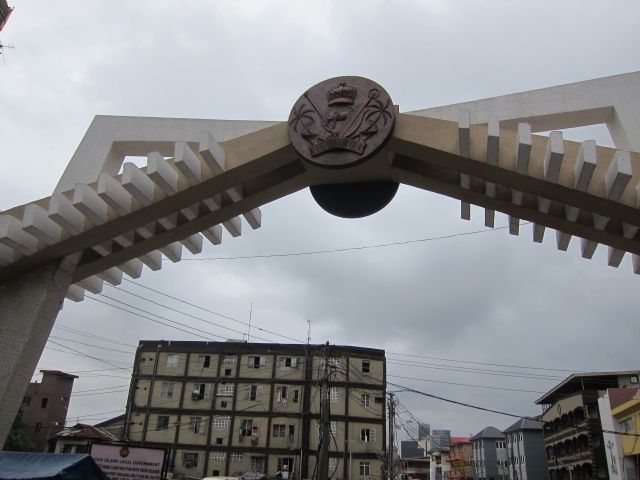
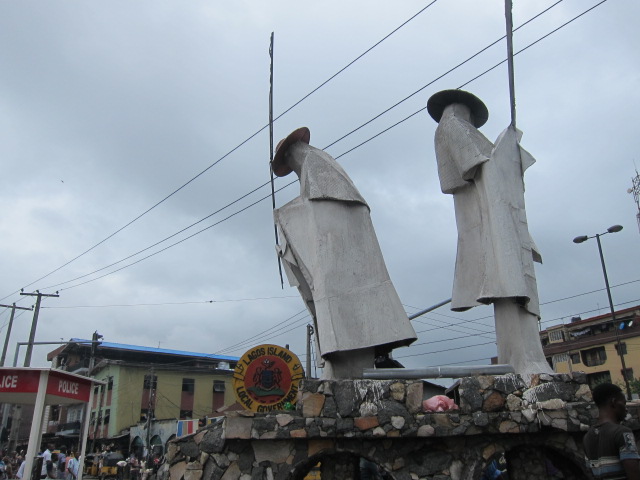
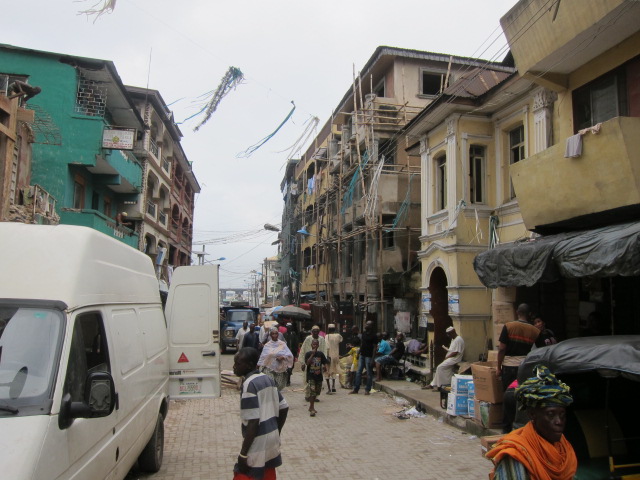
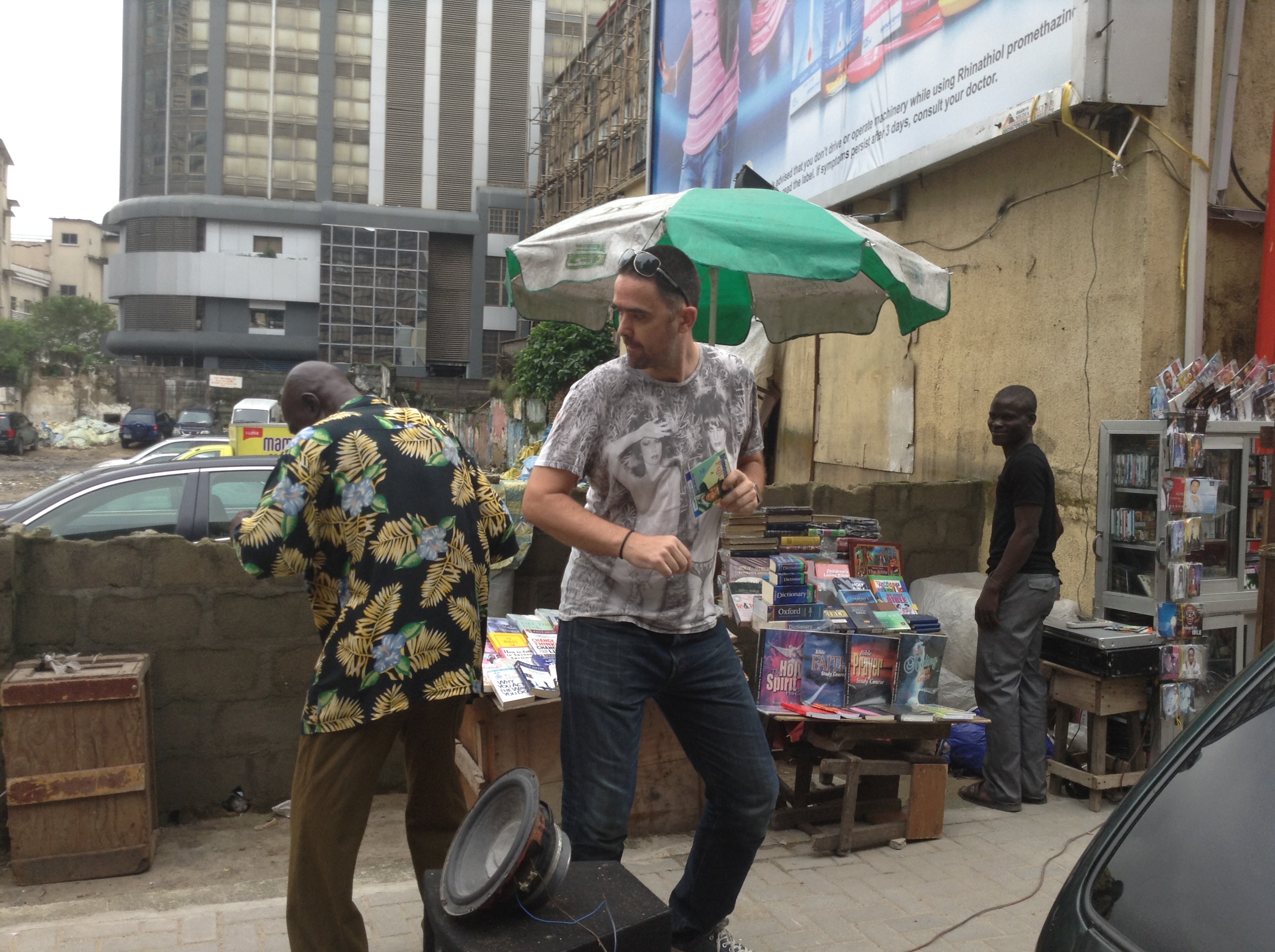
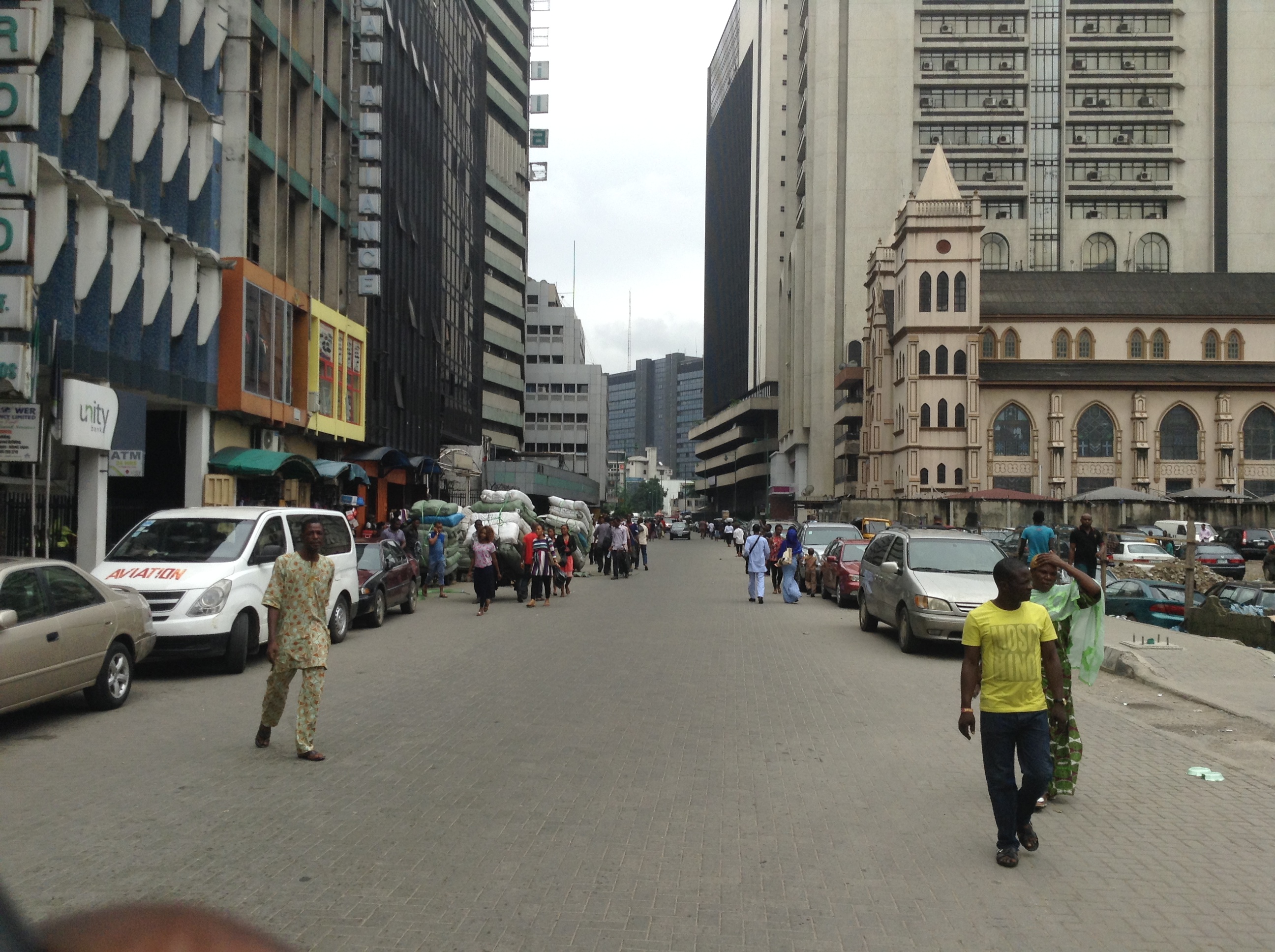
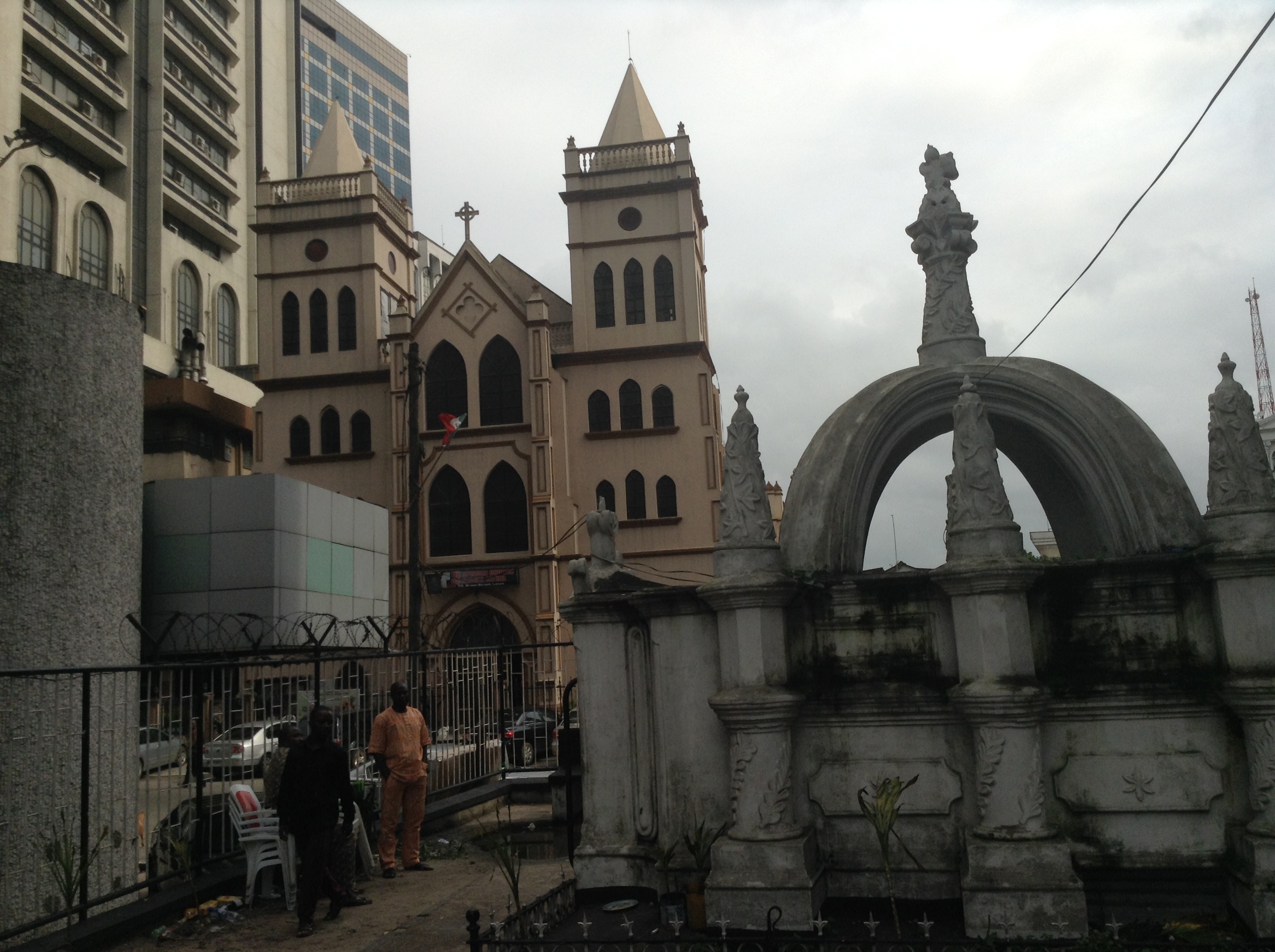
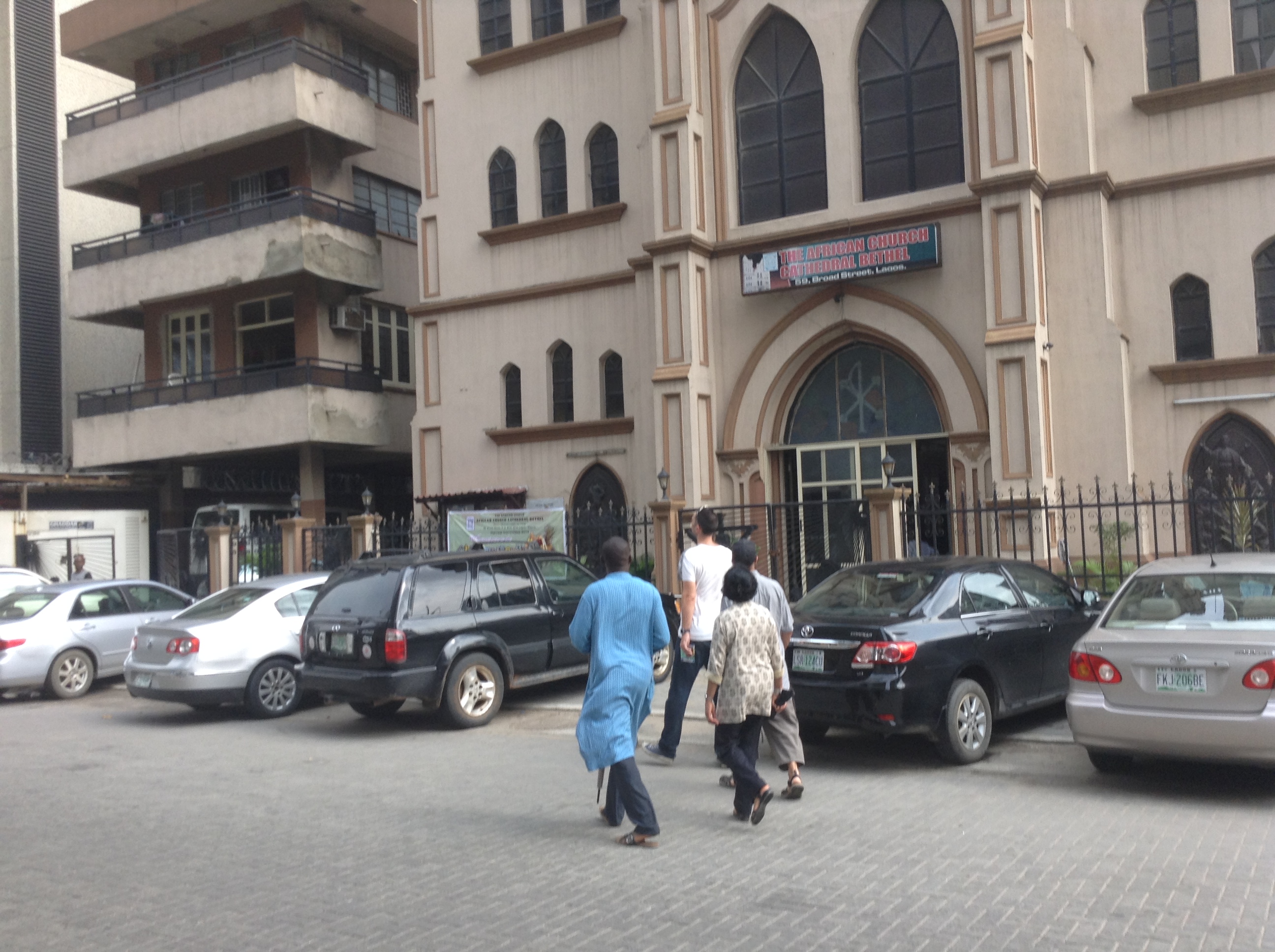
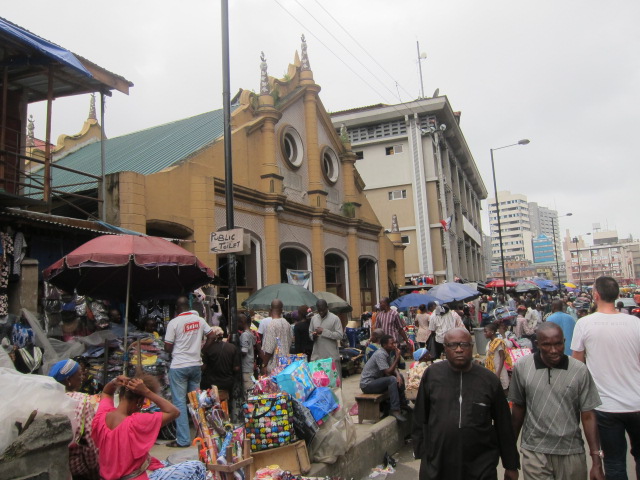
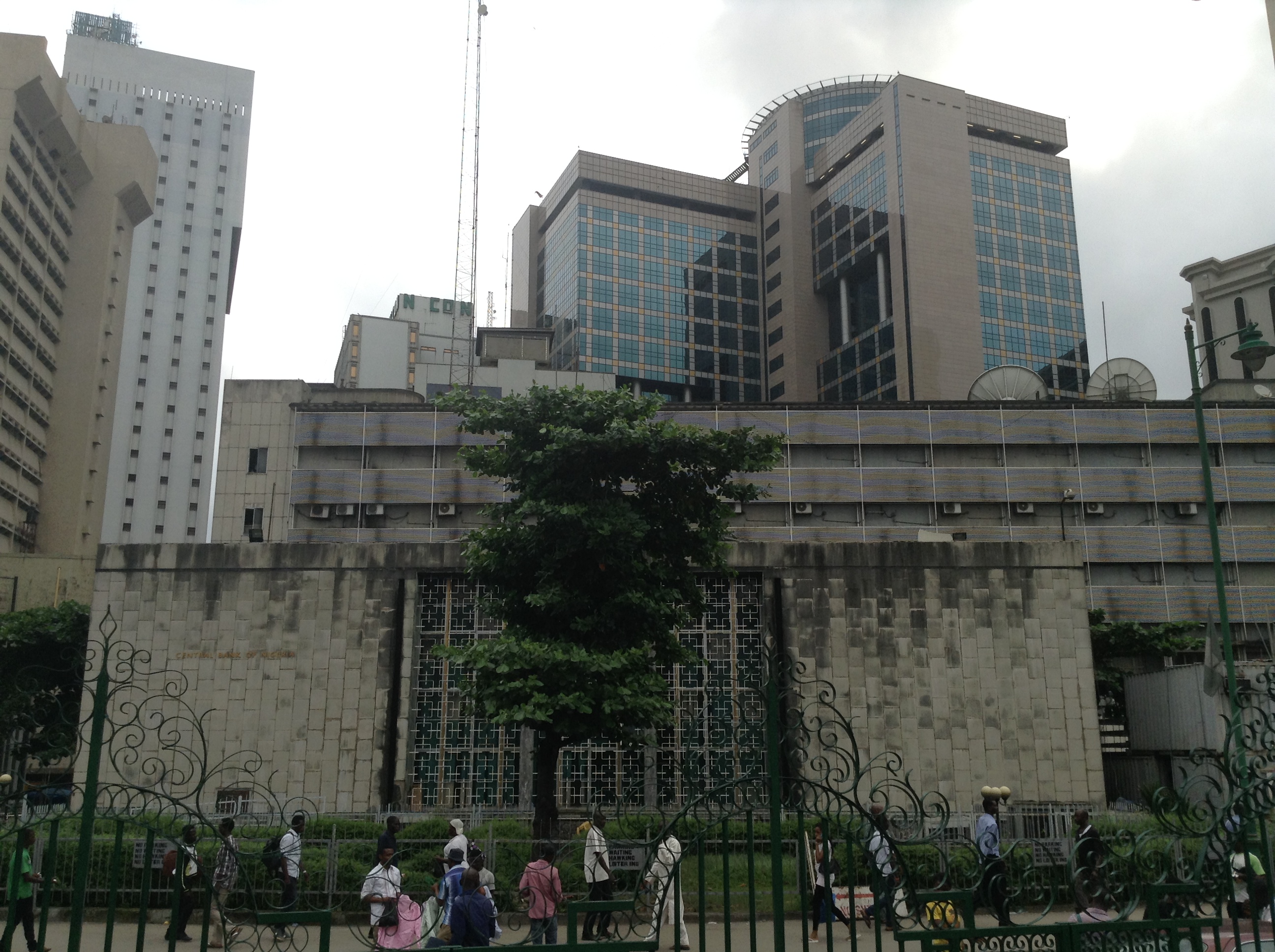
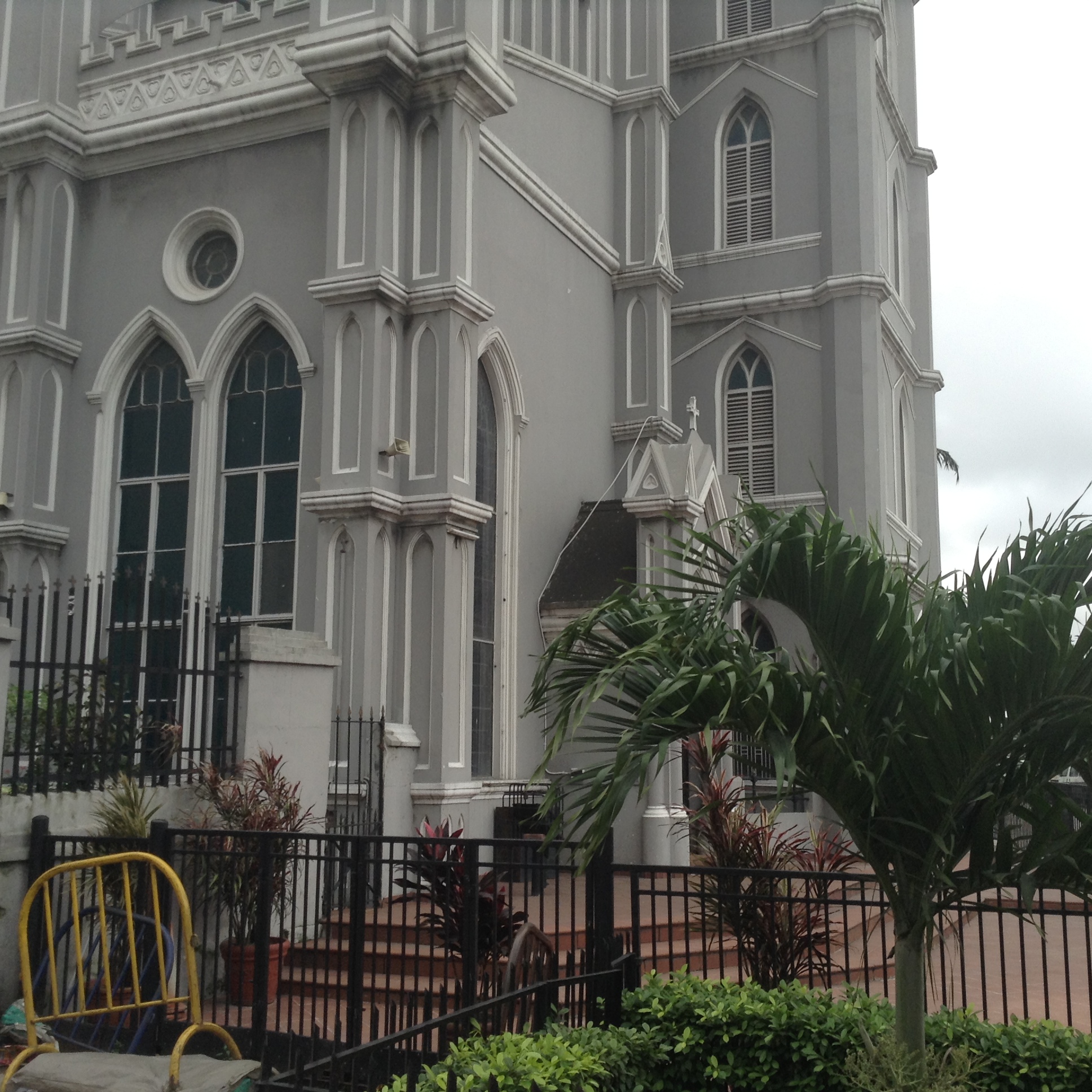
IMG_2582IMG_2573IMG_2581IMG_2334IMG_2332IMG_2354IMG_2330IMG_2406IMG_2363IMG_2596IMG_2385IMG_2459Iga Idunganran is the official residence of the Oba of Lagos, located at the northernmost point in Lagos Island. Yesterday, in company of Jeremy Weate (of NaijaBlog/Cassava Republic), Julian Henriques (from the University of London) and wife, and friend and psychiatrist, Mohammed Mustapha from Lagos., I visited the area. We also ran into artist and sculptor, Peju Layiwola.

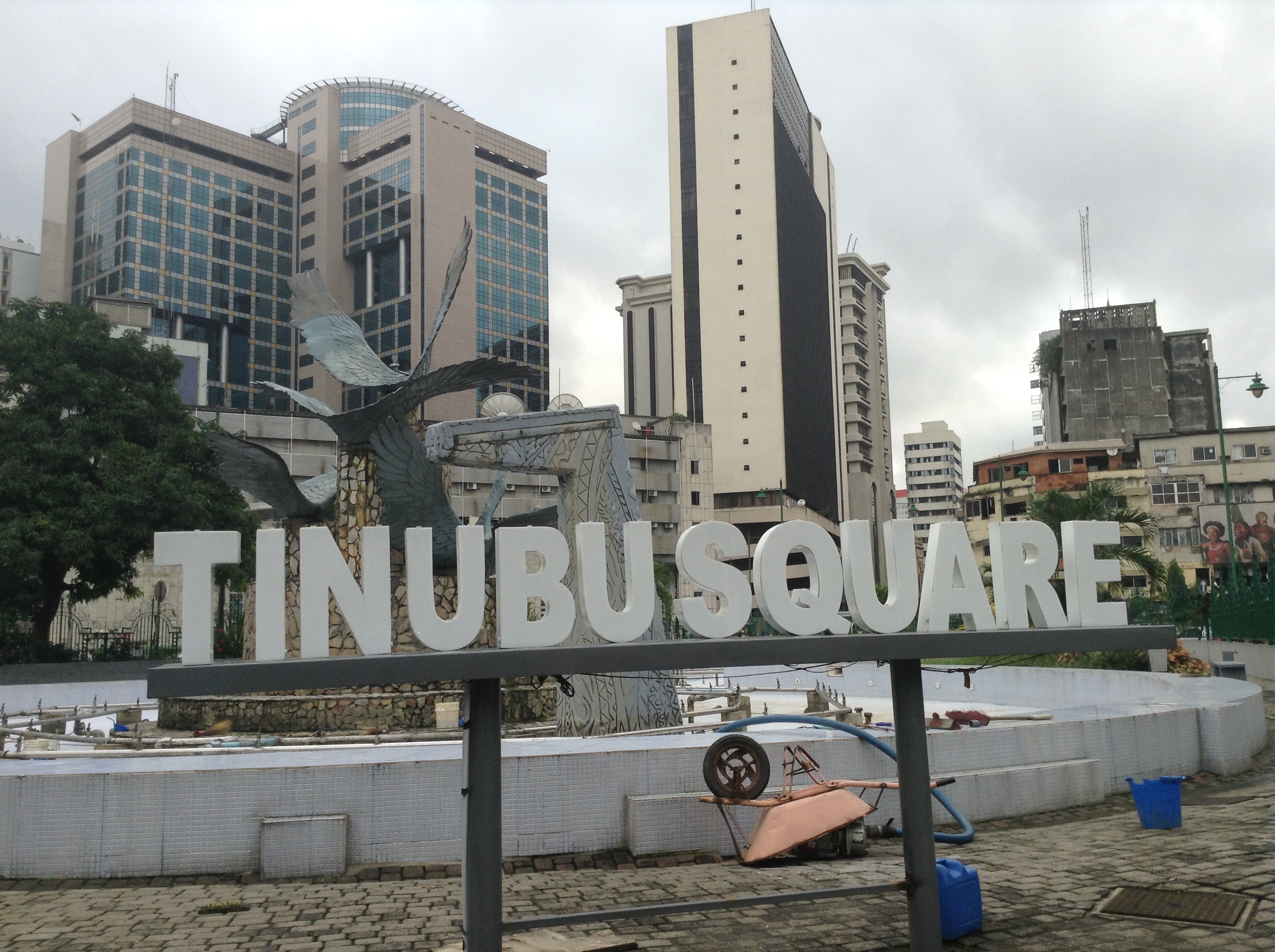
As much a three-hour leisure walk as it was a historical tour of storied locations in the city’s ancient history, it was also a much appreciated foot-mapping exercise. This is a part of Lagos I had never visited on foot until now. The trip went from the palace gates through the busy streets of Idumota and other ancient corridors of Lagos Island, through the famous Shitta-Bey Mosque, and through Tinubu Square, eventually to the southernmost point by the CMS Church located close to the Lagos Lagoon. It was a lot of history for one day.

Tinubu Square is a long story of its own, from its earlier decrepit state as a homeless shelter among other unsavory roles in the busy spot behind the old Central Bank building. It is now a decent-looking park that offers respite in the middle of such a bubbling environment. This deserves a longer piece, no doubt.

Here are a few shots.

On The Game of Giants

Red_Front-161x300There are many ways to teach history, but the best and most effective way has nothing to do with the classroom. In any case, a couple of months ago, it was announced that (Nigerian) History would be dropped from the Nigerian secondary school syllabus for reason of inadequate enrollment. Many of us protested online and offline, and that was the end of it. We have come to reconcile ourselves as a nation that no longer cares enough to celebrate, document, and teach its past in order to prepare citizens for the future.

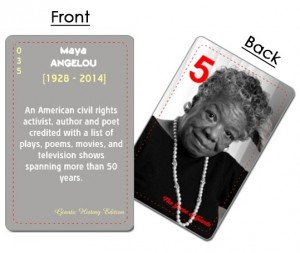
I came across this game a couple of months ago, during its invention, while working on The Giants of History book by Lateef Ibirogba. It was invented by Yemi Adesanya to teach history in a fun and interactive way. Called The Game of Giants, young citizens from the age of 6 to any age can challenge each other with knowledge of famous (and obscure) giants of history. On one side of each card in the pack is a picture of a famous person in history (living or dead), while on the other is a short blurb of his/her achievement. The rules of the game says that each player scores points by correctly guessing, without having looked at the back, what the famous person is known for.

Fullscreen capture 6242014 103239 AMAs a way to generate interest in the past and to introduce young people to a past generation, the game succeeds where textbooks might not. Being a game, it requires a time of leisure when the brain is most at east without any pressures of curriculum, and with maximum dopamin secretion. I have played it, many times with students (and won, if I might add), and what I’ve noticed is that the aim of the game’s invention is easily realized: students strive to remember the faces as well as what the person profiled is famous for. Over time, and over many losses and trials, they begin to remember. Those interested in learning more about the characters will – at other leisure times – go ahead and read some more. It is a good thing.

The best part of it, for me, is that the range of the characters in the game is wide and deep, from Aristotle to Soyinka, from Babatunde Jose to Marie Curie, and from Anthony Enahoro to Gregor Mendel. Gradually, young ones are introduced to history in a fun and non-threatening manner. (More about it here). According to the inventor, the aim is to make the game a household item not just for kids and youths, but for adults as well as a way to learn about the past while also having clean fun. This makes sense to me.