Browsing the archives for the History category.

The Ransome Kuti Museum in Abẹ́òkuta

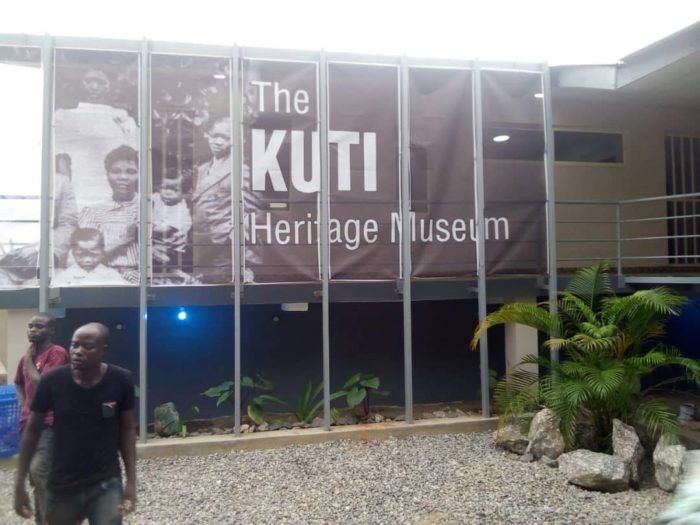
Sometime in April of last year (2019), I visited the site of the Kuti Heritage Museum in Abẹ́òkuta. Located on NEPA Road, Isábọ̀ Abẹ́òkuta, the house was the famous home of the Reverend I.O. Ransome-Kútì and Mrs. Fúnmiláyọ̀ Ransome-Kútì, and the likely birthplace of Fẹlá and some of his brothers.

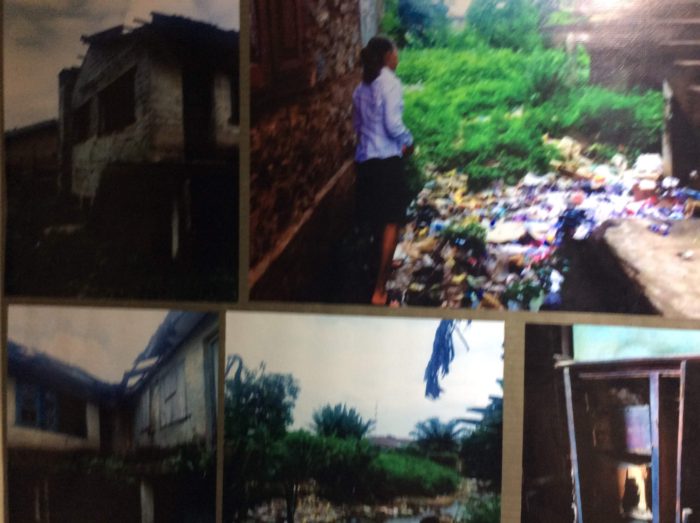
This restoration project has been ongoing for a while. The home of the famous Kútì couple had, over the years, become victim to negligence and decay. Photos exhibited at the venue, showing the transformation of the structure from its earlier state of rot shows it as sometimes being a site for refuse dumping by neighbours and passers-by.

But it was not always this way. Copious paragraphs from Wọlé Ṣóyínká’s autobiography Aké were dedicated to memories of times spent in this place to visit his uncle who was by then the headmaster of Abẹ́òkuta Grammar School, and his wife whose organising of women to protest the misrule of the Aláké led to the Abẹ́òkuta Women’s Tax Riots and the eventual abdication of the king in early 1940s.

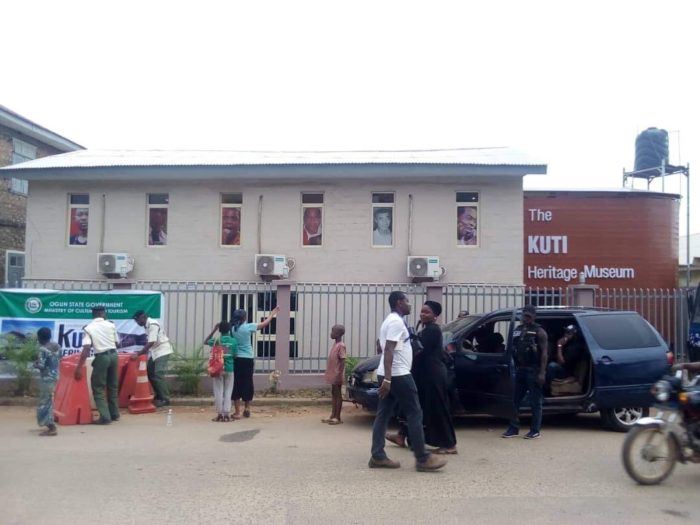
Over time, the successful careers of many of the house’s famous former occupants notwithstanding, the home had gradually settled into oblivion. But the Ògùn State Government, in collaboration with members of the family, returned a few years ago to restore the building to its rightful place in the Nigerian consciousness as bearers of history. From what I gathered, the building adjoining the original home is the museum, set up to inform visitors about the family, its famous members, and their role in Nigerian and world history. I could not enter this building itself on this day.

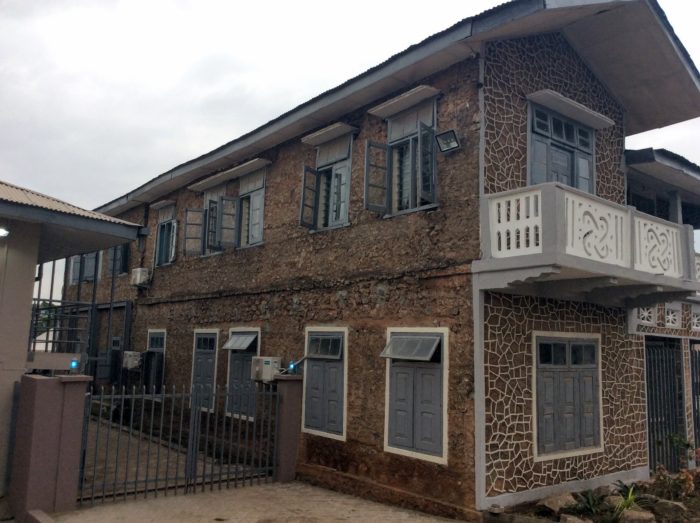
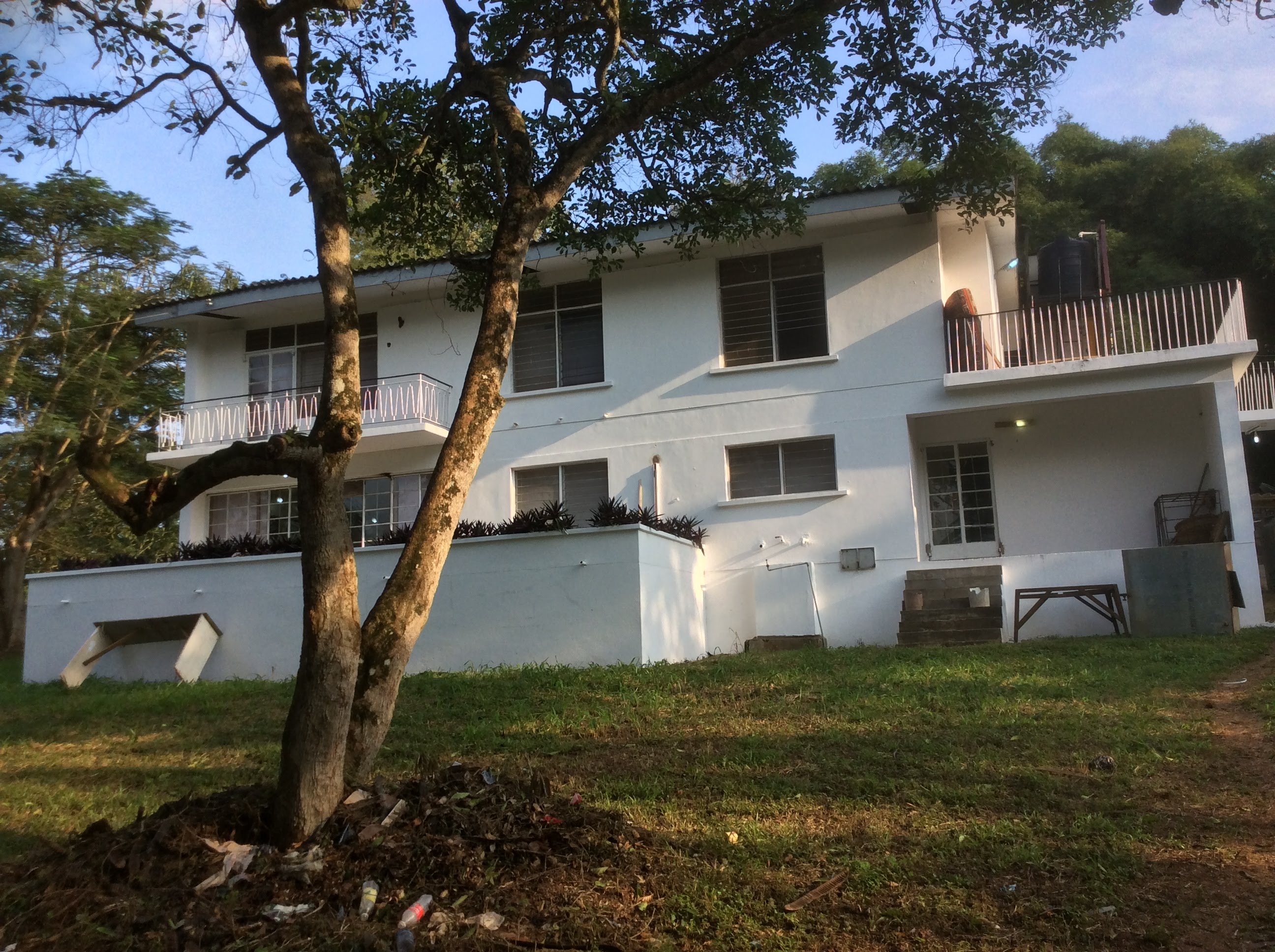
But I did enter the main home, restored to its old stone form, and girded on each corner downstairs with metal beams. Word is that the project was supervised by Theo Lawson, the same architect behind the Freedom Park and the Kalakuta Museum in Ìkẹjà. Being nothing more than a casual observer of art and documentation myself, I was impressed by the presentation.

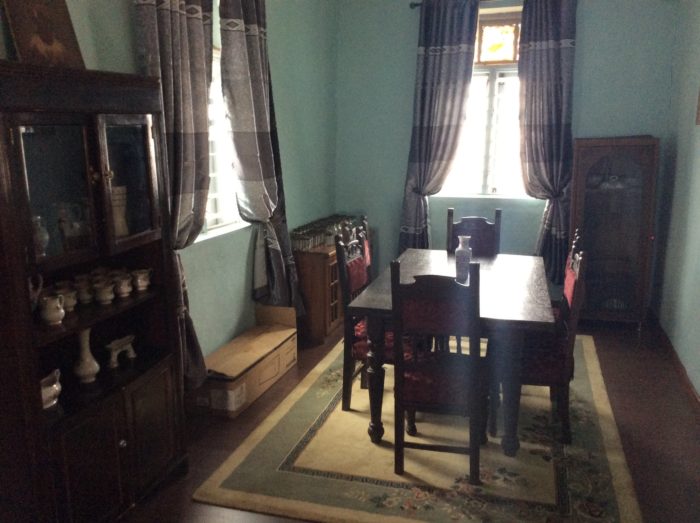
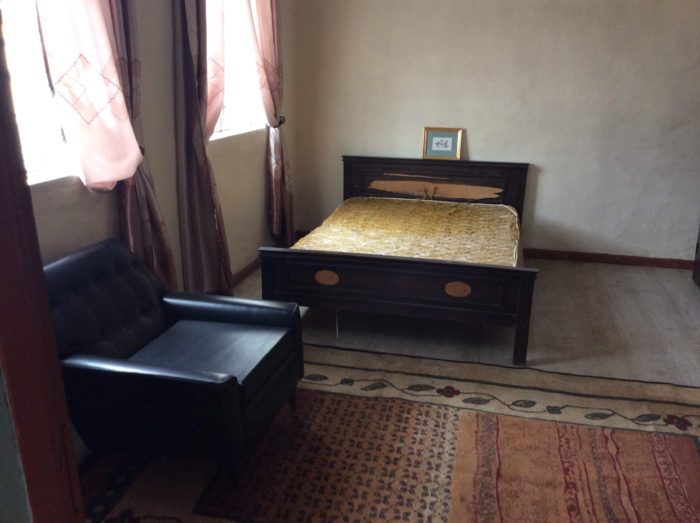
All the rooms in the old building have retained their sense of time. The furniture reflect those of the 40s, and the upper-class aesthetic that the Kútìs must have enjoyed among the society. The bathroom had a bathtub — what would seem like a sign of opulence in that part of Abẹ́òkuta and that time period. The plumbing of the house was modern, even though the house was made of mud and stones. This restoration has added a few more things to the aesthetic: air conditioning — which should tell us something else about the changing climate.

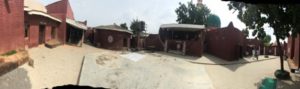
The veiw of the Museum from across the street.

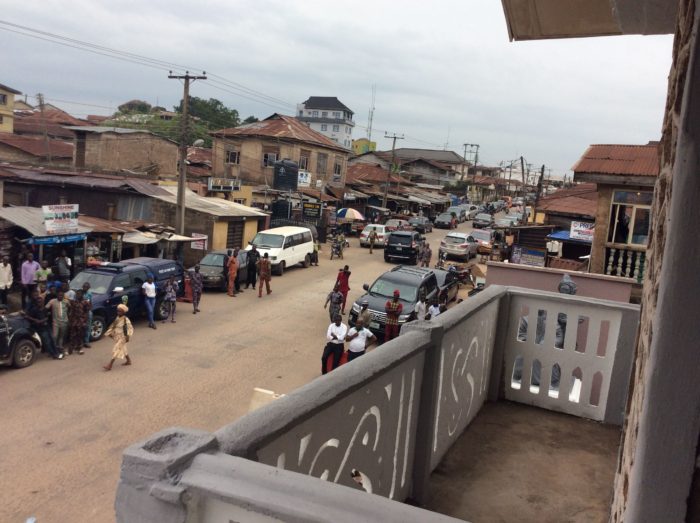
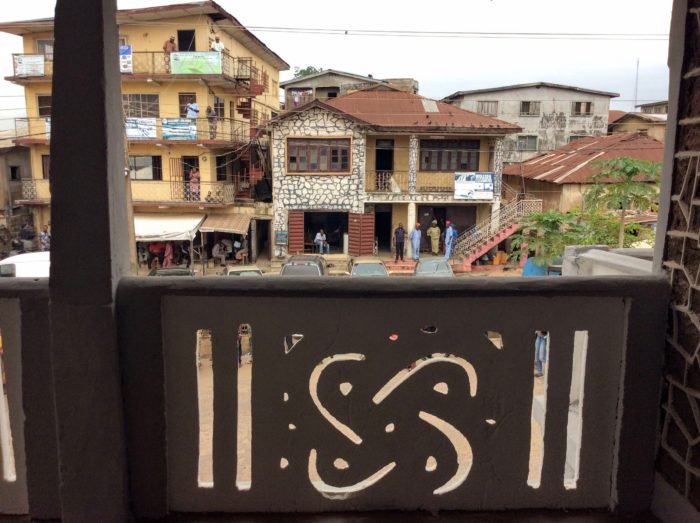
From the balcony, one could see a good view of the town itself, and one can imagine the Reverend himself, on a cool day, standing there, toothpick or pákò in mouth, staring out or greeting a passerby.

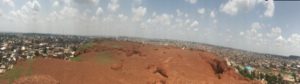
The view from the Reverend I.O’s Balcony.

Even much of the smell has remained, a rusty old smell from the mattresses, stationeries, rug, and furniture.

I recommend the building to anyone in Abẹ́òkuta, especially the adjoining Museum. I hope to visit it again when I’m in town. I am already impressed by this attempt at keeping history alive through structures and other non-conventional means of keeping the names of our famous citizens in the memory of contemporary children.

A few more photos below. Here is a more comprehensive report of the launch.

Exploring the Luxor Museum

by Adrienne Chamberlain


In a land where the last remaining structures of the ancient world still stand, you might think that modern museums pale in comparison. However, the marvels of Egypt do not stop at the pyramids, tombs, and temples found across the country. In fact, plenty of the nation’s ancient, fascinating history is preserved in its museums, from excavated sarcophagi down to remarkable ancient relics. In fact, the country’s museums tend to be filled to the brim with thousands of these wonders, but such is not the case with Luxor Museum.

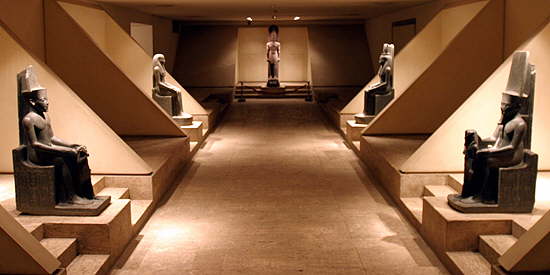
Standing on a corniche overlooking the west bank of the Nile River, the Luxor Museum was established in 1975 by the Egyptian Ministry of Culture. The two-story windowless building is only a fraction of the size of the country’s biggest museum in Cairo, but that’s okay — the Luxor Museum takes pride in the quality of its collection, rather than its quantity.

Image Source: EgyptianMuseums.net

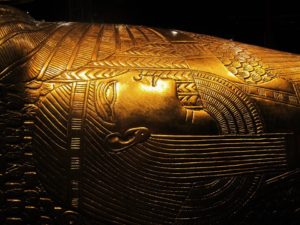
Egypt Today notes that some of the best antiquities inside are the preserved mummies of Ramses II and Ahmose I. These are displayed without their wrappings in one of the museum’s newer wings. The first is regarded as the greatest and most celebrated pharaoh of the New Kingdom, while the second was the founder of the Eighteenth Dynasty. Both are located in a section dedicated to the New Kingdom, which marked a great period of imperial power for the country.

Image Source: EgyptianMuseums.net

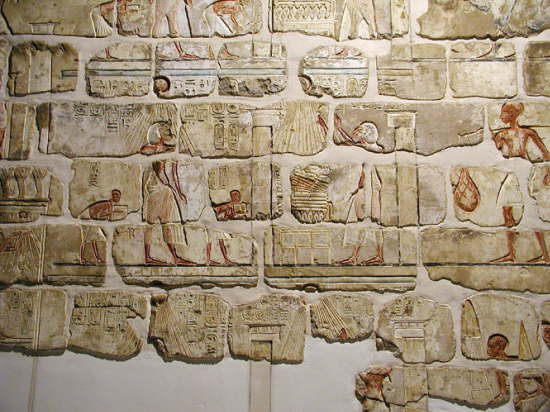
Another of the museum’s main features, this time located on the upper floor, is a reconstructed wall made up of 283 sandstone blocks from the Karnak temple built for Amenhotep IV. The wall illustrates residential and royal scenes as well as solar Jubilee scenes from the first Sed festival. This is a priceless exhibit, as very little of the actual temple remains in modern times.

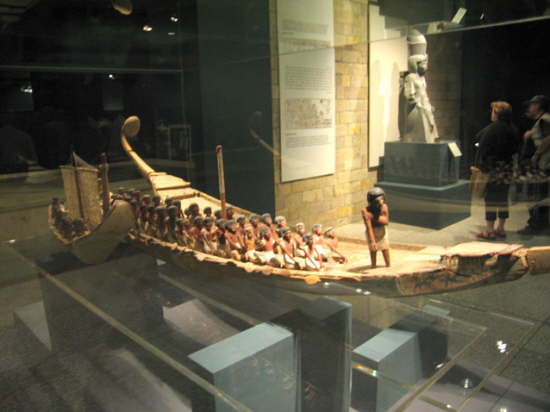
Some other of the museum’s highlights are the artifacts that have been gathered from the tomb of King Tutankhamun. Model boats, sandals, arrows, and figures of servants once decorated the area surrounding his resting place. Because ancient pharaohs believed in the afterlife and kept their most prized belongings close to their burial site in preparation, this is a major part of the museum.

Image Source: EgyptianMuseums.net

Indeed, the scale of the burial site was a major factor in the discovery of Tutankhamun’s tomb in 1922, which received worldwide media attention. It sparked a newfound interest in Ancient Egypt, a fascination that has stood the test of time. Egypt’s rich history is reflected in a wide array of modern media across the world. For instance, the fantastical film Gods of Egypt heavily draws inspiration from Ancient Egypt and even deviates from actual history in favor of creative interpretation. A more traditional depiction can be seen in a slew of video games, particularly in a collection of Egyptian-themed titles on Slingo Slots. Games like Cleopatra’s Riches, Temple of Tut, and Temple of Iris are a nod to the actual ancient history of Egypt. Though there are a few creative liberties, the images featured are more or less based on Egypt’s past — much of which resembles the surviving remnants of the ancient world housed in the Luxor Museum.

Recently, the Luxor Museum celebrated the 96th anniversary of the discovery of Tutankhamun’s tomb, acknowledging the event as a turning point in the country’s tourism and the world’s interest in it.

Fortunately, you don’t have to fly all the way to Egypt to catch a glimpse of its many relics. If you somehow find yourself in Turin, Italy, and are interested to know more about Egypt’s ancient past, you can also pay a visit to the wonderful Museo Egizio.

—-

Adrienne Chamberlain is a history enthusiast who is particularly interested in the mysteries of the ancient world. She mainly travels to see ancient structures (or at least what’s left of them) for herself. She’s already been to Egypt several times.

Seeing Nigeria: 7 Days in Kano

Guest post by Ọmọ́túndé Kàsálí

Exactly three months ago, in the afternoon of 1 July 2018, I set out from my home in Surulere, Lagos for a hotel in Sabon Gari, Kano. I was going on a one-week holiday to the prominent northern city to experience the North. Born and raised in Lagos, I did not see much of Nigeria beyond Lagos while growing up, except in my geography schoolbooks. However, these books interested me so greatly in the places and peoples of Nigeria, that from school on, I have always yearned to see the country in its vastness and diversity.

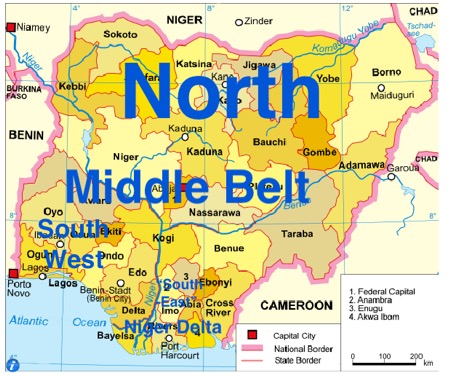
Much later, I made a concrete plan to fulfill this yearning – while bearing in mind my limited finances, my little free time, transport difficulties, security concerns, and my sparse countrywide connections. The plan was that I would visit a centre of the other major regions of the country beside the South-West, my home-region. And with time and luck, this plan began to materialize. I was posted to Imo State in the “South-East” for my Youth Service and lived in Owerri for the Year. During the time, I twice visited Port-Harcourt in the Niger Delta, just a 45-minutes’ drive from Owerri – first for a literary conference, and second on a visit to a relative.
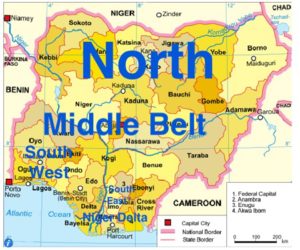
My Nigeria plan

Thereafter, my next region of interest was the Middle Belt and centre of interest in it Jos. Recently, having saved enough money for the trip and a holiday opportunity arisen, I finalized plans to visit Jos. I booked my flight ticket a month before my departure date, and got an accommodation offer from a friend, who is from Jos, maintains a residence there, but lives in Lagos. Then, sadly, a week to my scheduled departure, terror was visited on Plateau State, including Jos. On June 23 and 24, against the backdrop of the herders-farmers crisis, suspected herders gruesomely attacked 15 farming communities, leading to the deaths of 233 persons, the displacement of over 11,500 persons, and the desertion of over 40 villages.

Subsequently, a dusk-to-dawn curfew was imposed, extensive security measures announced, my trip to Jos deferred, and my holiday destination changed to Kano, which was the central city in my now-next region of interest, the North. Accordingly, I rerouted my flight ticket and booked a budget hotel. Sad thoughts about Jos would interrupt painfully, as I prepared for Kano.

At the Muritala Mohammed Airport, I boarded my Arik Air plane at past 7pm, and a little later, the flight – originally with a departure time of 3:05pm, which was then shockingly rescheduled three times on the very day of departure, and finally fixed at 6:45pm – eventually started for Kano at about 7:30pm.

I slept through the flight, and awoke around 9pm as we landed at Mallam Aminu Kano Airport. As I walked out of it, I noticed the glaring contrasts to its Lagos counterpart: serene halls, mellow lights, and no hassles. However, at its taxi park, I was taken aback by the ridiculously high flat-rate fare of ₦4,000 for a trip into the city – for a 15-minute drive to my hotel! The drivers justified it as an offset against high levies imposed on them by Federal authorities – which seemed plausible, given the general notoriety of Nigerian government institutions for exploitation. There was no Uber or Taxify in Kano, nor any other transport alternative in sight. Walking was not a sensible option, as it would entail an hour journey in the dark night of a strange city. Eventually, I bargained with a driver, and we agreed to a fare half the flat-rate.

On the journey into the city, the lights became brighter, the atmosphere more vibrant and my anticipation greater – which all climaxed as we pulled up before my hotel. The building was decorated with lights, there was music in the air, merrymaking all around, and a file of young women opposite the hotel. In it, I checked in and was led to my room, which I did not like but would get by with. Most light bulbs did not work, so did the little fridge, the TV was defective, so was a power socket, the music from the bar was too loud, water ran on and off in the toilet, and it was not potable. I had booked the room online, where it appeared a decent bargain, and now felt some regret about it. Nonetheless, I settled in, phoned my close friend, made a journal entry, and went to bed.

I slept in and got out of bed around 9am, and prepared for the day. Before setting out, I got some general information about Kano on Google, Wikipedia and TripAdvisor, and I had a phone conversation with a friend, who was born and grew up in Kano, and now lives in Lagos. She offered some tips on places to visit, things to do, and how to conduct oneself.

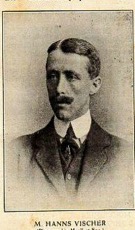
The first of my sights was the Gidan Dan Hausa (translated “Home of the son of the Hausas). It’s an over 250-year-old building, which became Kano’s first colonial residence in 1908, when Hanns Vischer, a British Educational Officer moved into it – his wife Isabella would join him in 1912. At the Gidan Dan Hausa, Vischer taught the English language and imparted western education to students drawn from 11 Northern provinces, including young princes of the Kano emirate. He was well-respected and -accepted, for his knowledge of Kanoan culture, his ability to speak Hausa, and his skilfulness at combining Islamic and western education – such that he was conferred the title of Dan Hausa (Son of the Hausas). He is said to have laid the foundation for modern education in the North.
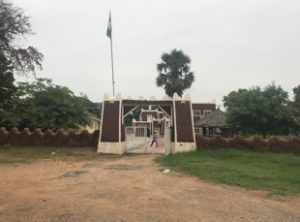
Gidan Dan Hausa

 Hanns Vischer

Now a museum, the Gidan Dan Hausa presents a permanent exhibition of Vischer’s life in Kano, and the history of the city itself. I arrived its premises around noon and walked through a vast garden towards its ancient gates, where a notice forbade photographing. At the entrance, a guide described the historical building in rapid Hausa to a group of schoolchildren. I entered the building, paid the visit fee, and joined a tour group, which, as I later learned through introductions, comprised 3 Youth Corps members, and a student – Ahmad, whom I would later have more to do with. We were shown various articles of interest and informed on their importance for subjects including: the Vischers’ ways and works; Islamic and Western education in Kano; and Hausa-Fulani relationship, the Kano Emirate’s power, the culture of Kano, as well as their histories.

Having concluded my visit, I proceeded to my next planned sight, which was coincidentally Ahmad’s too: The Emir’s Palace. About 500 metres away, we set off for it together in conversation. Ahmad told me he was Fulani, from Abuja, studying in Zaria, on a visit at a relative’s in Kano, and had for a day been in Lagos. I replied in kind, and revealed that it was my first time in the North, which visibly interested him. He asked about my experience in Kano thus far – as I did his in Lagos when he visited – and offered further travel tips for the North. He then described it in its distinctness to the South, and we talked about this. He criticized the largely conservative outlook of the North, but admired the prominence of Northern culture in the North, especially the Hausa language – suggesting a contrast to the decline of Southern cultures and languages in the South. I sadly acknowledged it.
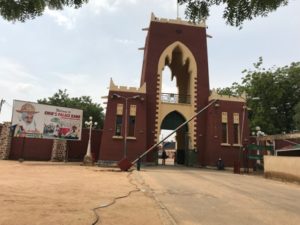
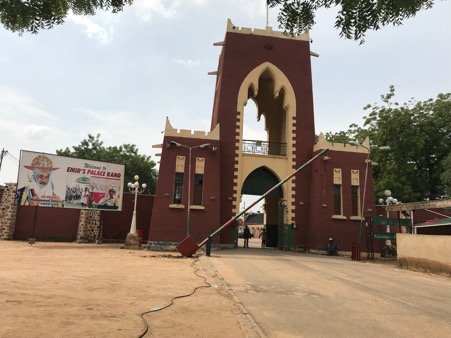
Gate of the Emir’s Palace

At the Emir’s Palace, we were denied entry, ostensibly for not having an appointment with the Emir, and advised to get permission at the opposite Emirate Council building – while locals entered freely into the Palace, apparently for any reasons but an appointment with the Emir. Likewise, at the Emirate Council, we were denied the permission, ostensibly for security reasons, and advised to visit the nearby Gidan Makama Museum – which was my next planned sight anyway – for an alternative experience of the Kano Emirate. Ahmad believed we were so treated because we were not traditionally dressed, but in T-shirts and jeans, and he further railed at the conservativeness of the North. He then took his leave of me for a personal errand, and I bade him goodbye and proceeded to the Gidan Makama.

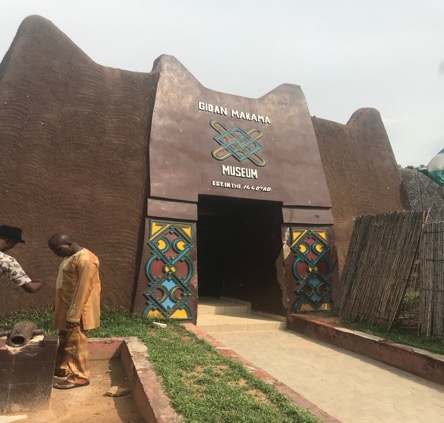
Built in 1442 as the residence of the Makama of Kano – a high-ranking Emirate aristocrat, the Gidan Makama is an ancient beauty of Hausa architecture. Shortly after its erection, it served as the temporary palace of the Emir; and in 1903, following the British invasion of Kano, it served as the residence of the then-chief commissioner of the Northern Nigeria Frederick Lugard. Now a museum and a national monument, the Gidan Makama, in its 11 galleries, contains materials, artefacts and pictures representing the heritage of Kano.
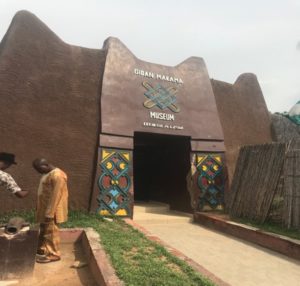
Gidan Makama

Inside Gidan Makama

At its gate, a man offered to be my guide at a small fee. For about 30 minutes, he led me through the museum, while he described its contents and their backgrounds: the colonial British capture of Kano, the traditional architecture of Kano, Islam in Kano, the Fulani Emirate dynasty, the ways of Kanoans, important historical and contemporary figures from Kano, the Durbar, the long history of commerce in Kano, and so on. Later, a large group of university students arrived on an excursion, and my guide excused himself to attend to them. I lingered in the museum, going over articles and taking pictures, and left shortly.

I lunched at the Kano Club to a World Cup match, and strolled by its lawn in the cool of late afternoon to tennis practices by adolescents. By evening, I was back in my hotel room, having visited almost half of my planned sights already on my first day-out in Kano.

So, the next day, I lingered in my hotel room, and set out late in the morning. My first destination was the Dala Hill. I had some difficulty finding a Keke, as tricycles were called, at the Keke-stop. I describe the stop as such, not as a bus-stop, for during my time in Kano, I found Kekes to be the dominant mode of public transport, and transit buses were a rare sight – in-fact, I came upon only one throughout my journeys. Hence, Keke-stops, not bus-stops.

Painted yellow, the Kekes were like a swarm of yellow ants crawling the streets of Kano. Though, compared to Lagos, Keke transport in Kano was better conducted: The rider’s seat sits only the rider; the left opening by the passengers’ seat is barricaded to prevent passengers from boarding from, or alighting onto, the side of traffic; and the business is free and private – no park rackets and destination restrictions.
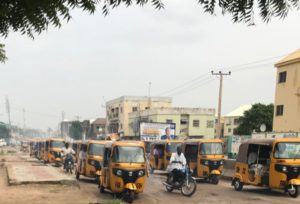
Kekes

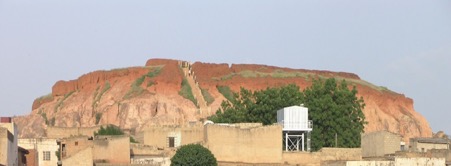
So, at the Keke-stop, on my way to the Dala Hill, a rider finally agrees to take me, upon my indicating an image of it – so legendary was it. Rising over 500 metres, and covering around 10,000 m2, the Dala Hill is the mythical birthplace of Kano. The first settlers in the city are believed to have lived in the Hill. Reportedly, present-day Kano was known as Dala up to the 16th century. According to legend, Dala was a hunter and the eponymous founder of the Dala community and the great grandfather of Barbushe, the high priest to the ancient Hausa god, Tsumburbura. Not anymore a place of worship, the Dala Hill remains a vital natural heritage of Kano, supposedly under the protection of the Kano History and Culture Bureau – on paper only, as I would later see.
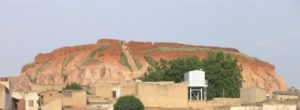
Dala Hill

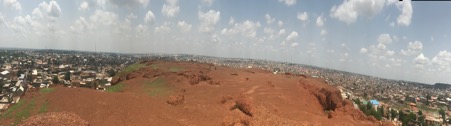
Kano, from Dala Hill

I found myself the only visitor that afternoon at the Dala Hill. I ascended it by the built concrete stairs, unshapely and unrailed, onto its wide flat top. Surrounding it well into the distance was the city of Kano. For a moment, I took in the spectacular landscape of the sprawling city; and for the next, the neglected features of the bare hilltop. A goat grazed,

and odd-looking acts went on in the crevices. Briefly, I photographed and filmed the city view, and descended the Hill into the local community, bringing my shortened 15-minutes visit to a quick end. I navigated the community, and later, hailed a Keke for the Ado Bayero Mall.

The mall, named after the Kano’s longest-serving Emir, sat set apart on its vast premises in the heart of the city. At the entrance, I submitted myself to security check and went in.

For some time, I wandered the mall, window-shopping, looking into gift stores for souvenirs, checking out the cinema, and enquiring about local dishes in the restaurants. I contemplated seeing a Hausa film about to show in the cinema, but decided against it, for my Hausa language skills entailed only a few words which I had learned in Hausa classes in school and seldom used until this trip. Instead, I settled into a restaurant which ironically, like the others, served no local dishes but fancy foreign foods. I ordered some Lebanese food and orange juice, and ate and relaxed to a  World Cup match. Following the first-half, I returned to the hotel, ending my day-out.

The next day, the fourth day of my holiday week in the city, I took a break from sightseeing and did not to go out, for I was feeling tired from the outings, and had visited all but one of my planned sights anyway. Incidentally, late in the morning, an hour-long heavy windy rain fell, such as one would never expect in the famously hot North. Indeed, the sun had been scorching hot since I got here, as it would be when it appeared moments after the rain.

In any case, it was the rainy season and had been raining for days in Lagos before I left it.

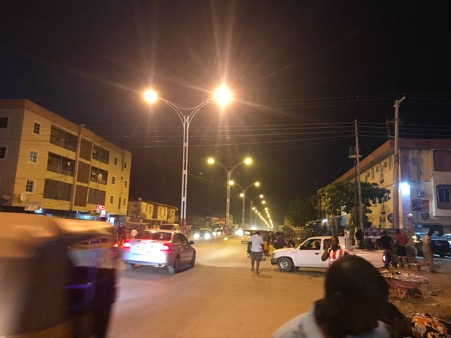
Later in the afternoon, I went into the neighbourhood to search for a restaurant to lunch in. It was my first time walking Sabon Gari. Laid out into streets with names like Yorùbá Road, Ibo Road, Ibadan Street, and Aba Road, and with churches on quite a number of them, Sabon Gari is predominantly inhabited by Southerners. Translated “new town”, it has historically been set apart for non-Hausa-Fulanis, and, sadly, has been the site of past religious and ethnic clashes between Southerners and Northerners. I would later learn that Sabon Garis exist in several Northern cities, like Kaduna and Zaria, where however they have become of mixed habitation. I hope this one does one day.
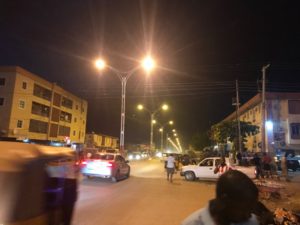
A Sabon-Gari street, at night

I eventually find a decent restaurant. My order, amala with egusi, is taken in Yorùbá language, and served. And I proceeded to devour my lunch. I emerged from the restaurant, with a half-empty bottle of water, which I give to a street-kid who immediately approached me. During my time in the city, the sight of groups of street-kids was a highly disturbing and very common phenomenon.

My last sight was the Kurmi Market, which I visited first on my fifth day, and returned to on my sixth. The market was founded in 1463 by then-Emir Muhammad Rumfa as a regional centre for Trans-Saharan trade, now extends over 16 hectares, and is regarded as both one of the largest and one of the oldest markets in Africa. The Keke rider, who took me to it and with whom I conversed about it, informed me about its major commodities: textiles, artefacts, leather materials, traditional jewellery, etc. I told him I would like some textiles and jewellery as gifts, and he dropped me off in that area of the market. I walked down a narrow passage flanked by rows of cavernous stalls, which I surveyed, and whose keepers beckoned, as I passed. Ultimately, I buy, for myself and friends, a leather bag, bead necklace, and Sassauci caps –  for more of which I returned the next day.

My seventh day in Kano, my last day, was departure day. Yet again, my Arik Air flight was delayed by two hours, and rescheduled to depart at 6:25pm. I made a mental note to avoid the airline in the future, as I left for the airport. I arrived in time, checked in, bought some Kilishi, and proceeded to the boarding area. Our plane arrived around 7:30pm, then quickly began boarding, and finally departed around 8:15pm, following some rain.

Mid-flight, I imagined our plane flying over Jos and thought about the possible events happening there then, after the previous week’s horror. I looked down from the window but saw plain darkness, and hoped for justice and peace for Jos, and looked forward still to visiting it in the future (sadly, there were recent reports of violence there). For a moment though, I reflected over the striking contrasts in two prominent cities of an incredibly complex Nigeria: death and destruction in Jos, and peace and liveliness in Kano. Today however, Nigeria’s national day, which also marks the one-year anniversary of my return to it after a few years away, I remain optimistic about the future of Nigeria despite its colossal challenges, and I am proud to be Nigerian.

_____

Omotunde Kasali (@OmotundeKasali) is a consulate official living in Lagos.
The Ṣóyínká Museum in Ifẹ̀

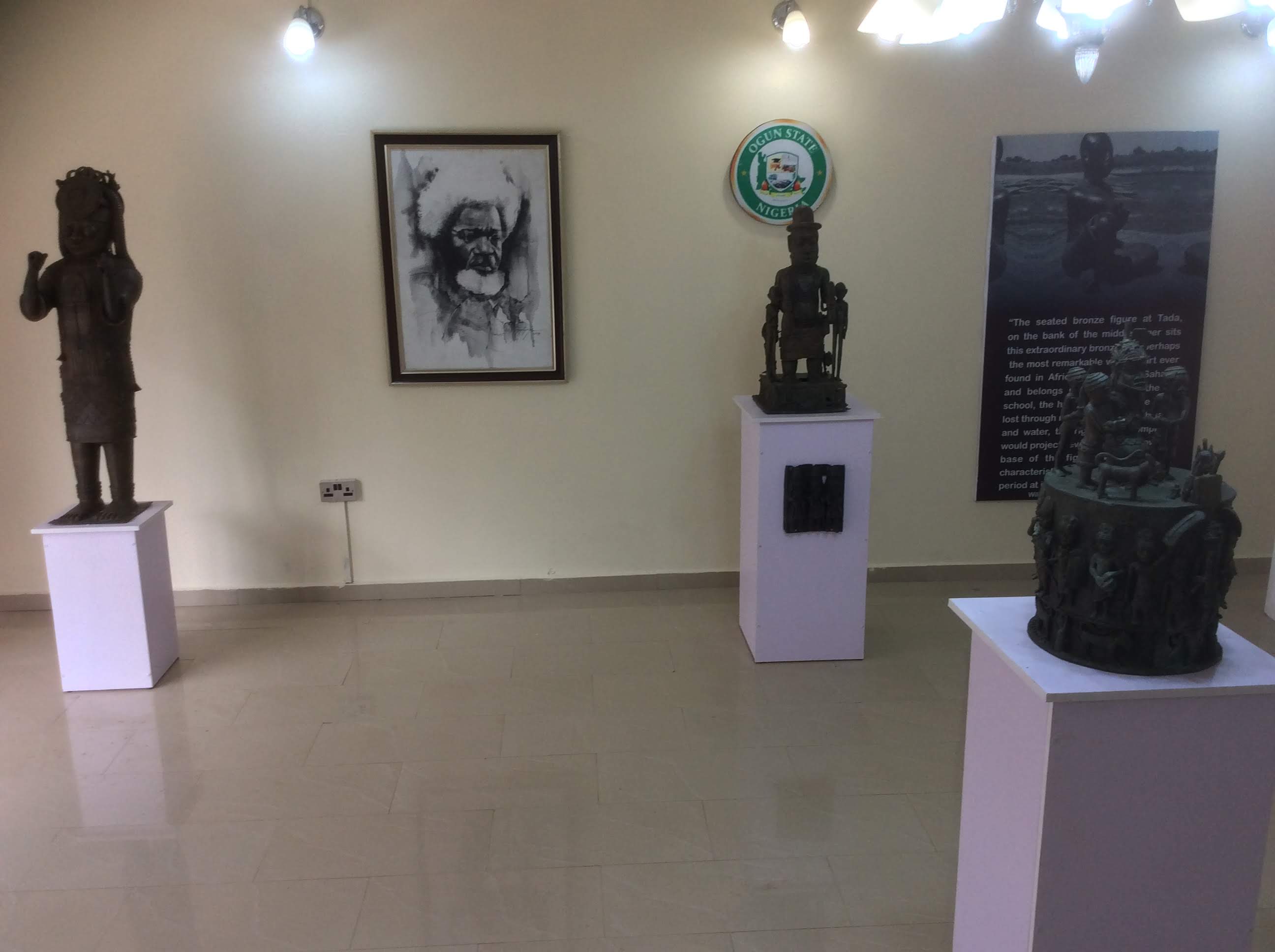
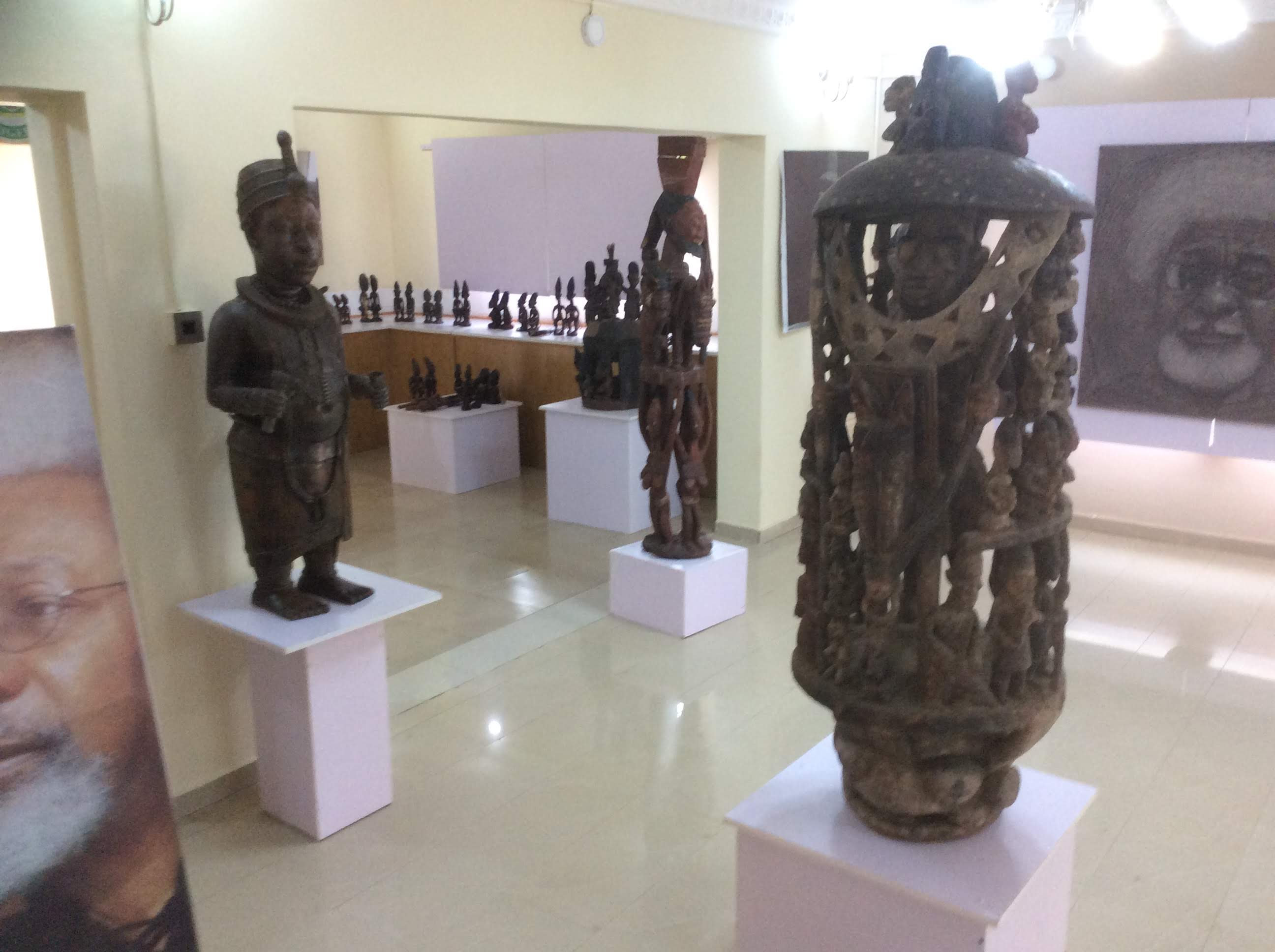
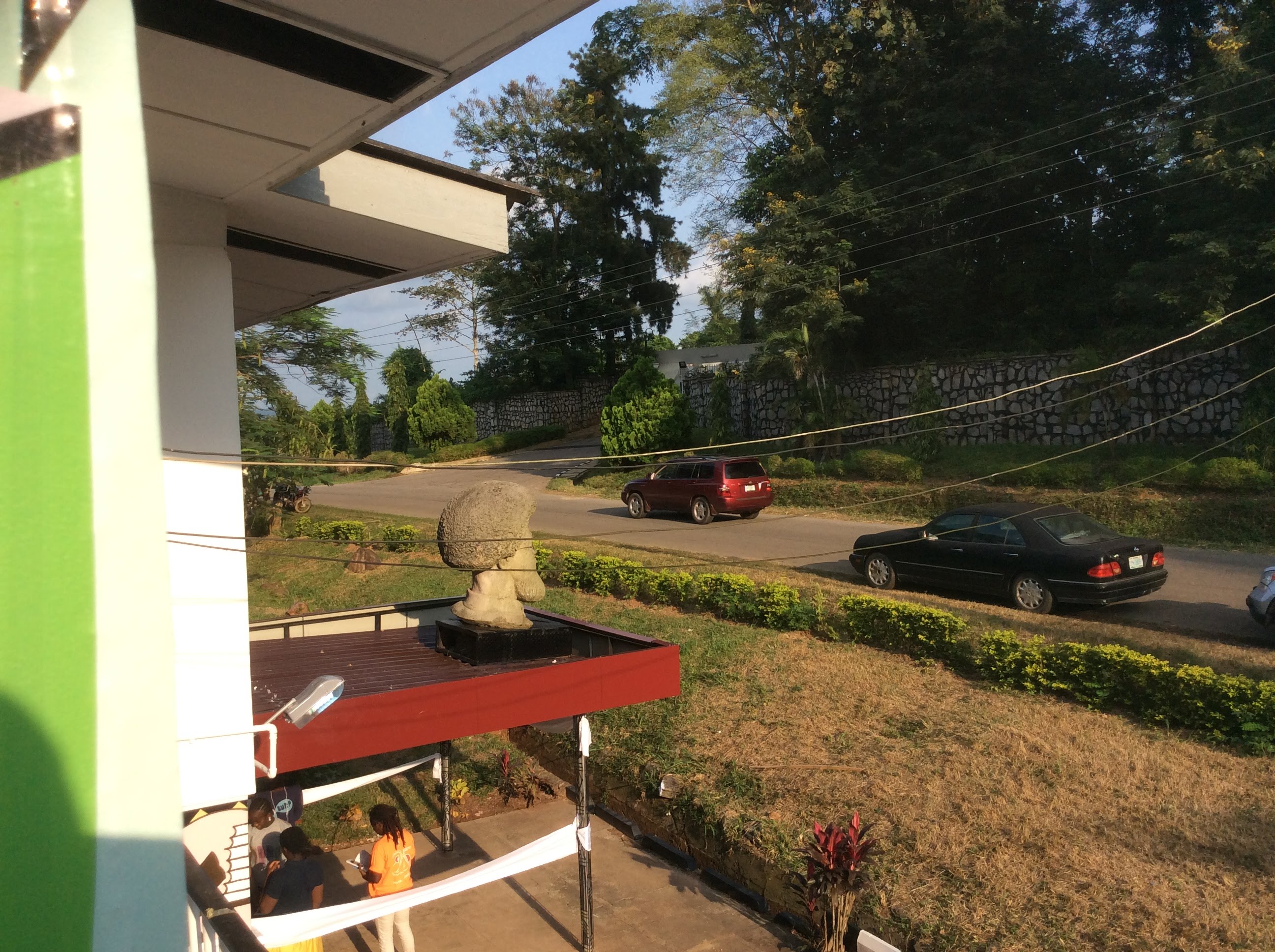
The new Ṣóyínká Museum in Ifẹ̀ wasn’t that hard to find, it turned out. Knowing that it is located across from the Vice Chancellor’s Lodge was a helpful tip that got us there. A straight road from the university gate, after just one turning, led us right through an open road guided by trees, grass, and lamp posts, and there we were.

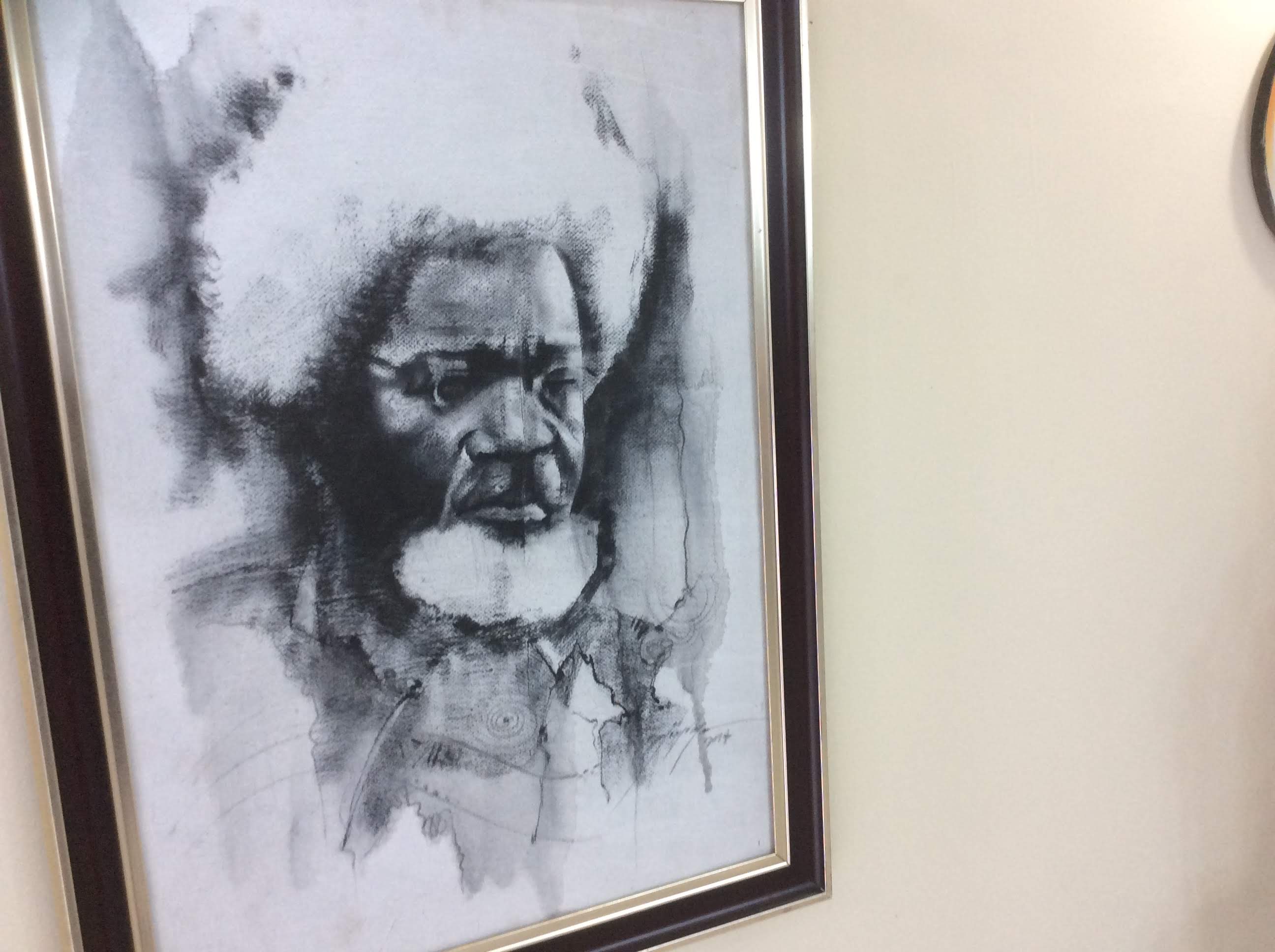
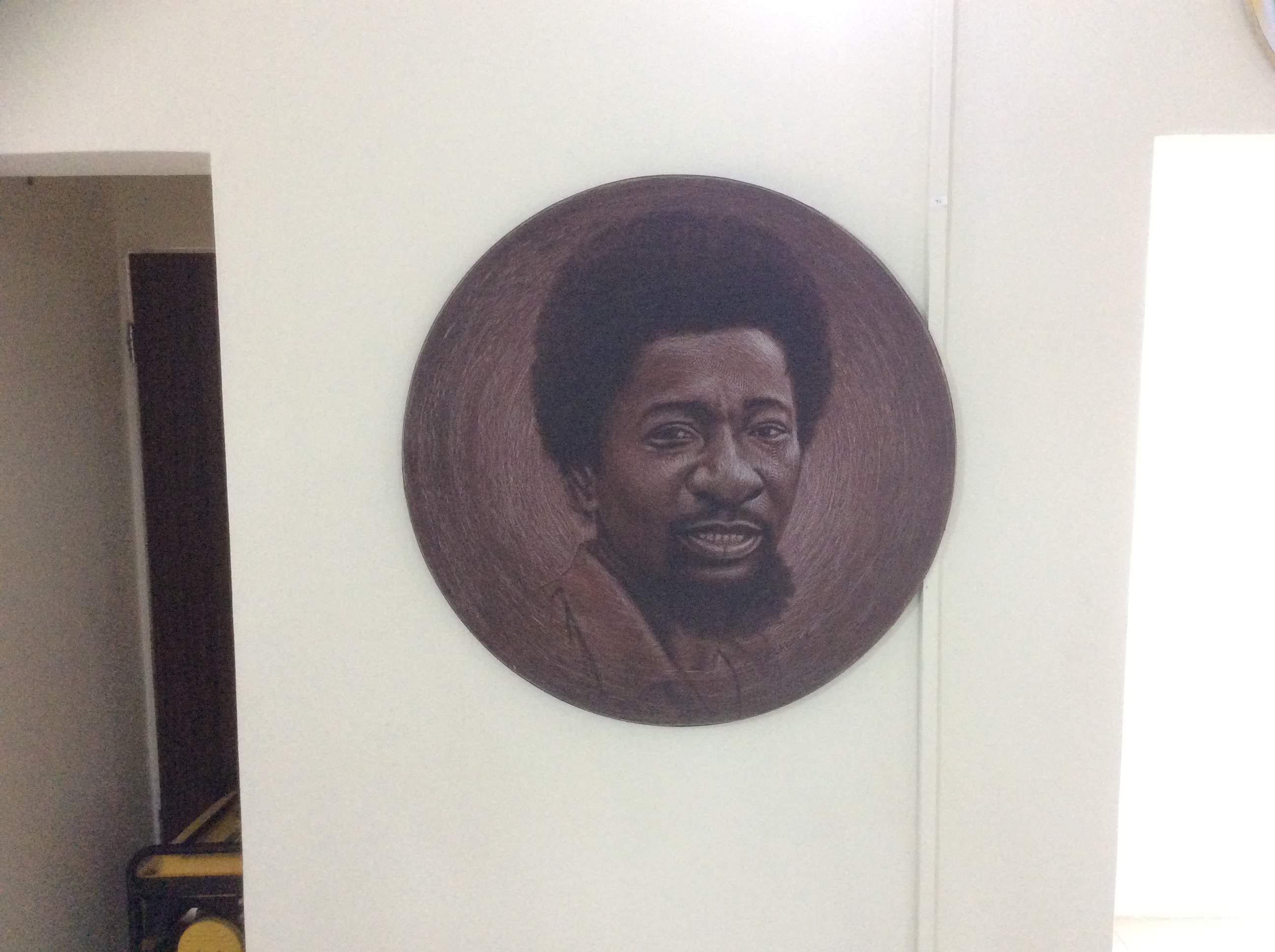
Located near the base of an impressive hill covered in thick foliage, the house, built in the simple but elegant style of other nearby structures created for the use of university staff, stuck out in white, decorated by murals portraying the Nobel Laureate in many different states. At the entrance, on top of a constructed covering, supported by metal poles, is a larger-than-life concrete bust of Ṣóyínká himself starting towards the Vice-Chancellors lodge.

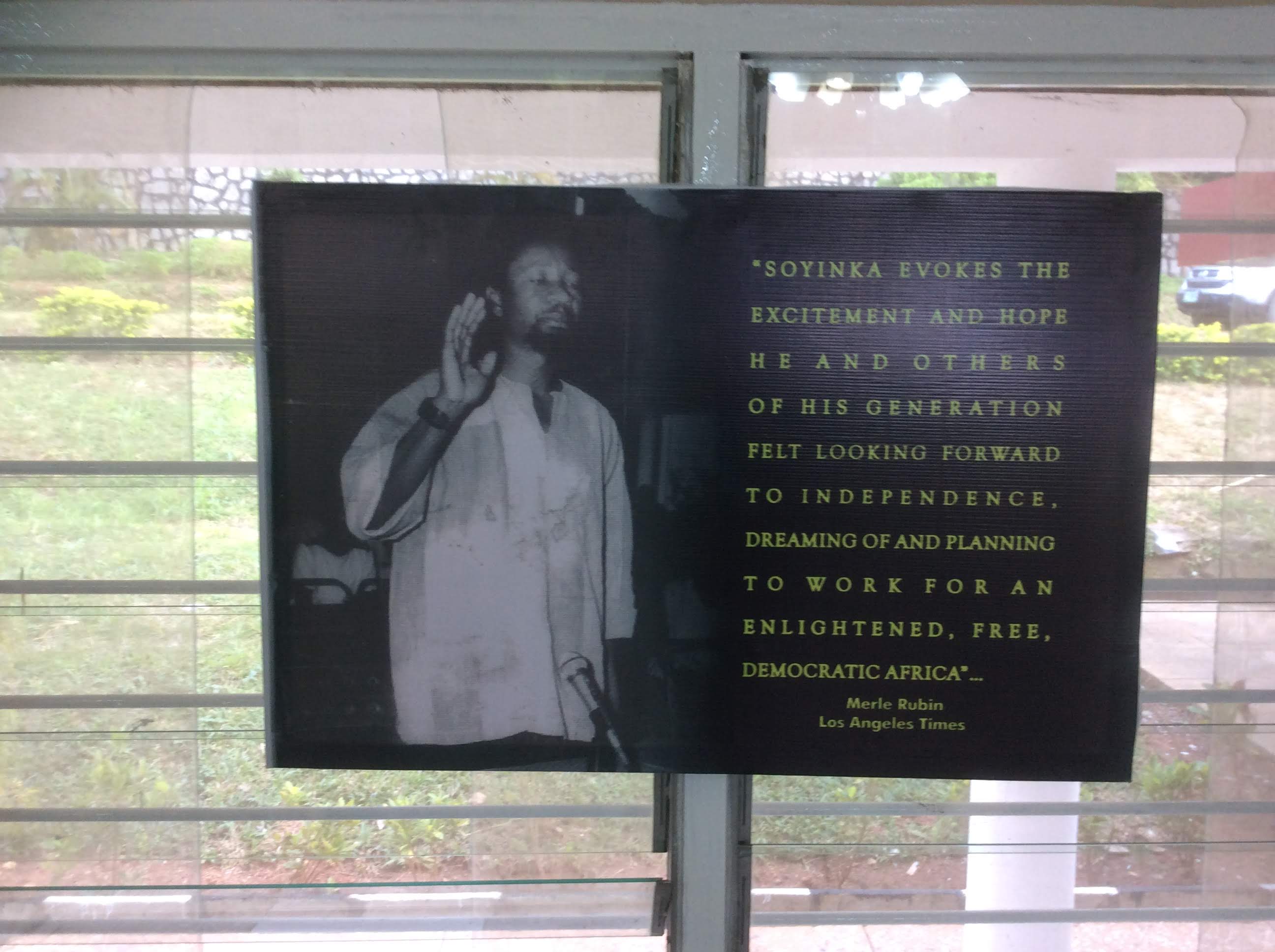
The house used to be yellow (see old pictures here), like other buildings in these staff quarters. The new white painting and decorations are a distinctive feature to mark it apart as not just any other residential property in the area. The house has now been adopted by the Ògùn State Government as a museum and artistic/exhibition space about the life of Africa’s first Nobel Laureate in Literature and famous indigene of the state and former member of staff at the university. In itself, this is an impressive and long overdue endeavour. In other parts of the world, important buildings of this nature are regularly turned into historical sites, creating great cultural value, and bringing tourists from across the world, which in turn generates funds to keep the structures perpetually maintained, to serve as valuable institutions to the preservation of memory and values of the celebrated heroes.

[Read about my visit to the Mark Twain Boyhood Home in Hannibal, Missouri here here, and here]


This location, I thought, was actually quite interesting. The rumours I grew up around had it that at some point in his career as a Professor of Theatre, WS was in the running to become Vice-Chancellor of the university himself. He has strongly refuted this in an email to me, writing “I have NEVER contested or even desired any administrative position in my entire career at Ifẹ̀ or any other institution in the entire world.” This makes sense, or it would have made for some awkward interaction with whomever had won the tussle living right across from him on campus.

According to the pamphlet handed out to us as we walked through, Professor Ṣóyínká left the University of Ifẹ̀ in 1986 after having “spent about 24 years” on the staff roll. That means he joined in 1962. I’ve found this record a little conflicting with the reality that the dramatist-professor was also the head of the Department of Drama at the University of Ìbàdàn from 1967, shortly before he was arrested for visiting the breakaway Biafra, to 1970, a few months after he was released from jail. So, either he first went to Ifẹ̀ (then located in makeshift buildings in Sango and Sámọńdà areas of Ìbadàn before this permanent site in Ilé-Ifẹ̀ was opened), then returned to Ìbàdàn and then went back to Ifẹ̀ after he left jail, or we have got the records wrong. It will be nice to have this all straightened out.

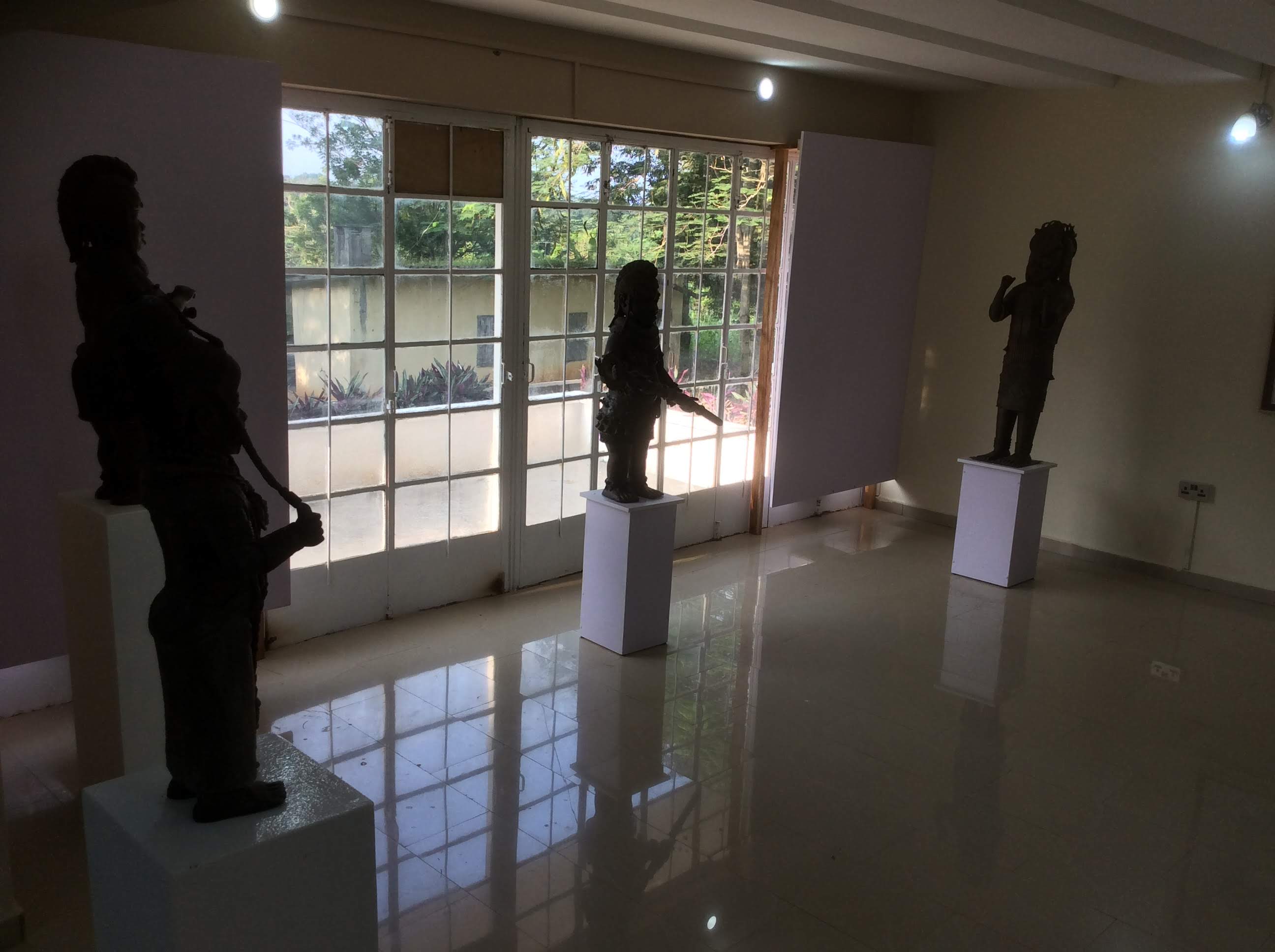
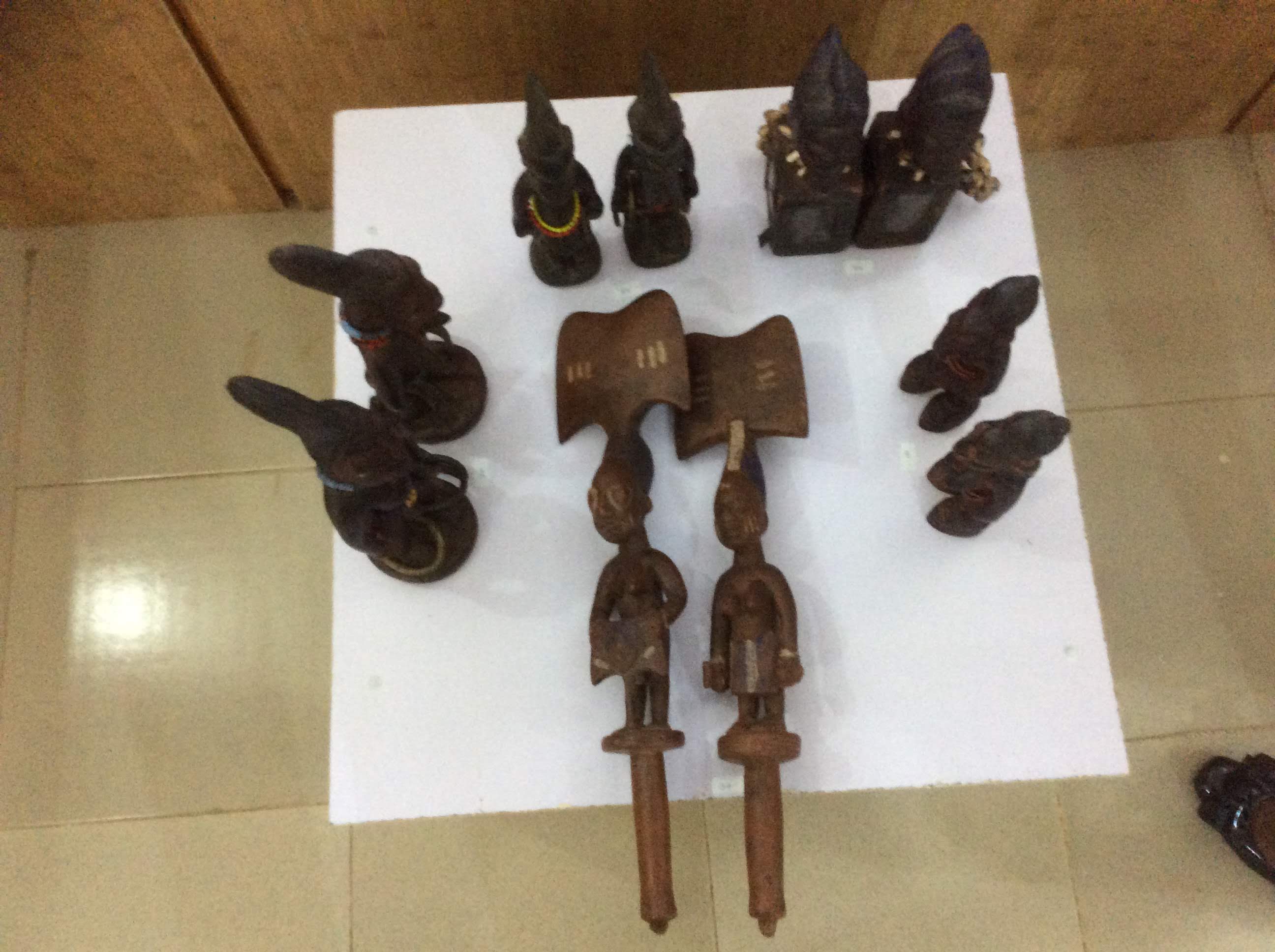
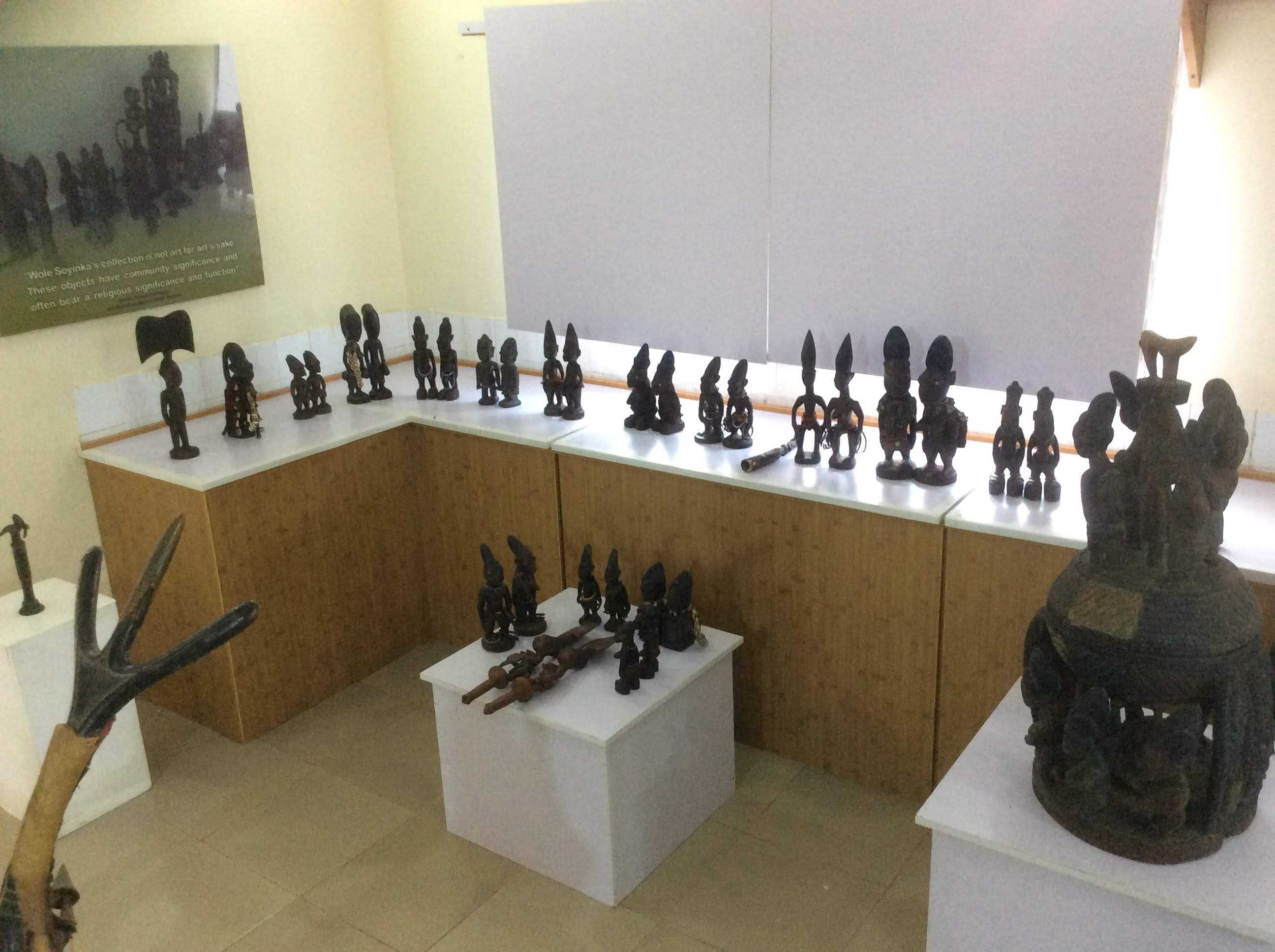
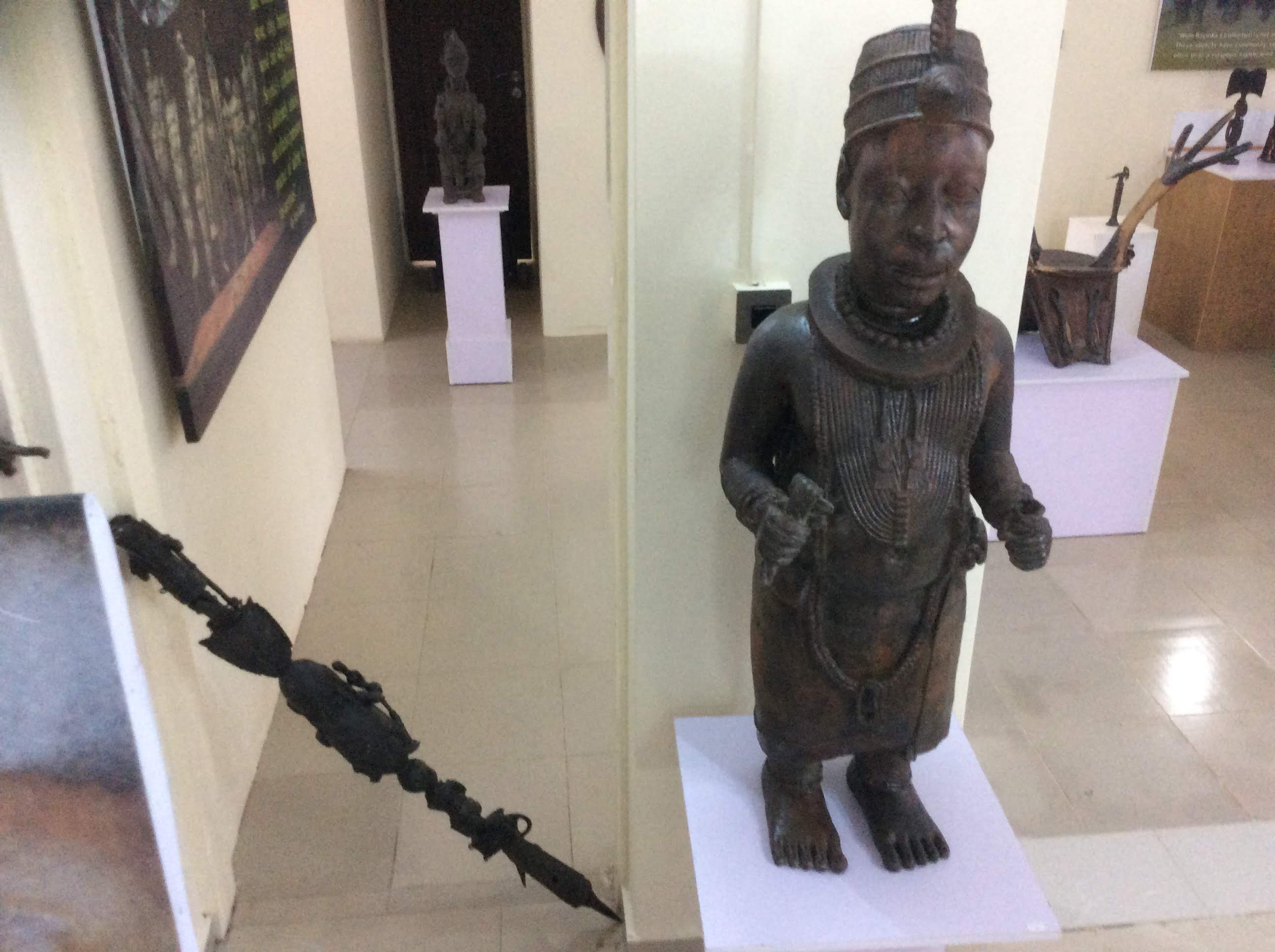
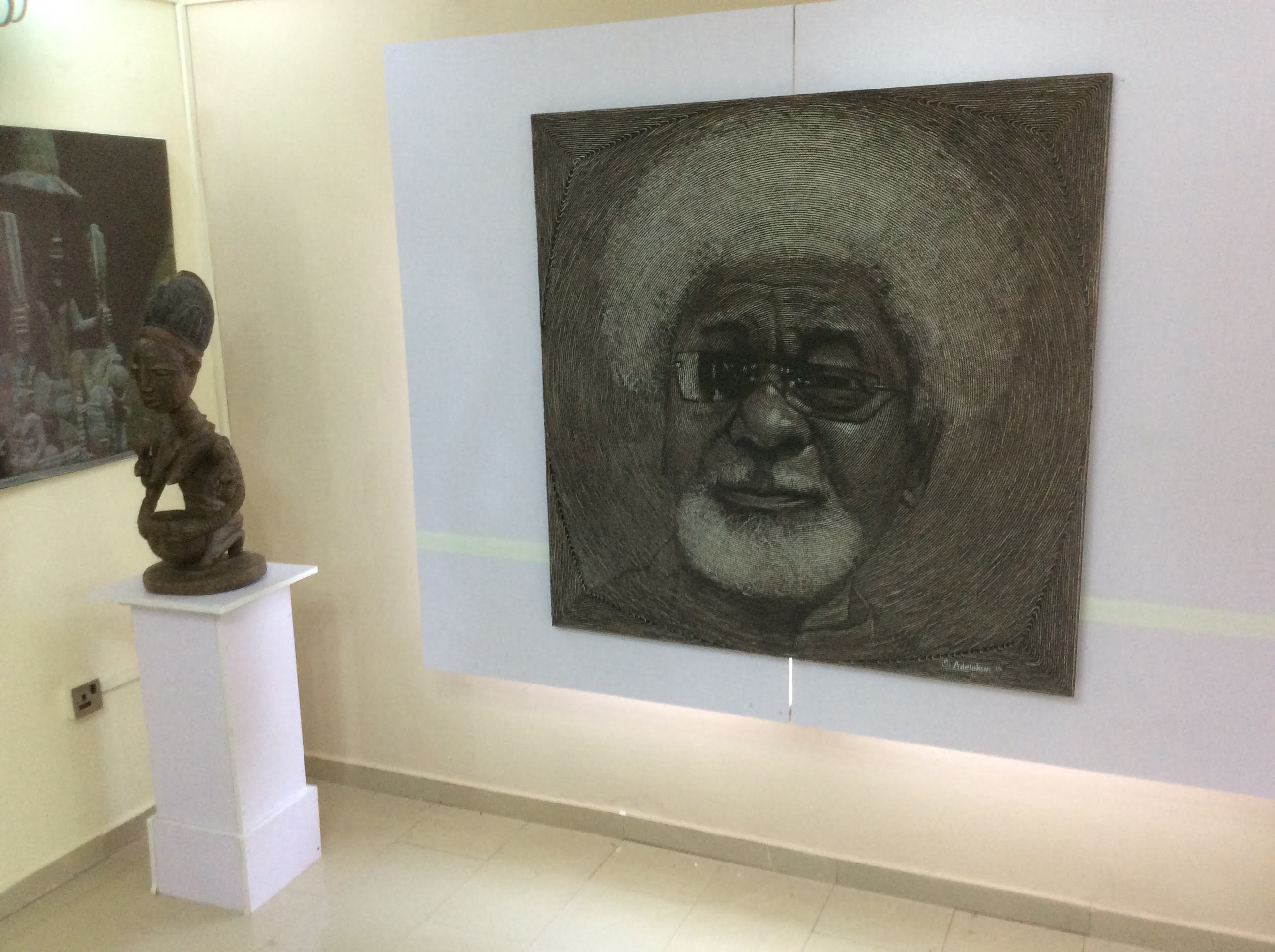
Speaking of records, the ostensible purpose of the Museum is to create ‘an academic and tourism destination’ around the writer’s life, work, and passions (including hunting), yet the only thing here, at the moment at least, are a collection of carvings and other artworks belonging to, collected by, or created around Wọlé Ṣóyínká. Nowhere in the building are directions to what each room used to be: this is WS’s former study. This is where he wrote The Road. This was his work typewriter for many years. This is the room where his children so-and-so used to live. And here is an old manuscript of Lion and the Jewel, with handwritten notations in-between the lines. etc. Maybe being in the presence of his artistic aura around the building and his art collections was supposed to be enough for the visitor. It wasn’t. There was a prevailing sense that a lot more context will need to be added to make it a true museum of the writer’s illustriious career.

At the moment, it is simply an exhibition space, filled with an impressive collection of art from the many corners of Nigeria, collected and preserved over many years. Won’t it be nice to have the structure turned into a real-life manifestation of the creative imagination of the writer’s theatrical and poetic ouvre? At Hannibal, one could pretend to whitewash a picket fence just like Tom Sawyer did in the writer’s famous novel. One could walk around the museum, and around downtown Hannibal like a character in Mark Twain’s early works. One could also visit a gift shop and buy books and other collectables related to the author. The ‘Boy’s Quarters’ of this Ṣóyínká Museum would be a good place to turn into a gift shop if the desire so manifests. Or, perhaps, this will be the case only when Ṣóyínká’s childhood home in Abẹ́òkuta is finally acquired for a more permanent artistic purpose.

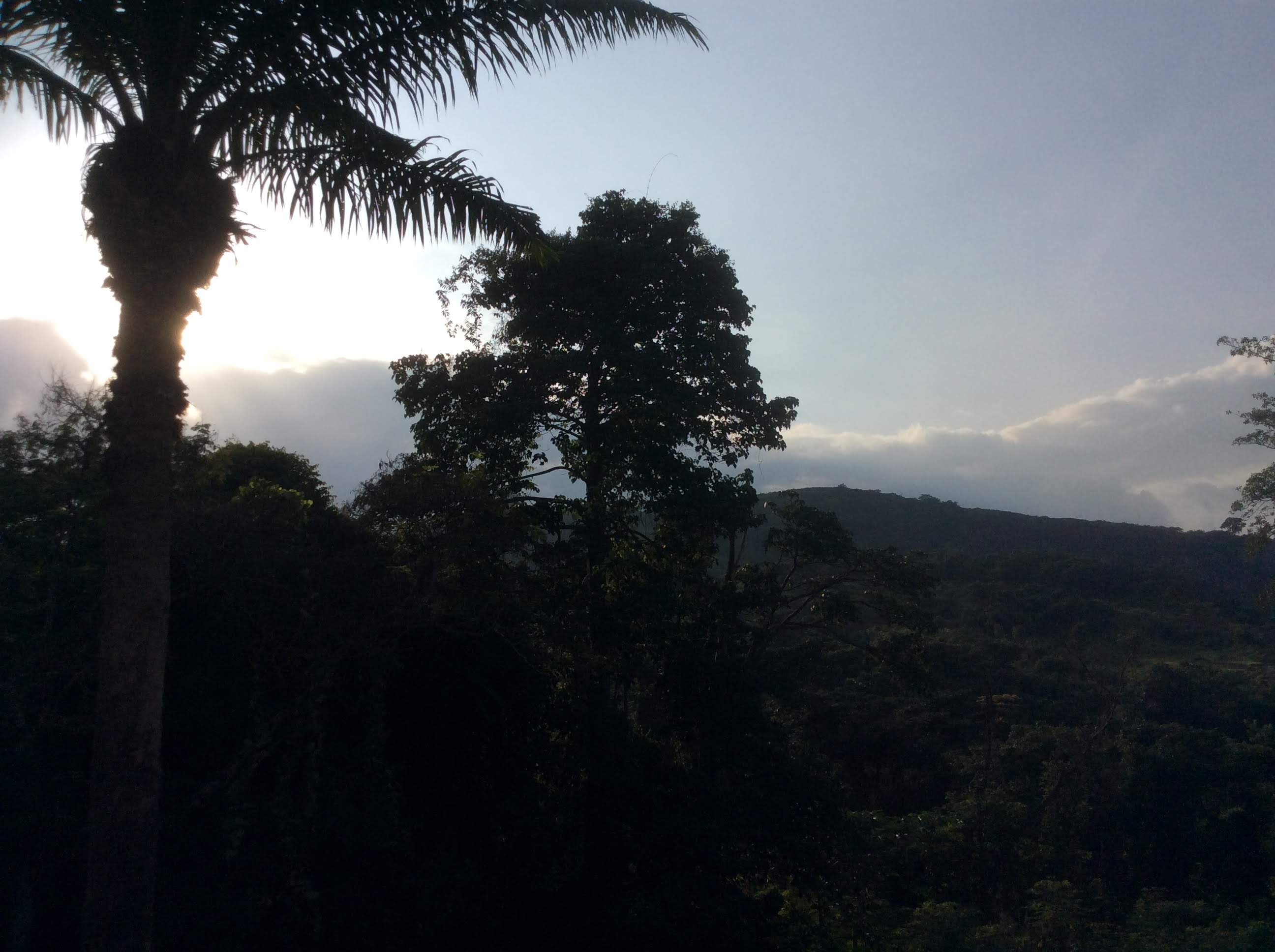
The grounds on which this museum building in Ifẹ̀ now stands will make a good venue for festivals, open literary fairs, and other artistic events. The view of the hills, glorious in the setting sun, is a delightful sight from the balcony, even when blocked by a lone palm tree that one can assume has had an illustrious life as a sater of creative thirst through the production of palm wine. One can easily imagine its former residents walking around it on cool evenings, setting traps for wild animals, or venturing into the adjourning thicket, up the hill, for a hunting expedition. Easily imagined as a venue for future writer residencies as well, there is a lot of understated potential for the project. One is glad, at least, that it has begun.

The Suspended Leg of the Tripod of Identity: Yorùbá Around the World Today

By Kọ́lá Túbọ̀sún

.

“Il suono di pan” (2017)

.

I am Yorùbá by birth and by blood, a privilege that has sat me in good stead, professionally and personally, through a wide network of associations, resources, legacies and traditions. From great award-winning novels (many in translation) to great art works curated in museums all over the world, there are many valuable responses that attend my questing glances around the world for validation and direction. In today’s world, to be Yorùbá is to embody all that is complex and dynamic in a culture and civilization that predates even the birth of Christ.

But due to centuries of colonial contact, my identity today is a complex one. I say complex, because saying “incomplete” would carry too much of a burden of judgment. My identity is complex because were we to return to early Yorùbá societies of 4th Century BC in Ifẹ̀, what I am would embody not just the language I speak, my racial composition, the clothes I wear, the scarifications on my face and my role in society, but also my religion, yet untouched by the crusading powers of Christianity that would come centuries later. 

In that 4th Century BC in Ifẹ̀, I would either be a citizen, with roles and responsibilities, or a member of the priesthood – which isn’t the same as the Christian one, but which carries similar significance to the proper ordering of society, or a royal. An important group of citizens, a hybrid between genuine plebeians and important religious personas, are the sculptors. The working class men — it was a more gendered time — whose role was to continue the tradition of preserving and interpreting the culture through the moulding of bronze heads. (A similar tradition would take root decades later in Benin — 270km SE of Ifẹ̀ — with more bronze heads of different shapes and styles moulded in the same lost-wax tradition not before conceived in the capitals of Europe). 

Because of the hard work of thorough artistry sustained through both civic and religious significance by the practitioners of those times, a record of who the Yorùbá were, what they did, and how long they have been around, was set. This would be helpful in 1938 when Leo Frobenius and his crew came across them at the Wunmonije Compound in Ifẹ̀, buried deep into the soil. So stunned were the European archeologists at the sophistication of the art works (they “compared them to the highest achievements of ancient Roman or Greek art” – source: Wikipedia) that they began to doubt that they could have been created by Africans. They must have been imported from Greece or Rome, they suggested, full of hubris.

In today’s Yorùbáland, I am still a citizen with roles and responsibilities. But I have embodied a new role, that of a citizen of a larger entity called Nigeria, brought into being in 1914 through colonial force, and before that by other forces of globalization, including the transatlantic slave trade and Christianity. (I’ll speak more on that in a second). The internet is a latter-day version of that movement, arriving in time to complete the cycle of connecting what is an individual culture and worldview to a supposedly larger one. In submitting myself to the forces of this expansion of our social and religious space, I also surrender to a new way of thinking. Christianity, in the intervening period, has taken over the world, through the invading forces of colonialism and slave trade. Our religious and cultural autonomy was destroyed and replaced with what is said to be superior and benign.

A friend of mine once visited Brazil and met with a number of caucasian residents of Bahia. In approaching him, because of his mode of dressing, they were curious about his origin. When he told them that he was Yorùbá, they were very excited, and they told him that they, too, were Yorùbá. Never before been exposed to this kind of unfamiliar acculturation, he became disoriented. How, his face wondered, could people of this skin tone and racial make-up be Yorùbá? Then, after recovering himself in a few seconds, he began to speak to them in the language. And to his consternation, they could neither speak nor respond. “But you said you were Yorùbá” he wondered. “Yes,” they responded. “We belong to the Yorùbá religion. We do not speak the language!” That cleared it up, and he learnt something new. Belonging to a religion is not always the same as belonging to the culture.

The Yorùbá religion, consisting of hundreds of Òrìṣà in a dynamic network, centers around Olódùmarè as the supreme being. And through Ifá divination, and its founding father of wisdom—Ọ̀rúnmìlà—the will of the divine one is made known to the people. Ifá as a symbol of divination has been the bedrock of Yorùbá belief system since its recorded history. Along with a corpus of stories, admonitions, aphorisms, songs and chants, that body of knowledge is one through which Ifá priests and priestesses predict the future and understand the past, and one with which the inidividual Yorùbá citizen understands his/her place in the cosmos. So when, in the 16th century, the transatlantic slave trade began, and citizens from inside Yorùbá country were stolen and sold off into the new world, the only valuable resource not capable of being destroyed by the invading slavers and their accomplices across the ocean was the knowledge of these old systems of religious knowledge. Though their bodies were broken down by hard labour, dehumanization, mutilation, separation and other forms of indignity, they held onto these songs and religious rituals and passed them to their children, sometimes in secret.
It is unclear why the religion did not survive in a stronger form in the United States as it did south of the Rio Grande. But we know that in Latin America, particularly in Brazil, Cuba, Trinidad, and Jamaica, variations of the indigenous African religious practices, particularly from the Yorùbá country survived, sometimes in isolation but mostly in syncretism and other forms of mutation, so that today, there are racially and culturally different people who are nevertheless religiously Yorùbá. Their worldview may be Western, as is their racial composition and language, but their soul and heart are Yorùbá, or aspires to be. This is in a sharp contrast with the homeland where many Yorùbá citizens today are Christian or Moslem (converted through a later trans-Saharan slave trade that came through the north), but Yorùbá only in cultural and linguistic heritage, that is, possessing everything but the third leg of the tripod of identity.

It is tempting, then, to assume that the spiritual identity of the Yorùbá has undergone a weakening since the dawn of European civilization. This would have been true only without the knowledge of the depth of hold that the religion has had around the new world, and among those at home who have retained the independent cultural, spiritual, and mental identity away from what the imported religions recommended. In any case, the “suspension” of this leg in Nigeria and much of Africa, deplorable as it is, has only deepened the support for the religion among those to whom that is all that is left after centuries of plundering. And so there is the silver lining. Over the last couple of decades, practitioners of Lukumi (a religious variation of the Yorùbá Òrìṣà religion, which uses Ifá as its divinatory centre, and modified Yorùbá incantations and songs for liturgy) have made pilgrimages to Nigeria and connected the relevant dots of their religious ancestry. And through a fertile continuation of that relationship, the practice of Ifá and Òrìṣà worship has resumed around the country. A number have also started taking to learning the Yorùbá language as well, as something to add to what they already have in Spanish, Portuguese, and English. And while the Yorùbá in the home country have also shown a lukewarm attitude to the language, the diaspora comes in to save it through a warm embrace.

In 2008, Ifá became classified as an “Intangible Cultural Heritage” by UNESCO. There is a sort of delightful ending in the fact that Ifá had to travel all the way across the world in a slave ship before returning home to rescue its people at home. But maybe that was necessary, especially in its now inevitable expansion across all hitherto forbidden spaces. 
_________

(first published, in a slightly different version, in English and Italian; in Il Suono di Pan, an anthology edited by Prof. MM Tosolini and launched at Cividale del Friuli, near Udine in Italy. November 2017)
_________

For Further reading