Browsing the archives for the Art category.

At Gowon’s Family House

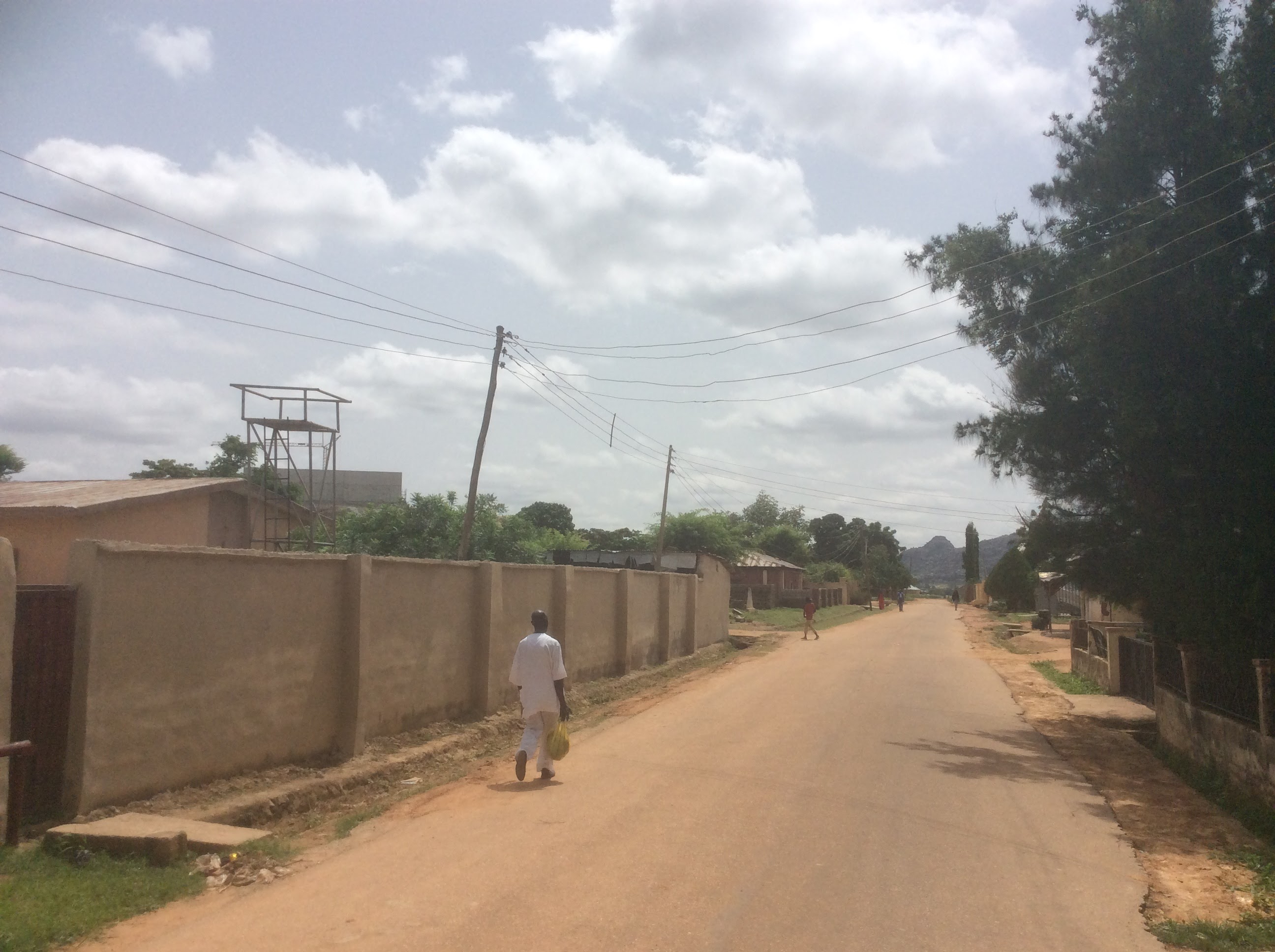
Wusasa. The road in front of Pa Yohanna Gowon’s House

Kaduna seems to throw up more interesting discoveries during every visit. The first time I was there, in the summer of 2010, I had visited the old city of Zaria as well as the church at Wusasa, St. Bartholomew’s, which has the reputation of being the oldest surviving church building in Northern Nigeria, and whose history is tied to that of the region in terms of development.

On returning to the church in Wusasa again this last July, this time in the company of my wife and Kinna Likimani, a writer friend from Ghana, I discovered something else; something I’d known was there, but never had the chance or the guts to discover: the Gowon Family House.  Both my guests and I were hearing of these two historical structures for the very first time.

General Yakubu Gowon is known primarily as the Nigeria’s longest-serving military Head-of-state under whom the Nigerian Civil War was fought from 1967 to 1970. Not much else about him has entered popular culture, with the exception, perhaps, of the fact that he was also the youngest leader. He was a bachelor by the time he assumed office in 1966. He got married in 1969. The general, as they know him in Wusasa, was actually born in Plateau State, but was brought, along with other siblings and family members, to this small missionary town when his father, Pa Yohanna Gowon was transferred there.

It is the story of his father that I have found quite remarkable.
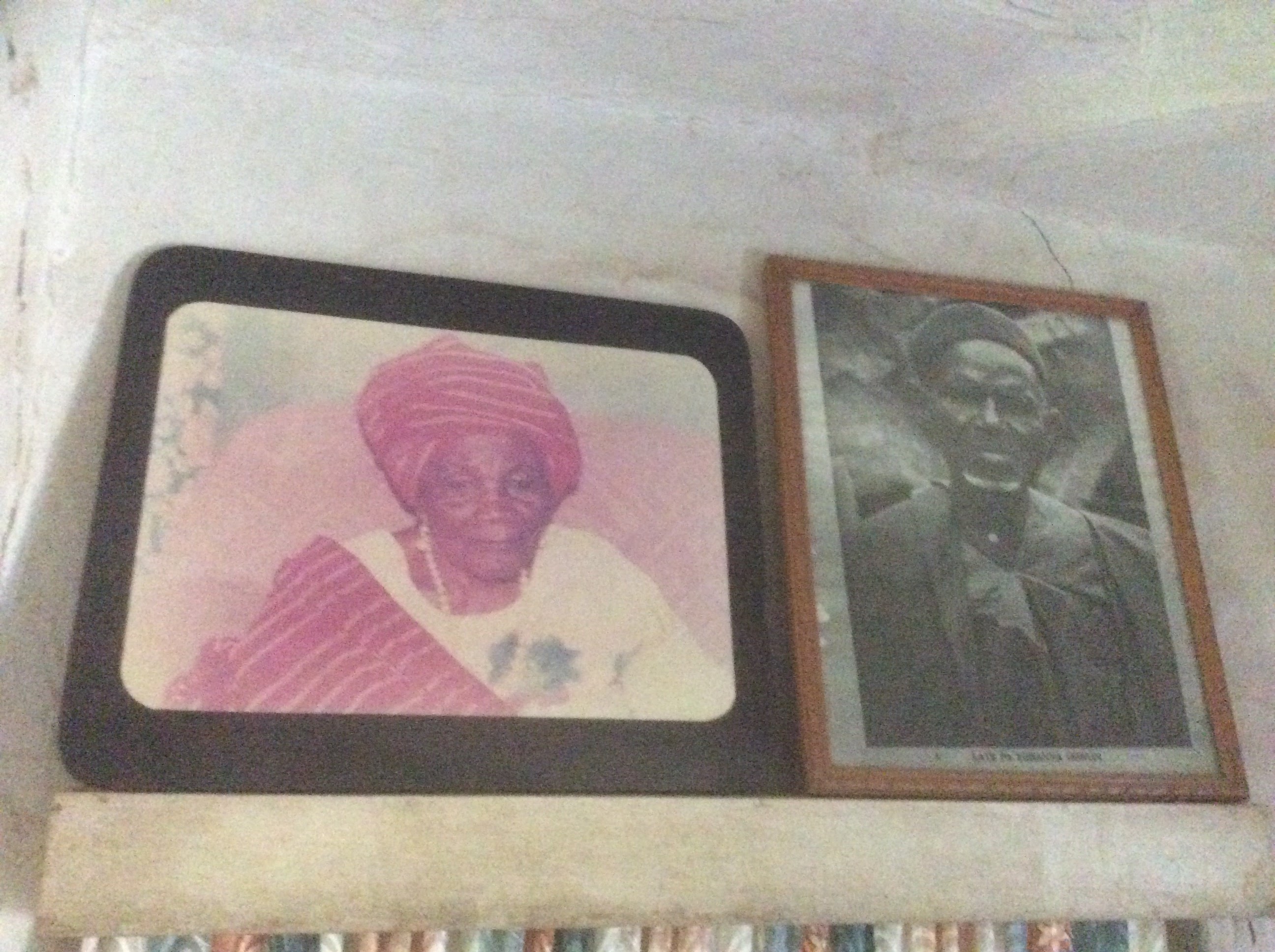
Pa Yohanna Gowon (r) and his wife, Ma Saraya Kuryan.

Born in about 1889 in Lur, a famous Ngas town southwest of Jos, in Plateau State, Pa Yohanna, the crown prince of a prominent chief became interested in missionary work after meeting with the first foreign missionaries that settled in his community in 1907. Christianity, and in the knowledge that these alien settlers brought, fascinated him enough to give up the life of a crown prince and become an evangelist, becoming one of the first to be recruited in his hometown.

In April 1923, he got married and started a family with the daughter of another chief. Missionary work at the time was not very well-paying so he struggled and persevered. But thirteen years later, in 1936, new changes were being made to the structures of the church. One of the changes included the new rule that evangelists would no longer expect a stipend, and would now work as volunteers. He and a number of other Ngas evangelists protested. Some even left evangelical work and moved into the civil service. Pa Yohanna, disillusioned, decided to move his family to Wusasa Zaria, where a newly established mission station had been established outside the Muslim city of Zaria. It presented new opportunities. The Christians in the town had been evicted from the Muslim city of Zaria because of the threat their proselytism posed to the emirate. But at Wusasa, where they were considered outcasts, they would be able to make new Christian converts made up of the rejects of society, the sick, the uneducated, and those not considered worthy enough to live in the city.

It was there in Wusasa that Yohanna’s work as a Christian missionary, and reputation as a fervent and passionate Christian earned him a place in the people’s heart. Although his grasp of Hausa was tenuous, as observed by the people among whom he lived, he continued to work relentlessly as an evangelist until he was finally relieved of his job. But because he still worked for the missionaries sinking wells, digging pit toilets, digging graves etc, he was able to secure scholarships for his children from the Christian mission. He also took up farming, and thrived enough to acquire land right beside the St. Bartholomew’s Church, and build a family house. He died in 1973.
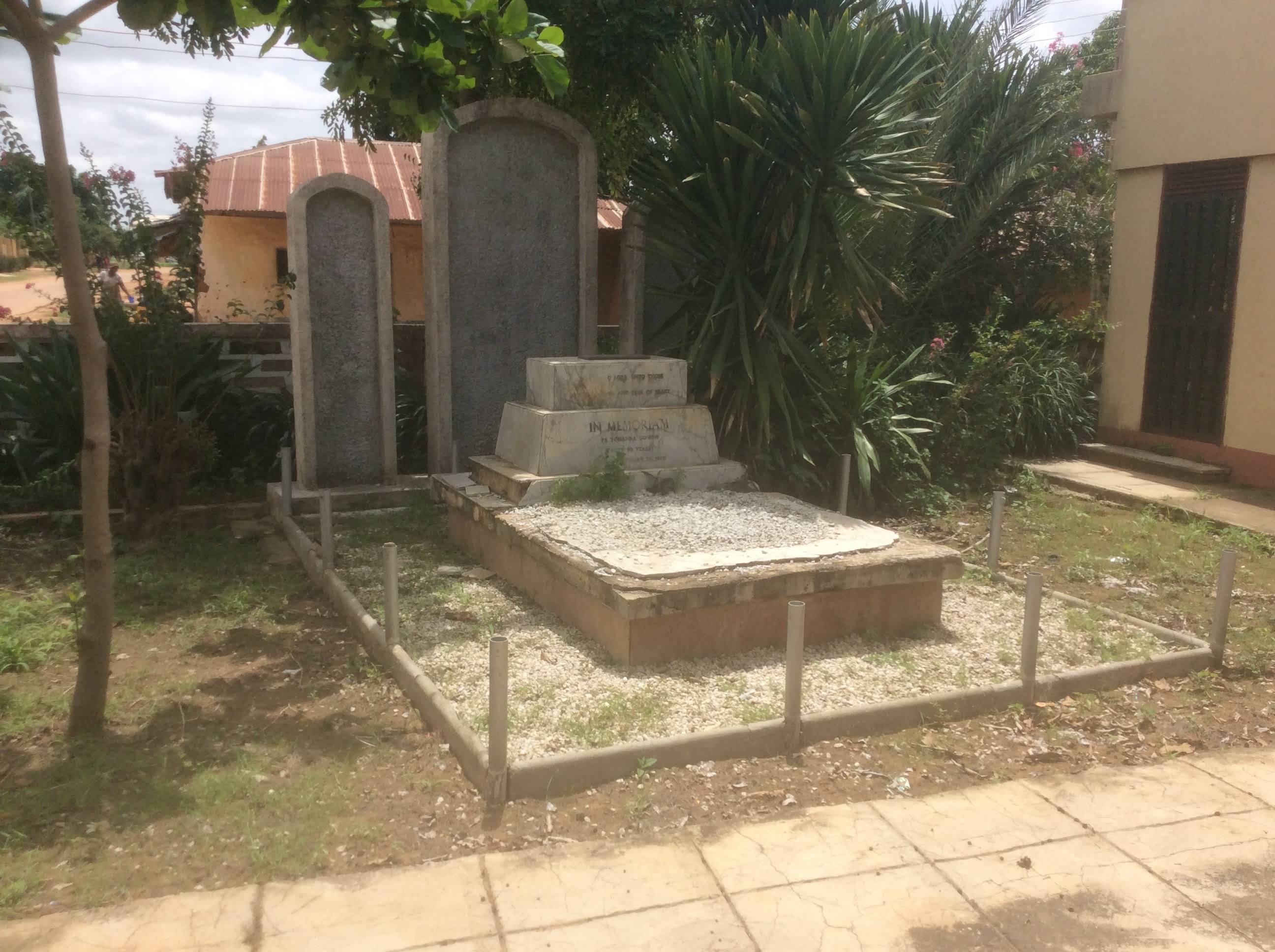
The gravesite of Pa Yohanna Gowon (1882-1973)

When I returned to Wusasa this time, I was content to spend just a little time at the church where, in any case, no one was around to show us around. But I was curious about the Gowon house so I headed there. A small gate led out of St. Bartholomew’s Church onto a small tarred road.  Across from the road was the house I had heard so much about. Painted yellow, the sprawling edifice appeared both modest and tastefully ostentatious at the same time. But its short fence suggested that whoever built it cared as much about openness and accessibility as about aesthetics.

I had never been there before. I did not even know if anyone lived there. The compound was empty and the gates were open, so I helped myself in. My wife didn’t think it was a good idea.

To the left of the entrance was the gravesite of Pa Yohanna. His date of birth and death were written on the gravestones. The silence around the premises didn’t convince me that anyone lived there.

“Now that you’ve seen it. Can we leave now?” Said my wife from the safety of the road that separated the house from the church compound.
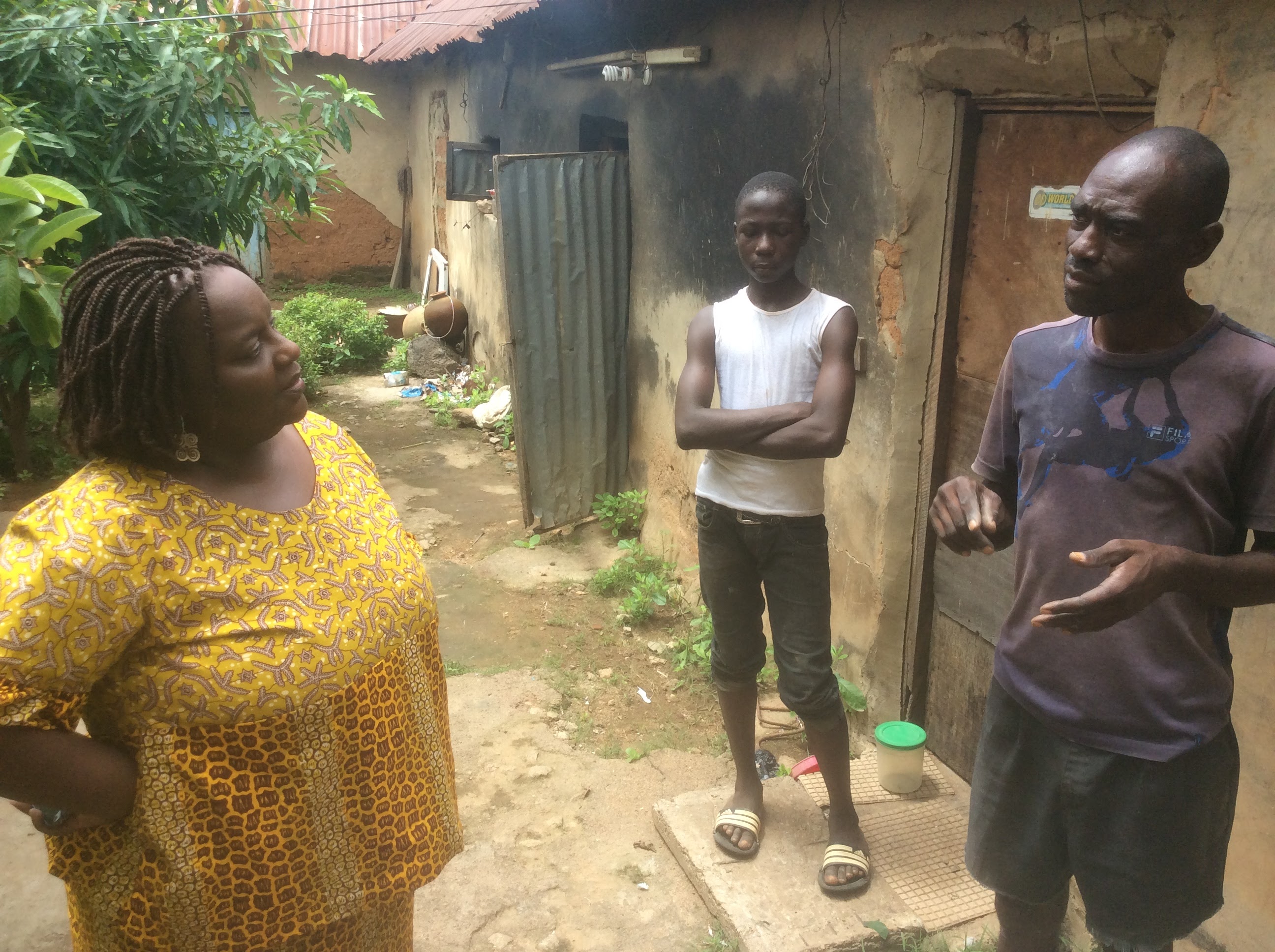
My friend Kinna Likimani, a boy, and Henry Nor.

“I think there might be someone inside.” I responded, half in jest. “Won’t it be nice to be able to talk to them?”

“I don’t think that’s a good idea!”

But there was indeed someone in the house. Our loud conversations going back and forth over the house fence must have caught someone’s attention, and a young boy came out to inquire what we wanted.

I explained myself in the best way I could without seeming threatening. He suggested that there was another person indoors that we might want to talk to. I was more than willing, but my guests were a little wary.

We walked through a small parking garage into a clearing where we were met by a young man, a soft-spoken man of certainly younger than forty.

His name was Henry.

Henry’s mother was General Yakubu Gowon’s sister who had now passed. He had lived in this house for a long time, maintaining it as a labour of love. He was also very conscious of his grandfather’s legacy in the town and was willing to talk when we told him why we had come.

He informed us that the building we saw as soon as we entered the compound wasn’t the house built by Pa Yohanna. That one came much later, perhaps after Yakubu Gowon became the Head of State, and had the means to build a more befitting edifice. Behind the modern edifice that welcomes the guest is the original building, made of mud and other traditional building materials.

Like the Bartholomew’s Church, the Gowon House exhibited a kind of originality in both style and component. Sitting in it felt relaxing. It was about two o clock in the afternoon, with a scorching sun outside, yet the inside of the house felt perfectly insulated. And it had been standing at this spot for decades, with just a few cracks on the ceiling as proof of its advancement in age.

“The general himself comes here often, you know.” Henry told us. “And he also prefers to relax here in the back house and not in the main one. This feels more comfortable, you know.”
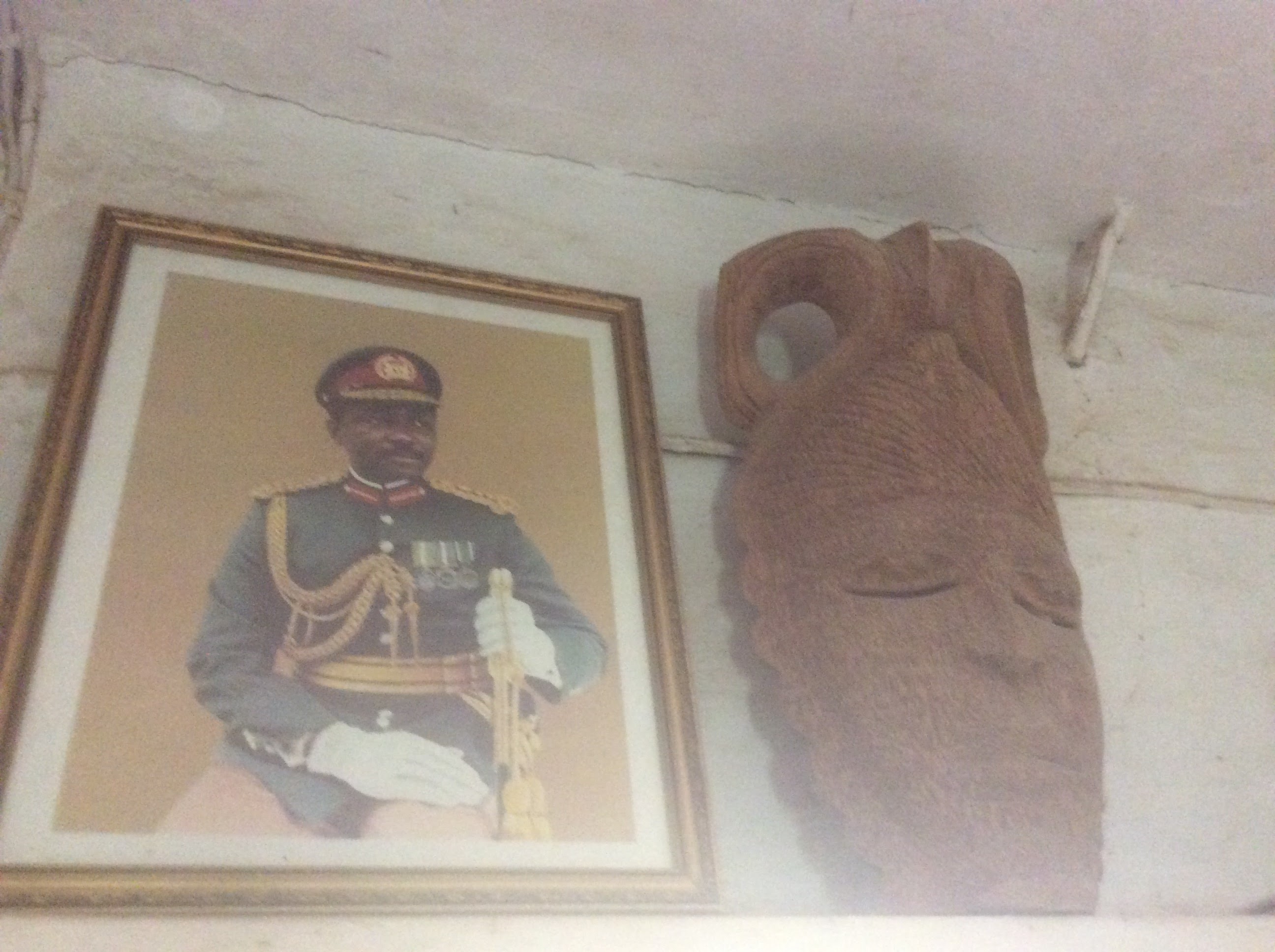
The general and a family mask.

On the wall of the house is a painting of Pa Yohanna. On the doorpost is a framed photo of the general himself, looking like the Head of State he was for nine long years.

We sat and chatted with Henry for what seemed like eternity, but was for shorter than thirty minutes. He appreciated our coming, and was very generous with details and stories of his nuclear and extended families. He is currently an art dealer, he said. A couple of the artworks he once took to the National Museum in Jos, obtained from his family collection, were declared lost and never paid for. “I have taken them to court,” he said, and showed me the documents. When I told him that I intend to write a travel piece about my visit to this historical place, he was glad to encourage me to mention how badly he had been treated by the National Museum. “I think they stole my art, sold it, and kept the money to themselves. Maybe calling them out will let them take me more seriously.”

Yet, for someone this upset at what appeared to be a slap in the face by a more powerful institution, he spoke with such soft and unassuming demeanour, matching the image I have in my head of General Gowon himself, and perhaps Pa Yohanna, the patriarch, whose evangelical vocation brought the whole family to this location.

“I will do what I can,” I said. “But what you have here is a historical property. I’m glad that you are here, and that the family cares enough to preserve Pa Yohanna’s memory by ensuring that his story continues to be told.”

“More needs to be done.” He conceded as we headed out towards our driver who was waiting for us within the compound of the church. “Writing about what you have seen is a good first step.”

“I will be back,” I promised. I hope you’ll still be here.
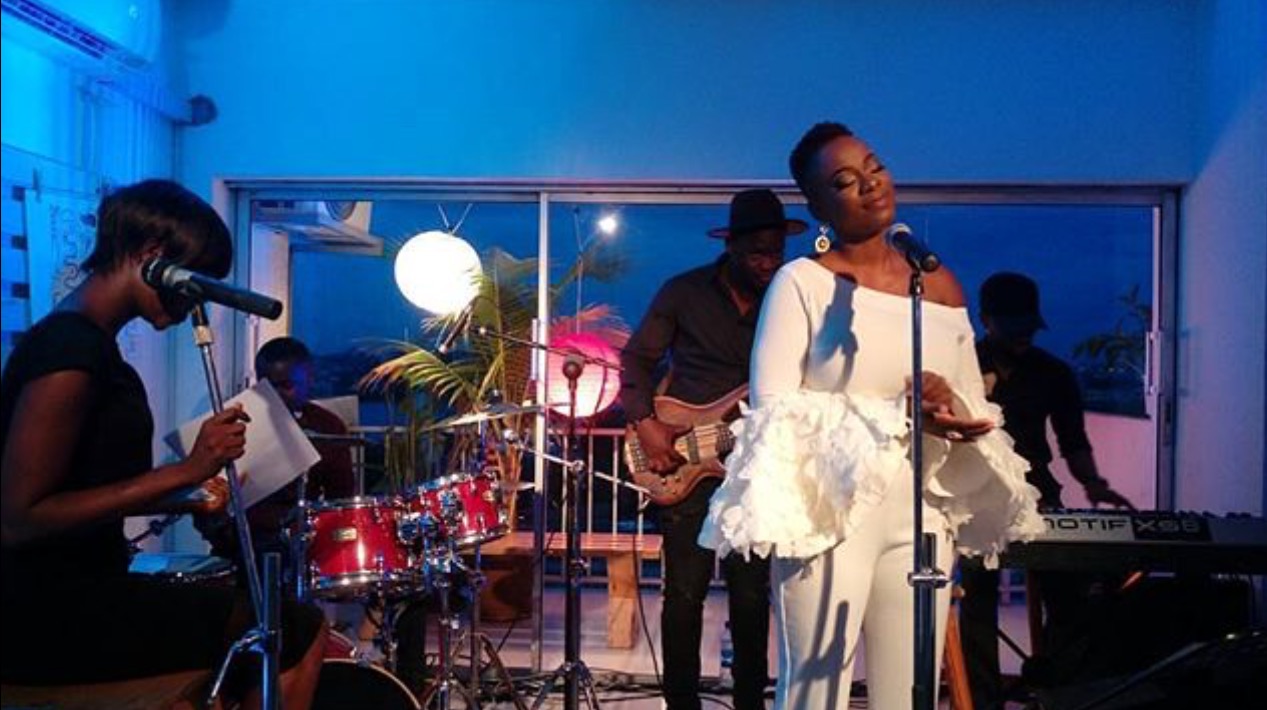
 

At Titilope’s “Open”

When I lived in Ibadan, there was these jazz sessions at Premier Hotel which took place every weekend (can’t remember now if it was Friday or Sunday nights). It held in a ballroom on the ground floor of the hotel and featured an ensemble that played non-stop for about four hours, late into the night. The music swayed from highlife to jazz, and sometimes to juju, but always within a range of danceability. Guests who sat around the stage in different arrangements often got up from their tables to dance, alone or with their guests. There was always food and drinks.

Sponsored message: Before you plan your trip, check out Hotels.com voucher codes to find out what deals enables you to save on your reservations. It is always good to have prior reservations done to avoid sky-scraping prices later.

I attended a couple of those sessions while I was a student, with friends and colleagues from the university. It always provided a kind of relaxing end to the week. We had nice stimulating conversations, got our fill of good music and food, and exercised the stress away. The location, on top of the hill at Mọ́kọ́lá, also provided not just a beautiful overview of Ìbàdàn at night, but also a very relaxing access to cool breeze. By morning, one felt refreshed and ready to take on the next week.

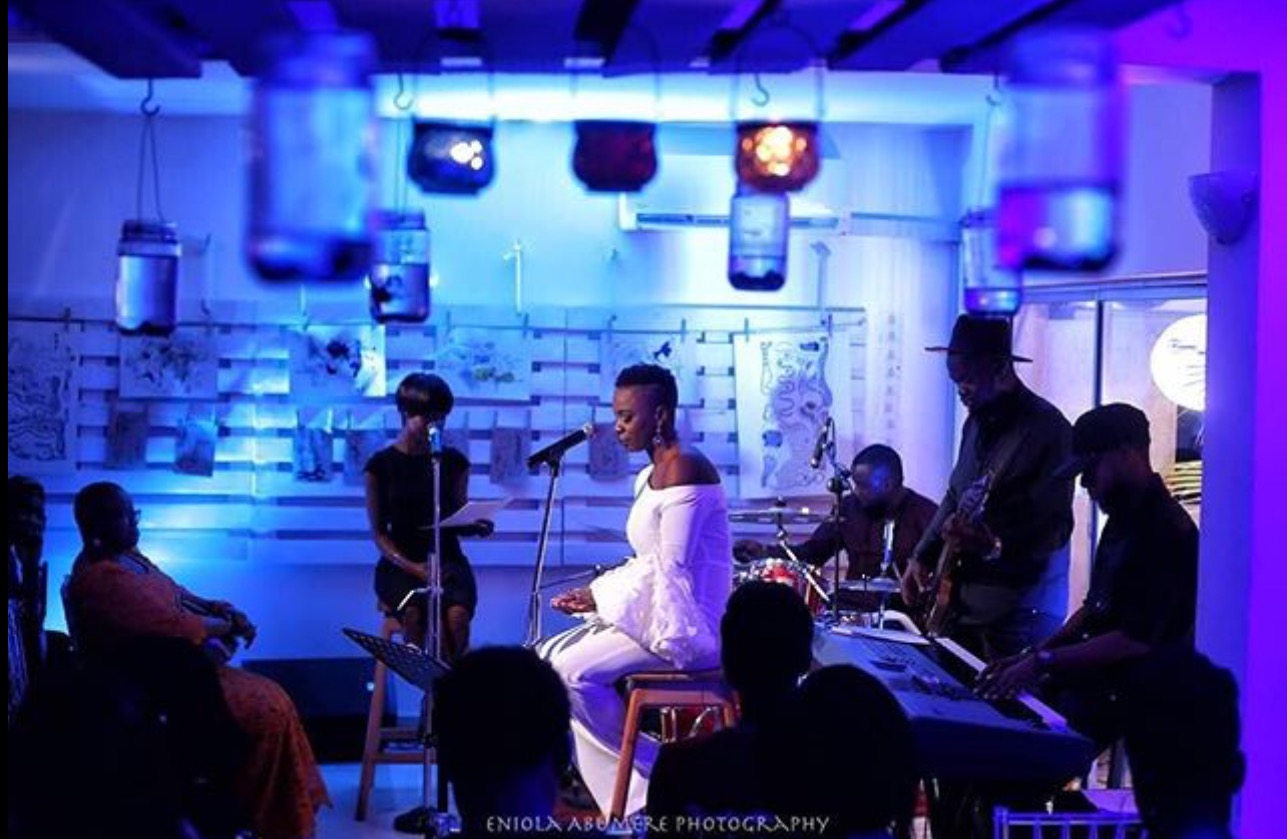
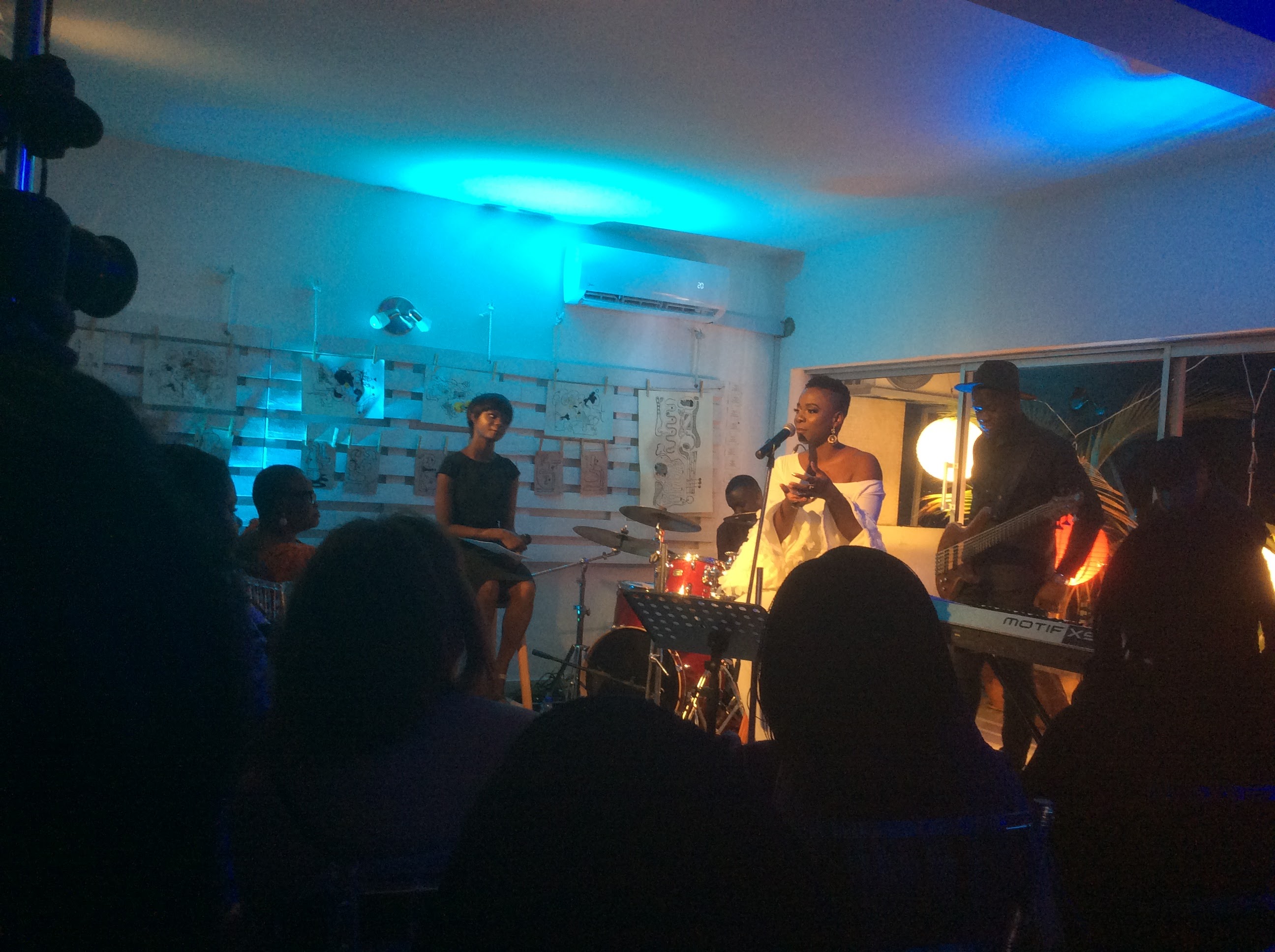
Yesterday, I had an experience very close to that, which brought the memories back. It was at 16 Kòfó Àbáyọ̀mí Street, Lagos, on the eighth floor of a building I never knew existed there, with a relaxing view of the Lagos Lagoon, and a high-up-enough location to soothe a most exhausted traveller. The event was Títílọpẹ́ Ṣónúgà’s poetry concert event titled “Open”. Gate fee: 5000 naira. It is the first of a three-part performance show slated around venues in Lagos.

I don’t know if “concert” is the right word, because the poet approached it like a soulful conversation between an artist and her audience. But the word still closely captures some of the show’s best aspiration. In a space that felt intimate because of its size, the lighting, and the mood, an artist performed to an audience, and the result was delightful.

I haven’t been to many spoken word concerts. My contacts have been limited to more public spaces like the halls of the June 12 Cultural Center in Abẹ́òkuta where poets from all around the world have performed to a much larger audience during the annual Aké Festival, and to YouTube channels and TED Talk videos, where poets with verve, rhyme, and sass have dazzled with inspirational and stimulating turns of phrase and soulful rendition of their work. There are a few other avenues that have popped up over the years though. I know, at least of Taruwa, which (I believe) featured open mic events for amateur and established spoken word artists to come impress an audience. But this one felt different, perhaps because it also included an element of music necessary to move even the most inexorable skeptic of the beauty or relevance of poetry in performance.

Accompanying Ms. Ṣónúgà last night was a bass guitarist, a pianist, and a man on the drums, along with a certain Naomi Mac whose voice carried the soulfulness demanded of the intimate occasion with ease and grace. With their accompaniment, the show was fully realized not just as a celebration of the power of the word or Ms. Ṣónúga’s poetic capabilities but as a ritual of mass catharsis; an artistic triumph.

The poems performed came from some of Títílọpẹ́’s recent works, a few of which I’d read on other platforms or heard in other places. Perhaps it was deliberate, a way to get the works performed again in a perfect setting of her choice, recorded along with the audience reactions. Some I was hearing for the first time. What united them was the theme of the evening: an openness to possibilities, in love, in life, and in public engagements. Navigating the tale of personal heartbreak, the process of finding love, coming of age, political instability, societal dysfunction, naivete, lust, love, and consent, the poet details her personal artistic response in a voice and style that is as open as it is reserved. (In a notable poem about a seeming first sexual encounter, for instance, the poem ends “he knows the punchline to this joke, and I’ll never tell“).

In the end, it was as much a beautiful intimate gathering as it was a much needed artistic intervention in a city space much in need of a lot more events of this character. We need plenty more.

_____

More about the last two performances here. Títílọpẹ’s earlier work “Becoming” was reviewed here. Photos 1 and 2 from Titilope Sonuga’s Instagram page.

Art at the Guggenheim

Abu Dhabi, from distant (and ignorant) estimation, didn’t seem like the most natural place to find a Guggenheim Museum. It’s in an Arab country appearing, at least from preconception, to be necessarily hostile or at best reticent. True I’ve heard great things about Dubai and the progressive nature of that society. But like most things not encountered in the flesh, they remained in the realm of hearsay, hovering around the globally pervasive perceptions of all Arab countries as just one thing: conservative.

But all misconceptions eventually meet reality and knowledge happens. It must be what Mark Twain meant by travel being “fatal to prejudice, bigotry, and narrow-mindedness.” And so, on my week-long visit to the country to participate in the inaugural Culture Summit, I found myself in the embrace of a Guggenheim Museum. This museum project, and the other involving the Louvre Abu Dhabi, is a collaboration with the government of the United Arab Emirates and prominent culture centres around the world to make Abu Dhabi a cultural centre in the Middle East.

I am not a visual artist. Not since primary school anyway. My contact with and appreciation of the visual arts have stayed consistently close to the familiar activity of gawking, collecting, and critiquing – the latter only in my head and among like-minded friends. I have found solace, many times, in the warm presence of a well-stocked museum or well-curated art exhibition. The environment for meditation that they provide and the visual stimulation guaranteed in a well-lit studio space while observing mounted artworks are unquantifiable pleasures of middle-class life, at least for those to whom that is a worthwhile activity.

And so, when I got a chance to spend some time at the exhibition space holding the temporary collections of the Guggenheim Abu Dhabi at Manarat Al Saadiyat, I needed no convincing. This location, on the famous cultural district of Saadiyat Island which hopes to also host other venues of cultural significance like the Louvre previously mentioned, is where much of the activities for the Culture Summit was taking place. One open door away and we were face-to-face with timeless pieces of art as Jacques Villegié’s Quai des Célestins (1965) or Tanaka Atsuko’s Painting (1960).

On the first wall to the entrance was Chiinsei Botaichui (Female Tiger Incarnated from Earthly Shady Star), oil on canvas, by Shiraga Kazuo, a work created with “bold swathes of sombre colours with tactile density”. The work, we were told, was created with the artist’s feet, seeking “to liberate his work from the constraints of academic-style painting” and “in order to re-conceive the process of painting as an experimental encounter with materiality and surface.” What appears on the board at times resembles a flying bat, and at others an angel of death. But an amateur art critic – me – projecting his impressionistic sentiments on a modern experimental work offers no new value to what the work already presents. The artist was born in 1924 and died in 2008.

Through the museum space, there are other exhibits, like work by Motonaga Sadamasa, another Japanese artist (1922-2011) whose work used poured paint, depending on gravity to “replace the paintbrush and foregoing the precise and deliberate meditation of the artist’s hand.” The third and final Japanese artist exhibited was Tanaka Atsuko (1932-2005) whose work of Vinyl paint on canvas “evokes the incandescence of the dress (and) intricate network of wires and bulbs reflect (an) interest in (the) technology of wiring systems and lights.”

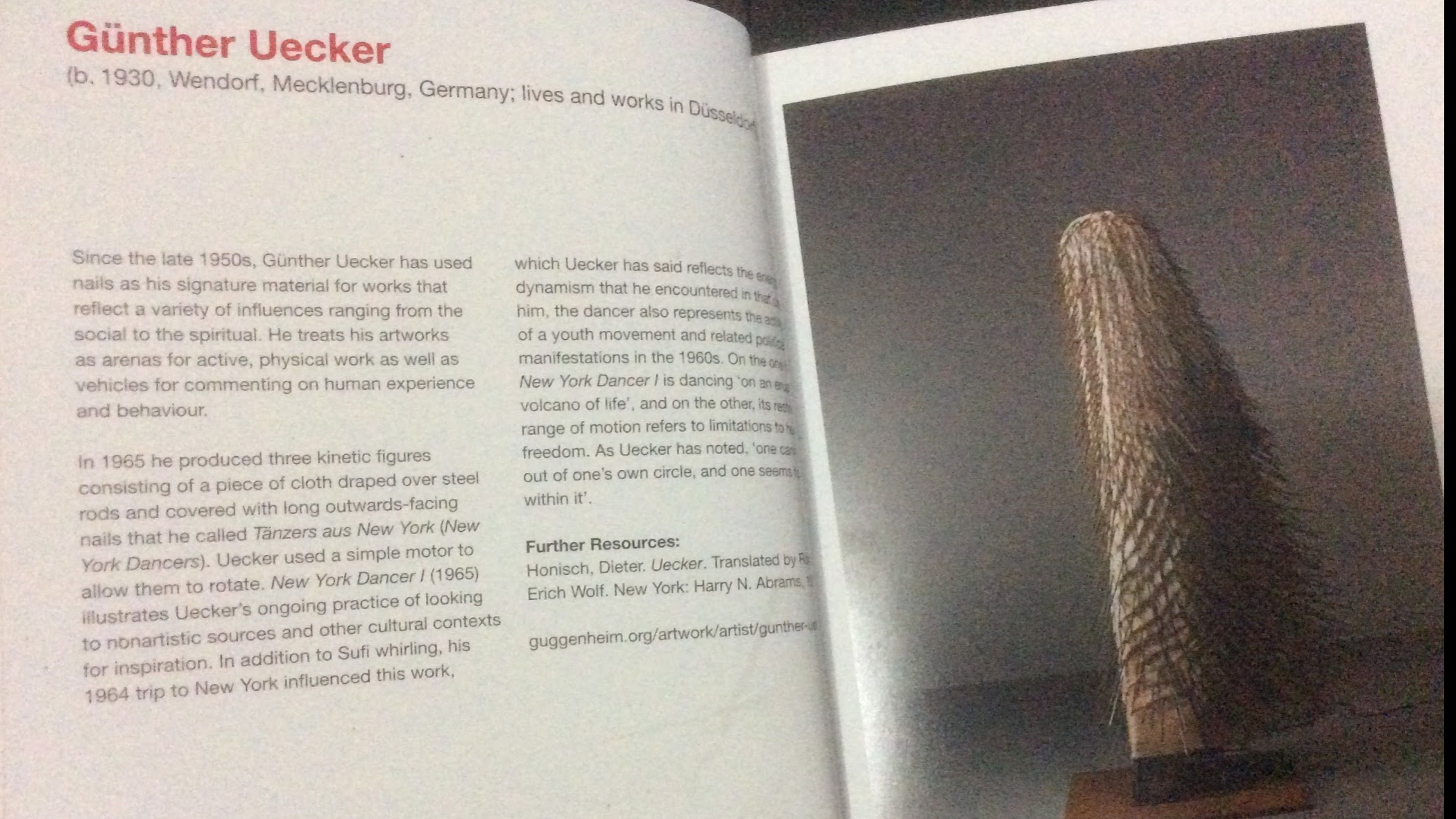
At the centre of the opening space are two kinetic works by two German artists. Gunther Uecker’s New York Dancer evokes the African egúngún without acknowledgment. It is a work “consisting of a piece of cloth draped over steel rods and covered with long outwards-facing nails.” The other, by Jean Tinguely (1925-1991) is called Baluba, a dancing piece of scrap metal “meant to portray a certain craziness and rush in this technological civilization”. Both of them, though not activated at the time but shown through a small television in their kinetic elements, felt familiar in a visceral way that most of the others didn’t. A walk through the Polytechnic Ibadan, or the Yaba College of Technology, will bring the traveller in contact with many similar kinetic and scrap metal artworks of like impression.

New York Dancer

Other artists whose work were on display included Niki de Saint Phalle, Jacques Villeglé, Julio Le Parc and Rasheed Araeen. For a temporary exhibition space, it was an impressive introduction. Outside of the museum space, at the reception area where participants in the Summit gathered, there were other artists, from Adéjọkẹ́ Túgbiyèlé (Nigeria/New York) to Jalal Luqman (Dubai) and Cristina del Middel, among others. Here at the Guggenheim, however, very little (except the age of the displayed collection, and a small reception desk) tells the visitor that s/he has crossed over into a new art space.

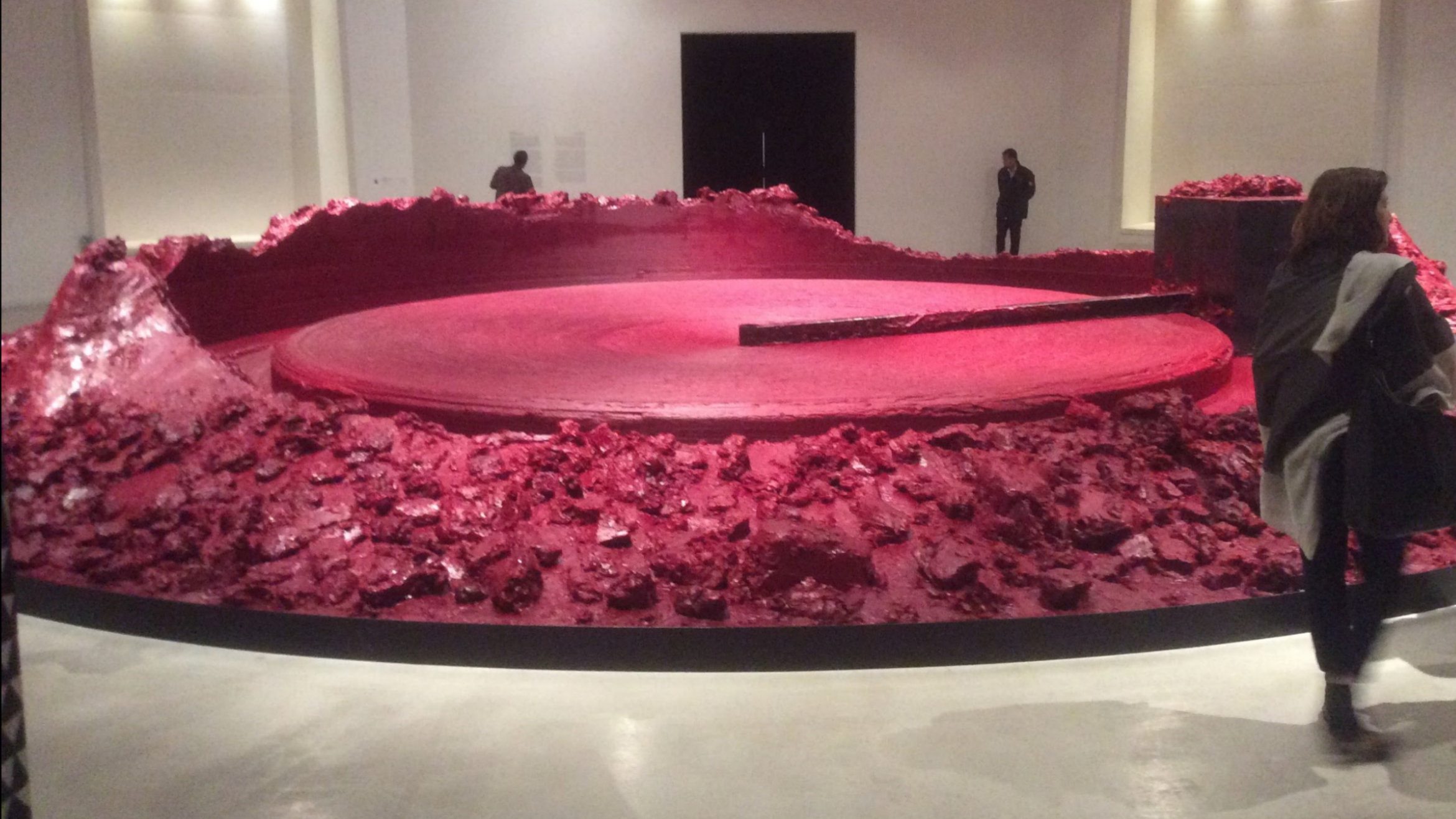
The most surprising, and most breathtaking work in that museum, however, was Anish Kapoor’s My Red Homeland, an installation that filled a whole room. It was a wax “sculpture” simulating a mound of red garbage stirred continually by a centralized mechanical arm. The description situates the concept of the piece in both the image of blood as well as the colour of saffron, an iconic symbol in India, from where the artist hails. For art enthusiasts to whom Kapoor’s most famous work is The Bean in Chicago, My Red Homeland was a welcome reprise, more impressive at close range, and equally awe-inspiring to the breadth of the artist’s vision and ambition.

My Red Homeland by Anish Kapoor

I purchased a few fridge magnets on my way out. Something to impress friends and family with. Something not necessarily representative of the scope of the ambition and inspiration of the exhibition just witnessed. Merely representative. The New York Dancer on a fridge magnet is certainly less bewildering as a work unconsciously derivative of ancient African masquerade experiences. But like others, it will mark my refrigerator as a symbol of another place I’ve been, another mind-enlarging artistic experience, not less, not more, than previous others in other parts of the world. But having experienced it in Abu Dhabi, an emerging cultural capital of the world, adds a new dimension not experienced anywhere else.

Sacrilege at Ilojo Bar

Ọláìyá House, a 161 year-old building declared a national monument in 1956 by the National Commission for Museums and Monuments, has been pulled down. This is a sentence that has haunted me since I read this news story a few minutes ago.

The building, also called Ilọ́jọ̀ Bar, was one of the cultural landmarks on Lagos Island bearing physical stories of our colonial and post-colonial past. The structure, built in an old Brazilian style was recently the family home to famous Highlife musician Victor Ọláìyá. It was reportedly built by Afro-Brazilian ex-slave returnees to Lagos Island in the late 1800s and was once called Casa do Fernandez after the first residents/owners of the house.

Photo credit: http://www.simonateba.com/

Photo credit: http://www.simonateba.com/

There had been talks of restoring the building for touristy and cultural purposes. But to wake up to hear news of its demolition is sickening and shocking. The news report doesn’t provide any reason for the demolition except for this quote by an occupant:

“They did not call our attention to the fact that the house had been leased to a developer. The developer just came one day and said they wanted to demolish, promising to settle those who live there. That was since April, we did not agree. We don’t like the way they drove away those people occupying the building.”

If true, this continues a pattern recently established by the state government in demolishing buildings without due process. In this case, the building is actually a protected cultural site, and that makes it way worse.

I’m following this news as it develops and will publish my findings here as they manifest.

____________

Update: 22nd October, 2016

All my subsequent reporting on this matter can be found on this blog in the following links:

2. Visiting the Demolition Site (First published on KTravula.com on September 18, 2016)
2b. Photos of the Demolition (September 19, 2016)
2c. Video of the Demolition (September 20, 2016)
3. Demolishing History (First published on KTravula.com and in syndication with the Guardian online/print and Premium Times online on September 25, 2016)
4. A Tragedy of Confusing Interests (First published on KTravula.com and in syndication with the Guardian online/print on October 2, 2016)
5. A Failure All Around (First published at KTravula.com on October 3, 2016 and in syndication with the Guardian online/print of October 9, 2016)

Three Writers Set for Artmosphere Lagos Reading

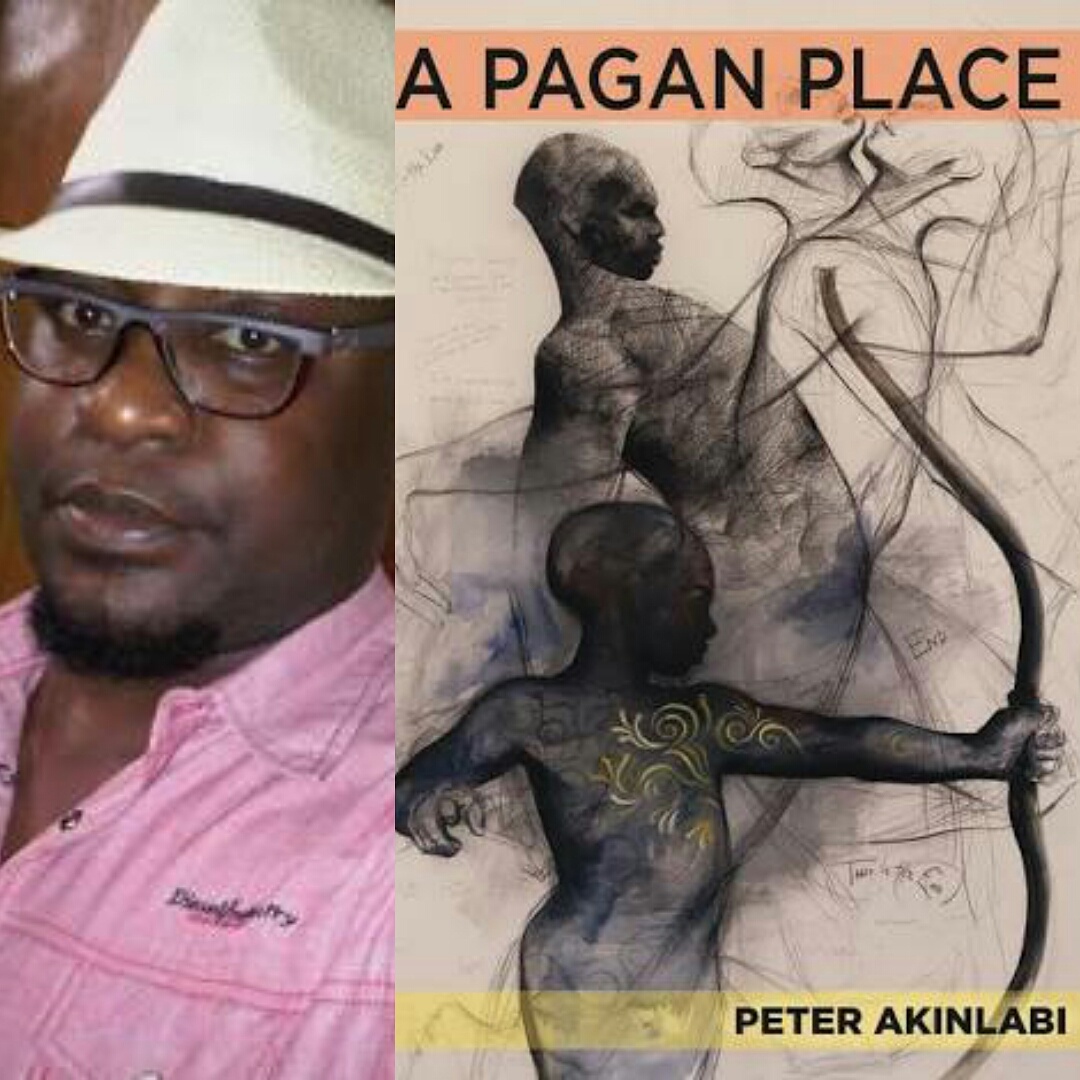
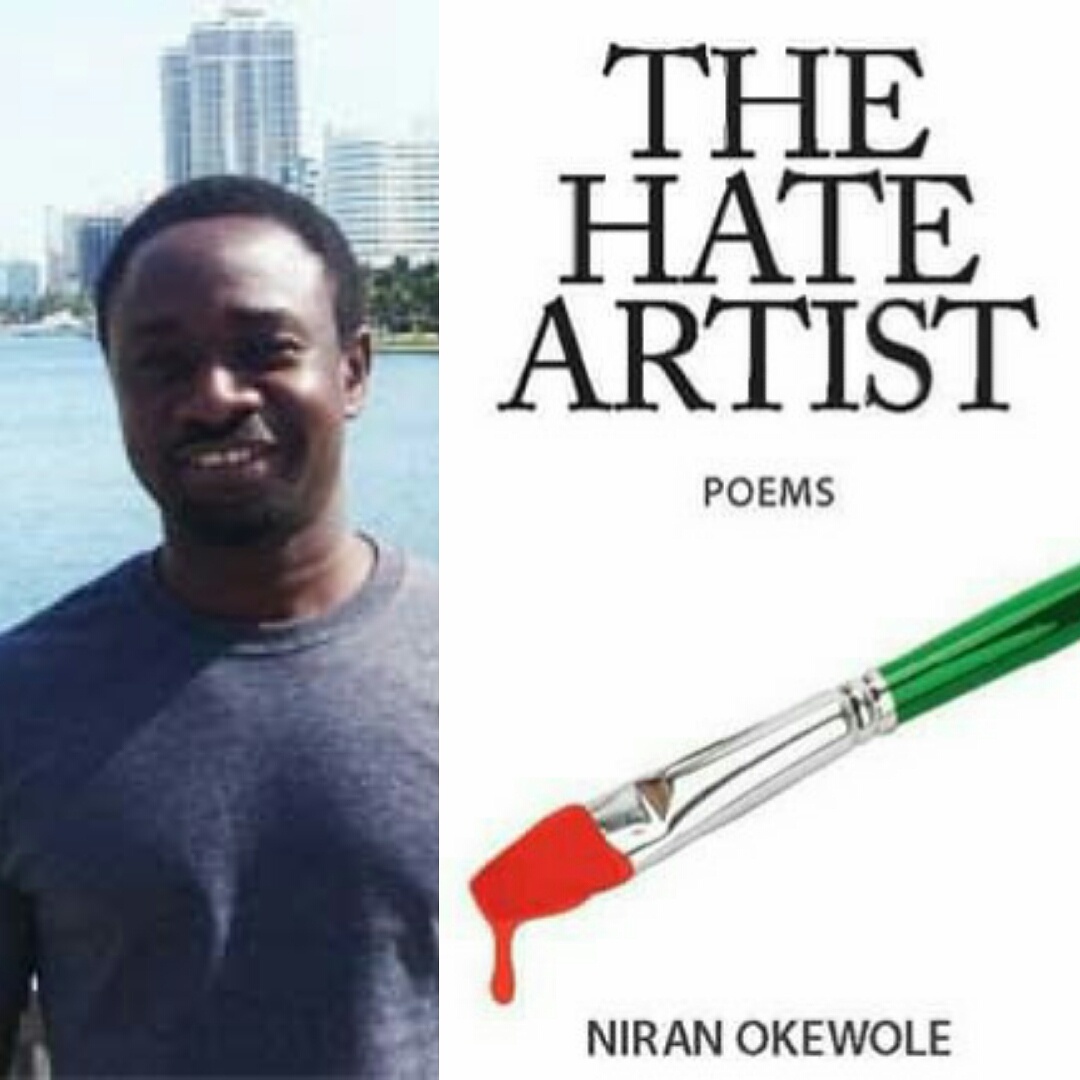
IMG_20160829_155222Artmosphere, one of Nigeria’s leading culture, literature and arts events, will be hosting three poets in the city of Lagos. The event will involve poetry readings and conversations from the myriad themes written by the poets. Poets, Peter Akinlabí, winner of the Sentinel Quarterly Poetry Competition and author of the Akashic chapbook, A Pagan Place, Níran Òkéwọlé, winner of the Muson Prize for Poetry and author of The Hate Artist, and Fẹ́mi Morgan, arts curator and author of Renegade. The Artmosphere Lagos event is in collaboration with Khalam editions, an imprint of an avant-garde publishing house, Khalam Publishers.

IMG_20160829_155039It is scheduled for 2pm on Saturday, 3rd of September, 2016 at the Patabah Bookstore, Shop B 18, Adéníran Ògúnsànyà Shopping Mall, Adéníran Ògúnsànya Street, Sùrùlérè, Lagos, Nigeria.

The poets were chosen for their philosophic disposition to persona, racial and global discourses, for their penchant to write outside the orientation of the popular style and artistic crafting. The book parley will be a gathering of Lagos residents and individuals who are interested in open conversations about art, social, political and cosmopolitan issues that affect our lives.

IMG_20160829_155420Artmosphere has curated literature, arts and culture events in Ibadan for the past five years. It has hosted writers, poets, philosophers, social and culture activists in the country, like Níyì Ọ̀súndáre, Tanure Ojaide, Sam Omatseye, Victor Ehikhamenor, Túndé Adégbọlá, Efe Paul Azino, Aiye Ola Mabiaku, Jùmọ̀kẹ́ Verissimo, Fúnmi Àlùkò, Ìfẹ́olúwa Adéníyì, Saddiq Dzukogi, Ahmed Maiwada, amongst others. It has also organized the Writer’s Notable Series, occasional readings in honour of exceptional writers and creative mentors in Nigeria, which hosted Tádé Ìpàdéọlá in Lagos, in 2013. Artmosphere Lagos will offer the Lagos public the arts, culture and literature conversations that has become a staple in the city of Ibadan.