Browsing the archives for the Academic category.

St. Louis to Saint-Louis

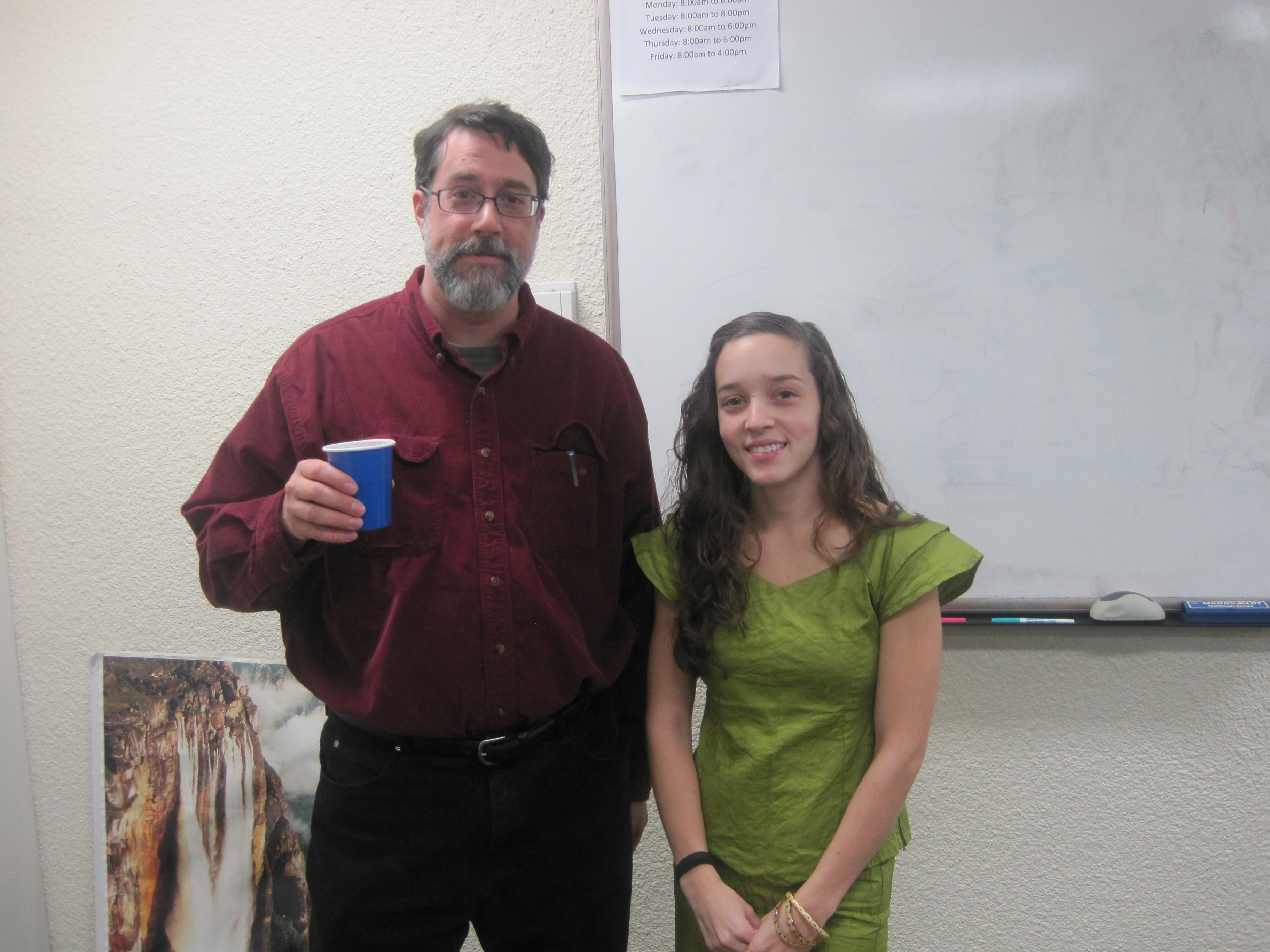
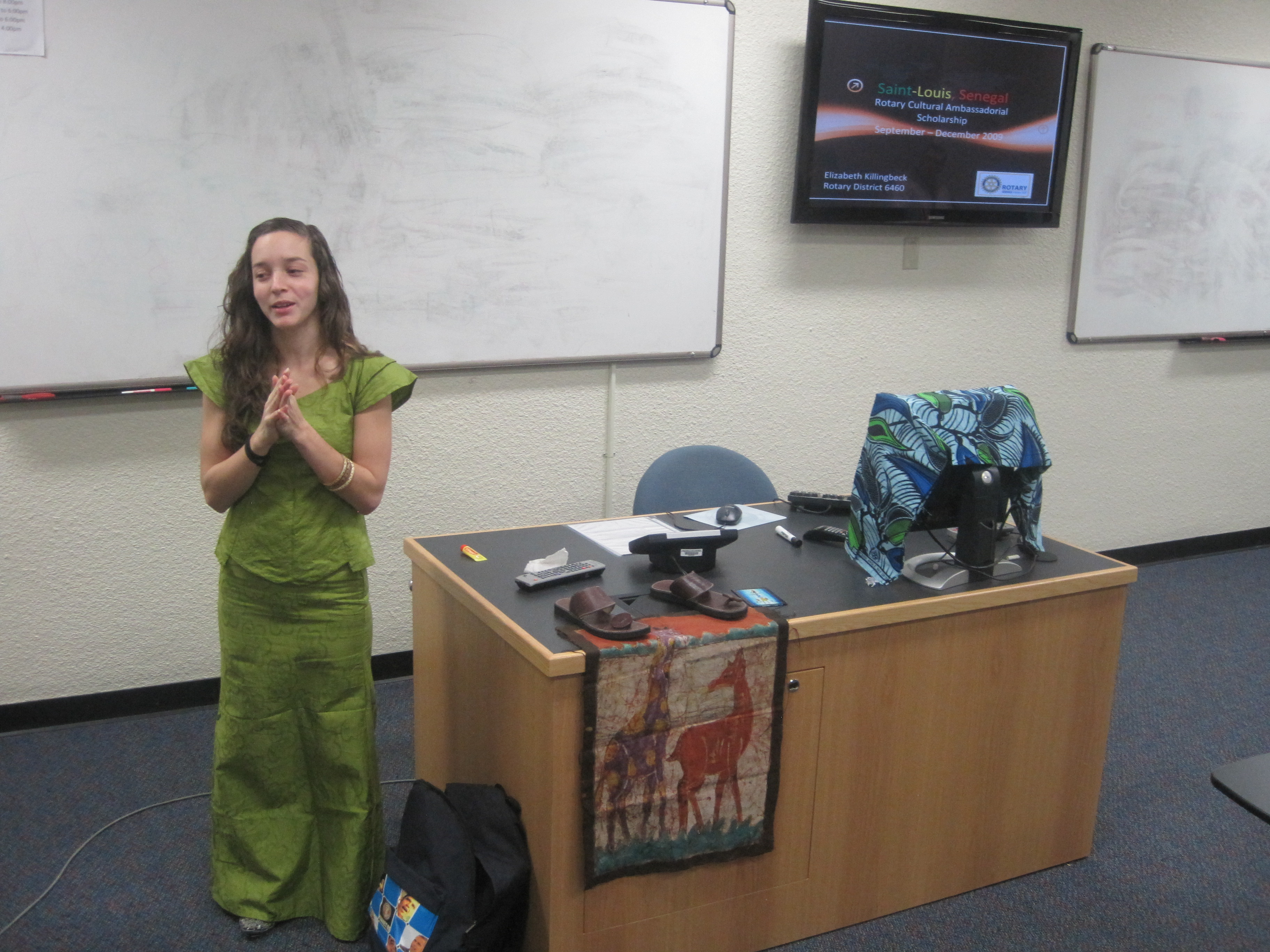
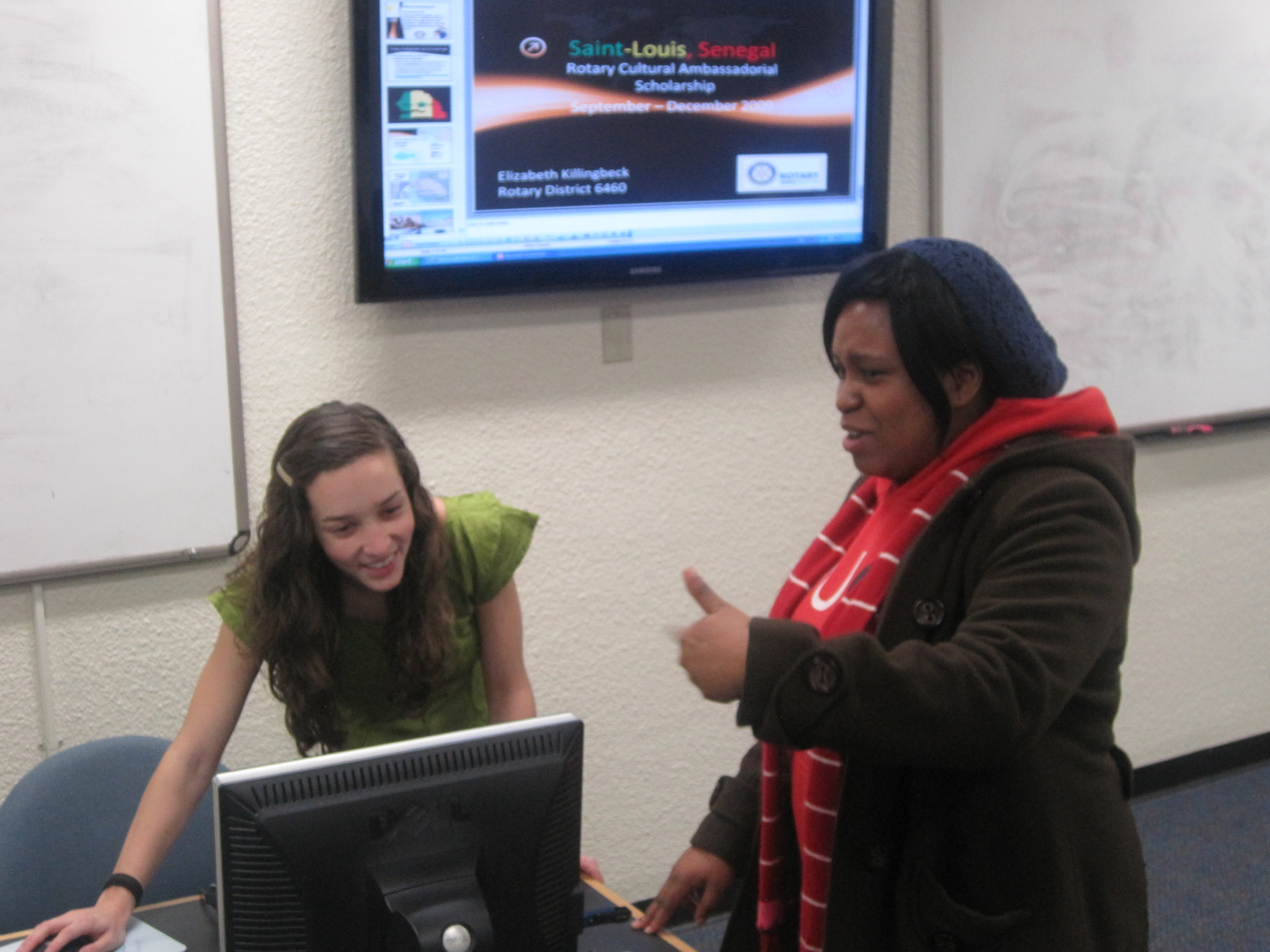
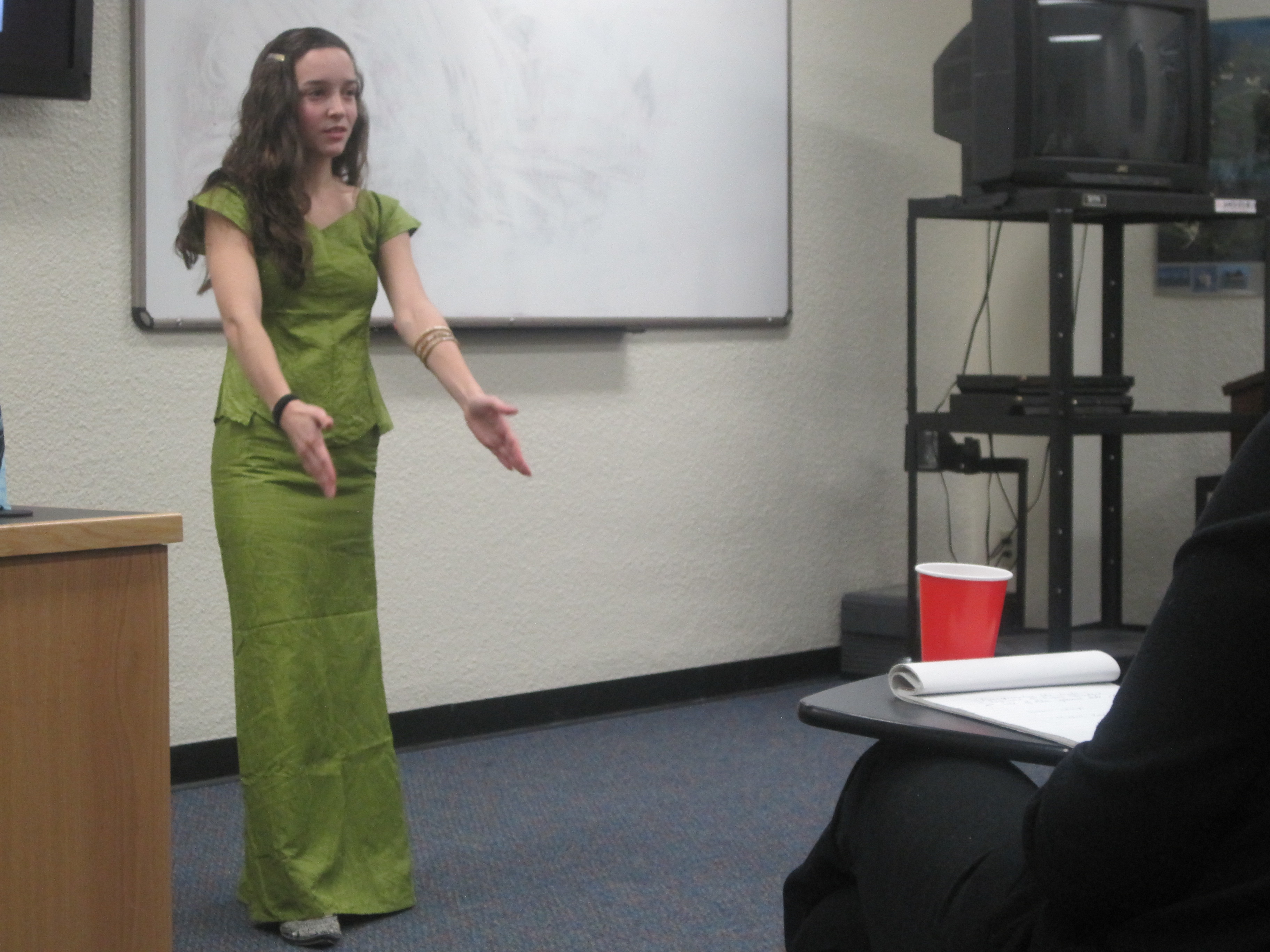
Today’s even in the Discover Languages Month was a talk by Elizabeth Killingbeck, a student of my department who had gone to Saint-Louis in Senegal in West Africa for a three month Rotary community project and a French-abroad experience. Elizabeth had come back with stories of said experience and was at the Plasma Lounge again to share it with members of the department, faculty and students who had come to listen. From a little after three pm when the talk started, and a little after four o clock when it ended, Elizabeth took us on a journey of her experiences, good and bad, in the West African country. It was worth it listening to.
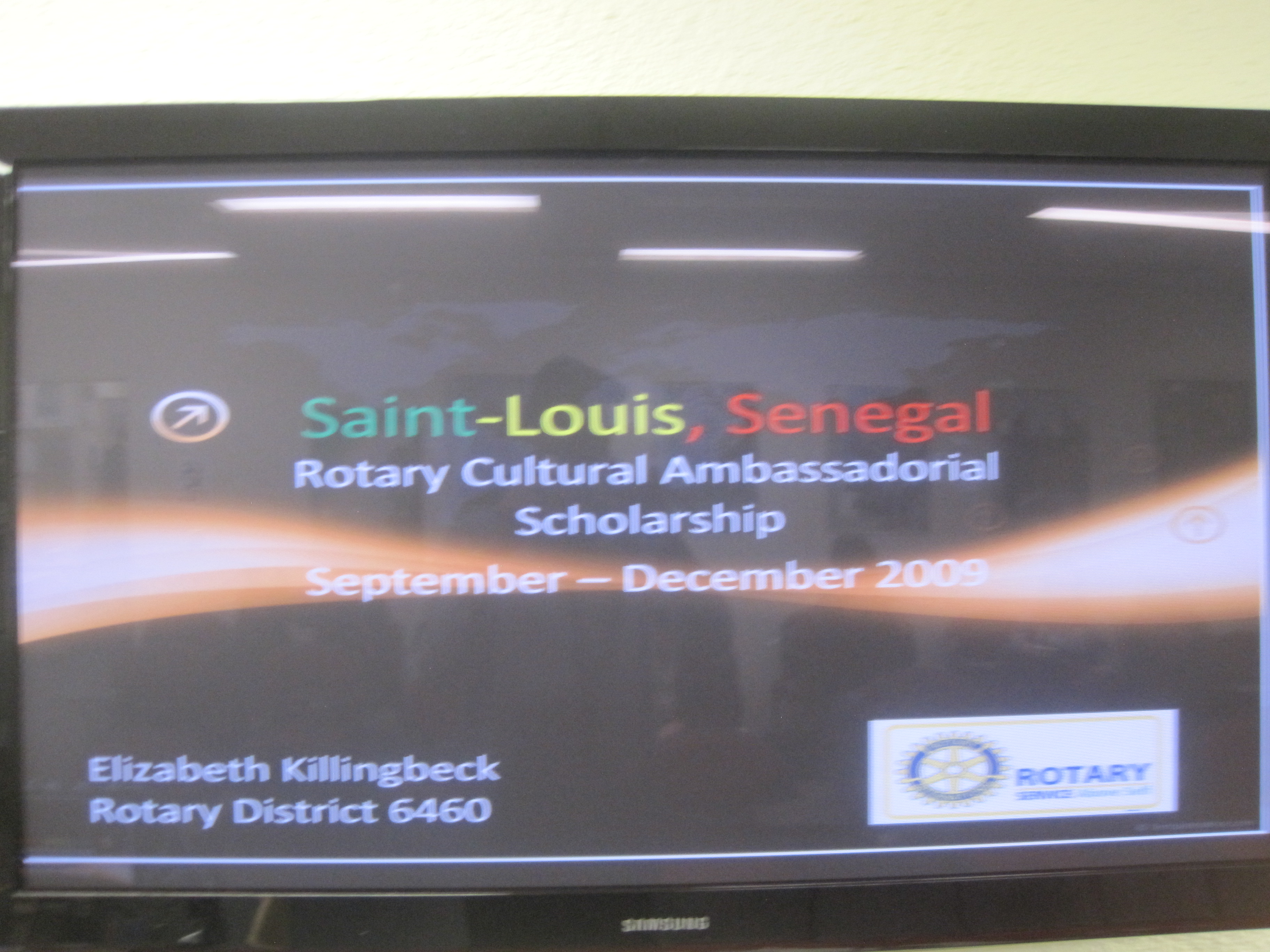
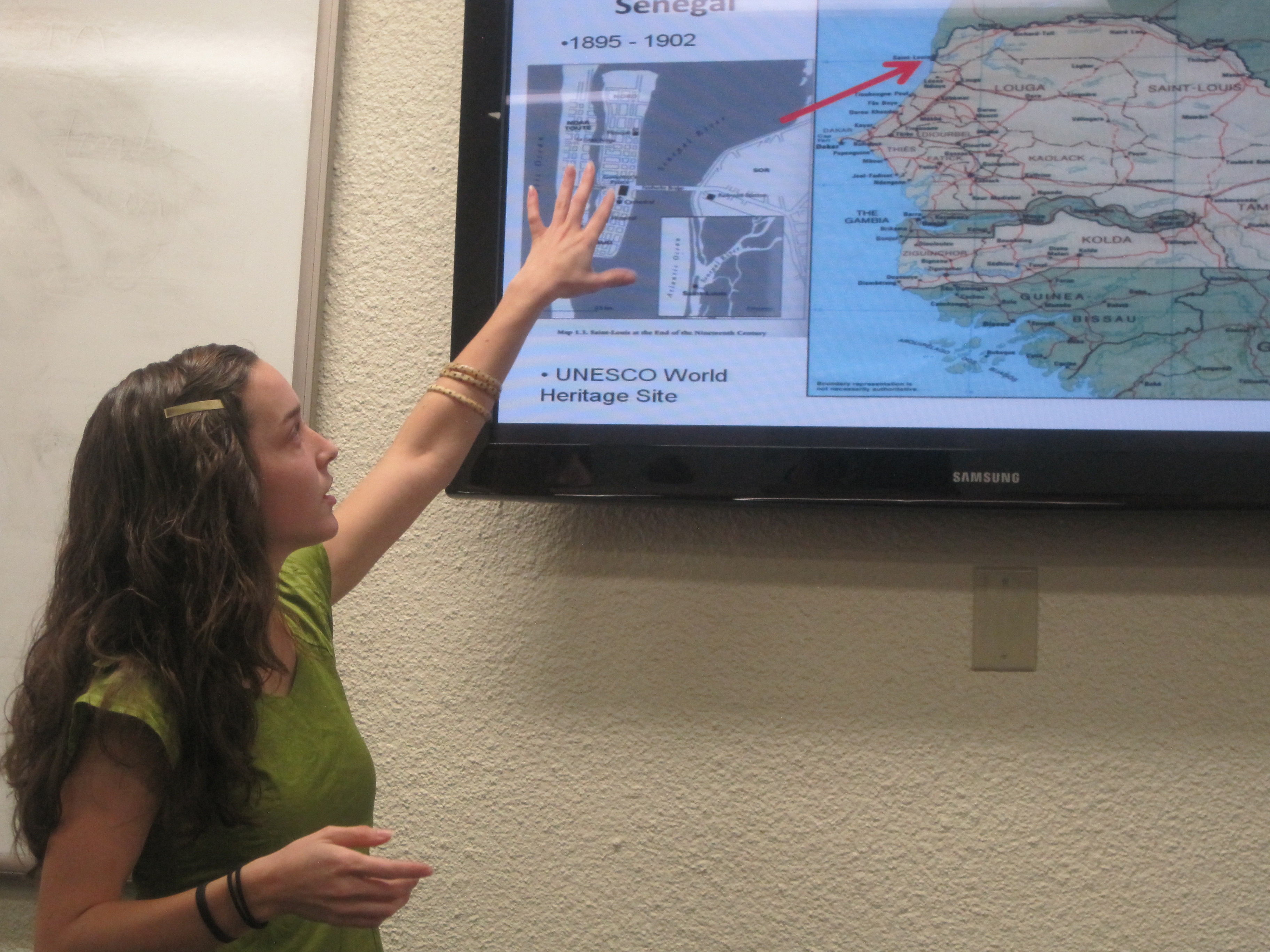
Her trip to Senegal was doubly memorable for her and for us because Elizabeth had never lived within any community of totally French-speaking people, nor has she ever been to Africa (or for that matter lived within a community of mainly moslems). And on top of that, she is someone of not so large a stature that must have gone through so much to survive (even in the US) within a group of bigger framed folks, and here she was in French and Wolof-speaking West Africa in the blazing sun. Now don’t get me wrong, Elizabeth is only soft-spoken, she is neither timid nor shy when speaking about what she finds fascinating.

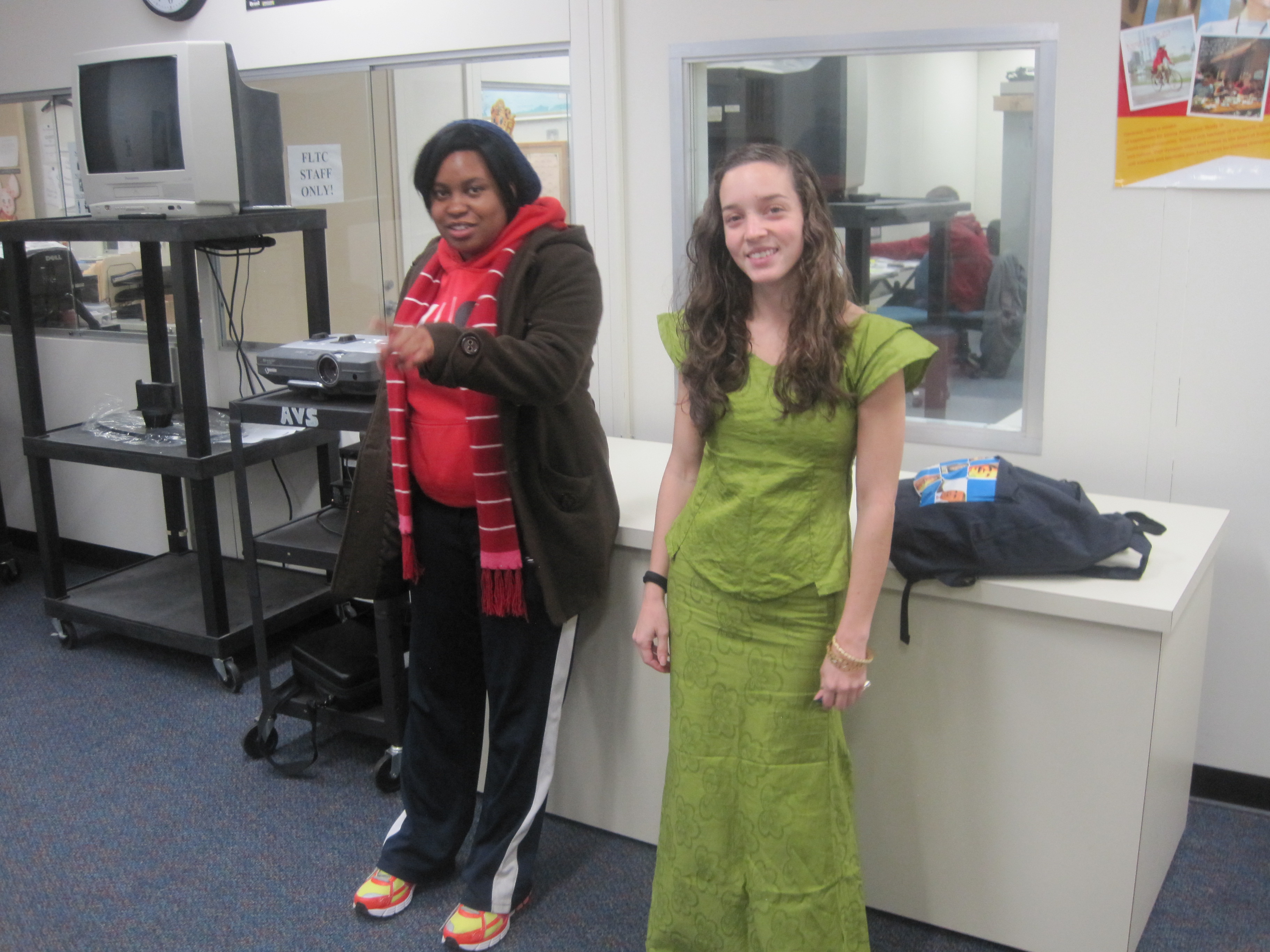
Wearing a green guinea attire that she bought while there in Abdoulaye Wade’s country, she talked about drinking water, flies, art, classrooms, children, vehicle art, street kids, food, family, language, camels, religion, literacy among many others. There were also pictures to show for it. Talking about water supply, Elizabeth talked about the problem of accessing good water where she lived. They drank from the well while she bought and drank bottled water. “Should she have drunk the well water?” Belinda asked me. “Definitely not,” I replied.

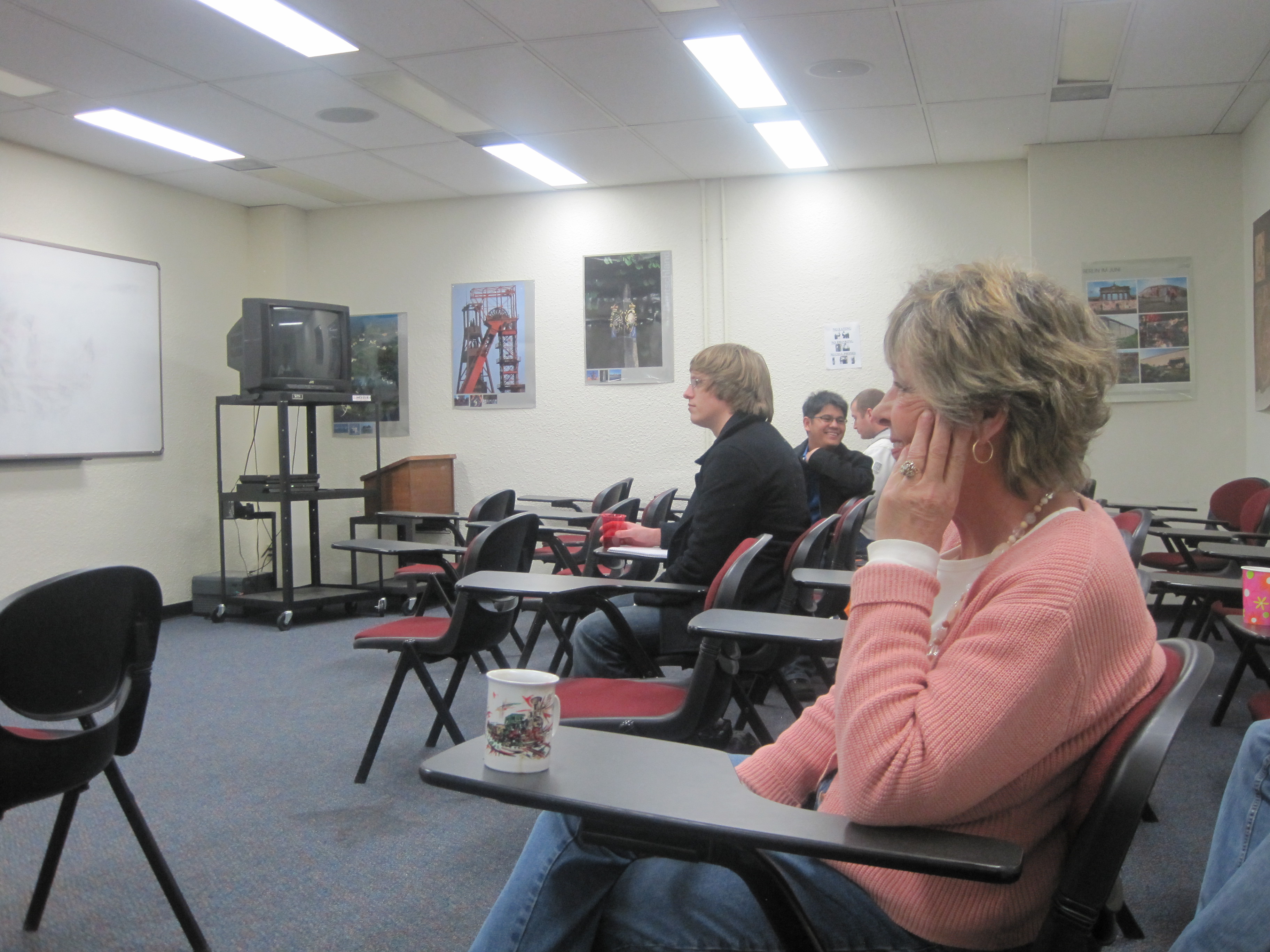
Present at the talk were the departmental head Belinda Carstens, the Chinese Professor Tom Lavalle, Prof Doug Simms, Prof Olga Bezhanova, departmental secretary Sherry Venturelli, the lab manager Catherine Xavier and many other members of the department. It was a nice talk over all.

Like in all of the previous talks in the Plasma Lounge, this one also had refreshments and drinks. The snacks was plantain chips – which I welcomed with all my appetite. Then there were marshmallows which Dr. Lavalle had brought just for my sake. See, this is one of the advantages of blogging. Somebody nice might read about your appreciation of the taste of marshmallows so much that he would actually go out of his way to buy you some more. I guess here is the time to express my appreciation for pineapple and chicken topped Papa John’s pizza. Not for everyday though. Just for Wednesdays. 😉

I think this concludes the Discover Languages Month events in the department. It has been a very good month for learning and sharing. I thank the organizers for the initiative.

The Big Hair Discussion

Yesterday was special in the history of this blog because we set a new (world)  record of hits and visitor numbers. You will understand why this memorable when you realize that the last time we had a record number of visit was December 27th when I published my opinion on the Nigerian guy who tried to take down the plane. Yesterday, that record was surpassed by about a hundred more visits. Can you believe that?

So what was the topic that turned my blog into a mecca of visits and contribution? You guessed it: another potentially terrorizing topic – women’s hair. Apparently, it is deserving of more than one posts, thus my decision to write this one.

Fact #1. Women care so much about their hair

Fact #2. Women don’t like people to tell them what to do with their hair.

Fact #3. Women’s hair is serious business.

But instead of rehashing the issues raised in this wonderful discussion, I will refer you to the post again to read and leave your comments, but not before I refer you to read Clarissa’s take on her hair adventures and ordeals. Apparently, Africans or Americans are not the only ones with which growing one’s hair in the natural state is a statement of revolt or rebellion. Far back in the Soviet Union, school children were punished for wearing their hair long. Clarissa had told me this during the coffee get-together with the Argentinean writer, and I had expressed my interest in the topic believing that it should be explored some more in detail. Why for instance did the Soviet rulers think that women’s hair represented luxury or militated against the state victory over capitalism. Needless to say, I like it when Clarissa writes about her growing up and how the system in the Europe of her youth influenced her thoughts and perception of life as an adult.

Fact #4. This interesting discussion on women’s hair is not likely to end today, or soon, but I like it.

Meeting Paula Varsavsky

I came late to this talk by the Argentinean writer Paula Varsavsky who had come to our University at the behest of the the tenacious Professor Bezhanova. The professor of Spanish had brought the brilliant writer to enlighten students of Spanish language and literature here on campus, as well as other interested listeners, in spite of financial straits in the University that made it impossible to financially compensate the writer in any way. Paula the writer writes mainly in Spanish and grew up in Argentina and the United States. She works now as a journalist, translator, short story writer and novelist.

Notwithstanding my late coming, I found a choice spot to sit, and I listened to much of the talk from a distance. The beautiful and soft spoken writer spoke of the repression of women writers in Argentina, the person of Evita Peron and her polarizing figure, writing in Spanish and its challenges, her life story and progress up to date, the politics of women writing, and military dictatorship (The wealthy people in Argentina were the ones who instigated and sustained the military for their own selfish reasons. The military didn’t strike of their own accord). At the end, she read a chapter from her first novel No One Said A Word (I have the video of her reading it on camera.) The chapter was descriptive of a very tender moment between a father and daughter some time before the general election in the country.

Here are a few things I learnt from the talk: Women writers are unknown in Argentina, she said. Even in cases when women writers wrote far better or were more prolific than the male writers, the male writers’ names still dominated the literary landscape. She gave an example of the woman writer and poet Silivina Ocampo who even though was a better writer than many of the contemporary male writers was not given the required recognition in the country because women are not supposed to be heard out of the home. The public voice effectively belonged to the man, and becoming a writer in such a country is like trying to usurp a position reserved for the men. Argentina, even till date, is still a repressive society for women. Another thing I learnt was the relationship between the class of wealthy Argentineans and the military. Apparently since 1930, the military that took over the government had done so at the behest of a small group of wealthy landowners who wanted to gain total control of all the resources of state. So to achieve this, they instigated the military to take over – much like what happened in many parts of Africa after independence as well. Some people, a cabal, to retain their hold on the land resources, backed military people to keep the people in check and control the land. As soon as the country went back into poverty, democracy took over. According to Paula, they are not totally gone yet and may return if the country gets back to prosperity.

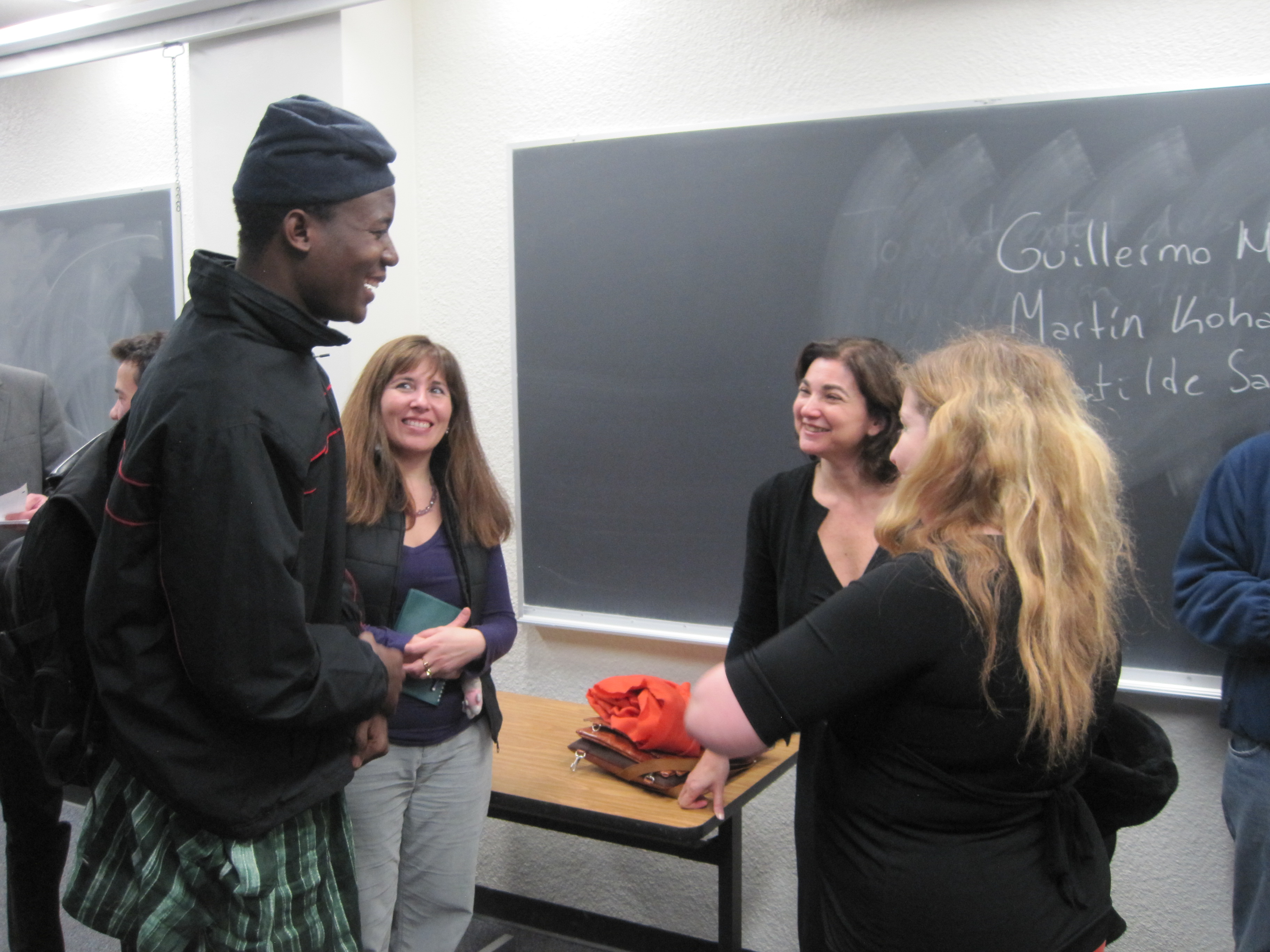
The best part of the day was at a get-together that took place later at Starbucks. Present was the writer and a few members of staff who had attended the talk earlier in the day, along with plenty coffee. Earlier in the day, I had read a translated short story of her titled El Retrato or “The Portrait” and found it very refreshing. Another one of her story, The Golden Dome, is online for reading and downloading. The informal get-together helped get to know her better, her influences, her interests, and her challenges. Meeting writers is always an exciting opportunity. I’m guessing that the only thing more interesting would be being a writer oneself.

India and its Plethora of Languages

Updated

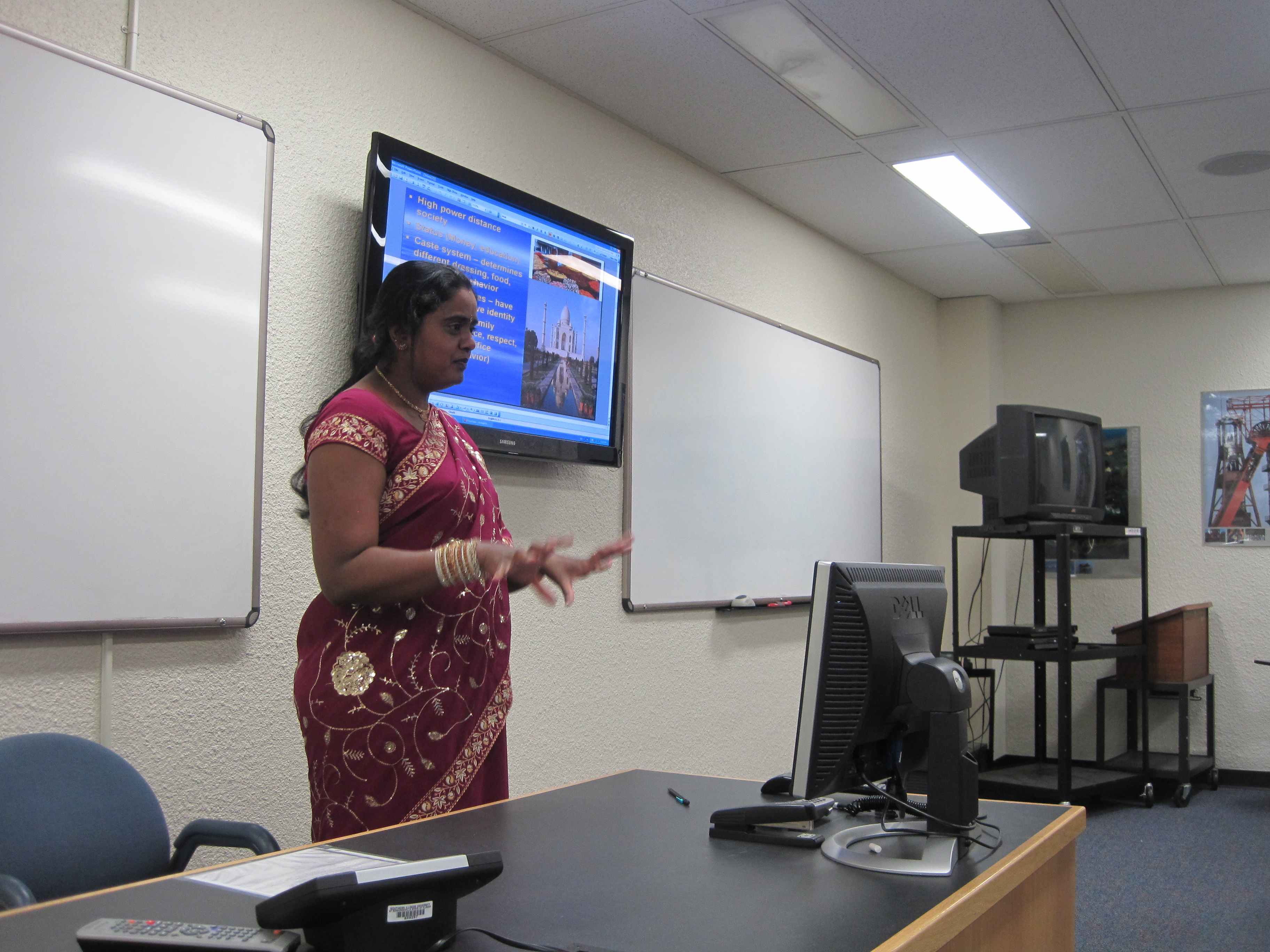
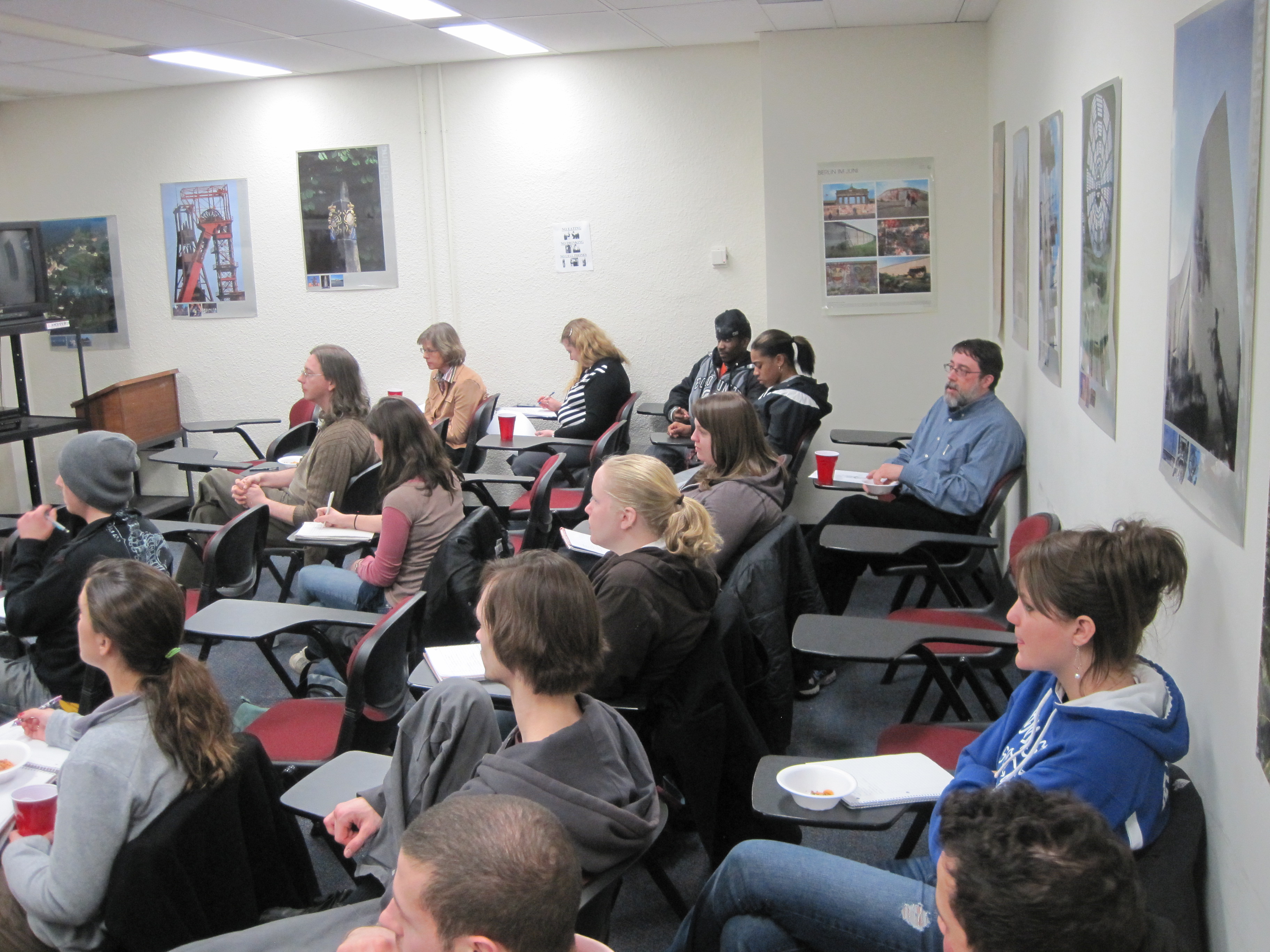
The third event in my department marking the “Discover Languages Month” took place on Wednesday and it was a talk by a graduate student of the department Catherine Xavier who spoke about India and its “Plethora of Language and Culture.”

I learnt some new things about India at this talk, one of which was that the country – as large as it is in population and land area – had only about twenty-two languages spoken in official capacity. The biggest of them was Hindi which everyone spoke and understood, but there were so many others. Much of the talk was along the lines of mine: i.e a comparison of Indian and American cultures, their similarities and differences. And from the presentation, I found that India is not much different from Nigeria as I previously thought.

One of the things she skipped however was the subject of the Karma Sutra which I believe is one of India’s biggest export to the world, and the influences of the literatures of Salman Rushdie and V.S. Naipaul – the two biggest and perhaps controversial names in Indian/English literature. According to Catherine, they were names that always stirred emotions and she had left them out in order not to make people uncomfortable or be polarizing. I do not take it against her because it doesn’t remove from the breadth of the talk, which lasted an hour and dealt with so many other things including economy, taxes, eve teasing, transportation, speech patterns, greetings and interpersonal relationship of Indians in foreign lands, and many more. As conservative as the culture in India is, it still managed to have produced a deep and colourful legacy of sensual exploration of the human body and I’d have loved to have been able to ask about it during the event. I couldn’t. It was a nice presentation over all with many laugh-out-loud moments during the talk and during some of the video clips that she played.

I love it because it was a balanced presentation of the positives and negatives of the country, unlike mine of two weeks ago which was mainly a positive representation of myself and culture. Clarissa has already accused me of being too positive about everything I observe, so it is just as well. Many of Catherine’s points reminded of me of what Nigeria and India have in common as a society. Famous Indian people in the presentation were Mother Theresa and Mohandas Gandhi.

Reacciones

I do not read nor speak Spanish much, so these don’t really count as vanity. Or maybe they do. They’re responses from students of an intermediate Spanish class who attended my talk two weeks ago. Culled from the class Facebook group, thanks to Professor Cuervo.

  • Fui a la presentación oral de Kola. La población de Nigeria es más que 50 millón. El tiempo en Nigeria es muy muy caliente. Kola dijo que la gente de Yoruba mira muchas películas de los estados unidos. Aprendí que cuando Kola llegó en los estados unidos él fue muy frío pero Kola llegó en agosto. También aprendí que hay poetas y cantantes en los estados unidos que son de Yoruba. – K. Mraz
  • Me encanta la presentación de Kola sobre la cultura de Yoruba. Fue muy interesante. Aprendí que el país de Nigeria tiene más que 500 idiomas. El idioma de Yoruba es el segundo popular de todos los idiomas en el país. Tambíen, aprendí que los raíces “ola” y “ayo” son muy popular en los nombres de la gente de Yoruba. Los raíces “ola” y “ayo” significan riqueza. – A. DeLuca
  • Yo fui a el evento, Cultura de Yoruba, y pense que son fue muy interesante. Aprendí que “ola” significa “riqueza” en Yoruba. Kola es el nombre del hombre de Yoruba, y su nombre significa riqueza también. Kola hablas cinco lenguas! Yoruba es en Africa y hay 15,000,000 personas que habla la lengua,Yoruba. Kola él lleva un sombrero llamó un “fila”. El dijo que el clima es muy diferente aquí. La presentación fue muy de información. – J.M. Ritter
  • Me gusta mucho la cultura de Yoruba. Las comidas que tuvieron para tratar fueron deliciosas. El hombre de Yoruba fue muy cómico con su presentación. Habló de cerveza y fiestas para unos minutos. También habló de la clima mucho. Dijo que el tiempo es muy diferente aquí en los estados unidos. Una amiga de él (ella vive en África) llamó por teléfono y dijo que fue muy fría en África ayer. Él dijo, “¿Que fue el tiempo?” y ella respondió, “Fue 82 grados”. Pienso que esto es muy cómico porque ella fue seria. El hombre Yoruba nos dijo que tiene miedo porque muchas personas le dicen que tiempos más frías están llegando antes de la primavera. En totalidad, su presentación fue muy interesante. – T. Dent
  • Fui a la presentación sobre la cultura de la Yoruba. El hombre (no recuerdo su nombre) tiene veinte y ocho años, y sabe seis lenguas, pero en su cultura hay quinientas lenguas. Hay muchas personas famosas de Yoruba como Seal, Sade Adu, Hakeem Olajuwon, y Wole Soyinka que ganó el Premio Nobel en 1986. En nombres, la palabra “riqueza” es mencionada muchos tiempos. Nosotros podemos tratar el jugo de arándanos y galletas de plátano. – L. Murphy