Browsing ktravula – a travelogue! blog archives for November, 2010.
From the new album called Beautiful Imperfections. Asa sings and strums my heart strings along the way.
 Today, after about a year of absence and distant hand wavings from across the road across the river, I visited the Gateway Arch again. It’s been a while. The Arch – a monument to dreams, as it was tagged when it was opened in 1968 – lay as enticing as it has always been from a distance, shining in the sun. The trip to the top took four minutes in a little tram that seats only five people. The trip downwards took three minutes. The monument 630ft tall retained its grandeur and charm as a symbol of possibilities, and a landmark to living history.
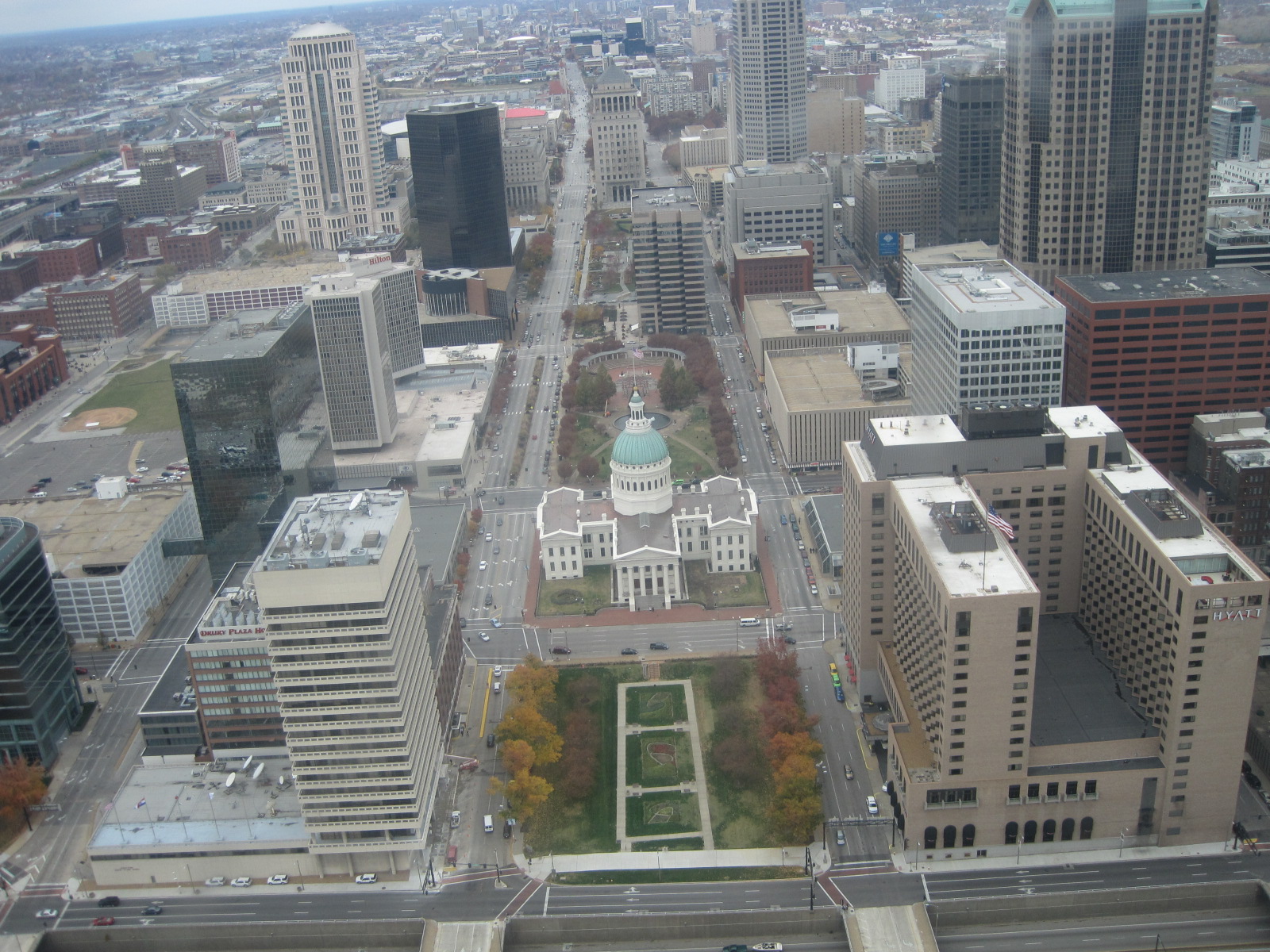 The Museum of Westward Expansion at the basement of the Arch itself didn’t disappoint, along with a 35 minutes movie presentation about how the structure was inspired, conceptualized, designed and constructed. Since 1968 when it was opened, it has remained a beacon – the tallest monument in the country. Still standing, still charming, still inspiring. If you ever find yourself in St. Louis, do check it out. A new regulation however is that, before entering the structure, you had to go through a series of checks, body scans and searches. And for good reason too.
I won’t trust the safety of such an important monument to just the pureness of heart of the rest of humanity either.
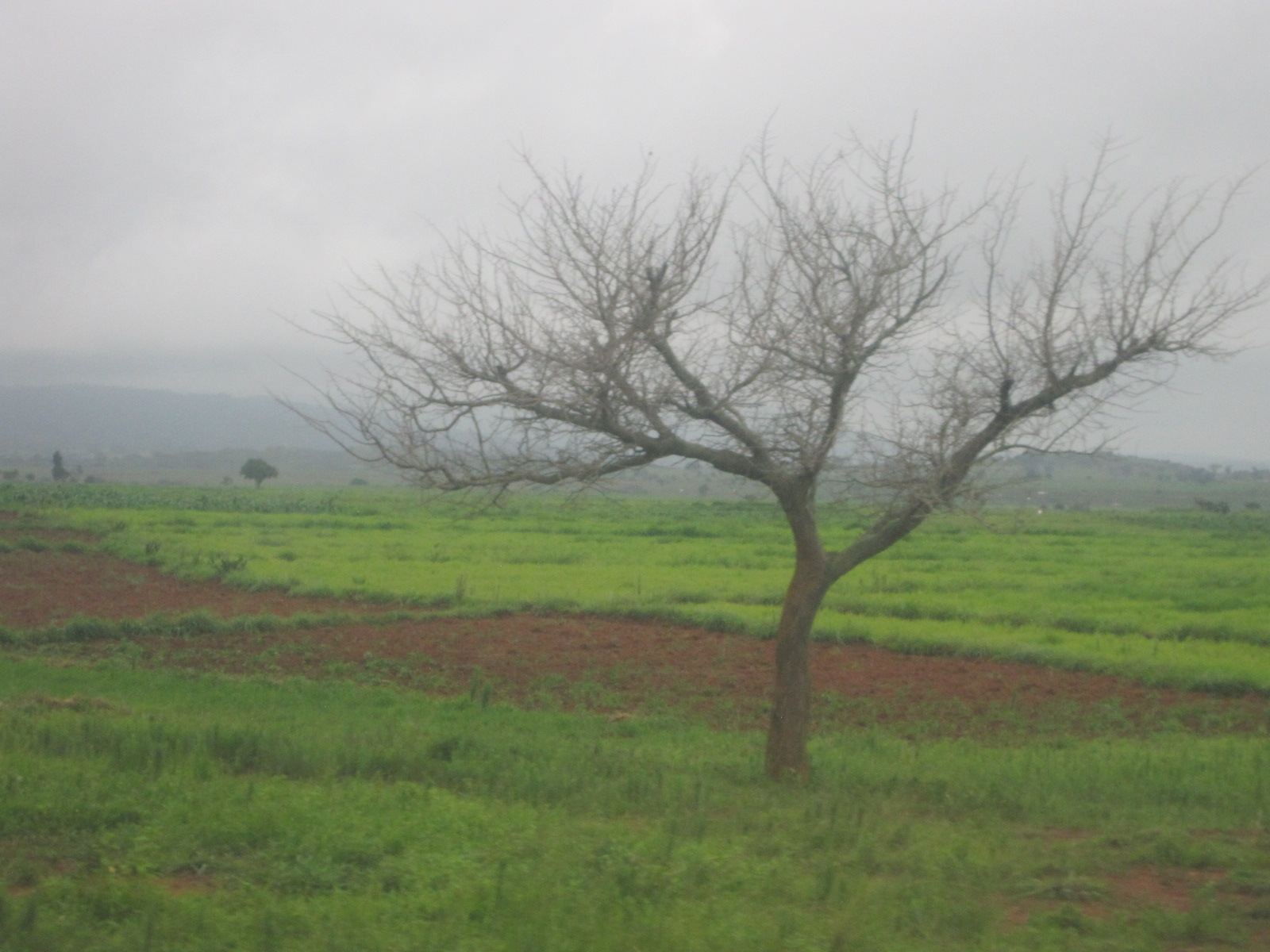 Our house lay at a junction of roads. The first one stretched from an unknown place beyond the mango trees and a public water well in front of the Oguns’ house. Ahead, it reaches out into the dry dusty parts of the village, past the albino barber’s house and farther down into places where now I can’t immediately conjure beyond the sight of leaves, dry wood and old men playing draught on wooden benches outside their unpainted houses. The other road goes past the Bello’s house to the church, then branches towards the main road where tar begins and heads into the town. When put side by side as they both inevitably lay approaching the wide spot in front of the house where we all usually play in the evening around the grown men of the area, they form a dusty wide line of an attempted “v” which ends at the Baale’s house. From there, they part, each again taking up a lonely path to my right into as far as the eyes can see.
A mental stepping now out of the big compound of my house into those streets, I stand now, facing the Baale’s house, turning my back to the dusty “v” of the coming road. On to the left, the road veers by the small thrush in front of the house where Lanko Lanko lives, then a little further down it reaches an electric transformer. After that, to the left, is my school, fenced around with a white concrete wall and spiked metal bars. Further down is nothing but gullies and leaves, and a beaten path to where moin moin is sold along with its corn paste companion, into the labyrinths of huts and a maze of households of mud and concrete of old women with intriguing dress patterns and ribald tongues. They knew me and knew that I ran away from them whenever I could, except when I had things to buy. And one of them called me “my husband”. Further down in the centre of the village woods where dirt competed with house animals and putrid smells from collective waste is a large agbalumo tree. It came along with it a myth that it housed spirits that tormented wandering children…
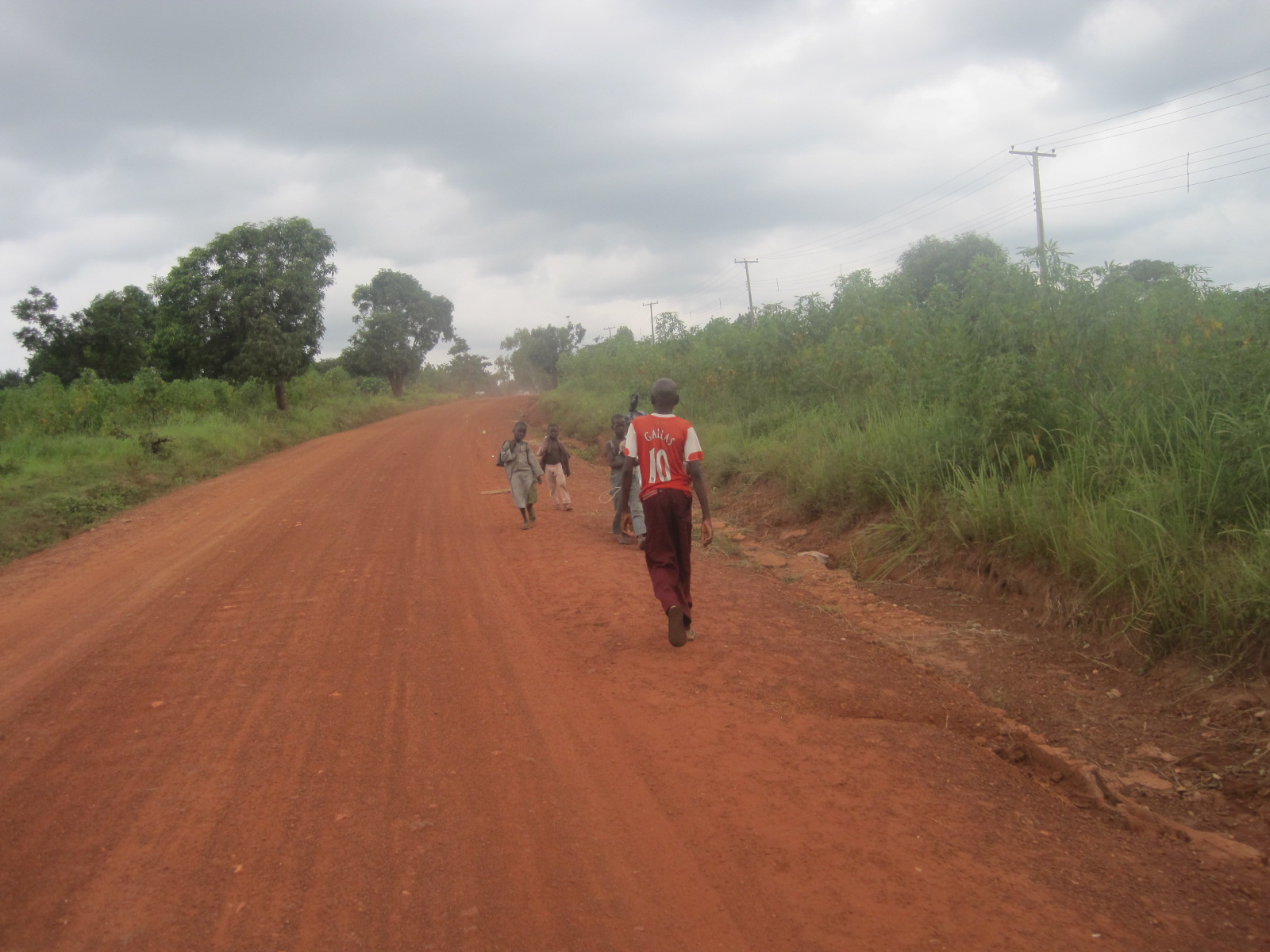 Back to my junction, on to the right are the better, sanctioned spaces of play: the opening towards Mama Lawyer’s clinic, just three houses away. Before that is the kolanut seller, then the farmer and professor’s awesome cottage where I saw a chess board for the first time and wondered why it didn’t look like the draughts boards I’d seen my brother play at home. In there are their three boy children one of whom was around my age, older by about a year or two. Then an orchard of sweet smelling flowers, a corn mill, trees of mango and cashew, and livestock. The cottage opened itself always up as a paradise of treasures, menu, and learning.
Mama Lawyer’s clinic, for then and now remains as old as memory. I never saw her husband who was the real lawyer. She has travelled to many countries, we were told, and she had come home to retire, operating the clinic as a way to stay active. Even then, tufts of grey hair already dotted her beautiful hair that kept her demeanour always so disarming. The smile, the warm hug of a mother of all little children, and the music in her voice when she asks “Young man, what have we got today? Aren’t we looking good.” It always made the enduring phobia of needles immediately disappear, if only for the second. So when I get the “fever” as all ailments are called to a six year old, Momma dresses me up in a thick sweater and the right pair of trousers, and we walk hand in hand towards Mama Lawyer’s house, stirring the dust paths of the village’s open roads into the evening sky.
(Photos taken in Jos, Plateau and Obi, Nassarawa. July 2010)
On returning from my weekly work in St. Louis, I’m pondering the importance of education and the state it is today worldwide (and especially in the US since I can only speak from the sneak peek perspectives that I have from being a teacher as well as a student at different times so far.) No doubt – as Clarissa comments in one of her recent posts – higher education in the US is (one of) the best in the world today. The reason why this is so is not just because of facilities, but because of some safeguards put in place to ensure independence of thought, and the freedom to pursue new challenges. It is terrifying to think of how easily it can collapse if allowed to become subject to the whims and prejudice of politics. Just last week, I followed the very many of people in the academics who had their hearts in their mouths while waiting for the result of the gubernatorial election because of the prospects of what would happen if a certain candidate wins. He had promised to cut funding to Universities in order to fulfil his party’s agitation for “small governments.”
 The No Child Left Behind Act passed under the Bush administration is notorious today because of how it subjects the prospect of learning to a set of blanket rules that doesn’t take into consideration a lot of testing biases, and variations in language aptitude and proficiency in child learners. It also subjects funding of schools to fulfilling a set of rules arbitrarily set by Government without regard for procedures or tested and trusted research results on child education. I’ve been reading a lot about the act and its effect on early childhood and high school education in the US, and it brings tears to eyes to see that had the changes in the Senate had been as drastic as it had been in the House of Representatives last week, by now, we would have returned to the same old process of returning schools to that retrogressive path. For now, higher education has been (only largely) immune from the influence of federal politics, but for how long will that remain? Till the next election?
The US federal budget for defense is more than twice the total annual budget of some other countries in the world – and for good reason, some might say. It’s not my place to knock the country’s defense or military agenda. Yet, thinking about it, one wonders if it is not always infinitely better to educate the mind of citizens than spend an even larger cost putting them and the country in harm’s way sometimes for totally non-justifiable reasons. The program on NPR today on my way to St. Louis focuses on the increasing number of US soldiers that have committed suicide since the occupations in the Middle East began. The number increases everyday, and the country spends more and more seeking psychologists and psychiatrists to take care of the resulting effects of the combat fatigues that fuel those horrible, preventable deaths.
I do hope that education grows someday to become a bigger priority for government spending, but I won’t cross my fingers yet. I live in a country of sometimes contrasting values, possibilities and characteristics.