…America got me mad!
I was angry and upset at the same time, and there was nobody to hear or temper my livid cry. Except Reham, of course, because she was there when it happened, but she couldn’t understand why a bottle of Californian Merlot could make a young man from Nigeria so friggn annoyed at a grocery store. To me, it felt like an usual and totally unexpected encounter, and even now when I think back at it, I still fume.
Okay, here is what happened.
It was Friday, and I had talked Reham the Egyptian into following me to town to do some shopping for fruits.
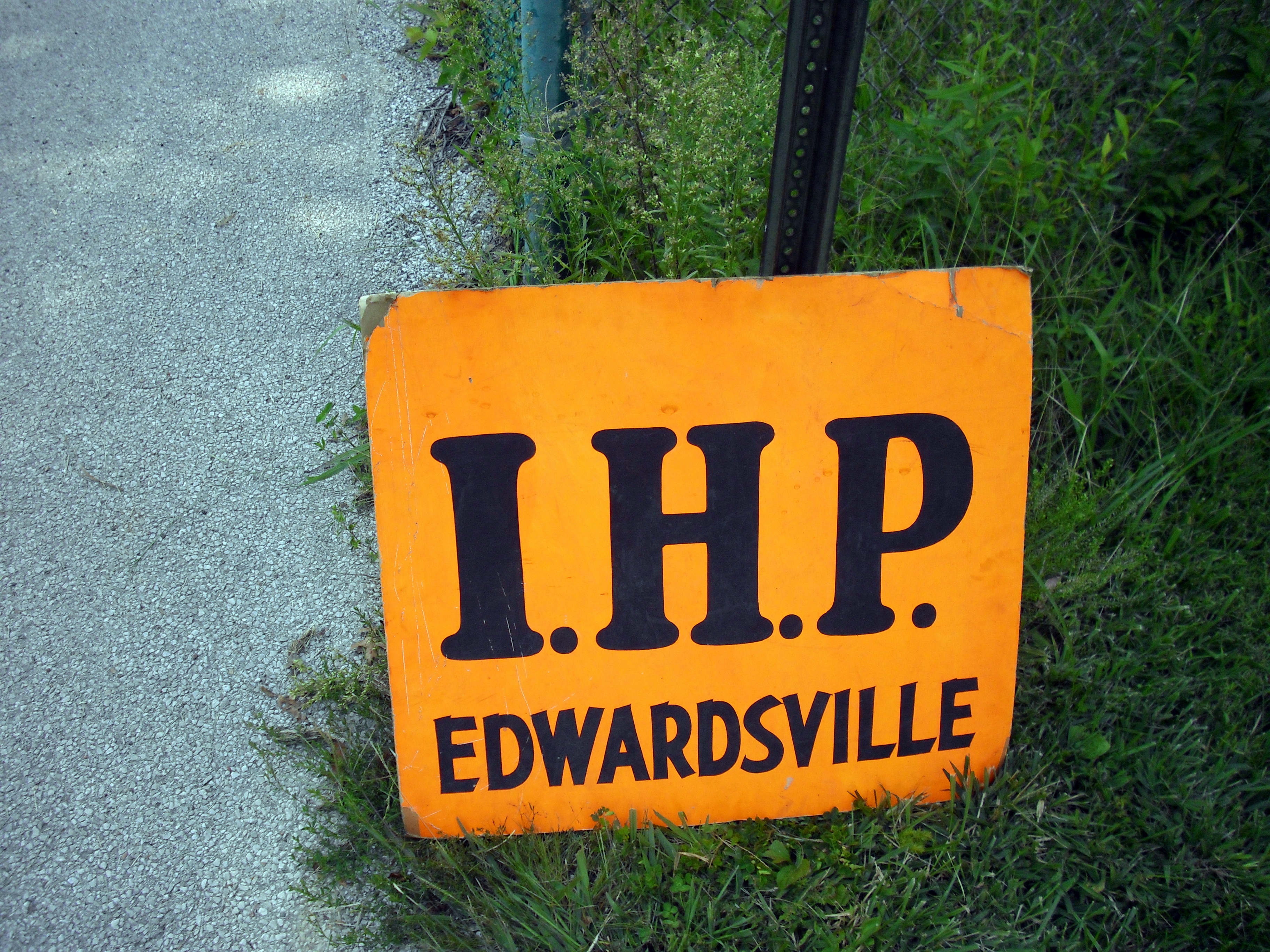
It was Friday, and I had talked Reham the Egyptian into following me to town to do some shopping for fruits and food. She obliged and we both went like two good FLTA students enjoying a beautiful city in the evening. If anything, it would give us another chance to look at downtown Edwardsville which we’d both been planning on visiting for a while now, without chance. She had just picked up a mobile phone which a relative in the US had sent to her from NY, and she had nothing else to do, like me. She equally felt the need to do a little shopping, so off we went. The bus from our “village” to Edwardsville station took only about twenty minutes, and we were sitting down at a lovely bus station/park, observing the beautiful scenery while we waited for the connecting bus to Walmart. It came on time, and we went with it. The distance from Walmart to Aldi’s is just a stone -throw. We walked the short distance, and we got there. The major difference between Aldi’s and Walmart is not only in the price of goods. It has cheaper fruits and food items on sale, for sure, but it also had some strange peculiarities that Walmart didn’t have. For example, you had to put in a quarter in the shopping carts before you could use them. And they won’t give you a shopping bag when you finish shopping. You had to buy it for yourself. All is fair so far, especially since they sell cheaper stuff than the other big stores. The problem came when I passed by a section of wines within the store, and took fancy to one lovely bottle of Californian Merlot.
 No, the problem came when I wanted to pay for it.
“May I see your identification, please.” The little lady at the counter said to me nicely, and I fumbled through my pocket to locate my ID that labels me as “A Visiting Scholar.”
She looked young enough to be a first year student in a neighbouring University, or even SIUE itself.
She looked at the ID, then at me, and asked. “We need to know that you’re old enough, before we can sell you the wine.”
I couldn’t believe my ears. I looked around to see if Reham was close by to laugh with me, but she was still busy shopping, and a few more people had began to line up behind me. I looked at the cashier and asked whether she was really serious. She was. I told her I was far older than that, and then she excused herself and went to show the card to someone superior to her. Then she came back to repeat the message.
“She said that you must show proof of your age or you can’t have it. Do you have a driver’s licence please?”
“I do, but it’s not here.” I said.
“Passport?”
“Yes, but I don’t take it everywhere I go. Come on! Do I look like a 17 year old kid to you?” I asked, getting almost angry at this time, but keeping calm. I was already causing a situation, and Reham looked at me from within the store with a puzzled look that showed her wonder at what I was being interrogated about.
“You have to be 21,” the lady said, firmly.
I was livid.
“Of course, I’m 21. I was 21 many many years ago. What kind of a shop is this?”
“I’m sorry,” she said again. And she looked like she meant it. She’s a youth, and she must understand my pain without being able to offer any help. “But that’s the policy. You may go elsewhere. Maybe they’ll sell it to you. It’s the policy here not to sell to anyone without ID.”
I left dejected and much annoyed. The scene repeated itself a few minutes at Walmart, where the cashier this time was an older woman whose line was “In case of anyone younger than 40, we require a valid identification.”
It was a horrible experience, I tell you, but I have now gotten over my disappointment with my grocery stores. With plenty teenage drinking and drunk driving in America today, they can’t seem to help it. But I retain my rage for the old Nigerian football stars on television who all claim/seem to be 24 years old when their mates are almost grandfathers. They it is who have successfully persuaded the whole world that if someone looks like me, without discernable beard or moustache, he’s most likely a minor, not fit the pleasures of Dionysus. Oh, the horror of it. For here I am, a travelling Nigerian spirit now floating aimlessly in a limbo space, unable to experience the true fullness of the American bottle. Fie! Fie! Fie!





















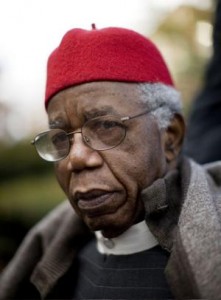 PROVIDENCE, R.I. [Brown University] — Brown University announced today (Monday, Sept. 14, 2009) that internationally acclaimed Nigerian novelist Chinua Achebe has joined the Brown University faculty. Achebe comes to Brown after 19 years on the faculty of Bard College, where he was the Charles P. Stevenson Professor of Languages and Literature.
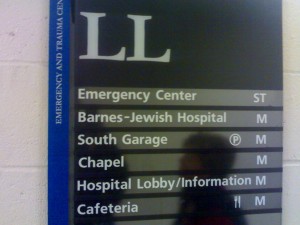 Healthcare is important to everyone, and no one, no one should have to die because they’re poor,, and no one should have to go broke because they fall sick. A society with as many rich citizens like America should be able to take care of it’s poor. This is not Obama’s policy. It is only common sense. The same goes for Nigeria. As I sat in the lobby waiting for Holly to emerge from the emergency room where she was being attended to, I began to think about the number of people who were rushed into the emergency room while I was there. I thought about all the sick people I know, and how much they already suffer, without worrying about having money to pay for it. I have a close family member diagnosed with cancer, and my heart goes out to her. A close friend of mine that I last saw in about 2008 in good health has now been diagnosed with a bone disease. He’s also sickle celler. One of the families here that has been very nice to me has a cancer patient in it. Patrick Swayze, the actor famous for his role in Point Break and Ghost has been announced dead after a long struggle with cancer. Just a few days ago, we had mourned the passing of Senator Edward Kennedy of the USA, and Gani Fawehinmi of Nigeria, both favourite public figures whose lives were cut short by old age, and a terminal disease. It is a world filled with sickness that we live in. We should not make it worse by restricting care and support to only the ones that can pay for it. Helping the weak and taking care of the sick may just be the most noblest act we could perform as conscious human beings, or the sanest reason of our existence.