Marching On, Counting Down

This month officially begins the last three months or so of my Fulbright year, but not the end of this blog. Yes indeed, by sometimes in May this year I’d be done with teaching my delightful students how to pronounce Gbadamosi and kpangolo; or how to greet an adult they might meet on a dusty road in Surulere, Lagos; how to perform naming ceremonies after eight days of the child’s birth; or how to sing in Yoruba, or dance the bata dance; or how to beat a talking drum. In short, by sometimes in May 2010, I will be taking off these photos from my wall, packing my bags, auctioning my winter jacket and boots, returning my bicycle to my beloved host parent, and getting onto a home-bound plane. I’m excited. Well, not really but that’s not the point. 🙂 My work here will be done by then, and I will be heading home.
In this month of March and beyond therefore, here are a few things I am looking forward to:

  • Re-issuing my first collection of poems Headfirst into the Meddle (first published in 2005) on Amazon. It will be available in both electronic and print editions.
  • Releasing a new book of photography, comprising of some of the best and/or memorable photos I’ve taken in the course of my stay here in the United States. The book – not being a full memoir – will only have some sparse notes beside each picture telling of the experiences that gave birth to the shots, but it will surely contain so many more things that I have never talked about on the blog. It will also be on Amazon and other online booksellers.
  • Getting published in one of the New York Times or The Washington Post. I don’t know why this is even important. Oh, screw it! 😀
  • Wishing my mum a very special happy birthday.
  • Going on Spring break to a very cozy destination in the United States, if possible.
  • Featuring more interesting guest-posts on ktravula.com. I want to spend much of the remaining three months reading from others as much as I write. I think I deserve it too, 🙂 so if you are a writer, or a blogger, or just a passer-by with an opinion, an anecdote or something to share, let’s talk and you could be my next guest-blogger of the week.

Beside that, everything else is fine and as they should be. And oh, there is a new poll on the right side of this blog, to commemorate the coudntdown that has just begun. What do you think I should do with this blog as from May 2010?Close it? End the travelogue but keep it open for reading indefinitely? Keep writing on it even from Nigeria? Or turn it into a book? You can choose more than one options. I appreciate your taking the time to tell me what you think. And don’t despair, May is still so far away. 😀 And, your votes count.

And, one final thing. This post about meeting Paula Varsavsky has been updated to show a few things I learnt from the talk. I was too much in a hurry the last time to post pictures that I left out the essence of the talk. And yes, this blog KTravula.com is now avalable on the Kindle! If you do have a Kindle, you can now subscribe to this blog so that you can read wherever you go. Head over here to check it out, and do leave a few nice words of review about this blog there if you have the time. I will appreciate it. Thank you.

Enjoy, and have a pleasant month.

______________________

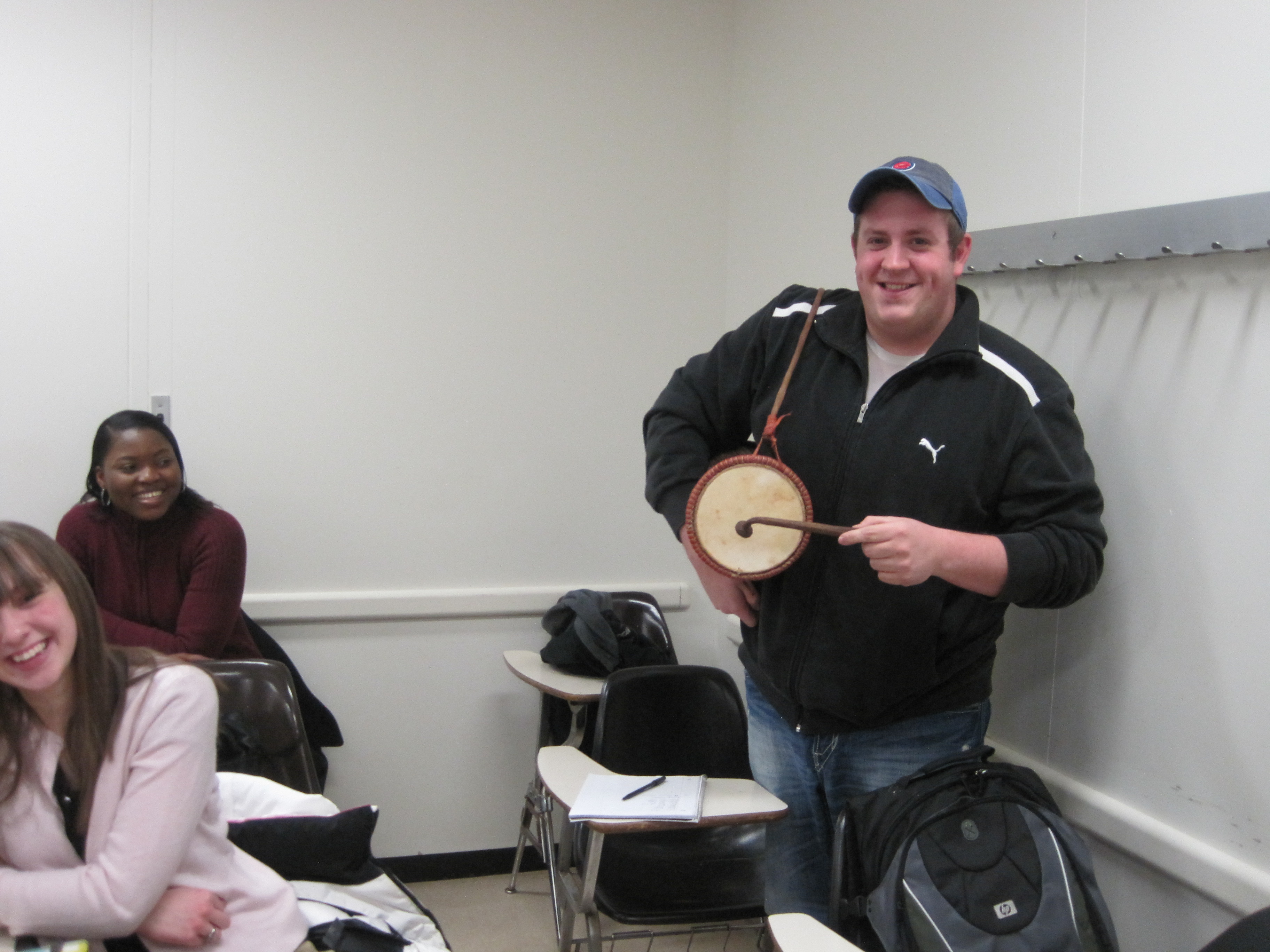
Picture taken in class last week at a drum-beating session. Used by permission.

Meeting Paula Varsavsky

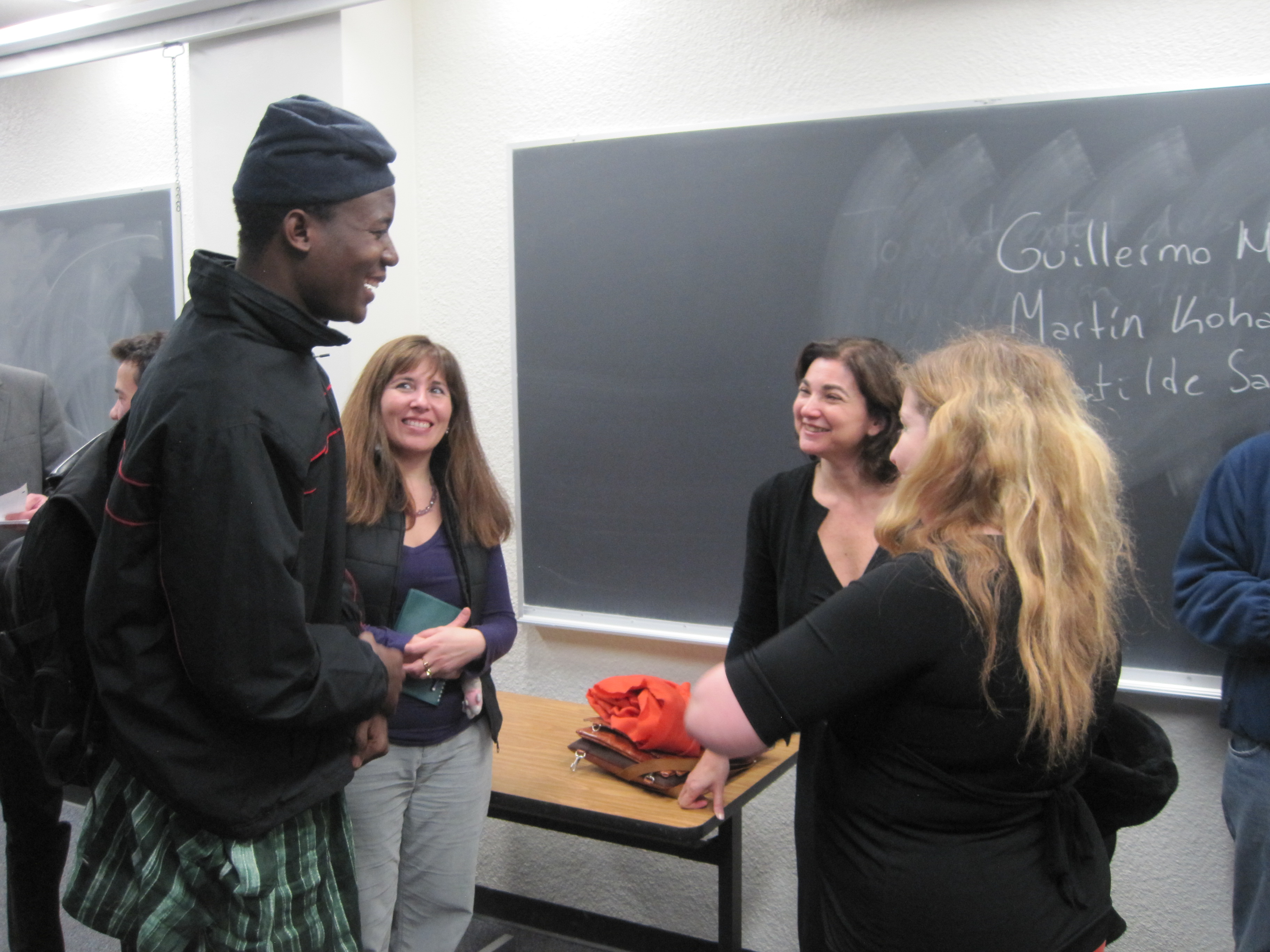
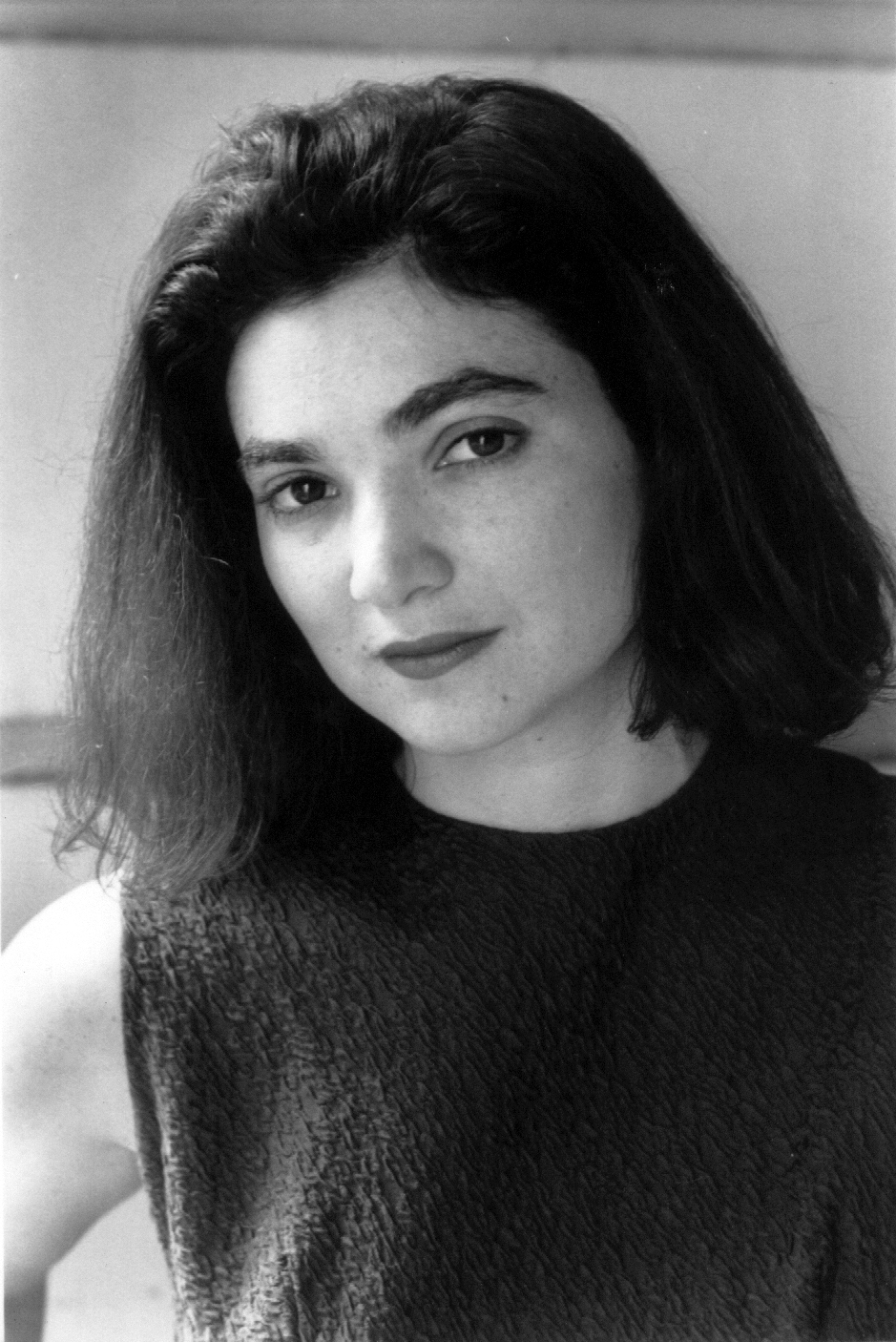
I came late to this talk by the Argentinean writer Paula Varsavsky who had come to our University at the behest of the the tenacious Professor Bezhanova. The professor of Spanish had brought the brilliant writer to enlighten students of Spanish language and literature here on campus, as well as other interested listeners, in spite of financial straits in the University that made it impossible to financially compensate the writer in any way. Paula the writer writes mainly in Spanish and grew up in Argentina and the United States. She works now as a journalist, translator, short story writer and novelist.

Notwithstanding my late coming, I found a choice spot to sit, and I listened to much of the talk from a distance. The beautiful and soft spoken writer spoke of the repression of women writers in Argentina, the person of Evita Peron and her polarizing figure, writing in Spanish and its challenges, her life story and progress up to date, the politics of women writing, and military dictatorship (The wealthy people in Argentina were the ones who instigated and sustained the military for their own selfish reasons. The military didn’t strike of their own accord). At the end, she read a chapter from her first novel No One Said A Word (I have the video of her reading it on camera.) The chapter was descriptive of a very tender moment between a father and daughter some time before the general election in the country.

Here are a few things I learnt from the talk: Women writers are unknown in Argentina, she said. Even in cases when women writers wrote far better or were more prolific than the male writers, the male writers’ names still dominated the literary landscape. She gave an example of the woman writer and poet Silivina Ocampo who even though was a better writer than many of the contemporary male writers was not given the required recognition in the country because women are not supposed to be heard out of the home. The public voice effectively belonged to the man, and becoming a writer in such a country is like trying to usurp a position reserved for the men. Argentina, even till date, is still a repressive society for women. Another thing I learnt was the relationship between the class of wealthy Argentineans and the military. Apparently since 1930, the military that took over the government had done so at the behest of a small group of wealthy landowners who wanted to gain total control of all the resources of state. So to achieve this, they instigated the military to take over – much like what happened in many parts of Africa after independence as well. Some people, a cabal, to retain their hold on the land resources, backed military people to keep the people in check and control the land. As soon as the country went back into poverty, democracy took over. According to Paula, they are not totally gone yet and may return if the country gets back to prosperity.

The best part of the day was at a get-together that took place later at Starbucks. Present was the writer and a few members of staff who had attended the talk earlier in the day, along with plenty coffee. Earlier in the day, I had read a translated short story of her titled El Retrato or “The Portrait” and found it very refreshing. Another one of her story, The Golden Dome, is online for reading and downloading. The informal get-together helped get to know her better, her influences, her interests, and her challenges. Meeting writers is always an exciting opportunity. I’m guessing that the only thing more interesting would be being a writer oneself.

Paula Varsavsky on Campus

Paula Varsavsky, a journalist, novelist and short story writer from Argentina is coming to campus today to give a talk to students and all interested listeners.

The talk is titled “Patriarchy and Dictatorship: The Challenges for a Female Writer in Argentina Today

She has published novels Nadie alzaba la voz (Emecé, 1994) and El resto de su vida (Mondadori, 2007), both of which are taught at different universities in Argentina, the United States, and Germany (Yale, Queens College, University of Buenos Aires and Heidelberg Universität, among others).

Nadie alzaba la voz was published in the United States in a translation into English by Anne McLean with the title No One Said a Word (Ontario Review Press, 2000) to excellent reviews.

She also wrote a collection of short sories El retrato (soon to be Published by Editorial Nueva Generación). Some of her short stories have been published in journals and anthologies, such as Lamujerdemivida, Translation, World Literature Today, Hostos Review, Revista Cultural Avatares y In Our Own Words: A Generation Defining Itself – Volume 8.  Currently, she is working on her third novel to be published under the title Una clásica historia de política y poder.

Thanks to Prof Bezhanova for the link. 🙂

Re-Reading Myself

Re-reading oneself can be such a boring chore that I’ve always tried to avoid because of the emotions it inevitably brings back. Most times, one is just too glad to be rid of the overwhelming feelings that make one write in the first place to go back at will. I’ve just finished looking through all the poems that make up my first collection of poetry and all of a sudden I’m back with the overwhelming nostalgia of pre-University and University life. Maybe this year would be a good time to re-issue the collection into the public after five years of hibernating fermentation.

I am now officially looking for publishers for the electronic and print reissue in America, Europe and in Nigeria. Here, below were the lines I penned for the year 2000, written a few hours into that year while I sat in church on that December evening, bored to my bones.

The Year of the bug

It’s a new dawn because a year is born,
But are hours years for zero to mark one?
Men have flown to realms of high imagination
with anxiety and snippets of loose contrite illusions.
Of human clock, a stroke of the thin long second hand,
Or the gradual droop till the final grain of sand
Marks a whole new start – a thunderous landmark.
And new time commences, yes it remains dark.
Here begins a new dull span of restless days
Of ends unseen, unsure even when one strongly prays.
Called it a new phase, named it a new rolling life –
new day into pay; new life into more human strife.
And yet remains too cryptic and strange remnants
of words, thoughts, fears and imagination parts,
And of pregnant signs, sights and sighs unblown –
of things not yet seen and yet all unknown.

(c) All rights reserved.

I’m Not A Writer, And I know It

I have a problem reading myself for a second time. I can barely read it for the first time at all. I write a piece of work, I try to read it again with an editing eye and I get strangely disgusted. I can barely make it through to the end. When I eventually do, I see only the things in my head, and not the words on the sheet, and I find that I have not edited it at all, but just endured another needless ordeal of re-reading.

I am lazy. With fiction, I fail with imagination but succeed somewhat with memory. I may thrive on details but sag on the fictive dexterity of their expression. I’m not a writer, and I know it. I am only a bearer of stories. With poetry, it becomes a little different. The muse descends, rides me roughly like the spirit in a possessed body, and leaves, leaving something pretty behind that I sometimes like to read again and again, although it scarcely leaves space to take full credit. So I can’t write a poem on the spot to save my life, or so I like to think. I will find out perhaps when there’s a gun to my head and an loud order to “Show me you’re a poet. Write something before I waste your brain on this concrete floor.”

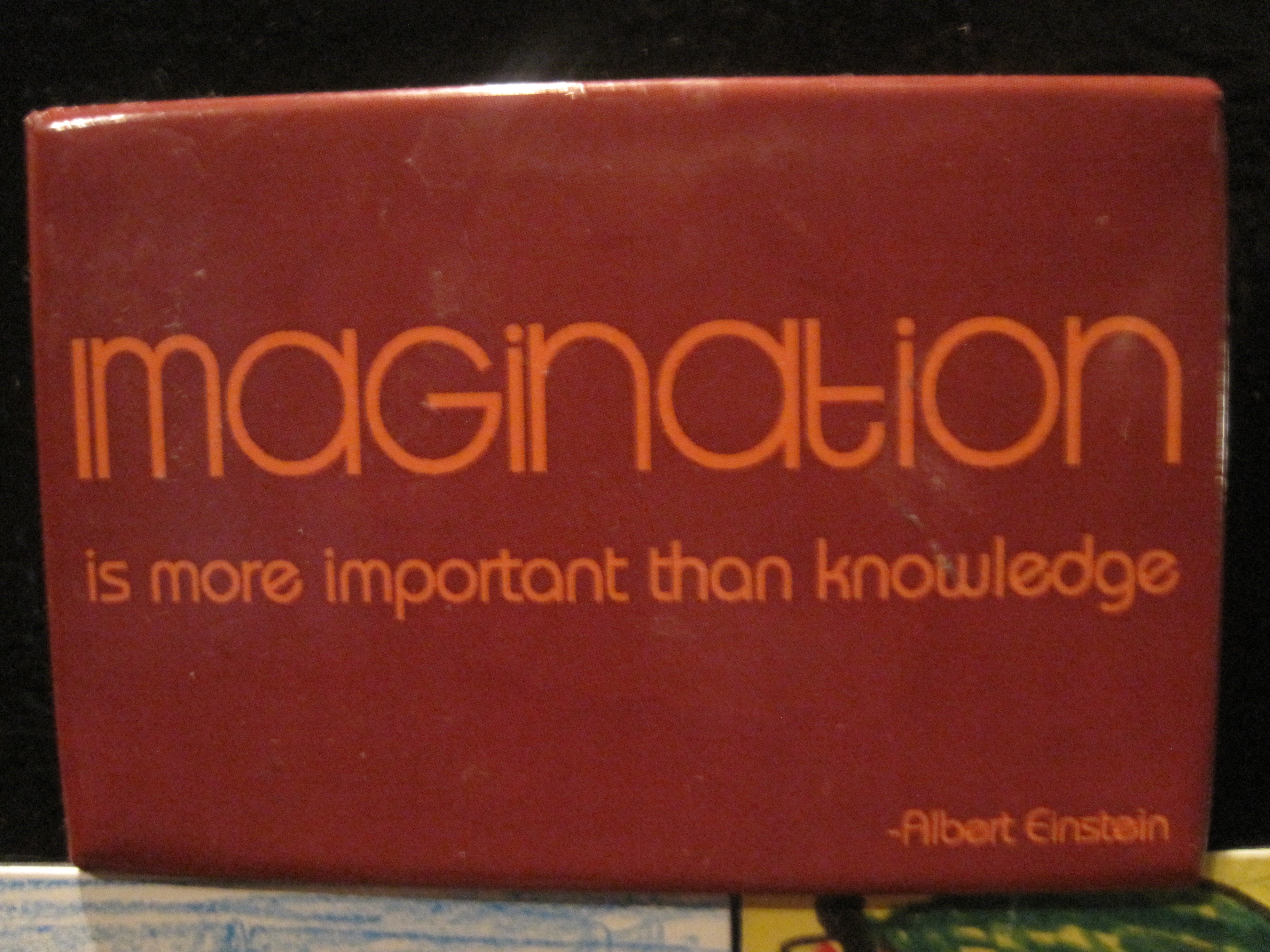
Knowledge is for philosophers. Imagination is for writers. Only one of them changes the world, and -hint, hint- it’s not knowledge. Really. So as soon as I can exchange my junk of knowledge for liberty of imagination, I will be a writer. Until then, let me just be me, the quiet observing traveller in this American wilderness. Perhaps also, a bearer of stories.

(Picture credits: A fridge sticker at the house of Nigerian writer Ikhide Ikheloa, taken in Maryland on the 14th December 2009)