 I was not too surprised when a fellow FLTA from France said to me two weeks ago over dinner at the Union Station in Washington DC that the city was developed by a French person. She is french, and, as she said so, everything had just fallen along the line of positive French stereotypes in my mind. They designed the Eiffel Tower and the Statue of Liberty, they must also be the big brilliant brain behind the planning and beautiful layout of the country’s capital. It was my first time of hearing the story, and though she didn’t have the name of the said designer, I believed it.
Today, I had a different conversation with Papa Rudy who says the city was developed by a black man. Now I’m confused. I told him of my discussion with the French girl, and he insisted that a black man did the city’s design. And somewhere in the conversation, the name Du Pont came up. Now I am familiar with a DuPont Circle in Washington DC, and reading more on it this afternoon showed me that it was named after a man Samuel Francis Du Pont (from the famous Du Pont family who really were originally from France). However, he is neither black nor an architect. He was a rear admiral during the Civil War. The wikipedia article on the beautiful Paris-like city does not say much about the “designers” of the city, so I’m giving up.
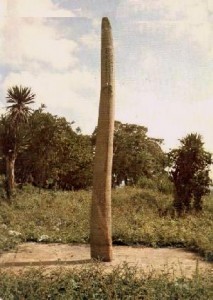
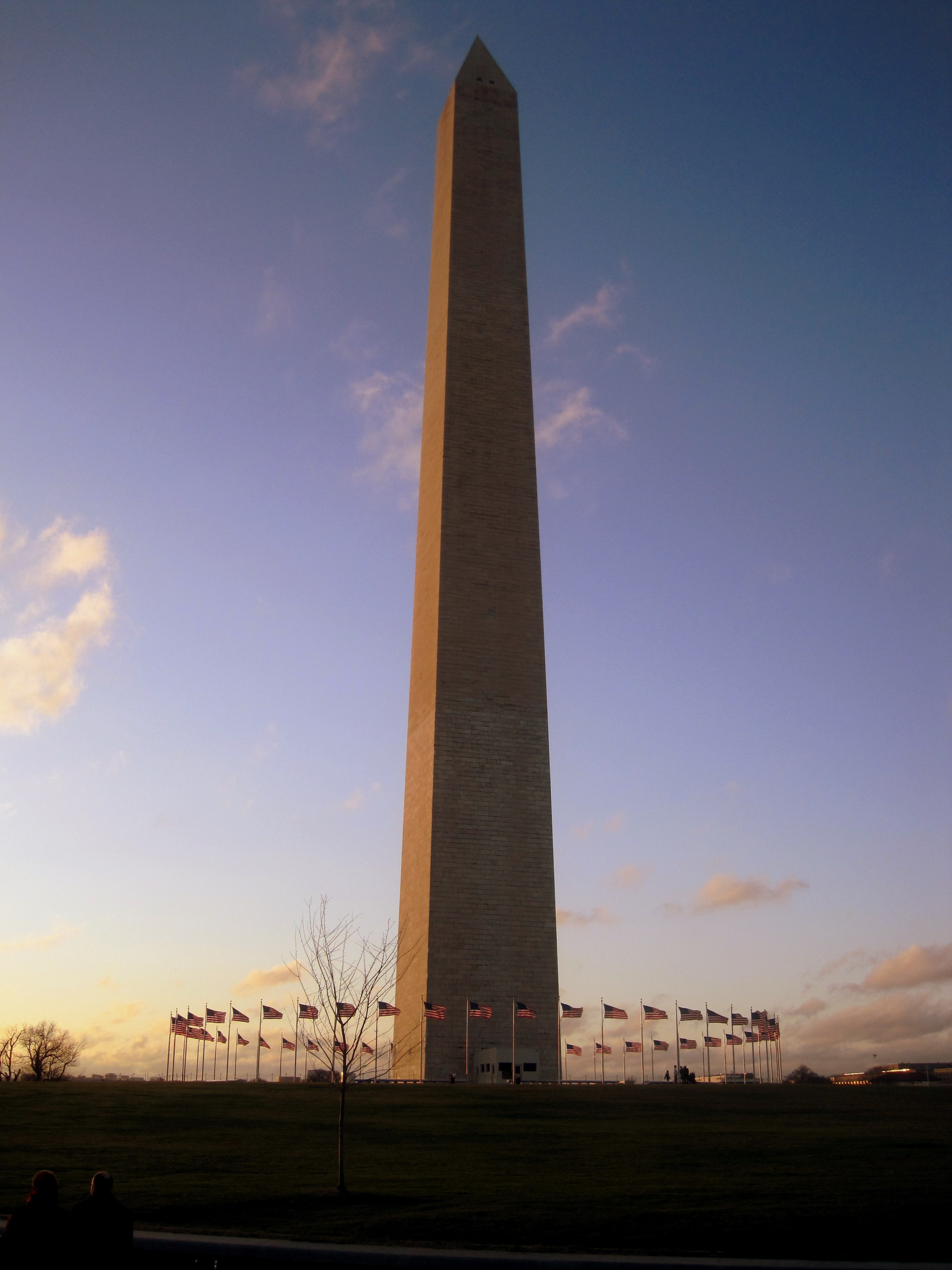
Or not. I have now come up with my own theory, that the person who conceived the brilliant layout of the city with the Washington Monument obelisk standing almost in its centre, could only have been the son of Oduduwa (the fabled progenitor of the Yoruba people). That’s the only explanation that can suffice to clear the air on the similarity between the Opa Oranmiyan obelisk in Ilé-Ifè and this Washington Monument obelisk. The Opa Oranmiyan was erected at a spot once believed to have been the burial site of Oranmiyan, a grandson of Oduduwa. Archeological evidence has now shown it not to be standing on any burial spot at all, but to be just a visible memorial to the fabled progenitor whose name it bears on it’s body. On the Opa Oranmiyan, as has been since its (undated) erection is an inscription in middle-eastern letters that archeologists have accepted as corresponding in sound to “Oranmiyan”.
It’s not the same in height and size as the Washington Monument, but that’s beside the point. The only other way to look at it is that Oranmiyan himself walked over to Washington DC from Ile-Ife with the Washington Monument on his right hand as a staff of office, and planted it firmly at the centre of the city as an artifact for future generation of archeologists to behold. What about that?
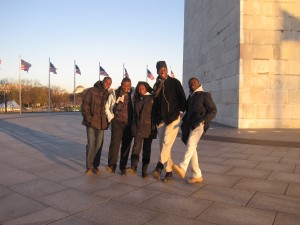 Oh no, not another alphabetic title, you say! Well, my time in this enchanting city is now over. In less than eight hours from this moment, I will be entering another mode of transportation out of the District of Columbia.
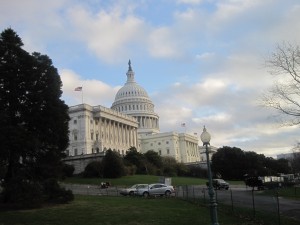
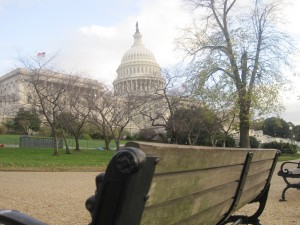
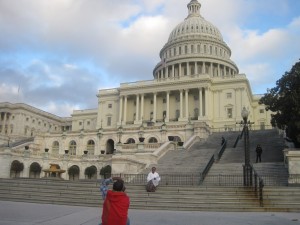
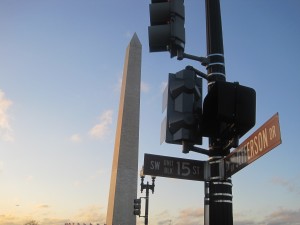
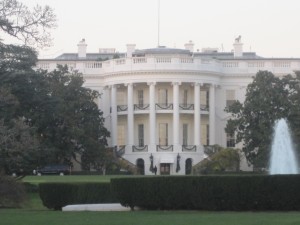
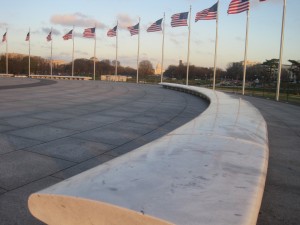
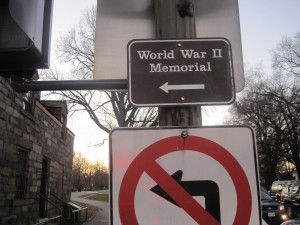
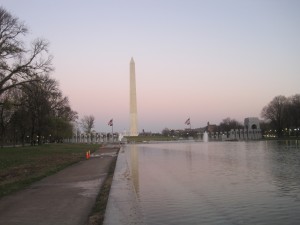

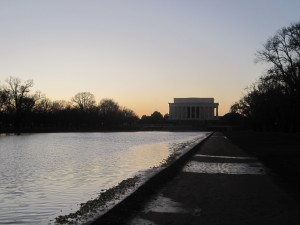
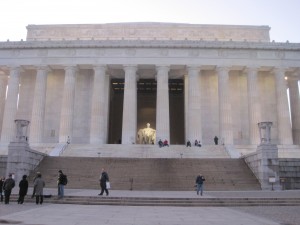
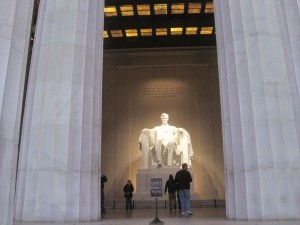
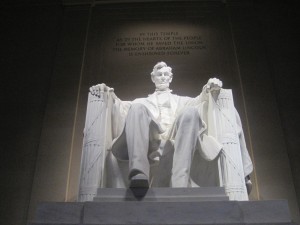
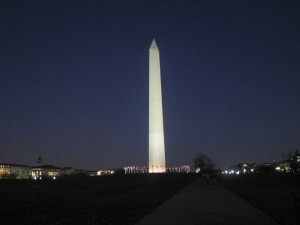
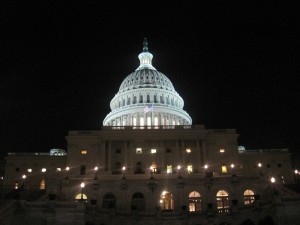
 all taken on my first day in Washington District of Colombia. Those familiar with the famous landmarks in the city would recognize the Capitol (which houses both legislative houses of the country, and in front of which each new president takes his oath of office), the Lincoln Memorial (which houses a larger than life marble structure of President Lincoln, and in front of which Reverend Martin Luther King delivered his I Have A Dream speech), the Washington Monument (which was at one time the tallest structure in the whole world before being overtaken by the Eiffel Tower in France and later the St. Louis Gateway Arch among others. Now, it’s just the tallest structure in DC), and the White House which houses the president.
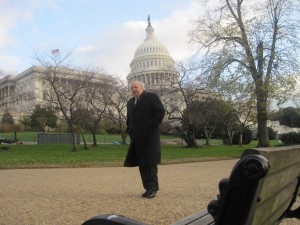 The first thing I did after checking into the Hyatt hotel and finding out that the registration for the conference will take place much later in the evening, and that I had more than three idle hours to burn, was to pick up a map of the capital, and set out to discover it, on foot. Because of the so many American movies I have seen I had a certain confidence that I knew just where everything was located. The Capitol, a magnificent Dome that houses the two houses of the United States Legislature stood just a stone throw from the Hotel, so it was the obvious first choice. The first thing that I noticed was the not so adequate number of traffic lights. The traffic lights were indeed different in design from the ones I’m familiar with at Edwardsville, but they were not enough. Some times, I just had to cross the road the Nigerian style – after looking left, right, left and right again – when there was no light to guide.
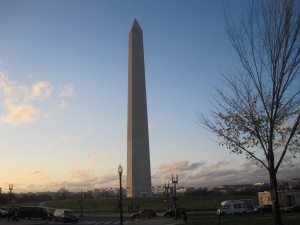 After I left the Capitol, whose interior I could not access only because it had closed to the public just a few minutes earlier, I headed to the Washington Monument. The Washington Monument is a brick obelisk structure built to commemorate the life of the city’s founding father President George Washington. Just like the Capitol, the Washington Monument was closed to the public, or I would have loved to go up to its top if there was such a chance, and look down on the city. According to Wikipedia, it is is both the world’s tallest stone structure and the world’s tallest obelisk, standing 555 feet 5⅛ inches, and representing the dead president’s overlooking eyes over his capital.
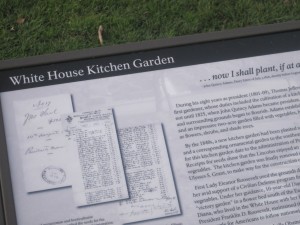
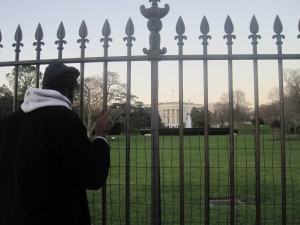
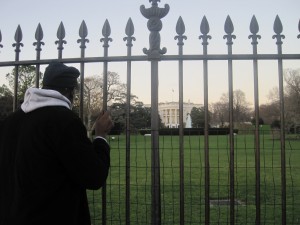 From the Washington Monument, I had two choices: The White House or the Lincoln Memorial, both of them almost equidistant from the Washington Monument. I chose The White House first. The long walk across public parks and winding roads to the White House took almost twenty minutes, only because I walked fast without stopping even for air. It was beginning to get dark. I got there in time, peeped through the black iron gates to look at First Lady Michelle’s garden project pictures displayed within reach inside. I could see the South Lawn fountain at a stone throw in front of me. on the second floor of the side of the building facing where I stood was also the Oval Office, where the president spends most of his office time. I was indeed looking at the magnificent mansion in which most of the world’s most important decisions were reached. I have never seen the State House of Nigeria. I don’t know what it looks like, nor do I know where exactly it is located.
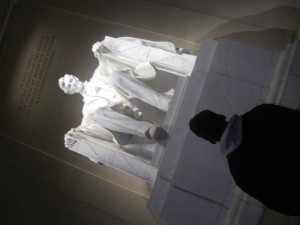 I then went, still on foot, towards the Lincoln Memorial – the site of the now famous “I Have A Dream” speech. It comprises of a small building which houses a larger than life marble sculpture of President Abraham Lincoln staring out towards the Obelisk of the Washington Monument. Actually, between the Washington Monument and the Lincoln Memorial is a long Reflecting Pool around which hundreds of thousands of supporters and civil right activists stood and sat while Reverend Martin Luther King Jnr read his speech. Looking at the sculpture of the late president did not fail to humble and inspire. On the walls to either of his hands were inscriptions from Abraham Lincoln’s famous speeches, and right behind the large marble sculpture are the words: “In this temple, as in the hearts of the people for whom he saved the union, the memory of Abraham Lincoln is enshrined forever.” Those words, along with the ones on the wall, bring a kind of solemnity and awe to the already hallowed feel of the memorial, and I left feeling quite inspired, especially when I think of the fact that on those same steps out of the building was where the words “I have a dream” were first uttered in a way that sowed a seed of hope whose result is now being felt all over the United States.