I Believe, I think, Unfortunately!

I believe in development.
But many times, if you would ask me to tell you what exactly would be my indices of development, I might not immediately be able to point at much. (It would depend on where I am, won’t it?) But if you asked me about Nigeria, the first would definitely be a 24 hour power supply and a fast, reliable internet access. Then a repair of local fabric industries in Kaduna, a return of groundnut pyramids in Kano, cocoa farms in Ibadan and coal in Enugu.

But then if we had all of that, plus a higher life expectancy, healthy food for (almost) all, good healthcare and good social services, I’m pretty sure that we’ll still find something to complain about if we wanted it badly enough. Won’t we? There seems to be an inherent cynicism that never seems to go anywhere. We may start complaining that the neighbouring country seemed to be getting more action in the international scene and we want some of the action too. I bet that one of the reason why the first democratic dispensation was scuttled was that people still weren’t satisfied with the situation of the time even though they had better food, better education and better healthcare. This is not a Nigerian problem. It’s humanity’s.

However, I believe so much in the potential for development in Nigeria especially, and the tendency for things to get better if we talk about them often, commit ourselves into making them work, and helping to maintain current structures that already serve us well. But some times it seems pretty much like a futile effort with no light at the end of the tunnel. In the end, every drop of contribution will go a long way into producing a flood of results.
I’m sounding like a politician or someone hoping to run for public office, right? I hope not, because behind the hope and optimism is a nagging skepticism. I’d just read the preface to George Carlin’s Brain Droppings again. George is an amazingly creative thinker whose ideas sometimes frighten me within the folds of their allure. Here we do not completely agree, but I’ve read the words very many times over and I find them interesting. Listen to him though:

“My interest in ‘issues’ is merely to point out how badly we’re doing, not to suggest a way we might do better. Don’t confuse me with those who cling to hope. I enjoy describing how things are, I have no interest in how the ‘ought to be.’ And I certainly have no interest in fixing them. I sincerely believe that if you think there’s a solution, you’re part of the problem. My motto: Fuck Hope…” He continues “I view my species with a combination of wonder and pity, and I root for its destruction. And please don’t confuse my point of view with cynicism; the real cynics are the ones who tell you everything’s gonna be all right…”

Could he be right? I sometimes wish I could say all that. And then I remember that my name isn’t George, I’m not Irish American, and I don’t occupy the same societal milieu as the comedian who died at 71 in 2008. In this day of terrorist threats, fear of the apocalypse, global warming/climate change, handguns infiltrations, gun-totting robbers, unsafe cars, non-universal healthcare, unsafe drugs, and underpaid airplane pilots among others, we’ll be lucky to even make it to 50. It certainly requires more than just a few shots of illegal drugs in one’s veins to adopt such a confident stance in the preface to a best-selling work. Personal confidence with a large shot of daredevilry is much needed. With all that however, perhaps a nagging inability to look into the eye of day, yell “Fuck Hope” and really mean it, and move on with life has kept me from the really funner roles.

___________________

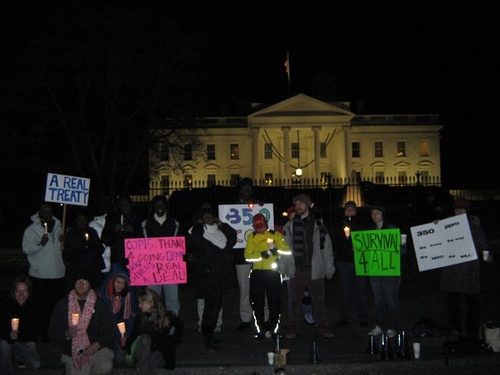
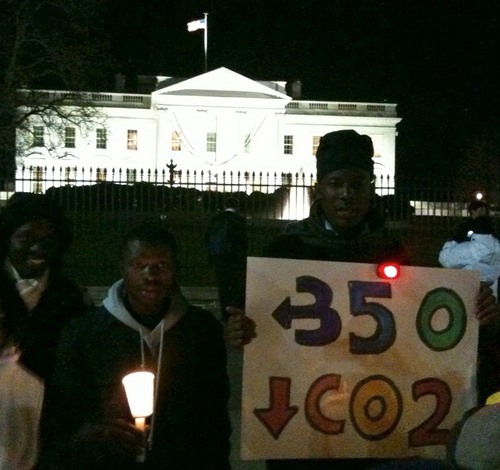
Pictures taken at the 350 vigil in front of the White House on December 13th 2009 organized to pressure the government to take (its commitment on) Climate Change more seriously.
Lastly, Around Nigeria.

There is a certain delusion that comes with writing, or having a blog that is read by people in different countries and continents, by different nationalities of different age ranges. More than that, there is a certain delusion that must come from the belief that one can change the world by what one writes. As far as that is concerned, I’ve been careful to be a very skeptical citizen, choosing instead to adopt a motto that reads: “I’m trying to change the world by not always trying to change the world.” This helps. The reason is that in the face of some physical realities, and consequences of human behaviour, I have often wondered if anything one says or does actually changes anything for good. Or if it does, whether it does as fast as one hopes. For the most part, having a pseudo-skeptical attitude to the power of words to effect fast positive change has helped to keep hope alive that even if the change doesn’t come as fast as one wants, one is not disappointed or disillusioned.

My journey around the country was a personal as well as a creative and spiritual endeavour, a need to connect with places that have meant much to me over time. By the time I arrived at my final place of visit, I felt a sense of completeness. But my host looked at me, glad to be seeing me after about one and a half years and gave me his plan: “Tomorrow, we’ll go to Ebonyi, then Aba, then maybe Owerri, and then Port Harcourt to see my folks. I haven’t seen them in years. You want to go around Nigeria, right?” It was a very good idea, and I said yes immediately. A few hours later, I got an email that I had to be in Lagos for an important event two days later, and the plan was botched. Who knows how much more fun I’d have had if I could visit the East for the very first time. It would certainly have been fun for this blog and its readers that have given me enormous pleasure over the past months. Next time, right?

Like everyone else, I’d love the situation in Jos to be quickly resolved. The same with the spate of kidnappings by restless and hopeless youths in the eastern part of the country. The country is rich with so much that one wonders why what we have is never sufficient  to ensure a peaceful and egalitarian society, and all we hear are the bad discouraging news. We build houses with high fences and spikes “to keep out unwanted intruders” and in the process imprison ourselves within its walls. We have nothing to fear but fear itself, as one president once said. Can we just step out of our comfort zones and enjoy the richness that the country offers? What’s more, can we make the country more conducive for living for ourselves and our future generation? I think we can, and every step counts, whether or not the solution comes as quick as we hope it does. Or maybe we’re just too deluded to think that man can change the course of history. Maybe everything is already predestined, and we’re just players in the hands of the invisible forces.

Well, well. I’ve been talking too much. Now let me share with you a few last pictures around the country, and then move to other (encouraging) matters. 🙂

Meanderings

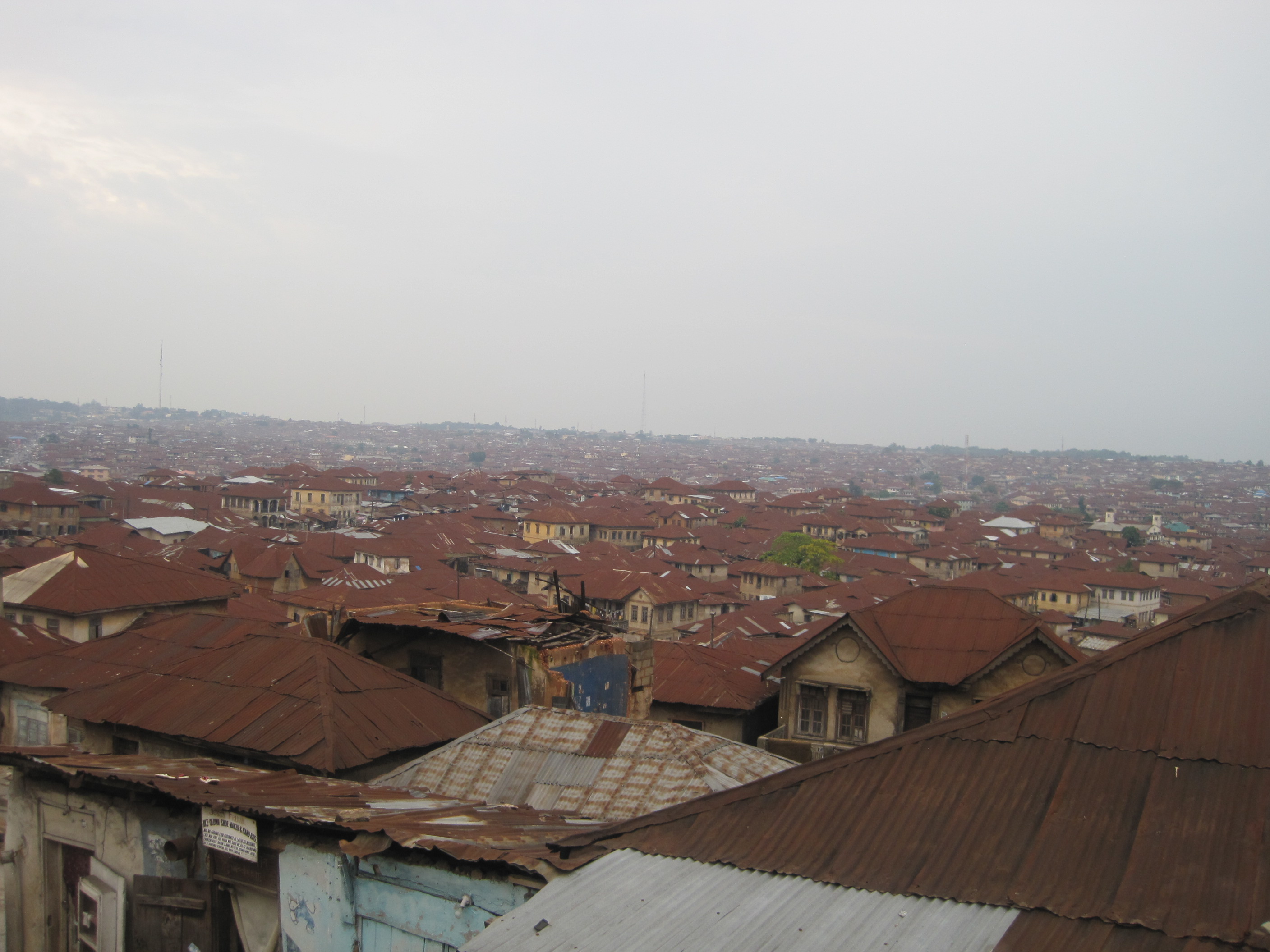
The task of making comparisons between states and towns along the roads to the North of Nigeria would soon inevitably fall on anyone undertaking a task of going around the country – Africa’s largest by population. Are there much differences in population, order, electricity, internet access, and a general sense of well-being? Are we that much different after all no matter where we choose to live, or do we differ only because we speak different languages or pray to a different invisible man than the other person? The answers are not that difficult if only we apply ourselves to discovering it.

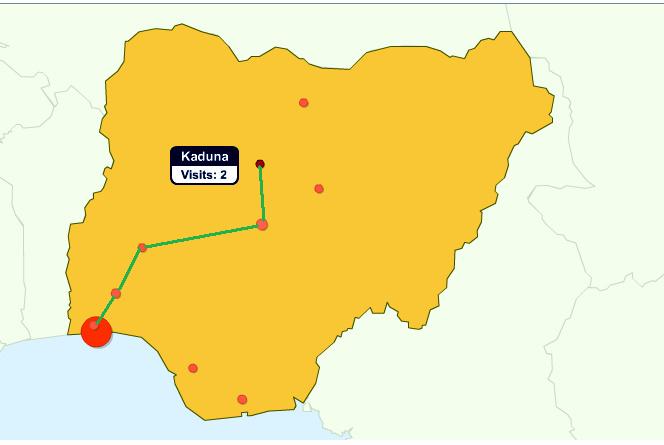
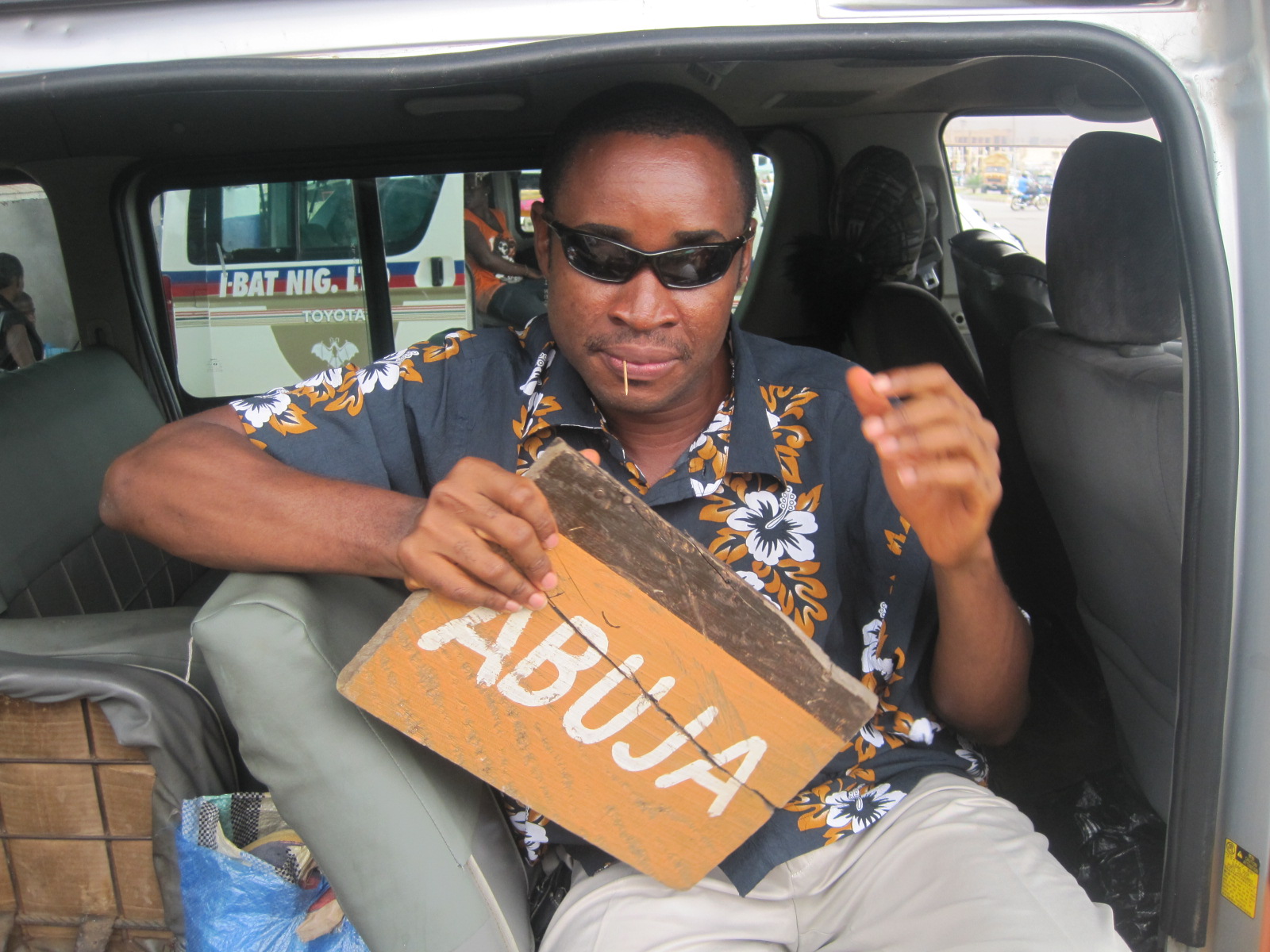
The young man in whose house I slept for two days in Kaduna finished from the University in Zaria in 2005 and served in the same year in Edo State. I had never met or spoken with him until that night when I showed up at his door with another friend and asked to stay overnight for the period of my footloose tour of his state. The young man at the motor park who negotiated by bike ride with the hausa-speaking rider within my first five minutes of arriving in the state was of the same breed. Oblivious of the fact that we had indeed been in the same car through the ride from Abuja to Kaduna and never haven spoken even once, he gladly got me towards the right direction, all for a handshake, “thank you” and a goodbye smile. Human goodness, I say.

In countless meanderings around places around the world, I have encountered the same kind of optimism and open-heartedness even from random strangers, and it has never ceased to amaze, and to delight. If only we could all live together as one, all the days of the year. While eating lunch yesterday and getting prepared to head out, there was the news flash on television that nine (or ten, depending on who you ask) people have again been killed in a fresh case of violence in the city of Jos. Over what? Religion?

Of all the things that should cause violence, shouldn’t religion in a sane world be the least relevant, especially since none of us is really sure? But what do we have? Moslems pray to Allah to help them destroy their enemies, and sometimes even lend him a hand. Christians sometimes do the same, praying for God’s help to vanquish the unbelievers. To paraphrase George Carlin, one of these groups would be fucking disappointed. Could it be… everyone? Is love for neighbour so hard to conjur in a world where we have succeeded in dominating nature and pretty much everything else?

Forgive my rant, all I wanted to say was that I love what I see in most of everywhere I have been around the country. Kaduna reminds me of Ibadan, but not in every way. Ibadan is too rowdy, and so is Kaduna city, with rickety buses and loud bus conductors who speak only the local language. But as far as scerenity is concerned, Ibadan has much much less open land areas along the highways than Kaduna does, and politically, my city seems far less mature. End of rant.

Where Am I?

Contrary to what you might think, I’m not lost. I know exactly where I am. I think.

I am in the United States of America, the land of the free… the place where your rights end right where mine begins.

Or not.

You are free to do anything as long as nobody (else) gets hurt. It is a land of rights as well as responsibilities.

This land does not run itself however. It is not on auto-pilot. It is made to work by people who spend their waking hours doing their part of the national chore.

“If everyone sweeps their front yard, the whole city will be clean.”

That is one quote that I’ve always liked, because it takes responsibility of making a society function properly away from the removed distance of “the other”, the government, and places it in the hands of the citizens who must either make it work or not.

The trash cans do not empty themselves. I have seen the guys who move them.

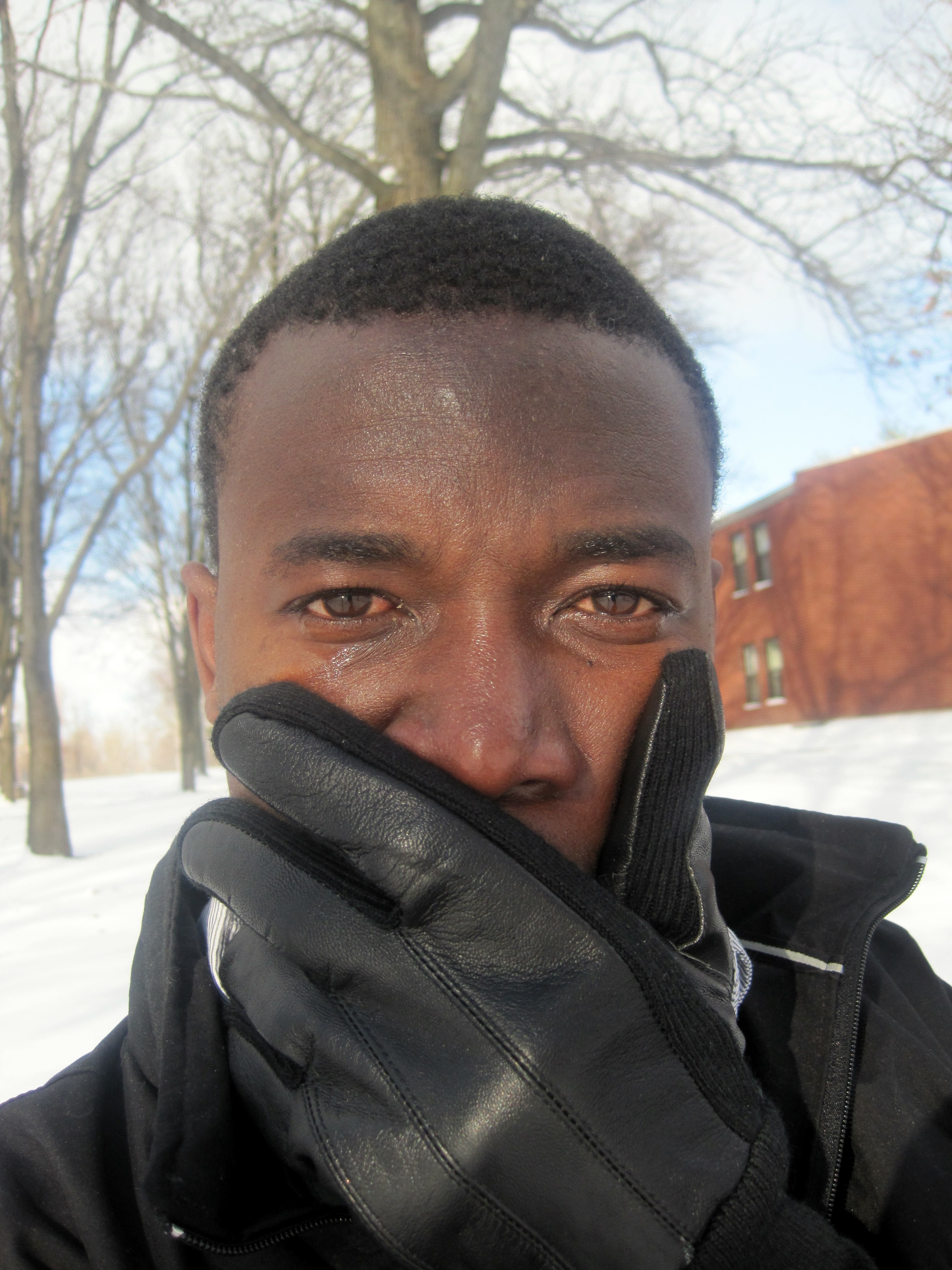
Neither does the snow magically disappear from the roads after a major fall. The woman who drives the snow mobile does so promptly and without fail. Or else how would I be able to ride my bike to school after a major snow fall?

The floor of Peck Hall is not magically clean, nor are its walls, corridors and classroom boards all fine and good looking all by themselves. The men and women who work every day to keep them as they should be also happened not to have more than just two hands. I have seen them.

This expanse of land inherited/taken over by a generation of immigrants is an interesting study. If I were to have won a great expanse of land estate such as this, I would be quite justified to fight for its defense with everything I have. I would be justified to jealously guard it as mine. I would never take it for granted. I would live everyday in the joy of the liberty afforded by such a gift. I would be an American, spending each day in gratitude and in the knowledge of the fragility of such great present, and in the joy of company. Life would be good. I would contribute to make it what it is – a land of order and contentment, if possible. I would not kill fellow citizens because they speak a different language or live in a different part of the nation.

I have seen the bus driver. She smiles at me every time I get on the bus, and we talk back and forth either about the book she is reading at the moment, or about the latest news about Nigeria and my American experiences. The bus comes on schedule. On time, most times. I do not get shoved when I go in, and neither is there noise of horns and a lousy conductor.

I’m not crazy yet, interestingly, within the silence of order and propriety. I am surprised by this. Cacophony beckons within the memories of heat and sweat in a distant city in Western Nigeria, and I sigh. I am still in the United States of America.

Alright, I’m in the Midwest of the USA, but it’s still the same. And sometimes, the calm and order unnerves me! 🙂

Talking to Myself

I am Nigerian. What exactly does that mean right now? What has it always meant? What has it ever meant? What do I mean to the world? I come from a country that has produced one of the inventors of the supercomputer Phillip Emeagwali, a Nobel Literature Prize winner Wole Soyinka and countless entertainers on the world stage. If there ceases to be an entity called Nigeria in its current political form, what would I be? What would I mean to the world? What would be my identity?

I’ve never been a fan of division, of separation, for a simple reason that even if we change the current political structure of the country, we would still not be able to do anything about our geographical contiguity. We are in fact still a bunch of different peoples living around each other. The British creation called Nigeria never really made us one, so removing the “Nigerianness” would not make us any different, or separate, than we already are. We still all live around the Niger River. The North is still the north, with its attendant conservatism, and the South still the south with its liberalism. If we wake up tomorrow and have ten nation states in that region instead of this large one called Nigeria, our problems would not immediately disappear, if they will at all. We would still be the same different people, still fighting ourselves, this time with our sovereign mights and alliances.

It is three days before a new year, and I am worried, very worried, that there is going to be crises in Nigeria. I hope not. I am praying against it because my friends and relatives are there. Selfish, I know. Right now, there is a shortage of fuel (gas) even though we are the 6th largest producer of crude oil in the world. The president of the country is in a hospital, and his state of health is uncertain. I’d joked around last week that I’m afraid that the customary new year’s message from the nation’s president will be delivered this time with a Morse code. Now, I’m beginning to fear that I may be right. It has been thirty-eight days and we have not heard a single word from the country’s leader. Is he alive? Is he conscious? If he can’t speak, can he write? Can he at least tap out his messages on a board? By December 31st, the Chief Justice of the nation will be ending his term, and ONLY the president can sign his tenure extension or his replacement. If the president is unconscious in a hospital as it now seems, and the National Assembly can’t remove him, as it now seems, come January the 1st, there will not only be a vacuum in the Executive, there will be one in the Judiciary as well. Just what the country needs.

I am Nigerian. I want to remain Nigerian, but what exactly does that mean right now? What has it always meant? What has it ever meant beyond the negative? What do I mean to the world? I come from a country that has produced great brains in various fields. So what? If there ceases to be an entity called Nigeria, what would I be? What would that mean to me? What would be my identity besides being the man from that country that is now no more? Who am I? Where are my people? Who are they? And what do we mean to the world?