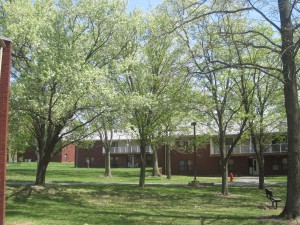
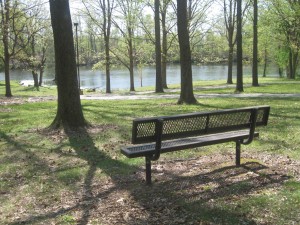
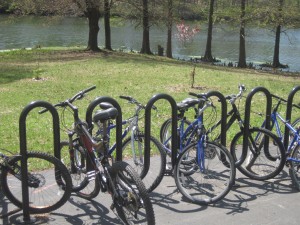
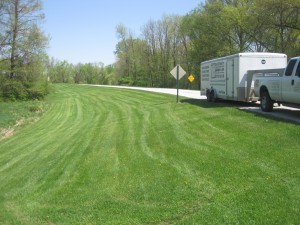
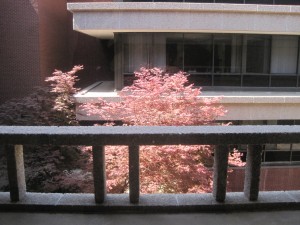
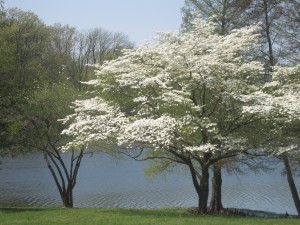
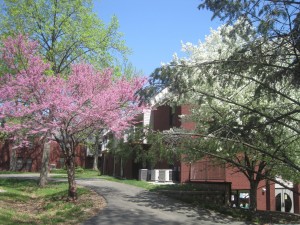
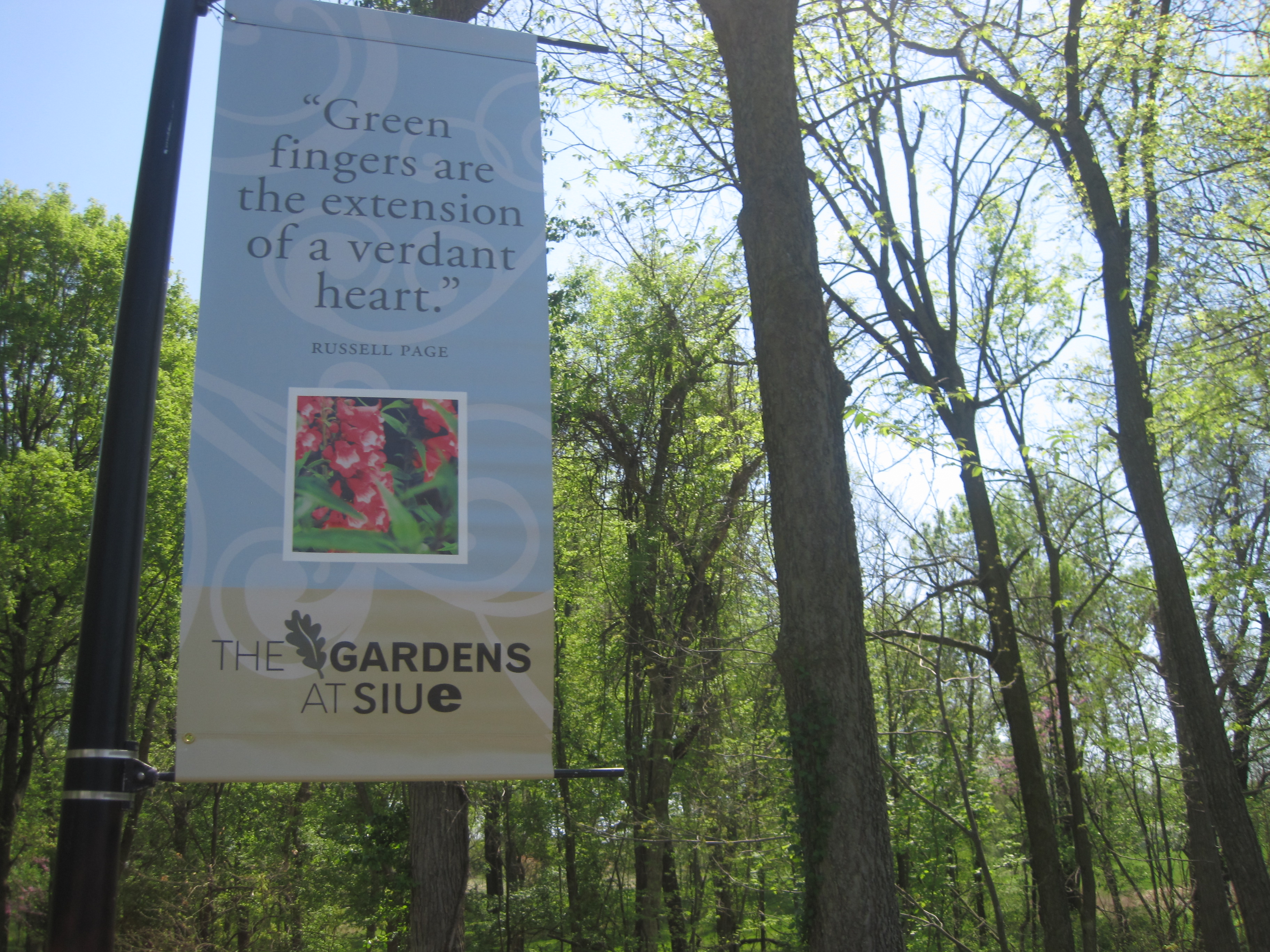

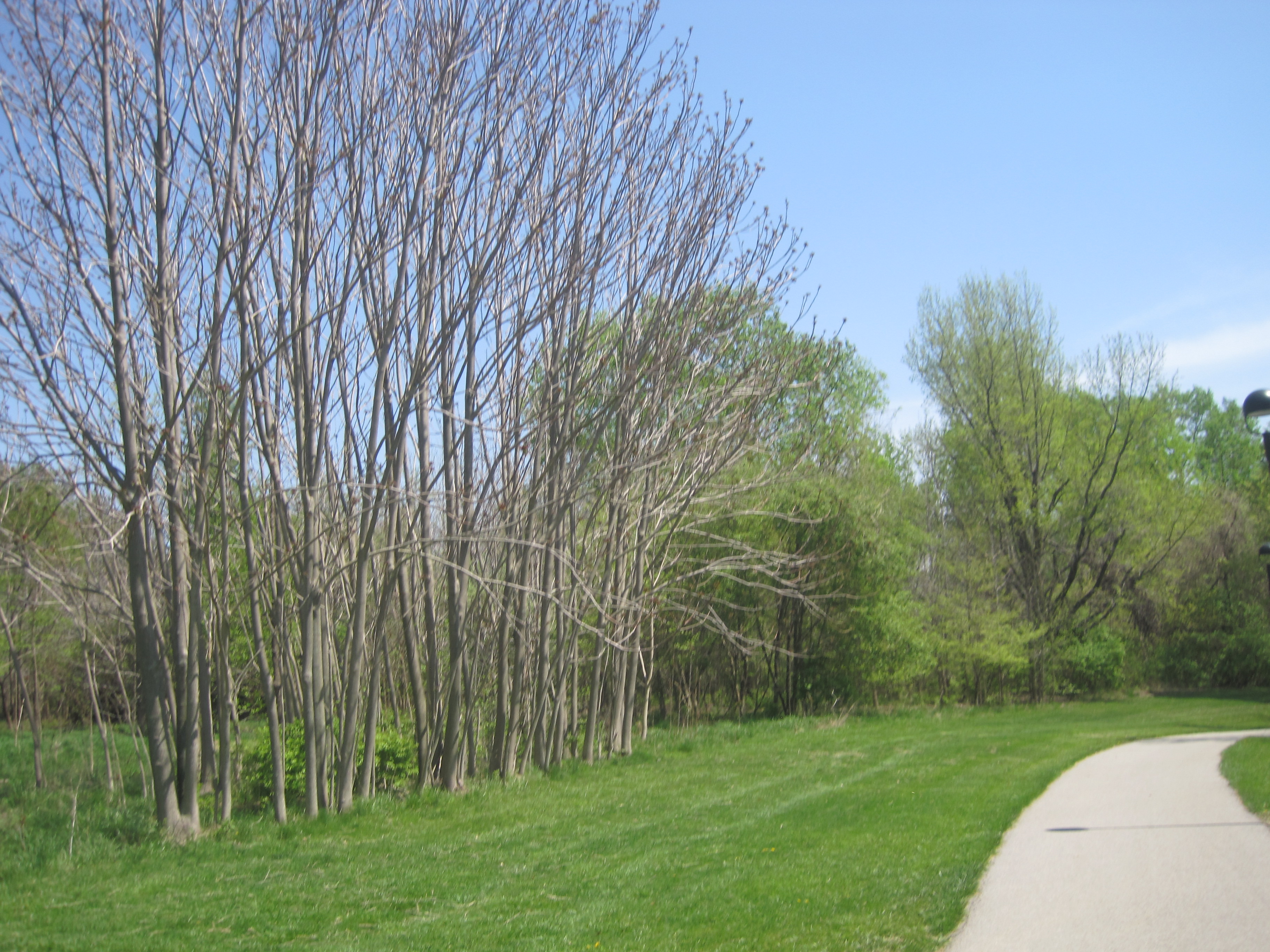
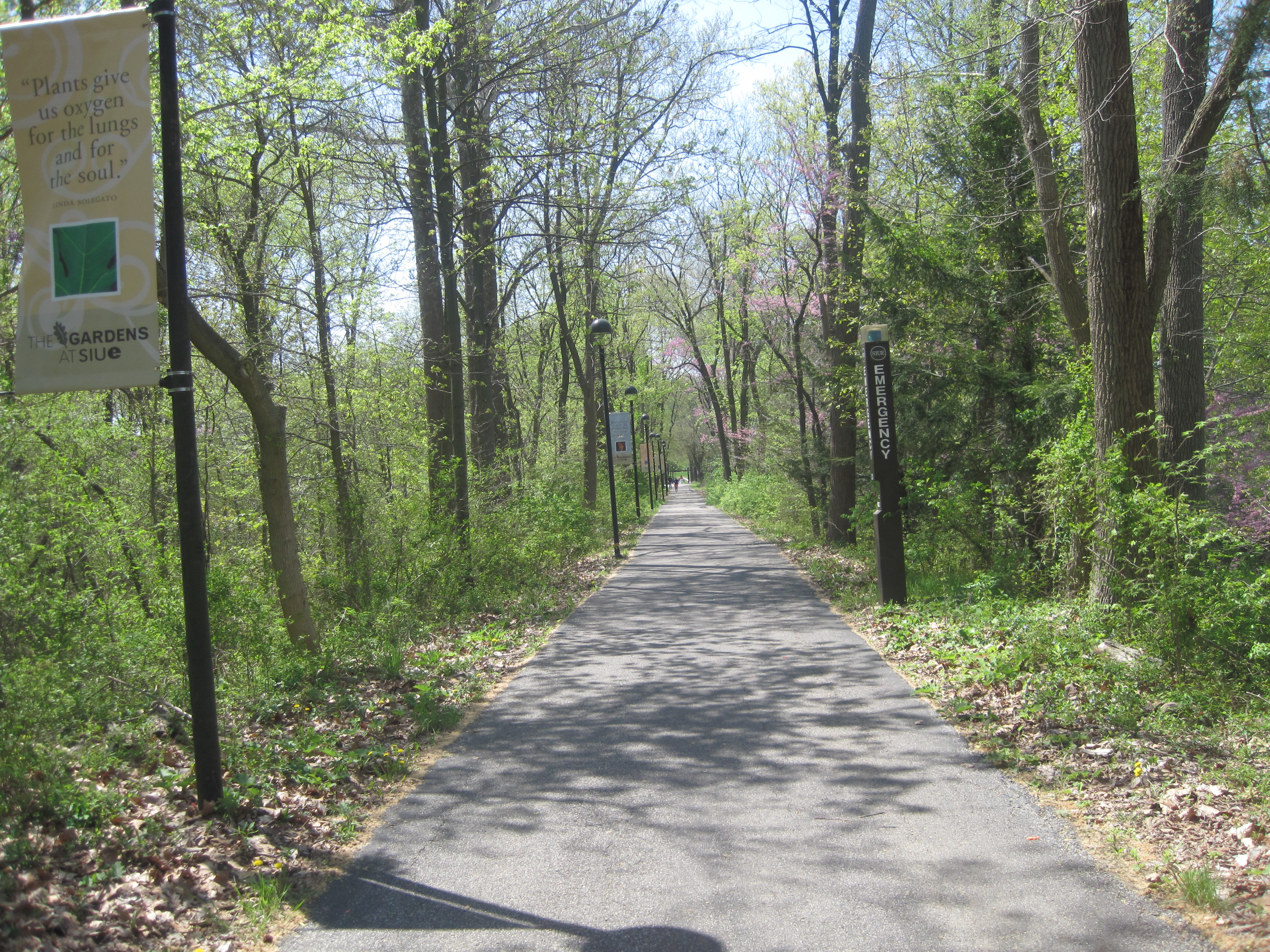
 Finally, I can delight in the pleasure of green leaves, beautiful flowers, and the joy of the fullness of the season. And what is the beautiful University campus without the famous Cougar bike trail from my apartment to campus. Enjoy the pictures.
- I don’t usually write the word “Programme” as “Program.”
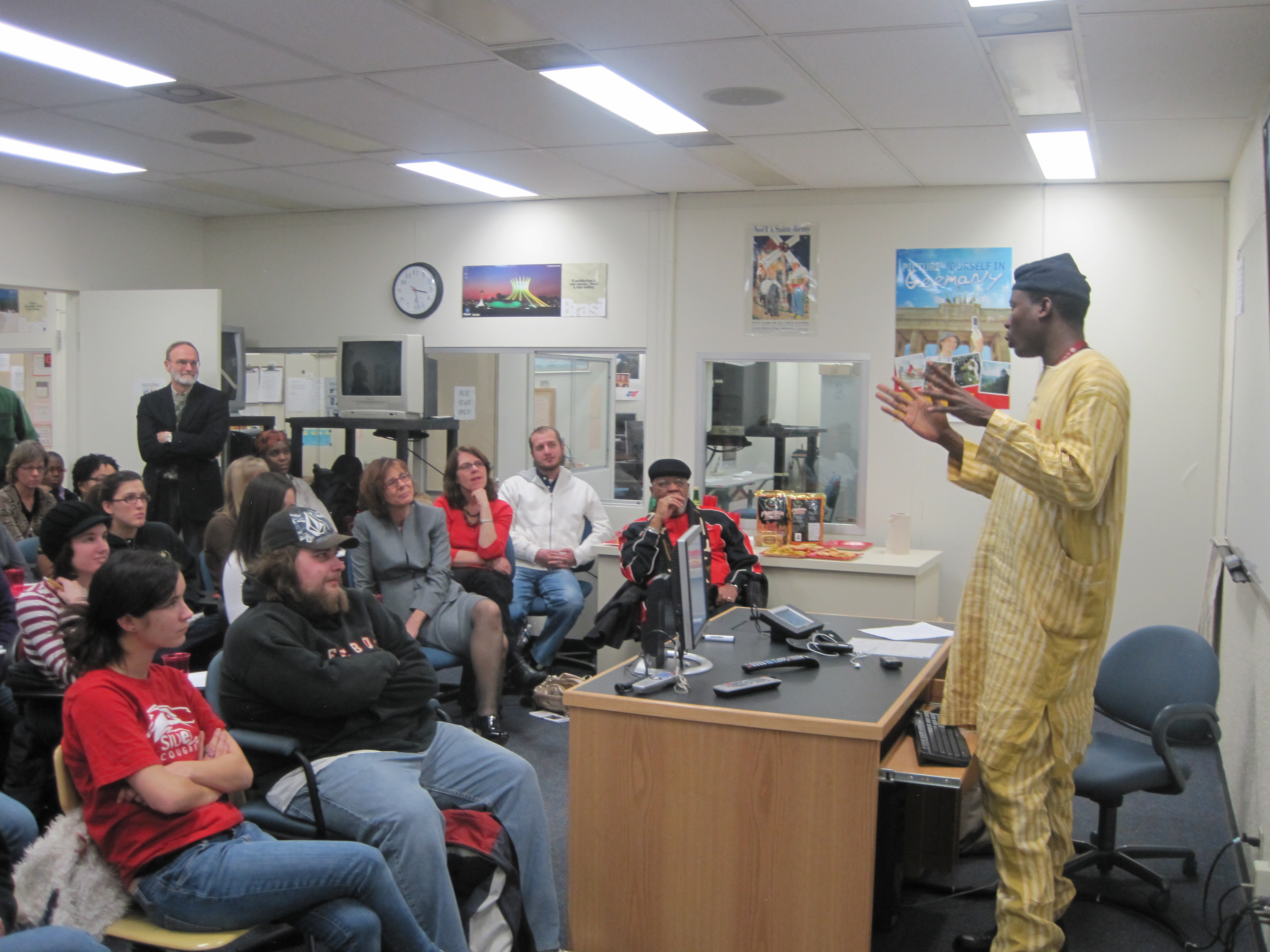
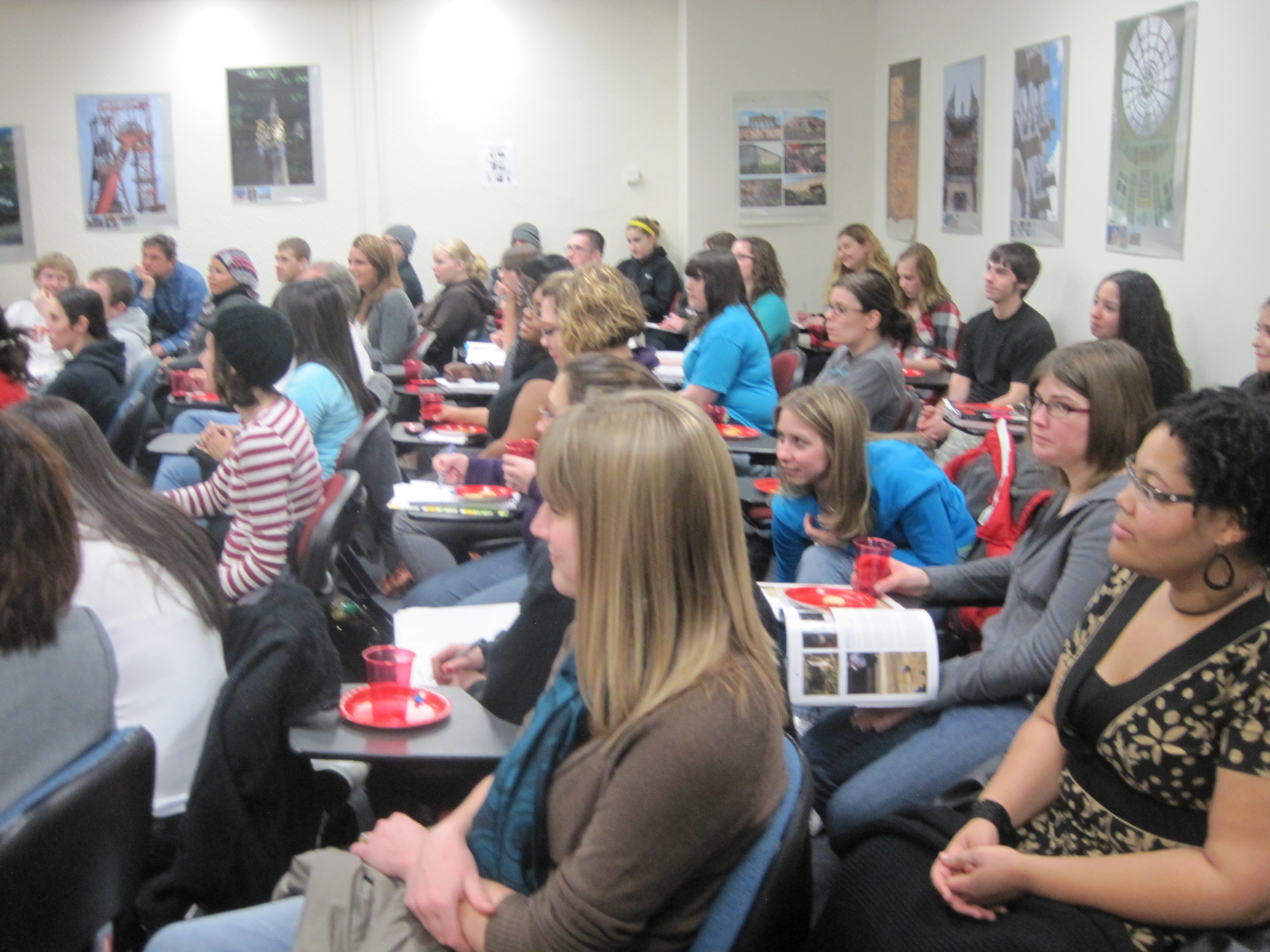 The long process that became today’s presentation began a little over a week ago when Prof Tom Lavalle, a professor of Chinese language and literature sent me a mail asking if I would be willing to kick off the “Discover Languages Month” with a public presentation. I said yes. He asked me to suggest a title, and I did. He liked it. I didn’t have too much time to plan for it however, which would explain why I had spent a few nights sleepless putting everything in form. For this, I also owe credits to the pictures on my room wall who listened to my mock pre-presentation, and to Deola, Zainab, Tayo and Chris who offered valuable suggestions after previewing the presentation. I also thank Clarissa who sat gently and almost anonymously at the back, smiling at almost everything I said, and blogging 🙂 but whose presence along with that of other colleagues and friends gave me the needed encouragement; and Belinda Carstens, my head of department who barraged me with questions when necessary, thus inevitably pointing me to a few things I seemed to have been taking for granted talking to a people from a different background.
- My undergraduate project in the University was called “The Multimedia Dictionary of Yoruba Names.”
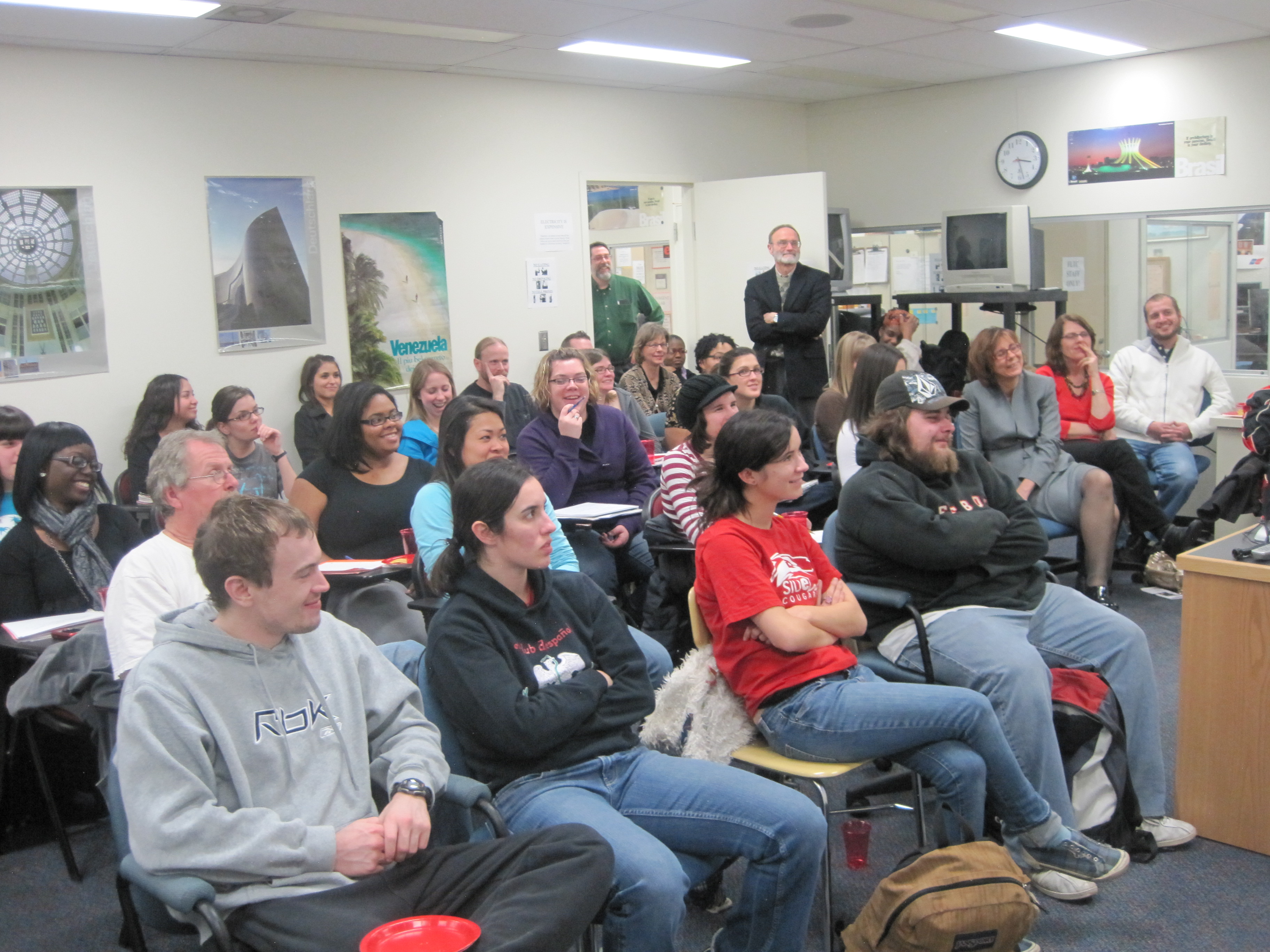 One of the most intriguing discussion from the talk came during the realization by a few members of the audience that we still had kings in Nigeria, within Yoruba kingdoms. “Are they all monarchies?” Someone asked. “No,” I said, and went into a long explanation about the peculiar (and prehistoric) republican nature of the kingship system in Ibadan in sharp contrast with the rest of Yoruba kingdoms in Oyo, Ife and elsewhere. Even to me, that was a moment of personal reflection and pride in the accomplishment of Ibadan ancestors who broke with tradition long before the British came, and did away with a succession system of government that is based on heredity like is practised in Oyo or Ife for a more meritocratic system based on long-standing and verifiable contribution to the society. Even at the end of the talk, a few more scholars came over to talk to me and ask questions about the kingship system. The kings, we discussed, do not have political powers as such in the country, but do occupy a status of responsibility that makes them indispensable in the proper governance of the country. There was also a question about spirituality. This elicited a response in reaffirmation of the Yoruba worldview: that which has never sought to impose its belief system on any other group of people for any reason. We had fought wars for women, for land, but never ever to spread a system of belief or to proselytize to our own way of life.
- Do you have Six Flags in “Yorubaland”?
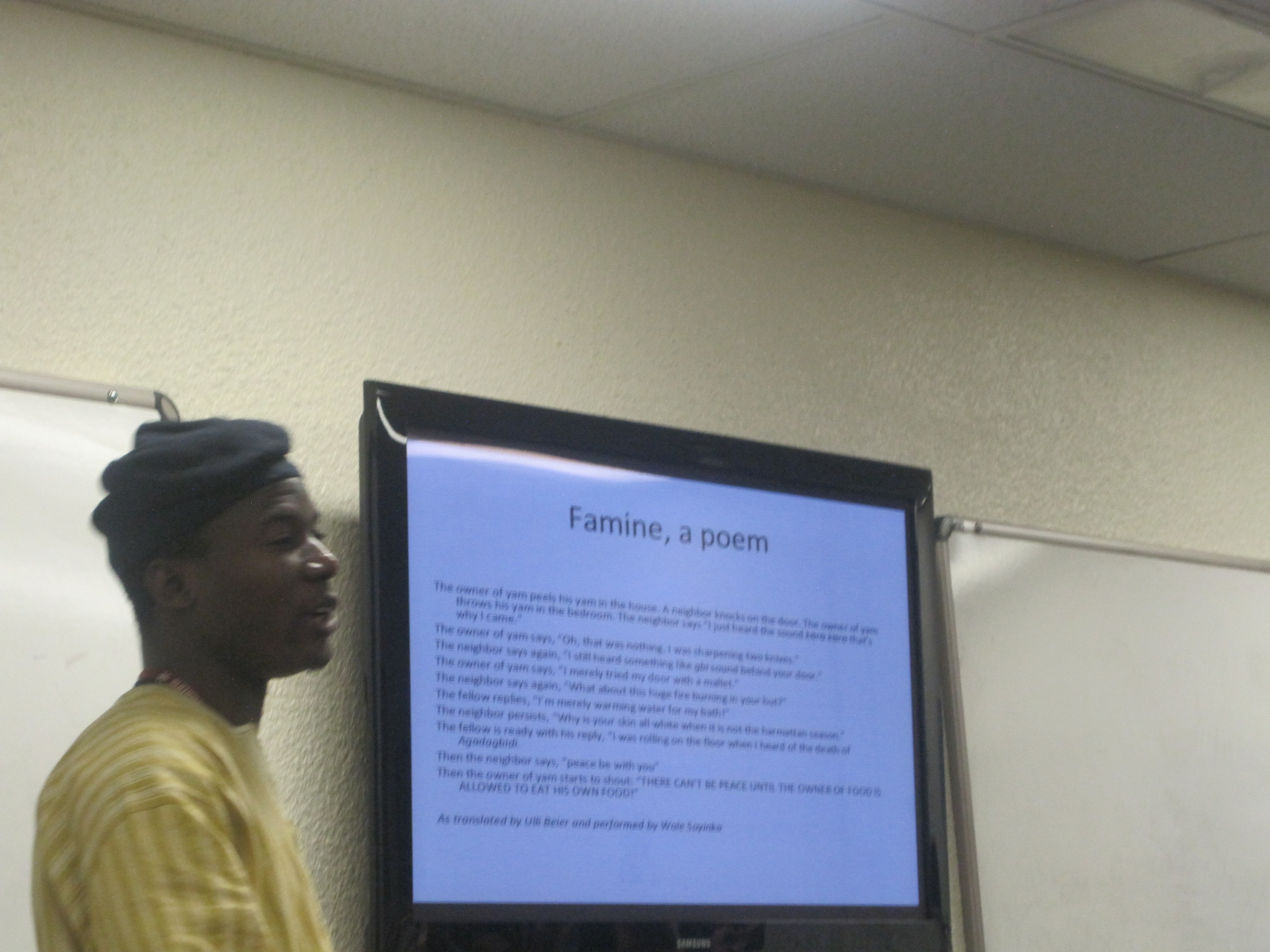
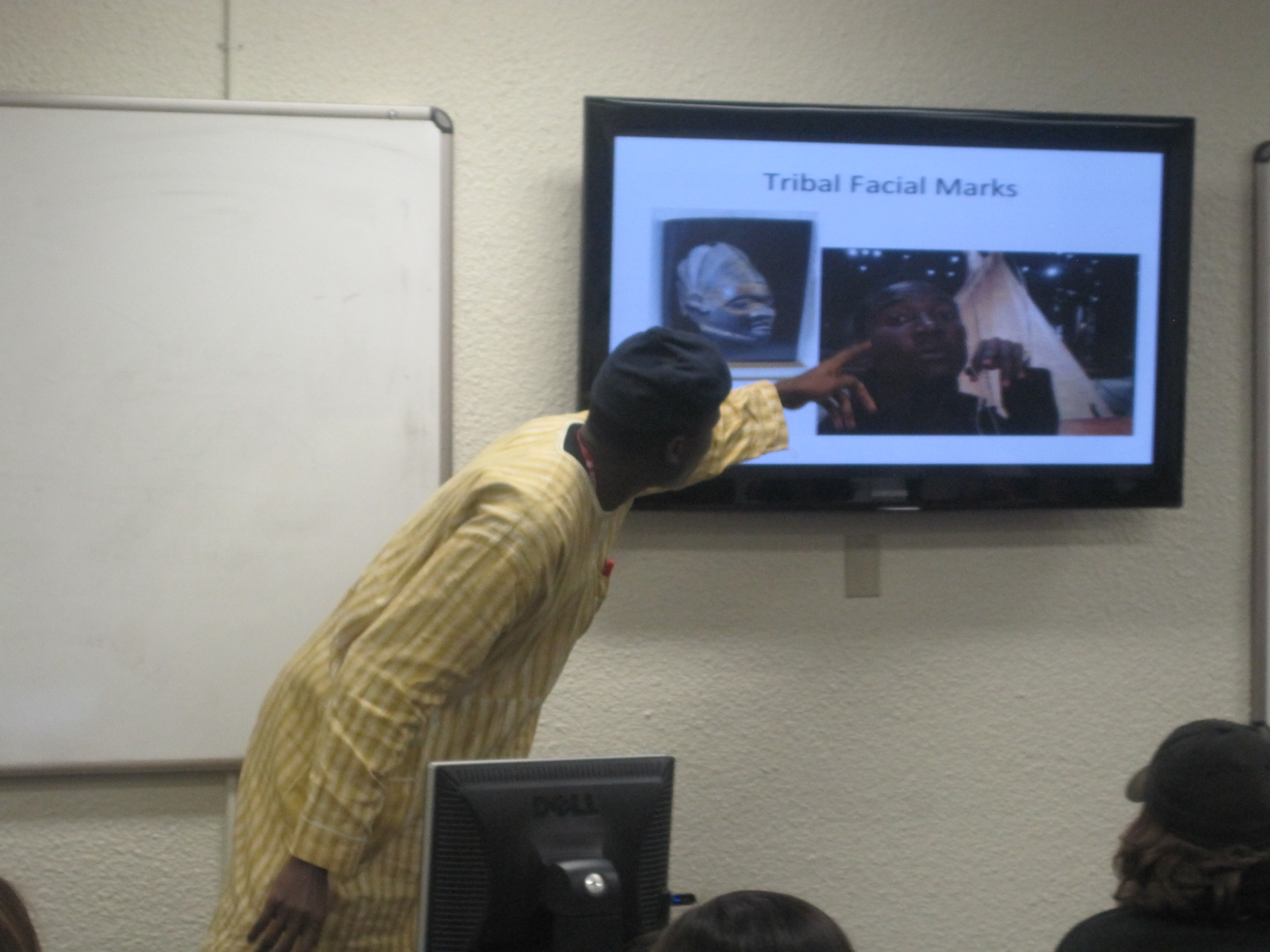 So there was food, plantain chips. There were over forty people in the audience, many of them standing. I saw a few old students in the audience, and a few current ones as well. How the old students knew about the event, I have no idea. Professor (Papa) Rudy showed up as well. It was my first time of seeing him this year. Also present was Prof Schaefer, professor of Linguistics, and SIUE Director of International Programmes who is no stranger to Nigeria himself, having taught at UNIBEN for many years and worked on the Edo language of Emai for a long time. I spoke about the mark on my face. I also spoke about the noted similarities between the Opa Oranmiyan and the Washington Monument; and about why I wear the cap in the United States even though I never did while I was in Nigeria; and about the meaning of names; and about masquerades, Lagbaja and the KKK (a little uncomfortable for me to broach); about Wole Soyinka and the many things he wrote about; among other topics. And then read a translated poem about The Owner of Yam and his Neighbour, which everyone seemed to have loved.
- Is “Yorubaland” like Disneyland?
 It was nice. I had fun. I’m guessing that from the response there will be more students next year registering for the Yoruba if the Fulbright commission decides to send more Yoruba teachers to this institution. I have also been told by professors whose students came to listen that they would be discussing what they learnt from the talk in their subsequent classes, and on Facebook groups created for the discussion of language ideas. I look forward to getting feedbacks from there. I enjoyed the talk. It was a nice but busy day. And oh, I also got the side pocket of my dress badly torn by a loose metal during the first jittery moments of sitting alone in front of the so large audience. Now I’ll need to find a good tailor to mend it, or leave it as a marker of this interesting speech-giving experience.
Well, there’s the report. I am glad to be here at this department of foreign languages at this point in time. You too should have been there.
- Q: Why learn a new language? Why learn about a new culture? A: The same reason why we learn anything new… to acquire new ways of interacting with the world around us.
This is how the story goes: Every human being on the planet is closer to any other person in any other part of the world by just 6 degrees, or six human beings. According to Wikipedia, ‘it refers to the idea that, if a person is one step away from each person they know and two steps away from each person who is known by one of the people they know, then everyone is at most six steps away from any other person on Earth. It was popularized by a play written by John Guare.”
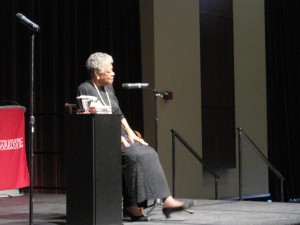 In the begining, there was just me, going to a University in Ibadan, Nigeria. I had gone through all my primary and secondary education in this same city, so it was just as well that I never knew – nor would have given any thought to – the reality, fact or fiction of the phenomenon of “six degrees of separation.” There was no way in the world that a little boy from that ancient town could relate to the likes of Martin Luther King Jnr, Roberta Flack, Bill Clinton, Oprah Winfrey, Coretta Scott King or Toni Morrison, even if by chance I knew a few of their names back then. The first American I could say I warmed up to was James Hardley Chase, and I didn’t know if we’d have gone along well if the chance ever presented itself for us to meet. Then there was Denise Robbins, whose many novels I read before I completed secondary school. The likes of Mark Twain, and Alex Haley came much much later, as did Toni Morrison, Eugene Redmond and Maya Angelou. I remember seeing Maya the first time while browsing through the now rested Microsoft Encarta Africana CD of 2002, and watching her read her poem, “Still I rise.” I was enchanted immediately, and while reading more about her, I realized that it was impossible not to be, considering how much of stories her life embodies. She was born in St. Louis, grew up in Southern California and Arkansas, then moved over to Ghana with her African Revolutionary husband whom she had met in the United States during the anti-colonial movement of the fifties. She returned to the States after her first son to the African, became a dancer, writer, teacher, public speaker, novelist, poet, film director and movie producer and later Inaugural Poet, the first African-American so honoured to recite for the in-coming president. She read her poem On the Pulse of Morning for the Bill Clinton in 1993.
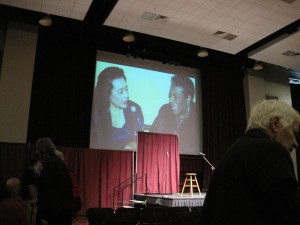 Now here I am in Illinois, less than ten years after that memorable introduction, now meeting the icon face to face in a campus auditorium. Looking at a slide show of pictures taken from the Eugene Redmond collection of photos of Maya Angelou on the big screen, I see a shot of her once with Coretta Scott King, the widow of the slain Civil Rights Activist, then another with Toni Morrison, then Oprah Winfrey, Eugene Redmond, Amiri Baraka and very many other famous names in African-American culture, and I remembered the rule of separation. If only because of this enchanting day, this time and this moment of fate, I can say that I may have finally connected my last branch of life’s six degrees, joining imaginary hands with all of the rest of the world, with everyone just six persons – or less – distant from me, no matter where they are. Oh how I like the sound of that!