 I was not too surprised when a fellow FLTA from France said to me two weeks ago over dinner at the Union Station in Washington DC that the city was developed by a French person. She is french, and, as she said so, everything had just fallen along the line of positive French stereotypes in my mind. They designed the Eiffel Tower and the Statue of Liberty, they must also be the big brilliant brain behind the planning and beautiful layout of the country’s capital. It was my first time of hearing the story, and though she didn’t have the name of the said designer, I believed it.
Today, I had a different conversation with Papa Rudy who says the city was developed by a black man. Now I’m confused. I told him of my discussion with the French girl, and he insisted that a black man did the city’s design. And somewhere in the conversation, the name Du Pont came up. Now I am familiar with a DuPont Circle in Washington DC, and reading more on it this afternoon showed me that it was named after a man Samuel Francis Du Pont (from the famous Du Pont family who really were originally from France). However, he is neither black nor an architect. He was a rear admiral during the Civil War. The wikipedia article on the beautiful Paris-like city does not say much about the “designers” of the city, so I’m giving up.
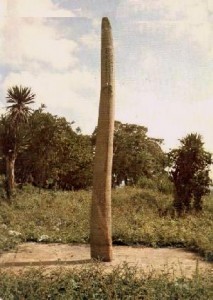
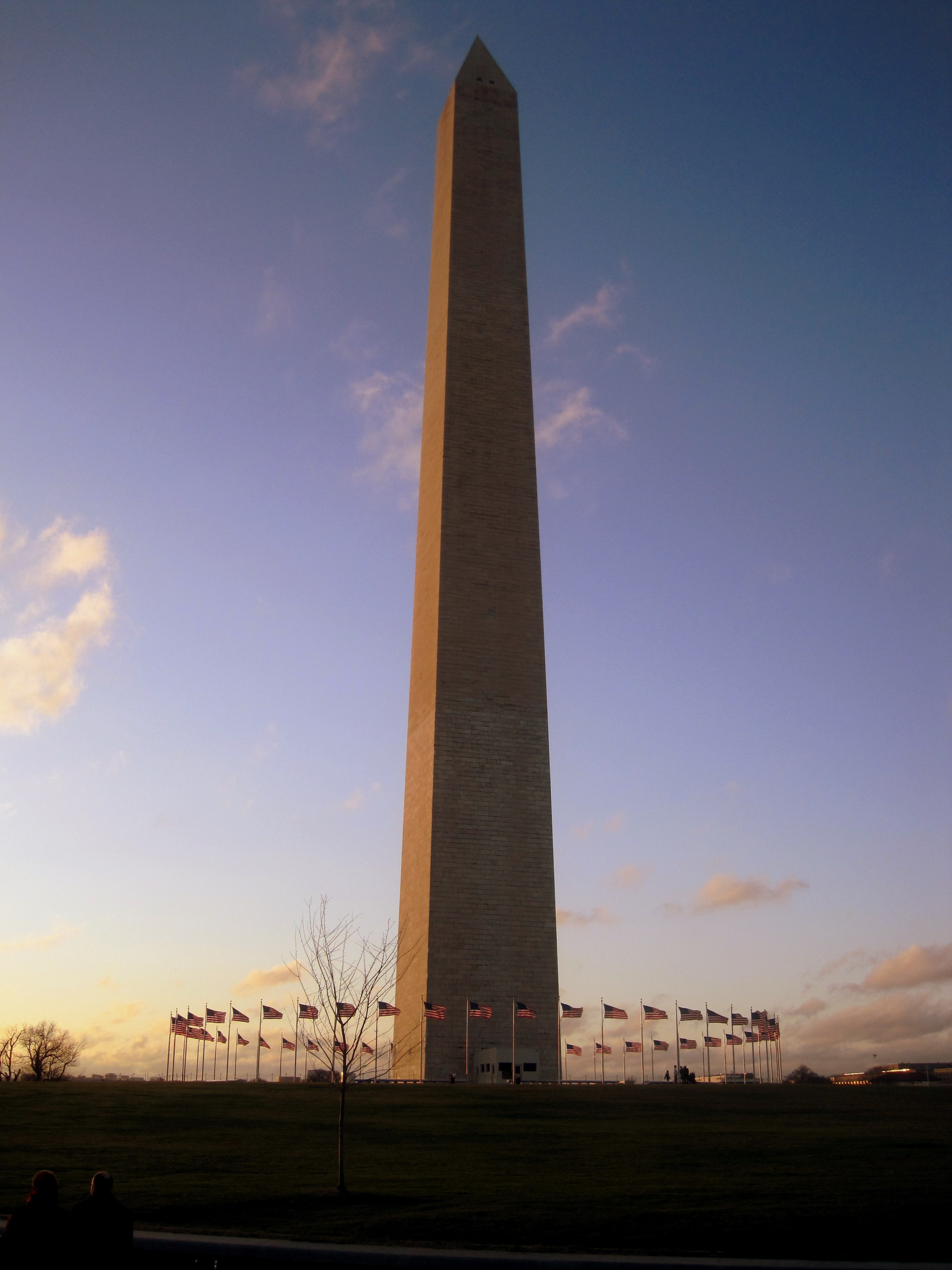
Or not. I have now come up with my own theory, that the person who conceived the brilliant layout of the city with the Washington Monument obelisk standing almost in its centre, could only have been the son of Oduduwa (the fabled progenitor of the Yoruba people). That’s the only explanation that can suffice to clear the air on the similarity between the Opa Oranmiyan obelisk in Ilé-Ifè and this Washington Monument obelisk. The Opa Oranmiyan was erected at a spot once believed to have been the burial site of Oranmiyan, a grandson of Oduduwa. Archeological evidence has now shown it not to be standing on any burial spot at all, but to be just a visible memorial to the fabled progenitor whose name it bears on it’s body. On the Opa Oranmiyan, as has been since its (undated) erection is an inscription in middle-eastern letters that archeologists have accepted as corresponding in sound to “Oranmiyan”.
It’s not the same in height and size as the Washington Monument, but that’s beside the point. The only other way to look at it is that Oranmiyan himself walked over to Washington DC from Ile-Ife with the Washington Monument on his right hand as a staff of office, and planted it firmly at the centre of the city as an artifact for future generation of archeologists to behold. What about that?