Exceptionalism is Overplayed

There is this weird notion that Americans are exceptional among peoples. It is one of the oft-repeated catch-phrases one would most likely find among politicians these days. Something like “unlike our president who believes that we’re just like every other country, I believe that as Americans, we are exceptional.” I have paraphrased Republican presidential candidate Mitt Romney, but he’s not alone. Heard repeated again and again, it often begins to sound something like this, between two children on a playground: “My daddy will beat the hell out of your daddy!”
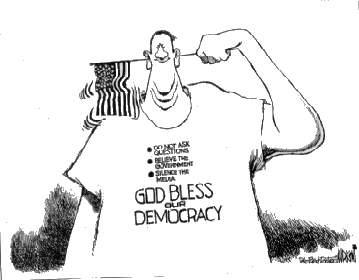
Here is a problem though: the vapid mantra has been taken so seriously by many citizens that a leading politician now thinks that it is something with which to impugn the credibility of an opponent. “Hear that America, he thinks that you’re human like everyone else. I, however, believe that you’re supermen. You’ve always been.” Before this post is accused of being anti-American, let me give a few more examples of these delusions of exceptionalism as I’ve found them all around the world:

  • Nigeria is the giant of Africa (said to a tone/attitude of superiority derived from nothing else than the fact that one in five persons on the continent today is a Nigerian or that the country has produced some of the continent’s most accomplished citizens.)
  • We are the chosen people (an oft-repeated phase associated with Judaism and Jewish identity. According to the bible, this conviction could be traced to hundred of wars and pogroms in the bible led by the leaders of the nation-states acting on direction of God. It is also a source of immense national pride).
  • A ji sebi oyo laa ri… (a saying from the Oyo people in Nigeria, translated fully as “Oyo is known only to be emulated. Oyo never emulates anyone.”)
  • We’re the superior race (from Adolf Hitler and the Third Reich)
  • Arab Exceptionalism (“a phase that prescribes that Arab nations are immune to economic modernization and democratization, or that these concepts form part of the ‘clash'”)
  • Polygamy is an integral part of our culture/Homosexuality is not a part of our culture. (One of the many vacuous polemics that surface around the African continent whenever any of those issues are raised in public discourse).
  • “Rang de Basanthi” (Hindi: “Colour it saffron” – a badge of nationalism, pride and racial exceptionalism among Indians to the exclusion of everyone else).
  • Once you go black, you never go back (A disgusting racial aphorism. Use google.)
  • I’m a man: that’s what we do/Don’t tell me what to do/What do you expect? (Gender exceptionalism?)

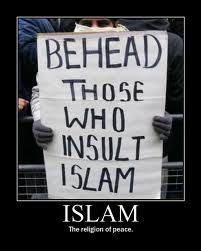
There are many more across different world cultures that I have come across but now forgotten. A thing common to all of them is the belief in a particular world outlook accepted as superior and as defining of the people who hold onto them. American exceptionalism, of course, falls into the same category as all of those above, and it is the reason for this post. The concept is usually defined this way: “Here is a country exceptional in its creation and survival, as well as its role in world affairs.” It is usually bonded with a demand for indemnity from all accountability. “Can’t you see? I’m American!” American television personality Chris Matthews, in debunking the Republican “slight” of anti-American exceptionalism on President Obama, often uses this defence: “Can’t you see? Didn’t you listen to the man’s election speech? He said that only in America was his story possible. President Obama himself is a product of American exceptionalism. Look at where he came from and where he is now…”

Where Chris Matthews got it wrong however is the better end of the same spectrum of Mitt Romney underhanded sneakiness. While America is really no more exceptional among other countries of the world with less colourful starting histories or world presence nor its people any more important than people in more obscure parts of the world, it is also not exceptionally unique just because a bi-racial young man from a poor home and a single mother could become its president after a long history of slavery. I agree however that these make for a very spectacular (albeit empty) polemics. There are a few more examples of such exceptionalism: Mother Theresa moving from Albania to live in India in service of the world’s poor, or Susane Wenger – an Austrian woman, who spent all of her creative life in the groves of Oshogbo learning and teaching art and spirituality (and in dying there become one of the forest’s eternal goddesses).
The undeniable fact is that humans will always thrive wherever they find themselves. The story of Steve Jobs making it out of an almost hopeless beginning to become an accomplished entrepreneur could equally have happened elsewhere (perhaps with much less flair). The son of a carpenter from a victimized culture becoming the most famous, venerated, victim of capital punishment (by crucifixion) is as much a story of Jewish exceptionalism as is the story of a black African from post-colonial Kenya making it through the ropes to become a PhD holder in the United States a case of Kenyan/African exceptionalism, as is the story of a previously obscure princess from a repressive patriarchal culture growing up in the world’s ugliest war finding herself, due to a series of coincidences, as the queen of a large empire on which the sun never set – a case of British exceptionalism. Here’s Brazilian exceptionalism: defy all odds of a third world/developing country and win gold in (almost) every World Cup in which your country participates.

My conclusion here – as might by now be clear – is that there either is something of a human exceptionalism – defined by great success in spite of all odds – common to every culture and people on the face of the earth, or there is no such thing as exceptionalism, and we’re all just as unique as we are different. Nationalism and patriotic/religious credos are usually more disingenuous than the words in which they are couched tell us, and they have not always led to an improvement on the condition of human well-being. Politicians should therefore find something more stimulating to spend their time talking about, as should all blindly-following fanatics.

Meeting Eshu

Today a well-dressed man with a Sean Connery/Salman Rushdie look, beard, and an eerily similar Wole Soyinka/VS Naipaul voice walked into the language lab. He was accompanied by a colleague in the department who had brought him there to use the computer. I’d heard a little about him from the departmental emails. He is one of the prospective employees brought to take a tour of the department and meet members of staff. He had come earlier before I arrived at work. He stands a chance of being a new addition to our staff so I went to speak with him.

“Where are you from?” He asked after I’d introduced myself.

“Nigeria.”

“Bawo nee.” He said, and I was suprised.

“A dupe. How did you know this. Have you ever lived in Nigeria?”

“No. I’m from Brazil.”

“Wao. I didn’t know that you speak the language there.”

“Yes we do. The Yoruba religion is very big in Brazil. It’s a huge huge thing.”

I knew this, but was still very impressed. Then he went on.

“Do you know Shango?”

“Waoh.”

“And Orisha.”

“I’m impressed.”

“And Oshun.”

“Interesting.”

“And my personal favourite – Eshu*!”

“Hahahahaha.”

“I tell everybody about Eshu, especially the Christians I meet, and they look at me like an evil voodoo priest.”

We went on to talk for a few more minutes, and he then showed me a youtube video of a performance of the Yoruba religious worship in Brazil. The songs are a mixture of Portugese and Yoruba. One could pick out many Yoruba words, phrases and expressions in the song. The costumes however are a mixture of European and African. The drums were distinctly African.

The short conversation has given me a new appreciation of religion being the most enduring bearer of language. We’ve seen it with Latin and Catholicism, Arabic and Islam. Now we’re seeing it with Yoruba and Candomble.

It is was all just very interesting to me.

_____________

* Eshu is the Yoruba god of mischief, lost in the translation of the English bible into Yoruba as the devil himself.

Goodwill Towards Men

If I could, I’d get a Santa hat to wear around this little town. The smell of snow and the colour of lights around houses in the neighbourhoods comes with a pleasant feeling of Christmas. If I could, I’ll get a Santa hat like the big American guy I saw early today at Walmart. He wore a pair of jeans, a tee shirt, and a Santa hat. He was not Santa Claus. Santa Claus doesn’t exist. He didn’t look good either. He looked goofy. But he had a Santa hat. If I could, I’d buy a Santa hat. But I won’t. I’m done with all things hats.

Hats are so last year, aren’t they? Let me leave that to Mohammed and Ameenah to project their Africanness wherever they go in the United States. They’re our new royalty of cultural exchange (although she still would not budge to my constant nagging that she takes off the religious head covering and replace it with something more culturally authentic – You’re Yoruba, for goodness’s sake. Get a Yoruba head gear. You’re and not from Saudi Arabia; and he would never stop complaining of how people become automatically distanced whenever they discover that he’s Arab. I wouldn’t suggest to him to wear a turban to class for his students either. Actually, now that I think about it, I would. Isn’t that the whole purpose of the exchange? Now that would be something). It is an interesting time to be here, learning good new lessons in cultural exchange through the eyes and experiences of some others standing at a different front line. Ameenah is Moslem from Nigeria. Mohamed is Arab from Morocco. Same continent, same religion, different people, a different outlook on life.

If I could get a Santa hat, I would. It is cold, and my hair (two months old) will soon become unable to provide needed protection. If my brain does eventually freeze itself off, I will have myself to blame, and lose the ability to do anything ever again. I should get a hat, again, truly. Ignore the fact that the last three I bought all got lost after the very first time I wore them. I ran into poet Eugene Redmond today on campus, almost by chance. An African-American writer from the United States, I met him in 2002 on the campus of my University in Ibadan and what struck me the most about his appearance was that he was always wearing an African-designed hat. Today was no exception.

If I could, I would get a Santa hat if only because it is the Christmas season. I could keep my head warm and fuzzy, and delight in the season, with goodwill towards men.

Coffee with the Quakers

A guest post by Adeleke Adesanya

Anyone looking in through the glass from outside would think we were just having a coffee break, while working on a Sunday. We talked about politics, heard a first person account of the civil demonstrations against planned cuts in child services. Someone brought up the issue of expected redundancies at the museums and I wondered whether it would have been preferable to charge entrance fees for adults instead. The majority did not seem to agree with me. I was having my first meeting with the Quakers of Birmingham, otherwise known as the Society of Friends. They are a religious organisation, founded in the 1630s and infamous for being non-conformists. But I am getting ahead of myself.

In the middle of the healthy debates, an elderly lady asked me if I had attended a Friend’s meeting before. I said, “No”. Truth is, I had attempted to find their meeting place the previous week but had a difficult time locating them and arrived just in time for coffee. I decided not to partake then.  Their meeting rooms are tucked discretely into the middle of Bull Street, at Birmingham’s commercial centre. The premises, without any signage, are better known for hosting seminars and business meetings. Inside, the decor was stylish in a minimalist, business like fashion.

The elderly lady asked how I heard of them. I told her of a handbill I had received in my post graduate student induction pack. But once again, the truth is a bit more complicated. Many years prior, I read Charles Colson’s Born Again. The lasting impression that book made on me was that President Nixon was a Quaker. Later, I found out, President Hoover was also a Quaker. They were arguable the two most unpopular US presidents before George.W.Bush.  Both of them demonstrated placid sedateness in the midst of the worst public storms and they credited their faith for the fortitude to stay calm. I was intrigued; what made these guys tick?

I got a clue when I joined them for worship last Sunday. It was devoid of any ceremony; we sat for an hour in easy silence. Quakers believe God is an inner light that should speak to us as we wait on it. Sitting in meditative silence, they waited to hear. I was informed that sometimes, someone who was inspired will speak up but that did not happen on my watch. It was a refreshing silence, so humbling to listen in prayer for a change. The challenge was, of course, not in abstaining from speaking but in quieting the mind. Anyone who has taking part in meditation would know that thoughts seem to wait for one to be calm before intruding. But I can imagine a habit of silent meditations being useful in dealing with worries.  After the silent service, there were some brief announcements, and then we had coffee together.

A first time visitor would like to ask Quakers when their service starts. They like to say it is immediately after worship stops. Quakers have been conscientious objectors throughout their existence and made history as a result. They founded Pennsylvania to escape persecution.  They were pioneers in the anti-slavery and women’s rights movements.They still campaign against the death sentence. Perhaps, in the UK, much is made of their past because today they have shrunk in size, numbering 25000. The meeting I attended had only eleven members in attendance, excluding myself. The other thing I was made to realize is that English Quakers have an inclusive, flexible and unwritten theology that now includes atheist Quakers. What struck me most about them was what was absent; loud prayers, direct exhortations.I left feeling I had spent a Sunday morning rather well and thinking, I could do this again. And that was one more item off my “Things to Do before I Die List”.

It is Written

Maybe I should have started the report on my crazy religious weekend from the mosque visit. After all, we went there first. Now, that particular post coming at the end of a long and beautiful description of the other places I went to on the same day, I feel like an angry blogger – something I’ve tried to consciously avoid. Life is too short to spend being angry all the time. Not when there is so much beauty around to satisfy even the most ordinary life. So there, I’m done with complaining for the next couple of weeks. Again, religion is a testy topic, and I’ve been warned to steer clear of its contentious parts. I’ve not taken well to that piece of advice. Sorry mum.

And so a new week begins, hopefully on a positive note. I thank you for voting in the poll on the right side. I’ve been too lazy to blog about it. I have a few academic papers to put in during this week so I don’t hope to blog much as it goes by (but we all know how well I stick to that promise). There may be other things I forgot to put in the poll, but if you have any ideas, feel free to include them under “others.”

In any case, here’s just a quick note to say that I’m still breathing. I bought two lovely postcards from the Cathedral Basilica and I’m willing to send it by post to whomever expresses interest. One shows the building from the inside, the other from the outside. Cost: $1. No tax.

This reminds me. I still owe some people postcards I promised to send. Sigh. I’m sorry to have kept you waiting. I’ll try to send them all off this week. What can I say, I’ve been a combination of busy and lazy. Welcome to the crazy life of a student, worker and blogger in America.

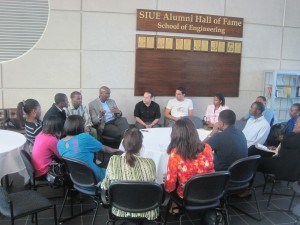
(In the photo: A group of students listening to the Kenyan Ambassador to the United States Mr. Elkanah Odembo on his visit to campus last week. I was there to impress him with my smattering of Swahili, his native language.)