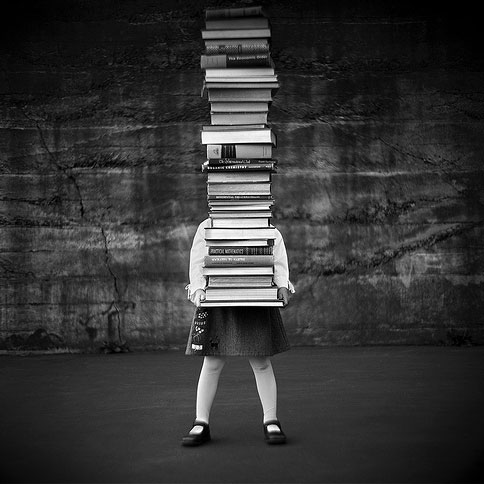
I like books, but only to the extent that they don’t become a physical burden. When I was younger, I used to like the idea of a stacked bookshelf filled with books of different kinds – even when I didn’t get to read them all. My room when I was between fourteen and eighteen was filled with over two hundred books that I’d gathered from all around the house. I studied library archiving methods from books and made a list of all of them, delighting in the ability to monitor their movement whenever anyone borrowed them.
 Much of those book were pass-me-downs from father and elder siblings. Father gave me tonnes of Readers’ Digest issues from the 60s and 70s along with series of novels from a writer called Dennis Robins. Sisters read James Hardley Chase and Harold Robins and a few Mills and Boons series. There were also books from the African Pacesetter series that provided an opening into a world of new adventures. The real heavyweight literature texts however were from Shakespeare (father gave me his copy of The Complete Works), Wole Soyinka (we had a copy of The Lion and the Jewel as well as The Jero Plays. I never did figure out who owned them. They could have strayed in somehow from borrowings. I remember vividly when father handed me his copy of Ake, saying, “This is one of his most accessible prose works. Even I can understand it. It turned out to be one of the writer’s most delightful reads.), Chukwuemeka Ike (The Bottled Leopard, The Naked Gods), D. Olu Olagoke’s The Incorruptible Judge, Ngugi Wa Thiong’o’s Weep Not Child, Nkem Nwankwo (Danda and some other one I can’t remember now), Efua T. Sutherland’s Edufa, Chinua Achebe’s trilogies, and his outstanding Chike and the River which I read in primary school. I also remember Thomas Hardy’s The Mayor of Casterbridge which I never read because at that time for a silly reason that it was too big a book to be read without accompanying pictures. Along with all of those were the Yoruba texts: all of D.O. Fagunwa’s books including the famous Ogboju Ode Ninu Igbo Irunmale, Bamiji Ojo’s Menumo, Adebayo Faleti’s Ogun Awitele, Akinwunmi Isola’s Efunsetan Aniwura (which we read in the Yoruba class in secondary school), father’s own poetry and prose collections, among so many others.
The house was a wonderland of sorts with such very many ideas locked in the pages of creative texts that I delighted not only in reading, but in making mine. I called the home library The Virgo Library and made a catalogue of all borrower. I also made a rubber stamp out of flip-flops and branded all of them with coded numbers all starting with VL. Much of the said library became depleted between 2000 and 2005 of undergraduate studies through lending and book exchanges with friends. In turn, I exchanged them for an introduction into a world of new texts and so called “adult” literature of Rushdie, Joyce, Marquez and the rest of them.
Then there was the other realization that half of the books we should even be reading didn’t even get to Nigeria on time, except occasionally through professors (like Niyi Osundare and Remi Raji) who brought them in truckloads after every return trip. We read voraciously from the many book exchanges with such trusting professors. It was a good thing that books – like the sea – renewed their buoyancy after each use, and the knowledge in them went around. Sometime when I think about it now that I’m in the US with Amazon.com at my fingertips, I wonder how much we missed out of back then because we didn’t have anywhere to buy books, or sometimes even the means to do so. Great books were encountered only in random places either in the shelf of a travelling professor, or in the corner of a used bookstore by the side of the road.
Most of the books on Amazon.com today have used equivalents that cost between $0.01 and $1, excluding shipping. What a delight, especially to find out when they arrive that they actually look as good as new. But what if they didn’t? Who cares? A book is a book is a book. The content will remain the same through pawings, markings, note taking, and dogearings. I’ll read it, leave a few notes in some of the margins, and hand them over to the next reader. These days I don’t keep books with me anymore. I find the concept of a stationary shelf of books to be tiring and not just because of the cost to move them around through airport baggage weight scanners. It might be why the Kindle or the iPad have become the next best companion of the itinerant reader. As clichéd as it might sound, there’s still an allure to the feel of real books, and I won’t tire to buying and reading them. And this, my friends, is why those who take a look at my new Amazon wishlist will find a list of books I’ve wanted to read, along with a few gadgets that have stolen my interest, including the iPad. (Hint: Mr. Jobs, here’s your chance to win me completely over).
What is the value of books, or knowledge, or even Christmas gifts? A delight, I tell you. Or ask a fifteen year old boy discovering the world, discovering himself through the words of others in the dead of night.
__________________________
Picture source: http://www.binarydollar.com/category/frugal/, http://stkarnick.com/culture/category/culture101/