Image of the day: Protesters in Lagos, Nigeria, gesturing their displeasure at patrolling police helicopter.
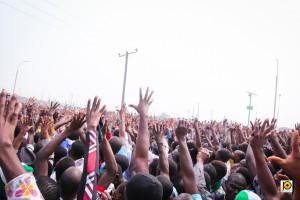
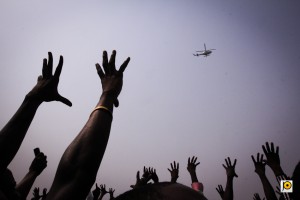
Image of the day: Protesters in Lagos, Nigeria, gesturing their displeasure at patrolling police helicopter.
1. Give. Thousands of people who go out everyday to give their time, energy and put their lives on the line in demanding for justice and reform do so with their own money. Because of the standstill around the country, they are not able to go to work and make a living, so it might become a lose-lose situation where the powers just wear them out patiently. If you live in Europe or America and you have the means, please donate money. Give to people you trust. Give to organizations that you are sure will make sure that the funds are judiciously used to cater for the (mostly food and transport) needs of those young people out in the sun every day. (PS: I will be sending some money to the Occupy Ibadan coordinators, friends, during the coming week. If you’re interested in supporting the protests with your money and it is too small to send alone via Western Union, let me know. I can take it via paypal or bank transfer and send it together with mine.)
2. Learn about the situation. The #Occupy Movement in Nigeria today is not about income inequality as it is about a demand for accountability and reform. The status quo is corrupt. Millions of dollars are siphoned every month in Nigeria to the pockets of political elites and other business cabals who collect subsidy money from the government and then turn around to sell petrol at market price to neighbouring countries, thus creating scarcity and making a profit. If you are a writer/blogger/tweeter, be aware of all the facts in the situation. Do not be used.
3. Join an #Occupy protest around you. There have been #Occupy Nigeria protests in Belgium, Washington DC, London, New York etc. Start one near you, or join them wherever it exists. The soul and future of Nigeria is at stake, and every support counts. Spread the word. Spread the message. Tell everyone you know about this and put pressure on the Nigerian government to reform on the side of the people and not on the side of the selfish people who look out only for their pockets. Post pictures and videos from this protests.
4. Write to your representatives. A group of activists” called the Naija Cyber Hacktivists are using twitter to put out phone numbers of elected officials, and other relevant information. Follow them, and barrage representatives with messages, pressuring them to take sides with the suffering populace.
5. Follow Occupy Nigeria on twitter.
“We were sent the wrong people. We asked for statesmen and we were sent executioners.” – Wole Soyinka in A Dance of the Forests
Today all around the country, citizens are taking to the streets to protest the sudden and brazen removal of fuel subsidies by the Federal Government, thus raising the cost of buying fuel in the world’s sixth largest producer of oil. There is more: insecurity of lives and property, and a splintering country along the lines of ethnic and religious allegiance. Very scary.
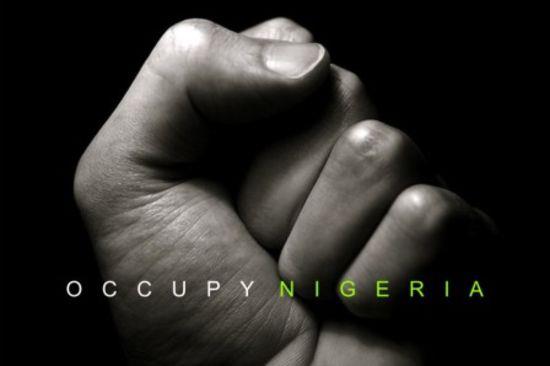 As much as I want to blog about other interesting things in America today, I’d like to use this post to express solidarity with fellow compatriots now defying the sun, a suspicious police force, and an anti-people government, walking and protesting to express their grievance with a distrusted government. They carry with them a risk of government violent reprisal, and a loss of livelihood if – God forbid – the situation is not quickly reversed.
The soul of the country is once again on trial. We stand at a junction. We have a choice between a big government run by a selfish political class with a struggling, oppressed populace, and an accountable, egalitarian society where the resources of the country is judiciously used to better the life of citizens. We have been here many times. The military dictatorships we went through enriched themselves at the expense of everyone else (and several lives). Now under an elected democratic government, the last thing we want is a system even much worse than previous ones. Alas, that is what we have.
May the will of the people overcome.
by Adeleke Adesanya
Dear Friend,
A season of discontent is upon us again. You have heard of government’s recent decision and you want to join in the protests. We have argued about it all before. You are aware that you and I at least agree on one thing and that is your right to freely protest. These are uncertain times however. And I see in your fervour a certain hope for this country. I want to see you come back in peace, healthy enough to argue with me again. That is why I write this precise manual on best practise procedures to ensure a peaceful protest and your safe return.
Do not bother querying my credentials. I will be frank and admit that I have never taken part in any public protest in Nigeria or elsewhere. I can write protest letters, sign petitions, and even place a phone call or two. But I don’t do Sit-Ins, Million Men March or Occupy Wherever. I value my physical security and have always been cynical of all leadership including that of every opposition body. As a student, I noticed that Student Union President’s do the talking while their followers receive the hard side of police baton during protests. I know that those who died during violent protests of 1993 never got to receive political appointments. I know that many who were apparently ready to die for that cause turned coat and made it into a source of livelihood. I know that many people do not want peaceful protests. Some nouveau leaders want to climb the corpse of martyrs to renown. Thieves want a little rowdiness so they can steal. And then, there are fifth columnists, SSS officers and paid agent provocateurs. You will learn to identify them while reading this piece.
One, you must plan for the protest properly. Revolutions do not happen by accident. Know when it will start and when you will leave. There is nothing called indefinite protests, everything must have a beginning and an end. Know what you will do and what you will not have a part in. There are many ways to make your voice heard. The people who write articles, who protest on twitter, who telephone radio stations do not have two heads. You don’t have to be the foot soldier in the march, that confronts the mobile policeman.
Two, if you must go out, err on the path of caution. Consider writing you local police DPO for approval first. I know you have a right to protest but it is his duty to maintain law and order. If you do not have permission, it is common sense that he will not guarantee your safety. He might refuse but if you receive approval, it is guaranteed that you will have police officers to secure your procession. They will not tear gas you if you received approval. They will even protect you from touts who may want to hijack your protest. You may belittle this point but asking for permission earns you respect. You are advertising that you are really a leader.
Three, in case of public protests, choose the locations carefully. Choose play areas and parks in suburban areas. Do not protest along main roads. Never ever burn tyres. Do not hold sticks, tree branches or anything that may be misconstrued as a weapon. Do not burn explosives aka banger. Do not harass motorists. You must be unarmed and appear to be harmless. You are a well bred gentleman afterall.
Four, dress like a responsible person. You may be tempted to wear jeans and a tee shirt but I will suggest a suit or blazer. If you wear native attire, don a cap. Dress as you will like to appear before a judge for bail and in all likelihood you will not need to. With your smart dressing, the police will assume you are a lawyer or a representative of some foreign NGO. You want them to make that kind of mistake. Never ever show your naked chest or wear a bandanna no matter the heat.
Five, before going for a protest, take care to telephone each media organisation in your vicinity and inform them of your protest. Or better still, request to visit them and make your visit to their office your protest. If you can get foreign press too, then fate has favoured you. If you cannot get the media to cover your protest, postpone it. In this day and age, a revolution that is not televised did not happen.
Six, part of your planning is the preparation of handbills and banners. Use your wits to come up with catchy, even funny choice of words. Design your handbills like you are selling a church retreat. Smile when you go out to evangelise. You may not agree with me your attempt to mould public opinion has made you a politician and you must learn to act the role appropriately.
Seven, do not march to the Governor’s office, the Senate or Representatives building unless you have previously secured an appointment. The security men that guard these places are bored and have been looking for action, any action. Your attempts to break protocol may be repelled with the direst deterrents. If on the other hand, you are able to secure an appointment, try not to smile too happily when you get the customary photo opportunity.
Eight, there will be many who are not of similar persuasion as yourself. They are not necessarily against you, sometimes they just don’t care. If in a democracy you have a right of dissent, accept that they too have the right to be aloof. As for those who do not agree with you, do not get into any argument. Flee from them the way Born Again Christians are told to flee from Jehovah Witnesses. Public arguments too easily turn violent and are not subject to our customarily civil rules of debating.
Nine, it is one thing to have a plan; it is another to actualise it. If you plan to walk a mile and common sense tells you to stop at half, it is not cowardice. He who protests and runs away will live to protest another day. But be wary of those that push you to go a mile and a half. I am speaking metaphorically. Anyone who tells you he is ready to die or throws a missile at a policeman is the enemy. Ditto those who carry concealed weapons or argue with a man with a gun. Ditto arsonists. Ditto the bearer of fantastic tales about grave casualties in other scenes of protest. Anyone who calls a civil demonstration a call to revolution. Watch these ones. They are either fools or fifth columnists.
Ten, you must remember the practical issues on the D-day. Take some water with you. Eat a good breakfast; you don’t know for sure where or when the next one will be. Avoid any form of intoxication. Do not rub your eyes with kerosene; rather leave if the police start shooting tear gas. After tear gas, things generally go from bad to worse, I am not even sure the Nigerian Police have any stock of plastic bullets. Carry a small camera and a cell phone and make a call at the first sign of trouble. Have a lawyer on speed dial. Take your doctor’s prescription along if any, as well as your hospital card showing your blood type. Carry a valid national I D card. Be alert and prepared to flee to safety, when necessary.
I have written this because of my awareness of the attendant risks in the society we live in and the fragility of human life. Don’t be a dead hero, martyrdom is generally overrated. Someday, you will read this again and laugh at me for being so worried about you. When that day comes, I will be happy to buy us both a drink, relieved that this epistle has served its purpose.
Occupied. Now What?
From snippets I get on social media (more than a handful of pictures from Facebook and Twitter), Nigeria is effectively grounded. People occupied (that word again) the streets demanding change. I’d been bothered about one thing all along – having been incapable of joining the protest because of inevitable distance: the capacity of public protests (with tendency to turn violent and take innocent lives) to make a significant difference. At the last count, more than six people have now been shot dead by overzealous policemen sent to the streets to “restore order”.
There is a sad, lingering realization, that this revolution will not solve all the nation’s problems. (It didn’t solve all of the problems in Libya, Syria, Iran, America, Tunisia and Egypt either). If the government subsidy removal would be beneficial to the citizenry, government would have begun to put structures in place for people to see and feel BEFORE removing the only benefit that many enjoy as citizens of such naturally endowed country. Now here is a better thought: LET US ERADICATE CORRUPTION. Where are the new ideas for a different country to arise when this revolution dies? Where is the new direction? Where is the new leadership that will take us from here? In ten to twenty years from now, most of the visionaries and pioneers of Nigerian independence would most likely be dead and gone. Who would take their place? What new ideas would they bring to the table?
I had a long discussion this afternoon with a family member about the progress now celebrated in Rwanda. After a brutal civil war that tore the country into pieces in 1994, bold new steps have been taken (including adopting English, abolishing “tribe” and instituting a host of reforms that has now made the little African country one of the best places to live on the continent). We had our chance in Nigeria (and much of West Africa) after “independence” from the British, it was squandered. We had a different chance after military rule in 1999, some progress was made, and then slowly foundered. Is this another chance? What emerges from here when the tyre bonfires are well burnt out and things return to normal? What will that normal be, and will it be good enough?
It should never be. The world is evolving. So should we. For the better.
Occupied. Now What? was published on January 10th, 2012, with the tags commentary, Nigeria, Occupy Nigeria, Protest, under the Observations, Soliloquy, Travelling category. There are currently no comments on this article so far.