NLNG 2017 Literature Prize Interviews and Reviews

As promised, over the last week, this blog has featured reviews of the shortlisted work on the 2017 NLNG Nigeria Prize for Literature (Poetry), as well as interviews with the shortlisted writers, and the prize coordinators. You can now read and watch them here, below:

Monday, September 25, 2017: A Review of A Good Mourning” by Ogaga Ifowodo

Thursday, September 28, 2017: A Review of Songs of Myself by Tanure Ojaide

Sunday, October 1, 2017: A Review of The Heresiad by Ikeogu Oke

Monday, October 2, 2017: Conversation with Professor Ben Elugbe, member of the advisory board of the Nigeria Prize (video)

Tuesday, October 3, 2017: Conversation with Ogaga Ifowodo, author of A Good Mourning (video)

Wednesday, October 4, 2017: Conversation with Tanure Ojaide, author of Songs of Myself (video)

Thursday, October 5, 2017: Conversation with Ikeogu Oke, author of The Heresiad (video)

Friday, October 6, 2017: Excerpts from each of the collections (video)

Sunday, October 8, 2017: Conversation with Kudo Eresia-Eke, General Manager, External Relations for NLNG (video)

Monday, October 9, 2017: Prize Announcement/World Press Conference.

Update: October 9, 2017: Ikeogu Oke’s The Heresiad is the winner of the 2017 Nigeria Prize for Literature. 

The intention behind this effort was to help engage the community of writers and give visibility to each year’s shortlist as a way to better improve the prize through conversations and constructive criticism. The end game, of course, is the hope to stimulate an improved culture of reading and appreciation of literature around the country.

____

Follow us on twitter at @ktravula.

WanaWana Celebrates Love, Sensuality and Feminine Agency

I was present at Rele Gallery Onikan on August 27, 2017 at the listening party organized for Wana Udobang’s sophomore poetry collection called In Memory of Forgetting. I have also spoken with the poet, in an interview published on Brittle Paper, about her work, craft, and opinion on the Nigerian literary scene. So I was glad to see that she has created visuals for a few of the poems in the collection.

This one is called “20”. It was released on September 20. According to the press release, ‘the video was filmed in Lagos at Freedom Park. The concept of “20” was developed by WanaWana, directed by XYZ, and features MTV VJ Folu Storms. The video artistically celebrates love, sensuality and feminine agency in a poem that has been described by one critic as “steamy and intense”.’

Enjoy.

You can get the album here: https://store.cdbaby.com/cd/wanawana, or at Salamander Café (Abuja), and at Terra Kulture and Rele Gallery (in Lagos).

At Titilope’s “Open”

When I lived in Ibadan, there was these jazz sessions at Premier Hotel which took place every weekend (can’t remember now if it was Friday or Sunday nights). It held in a ballroom on the ground floor of the hotel and featured an ensemble that played non-stop for about four hours, late into the night. The music swayed from highlife to jazz, and sometimes to juju, but always within a range of danceability. Guests who sat around the stage in different arrangements often got up from their tables to dance, alone or with their guests. There was always food and drinks.

Sponsored message: Before you plan your trip, check out Hotels.com voucher codes to find out what deals enables you to save on your reservations. It is always good to have prior reservations done to avoid sky-scraping prices later.
I attended a couple of those sessions while I was a student, with friends and colleagues from the university. It always provided a kind of relaxing end to the week. We had nice stimulating conversations, got our fill of good music and food, and exercised the stress away. The location, on top of the hill at Mọ́kọ́lá, also provided not just a beautiful overview of Ìbàdàn at night, but also a very relaxing access to cool breeze. By morning, one felt refreshed and ready to take on the next week.

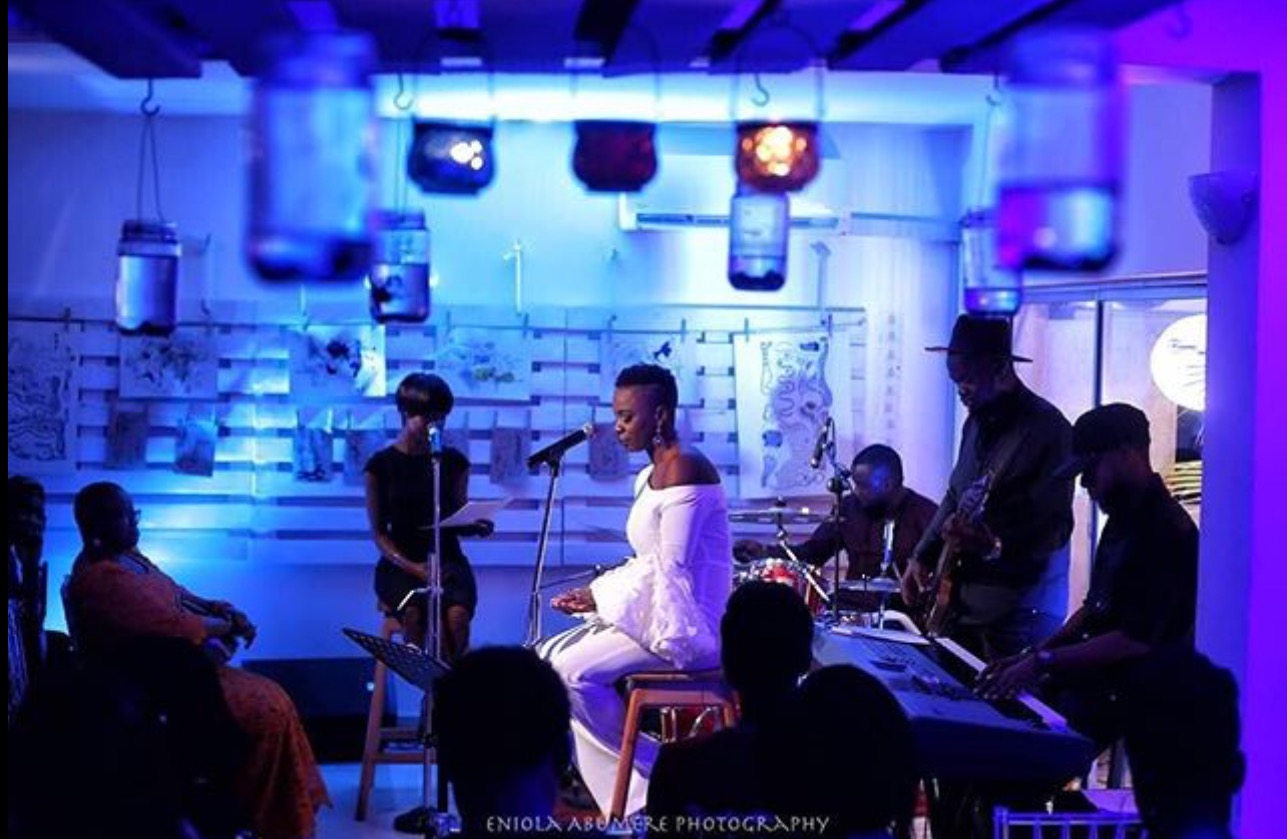
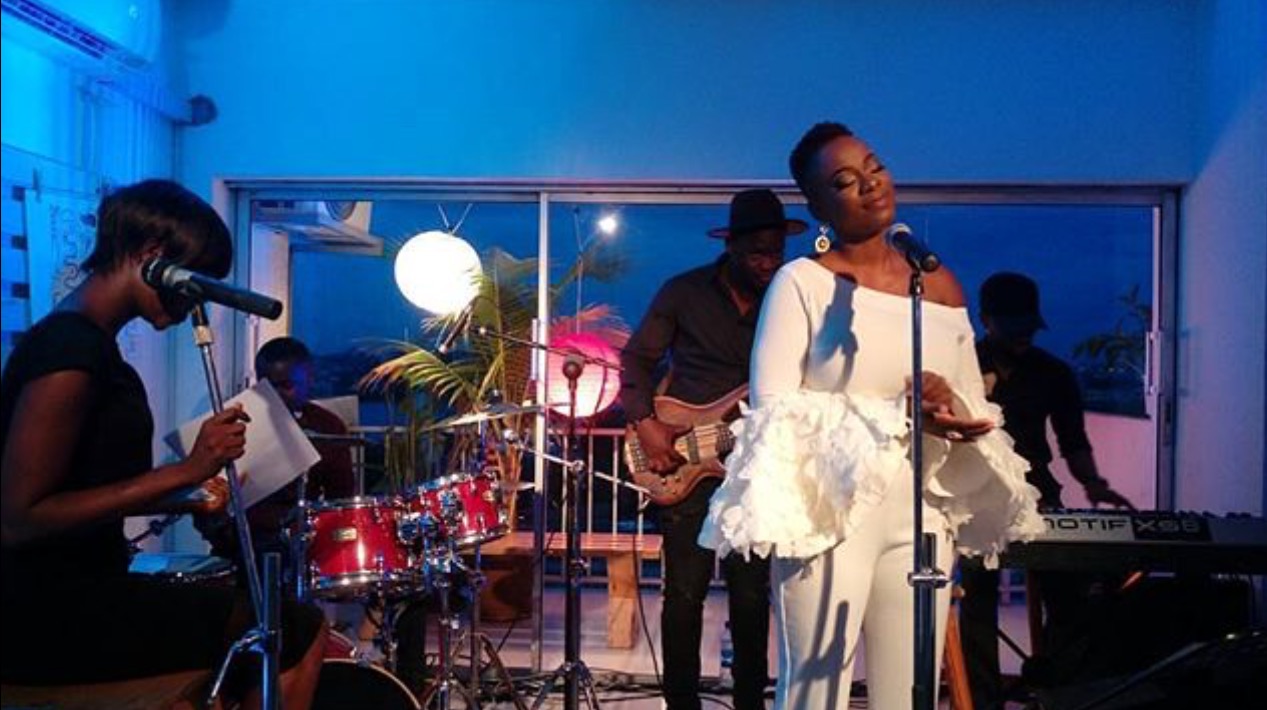
Yesterday, I had an experience very close to that, which brought the memories back. It was at 16 Kòfó Àbáyọ̀mí Street, Lagos, on the eighth floor of a building I never knew existed there, with a relaxing view of the Lagos Lagoon, and a high-up-enough location to soothe a most exhausted traveller. The event was Títílọpẹ́ Ṣónúgà’s poetry concert event titled “Open”. Gate fee: 5000 naira. It is the first of a three-part performance show slated around venues in Lagos.

I don’t know if “concert” is the right word, because the poet approached it like a soulful conversation between an artist and her audience. But the word still closely captures some of the show’s best aspiration. In a space that felt intimate because of its size, the lighting, and the mood, an artist performed to an audience, and the result was delightful.
I haven’t been to many spoken word concerts. My contacts have been limited to more public spaces like the halls of the June 12 Cultural Center in Abẹ́òkuta where poets from all around the world have performed to a much larger audience during the annual Aké Festival, and to YouTube channels and TED Talk videos, where poets with verve, rhyme, and sass have dazzled with inspirational and stimulating turns of phrase and soulful rendition of their work. There are a few other avenues that have popped up over the years though. I know, at least of Taruwa, which (I believe) featured open mic events for amateur and established spoken word artists to come impress an audience. But this one felt different, perhaps because it also included an element of music necessary to move even the most inexorable skeptic of the beauty or relevance of poetry in performance.
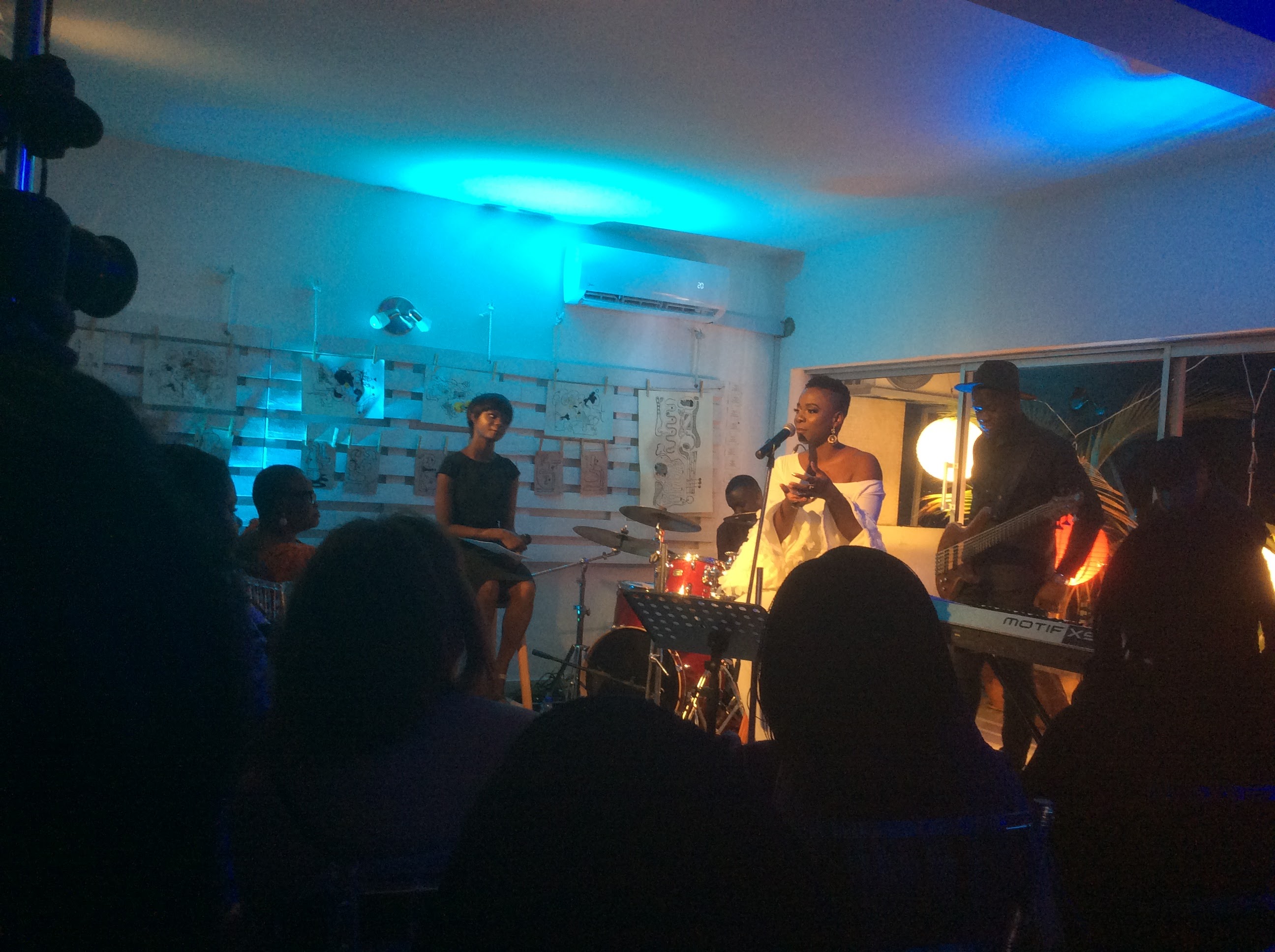
Accompanying Ms. Ṣónúgà last night was a bass guitarist, a pianist, and a man on the drums, along with a certain Naomi Mac whose voice carried the soulfulness demanded of the intimate occasion with ease and grace. With their accompaniment, the show was fully realized not just as a celebration of the power of the word or Ms. Ṣónúga’s poetic capabilities but as a ritual of mass catharsis; an artistic triumph.

The poems performed came from some of Títílọpẹ́’s recent works, a few of which I’d read on other platforms or heard in other places. Perhaps it was deliberate, a way to get the works performed again in a perfect setting of her choice, recorded along with the audience reactions. Some I was hearing for the first time. What united them was the theme of the evening: an openness to possibilities, in love, in life, and in public engagements. Navigating the tale of personal heartbreak, the process of finding love, coming of age, political instability, societal dysfunction, naivete, lust, love, and consent, the poet details her personal artistic response in a voice and style that is as open as it is reserved. (In a notable poem about a seeming first sexual encounter, for instance, the poem ends “he knows the punchline to this joke, and I’ll never tell“).

In the end, it was as much a beautiful intimate gathering as it was a much needed artistic intervention in a city space much in need of a lot more events of this character. We need plenty more.

_____

More about the last two performances here. Títílọpẹ’s earlier work “Becoming” was reviewed here. Photos 1 and 2 from Titilope Sonuga’s Instagram page.
184 Poets Vie for the Nigerian Literature Prize

Today in Ikeja, the entries for this year’s NLNG Nigerian Literature Prize were delivered to the judges at an open ceremony. They contained entries by one hundred and eighty-four (184) Nigerian poets vying for the Literature Prize and five (5) literary critics vying for the Prize for Literary Criticism. The two categories are worth $100,000 and N1 million respectively.

“The hand-over of the entries to the Advisory Board, chaired by Professor Emeritus Ayọ̀ Bánjọ, signifies the beginning of the judging process which culminates in the announcement of the winner in October 2017,” reads the press release put out after the event.

Handing over the entries, Dr. Kudo Eresia-Eke and Professor Ayọ̀ Bánjọ. Photo: SabiNews

Handing over the entries, NLNG’s General Manager, External Relations, Dr. Kudo Eresia-Eke, said the prize has inspired some 1,630 books of which 533, representing 32%, were submitted in the Poetry category since the inception of the prize in 2004.

It continues:

The number of entries for the 2017 edition exceeded the 2016 numbers, showing a six percent rise in the number of entries received…. The entries… will be examined on their merits of excellence in language, creativity and book quality.”

The panel of judges for this year’s awards is led by Professor Ernest Emenyonu who is a professor of Africana Studies at the University of Michigan-Flint. He was Deputy Vice-Chancellor at the University of Calabar between 1988 and 1990, and Provost (Chief Executive) Alvan Ikoku College of Education, Owerri, between 1992 and 1996. He has taught in several Nigerian and American universities.

Other judges are Dr. Razinat Mohammed and Tádé Ìpàdéọlá. Dr. Mohammed is an Associate Professor of Literature at the University of Maiduguri. She teaches African Literature with specialization in Feminist Literary Criticism and Theoretical Approaches. She is an accomplished writer as well. Tádé Ìpàdéọlá won the Nigeria Prize for Literature in 2013 in the Poetry category with his third volume of poetry, The Sahara Testament. A poet and a lawyer, Ìpàdéọlá has won several awards and is a resource person for the Rockefeller Foundation around Africa on building resilience.

Members of the Advisory Board for the Literature Prize, besides Professor Bánjọ, two-time Vice-Chancellor of Nigeria’s premier university, University of Ibadan, are Prof. Jerry Agada, former Minister of State for Education, former President of the Association of Nigerian Authors, and Professor Emeritus Ben Elugbe, former President of the Nigerian Academy of Letters and president of the West-African Linguistic Society (2004-2013).

“The Nigeria Prize for Literature has since 2005 rewarded eminent writers such as Gabriel Okara (co-winner, 2005, poetry), Professor Ezenwa Ohaeto (co-winner, 2005, poetry); Ahmed Yerima (2006, drama) for his classic, Hard Ground;  Mabel Sẹ́gun (co-winner, 2007, children’s literature) for her collection of short plays Reader’s Theatre; Professor Akachi Adimora-Ezeigbo (co-winner, 2007, children’s literature) with her book, My Cousin Sammy; Kaine Agary (2008, prose); Esiaba Irobi (2010, drama) who clinched the prize posthumously with his book Cemetery Road; Adélékè Adéyẹmí (2011, children’s literature) with his book The Missing Clock; Chika Unigwe (2012 – prose), with her novel, On Black Sister’s Street; Tádé Ìpàdéọlá (2013; Poetry) with his collection of poems, Sahara Testaments and Sam Ukala (2014; Drama) with Iredi War,” the press release concluded.

The Nigerian for Literature is Africa’s biggest prize with a cash reward of $100,000, which rotates yearly amongst four literary categories of prose fiction, poetry, drama and children’s literature.

Reasons Why We Write

by Afọlábí Bólúwatifẹ́

IX

Because forgetting

is unforgivable,

irredeemable even

and we must not go too far

from redemption

beyond reach-

of  Abram’s water drops.

VIII

Because pain must be kept-

safe

to be felt

again

and again.

VII

Because we must never stop trying

to define beauty

even when our inks embrace emptiness

and pens fall into pits-

of clichés

and stereotypes.

VI

Because fragnance is transient

and a sunrise

is never complete

without words-

radiant,

magical,

warm.

V

Because time is infinite

and life is measured in spaces-

between seconds

between laughters

between tears.

IV

Because they said-

feelings are just biochemical reactions

in the blood and brain’

neurotransmitters bumping against receptors-

exciting

inhibiting

exciting.

But we had to prove Loewi wrong.

III

Because words don’t die

and immortality has not lost the gaiety

that bewitched Galahad

so we still attempt

to bury parts,

organs-

in alphabets

and phrases

and paragraphs.

II

Because of voices

between sulci and gyri

that won’t stop whispering-

puns,

quips,

poetry.

That have grown resistant to Haloperidol.

I

Because,

Because one thousand  poems are not enough.

Because there is always space for one more-

I am lost without youboluwatife

I can’t live without you

I am empty without you.’ 

__________

Afọlábí Bólúwatifẹ́ is a 4th Year Clinical student at the University College Hospital(UCH), Ibadan. He is passionate to a fault about poetry and is currently working on publishing his first collection of poetry. His poems have been published on Kalahari Review, Kollectiv, several online blogs and some editorial boards at the University.

He tweets via @oluafolabi.