Simplicity of Youth

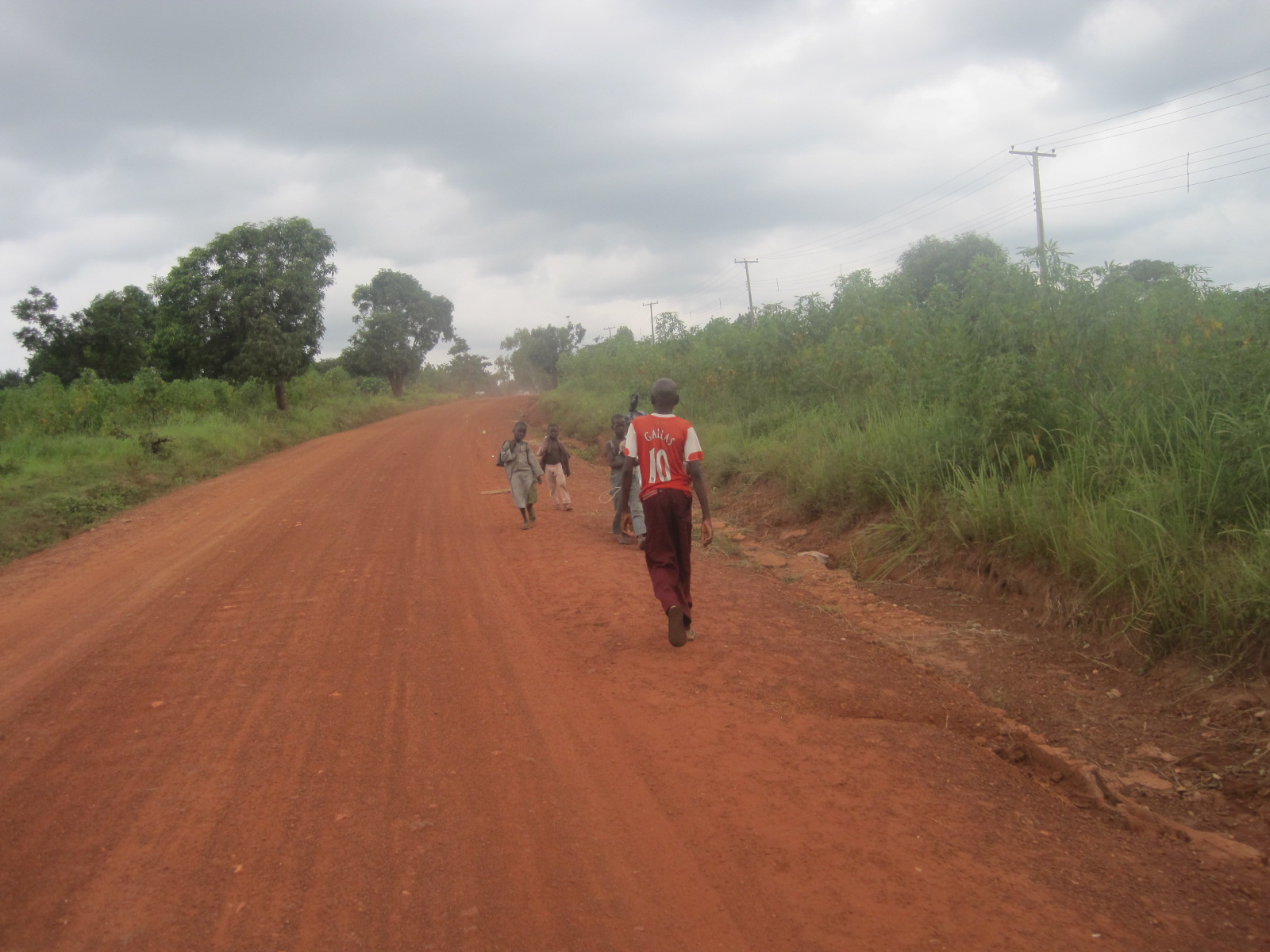
It is night in a once noisy village, and the cool wind of the evening blows around the rest of the dust floating around the sky. During the day, the bustle of the street rivals that of many small markets around Ibadan. Children racing with used car wheels from baale’s house downhill towards Mama Lawyer’s clinic at the end of the street, young girls hawking vegetables scream the price of their wares on the top of their lungs, children run around bare-feet without any care in the world, and loud music plays from the many rooms around the street. Now, at night, everything is quiet, except for the little transistor radio in father’s hands as he paces around the house looking for the signal for the Voice of America.

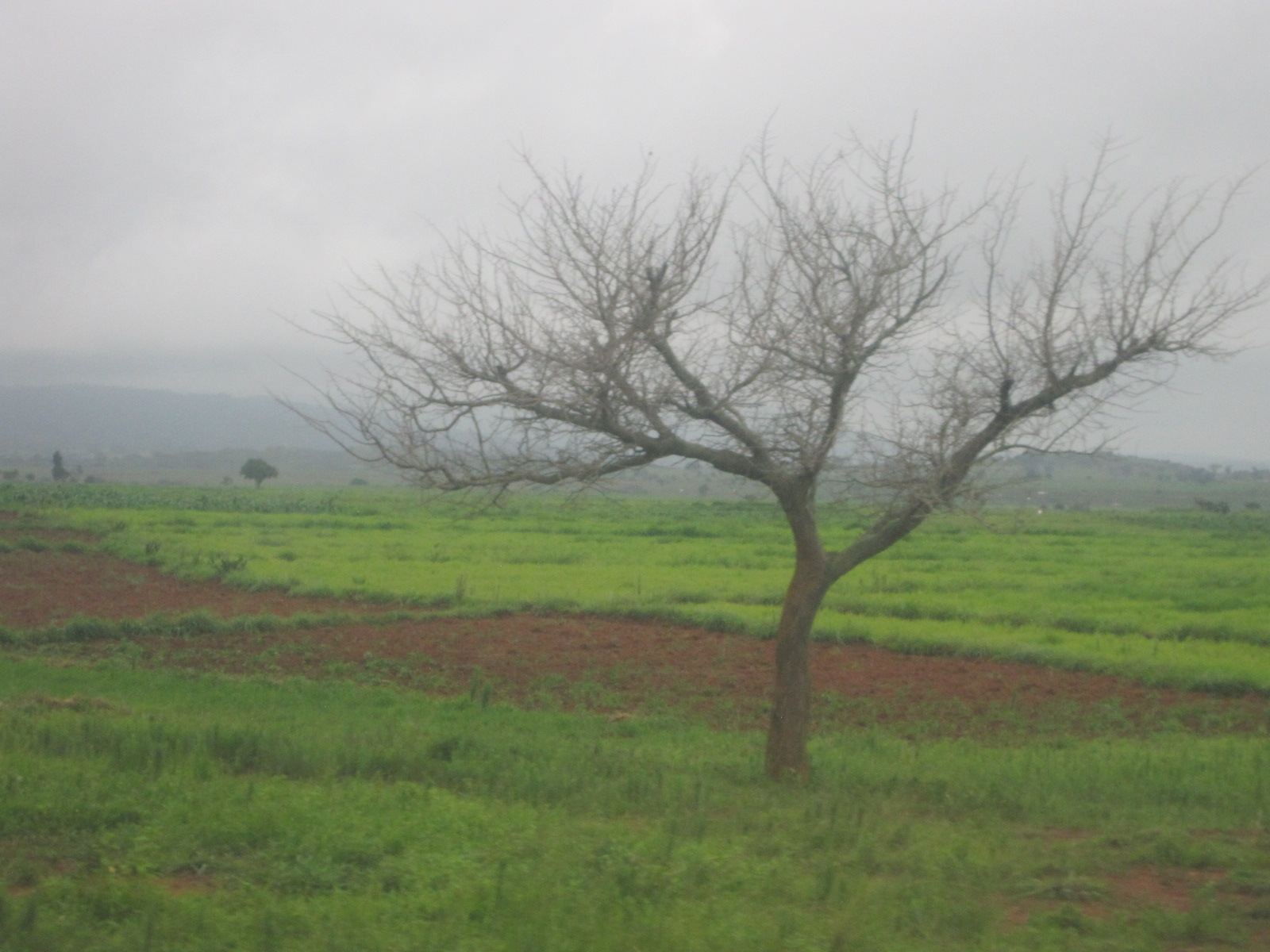
The concrete slab that extends from the front door of the house bends towards the sand at a steep angle. It goes on for a few metres and is suddenly cut off, leaving a ledge where water drips down into the open field when it rains. The field has grandmother’s garden of vegetables. It had garden eggs, yanrin, and spinach. Farther down a few metres on is the well for water. All the other parts of the compound has different crops, depending on the time of the year. Maize grew in April. We planted them in March. Cassava grew many times during the year, as did coco-yam. As soon as the rain fell, we went out with hoes and made heaps. We got loam from two houses away where the chicken farmer dumped the waste from the poultry. They told us that the soft black dung when mixed with the soil in our compound made the corn come out bigger and stronger. They gave us buckets and seeds. We were six, and seven, and ten. We fancied ourselves as brilliant farmers who knew just what the land wanted, and gave it to it. We treasured millipedes and centipedes, and the little white worm that surprises us from within the dung. They called it ogongo. Ogongo was another name for ostrich, but I’d never seen an ostrich before.

Behind mother’s window north of the house was a large guava tree. Underneath is was the softest soil around the house. Two plots for a house compound was large enough for any kind of play, and we ran around to the best of our strength. When raining season came, we settled on that spot behind her window for the site of the corn and beans garden. The soil is heaped in serrated ridges and space is put in-between them for walking. Corn is planted in twos and threes. Olaolu said he had been told that planting them in threes made the odds more favourable for the seeds. I looked at the small black bed of soil and smiled in contentment. It always took two to five days for the first leaf to sprout out of the heap, and all that would be left is the need to add water, or just wait for the rain to pick up. But there I was just smiling at the result of my accomplishment. Mother looked out of her room through a striped red curtain and giggled. “Kola, you won’t be standing there forever, would you? It doesn’t start growing as soon as you plant it, you know.”

Night. We lay on mats on the concrete slab just a few feet away from the front door. It’s quiet and the evening breeze blows around the village tossing up the remaining dust left of the children’s running feet. There usually is no electric light. If there is, it would have been put off deliberately. What lights the evening is the moon and the cheer in our voices as we talk about whoknowswhat, mostly in hush and sometimes excited tones. Father is still pacing around the house this time with his little transistor close to his ears. Occasionally, the words Tamil Tiger rebels or Bosnia Herzegovina will assail my ears as the others giggle at his strange hobbies. Mostly, when he comes around in those heavy paces holding the radio to his ears, those giggling a few minutes earlier would have relapsed into a mode of pretend-sleep. The front porch had its charm, especially when it rained. It was the best place to sit and watch the lightening rip the blackness of the village sky into shreds, and give certain shivers needed for a good night sleep. But those were the days.
Village Boy

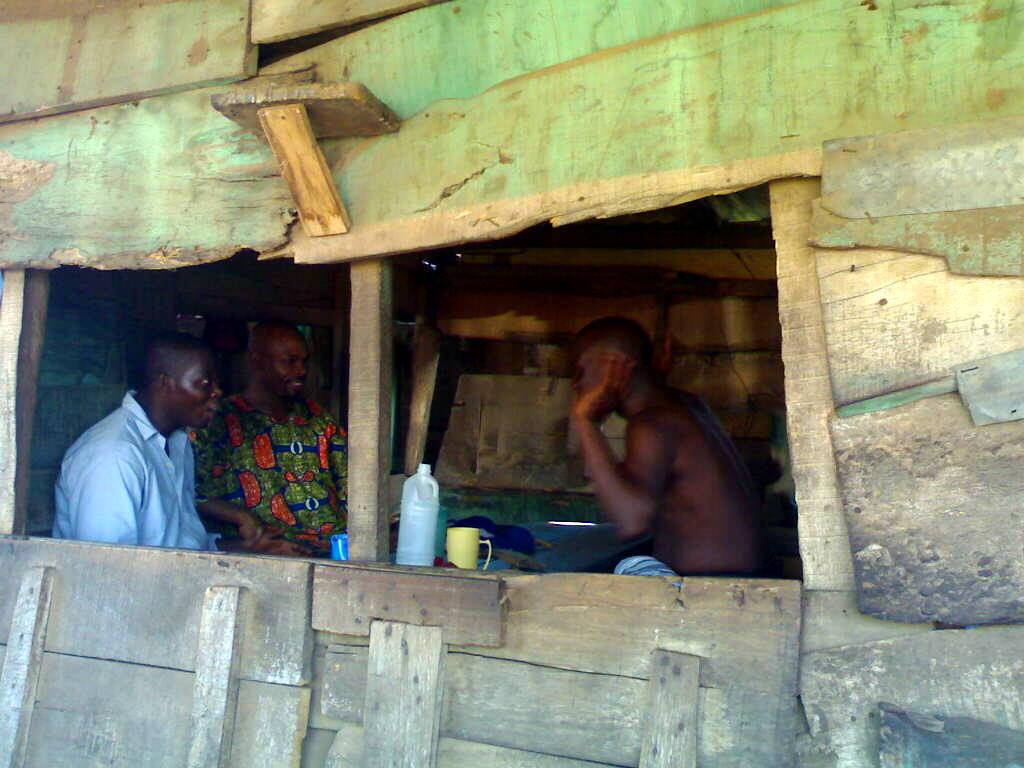
Evenings come with breeze, silence and dust. Across the sky are slivers of brown rustiness finally settling on the town after a long day’s work. A road passes in front of the wooden shack where men young and old sit down to banter in merriment, often with their shirts off. The women sit in groups petting children. When darkness falls and all that lights the day is the moon up in the sky, voices move up and down in modulations that carry the weight of their vain deliberations.

The village is a study of contrasts. On the one side of it is a sprawling mass of huts covered with brown rusted roofs. In the middle of this side of town, also called Aba, was the Christ Apostolic Church – perhaps the only modern building there. Aba burns the eyes with the brown of its thatched huts and of its children’s feet. In a bustling afternoon, the sound of goats and chicken compete with the trail of their smell from one street to another up until the foot of the agbalumo tree…

One hour of traipsing around these edges of the village eventually finds a seven year old boy back at home – a different part of the town. The house overlooks a long equally dusty street that runs from a clinic down to the right hand of the observer to the other part of the village where the barber lives. There is a certain magic in living around here. Grown folks played practical jokes on little children and on each other. A day earlier, on his way back from wandering around the village, he was stopped on the pavement of a certain house where another young boy was being shaven. His head was already bald.

“It’s your lucky day, young man.” A man volunteers. “Stay right where you are. What are you doing around here all by yourself?”

“I was coming from around there. I am going home over there.”

“Why were you staring?”

It is always hard to know where adult conversations were leaning.

“I wasn’t staring. I was on my way home.”

“Like I said, it is your lucky day. All young men your age are being circumcised today.”

What?

“You look frightened. Come closer and sit down here. We’ve been told to go around circumcising all young men like you around town.”

It took a whole minute, then he took off as fast as he could. He never looked back until he got home, panting like a dog. For a long time that evening, he would wonder how grown people managed to make such brutal jokes that seemed at the expense of poor helpless kids scared half to death. And for a longer time after that, he would begin to take a different route home while wandering around the village, but always with a lingering fear that he was not totally out of the grip of mentally bullying elders.

On Silence

The depth of perception lends itself at occasional bouts of silence. There is no sound, none, except little rasping taps of the computer keyboard. Imagine the dead of night, or the afternoon in a quiet cottage overlooking a freezing lake. The birds can’t wallow in its open embrace and make their shrill piercing noises. They have moved elsewhere. The air conditioner also remains quiet, and all stays numb except for occasional sounds of footsteps walking by. You are there, all alone, and dead to the world, except to the hum of the laptop. Focus. There connects – in the instant – a soothing link between every letter out of the fingertips and the screen. Besides that, only an occasional flash of a past memory reminds of a world on the other side of the white plasma. The world sleeps at the moment, and a will remains. Only that, seeping out of the tips of slowly rasping fingers.

Colours on the wall, green disagreeing chairs and mild alliances of littering warts brace the space for warmth. Silver gum wrappers on a spiral art, then there is the book and the keys that lay on it like a lover’s head on the bosom. A black jacket, a shawl, a headphone on the other side of the elbow scream: “there is no peace here but calm, and no order either.” A white plug, white paper receipts, white sheets sticking out of manila envelopes.

A Little More Than Fun

I enjoy the trips I make – when I can afford to make them, most times between the moments of mouthing profanities at mandatory fees of the graduate school. (More angry posts on this later). They enlighten, they inform, they surprise, and they provide countless photo opportunities – very great shots that present themselves at unexpected times in unexpected places. I also love them for the brief relief they provide from the stress of graduate school. In the end, they delight those who read about them, and that in turn makes me happy. Like I always say, life is too short to be spent in the tedium of just work.

I’ve discovered something else. More than just a chance to see my word in print – and who hasn’t harboured plenty of such narcissism – there is also the desire to say something, or say something new. Whether that desire is realized itself is another matter, but the pleasure of having something to say, and the chance to say it in one’s own way at one’s own time is delightful. In-between the appreciation of nature through photographic lenses, or songs, or words of others from books, there sometimes rises moments of professional epiphany, or hubris. The self realizes itself as a medium, and immediately assumes the responsibility to communicate a freshly discovered idea. I mean, I’ve not always been meant to be here, even though I’ve always felt myself moved to write, or to interpret concrete ideas of the world in my head through my own thought processes. But the present delights. In one moment, I’m in the vortex of confusing ideas even of my own relevance, and in another, I’m thinking of writing a book: Yoruba for Dummies: a guidebook to machine translation from and into Yoruba (although speaking out on my thoughts already makes it easy to absolve myself of the responsibility of having to do the work).

What was the point I was trying to make? I’ve lost it now, but it must have had something to do with deciding to write more on this blog in the coming year about my career projections, observations and opinions; sort of like a regular shrink session of ideas with my own personal silent listener. On second thoughts, maybe I was just getting the end-of-the-year blues characterized by looking for relevance in the most mundane things, or taking myself too seriously.

Roads Around The Child (Non-Fiction)

Our house lay at a junction of roads. The first one stretched from an unknown place beyond the mango trees and a public water well in front of the Oguns’ house. Ahead, it reaches out into the dry dusty parts of the village, past the albino barber’s house and farther down into places where now I can’t immediately conjure beyond the sight of leaves, dry wood and old men playing draught on wooden benches outside their unpainted houses. The other road goes past the Bello’s house to the church, then branches towards the main road where tar begins and heads into the town. When put side by side as they both inevitably lay approaching the wide spot in front of the house where we all usually play in the evening around the grown men of the area, they form a dusty wide line of an attempted “v” which ends at the Baale’s house. From there, they part, each again taking up a lonely path to my right into as far as the eyes can see.

A mental stepping now out of the big compound of my house into those streets, I stand now, facing the Baale’s house, turning my back to the dusty “v” of the coming road. On to the left, the road veers by the small thrush in front of the house where Lanko Lanko lives, then a little further down it reaches an electric transformer. After that, to the left, is my school, fenced around with a white concrete wall and spiked metal bars. Further down is nothing but gullies and leaves, and a beaten path to where moin moin is sold along with its corn paste companion, into the labyrinths of huts and a maze of households of mud and concrete of old women with intriguing dress patterns and ribald tongues. They knew me and knew that I ran away from them whenever I could, except when I had things to buy. And one of them called me “my husband”. Further down in the centre of the village woods where dirt competed with house animals and putrid smells from collective waste is a large agbalumo tree. It came along with it a myth that it housed spirits that tormented wandering children…

Back to my junction, on to the right are the better, sanctioned spaces of play: the opening towards Mama Lawyer’s clinic, just three houses away. Before that is the kolanut seller, then the farmer and professor’s awesome cottage where I saw a chess board for the first time and wondered why it didn’t look like the draughts boards I’d seen my brother play at home. In there are their three boy children one of whom was around my age, older by about a year or two. Then an orchard of sweet smelling flowers, a corn mill, trees of mango and cashew, and livestock.  The cottage opened itself always up as a paradise of treasures, menu, and learning.

Mama Lawyer’s clinic, for then and now remains as old as memory. I never saw her husband who was the real lawyer. She has travelled to many countries, we were told, and she had come home to retire, operating the clinic as a way to stay active. Even then, tufts of grey hair already dotted her beautiful hair that kept her demeanour always so disarming. The smile, the warm hug of a mother of all little children, and the music in her voice when she asks “Young man, what have we got today? Aren’t we looking good.” It always made the enduring phobia of needles immediately disappear, if only for the second. So when I get the “fever” as all ailments are called to a six year old, Momma dresses me up in a thick sweater and the right pair of trousers, and we walk hand in hand towards Mama Lawyer’s house, stirring the dust paths of the village’s open roads into the evening sky.

(Photos taken in Jos, Plateau and Obi, Nassarawa. July 2010)