In Pursuit of a Canon

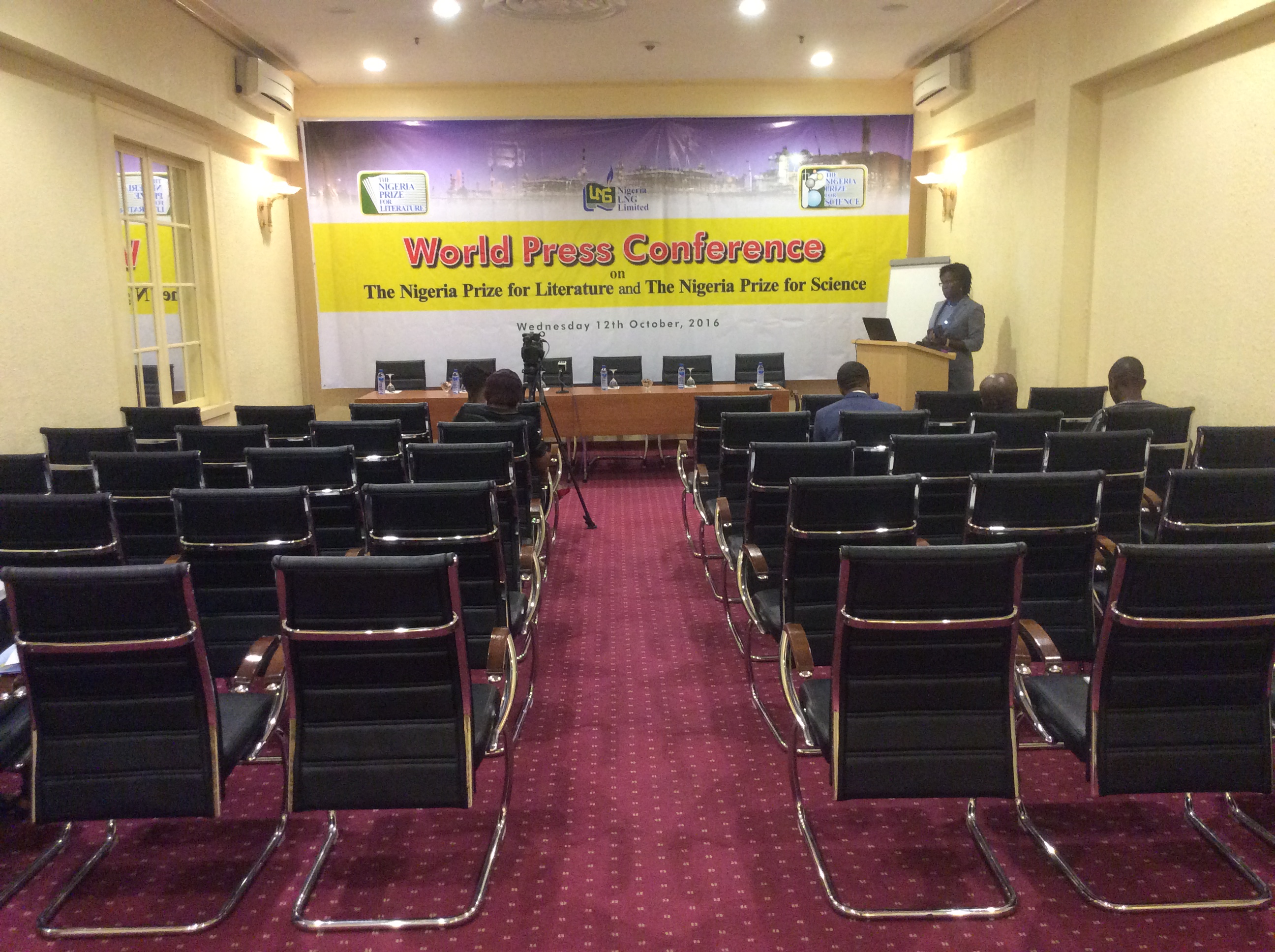
One of the issues that came out of the conversation, yesterday, at the Q&A part of the Press Conference to announce the winner of the Nigeria (LNG) Prize for Literature is whether the judges on the award panel are too old to understand contemporary literature. It was an indirect hit in form of a question from one of the journalists in the room about the currency of the judges’ knowledge about current trends. But the chair of the advisory council, Professor Ayọ̀ Bánjọ, picked up the snark and addressed it fully, defending his team’s savvy and curiosity: “Because we’re old doesn’t mean that we don’t know what is going on. We try to keep up.” Or something to that effect.

But he also went on to suggest that the public make their work easier (if not also superfluous) by generating sufficient debate around each year’s long-listed (and shortlisted) works in order to enrich the canon with smart takes, appraisal, and criticism of each of the work during and after the process of the Prize announcement. He said, and I’m paraphrasing, If you don’t engage the work and create an industry of conversations around them and around the trade, we as judges, may be denied an opportunity to be familiar what is new, and we’d be forced instead to judge the works we are given by the standards with which we are familiar, which may not always be modern. It was both a humble cry for help and a smart take on the state of literary criticism in the country.

Perhaps aware of a criticism of the Prize as being rich in money but not in the elevation of the craft, Professor Bánjọ was throwing the challenge back to the community to not leave the important work of the whole process – criticism, which enhances the value of the work and engages the audience on a second level – to the judges alone. Notable was the fact that no one was rewarded this year with the prize for Literary Criticism which had always been a part of the annual award.
image

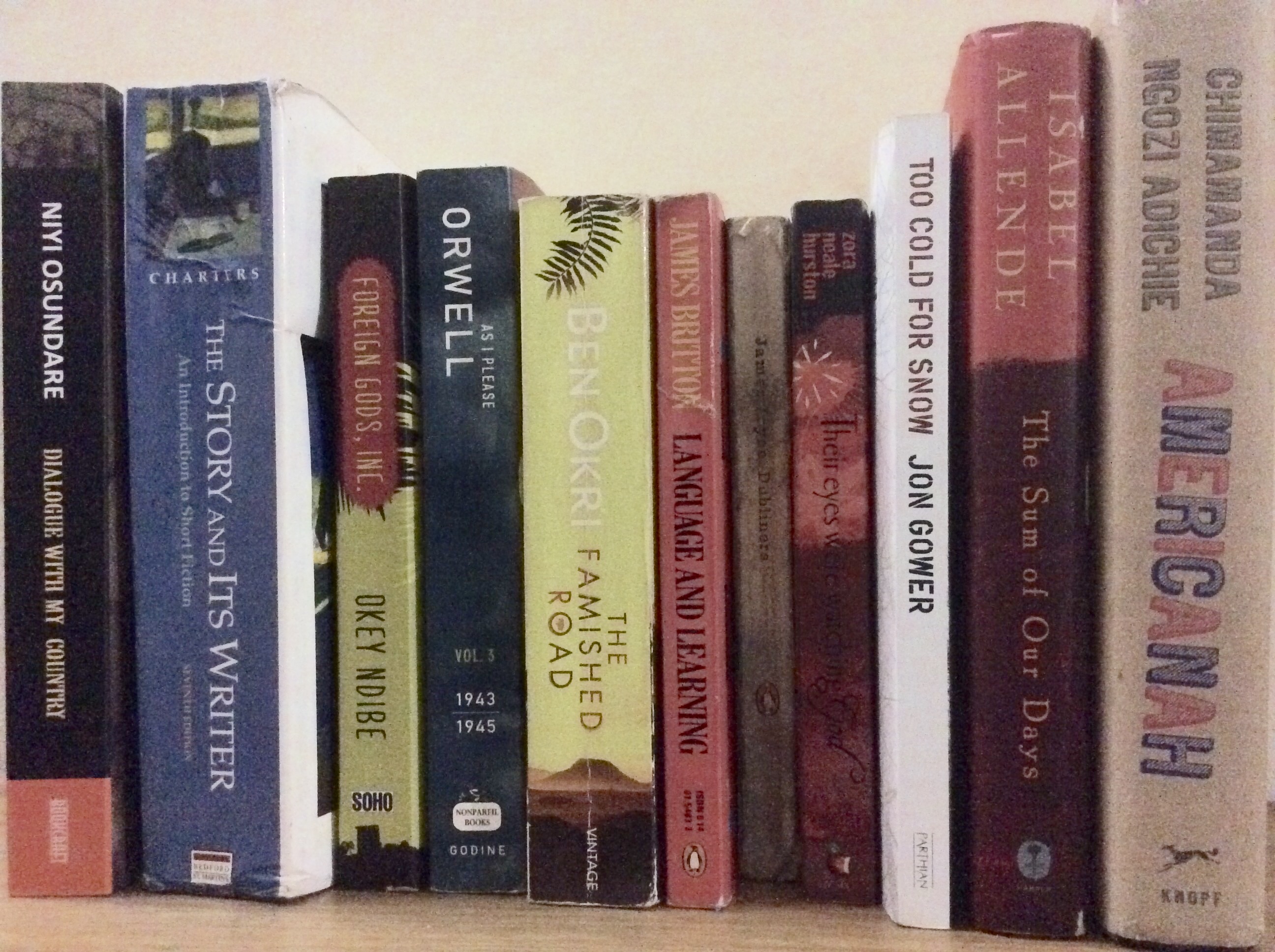
He has a point. Many writers who have won the Nigerian Prize – as also pointed out by another questioner – have gone into oblivion with no follow-up work, as if the cash payout of the award had delivered a knockout punch to their creative ability or drive. Certainly, the point can be made that if the work of past winners of such a prestigious prize do not gain more critical interest after such an honour, or increase in sales at the bookstores, or even show up in more quantity on book stands as a result of the award boost, the Prize would have failed in a major way. And what creates this kind of interest is not just the distribution of the books at the award ceremony as the NLNG already does, or a donation of copies to public libraries which is also a good thing, but a critical engagement by other writers and critics of each work as soon as the long list is made, and before/after the award winner is announced.

This is where the indictment of the community is deserved.

The Caine Prize is a much smaller prize in terms of cash reward, but has been deemed way more prestigious across the continent for its sustenance of critical conversation on African literary production though it only rewards writers working in the short story form. There is a couple of reasons for that. The prize has an active online engagement strategy that covers the continent, involves the writing community, and stays connected to the source of important conversations regarding the writers it shortlists. It also has an annual retreat/writer’s workshop in which writers are made to produce works that are then published as an annual anthology. It does this on a budget most likely smaller than that of a prize that awards $100k to an individual every year.

But perhaps more importantly, for the Caine Prize, is that writers and critics also pay attention to each shortlisted story, which are usually carefully reviewed online before the prize announcement. Notable among these annual exercises is the Caine Prize Blogathon founded by Aaron Bady through which interested critics take on each or all of the shortlisted stories each year, and review them individually and as against the criteria of the prize. I have been a part of this exercise since 2013 and enjoyed the process, which brings me much closer to the works than I would ordinarily have. We’d never know how much this annual exercise affects the decision of the judges, but responses to past editions of the Blogathon shows that the large literary community across the continent does pay attention to what is being said and how. It enriches the profession, helps the writers, benefits the readers interested in critical engagement, and makes the prize better.

We need the same for the Nigerian Prize for Literature. All shortlisted books should be made available for free – if possible – to interested reviewers for critical engagement on online and print platforms. Maybe it will make the prize better. But certainly, it will enrich the community of Nigerian readers, and writers.
The Nigerian Prize For Literature 2016: The Judges’ Report

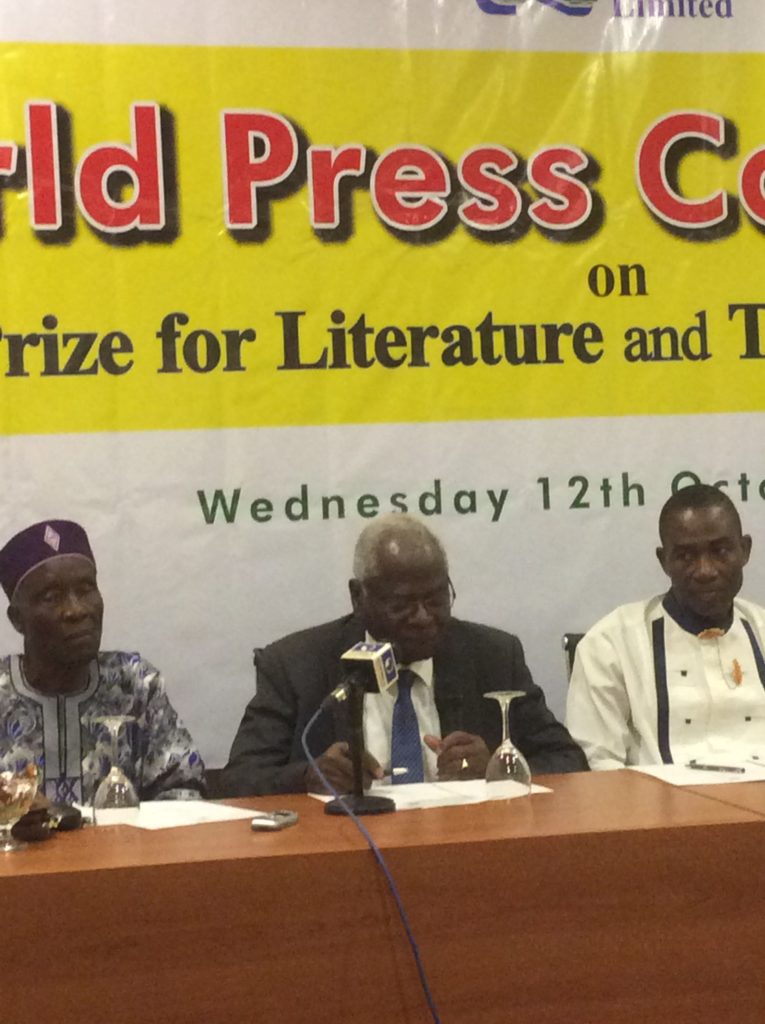
Editor’s note: Today, at Sheraton Hotel, Ikẹjà, Lagos, the winner of the 2016 Nigeria Prize for Literature was announced as Abubakar Adam Ibrahim for his novel Season of Crimson Blossoms (Parressia, 2015) and for the “competent manner in which Ibrahim demonstrated the execution of his work.” Here is the full speech given by Emeritus Professor Ayọ̀ Bánjọ, the Chairman of the Advisory Board for the Prize, on the justification for the prize, and other commentary on the whole judging process.

_____________

image

__________

GENERAL COMMENTS ABOUT THE 2016 COMPETITION BY PROFESSOR AYỌ BÁNJỌ

The Nigeria Prize for Literature is an annual competition which awards annual prizes to winning entries in the literary genres of Prose Fiction, Drama, Poetry and Children’s Literature on a rotational basis.

This year, the genre in focus is Prose Fiction. The following advertised rules were applied during the process of short listing and selecting the winning entry.  

Eligibility: The competition is open to all Nigerians anywhere in the world. This does not mean that writing about other peoples and cultures in a foreign setting is acceptable.

Relevance should be interpreted as consistency with the goals and aspirations of the Nigerian nation and its peoples – specifically, respect for their traditions and their identity as Africans.

Publishing: The prize is meant to encourage local publishing and book distribution, among other goals. Books published outside the country are eligible for entry. Only properly published texts are acceptable. However, efficient editing and good presentation of text are considered essential parts of publishing and are taken into account during the process of evaluation. The quality of the language is important, and errors of style and grammar are  considered major blemishes; these errors may not pass as typographical errors.

Genre: for this year’s competition, a basic distinction is drawn between fiction – that is imaginative prose which may incorporate factual materials and non-fiction like history, biography and sociological tracts which sometimes feature in the submissions for the competition.

This year’s completion has attracted a strong field with such high quality that even without this current shortlist of 3 books there would have still been a winner.

image

COMMENTS ON SHORTLIST OF THREE BOOKS

All the three shortlisted texts cover a wide range of urgent societal and cultural issues such as the status of women in a patriarchal society, the education of youths, the search for identity, the danger of youth unemployment, corruption, insurgency, religious hypocrisy, migration, broken homes and single parenthood and attendant impact on women and children who are usually at the receiving end of most of these problems.

  • Chika Unigwe’s Night Dancer, tells the familiar story of the continuing marginalization of women in Igbo society. The author shows a strong awareness of this context by  the flavoring of the narrative with linguistic and cultural insertions. The novel tells the story of Mma, a young woman’s anguished search for her roots from the opening of the novel when she feels that she has been denied by her mother, until she gradually discovers that her mother had been deeply hurt by both her matrimonial and maiden families. In the course of Mma’s adventures in excavating her identity and her mother’s past, she is predictably confronted by the same cultural inhibitions that her mother had rebelled against. Mma’s own denunciation of those traditions and her belated adulation of a mother she had despised at the beginning of the novel is a slow and painful process of discovering the truth of her family background, and a radical change in her perception and understanding of this background. All this is aimed at validating Unigwe’s passionate call for the extension of the frontiers of women’s space in society.
  • Elnathan John’s Born on a Tuesday is a book about contemporary Northern Nigerian Society as seen through the eyes of a young man. The narrative is told from within a deviant community seen through the first person consciousness of street boys, popularly described as al-majiri. Virtually abandoned by parents and community the  young boy, who tells the story in his own words, finds his survival through a brotherhood of other street boys. Their small outcast community is exploited by politicians and the brutally victimized as scapegoats by law enforcement agencies.  They inevitably patronized and taken over by leaders of religious sects and become a source of recruitment terrorist groups. One of the strong points of the novel is its insight into the social mechanisms that lead to national crisis and terrorism or the social processes that give rise to religious fundamentalism and political hypocrisy, corruption and exploitation.
  • Abubakar Adam Ibrahim’s Season of Crimson Blossoms is a very skillful and sympathetic narrative handling of a most psychologically and emotionally painful between an aging widow, who seeks release from her culturally imposed sexual repression, and a young outcast leader of a group of “weed” – i.e. hard drug – dealers who are ready thugs for politicians. In the background as immediately cause of the widow’s troubles, is the violent history of ethnic hatred and conflicts in Jos, placed within the larger context of contemporary Nigerian history with its complex and sometimes violent intertwining of politics, religion and culture. The novel moves from its evocative and passionate first sentence through a web of anxious moments to a tragic and painful conclusion with hardly a moment of respite.  All through its projects through is main action, the implications of certain key social issues for younger audience – key issues such as early marriage, drug abuse and impact of relationships on human action. It is a novel whose narrow domestic action has wider universal relevance beyond its relevance for its immediate setting.

On behalf of the advisory board of the Nigeria Prize for Literature and of the judges and international consultant, I have the pleasure of announcing as the winner of this year’s entry, Season of Crimson Blossoms by Abubakar Adam Ibrahim.

________

The award ceremony will take place early next year.

173 Authors vie for the 2016 Nigerian Prize for Literature

According to the press release from NLNG today, there are 173 entries for the 2016 NLNG Nigerian Prize for Literature. This year’s edition is focused on the Prose Fiction genre. More from the press release:

NLNG-Prize-for-Literature--330x218“The entries were handed over to the panel of judges by the Emeritus Professor Ayo Banjo Advisory Board for Literature. Other members of the Advisory Board are Emeritus Professor Ben Elugbe and Professor Jerry Agada. The panel of judges is led by Professor Dan Izevbaye, a professor of English Language, at Bowen University, Iwo. Other members of the panel of judges include Professor Asabe Usman Kabir, Professor of Oral and African Literatures at Usmanu Danfodiyo University Sokoto and Professor Isidore Diala, a professor of African Literature at Imo State University, Owerri and first winner of the award for Literary Criticism. The International Consultant is Professor Kojo Senanu, Professor of English at the University of Legon.

The last winner of the literature prize in the Prose Fiction category was Chika Unigwe in 2012 who beat 213 authors to the prize with her book On Black Sisters’ Street.

This year’s award for prose fiction will run concurrently with NLNG’s prize for literary criticism for which only two entries were received. Introduced in 2013, the literary criticism prize is a yearly award and carries a monetary value of N1 million.”

 The Nigerian Prize for Literature: Children’s Fiction 2015

(Being a speech given today at the World Press Conference of the NLNG Nigerian Prize for Literature 2015 Award by Emeritus Professor Ayo Banjo, Chairman, Advisory Board, Nigerian Prize for Literature)


The Nigeria Prize for Literature sponsored by Nigeria LNG Limited was instituted in 2004 with the aim of promoting literature and recognizing excellence. The initiative has witnessed steady progress since inception. The prize rotates among four genres namely – Poetry, Drama, Fiction and Children’s Literature. The 2015 The Nigeria Prize for Literature competition is for Children’s Literature.

The Nigeria Prize for Literature has since 2004 rewarded eminent writers such as Gabriel Okara (co-winner, 2005, poetry), Professor Ezenwa Ohaeto (co-winner, 2005, poetry); Ahmed Yerima (2006, drama) for his classic, Hard Ground;  Mabel Segun (co-winner, 2007, children’s literature) for her collection of short plays Reader’s Theatre; Professor Akachi Adimora-Ezeigbo (co-winner, 2007, children’s literature) with her book, My Cousin Sammy; Kaine Agary (2008, prose); Esiaba Irobi (2010, drama) who clinched the prize posthumously with his book Cemetery Road; Adeleke Adeyemi (2011, children’s literature) with his book The Missing Clock; Chika Unigwe (2012, prose), with her novel, On Black Sister’s Street; Tade Ipadeola (2013, Poetry) with his collection of poems, Sahara Testaments and Sam Ukala (2014, drama) with Iredi War. In 2004 and 2009, there were no winners.

Perhaps at this point, it is necessary to explain very briefly what children’s literature entails. Children’s literature reflects the cultural milieu, norms and values of any given society. It molds, teaches, corrects, entertains and crucially inspires the next generation of readers and writers. In most of the entries for this year’s contest, it was discovered that inappropriate prominence was given to the following: violence, eroticism, mediocrity, cheating in examinations, bullying, exploration in mysticism and negative peer-pressure.

A distinction needs to be made between children’s literature and literature about children. Children’s literature should be a creative works of aesthetic and social values for children.

This year, 109 entries were received. Eighty-nine (89) entries did not meet the preliminary criteria for assessment. This number represents 81.6% of the total number of entries received for 2015. The percentage by any standard is worrying; especially as there is a paucity of literature for children. Creative writers are urged to pay particular attention to children’s literature because this is the fundamental stage for child growth and consequently national development. In this year’s competition, the following criteria were used for assessing the entries: language\diction, theme(s)/content, social relevance, style, quality of production and originality.

Language plays a major role in literary production. Creative writers are normally expected to pay special attention to the use of language, particularly so with regard to children’s literature. The Nigeria Prize for Literature demands stylistic excellence as manifested through an original and authoritative voice, narrative coherence, and technically accurate writing. Unfortunately, the entries this year fall short of this expectation as each book was found to manifest incompetence in the use of language. Generally, published works are expected to be attractive, attention-catching and of good quality. The entries assessed for the 2015 The Nigeria Prize for Literature competition did not reflect the above qualities to an acceptable degree. Many of them showed very little or no evidence of good editing.

In view of the above assessment, it is clear that no entry met the standard expected of a good literary work of children’s literature. Therefore none of the entries is found suitable for the 2015 The Nigeria Prize for Literature Award.