Lost in Birmingham

This is a guest post by one of my “veteran” readers and commenters from Lagos, Nigeria now living in Birmingham, UK. Adeleke Adesanya is a literary spirit in an accountant’s/economist’s bottle, and I am not sure that he has successfully resolved the conflict that those almost opposite preoccupations of money and literature must pose to the stability of his mind. Along with his beautiful wife and daughter, he runs the shoes, bags and clothing outfit in Lagos called Laurensonline and has been a supporter of this blog and blogger for a long time. Now a student in the United Kingdom, he has sent this beautifully written reaction to the weather, environment, language and people of Birmingham. I hope you enjoy this as I did.

____________________________________

I have often found that when I put pen to paper, it is easier to express my feelings and thoughts than the sight and sounds around me. Perhaps, this is because I am often so lost in thought, and I don’t look around so much, and this is why, I find, I keep my losing my way. Perhaps this also allows me to say a lot about the environment in a way a visual description would not allow. Nothing expresses better the warm welcome I received on arrival in Birmingham than how my mind related to its cold weather.
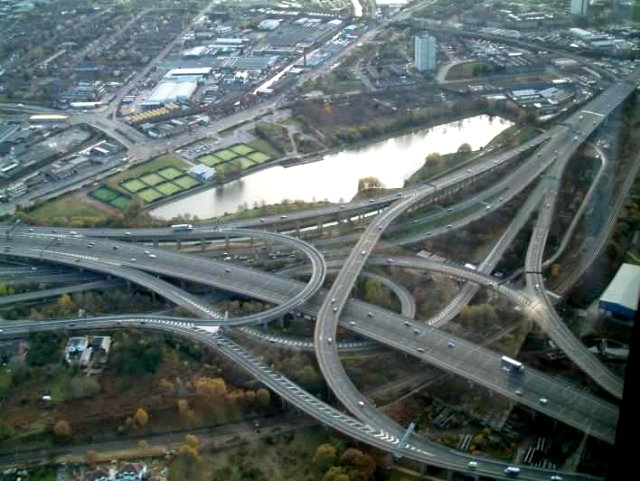
Getting lost in Lagos was no big deal. I confess my propensity to get lost, in the marketplace of my mind, is an old habit. Many a times I had driven straight ahead to Ojota, on the way to Victoria Island, because at that split second when I should have turned right towards the Third Mainland Bridge, I was lost in thought, pondering perhaps the similarities between Buddhism’s belief in reincarnation and that of Yoruba native beliefs. I would find this ironic and maybe funny, considering I had, un-Buddha-like, been unable to drive “in the moment”.

But getting lost in Lagos is a piece of cake. You might have to drive against traffic, “one way” in local parlance, to get back in track. Or you could hail an Okada, the commercial motorcyclist, to take you through back roads, back to your destination. And then, as a Yoruba proverb hints, you aren’t yet really lost in Lagos if you do ask around for directions.Getting lost in Brume is a different pot of stew. I am not so crazy as to attempt driving myself; they drive on the wrong side of the road, you see. My right to travel is entirely dependent on route schedules determined by local transport companies.
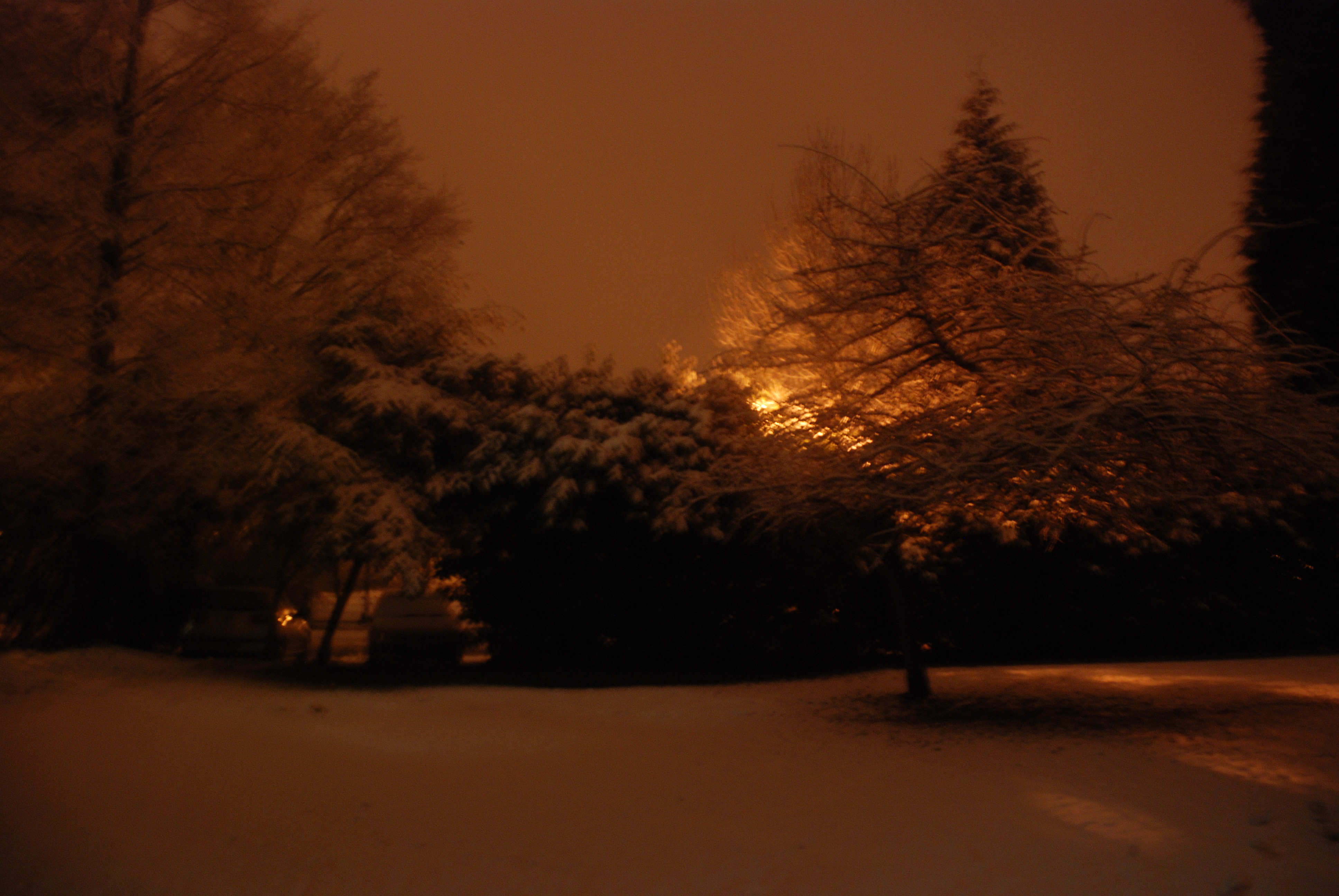
As soon as I find a seat on a bus and look through the pane onto those cold, snow covered streets, my mind retreats into its marketplace, ruminating over morbid thoughts like, if one was to die of exposure and is buried in this cold, frozen land, would the cadaver ever know corruption? It is not entirely strange that over and over again, I miss my bus stop and get driven around the outer circle of the town. Once I made a mistake of coming down from the bus. Picture me, unwisely clad in a suit, fending off snowflakes with bare freezing fingers. I tried to cheer myself up by singing lustily the chorus of Don Mclean’s American Pie with extra emphasis on “this would be the day that I die!”

And then I start asking for directions, which is not as simple as it appears. For one, the aborigines (whether white, Indian or Jamaican), I find, do not speak the English Language. Their accents are so thick; it is virtually another dialect, nay, language. It sometimes makes more sense to acknowledge the verbal challenges and try to communicate via sign language. Now they, I mean the natives, would politely go through detailed explanations of buses I should take and changes I must make, while I put on my best Nigerian smile. But in the end, I am in no wit wiser.
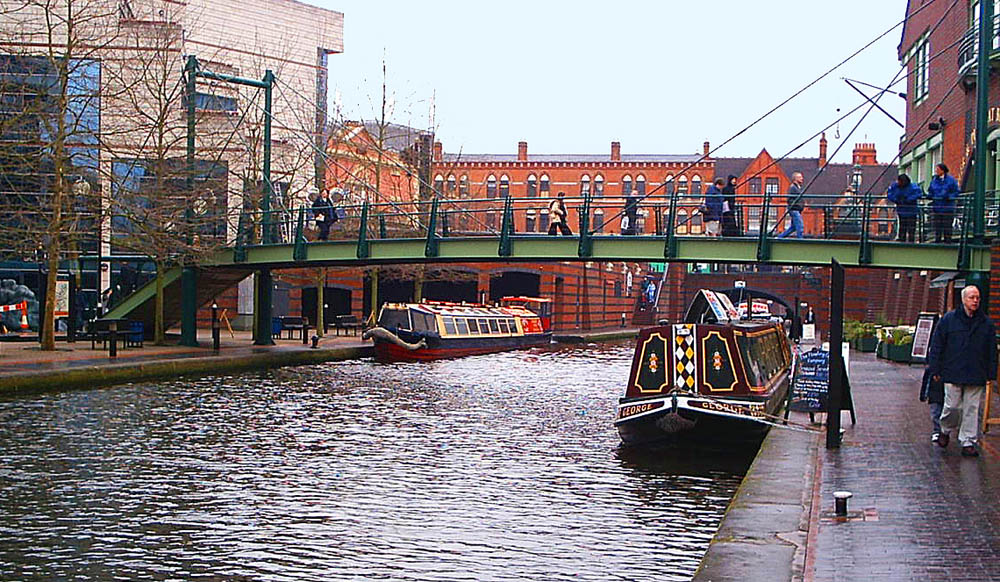
A few times, when the bus driver appeared African, I wrongly assume that linguistic challenges would easily be resolved if not eliminated. Alas, this clan is mostly of taciturn types, more eloquent in communicating by nods and grunts. I once wondered whether they had signed a pact not to speak in complete sentences in order not to betray their Nigerian accent. As if that is a bad thing…

In the end, I learnt to cope by using the internet to research my route and printing detailed maps. I also avoid travelling at night, when visibility may not be as clear. On the bright side, getting lost has its benefits. It is the perfect alibi for lateness. It makes for humorous jokes when with good company. And if you are a stranger and you really want to know the town, you really should get lost sometime. It is wonderful, the things you find and the people you meet, when you get lost, sometimes.

__________________________

He used to blog as Kiibaati, Adeleke can now be found on Twitter @adelekeadesanya.

Dear Henry,

How are you today? I hope you are fine. I’m not so cheerful today. My arm hurts from the immunization injection I took last week. I’m bored from waiting for the long weekend to end, and I’m too lazy to get out of bed to make dinner. But that’s beside the point. I have always wanted to write you a letter.

From the last news I got from home yesterday, you and your little brother have finally left Ibadan for Lagos with your mum to face the new realities of life. I have used those big words “realities of life” just so that you know that the life in Lagos is not going to be as fun, colourful or adventurous as it would have been if you had stayed with your grandma in Ibadan. Or what do you think? In Lagos, you will be sheltered, you will spend most of your time indoors taking care of Oyin with whom I’m told you haven’t been getting along well most of the time. That’s no fun. When I was your age, I had already formed a mental map of the neighbourhood in which I lived, and I always managed to sneak out of the house to explore when no one was looking. It got me some spanking many times, but I always did it again. It was mad fun. It also helped that my parents were both working so I stayed most of those times with my grandmother. I can’t tell you how nice that was. But you had the chance since last year, didn’t you? You have stayed with your grandma for how many months now, along with Oyin. Did you enjoy it? I bet you do. She can be doting and relaxed when it comes to her grand children. With us growing up, everything fun and permissive was considered “indulgent”, and we weren’t supposed to do them. Until lately, she never even believed that anyone not older than eighteen should own a mobile phone. Yea, she’s strict like that. She’s changed a lot now though – things that come with growing up – yet I bet that if you eavesdrop on her conversation with your mum occasionally, you’d hear them argue about the most appropriate length of a woman’s skirt.

Since you returned from Ireland last year, coming to Nigeria for the first time, I have been really worried about you and your little brother, wondering how you would cope in a country that still grapples with the problems of electricity. I bet coming to Nigeria was your first time of seeing a power cut that lasted more than two minutes. How did you take that? Oh I remember, your mum told me that you looked at her and asked her to “put the light back on”, as if she was the one who took it out in the first place. Aww, so cute. By now, you are probably used to it, which might be a good thing. You are going to be a strong, rugged Nigerian man, not surprised by power outage nor shocked by an absent president. I bet it’s even the least of your problems. I remember that on June 22 or so in 1990 when the Orkar Coup took place in Lagos, the only memorable feeling I had was exhilaration. I didn’t know who Orkar was, but the excitement in the air all around our school tickled my brain beyond description. Work stopped, and everyone talked in low tones. There was an energy that I can’t describe. And when my father stormed into the school compound demanding that the school released his children to him or provide the signature of the school’s proprietress on a document taking absolute responsibility for our safety, and accepting all liability in the event of any mishap on anyone of us his children, I was giddy. She released us immediately, and we went home in daddy’s car, one of the few times he left work to pick us up from school. We had roasted corn, and ice cream – that one that is scooped into a cone and eat out of it. Yea, I still remember.

My point here is that I acknowledge the fact that you may not care about politics or everything going on around you except to the extent of their providing you with excitement. But why Lagos? That state is too fast, my young man. You need serenity in your life at this point in time. You need adventure, and I’m afraid that you might be exposed to too much of the grim realities of Nigeria before you’re sufficiently capable of reacting to them in the most playful, adventurous, and deeply reflective way. I may be wrong. In any case, take time out of your day to have fun. Do not, I repeat do not, spend your day in front of the television. It is bad for you. Go out and play with the sand. Get dirty. Your mum will wash the clothes, don’t worry. Play with flowers. Build sand castles like I did with Laitan when we were younger. We would later find grasshoppers and put them in the castle, watching them through the perspex glass ceiling, observing their process of discovering that they had been trapped. Now that I think about it, I realize that it must have be frustrating to those little insects. Build fake stoves, plant corn and potatoes in your own garden at the back of the house like we did back then. Get out of the house often and get lost in the streets. Walk for kilometres and return. Let your parents get worried and look for you everywhere, and let them find you. They might hit you involuntarily though if you stay too long, but don’t let that discourage you. Don’t listen to everything they say while angry. And do not believe them all the time. This is the best education you can have. Have you seen a masquerade yet? Have you taken a swim in the river? Have you stolen a bite out of some of your grandma’s delicious muffins as they lay on the table, or unscrewed your dad’s radio set just to see what makes it work inside? If not, you have a whole lot more to learn.

Your mother won’t tell you this, but when we were younger, we used to steal entrance into my father’s (your grandfather’s) blue Isuzu car whenever he didn’t go out with it. I was the youngest then, although Laitan had been born. She was never around, and I don’t know why. We didn’t have the key to the car but the doors were always open so we’d open it and get in. Actually, one person would get in, release the hand break, put the gear in neutral position and smile as the car went forward the slope towards the compound gate, then hit the brake as soon as it got close to the fence. The rest of us would then push the car back to its initial position, and some other person would get in to repeat the process. It was fun, but they never allowed me to do the driving. I always did the pushing. I think they stopped including me in the game when one day after church service, before anyone got out of the church building, I ran to the car, sat at the driver’s seat, released the gear into neutral and watch the car lurch forward on the long slope of the church’s parking lot that led out towards a sea of people. The problem was, I didn’t know which of the pedals on the ground was the brake. It took some random luck, and a few vigilant men on the road whom I had now almost run over with the already fast moving car to stop me. They must have seen me from afar and figured that I didn’t know what I was doing, so they gathered in front of the car and stopped it with the force of their strength. My heart was in my mouth. I was sweating, and I felt a very sorry. I had done the inconceivable, and I would get some serious punishment later in the day as a result. But I had driven a car, and it felt good. Your mum should remember some of this details if you ask her. But here’s my warning: you don’t have to go to that length to have fun, and besides, you don’t have to do what I have done. That won’t be original. Take liberty with your own ideas, and let me return home to meet you and we can share ideas. Our first meeting should be memorable indeed. I heard that you have really grown, and don’t look like a four year old. Do you still remember what I look like from the photos in your mum’s albums?

My regards to Oyin and your parents, and to your other cousin Jolaade as well. I will write you again when I have the time.

I am your Uncle KT, now at Edwardsville.

PS: Do you speak Yoruba by now? I hope you do. What an irony it is that when I was your age, I was busy getting pummeled by those Ghanaian teachers in my school who believed that it was a taboo to speak my local language within the premises of the school. Like they used to say to us back then in class whenever they were angry, I say “Wasia” to them now too. 🙂 And I still don’t know what it means. I only know that it’s not an English expression, and it wasn’t nice.

To Good Times

I like to be happy, most times. Actually, I like to be happy all of the time, although I have realized that it is when I am not so extraordinarily happy, yet charged with sufficient energy that I am the most creative. I like to be happy because there is no trophy for sadness. Nothing is romantic about it. There is no medal for a constant gloomy state of mind. I have discovered that cheerfulness, laughter, conviviality are better alternatives to gloom, and sadness. I like to be sarcastic only because it gives me more avenue to laugh and be happy. I am an optimist in a way that can sometimes manifest in occasional pessimism, or is it sacrasm. But I love life, and I enjoy it, each second of the way. This is my affirmation of life.

I’m thinking back to some good times I’ve had in life. Some times, the days appear long and a simple conversation with a pleasant company either over the phone or in an internet chat brings back moments of familiar conviviality, I relapse into a sweet nostalgia of the fun care free days. They are not gone yet. They are here still. I smell them in the cold night air. Tonight I remember Ibadan, not of childhood and innocence, but of youth and pseudo-recklessness and revelry. Well, not so much. I remember Sola Olorunyomi with his truck, his bicycle and his guitar at the Students Union Building bar in the Ibadan University campus in the early 2000, discussing poetry and politics within cigarette smokes, beers and music. There was Loomnie. There was Benson. There was Bukky who loved Benson, and there was Benson who loved his bottle. There was Luvles. There was Olads. There was Kemi who later became Idayat. There was Pinheiro. There was Lola. There was Kunle. There was fun. There was the religious Seni who had a bible verse for every situation. There was Chiedu, and Chido. There was Busola, who had a first class in Linguistics. Then there was Ropo, and Chris Dudu, and Funmi who liked to write daringly. There was poetry. There was Ify. There was Najite. There was harmattan and the dry wind of November. Then there was Uncle Prof whom we embarrassed by reading his love poems back to him in that public get-together. There was his lovely wife. There was Adelugba. There was the Arts Theatre which never ever ceased to be a fun place to be at evenings. And then, there was Nike who was so thin she almost didn’t have a shadow. There was Sophie who smuggled tobacco in from Germany to give to Benson, and there were Nadine and Bettina who saw Ibadan once with Sophie and could not wait to return, just to see us. There were days of walking all night from the University all the way to Dugbe. There was Noffield House. There was palm wine and pepper soup at Niser. There was Elizabeth. And there was Bidemi. There was fun Biodun who died, but was so tall that his legs stuck out of the coffin. There was Henrietta who I liked, and who Olumide liked, but who perhaps thought that we were all bad boys. There was Demola who was going to be a monk, and who became a butt of beer jokes. And later there was changed Demola who finally fell in love and got Ope before Pinheiro made his move. There was UCJ, and the different folks it attracted. There were endless dinners. There were endless protests. There was Mellamby Hall. There was Upper Mellamby. There was room A52 and its many adventures. There was Fidho. There was Ibukun. There was Kunle. There was Ositelu. There were riots. There were strikes. There were moments of silliness and idleness. There were moments of stupidity. They were good times.

I remember Lagos a few days before I travelled to the United States, at the Silverbird Galleria for a mini bear summit. There were books. There was laughter. There were jokes. There was Tolu, and Chris, and Rayo and Kris, and Bukky and Sunkanmi, and music. And ice cream. There was fun. And food. Before then, there was Bimbo on the expressway. Then Elizabeth, sometimes earlier in the day. Then there was Food Major, and roasted beef. And family. And Jolaade. And Leke. And Yemi. And Laitan. And strawberry juice. And suya. Tonight, I remember the good times. Whenever the cold wind blows within recurring laughters, whenever I smile, whenever the days seem long and only a phone conversation, or a pleasant internet chat, connects me with a world I have since left for a little while, I remember the good fun times. Those are the moments that count.