

 Most
Most 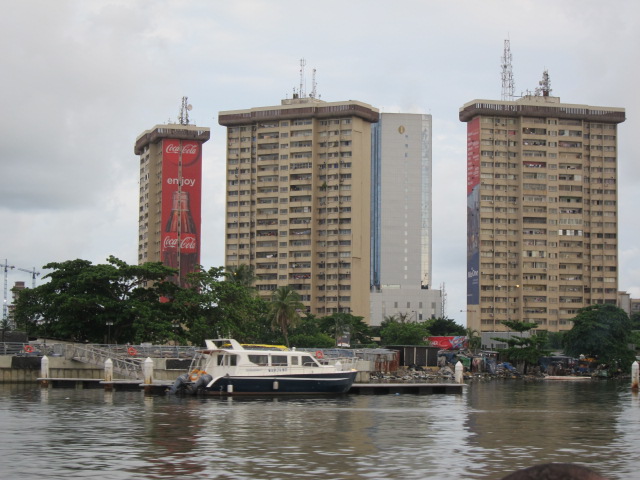 of those who have bothered with the matter have concluded, faced daily with incontrovertible evidence of that certitude, that the Lagos of commuters is one of unavoidable stress, distressing heat, grating noise, and rowdiness. Workers spend almost half of their commuting time at a standstill in traffic, most times with sweat and grime of fellow passengers rubbing them at all ends.
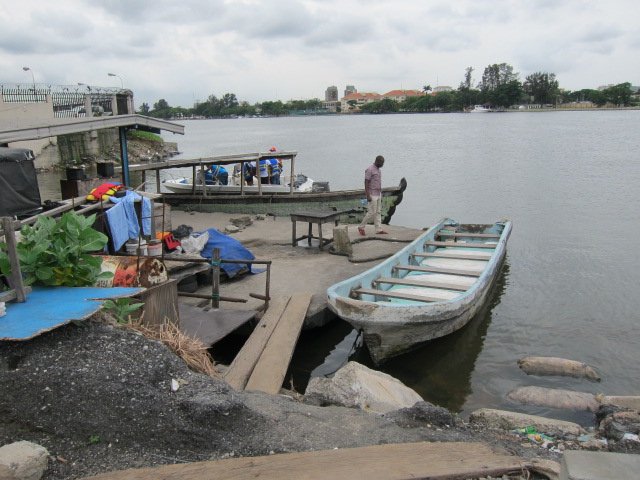
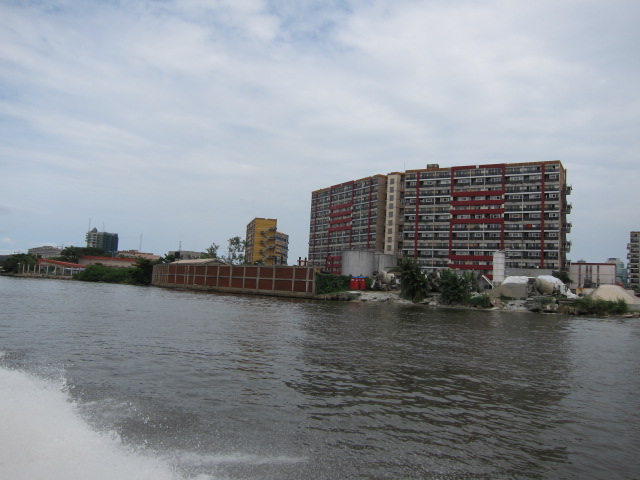
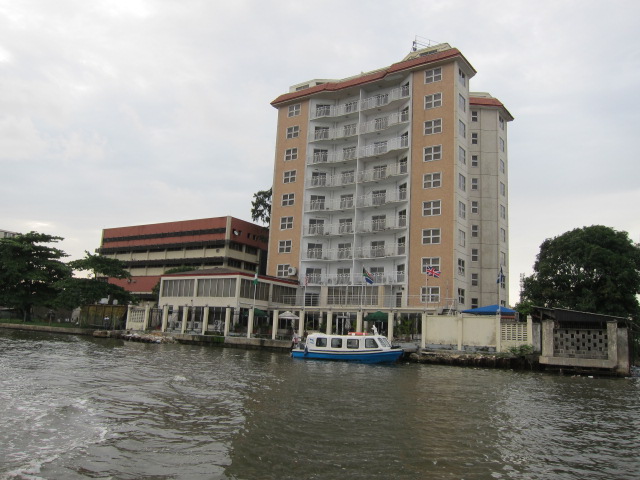
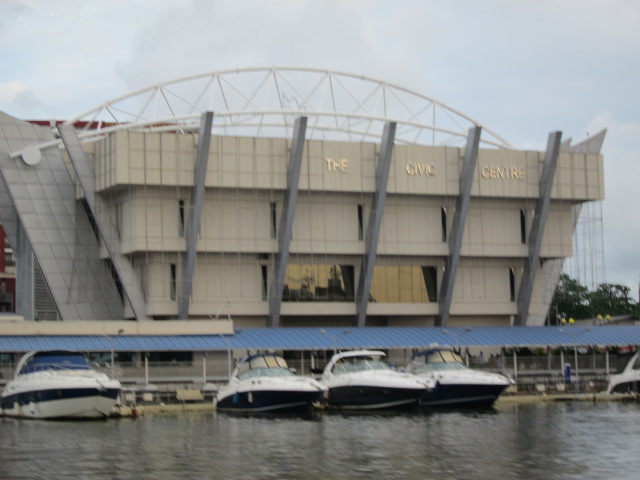
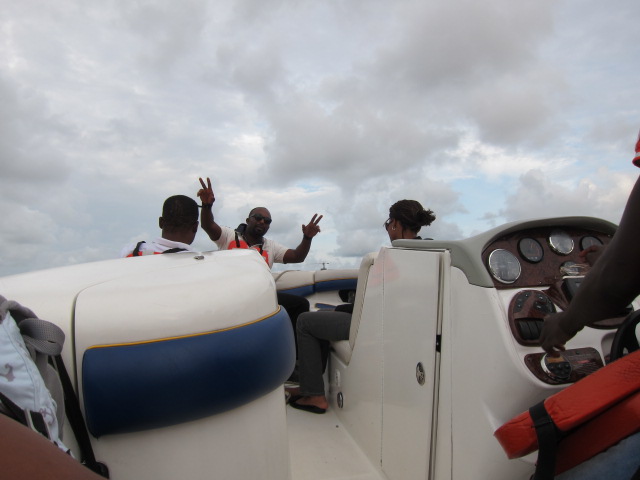
In this post, surrounded by the flourish of that attempted grand locution of mine in the first paragraph, I present photographic evidence of another side of Lagos, a city marked both by its name derived from the Lagoon, and its dynamic ability to constantly remake itself in the eyes of its denizens. This trip, undertaken on Sunday, begins at Sandfill (former Maroko), by speedboat, proceeds through Falomo, to Bonny Camp – all on water – towards Tin Can Island, Apapa, Ajegunle, and Snake Island, before arriving at our destination: a place of sublime beauty called Inagbe Grand Resorts.
(Reports about the resort itself will take a blog post of its own.)
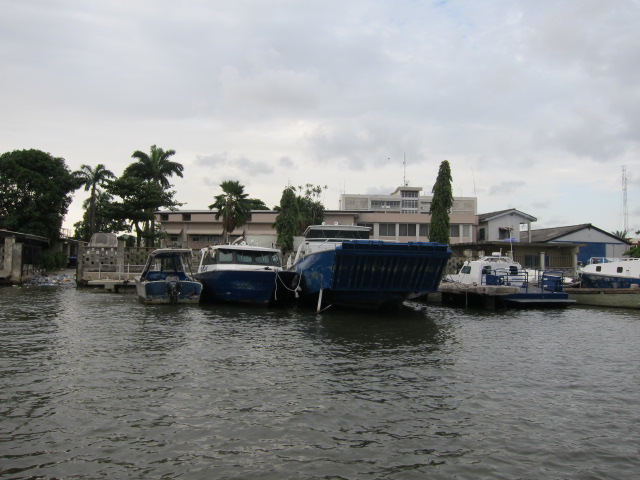
It turns out that regular view isn’t the only side of Lagos that exists, as commuters by boat and other water vessels will testify, whether one rides on an open canoe propelled by paddles of fishermen, or on open speedboats with a private driver; whether one transits, as do many commuters from Ikorodu to Victoria Island everyday, in a large ferry run by businessmen hoping to turn a profit with as many passengers as possible, or whether one sits in comfort – like Aliko Dangote and Femi Otedola whose private speedboats lay beside each other across from the United States embassy at Victoria Island.
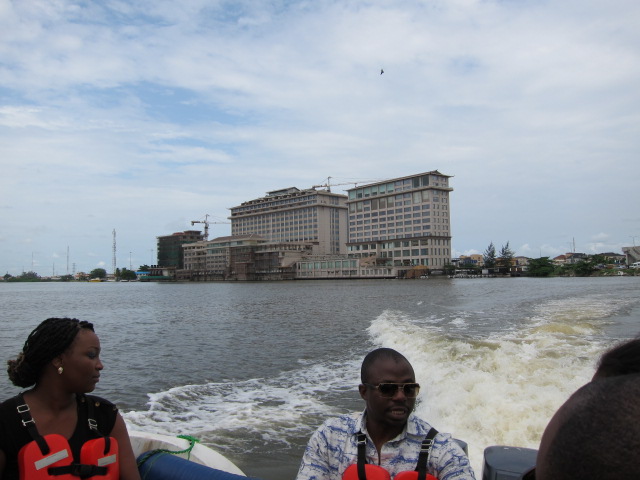
There is a view that traces the path of the waters all around the islands and peninsulas that make up Lagos. There, there are no traffic hold-ups, no bodily heat exchange except desired, little noise apart from that made by the engine of the speedboats, and sparse pollution except for whatever ships and those other large vessels emit. In short, to enjoy the city is to experience as many means of transporting oneself as are publicly available – and traveling by boat seems to be a nearest affordable alternative to the fumes and stress of driving.
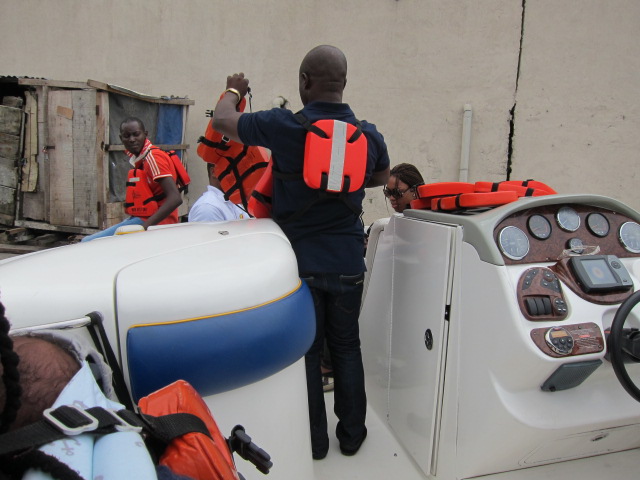
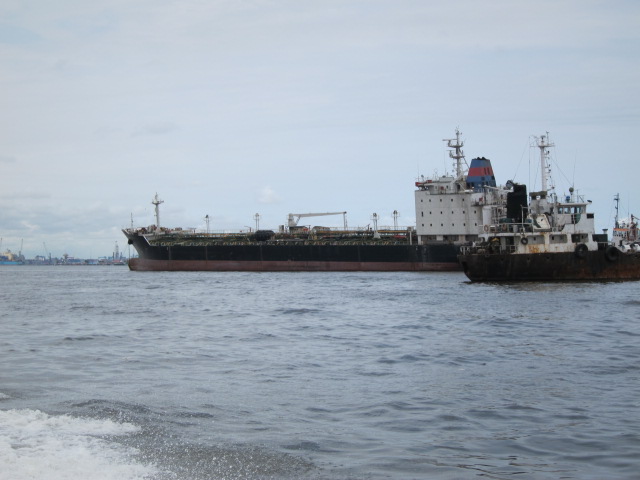
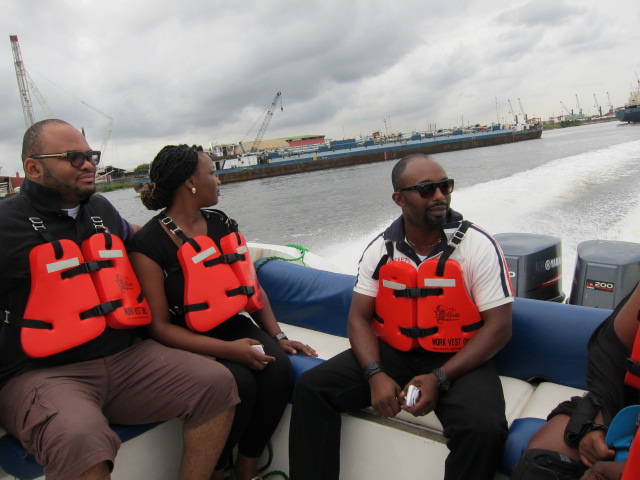
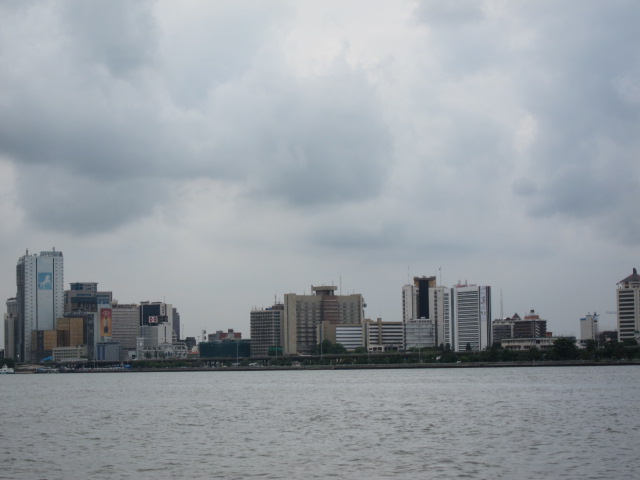
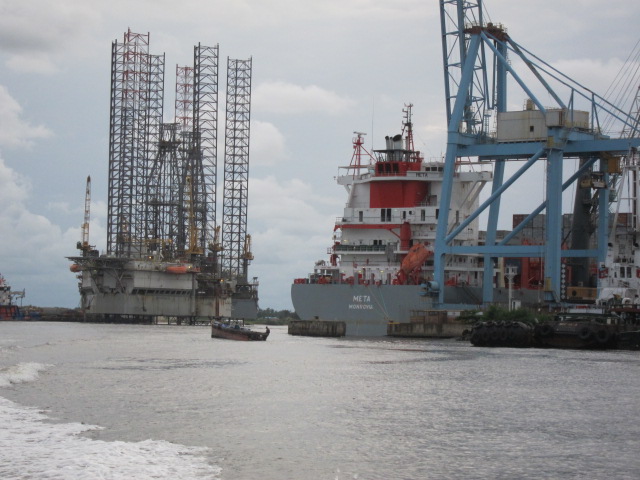
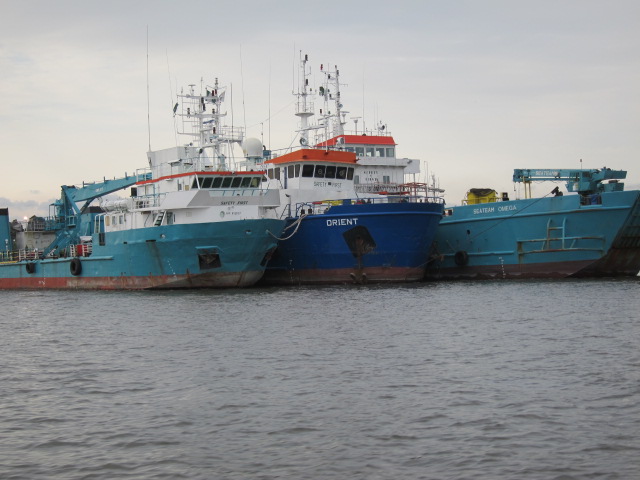
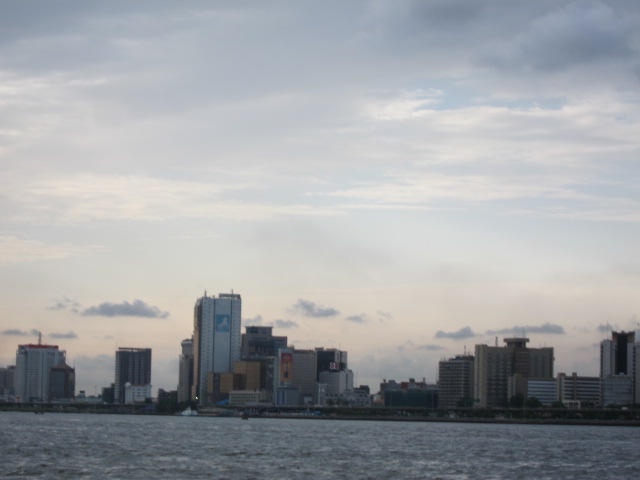
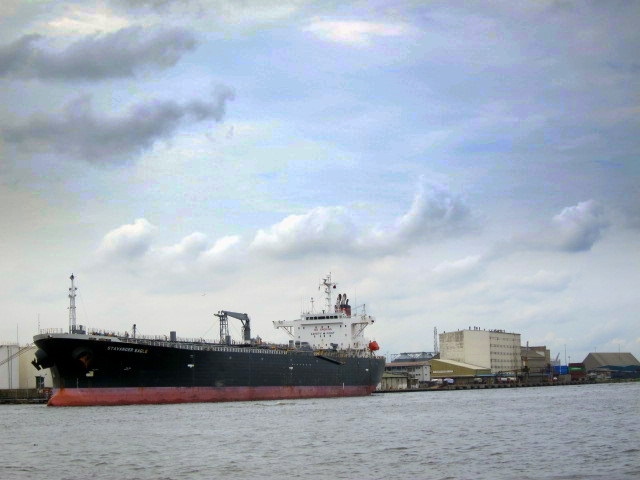
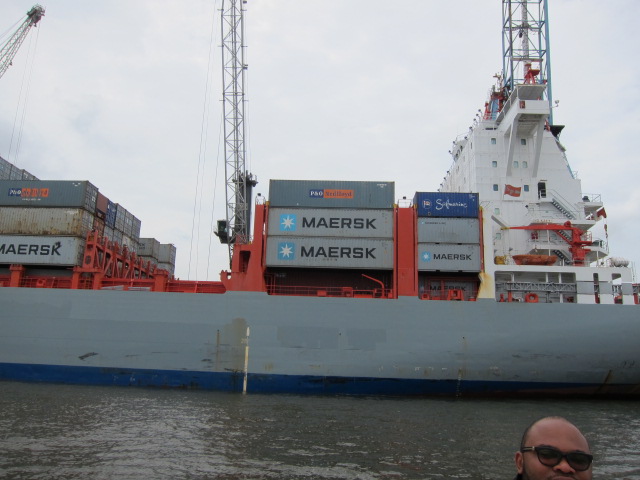
On the way to this resort are splendid views of the city, including a brief but captivating skyline of Marina and much of Lagos Island, as well as a few dozen ships many of which seemed – by their appearance – to have outlived their time and usefulness. On another boat, a far smaller, far inferior vessel in which about seven travelers with flotation devices sat carefully as if afraid that they might fall into the water, one person waves from afar, signalling a type of camaraderie like one between two strangers who suddenly find themselves sharing a mental fellowship of some kind in which the sharing of each other’s fears and exhilaration can be exchanged without ever uttering a word.
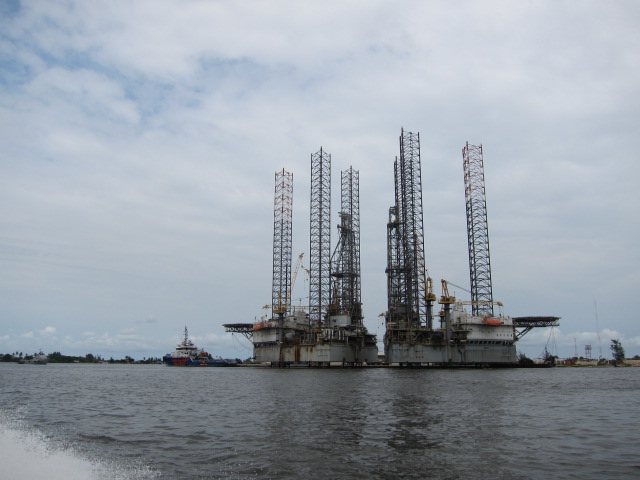
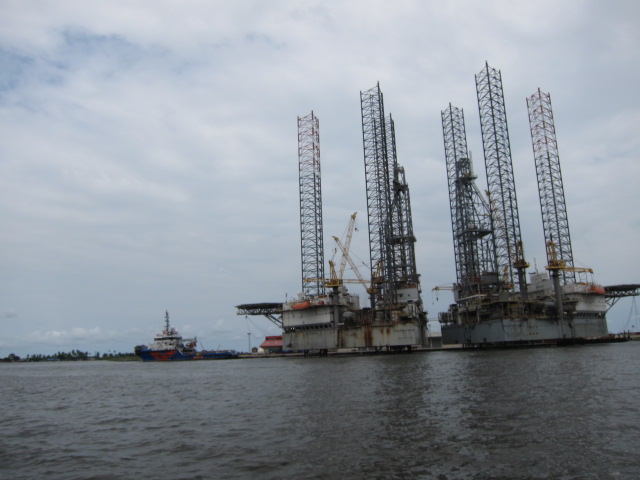
Bridges, more ships and vessels, canoes, speedboats, and an abandoned oil rig; more water frothing behind like the wide liquid smile of the goddess; less and less number of buildings, and a horizon ahead, pregnant with promise. Then we arrive. A destination away from all the troubles of the world… Of that oil rig, my tour guide remarks: “There is a story about that, and how First Bank almost got bankrupt because of a deal that would have made it a stakeholder in the oil and gas business. Powerful interests prevailed and the deal was called off. The rig now lay abandoned in the waters…”
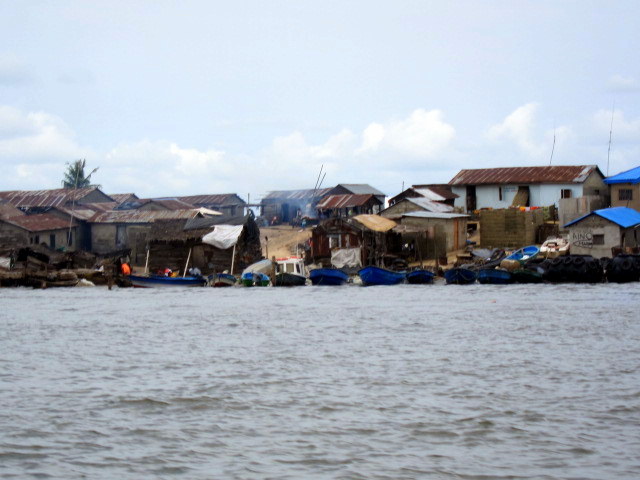
After a few minutes, we pass by what I guess could be Ajegunle, defined from afar by a type of resilient squalor, one that we’ve heard so much about. One that produced great artists like Daddy Showkey and (to a lesser extent) African China, and many more. Brown boats, brown waters, brown coconut trees that sway quietly as if bereft of will, and brown little children by the shoreline running around without any regard for the stranger’s distant gaze. Blue and brown smoke tell of some roasting, and the promise of a nice evening in cheerful company if one would dare such an unscheduled visit.
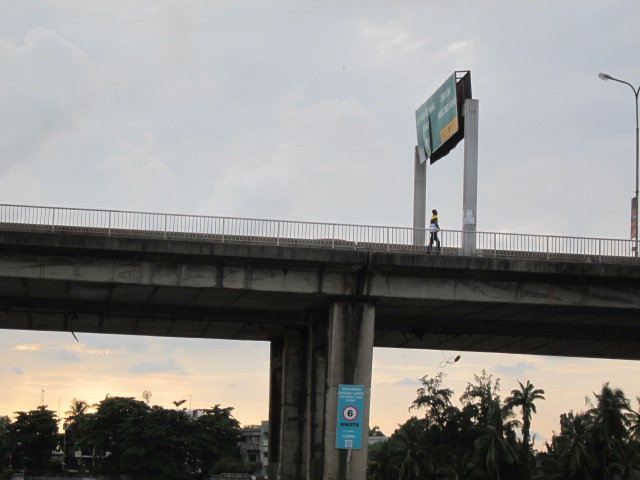
On return, the views are the same, enhanced this time by the setting sun, slightly tired limbs and a refreshed spirit from having visited one of the finest resorts in the city, many miles into the waters. The city welcomes its children back with concrete and paint, a skyline of Marina in the distance.
It has been a pleasant ride.