The Art of Witness and Peace in Bosnia: Ways people have remembered and reconciled since the the war

This was written by guest blogger Sean Amiri who also works as a radiology technician and writes on the subject of top online universities.

In the close to 20 years since the beginning of the Bosnian War, much has happened. Thousands have been massacred, international forces have intervened, peace agreements have been negotiated, individuals have been tried for war crimes, refugees have fled. Yet, in the midst of this difficult story, it is inspiring to know that people have resisted against the brokenness and destruction that consumed the conflict. Here are two examples of how human spirit and creativity have used art to remember and reconcile the war from its very first year until today.

Witnesses to Evidence

The seige of Sarajevo began in April 1992. Six months later, in the shelled and rundown Sujetska Cinema, a gallery director and eight artists gathered to create something as a witness to the conflict. From that October to April 1993, the artists collaborated on a series of works inside the hidden hallways of the cinema, where Sarajevans frequently passed through to escape snipers outside. The gallery director, Mirsad Purivatra, and the eight artists – Nusret Paši?, Zoran Bogdanovi?, Ante Juri?, Petar Waldegg, Mustafa Skopljak, Edin Numankadi?, Sanjin Juki?, and Radoslav Tadi? – created a living testimony to the war they themselves were living.

The exhibit was themed around and subsequently named Witnesses to Evidence, after Nusret Paši?’s piece. The exhibit was invited to represent Bosniz-Herzegovina at the 45th Venice Biennale, but because of the wartime blockade, the artists and their works were unable to travel. However, later in the spring of 1994, they could finally leave. Witnesses was brought to exhibit at the Kunsthalle in New York, and the schedule was ideal. At the time, international audiences were gathering in New York to discuss the aftermath of the Bosnian conflict. More attention was being given to the consequences of the war.

What many found compelling about Witnesses was not so much its representation of the war, but more so the sense of obligation it passed on to its viewers to act as witnesses to history. After he saw the exhibit in New York, Johannes H. Biringer, an artistic director and the author of Performance on the Edge: Transformations of Culture, wrote a commentary about what the artists had done:

“They build meaningful compositions of the human spirit and intelligence in midst of the war’s insanity,” Birringer stated, “Thus they become also witnesses of our indifference; their irony and resiliency shame us. Their work also proves that it is neither impossible nor frivolous to make art in the time of war; perhaps making art in such a time is as necessary as finding food and shelter and healing the wounded.”

Most Mira

A little over a decade after Witnesses exhibited in New York, Bosnian-born Kemal Pervani? and social researcher Lea Esterhuizen founded Most Mira, a charity organization based in Britain and Bosnia. Most Mira means ‘Bridge of Peace’ and fittingly, the organization’s mission is to build understanding and tolerance among youth in Northwest Bosnia by means of creative community arts.

Imagine this: 500 Bosnian, Serb, Croat, and Roma kids frolicking around for a week dancing, playing games, playing music, painting, writing, and singing. It’s a picture in stark contrast to war. That picture is of the Youth Festival that Most Mira has organized since 2009. And now, the charity’s energetic and innovative Trustees and Action Team are in preparation to launch this year’s festival scheduled for May 16-20, five days of workshops in art, drama, circus skills, dance, music, media, and performance. With May approaching, they’re in the last leg of the hunt to recruit volunteers, the ones who really make the festivals possible. Though, the point of it all reaches far beyond the fun and games. In a fragmented society shadowed by the war’s aftermath, what Most Mira and these volunteers do is help continue the work of remembrance and reconciliation that began in Sarajevo all those years ago.
Coffee with the Quakers

A guest post by Adeleke Adesanya

Anyone looking in through the glass from outside would think we were just having a coffee break, while working on a Sunday. We talked about politics, heard a first person account of the civil demonstrations against planned cuts in child services. Someone brought up the issue of expected redundancies at the museums and I wondered whether it would have been preferable to charge entrance fees for adults instead. The majority did not seem to agree with me. I was having my first meeting with the Quakers of Birmingham, otherwise known as the Society of Friends. They are a religious organisation, founded in the 1630s and infamous for being non-conformists. But I am getting ahead of myself.

In the middle of the healthy debates, an elderly lady asked me if I had attended a Friend’s meeting before. I said, “No”. Truth is, I had attempted to find their meeting place the previous week but had a difficult time locating them and arrived just in time for coffee. I decided not to partake then.  Their meeting rooms are tucked discretely into the middle of Bull Street, at Birmingham’s commercial centre. The premises, without any signage, are better known for hosting seminars and business meetings. Inside, the decor was stylish in a minimalist, business like fashion.

The elderly lady asked how I heard of them. I told her of a handbill I had received in my post graduate student induction pack. But once again, the truth is a bit more complicated. Many years prior, I read Charles Colson’s Born Again. The lasting impression that book made on me was that President Nixon was a Quaker. Later, I found out, President Hoover was also a Quaker. They were arguable the two most unpopular US presidents before George.W.Bush.  Both of them demonstrated placid sedateness in the midst of the worst public storms and they credited their faith for the fortitude to stay calm. I was intrigued; what made these guys tick?

I got a clue when I joined them for worship last Sunday. It was devoid of any ceremony; we sat for an hour in easy silence. Quakers believe God is an inner light that should speak to us as we wait on it. Sitting in meditative silence, they waited to hear. I was informed that sometimes, someone who was inspired will speak up but that did not happen on my watch. It was a refreshing silence, so humbling to listen in prayer for a change. The challenge was, of course, not in abstaining from speaking but in quieting the mind. Anyone who has taking part in meditation would know that thoughts seem to wait for one to be calm before intruding. But I can imagine a habit of silent meditations being useful in dealing with worries.  After the silent service, there were some brief announcements, and then we had coffee together.

A first time visitor would like to ask Quakers when their service starts. They like to say it is immediately after worship stops. Quakers have been conscientious objectors throughout their existence and made history as a result. They founded Pennsylvania to escape persecution.  They were pioneers in the anti-slavery and women’s rights movements.They still campaign against the death sentence. Perhaps, in the UK, much is made of their past because today they have shrunk in size, numbering 25000. The meeting I attended had only eleven members in attendance, excluding myself. The other thing I was made to realize is that English Quakers have an inclusive, flexible and unwritten theology that now includes atheist Quakers. What struck me most about them was what was absent; loud prayers, direct exhortations.I left feeling I had spent a Sunday morning rather well and thinking, I could do this again. And that was one more item off my “Things to Do before I Die List”.

My Dad and I

A guest post by Angura Rani Elke

________________________________

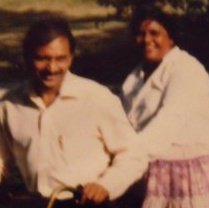
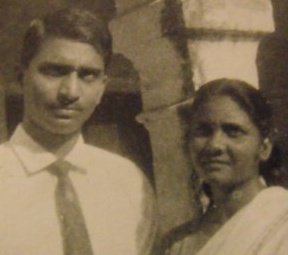
Today is the birthday of the first man that I ever loved, my father. I met my father on October 22, 1956, you see that was the day that I was born in Jahnsi, India.

My Father’s name is Bharat Bhooshan, a second generation preacher. My Grandfather and my Papa were both ordained as Methodist Preachers. Papa moved to United States of America in the fall of  1961, reuniting with my Mama. She came here in Januarry of 1961, leaving their five children in the care of my dad’s mom. During this time my parents were doing college credits because they were here on student visas. Life was hard for them, but they were a team. They worked at anything and everything they could do to make money for their children back in India.

My parent’s worst nightmares were coming alive. My brother (their only son) lived with an aunt and was diagnosed as being an eplepitc. I was crippled by a quack of a doctor when my two sisters were in boarding school. My little sister and I lived with our grandma. Its funny to think about the past and not feel sick at what my parents were doing here and what was going on in India to their children. Physical, verbal, emotional and yes sexual abuse was going on and they had no idea. My brother finally came to America in 1963. My little sister and I came in 1964, I went into to a hospital almost right away, I somehow had gangrene up to my knee. My older sisters finally made it to America in 1965. That is when the healing began for all of us.

Papa got his first church in Northeren Wisconsin, He became a United Church of Christ Congrational preacher. We lived in Elco, Winsconsin. We were the only “dark” people that some of them had ever seen. We lived here for three years, moved to Appleton, WI, which was another town that had never seen our kind. Wisconsin is very cold in the winter and very pleasant in the summer. Papa had his first heart attack in 1978 at the time I was living in Arizona going to college. They moved from Appleton in 1979 to Grantfork, IL. 20 miles from Edwardsville (where I now live.)

My relationship with my Papa was a very smart and loving. I was the tomboy, that wanted to learn from everything, the only one that went to college out of the five kids. I was the one that would listen to him and let him feel that I knew what he was saying. We would go for walks together. You see. I was the one when I could talk, would tell my mom that I didn’t want my diaper changed by anyone but him. So, ya stubborn was a good word. When I came to the USA, he would carry me up and down the stairs from the apartment that we lived in. When the pain was unbearable he would make a concoction of milk and brandy, it would knock me out. I loved to read books which I got from him or I bought and he would read them. I could talk to him about anything. I remember having a talk with him about getting high on pot, he said Batie (darling) I got high on Jesus Christ. I laughed and we talked about how life has more meaning with Christ in our life. Pot will make you feel good for a while but Jesus Christ will be with you forever. I miss him so much.

He had a total of four heart attacks. The last time I saw him before he went to surgery he was happy and told us his Alice was coming to get him. You see Alice was my Mama’s name. By golly she did come get him, partners forever and ever.

___________________________________

I met Rani in Edwardsville, Illinois at a get-together for the Rotary visitors from Nigeria in April (I think). She’s one of the most fun adults I’ve met in my life. I hope you enjoyed reading her story which she managed to write impromptu immediately after I asked her today. I hear that Rani also means “queen” in Hindi. She could as well be an author, don’t you agree? (Previous guest-posts here.)

India – Gender and Human Dignity

Here’s a guest post by a friend and colleague Catherine Xavier. In this write-up, she talks about the less talked-about “third gender” in India – a class of people maltreated and discriminated against on the basis of their sexual orientation. Read it up to see why they do not fall into the class of homosexuals or lesbians or transgenders, but a different category of men raised or conditioned from birth to behave like women. There is a Youtube video interview with one of them here, for anyone interested in further information on the matter.

_______________________________

The India society is patriarchal to the core – simply stated, men rule the roost. The society in general seems to have resigned to this, while women have been forced to reconcile to be the ‘fairer sex’. However, we are a society that worships women. Our goddesses of strength, wisdom, love, and power, are all personified as women. I cannot understand that irony here; India has one of the highest rates of female infanticide and dowry-deaths, while the society and the government claim to vigorously promote the girl-child and women’s emancipation. How can a society that boasts of a rich, ancient, and varied culture simultaneously glorify and dehumanize women  – how can mythical womanhood be celebrated and worshiped in the form of a  goddess at the temple, while helpless women are subject to eve-teasing, torture, abuse, discrimination, and unspeakable indignity. I was taught as a young girl that there is greater modesty in ignoring the lewd comments from your male counterparts, as it saves a woman a lot of shame and disgrace – yes, the same society that celebrates week-long festivities in honor of women deities, while sublimely accepting its men resorting to eve-teasing, ogling, and trying to grab women’s breasts in crowded public places.

I could write a lot about the Indian mentality of gender discrimination and the stifling of individual feminine freedom. However, I choose to focus on that part of Indian sexuality and gender that is not broached by most Bollywood movies or Indian novels (You can find this on the BBC though). The simple truth is that the Indian society recognizes only two types of genders – male and female. We prefer to be oblivious to the third gender classification: the hijras or eunuchs.

Hijras are physiological males with feminine instincts. They adopt feminine identities and don feminine attires. The Indian society describes the hijras as ‘neither men nor women’ thereby, making them the most ostracized section of our society. Young boys with feminine instincts are a shame to their family and to the society. Most times, the family is not supportive because they fear social boycott; they abandon these young men who are forced to live with people like them, thought they are not their kith and kin. I doubt if our society recognizes the trauma that the family and the young man go through in this entire ordeal of family bonding, wanting to belong, social belonging, and social abandonment. Most times, the hijras are castrated and they earn a living by working as sex slaves, and by performing dances at the weddings and birth ceremonies of the so-called cream of our society.

It is so strange that though the hijras have a recorded history of living in groups in India since the 17 century, the Indian constitution does not guarantee them any rights – it does not even provide validity to the marriage of hijras. Ironically, the Hindu religious texts in India have several references to them since ancient times; while our society has never accorded them any respect.  I am sure that in the US, there is greater privacy, legal protection, and respect for human dignity of the parents and the young man involved. In India they are a joke, everyone laughs at them, pokes fun at them, and metes out violence and abuse to them – worse still, Bollywood portrays them as comic relief. They are no special schools for them, and regular boys/girls schools do not admit hijras – hence 95-96% of hijras are uneducated; carrying with them all the evils of illiteracy – who is to blame???

I just discovered today in a conversation with a friend that the Hijras are becoming a more and more organized community in India –the faint sign of conviction of their part and an utter failure of social justice on the part of the Indian society. I was happy to hear that hijras celebrate communal fellowship and festivities every year at a temple in Villupuram district of Tamilnadu in India, and this festivity encompasses their marriage to a god ( because  mortals are far too superior for the hijras, I guess), and to discuss their hijra rights. I would be very curious to see how they react – a caste of India that has endured the most unspeakable indignity and shame – they sure have a right to the heights of indignation towards a society that simply fails to acknowledge and respect human dignity. I wish a goddess could appear overnight to shed wisdom on the males and females of our society, while soothing the scars of abuse and shame endured by the hijras in India.

_______________________________

Catherine is an MBA holder from Southern Illinois University Edwardsville, and a PhD student in the University of Arkansas.

IBB and the Nigerian Story

A guest post by Adeleke Adesanya

____________________________

Nigerians hate to love IBB. For those who don’t know who IBB is, it is the nickname for former military ruler, Babangida. When you have learnt to love to hate someone for almost three decades, it kind of gets confusing. You hate to love him. You love to hate him. And in that confusion, you get a classically defined, part sadomasochist, part Stockholm syndrome relationship. But what is this hold that Babangida has on Nigerians? Or perhaps, what is the Nigerian fixation with this former dictator? Permit me to take you on a journey in history.

Nigeria in early 1993 was a very complicated society, not as simple and straight forward as the Press like to think it is, nowadays. On one hand, there was a dictator who had promised several times to hand over power. On the other were pliant and corruptible politicians, willing to do anything for power. If the truth be told, many Nigerians agreed with Babangida’s policy of screening his successors. The political class was such a rotten lot that in exasperation, he (Babangida) declared, ‘I don’t know who will succeed me but I know who will not’.  The political waters were so mucky, having been sullied by the latter day politicians, mostly opportunists who had made a fortune fornicating with the military, that those who know better, like the late Bola Ige , decided to ‘siddon look’ and abstain from partisan politics.

People forget that the military once decreed political parties into existence and these opportunists still jostled to contest, confident that once they entered office, the financial outlay incurred in fixing the elections would be readily recouped. They forget that Babangida commissioned the manifesto for both PDP and NRC, under which elections were held. Those were the heady days of sandwich politics when loafs of bread were stuffed with twenty naira notes at party conventions. After one election, it was said that the rigging was free and fair.  If after their trysts together, the politicians had lost the respect of even their benefactor, Babangida, the ordinary Nigerian didn’t really care.

At a stage, a close associate of IBB and populist philanthropist entered the political equation. After apparently seeking Babangida’s blessing, he deployed the best political campaign money could buy, the kind we had not seen before and ever since. But there were doubts along the way that the military establishment will not change their mind. I recall that some days before the election, Beko Ransome-Kuti was, in a radio interview, expressed his conviction that the military was not ready to handover, that the elections would be cancelled. It then it dawned on me that it was all a nullity. There was no logical reason why the elections should hold. If IBB was a logical person, why should he change his mind then? What was the fundamental difference between Abiola and the others except that he had more money and loved reciting proverbs?

On the Election Day, I did not vote.  I sat in my room and read Campaign for Democracy (CD) literature. I had a bet with a friend that the election would be cancelled. He never paid but I enjoy to this day, the satisfaction that I did not vote that day. It was much later that I learnt that the June 12 elections were also boycotted by MOSOP, triggering events that would lead to the death of the Ogoni 13 and later the Ogoni 9, including Ken Saro Wiwa. In between the many waves of crises that engulfed Nigeria, Babangida was able to engineer a political transition that ensured that for the next seventeen years, he and the military power block has chosen their successors, with little opposition from any section of the Nigerian society. These are the facts. Whatever opposition to the military power group has effectively crumbled over the years and Babangida is right to say there is no viable alternative it.

The sad fact is that, in the experience of ordinary Nigerians, the era of Babangida has become the good old days. Infrastructure has become worse, the standard of living has fallen, and little progress has been made in giving marginalized communities a sense of belonging. The energy sector is nearly comatose. To many, Nigeria today is clearly worse off than in Babangida times. Now, we could do the easy thing and blame it on him but frankly, should there not be a statute of limitations on the blame game? It has been 17 years! In that time, several civilian governors have proven that when it comes to embezzling, they could easily outdo the military.

And just like Nigerians were convinced to recycle Obasanjo, the refrain is now out for Babangida, again. I will be the first to argue that political jobbers are behind this campaign. Babangida is assumed to be mythically rich, in stupendous proportions. Nigerian elections are expensive affairs and a candidate of the caliber of IBB will be able to raise resources and favors that will assure his close disciples of a highly rewarding stewardship.

Then I read that President Jonathan’s posters are now all over Abuja, in spite of loud protestations from his (Jonathan’s) camp. We have heard that before, haven’t we, many times, the reluctant leader syndrome? Babangida taught them this shit, and 17 years later, they still can’t be any more creative. Little incidents like that bring us face to face with our fear that, should Babangida decide to effectively contest, he will meet no opposition. Babangida’s comment is just to send a signal to his constituency within the reigning power block that all is well. If all else fails, he will step back in.

____________________________

Pictures from DustBeings