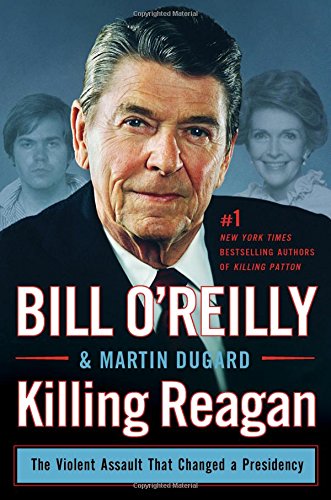
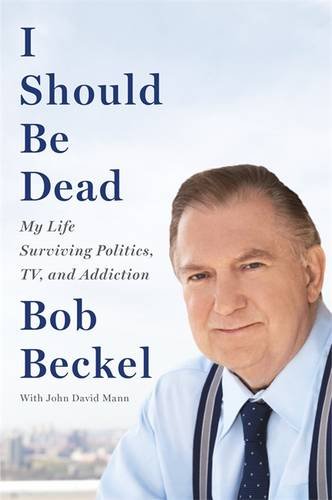
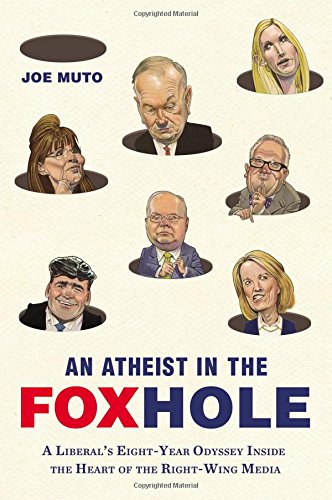
 I’ve just finished reading Joe Muto’s An Atheist in the Foxhole: A Liberal’s Eight-Year Odyssey Inside the Heart of the Right-Wing Media. It is the third of non-fiction books that I read over the last two weeks. And for some reason, they all happen to revolve around a certain preoccupation: politics, especially in the right-wing quarters of the United States. The other two are Bob Beckel’s I Should Be Dead: My Life Servicing Politics, TV, and Addiction and Bill O’Reilly’s Killing Reagan: The Violent Assault That Changed a Presidency. They also happen to have notable dissimilarities.
What they all have in common, though, other than aforementioned similarities and that they are all non-fiction – which always gets my attention every time, is that they were all written by people who either are current (O’Reilly) or past (Muto, Beckel) employees of the Fox News Channel, America’s enigmatic but highly successful conservative television channel; a business enterprise of Rupert Murdoch, an Australian billionaire.
Muto’s book details his train-wreck adventure as a liberal-minded employee through an eight-year career in America’s most right-wing media company, a career that ended in ruins when he turned into a mole for the website Gawker in April 2012. More than giving a rare insight, with notable anecdotes, into the working of the media house, its politics and successes, it also portrays a sympathetic image of the employee himself. Like many others in the company, and in perhaps many other such organisations around the country, the writer didn’t start out being conservative or in any way supportive of the employer’s political and business viewpoints. He only wanted a job in a tough economy, and a chance to build a life with his girlfriend whom he had brought into New York from a small town. And through a series of justifiable (and sometimes hilariously contrived) compromises meant to keep him in the good graces of his employers, he worked his way from a Production Assistant to an Associate Producer for the channel’s most highly-rated programme. Then blew it. Publicly. What was to be learnt from reading the book other than how to throw away an eight-year career in the most ignoble manner? Not much, but it was nonetheless a good account that read like a fast-paced thriller. The writer may not be glad about the way his career ended, but he was sure glad to have left as we are of his decision to write the book. He had a keen eye for details, and his observations, especially of his former colleagues, seemed fair and measured.
In Bob Beckel’s book, one lives through the civil rights era of 60s America through the unlikely journey of a child from an abusive alcoholic home who, in a few short years, became the Deputy Assistant Secretary of State in the Jimmy Carter White House and later the campaign manager of a presidential candidate (who lost 49 out of 50 states, no less). The book details not just the notable events of these times and the author’s personal successes, but also his failings and struggles with drugs and alcoholism, and his eventual redemption. I first knew Bob through The Five, a roundtable political news conversation show at 5pm on Fox where he was the resident liberal against four conservative hosts. His geniality, unconventionality, and resilience as he held his own successfully against the usual misinformation and sometimes just merely surly temperament of his co-hosts was stuff of legends. It was easy to root for him: a lone sane voice in the wilderness. He, of course, notably got just as surly himself, ending up as a butt of brutal jokes when he advocated for the ban on muslims coming into the US, a suggestion apparently not risible enough for Donald Trump, the Republican frontrunner to eventually picked it up many years later. Bob’s attempt with this book however is one of honesty and courage in telling a story that is at once self-reflective as it is self-incriminating. The subject is both its conquering hero as its remorseful villain. The reader leaves its pages understanding the causes, cost, and cure for alcoholism and addiction. And, more importantly, gaining sufficient empathy for its victims around us. It is certainly a book to recommend, and I do so, strongly.
The third, a biography of sorts, was Bill O’Reilly’s Killing Reagan which revisits the assassination attempt on the president’s life in March 1981, just two months after he was sworn in. The book details not just the former Hollywood actor’s rise to fame and mythology from a humble mid-western (and liberal) background, but also the effect of the assassination attempt (and his Alzheimer’s disease which was said to have started a little bit afterwards) on his presidency and legacy. Fascinating, also, was his relationship with his wife Nancy (whom he married after the failure of his first marriage to a fellow Hollywood star, Jane Wyman) and who turned out to be his rock-solid companion and shield (and, as some insinuated, manipulator). Not only did she endure the loneliness of his last years when he lost the ability to recognise her or anyone, she also had to live twelve more years alone without the man she had loved for most of her life. It was a well-written story, which introduced the former president to anyone curious about his life and legacy. The book wasn’t without its critics, however: some Reagan loyalists and other reviewers thought that O’Reilly exaggerated the effect of the disease on the president’s performance in office, among other untruths. Bill, for some reason, continues to dominate not just cable news with his O’Reilly Factor but also the Bestseller lists with his Killing series. Like Killing Kennedy, Killing Lincoln, Killing Patton, and Killing Jesus, before it, Killing Reagan continues the trend of entertaining (and informing, I must admit) readers through the non-fiction medium, sometimes through dubious or exaggerated reportage, but always with a single-mindedness of purpose.
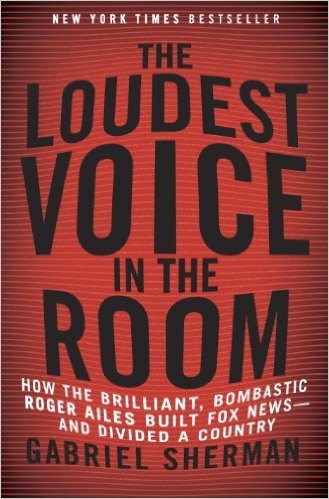 A figure that stood out of these three books, like a brooding shadow, was that of Roger Ailes, Fox News’ boss. It was he who is reputed to have built the cable channel out of nothing, discovered and made its on-air talents into national figures, and continues to drive liberals crazy around the country with his enigmatic and unapologetic successful conservative persona. But in the three books, Dr. Ailes is a number of different people. Joe Muto’s Mole dedicated a notable space to describing how his micromanaging style, and politics, ensured that all those who worked at Fox took care to either tow the party line as true believers, or fake their way into promotion and prominence by appearing to be as conservative as desired: an image of a paranoid invisible puppeteer. In O’Reilly’s Killing, he was a genius who kept Richard Nixon’s administration television-friendly, thus minimising the damage it would otherwise have got earlier on. He, it was, during the re-election campaign of Ronald Reagan, who (as a hired political consultant) came up with the killer response that damaged the Mondale Campaign (and, by extension, Bob Beckel’s campaign career) in 1984. More than that episode, for Beckel, Roger Ailes was also the man who – after decades of failure and impending ruin – offered a lifeline by giving him a job on Fox News as a contributor, and eventually as a co-host on The Five: a smart but benevolent operator who holds no grudges against former opponents. The portrayal of his genius (or deviousness as the case may be) has now driven me to buy this promising biography of his, written without his support or approval.
These three books were a delightful, and surprisingly easy, read, as most non-fiction works tend to be in my experience. They were worth each cent, and gave me a deeper peek into the workings of the US media, politics, and journalism in general. It certainly delighted the part of my brain that has always wanted to write a memoir or someone else’s biography in the future, though not necessarily the part in search of a clever turn of phrase or some delightful serving of English prose in its literary glory. Still, not a wasted time in the company of lived history.