MidEast in the MidWest

What does Iran have in common with Egypt and Morocco? A lot more than you think, and a lot less depending on where you look. The language of Iran, Farsi (or Persian as it’s also often called), is written with the Arabic script. Arabic, the language, however is spoken in Morocco and Egypt as official languages. Language and cultural attitudes is also quite different. More women in Egypt still favour the traditional, conservative way of life and dressing as opposed to their counterparts in Iran who show a marked rebellion against what its Islamic government stipulates: head covering, public separation of the genders etc.
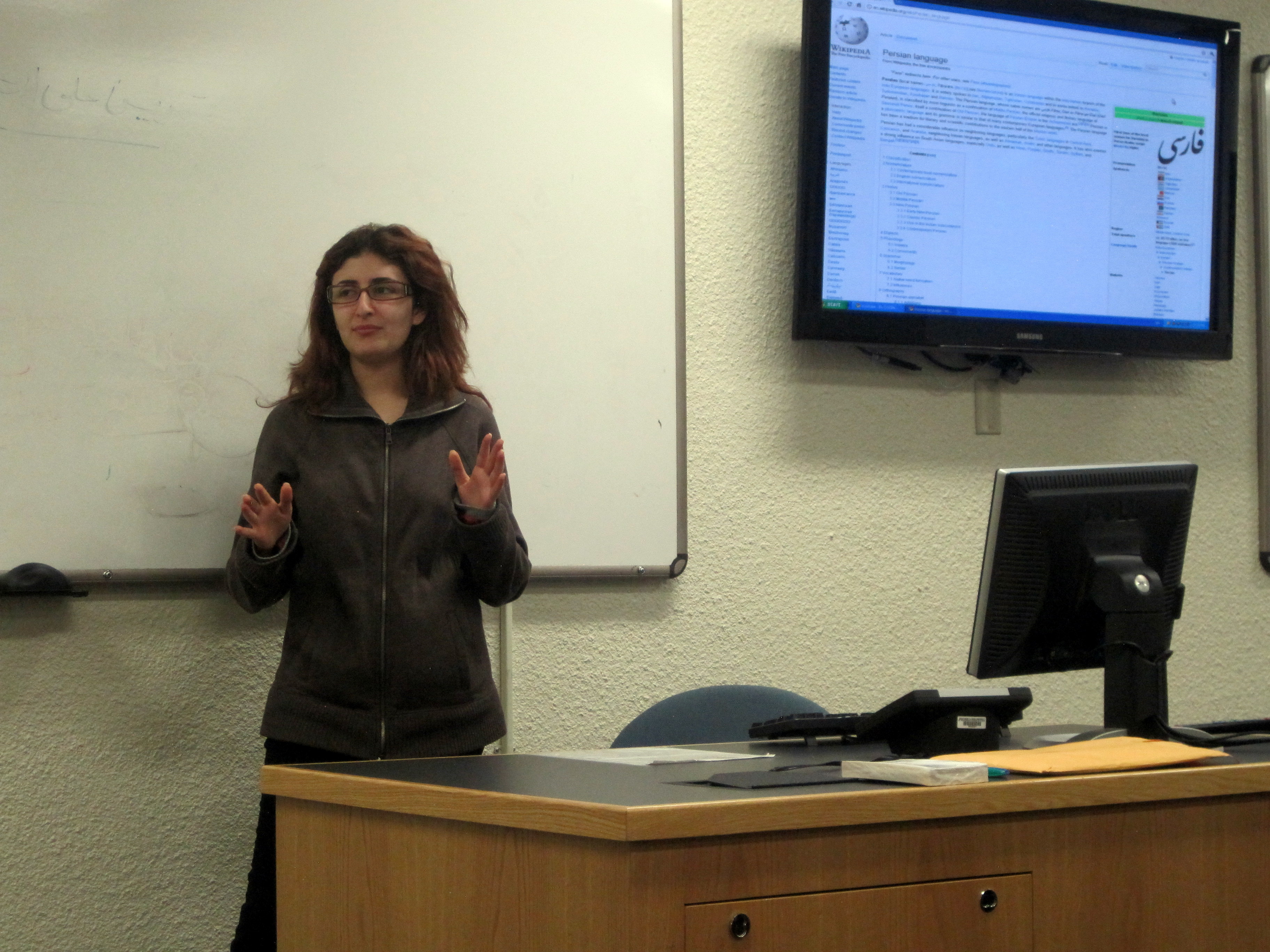
This month in the United States is the Discover Languages Month. One of such activities at my department includes inviting students from different countries and cultures to speak to us about what is important to them, and what we may want to know about their culture and languages. Mohamed spoke about Morocco, its linguistic diversity and cultural influences while Reham spoke about Egypt giving us a view into the everyday life of its citizens. Yesterday, Mojdeh Faraji came to speak about Iran, dedicating a large part of her talk to the artistic contributions of Iranian film makers some of whom are now serving prison terms in the country for speaking out against the government. The Iranian director of the movie Offside was one case in point.

If I do find myself in the Middle East someday – maybe as a teacher of English, where would I rather be? For the food, it might be Morocco. For the view, it will be Egypt. For the weather, the culture and the language, It might be Iran – a freer one of course.
St. Louis to Saint-Louis

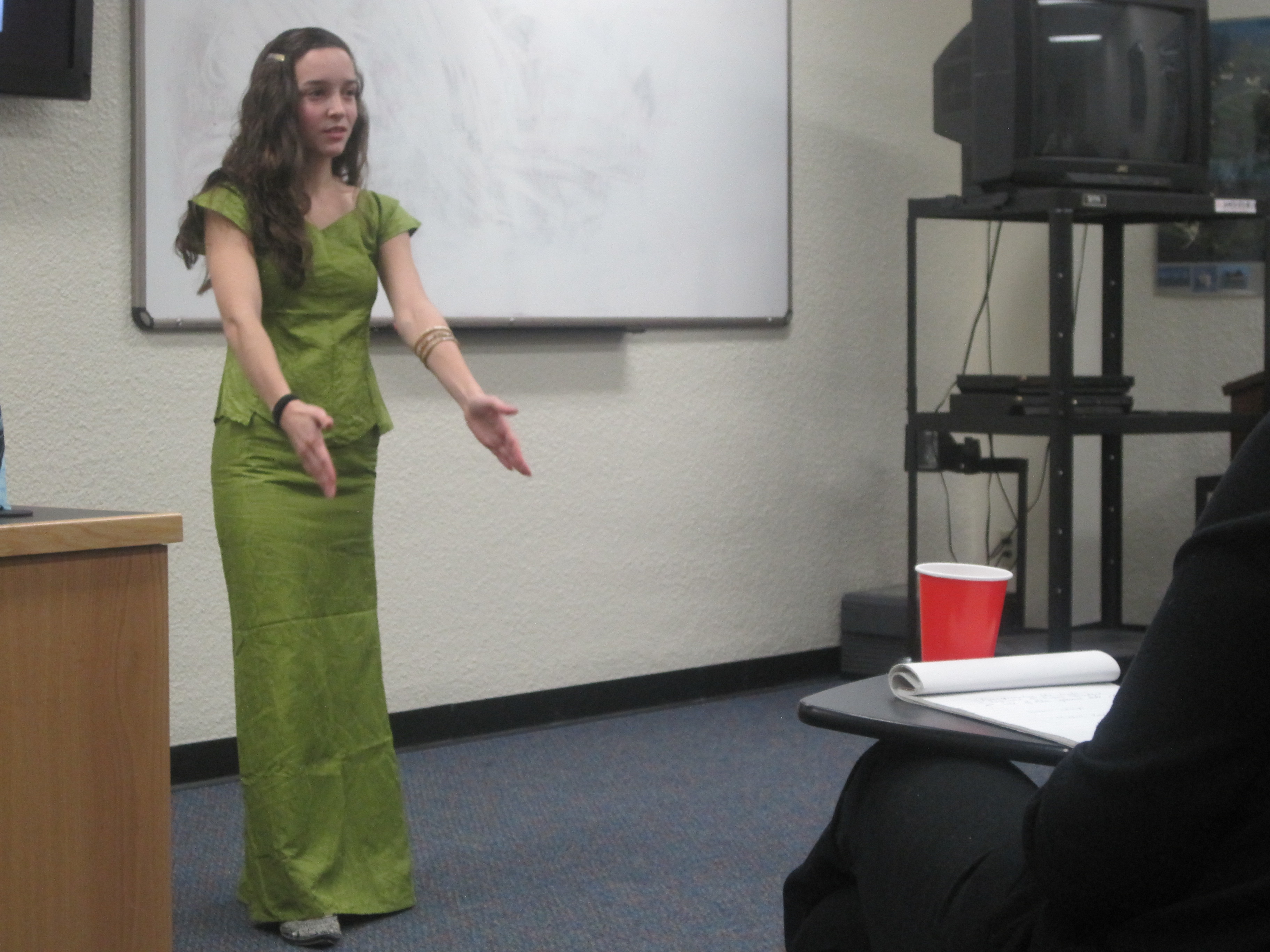
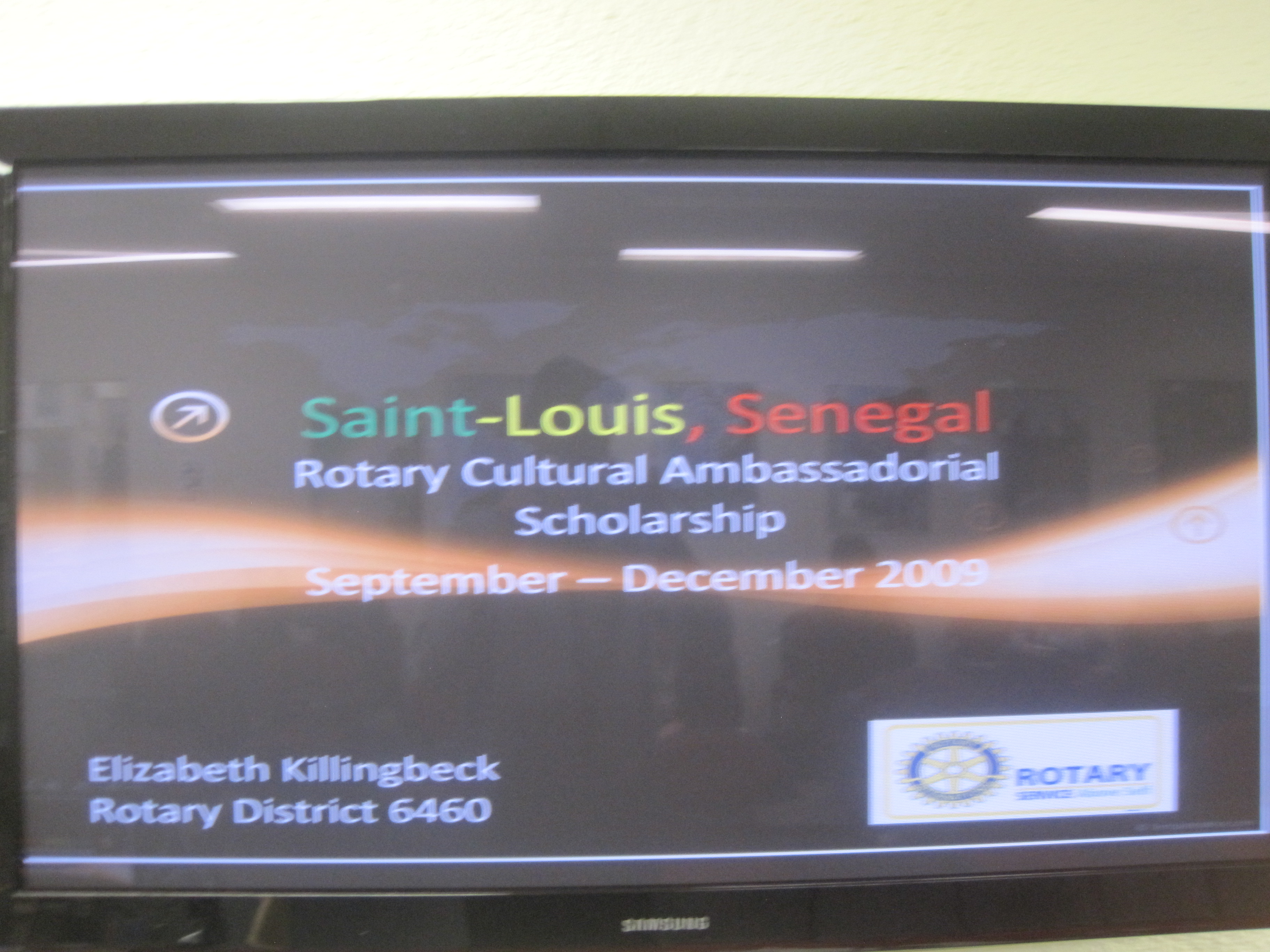
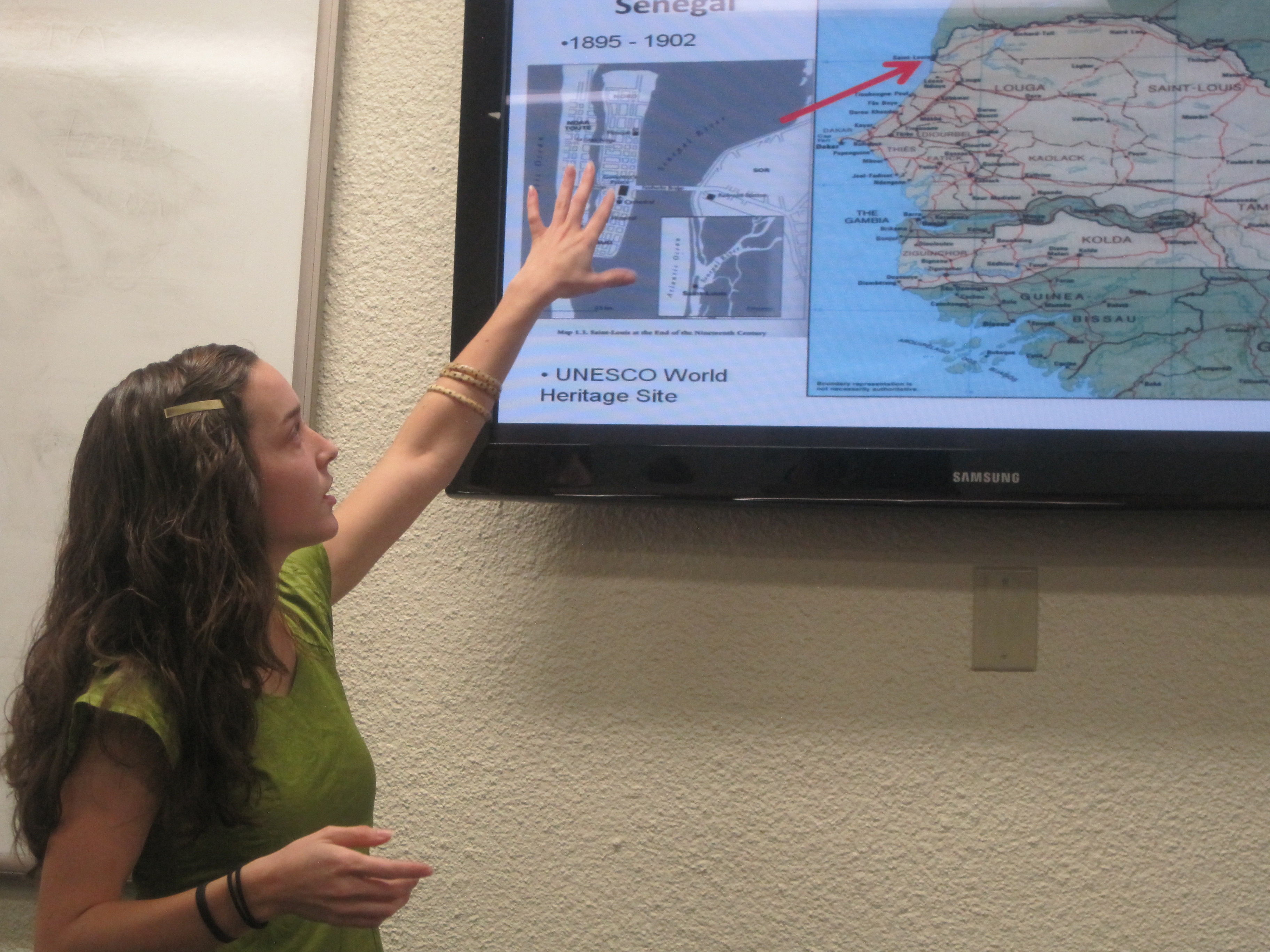
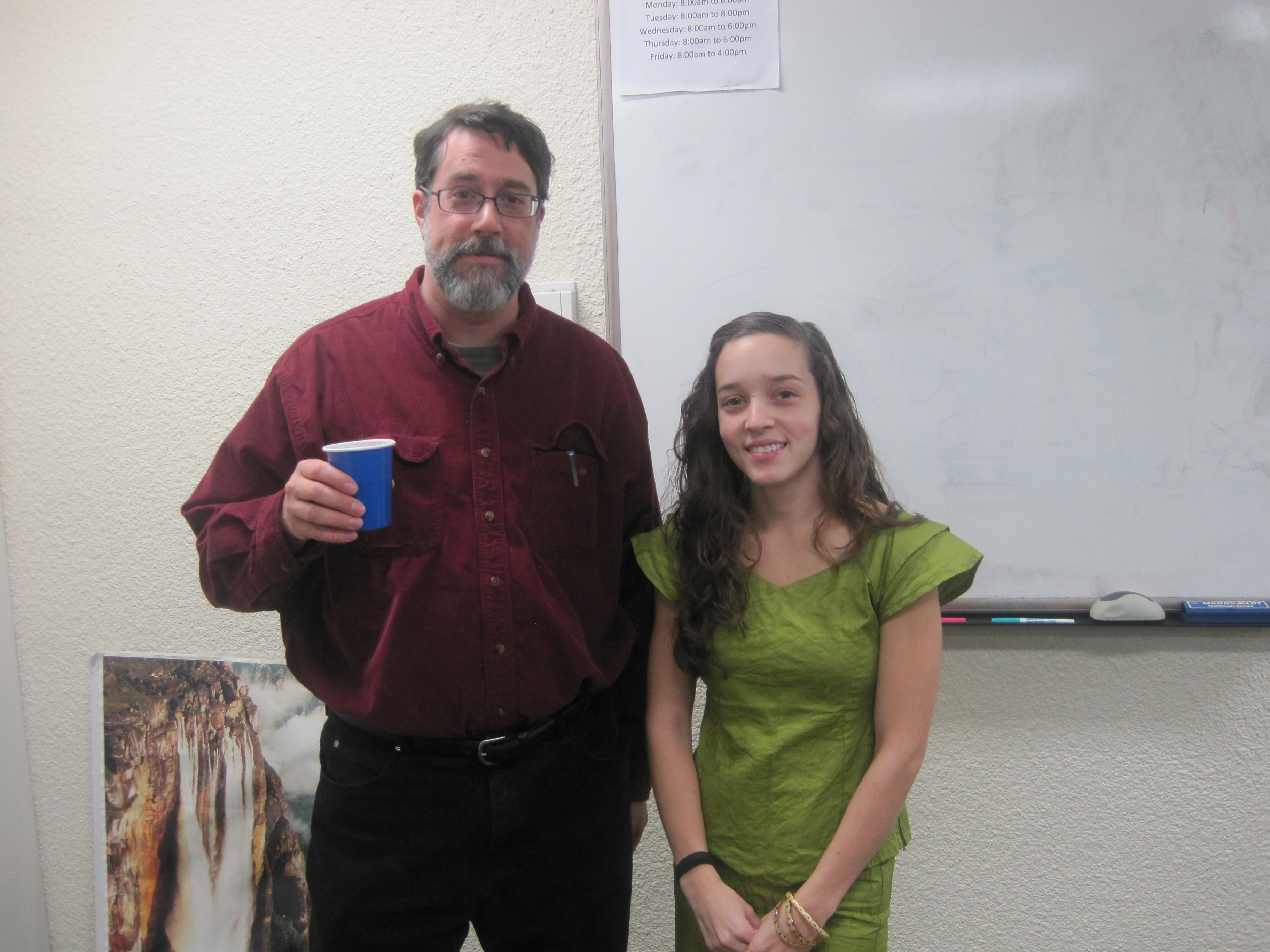
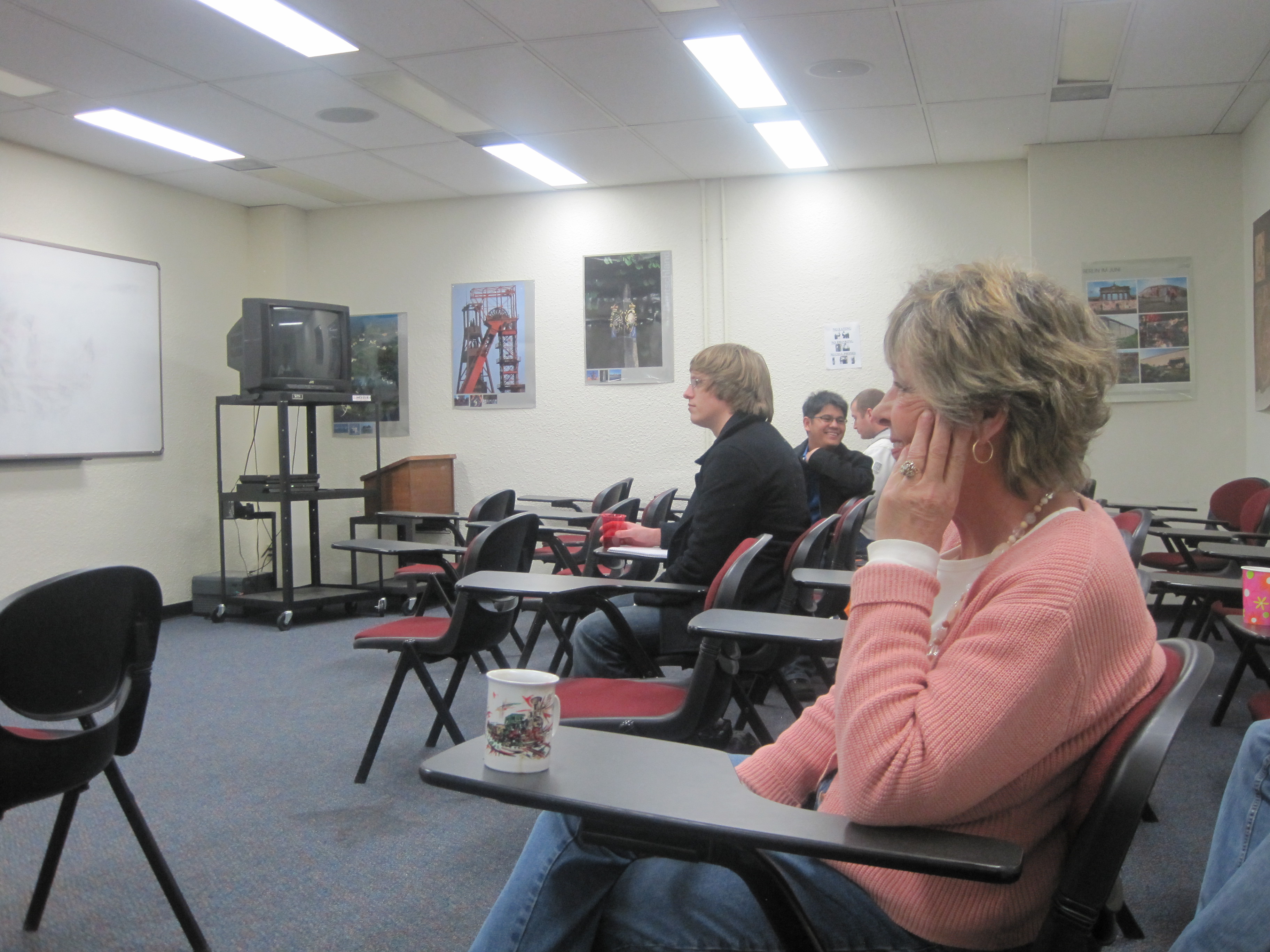
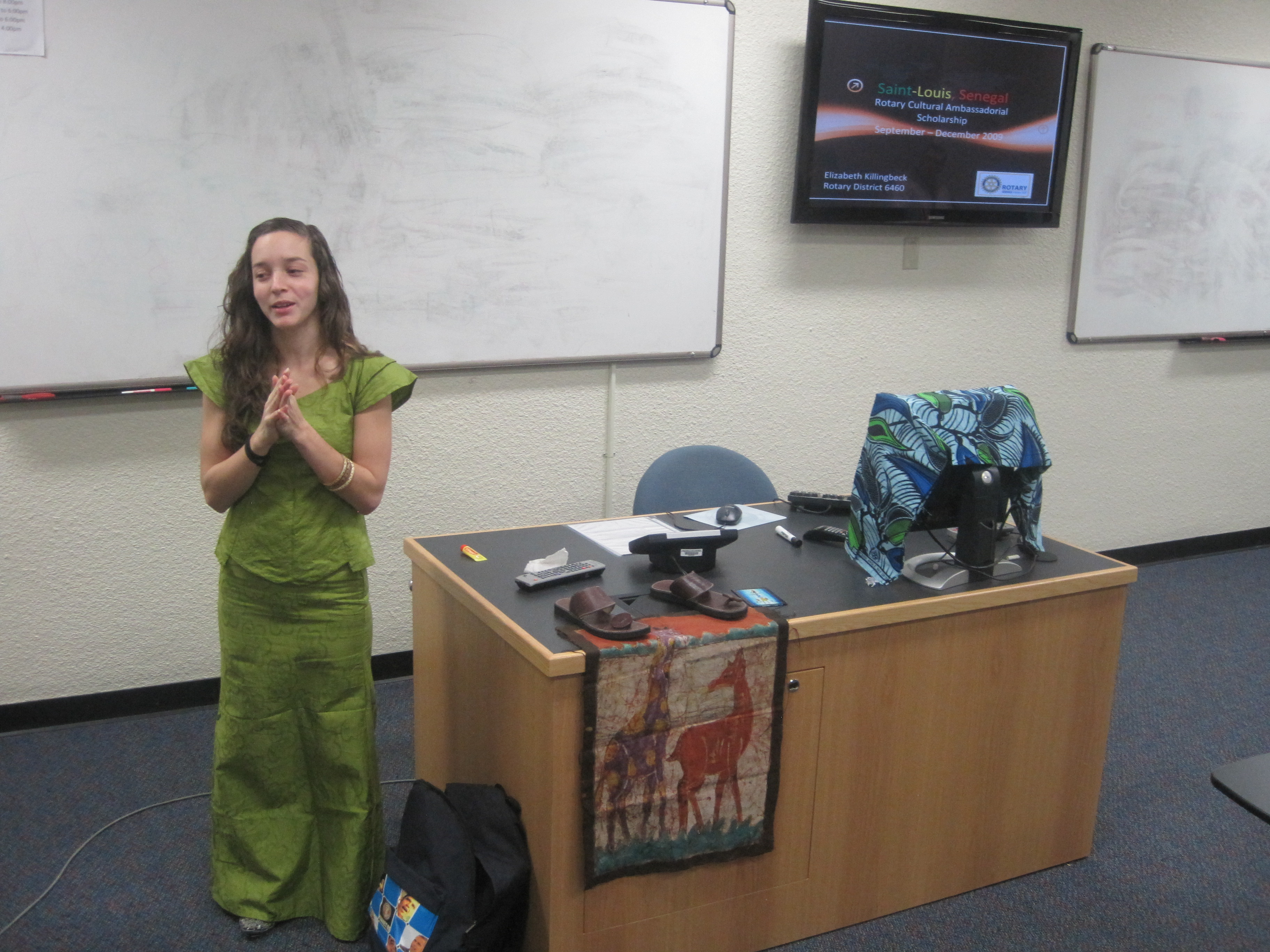
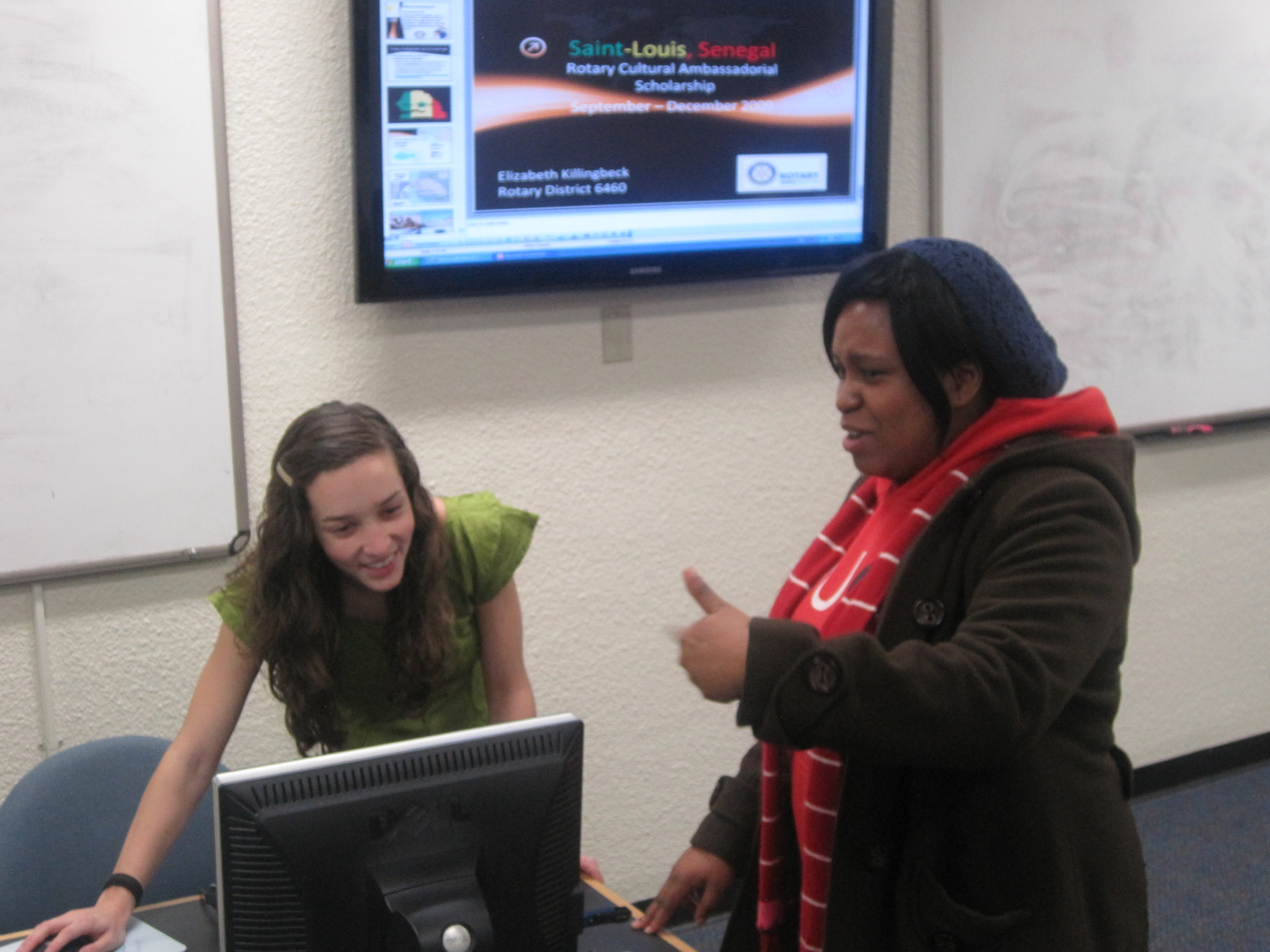
Today’s even in the Discover Languages Month was a talk by Elizabeth Killingbeck, a student of my department who had gone to Saint-Louis in Senegal in West Africa for a three month Rotary community project and a French-abroad experience. Elizabeth had come back with stories of said experience and was at the Plasma Lounge again to share it with members of the department, faculty and students who had come to listen. From a little after three pm when the talk started, and a little after four o clock when it ended, Elizabeth took us on a journey of her experiences, good and bad, in the West African country. It was worth it listening to.

Her trip to Senegal was doubly memorable for her and for us because Elizabeth had never lived within any community of totally French-speaking people, nor has she ever been to Africa (or for that matter lived within a community of mainly moslems). And on top of that, she is someone of not so large a stature that must have gone through so much to survive (even in the US) within a group of bigger framed folks, and here she was in French and Wolof-speaking West Africa in the blazing sun. Now don’t get me wrong, Elizabeth is only soft-spoken, she is neither timid nor shy when speaking about what she finds fascinating.

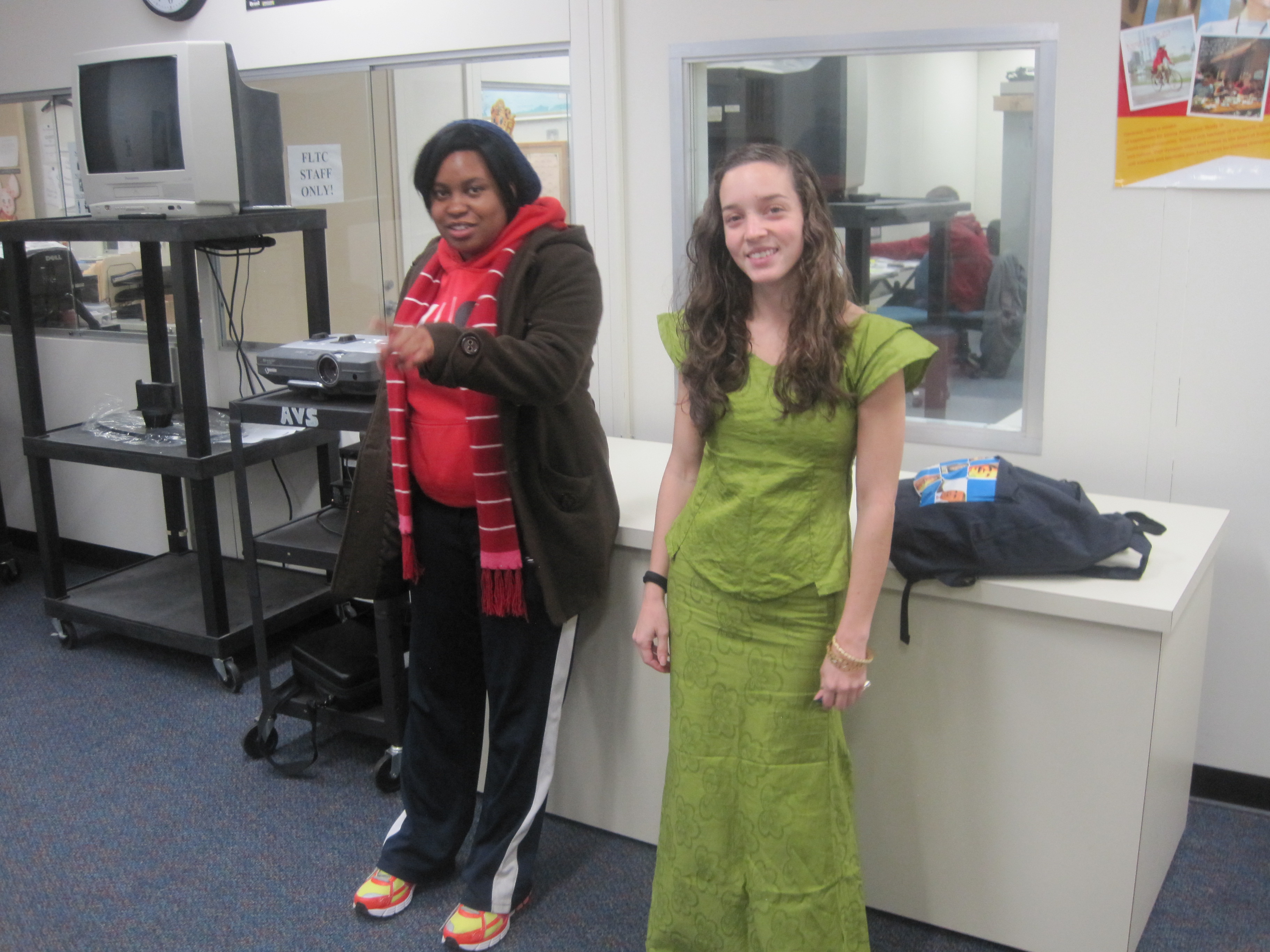
Wearing a green guinea attire that she bought while there in Abdoulaye Wade’s country, she talked about drinking water, flies, art, classrooms, children, vehicle art, street kids, food, family, language, camels, religion, literacy among many others. There were also pictures to show for it. Talking about water supply, Elizabeth talked about the problem of accessing good water where she lived. They drank from the well while she bought and drank bottled water. “Should she have drunk the well water?” Belinda asked me. “Definitely not,” I replied.

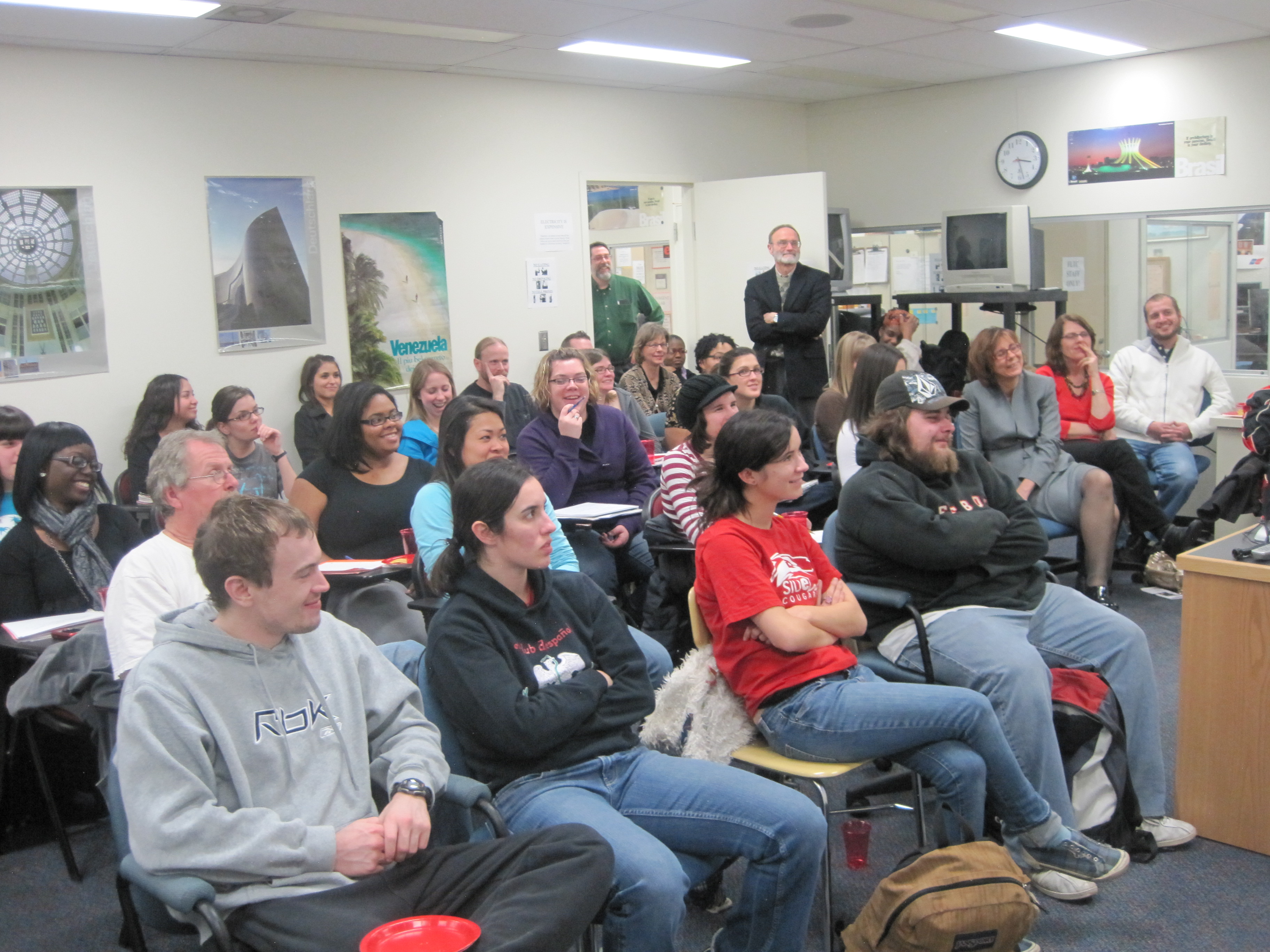
Present at the talk were the departmental head Belinda Carstens, the Chinese Professor Tom Lavalle, Prof Doug Simms, Prof Olga Bezhanova, departmental secretary Sherry Venturelli, the lab manager Catherine Xavier and many other members of the department. It was a nice talk over all.

Like in all of the previous talks in the Plasma Lounge, this one also had refreshments and drinks. The snacks was plantain chips – which I welcomed with all my appetite. Then there were marshmallows which Dr. Lavalle had brought just for my sake. See, this is one of the advantages of blogging. Somebody nice might read about your appreciation of the taste of marshmallows so much that he would actually go out of his way to buy you some more. I guess here is the time to express my appreciation for pineapple and chicken topped Papa John’s pizza. Not for everyday though. Just for Wednesdays. 😉

I think this concludes the Discover Languages Month events in the department. It has been a very good month for learning and sharing. I thank the organizers for the initiative.

India and its Plethora of Languages

Updated

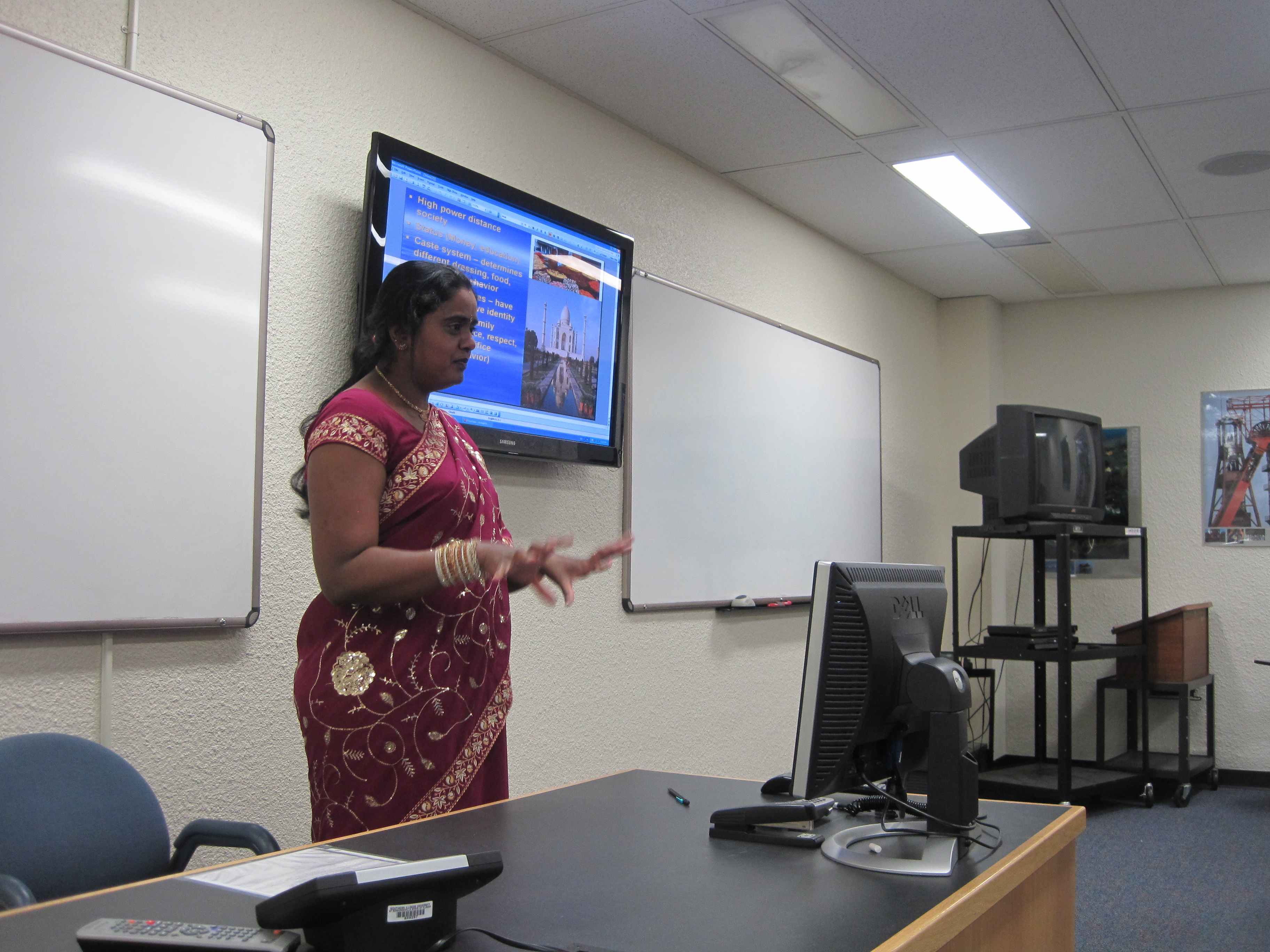
The third event in my department marking the “Discover Languages Month” took place on Wednesday and it was a talk by a graduate student of the department Catherine Xavier who spoke about India and its “Plethora of Language and Culture.”

I learnt some new things about India at this talk, one of which was that the country – as large as it is in population and land area – had only about twenty-two languages spoken in official capacity. The biggest of them was Hindi which everyone spoke and understood, but there were so many others. Much of the talk was along the lines of mine: i.e a comparison of Indian and American cultures, their similarities and differences. And from the presentation, I found that India is not much different from Nigeria as I previously thought.

One of the things she skipped however was the subject of the Karma Sutra which I believe is one of India’s biggest export to the world, and the influences of the literatures of Salman Rushdie and V.S. Naipaul – the two biggest and perhaps controversial names in Indian/English literature. According to Catherine, they were names that always stirred emotions and she had left them out in order not to make people uncomfortable or be polarizing. I do not take it against her because it doesn’t remove from the breadth of the talk, which lasted an hour and dealt with so many other things including economy, taxes, eve teasing, transportation, speech patterns, greetings and interpersonal relationship of Indians in foreign lands, and many more. As conservative as the culture in India is, it still managed to have produced a deep and colourful legacy of sensual exploration of the human body and I’d have loved to have been able to ask about it during the event. I couldn’t. It was a nice presentation over all with many laugh-out-loud moments during the talk and during some of the video clips that she played.

I love it because it was a balanced presentation of the positives and negatives of the country, unlike mine of two weeks ago which was mainly a positive representation of myself and culture. Clarissa has already accused me of being too positive about everything I observe, so it is just as well. Many of Catherine’s points reminded of me of what Nigeria and India have in common as a society. Famous Indian people in the presentation were Mother Theresa and Mohandas Gandhi.

The Year of the Tiger

I’m beginning to consider the possibility that I might have been Chinese in my former life. The more I think about it, the more I remember instances in which the Chinese people, or the Chinese language has revolved around me. One of my favourite FLTAs at our orientation in Providence, Rhode Island was Chinese, and she taught me to write my name and my country in Chinese, and I’d given up of ever having such a chance again.

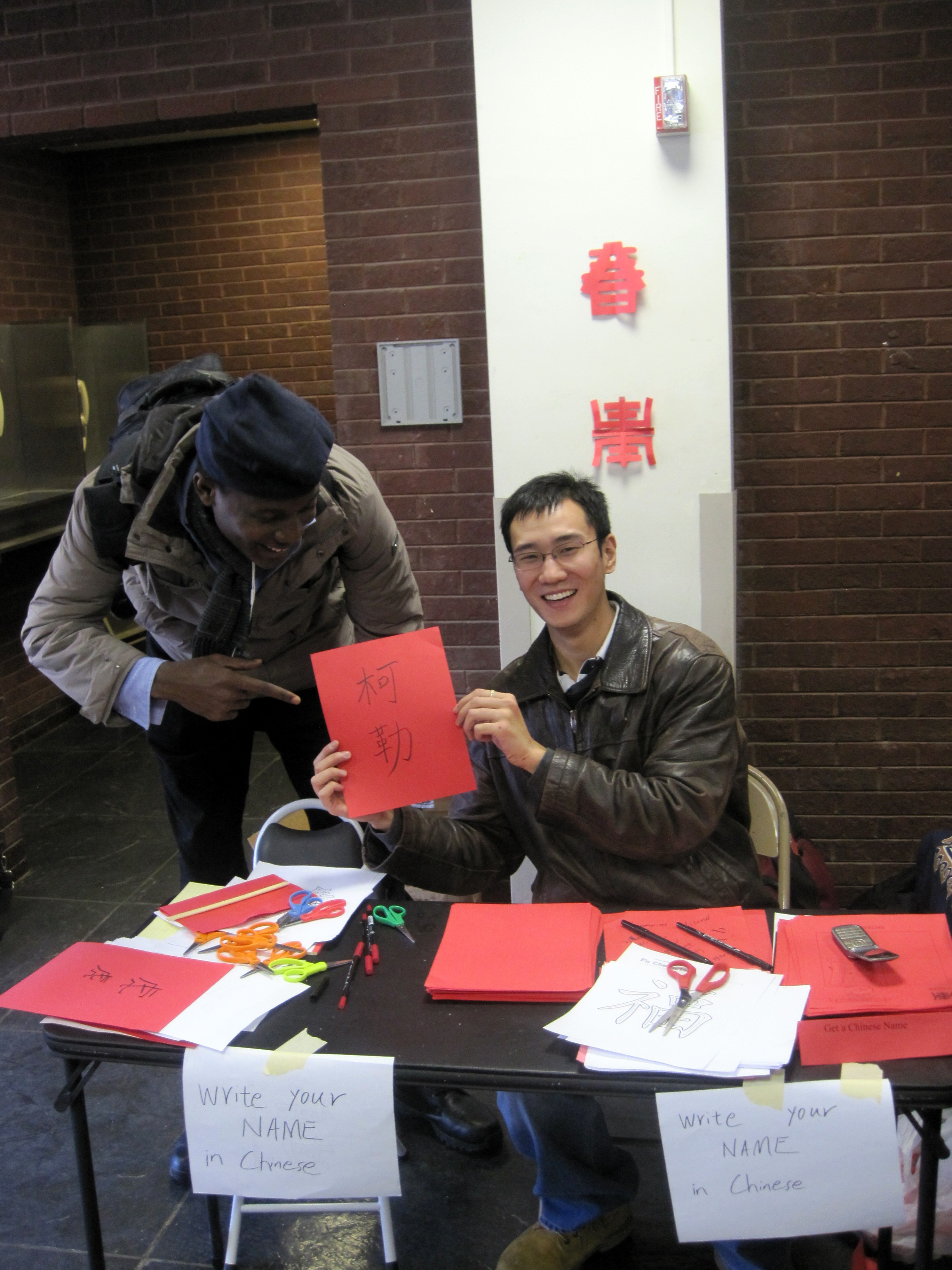
But today, I had another chance or reunion with my adopted spiritual home in the continuation of the events marking the “Discover Languages Month”. Last week was Yoruba. this week is the celebration of the Chinese new year, called The Year of the Tiger, and the student of Chinese had come out to exhibit their skills and knowledge of the language. Supervising the event was none other than Professor Lavalle, the teacher of Chinese language and literature whom I’d blogged about a few days ago. As special attraction, there were marshmallows and chopsticks, and interested competitors can win one of several Chinese toys and artifacts if they could only hold the chopsticks right and move the marshmallows from one bowl into another.

"My name is Chinese Kola"

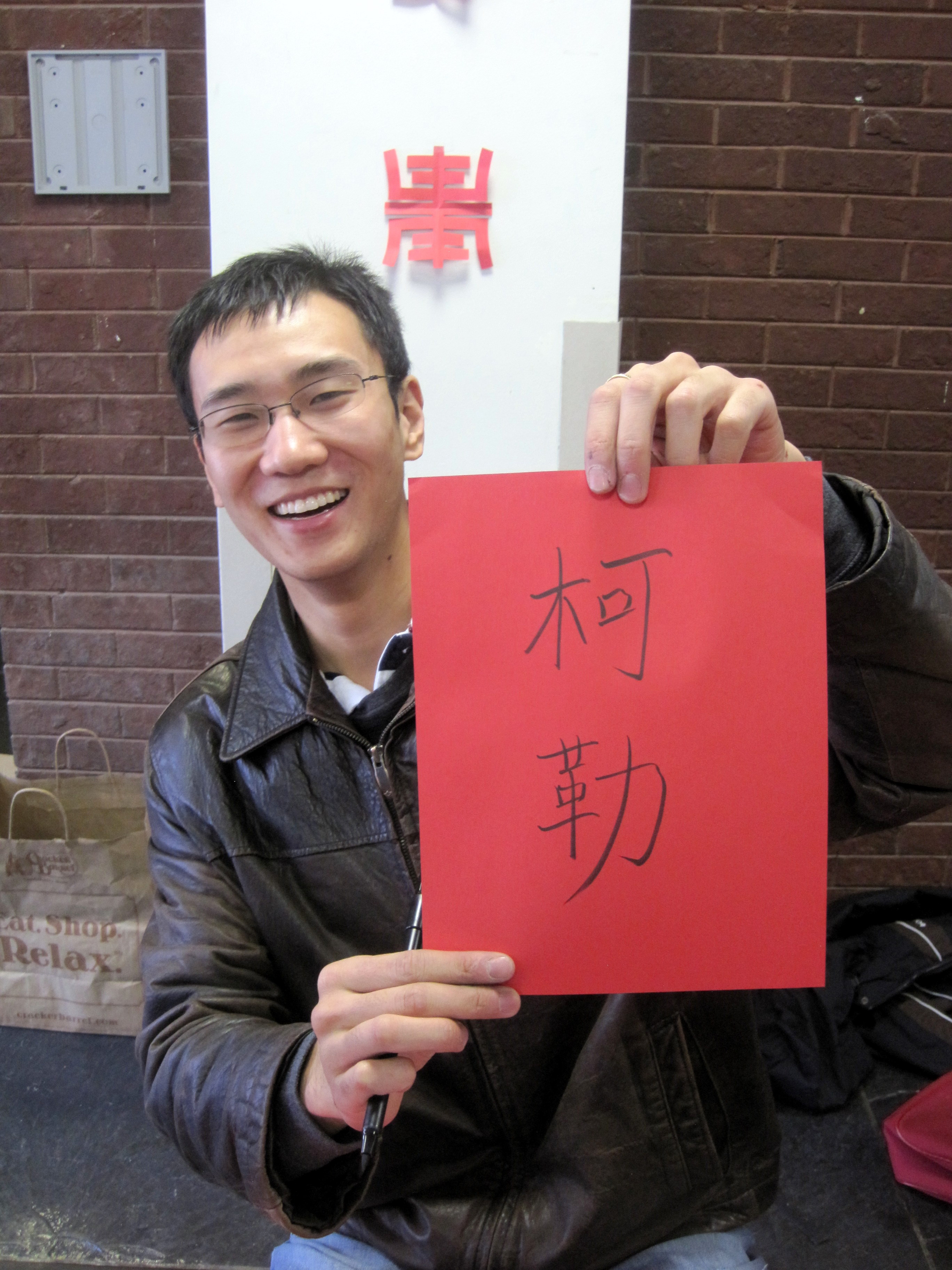
I had never had marshmallows before, so it was nice that I showed up. Afterwards, after devouring them all, with my hands – of course, I began to wonder why it was sooo sweet in the mouth. I also had dates, which were nice, and then a fortune cookie which predicted that I was about to become $8 poorer. Tell me what kind of a “fortune” cookie is that? Later, I walked up to the stand where calligraphy was being exhibited, and I had my name written, again, in Chinese. I can’t read it now, but I believe the Chinese guy who wrote it. And Prof Lavalle was there. I believe that he would have told me if it was wrong. More than that, I also confirmed that I had not forgotten the few words of Chinese that I know: Ni hau for “hello” and Shi-shi for “thank you. When next I get free time, I think I will be making a trip to Beijing.

If it helps, Chinese is a tonal language, just like Yoruba. Professor Lavalle had also told me on our first meeting that what he read of my poems reminded him of Chinese poetry, as opposed to the prosy and “confessive” nature of American poems. It is supposed to make me feel better, I guess, that my peripatetic spirit has now has more links to the Orients than I like to acknowledge?

Maybe this is why I like Jackie Chan so much. Blood is so thicker than water. 🙂

“Exploring Yoruba through American Eyes”

  • I don’t usually write the word “Programme” as “Program.”

The long process that became today’s presentation began a little over a week ago when Prof Tom Lavalle, a professor of Chinese language and literature sent me a mail asking if I would be willing to kick off the “Discover Languages Month”  with a public presentation. I said yes. He asked me to suggest a title, and I did. He liked it. I didn’t have too much time to plan for it however, which would explain why I had spent a few nights sleepless putting everything in form. For this, I also owe credits to the pictures on my room wall who listened to my mock pre-presentation, and to Deola, Zainab, Tayo and Chris who offered valuable suggestions after previewing the presentation. I also thank Clarissa who sat gently and almost anonymously at the back, smiling at almost everything I said, and blogging 🙂 but whose presence along with that of other colleagues and friends gave me the needed encouragement; and Belinda Carstens, my head of department who barraged me with questions when necessary, thus inevitably pointing me to a few things I seemed to have been taking for granted talking to a people from a different background.

  • My undergraduate project in the University was called “The Multimedia Dictionary of Yoruba Names.”

One of the most intriguing discussion from the talk came during the realization by a few members of the audience that we still had kings in Nigeria, within Yoruba kingdoms. “Are they all monarchies?” Someone asked. “No,” I said, and went into a long explanation about the peculiar (and prehistoric) republican nature of the kingship system in Ibadan in sharp contrast with the rest of Yoruba kingdoms in Oyo, Ife and elsewhere. Even to me, that was a moment of personal reflection and pride in the accomplishment of Ibadan ancestors who broke with tradition long before the British came, and did away with a succession system of government that is based on heredity like is practised in Oyo or Ife for a more meritocratic system based on long-standing and verifiable contribution to the society. Even at the end of the talk, a few more scholars came over to talk to me and ask questions about the kingship system. The kings, we discussed, do not have political powers as such in the country, but do occupy a status of responsibility that makes them indispensable in the proper governance of the country. There was also a question about spirituality. This elicited a response in reaffirmation of the Yoruba worldview: that which has never sought to impose its belief system on any other group of people for any reason. We had fought wars for women, for land, but never ever to spread a system of belief or to proselytize to our own way of life.

  • Do you have Six Flags in “Yorubaland”?

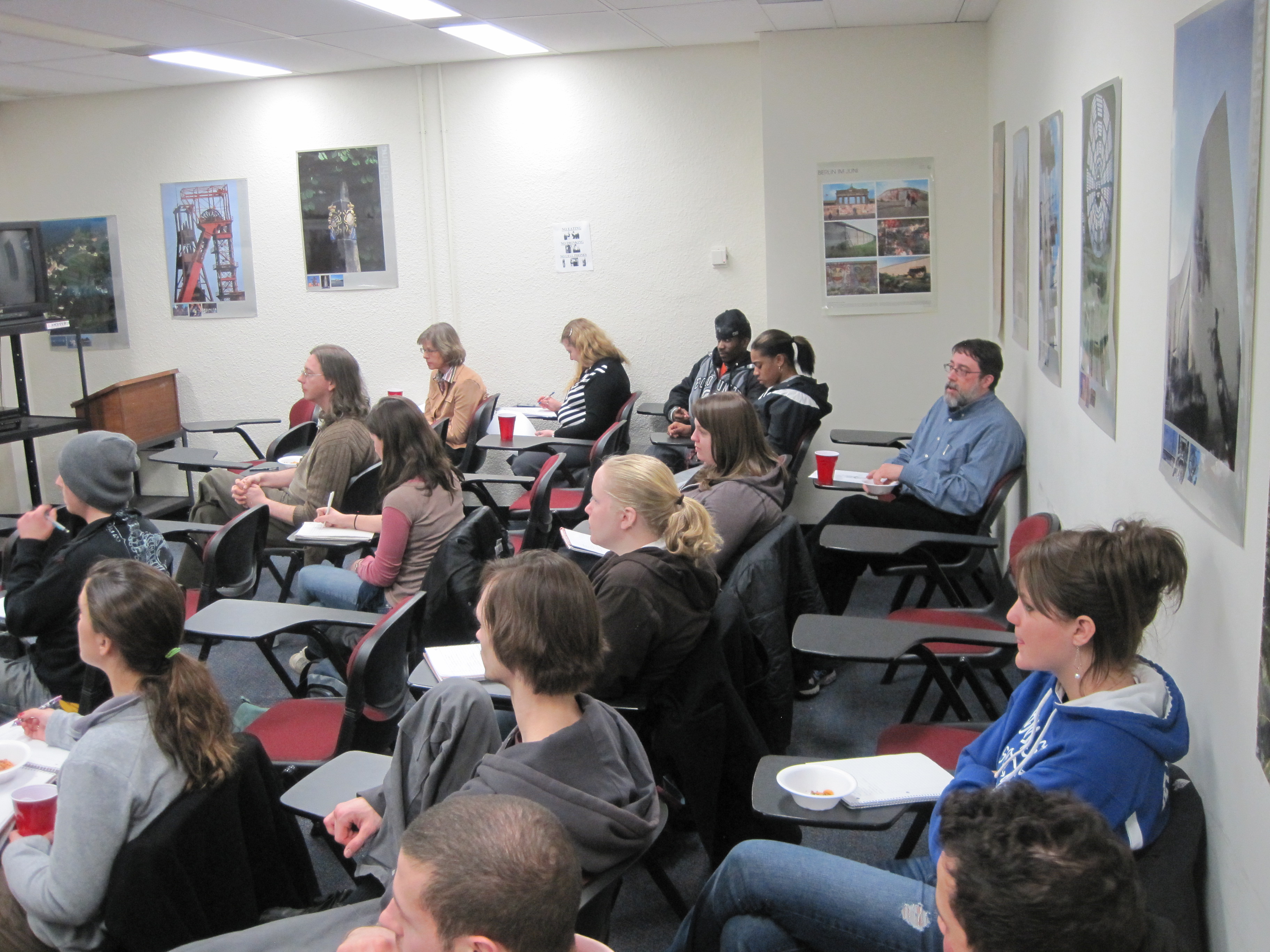
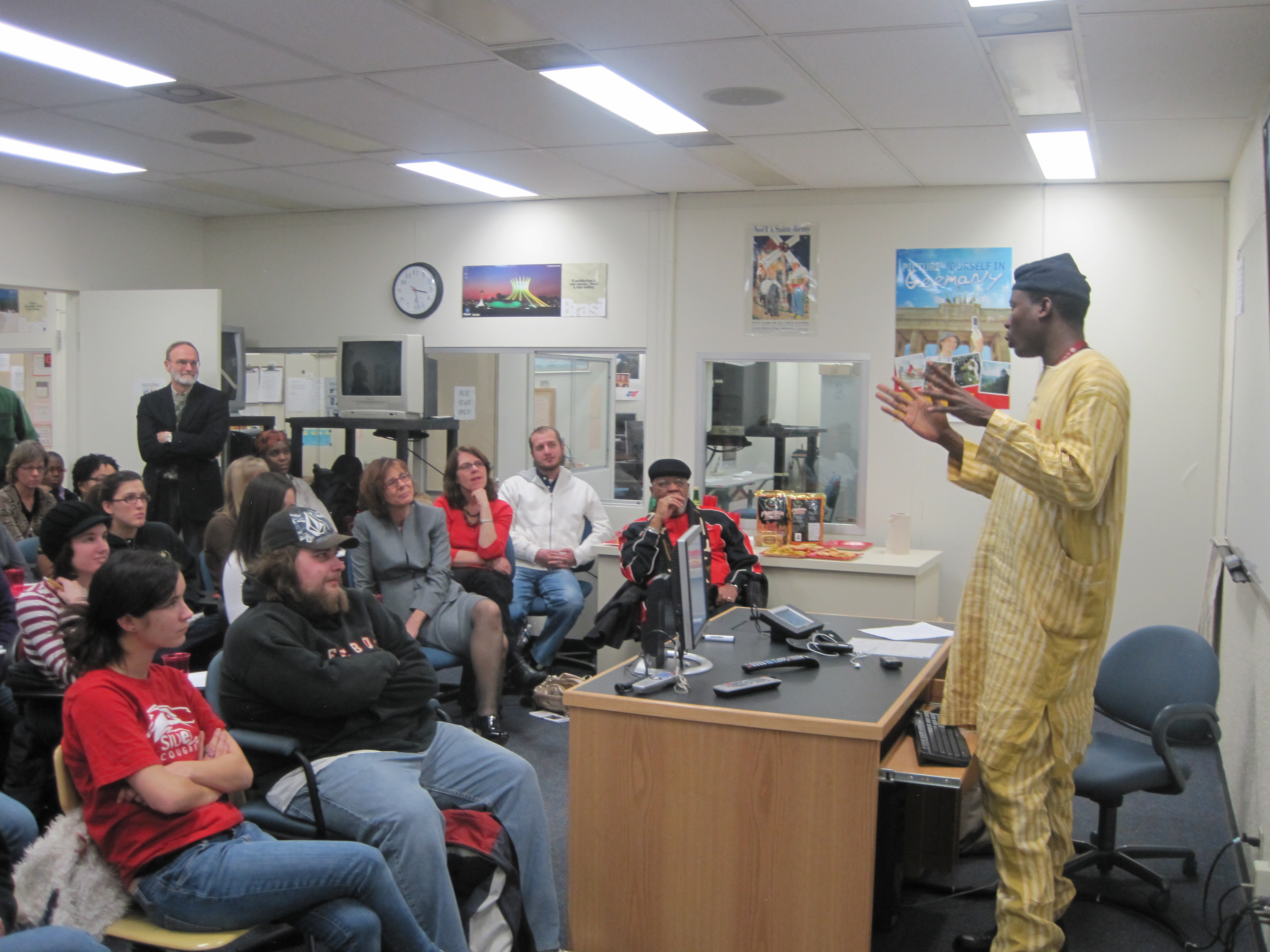
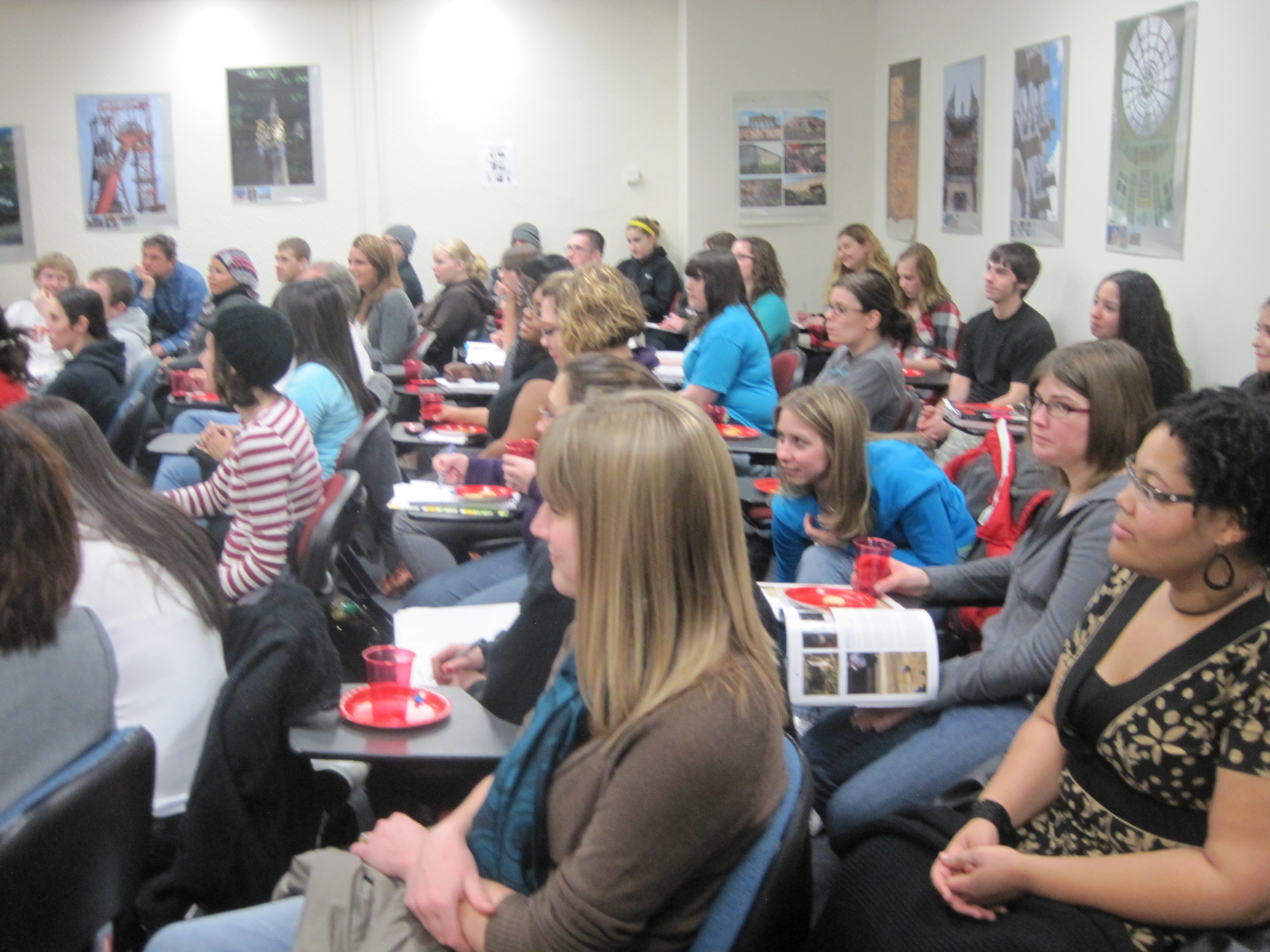
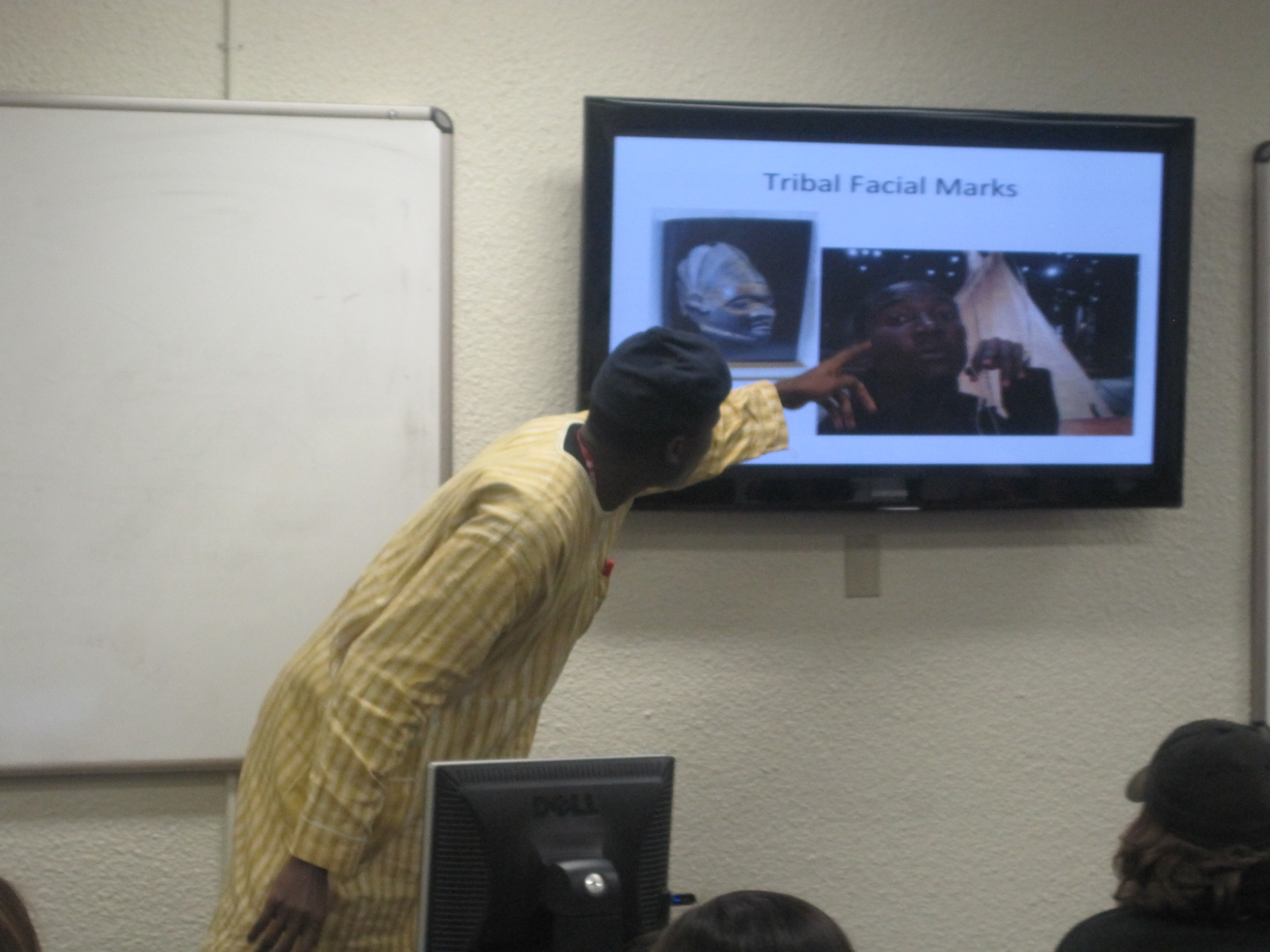
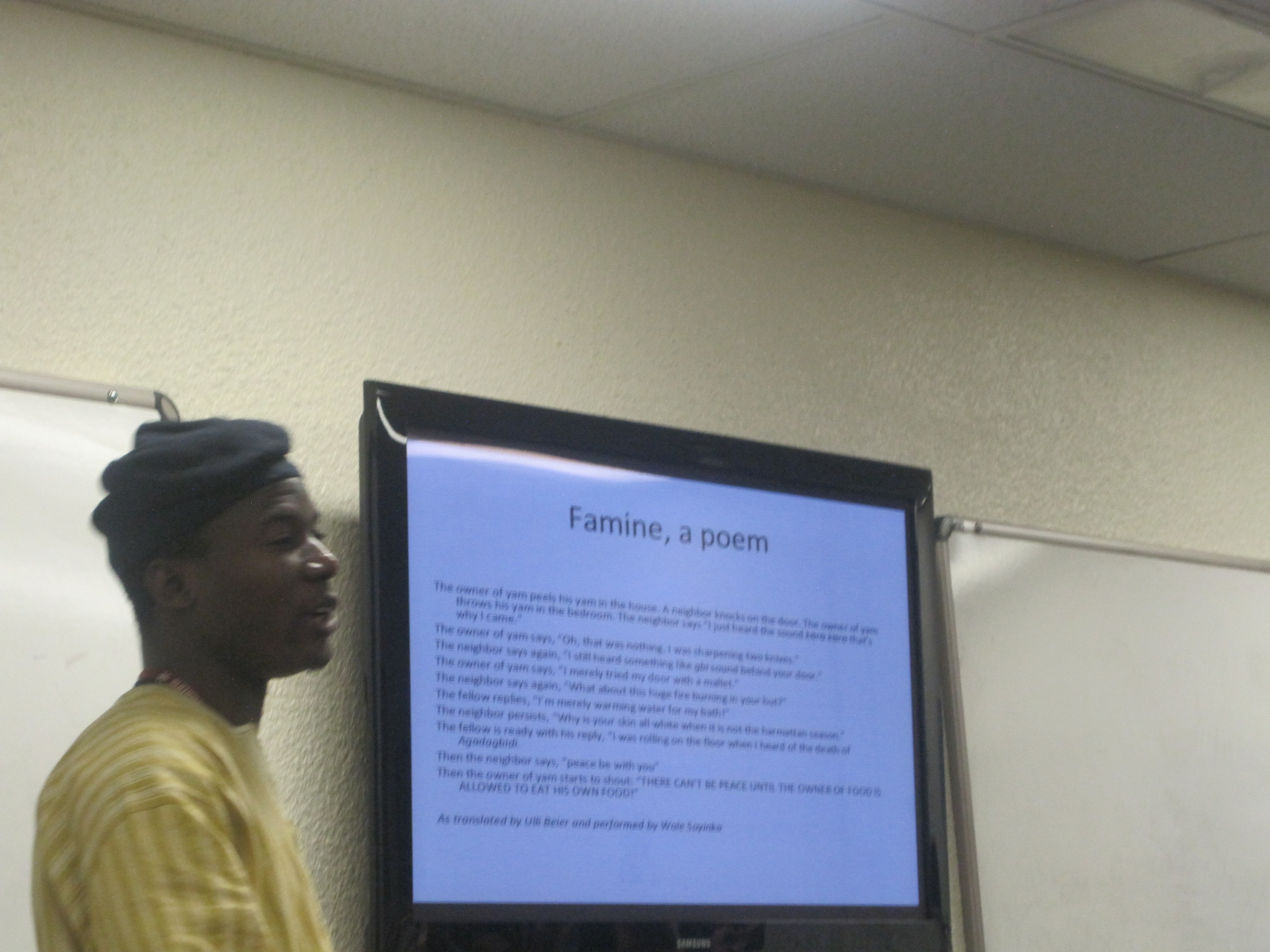
So there was food, plantain chips. There were over forty people in the audience, many of them standing. I saw a few old students in the audience, and a few current ones as well. How the old students knew about the event, I have no idea. Professor (Papa) Rudy showed up as well. It was my first time of seeing him this year. Also present was Prof Schaefer, professor of Linguistics, and SIUE Director of International Programmes who is no stranger to Nigeria himself, having taught at UNIBEN for many years and worked on the Edo language of Emai for a long time. I spoke about the mark on my face. I also spoke about the noted similarities between the Opa Oranmiyan and the Washington Monument; and about why I wear the cap in the United States even though I never did while I was in Nigeria; and about the meaning of names; and about masquerades, Lagbaja and the KKK (a little uncomfortable for me to broach); about Wole Soyinka and the many things he wrote about; among other topics. And then read a translated poem about The Owner of Yam and his Neighbour, which everyone seemed to have loved.

  • Is “Yorubaland” like Disneyland?

It was nice. I had fun. I’m guessing that from the response there will be more students next year registering for the Yoruba if the Fulbright commission decides to send more Yoruba teachers to this institution. I have also been told by professors whose students came to listen that they would be discussing what they learnt from the talk in their subsequent classes, and on Facebook groups created for the discussion of language ideas. I look forward to getting feedbacks from there. I enjoyed the talk. It was a nice but busy day. And oh, I also got the side pocket of my dress badly torn by a loose metal during the first jittery moments of sitting alone in front of the so large audience. Now I’ll need to find a good tailor to mend it, or leave it as a marker of this interesting speech-giving experience.

Well, there’s the report. I am glad to be here at this department of foreign languages at this point in time. You too should have been there.

  • Q: Why learn a new language? Why learn about a new culture?  A: The same reason why we learn anything new… to acquire new ways of interacting with the world around us.