A Prize is Only As Good As Those Who Enter

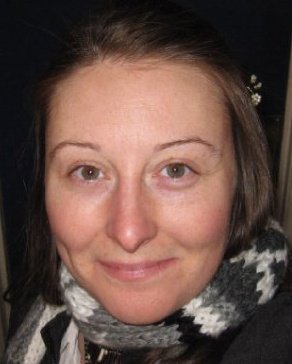
Photo credit: Cornell.edu

Lizzy Attree has a PhD from SOAS, University of London, on “The Literary Responses to HIV and AIDS from South Africa and Zimbabwe from 1990-2005”. Her collection of interviews with the first African writers to write about HIV and AIDS from Zimbabwe and South Africa was published in 2010 by Cambridge Scholars Publishing, and is entitled “Blood on the Page”. In 2010 she was a Visiting Lecturer in the English Department at Rhodes University in South Africa and from 2002-2009 she organised literary tours of African writers in the UK funded by Arts Council England such as the Caine Prize 10th Anniversary Tour in 2009.

She was appointed Administrator of the Caine Prize in 2011 and was made Director in 2014. She will teach African literature at Kings College London in 2015 as a temporary Lecturer. She sits on the Writivism Board of Trustees and is the co-founder of the Mabati-Cornell Kiswahili Prize.

________

In 2011, you took over as administrator of the Caine Prize for African Writing, from Nick Elam? How did you chart the path to the Directorship?

I took over from Nick Elam (who along with the Trustees founded the Prize) as Administrator of the Caine Prize in August 2011, having worked for a year alongside him to learn the ropes. Before that I had organized a separately funded Arts Council England 10th Anniversary tour of Caine Prize Winners and Shortlisted Writers in 2009 which was very successful and that lead to being offered the job as Administrator. I was made Director earlier this year because my role shifted. I was undertaking a more managerial role which involved strategic decision making and fundraising.

How would you rate the success of the Caine Prize, in meeting its original goals?

The idea for the Prize began long before I was involved, in 1999, when it was established in memory of Sir Michael Caine, who had been Chairman of the Booker Prize. It was prompted by the absence of a well-promoted prize for African Writing and a desire to create a broader awareness of African writers and African fiction. Now, fifteen years later, I think the Prize has been instrumental in recognising, valuing, rewarding and promoting writing from Africa. This is what attracted me to the Caine Prize in the first place. Having lived and worked in South Africa (researching at UWC and teaching at Rhodes University), I met incredibly gifted authors who deserved better exposure both on the continent and beyond.

Earlier this year we initiated an external evaluation process and found that the Caine Prize is making an important contribution to the number and quality of opportunities for writers of African descent, and that over the past 15 years, publishers, journalists, academics and the reading public have become much more aware of new African writing since the Prize was founded in 1999.

I think to a certain extent the Caine Prize has met the goals it originally set out to achieve in bringing African writing to a more prominent position internationally and particularly in the UK where you’ll find a much healthier selection of African writers on publishers’ lists, who sell, and who even get shortlisted for the Man Booker Prize! But of course the Prize sets itself new goals each year, otherwise there would be no point continuing. The Caine Prize aims to get bigger and better each year.

What is your assessment of the state of writing in Africa today? How do you rate the impact of the Caine in shaping that state, and what do you expect to see 20 years from now?

I hope I’m not still Director of the Caine Prize in 20 years time! Everyone has to move on, but I expect in 20 years time there will be far more Prizes on the African continent and that the literary industry will hopefully have become completely self-sufficient with a bigger audience, and active readers and writers producing and consuming work independently. There is always room for external validation and international prizes, but it’s not the purpose of the Caine Prize to remain dominant forever. I have taken great pleasure in providing advice, when solicited, to other Prizes, like the Baobab Prize, the Brunel African Poetry Prize, the Commonwealth Writers Prize, the Miles Morland Foundation Scholarships, the Kwani Manuscript Prize, Writivism, the Etisalat Prize, and even the Windham Campbell Prize in order to help shape their remits and share Caine Prize experiences in everything from judging, dates of announcements, fundraising to publicity. Writing in Africa today is very healthy and exciting. There is still a huge lack of publishers, particularly of commercial and literary fiction (particularly online). The professional support of literary editors and translators would make a huge difference to the quality of books produced and this is something we work to improve, on a friendly basis, with Goretti Kyomuhendo at African Writers Trust and others.

How does the Prize get its funding?

The Caine Prize raises money every year to support its work and receives support from a range of different organizations. At present the Prize is principally supported by The Oppenheimer Memorial Trust, The Miles Morland Foundation, the Booker Prize Foundation, Sigrid Rausing & Eric Abraham, Weatherly International plc, China Africa Resources, The Beit Trust, Exotix and CSL Stockbrokers. Other funders include The British Council, The Lennox and Wyfold Foundation, the Royal Over-Seas League, the EU Culture Fund and Kenya Airways. We also get support from generous individuals such as John Niepold, Adam Freudenheim and Arindam Bhattacharjee.

How have you managed to stay relevant as a top fiction prize on the continent?

I think the quality of winners and shortlisted writers speaks for itself; the Prize is only as good as those who enter, and those who make into the final five. The work they go on to produce after they have been shortlisted means that we can point to a record of having helped to identify and promote writers who are now recognized far and wide.

There have been a couple of changes made to the administration of the Prize since you took over, from compensating the judges to giving cash prizes to all the shortlisted writers. Why did you think this was important? Are there other changes to come?

As far as I know the Judges have always been paid. Yes, the new £500 Prize for shortlisted writers was added this year as a way of celebrating 15 years of the Caine Prize. It is hoped, funding permitting, that we will be able to continue awarding this Prize to the shortlisted writers, who deserve a financial reward for the quality of their writing and the publication of their stories in the annual Caine Prize anthology.

Other changes I have made are an expansion and formalization of our co-publication arrangements with publishers in Africa. The Caine Prize had longstanding arrangements with three African publishers, who co-published the annual anthologies of short stories produced at the workshops, Kwani? in Kenya, Jacana Media in South Africa and Cassava Republic in Nigeria, have now been joined by FEMRITE in Uganda, Sub-Saharan Publishers in Ghana, Bookworld Publishers in Zambia, ‘amaBooks in Zimbabwe and LANGAA in Cameroon. All of these publishers receive a print ready PDF free of charge, with which they produce the anthology and sell at local prices. At present co-publishers keep any profit for themselves, and I am happy for them to use that to re- invest in their business and continue to support Caine Prize publications, however if sales were to become very high then we have agreements in place to pay a division of royalties to authors.

Last year we were approached by a French publisher Éditions Zulma who published a collection of six stories by Caine Prize winners and shortlisted writers in an anthology called Snapshots – New Voices from the Caine Prize in October 2014. The stories were translated by Sika Fakambi and writers were paid 300 Euros each for their stories. We hope that the existence of a French edition of Caine Prize stories might enable us to make links with a French West African publisher who might co-publish Snapshots next year and Zulma intend to publish another six translated Caine Prize stories in 2015. There is also interest from a German publisher. I’m interested in finding an Indian co-publisher if possible, and even a Chinese publisher, but also to encourage Arabic and other African language translations of Caine Prize stories. I’m still very keen that we shortlist a story in translation in the next five years.

Visits to schools is something I instituted in 2013 while the Caine Prize workshop took place in Uganda. This was expanded and continued in Zimbabwe this year and will continue for the foreseeable future as the experience was enjoyed and appreciated by all involved. Accounts of some of these visits are available on the Caine Prize blog.

This year the shortlisted stories were all recorded as podcasts so that readers could also listen to the stories direct from our website via soundcloud. We hope to continue doing this. We are also improving our website, slowly, so that it will have more visual and sound content. I have tried to keep up with all 55 shortlisted writers’ activities since 2000, so that has become an extensive resource on the Winners page of the website. The blog we have developed has also been an interesting source of different views on the Prize from judges, workshop participants and myself, as well as other contributors and I’m keen to keep this going if possible and to encourage debate as a consequence.

A partnership with the NGO Worldreader was initiated by Nii Parkes, and we have gone on to invite Caine Prize winners to donate their stories to Worldreader so that they will be available on their free mobile phone platform across Africa. And the comic books mash-ups that Emmanuel Iduma and Bunmi Oloruntoba at 3Bute created for us with the shortlisted stories in 2012 were a fantastic innovation that I’d like to encourage in future. The use of new media to transform literature in to different forms will be key to encouraging a new generation of readers and writers to remain engaged in the digital age.

Another addition I have made to the annual programme is to encourage invitations from African literary and book festivals for Caine Prize writers. This began with a street corner conversation with Mervyn Sloman owner of the Book Lounge in Cape Town as he began planning for the first Open Book Festival in 2011. We fundraised together to make it possible for NoViolet Bulawayo to attend that year, and subsequent winners Rotimi Babatunde and Tope Folarin in the years that followed. The only obstacle this year was that Storymoja in Nairobi was the same weekend as Open Book, so instead we flew Okwiri Oduor in a few weeks earlier to do a book launch of The Gonjon Pin at the Book Lounge with Henrietta Rose-Innes and fellow 2014 shortlisters Efemia Chela and Diane Awerbuck (who all live in Cape Town). Okwiri was then invited to the Mail & Guardian LitFest in Johannesburg. I intend to ensure the Caine Prize winner is invited to Open Book in Cape Town next year and hope that our expansion to include invitations to Storymoja in Kenya and Ake Arts and Book Festival in Nigeria will continue to be honoured, as long as the dates allow and the winner themselves can fit it into their busy schedule. I have also been lucky enough to be invited to some of these literary events on the African continent, including the Casablanca Book Fair in Morocco earlier this year, which celebrated ECOWAS member states and their publishers and where I made important links with the Berlin Literature Festival Director, and North and West African publishers. I believe this led directly to Caine Prize winners Tope Folarin and Yvonne Owuor being invited to Berlin in September 2014.

Basic developments like joining Twitter, creating a better Facebook presence and participating more actively in social media have all been things we have instigated since I took over, just to keep up with the times.

Is there really a restriction on the language of entries? With the language diversity in the continent – and the abundance of multilingual translators – why do the stories still have to be originally written in English before it can be accepted?

Many people misunderstand this rule. The stories submitted DO NOT have to be written originally in English, but if they are entered in translation, there has to have been a published English translation of the story. If such an entry were shortlisted, the Prize money would be split between the translator and the author.

Notable critic Ikhide Ikheloa has a recurring charge that the name of the Prize be changed to “Caine Prize for Writing” rather than the “Caine Prize for African Writing.”

There are few other prizes for ‘African Writing’ or African literature. This is part of the Caine Prize criteria, and the reason the Prize was founded, to promote and support African writing/literature. Again, I think the term is misunderstood to refer to style when in fact it is about origin.

In an interview you gave a couple of years ago, you said “North Africa already has a well- established literary scene and prizes that reward writers from that region”. If that concession has already been made (however non-consciously) to exclude a part of the continent, then what’s the point of the “Africa” in the name of the prize? (I concede also that that’s probably not the reason for Ikhide’s own objection)

It is not a non-conscious exclusion; it was an attempt to explain why the Caine Prize receives so few entries from North Africa. We continue to seek and encourage submissions from all over Africa and from all its 55 countries.

There is another impression that never seems to go away about Caine as a prize awarding institution, for instance, from my interview with Aaron Bady (from July 2013), where he says that the Caine “has the baggage of being an extremely British institution that is in the business of awarding prizes for African authenticity, and there really isn’t a way to do that without imposing an artificial conception of what that is on African writers.” Is this a charge that keeps you up at night? And how have you rationalized, or responded to it?

Not really. It is a British institution and cannot pretend to be anything else but the Prize does not award a Prize for ‘authenticity’ but for excellence in writing/in literature. The judges have, for the most part been African and change every year. I don’t think anyone can tell writers what to think or write and this is certainly not the objective of the Prize. If you think about it, the stories the Caine Prize receives have already been (for the most part) edited and published. Perhaps we should be asking fiction editors and publishers all over the world how and why they choose to publish certain stories about or from ‘Africa’ or ‘African writers’?

Recently, Binyavanga, who won the prize in 2002 says “it (Caine Prize) just isn’t our institution… what is happening is you people are allowing the Caine Prize to receive funding and build itself as a brand and make money and people’s career there in London…”. He has made a few other disparaging comments in recent times, on twitter. Last year, Chimamanda Adichie’s asked in an interview, “…what’s all this over-privileging of the Caine Prize, anyway?” Continuing: “I suppose it’s a good thing, but for me it’s not the arbiter of the best fiction in Africa. It’s never been.” How do you respond to these comments, knowing that Adichie has been on the Caine Prize shortlist and Wainaina has actually won the prize?

I consider both writers as colleagues and I believe they are entitled to their opinions. I however strongly disagree with some of what has been said publicly about the Caine Prize. The idea that the Caine Prize receives funding and makes money and careers in London is false; the Caine Prize is a charity and it is therefore illegal for it to make money. All the money that is raised is spent on delivering the Prize and the workshops each year. We do this on a very modest budget of approximately £100,000 a year. I work 2 days a week. There are no other employees other than a web designer and a PR consultant who are contracted annually to specific roles. All the board members, patrons, trustees, the Chairman and the Deputy Chair person are unpaid, and give their time freely and generously in support of the Prize.

Of course we build the Caine Prize brand with press clippings and media coverage, and we fundraise on the basis of the success of the Prize in the work that it does, but these funds are not funds that would otherwise be accessible to writers, publishers, and organizations on the African continent. In fact, one of the reasons we struggle to raise money is because donors would rather give money directly to causes on the ground in Africa, and of course it is even harder to convince donors who have money for philanthropic causes that writing or literature is something worth supporting, when there are opportunities to build a well, start a school, educate or rehabilitate women in Darfur or the Congo. We fill in application forms and report on our spending not only to donors, but annually to Companies House and the Charity Commission in the UK, and our accounts are available to view on www.charitycommission.gov.uk.

The Caine Prize does not claim or pretend to be “the arbiter of the best fiction in Africa”; it judges five outstanding short stories from amongst the hundred or so entries it receives each year and chooses a winner who receives £10,000 and often goes on to secure a book deal with a reputable publisher. This is no small thing, but it’s not the barometer for all that is good in the world!

Before preparing for this interview, I had no idea about your work in HIV/AIDS advocacy.

HIV/AIDS in literature is my area of expertise and I think HIV/AIDS is still an important and complex issue that requires action globally to prevent its spread. Writers are important sources that policy makers and general readers can refer to, in order to better understand the complexity and impact of HIV and AIDS on the individual, on a human level. And by that I mean on the level of desire, sex, love, intimacy, contagion, empathy. I believe writers, thinkers and artists can help people become more empathetic, and think of the patient not as a threat or as a source of infection but as a human being who deserves love, respect, compassion and treatment.

Does your interest in advocacy influence, in any way, the choice of stories in the shortlist of the Prize year after year?

Contrary to what people may believe I am not involved in shortlisting! This process is performed solely by the judges each year. I simply provide them with the eligible shortlisted stories. And, once again for the record, they are not given ANY criteria with which to judge the stories, they are just expected to use their own literary faculties. Their records as writers, thinkers, artists and academics should speak for themselves. And after all, literary tastes are subjective.

I read about the Caine Prize Short Story Surgery. Can you tell me more about it?

The Port Harcourt One Day Short Story Surgery is a one off, for now, and was devised with Port Harcourt Book Festival as part of the celebration of their 2014 UNESCO World Book Capital status. Candidates were selected from 46 eligible entries of unpublished short stories between 1,500 and 2,000 words. The aim of the workshop is to explore and discuss the short story form and give one-on-one feedback and advice to the 15 selected candidates. Some reading will also be assigned in the week beforehand and the workshop is led by Ellah Wakatama Allfrey, Abubakar Ibrahim and Stanley Kenani.

I’ve also wondered for a while whether the Caine Prize ever thought of opening its doors to unpublished stories. Maybe a junior category, of sorts. What do you think?

Yes it’s a question that is often asked, but I think the Caine Prize is more likely to expand to include novels than unpublished short fiction at present. We just don’t have the capacity (with one staff member) to sort through the sheer volume of unpublished entries we would receive. Any expansion is subject to fundraising and is not on the horizon at present. Writivism is already dealing with unpublished short fiction, running a Prize, publishing an anthology, running a festival and workshops all over Africa. Samuel Kolawole is also running Writers Boot Camp, through Writers’ Studio, which still needs to raise a great deal of money on indiegogo to fund the November events in Cape Town. I’m sure there are other organizations that could fundraise to run a similar competition, indeed local publishers are probably already or should be scouting for this kind of work to find the next works they will publish. This work can only really be done locally and from the grassroots.

I know that you have the Caine Prize workshops in African countries. Have you thought of having Caine Prize dinner on the continent as well?

The question of the dinner raises all kinds of issues, mostly related to fundraising and administration. The first Caine Prize was awarded to Leila Aboulela at the Zimbabwe Book Fair in Harare in 2000, and the second to Helon Habila at the Nairobi Book Fair, but as the influence of book fairs began to wane there were no longer such viable public opportunities to award the Prize in Africa. With the current rise of literary festivals at the moment in different African countries it is possible that a celebration could be held in Africa, or even an award, as the NOMA Prize used to award its prizes in different countries each year. But at present, simply raising money and soliciting invitations for Caine Prize writers to attend literary festivals in Africa is a priority because these are aimed specifically at the writer and promoting their work.

Also, when will Nigeria host its own Caine Prize workshop?

We very much hope that in the next few years it will be possible for the Caine Prize to fundraise for and hold a successful workshop somewhere in Nigeria. It’s absolutely necessary that the Caine Prize comes to Nigeria since there have been three Nigerian winners, and Nigerians are shortlisted almost every year. The other thing to think about is that there already a number of brilliant workshops taking place in Nigeria. At the moment, we are looking at countries from whom the Prize receives less entries. That’s why we have held workshops in Cameroon (2011) and Ghana (2009) and could well go to Gambia, Senegal or Benin before Nigeria!

Personally, what is your vision for writing in Africa?

I don’t have a vision as such, I imagine and hope that writing in Africa will continue to grow and be supported locally and nationally by readers, publishing houses, magazines, the internet, mobile phones, radio, tv, government departments of culture and education and develop a literate, canny audience who can read and write freely about the world they live in and which we share. I hope to see more success and international publication for writers I admire like Nthikeng Mohlele, Yvonne Owuor, Rachel Zadok, Yewande Omotoso, Rotimi Babatunde and George Makana Clark, as well as more transference of African stories on to the silver screen.

And when you hand over as the director of the Caine Prize, where do you see yourself, professionally? I know that you got your PhD on “The Literary Responses to HIV and AIDS from South Africa and Zimbabwe from 1990-2005”. Have you given up on scholarly work?

I think scholarly work gave up on me! It was difficult to find a job in the UK in my niche area of research. I still write academically, unpaid, when I have time, and I try to be an active book reviewer, and peer reviewer for both academic journals and creative writing manuscripts that cross my path. I even examine the occasional PhD thesis when asked. I would like to write another book and have a project in the oven about African Footballers.

I will also be teaching an MA Course in Conflict, Memory and Resistance in African Literature at Kings College London next semester, covering a colleague’s maternity leave, and teaching a second year undergraduate course in both Francophone and Anglophone African Writing, whilst still working for the Caine Prize. I sit on the board of trustees for Writivism, which grows in strength year on year, and I am in the process of setting up the new Mabati-Cornell Kiswahili Prize for African Literature with Mukoma Wa Ngugi. There’s a lot going on. I don’t think pure academic work would ever satisfy all my interests. I still have an ambition to turn Yvonne Vera’s novel Butterfly Burning in to a film one day and of course I have a family to raise!

___________

This interview was first published in Aké Review 2014

A Review of Tendai Huchu’s “The Intervention”

“The Intervention”, a short story by Tendai Huchu, which can be read here, was recently shortlisted for the Caine Prize for African writing. Here’s my take on the work.

_____________

“Intervention” could be read in many different ways: as a tale of distant compatriots grown impotent by time and distance; the futility of armchair activism or the inevitability of same in the face of real challenges; or as a common allegory on the state of the continent in tumult.

It could, however, be read simply as a story of love, lust, disappointment, and one man’s care-free interrogation of it all. That man was Simba in this case, a poet, along with his friends, Z and Tamu (and their girlfriends).

The texture of Huchu’s story goes from casual to mundane to judgmental observations of people made by the principal character, Simba, who lives in the United Kingdom, far away from the scene of electoral action in Zimbabwe, his hometown.  The story climaxes at the end of a national election in Zimbabwe where the president who has ruled since the country’s independence in 1981 was “elected” into office for another term. Then it descends gently into the chaos of domestic dispute between lovers and friends: a not so subtle subplot that had followed the story from the start.

So, is this an allegory on the state of our impotence and confusion on the continent? I’m more inclined to that conclusion. Or, in trying to find other ways to appreciate a story so ordinary yet representative of a slice of some immigrant life from a failed African country, I might be forced to dismiss it as a neophyte attempt at storytelling (at worst) or an effort carefully riddled with levity, for particular effect (at best). The characters are naïve if not simple, and prosaic if not uninspired. An example:

“…I never cast a single stone in this entire charade. I was consumed with overwhelming fury, seeing what Tamu was doing to this little princess. How could he sit there, chatting nonsense about his privacy, as she trailed the list of names from his phone.

Apart from the fact that the last sentence is missing a question mark, the expression itself is not that striking, especially in a work of fiction aspiring to Africa’s largest literary prize.

In an earlier scene, Simba says: “I gave him my wtf face”, written exactly as quoted, with small letters for “wtf” which one assumes does not mean “Welcome to Facebook”.

Maybe the pedestrian storyline of a bunch of immigrants in England watching and pontificating about their home elections does call for equally carefree characters speaking in insipid turns of phrase. Or maybe the primary character is an extension of a writerly experimentation that didn’t quite achieve its goals. Either way, one is left with a feeling of deep dissatisfaction when it all ends. This is 2014. A failed African state and the disappointment of its emigrated elites isn’t such a tantalizing storyline except something new is added in the form of great and captivating writing.

More:

“The kids didn’t speak Shone, so we were introduced in English, and check this out; I was “Uncle Simba”… The kid just looked at me blankly like I was talking effing Zulu.”

Effing, really? Who is this character? A twenty-two year-old Zimbabwean visiting England for the first time and intent on convincing us of his acquisition of street and teen lingo?

So, maybe the writer didn’t care much for inspiring our imagination or challenging our capacity for linguistic fireworks. Or maybe he couldn’t. We may not know until we read his other offerings.

Or maybe the story is a deliberate simplistic portrayal of simplistic existence. Zimbabwe goes on in its charade of a government. AIDs continues to ravage the continent. Sudan is now two countries. Egypt has changed its government more than twice in three years. Boko Haram has turned the fragile Nigerian state into a colander of dust and dead bodies. Kenya is fighting Al-Qaeda on its streets. Somalia is a violent ghost of whatever was there before, and Libya after Gaddaffi hasn’t lived up to Western (and African) hopes of its survival. Yet here we are in a quotidian cycle of daily vanities: dating, cheating, smoking, etc, and goofing around in our new realities, too impotent to act in any meaningful way. On this level, I understand and appreciate the effort and direction of the work. Otherwise, I should also probably go for a smoke (and hopefully not “cry like a pussy.”)

In any case, if it is the writer’s first, it shouldn’t necessarily be his worst. Next, please.

___________

First published on Brittle Paper.

No, Not “America”, but Love – A Review

Here are my thoughts on the final story on the Caine Prize shortlist for 2013: Chinelo Okparanta’s America. Thoughts on earlier stories are here: Bayan LayiMiracle, Foreign Aid and Whispering Trees.

_________________

As far as the Caine Prize shortlist is concerned, no better gift could have come after last week’s unimpressive encounter with Whispering Trees than a story that is unpredictable, sweet, and delightful – a worthy end to my review of the five shortlisted stories of the Caine Prize 2013. In Chinelo Oparanta’s beautiful story of love and longing is that final elixir. It is a tale of love between two women, eventually separated by the other by the Atlantic Ocean, hence “America”, and a story-long attempt through a stream of recollections to reunite with the distant lover.

images (9)The story begins in medias res with the heroine Miss Nnenna Etoniru on the way to Lagos from Port Harcourt for a visa interview. She is hoping to head to America in order to meet Miss Gloria (whose age we didn’t quite figure out), a subject of her affection and love which had defied parental objection and entreaties. Before the trip is over, we hear about her first visit to the visa office which ended in a rejection. We also hear of the story of the relationship itself, how it began, who knew about it and what their reactions were, and what Nnenna was looking forward to in the nearest future. They had met in a school she worked, and where Miss Gloria had visited for a week, and struck up a relationship away from the eyes of their colleagues and the world. All through the story – and to great credit to the writer not falling into a temptation to write a treatise – the word “lesbianism” was never mentioned once. Instead we had the following:

 “Mama still reminds me every once in a while that there are penalties in Nigeria for that sort of thing.”

The “sort of thing” taboo-speak the author used here and elsewhere enhances the sense of the abominable in the relationship, leaving us to resolve our feelings about it ourselves. In another scene where her mother walks in on a live sexual scene taking place in Nnenna’s room, the writer describes it again as follows:

“Mama stands where she is for just a moment longer, all the while she is looking at me with a sombre look in her eyes. ‘So, this is why you won’t take a husband?’ she asks.”

It is subtle so that all concerned know what the mother had just witnessed. This dexterous show-not-tell style of writing greatly benefited the story, and deserves a lot of commendation. It also ensured that the story had just those (barely) two sexual encounters in order – I would guess – to keep it special/relevant enough to matter in our minds before it became all too gratuitous. In another scene, she describes something that seemed like a woman on her period:

“There is a woman sitting to my right. Her scent is strong, somewhat like the scent of fish. She wears a headscarf, which she uses to wipe the beads of sweat that form on her face. Mama used to sweat like that. Sometimes she’d call me to bring her a cup of ice. She’d chew on the blocks of ice, one after the other, and then request another cup. It was the real curse of womanhood, she said. Young women thought the flow was the curse, little did they know the rest. The heart palpitations, the dizzy spells, the sweating that came with the cessation of the flow. That was the real curse, she said. Cramps were nothing in comparison”

It turned out eventually that there was a literal fish somewhere in the woman’s bag, and that the woman herself was pregnant.  It seemed to be a special narrative strength of the writer to put things like this, or else a personal quirk derived from her own inability or reluctance to be anything but discreet with intimate subjects. I found it enchanting.

In response to the earlier-quoted charge, Nnenna responds:

“It is an interesting thought, but not one I’d ever really considered. Left to myself, I would have said that I’d just not found the right man. But it’s not that I’d ever been particularly interested in dating them anyway.”

This is where my fascination with the plot begins. Many questions arise: was Nnenna a lesbian or merely bisexual? Was she capable of ever loving a man the same way she had loved Gloria? Was Gloria the last woman she would ever love (it certainly sounded like she was the first, or we would have been told)? Is it a love based on mutual respect of mental and professional capabilities and idealism, or one fuelled by lust and desire? Is it both? Will it endure or has it already begun to fail by the time Gloria returned home for the first time after her initial departure? Is this story about an expression of sexual orientation bursting out of a repressed environment or an expression of just a particularly stimulating and enduring passion developed serendipitously for one person only? Not all of these can be answered by the quote above, or by the story itself. At the end, we are left with the endless possibilities that abound in the reunion of two distant friends in a foreign land.

Black Women-MonologuesI am curious about these because the story is an important intervention in the current debate about same-sex relationships. From all we know, it was a consensual relationship. But from what we hear of the interventions of Mama, it was one caused by the overbearing influence of the foreigner which Nnenna just couldn’t shake.

I found Mama‘s presence very interesting too: a Nigerian woman of the conservative Igbo culture whose strongest reaction to her daughter’s same-sex relationship was to cry a few times, and to pick out baby names in order to pressure the daughter. No church interventions. No village elders brought in. No shouting out loud until the whole town got involved and shamed the daughter.  Either she is a weirdly tolerant modern Igbo/Nigerian mother, or she is a contrived flawless character that exists nowhere else but in Ms. Okparanta’s rebellious imagination. Either seemed to work perfectly, but I can accept this only because I am creatively wired to do so. It might be harder for others.

On the other hand, female-to-female sexual love seem to occupy a lower run on the outrage ladder of our society than male-to-male. The writer seemed to have acknowledged that reality in this scene, a nod to the more familiar types of Nigerian families we have come to always expect to meet in these kinds of situations:

‘You know. That thing between you two.’
‘That thing is private, Mama,’ I replied. ‘It’s between us two, as you say. And we work hard to keep it that way.’
‘What do her parents say?’ Mama asked.
‘Nothing.’ It was true. She’d have been a fool to let them know. They were quite unlike Mama and Papa. They went to church four days out of the week. They lived the words of the Bible as literally as they could. Not like Mama and Papa who were that rare sort of Nigerian Christian with a faint, shadowy type of respect for the Bible, the kind of faith that required no works. The kind of faith that amounted to no faith at all. They could barely quote a Bible verse.
‘With a man and a woman, there would not be any need for so much privacy,’

************

I enjoyed reading the story because of how it is written, error-free as you would expect from something in Granta, and the dimensions of politics, policy and advocacy that formed a humming background to the whole relationship. The right balance was struck to keep them visible enough, but not too loud as to crowd out the other details in the story. When the story is over, we forget about the oil spill and the other issues bedeviling Nigeria or the US, and are just contented that lovers are finally going to unite.

My grouse with America is with the title, an attempt to be plain and simple that ended up terribly as trite at best, and patronizing at worst. Out of about a million other titles that evoke love, expectations, guilt, distance, longing, and a thousand more other emotions one must feel while being in a taboo relationship fraught with such perils, Chinelo chose “America”, the biggest buzz-kill of all. The theme of “America”, “Americanah”, or traveling or returning has been written about so many times that inviting the audience into that story on that premise holds too much risk. I had the same problem and a disappointment of expectations with Pede Hollist’s “Foreign Aid”. One had to read the with a much reduced of expectations only to discover a gem in the end. That is too cruel, and doesn’t do justice to a work that could otherwise have enticed more curious readership and a better whetted appetite for such interesting stories.

_____________

Reproduced on Nigerianstalk LitMag | Photos from Actuatornic and Queer Cinema.

Fledgling Whispers of a Story – A Review

This week, I discuss my thoughts on Abubakar Adam Ibrahim’s Whispering Trees, the fourth story on the shortlist of the 2013 Caine Prize for African Writing. Many other bloggers are participating in what Aaron Bady spearheaded as a “Blog Carnival”: thoughts and opinions on each of the shortlisted stories. Find the rest of the reviews on twitter via the hashtag #CainePrize.

_____________

Of all the stories I have read since this Caine Prize carnival began, Whispering Trees is one I have read twice fully, from beginning to end. It is a story about Salim, a young man who became disabled, and lost his eyesight, in a car accident and along with it his dignity and prospects, and who eventually finds a different kind of vision staring at “souls” of people, and seeing visions.

I read the story twice not because I particularly enjoyed and understood it all the first time, but because I didn’t fully grasp it and wanted to be sure about the intentions of the author and the character. Many of my thoughts from the first reading were confirmed by a second reading: it is a story about coping with disability, but a little also about faith, and psychic and supernatural outer body experiences, and love. The author doesn’t succeed in developing each of these areas, but we see that it was his intention that we see them. Away from the second reading, I realized that there were no hidden meanings other than the fact of the hero’s disabilities and eventual psychic evolution. It tried very hard to be didactic, but failed at that too. The last line, italicized for effect, read “I realize that happiness lies, not in getting what you want, but in wanting what you have.” I certainly had not come to that conclusion merely by reading the story, and including it as the last line did not drive it in either.

I could be uncharitable and say that Whispering Trees could have borrowed a leaf from the handling of the crises of faith and disability from reading Tope Folarin’s Miracle, or that it could have portrayed the homeliness of young hapless men under a tree deliberately named by reading Elnathan John’s Bayan LayiHeck, it could have done better with romance under pressure by reading Pede Hollist’s Foreign Aid, but that would be assuming that the author wrote the story with the Caine Prize in mind, only after reading these other stories. It is most certainly not the case, so I will only say that whatever moved the author to write this story could most certainly have been better served by a shorter and smarter handling of the plot. There are many issues that can be raised from this story about of the helplessness of disabled people in Nigeria, particularly those wounded as a result of man-made disasters like car accidents. There are also angles of societal neglect and the non-existence of public facilities to make the life of disabled folks much easier. These however are from my own mining of the story’s schizzy fields. The author doesn’t consciously lead me to them.

The part of the story detailing the problems of disability were affecting, but seemed artificial and forced, helped by the tortured use of some figures of speech. The most uncharitable word for these instances of use is “amateurish”, providing a major obstacle to enjoying the story. Here are a few:

Personifications:

Sometimes it worked beautifully: “I remained there until my anger forced tears out of my damaged eyes”, but most times it didn’t: “Silence answered me.”, “Insomnia would claim me every night”, “My mind climbed up to the gates of heaven once more, seeking admittance”, “She would talk and weep until blessed sleep stole her away”, “I heard the trees screaming in agony as they were cut down”, and “But my mind was not very happy about this.” Nobody should ever write like that.

Similes:

There were some passable lines: “Her tears, like rain, fell on the wild fire of anger raging in my heart and extinguished it.” Others were not: “I discovered a whole new world of numbers and was as excited as Columbus must have been when he stumbled upon America” and “She pranced in front of the house calling for Saratu just like Achilles before the walls of Troy.”

Hyperbole:

In describing a rash and angry response of an otherwise reasonable citizen, the following was written: “Faulata fetched some petrol and poured it on the house. She was about to set it ablaze when they seized her. She struggled fiercely and wept because they would not let her burn down the house. Later, Saratu’s parents came to apologise. Neither Faulata nor I said a word to them. Then the elders came and delivered a long, boring lecture about forgiveness and reconciliation and, to get rid of them, I said it was over. So Saratu kept her distance.” The attempted arson described here could as well be the most hurried description I’ve ever read. I am trying to see how Faulata could have poured petrol on the house. The event to which Faulata was responding by trying to set a fire ablaze didn’t also seem to warrant this kind of response either, so I chalked it down as a failed hyperbole regarding plot.

In another part of the story, a character makes an attempt at quoting Oscar Wilde. The original poem, from The Ballad of Reading Gaol, reads:

Yet each man kills the thing he loves
By each let this be heard.
Some do it with a bitter look,
Some with a flattering word.
The coward does it with a kiss,
The brave man with a sword!

In Ibrahim’s story, there was the following:

Hamza and I talked some more until he rose and said, “I must leave now. Now that you are here, I can leave. But see how beautiful this place is, see how pure and full of life it is. Yet, someday, the living will come and destroy everything.” He started off, “Man destroys that which he claims to love.”

In another instance, the author tries to write in Nigerian Pidgin English, yet gave us the following:

The oga’s voice was raucous. “How much you find for ’im body?”

The first man said, “Four thousand naira, sir.”

The oga grumbled, “These ones se’f, them no carry plenty money. Oya, put ‘im body with the others but hide the money before people come.”

Yes, that was ‘im body, se’f, and other unconvincing attempts at Nigerian Pidgin. In pidgin, there would be no apostrophe in any of those words, and “body” would surely have been written as bodi.

I realize then why I found the story hard to enjoy as fiction, or anything other than the writer’s attempt to be profound and didactic with magical realism: it tried too hard, with little skill, and failed (at least as a worthy representative of this year’s shortlist of the best of African fiction. As some have wondered aloud: “thank goodness we won’t have to read the other ninety non-shortlisted pieces!”).

Now, so that this does not end up as a completely disappointed rant against something that Mr. Ibrahim surely put a lot of effort into writing, let me admit that I found the first sentence quite charming and inviting: “It’s strange how things are on the other side of death.” Had the promise of that initial sentence been followed by equally strong and well sustained passages, and had the story been a lot shorter, or at least the characters better developed, we might have had a different offering.

The other paragraph that I found absolutely delightful is as follows:

“The rains came and went. The grasses grew lush green and faded into a pale, hungry brown. I could hear the dry, cold harmattan winds blowing through the starved savannah; I could feel it on my desiccated skin. The weather grew unpleasantly chilly. Everything was cold, including my heart. Faulata was gone”

Unfortunately, gems like this were far in-between, and did not tie the story together as a tale of resurrection, redemption, and a soulful realization of an inner strength and power as the author clearly intended the story to be.

___________

Also published on the NT LitMag

The Travails of Logan – A Review of “Foreign Aid”

Here are my thoughts on the third story on the Caine Prize shortlist: Foreign Aid by Pede Hollist

___________

I began reading this story with trepidation, and a worry that after reading Elnathan John’s “Bayan Layi” which moved me in a disturbing yet endearing way, and Tope Folarin’s “Miracle”, which made me think a lot about dimensions of faith and unbelief in the socialization process of young Africans, I had lost the innocence of my expectations, and thus perhaps irreparably damaged in my ability to see any new (or delightful) surprises in any of the last three shortlisted stories. After finishing Pede Hollist’s story Foreign Aid, I can now reluctantly admit that the trepidation was unnecessary.

The really long short-story that is Foreign Aid follows the travails of a returnee American, Balogun (who became Logan as part of his necessary painful American socialization experience)  all the way from America where he had emigrated with hopes of becoming an economist to his Sierra Leonean homeland where he had come, after a long absence, to visit his parents and right some wrongs. Things didn’t go quite as planned, and thus the story. Nothing explains the length of this work – a little over 10,000 words – except a guess that, like many of the others, it is part of a longer story that continues beyond the limit of a short story. To the its credit, the plot captivates one enough to take the reader from one part to the next one, onto an eventual, climatic (if predictable) end.

Many parts of the story made me smile, a few others made me very upset, and a couple more made me feel sorry for the protagonist, Logan, who reminds me of a number of American emigrés returning home for the first time in years. The accent, the impatience, and the righteous indignation at the state of things in the homeland is carefully depicted in a believable way. Much of the depictions of the warm, cheerful receptions in Freetown, and Logan’s introduction to long-lost relatives reminded me of a book I’d recently re-“read” in audio form – a story of another young man visiting his “hometown” this time for the very first time. It is Dreams from my Father by Barack Obama. The depiction of Kenya’s physical and human landscapes were affecting, and vivid in DFMF, as it was in Mr. Hollist’s work.

Here’s one from Foreign Aid:

Over the next two hours, in the television-less but now mosquito-filled
room, Father, Mother, and son chatted quietly, beginning with the events
at the ferry terminal and working their way back twenty years, alternating
stories of home and abroad, their conversation punctuated by the occasional
horn from a speeding car and Mother’s palms crushing hapless mosquitoes
that ventured within her reach.
“We’ve arranged a thanksgiving service for you to thank God for
protecting you and making your life a success.”
“I don’t go to church,” Logan said.
“America!” Mother sighed.
“What does that mean?” Father, a lifetime chorister, quizzed.
“God was nowhere when I gat kicked outta my cousin’s house, had no
job, nothing!”
“Were you praying and going to church?” Mother asked.
“All I know is that I gat no one but me,” Logan poked his chest, “to
thank for where I’m today.” He proceeded to tell the story of his twenty-year
sojourn in America. They went to bed that night with smiles and handshakes,
but they were like those offered through the bars of a jail cell between a prisoner and visiting relatives—well-meaning and hopeful but grounded in two
different realities, and neither party fully understood the reality of the other.

The “coming home” factor brought an affecting quality to the story that makes it hard to judge Logan as harshly as one would have if we had just encountered him at a bus park, a train station, or at an airport, screaming impatiently at a bus driver for driving too slow, or for losing his luggage. We know him intimately, we come to believe, and we take as much pity on him as we would if he were us. His reflection at the end of the scene quoted above is common through the story. Like Obama’s in his own autobiography, but unlike him in the circumstances of their return, their relationships with the hosts, the eventual consequences of their return, and the depth of their reflection, there is a sense of keen observation, reflection, and disappointments.

In many ways then, the story is one of transition, of hope and disappointments, of the price of alienation and intervention, and of the futility of assuming on returning to an old place that things would remain the same or remain within one’s reach to improve. The metaphor of the changing of name from the Yoruba name Balogun (warrior) to the Americanese “Logan” is a sad and constant reminder of this transition and its ramification for immigrants everywhere. It’s more enhanced by a realization that these Yoruba group in Sierra Leone may have originally migrated from Nigeria themselves over a certain period of time. And, importantly, that Sierra Leone was founded as a resettling spot for freed slaves from America who had also – at some point far up in history – come from these parts and others around West Africa.

In one last, moving, scene, Logan speaks to a youth at the airport already contemplating his own migration pattern:

“Do you go to school?”
“Form five.” Lahai puffed his chest.
“What do you want to do after school?”
“Go to Nigeria and study to become a pilot.”
“Nigeria! Why not America?”
The youth chuckled. “I won’t have the money for America, but maybe
I will have enough for Nigeria.”

The – I assume, authorial – self-reflection, and the notable irony of this opposite migratory pattern eastwards as contrasted with Logan’s own to the West, created – for me – a moment of profound empathy. It is not hard to imagine the youth one day taking on a Nigerian name, and maybe a Nigerian wife of his own in the nearest future.

There was another brief moment of such reflection when we find out that [spoiler alert] the Coral scum who had impregnated the author’s sister was not a foreigner at all, but a native Sierra Leonean himself [/spoiler alert]. It was not a long scene, but readers sensitive to challenges on the continent relating to belonging and nationality might find it significant. Reading the author’s bio as having interests in “the literature of the African imagination—literary expressions in the African continent as well as in the African diaspora” puts all of this exploration of movements into a proper perspective. He could as well be a Chimamanda Adichie, an Uwem Akpan, a Chika Unigwe, or – with some finesse – even a Teju Cole.

The story may have been told before in many different forms, but the development of the characters here, and the attention the writer pays to them and their foibles makes for a refreshing, if entertaining, perspective. I do not know much about Sierra Leone and its political and social situation, so this gave me a little glimpse. I didn’t know how similar to Nigeria it was. This helped. I also like the unapologetic use of the Sierra Leonean Creole throughout. Those who pay attention would easily spot that Tenki ya meant “thank you”, that Sa meant “sir”, that Luk ya meant “look at you”, that Salone meant Sierra Leone, that Yu no yehri wetin a se? asked “Can’t you hear what I said?”, or that Minista bizi meant “the minister is busy.” They may not know that Coral referred to a bastardized form of “Korean” or basically “Asian” (or any brown foreigner, used to refer to Lebanese immigrants in Africa), or the meaning of Borbor, except they are familiar with the pidgins of West Africa. They would not have lost much however, as they story flowed nevertheless.

I have saved my beef with the writing for last – a minor but irritating quirk of the writer to capitalize “white” whenever it referred to a Caucasian woman in the story: “The White officer grumbled” (262), “two marriages, one to a White woman, and three child-support payments later” (258), and “to his mother that he would take care of himself and not marry a White woman…” (258). It was unnecessary, ungrammatical, and needlessly distracting. It is also jarring enough, I would assume, to not have escaped the eyes of a diligent journal editor. Overall, it is a brilliant and enjoyable work that improves on re-reading; challenged, perhaps, for this competition, only by its incredible length.

____________

Also published on the Nigerianstalk LitMag