by Emeka Ofoegbu
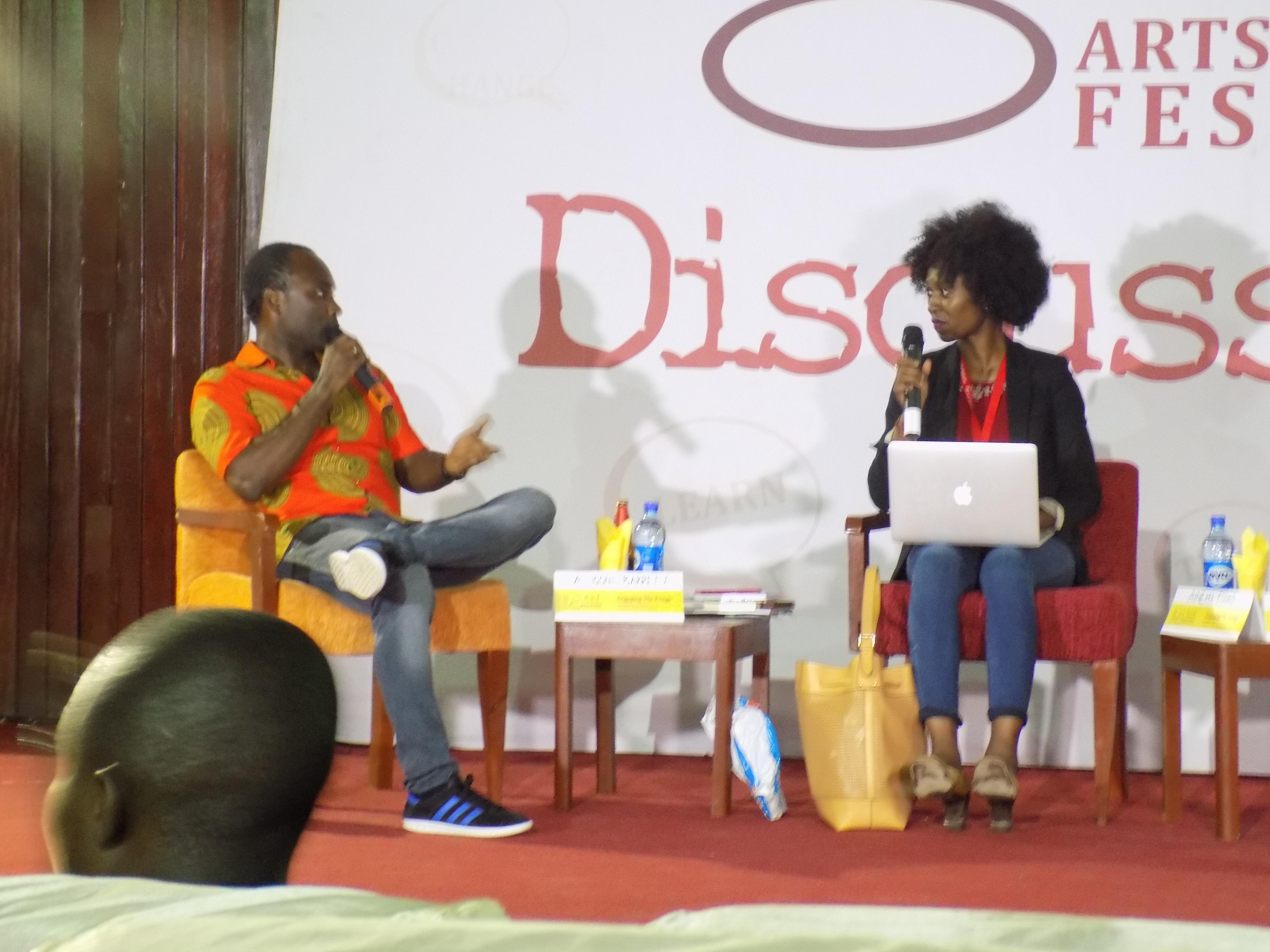 This is one of the highly anticipated book chats of the festival. On the one hand we have Igoni Barrett the author of the tastefully written Blackass and on the other we have Nnedi Okorafor one of Africa’s answers to fantasy, African-based science fiction and magical realism. The moderator for the book chat is Ainehi Edoro editor of Brittle Paper.
“Fiction is fantasy that’s why it’s fiction.”
“Realism depends on a worldview. Fantasy depends on one’s world view.”
These are the statements that color the chat as both Igoni and Nnedi tackle questions about the place fantasy and fiction occupy in African literature.
Nnedi talks about the boundless nature of fantasy writing and how, multiple times, her writing is influenced by the things she observes about her — a habit of hers which she jokingly apologizes for. She then regales with a tale from her childhood to further buttress the point of how her surroundings inspire her stories. It is a tale about how her and her sisters had observed pink ducklings on their way to her home state.
“Because it wasn’t important to the story” is Igoni’s response when asked by the moderator why he had chosen to keep silent on the reason why and how his main character in his latest novel wakes up a completely different race. He stresses how he did not wish to distract the reader with meaningless information and take their attention away from the story he was telling. In his words “the book would have ended in the first paragraph if I’d explained that.”
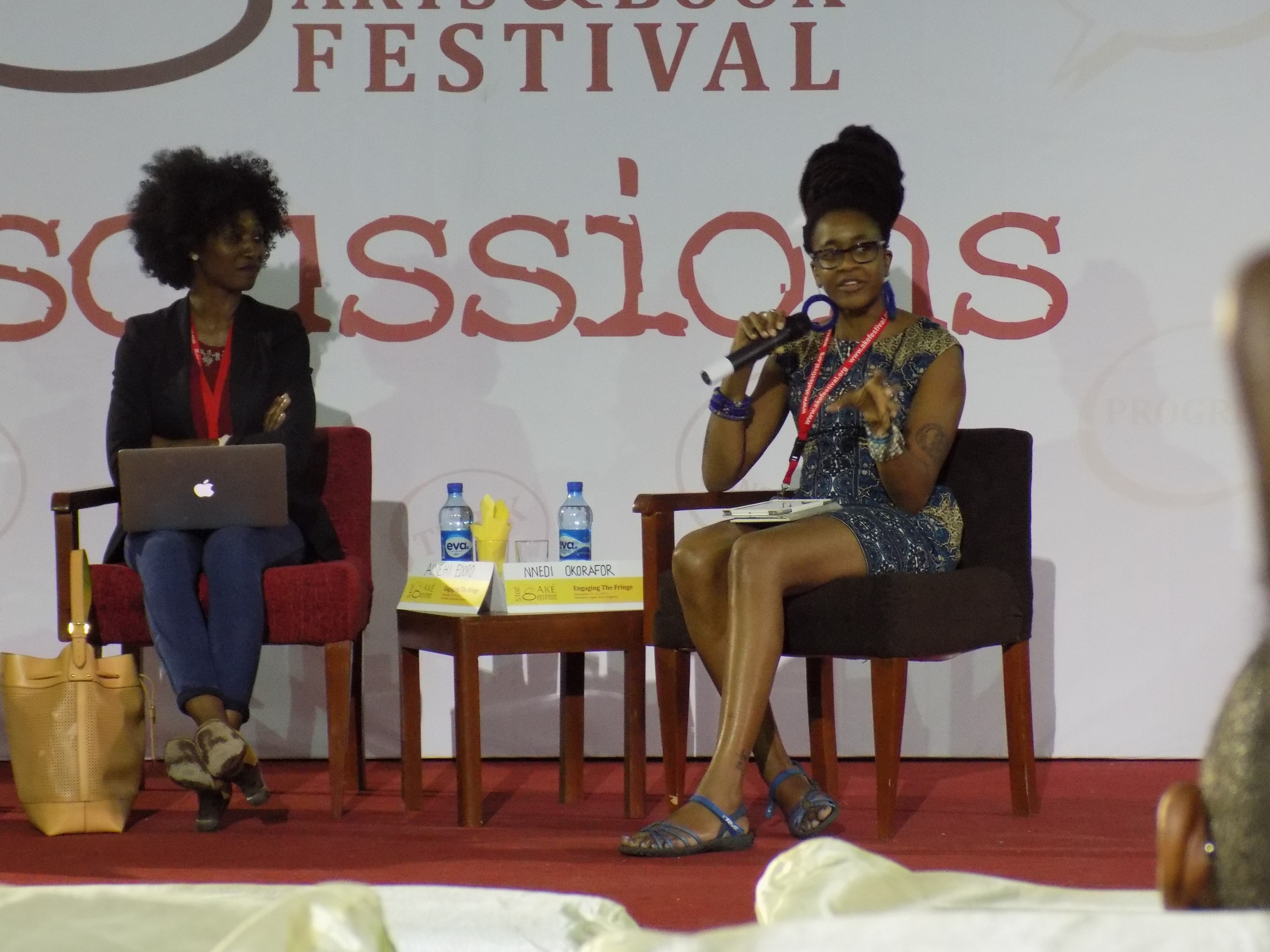 On talking about the similarities shared by both novels one being based in Lagos state, Nnedi and Igoni seemed to arrive at one conclusion. Lagos is prime material for works of fiction, science-fiction and fantasy. Referring to an article he read a while back, Igoni quotes the writer who said “it feels like Lagos is a city that had been built by aliens and abandoned” to which the audience laughs.
Nnedi talks about Lagos and the chaotic nature of it. She tells us about an incident which put her off the city for years. “You cannot see Lagos without seeing the chaos,” she says.
Ainehi then mentions their novels and their relations to digital technology. A lot of Igoni’s plot moves through social media. His character seems to have two personalities in the book. His real self and his social media portrayal of himself. Igoni responds by saying “social media allows people do what fiction allows the writer do. It allows you wear multiple faces.”
Nnedi then talks about how rhythm is used to inspire people and can therefore be considered a superpower. She cites Drake, the American rapper, as an example.
“Drake says complete nonsense in his song and makes sense in it. That’s a superpower.”
It is now time for questions and a lot of them come in. One of which is directed at Igoni. He is asked why his main character in his novel is aged 33 to which he responds “Jesus died at 33. I like 33 the lager and I was 33 at the time I wrote the story.”
The Book Chat comes to a close.