The Nigerian Prize For Literature 2016: The Judges’ Report

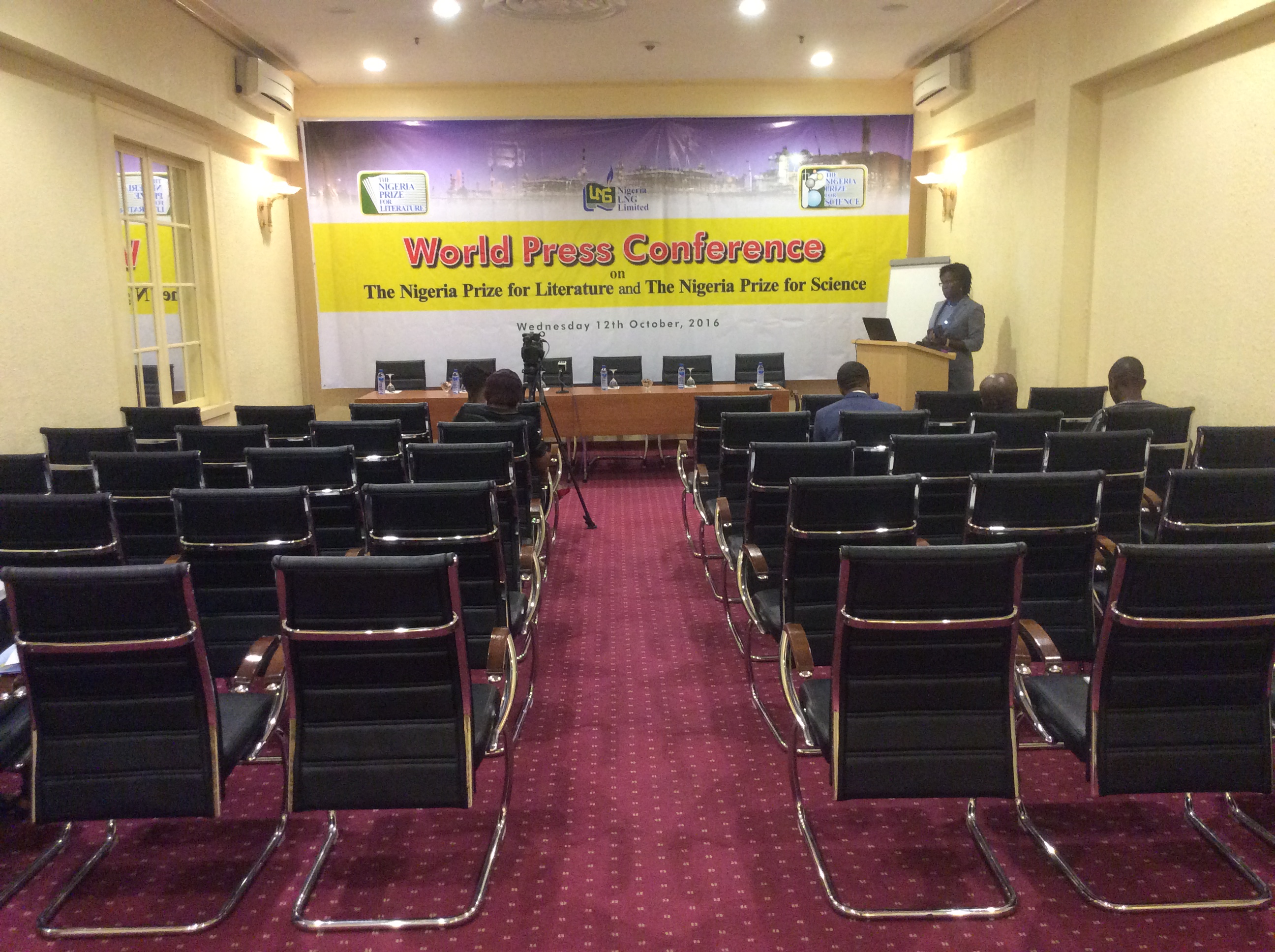
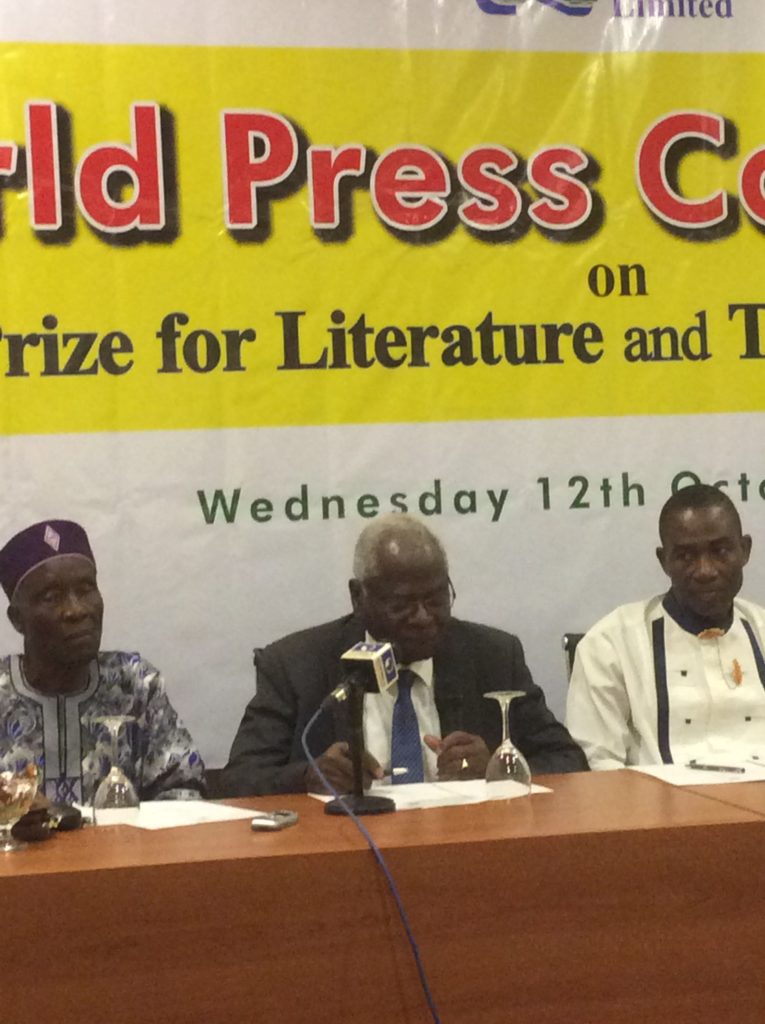
Editor’s note: Today, at Sheraton Hotel, Ikẹjà, Lagos, the winner of the 2016 Nigeria Prize for Literature was announced as Abubakar Adam Ibrahim for his novel Season of Crimson Blossoms (Parressia, 2015) and for the “competent manner in which Ibrahim demonstrated the execution of his work.” Here is the full speech given by Emeritus Professor Ayọ̀ Bánjọ, the Chairman of the Advisory Board for the Prize, on the justification for the prize, and other commentary on the whole judging process.

_____________
image

__________

GENERAL COMMENTS ABOUT THE 2016 COMPETITION BY PROFESSOR AYỌ BÁNJỌ

The Nigeria Prize for Literature is an annual competition which awards annual prizes to winning entries in the literary genres of Prose Fiction, Drama, Poetry and Children’s Literature on a rotational basis.

This year, the genre in focus is Prose Fiction. The following advertised rules were applied during the process of short listing and selecting the winning entry.  

Eligibility: The competition is open to all Nigerians anywhere in the world. This does not mean that writing about other peoples and cultures in a foreign setting is acceptable.

Relevance should be interpreted as consistency with the goals and aspirations of the Nigerian nation and its peoples – specifically, respect for their traditions and their identity as Africans.

Publishing: The prize is meant to encourage local publishing and book distribution, among other goals. Books published outside the country are eligible for entry. Only properly published texts are acceptable. However, efficient editing and good presentation of text are considered essential parts of publishing and are taken into account during the process of evaluation. The quality of the language is important, and errors of style and grammar are  considered major blemishes; these errors may not pass as typographical errors.

Genre: for this year’s competition, a basic distinction is drawn between fiction – that is imaginative prose which may incorporate factual materials and non-fiction like history, biography and sociological tracts which sometimes feature in the submissions for the competition.

This year’s completion has attracted a strong field with such high quality that even without this current shortlist of 3 books there would have still been a winner.
image

COMMENTS ON SHORTLIST OF THREE BOOKS

All the three shortlisted texts cover a wide range of urgent societal and cultural issues such as the status of women in a patriarchal society, the education of youths, the search for identity, the danger of youth unemployment, corruption, insurgency, religious hypocrisy, migration, broken homes and single parenthood and attendant impact on women and children who are usually at the receiving end of most of these problems.

  • Chika Unigwe’s Night Dancer, tells the familiar story of the continuing marginalization of women in Igbo society. The author shows a strong awareness of this context by  the flavoring of the narrative with linguistic and cultural insertions. The novel tells the story of Mma, a young woman’s anguished search for her roots from the opening of the novel when she feels that she has been denied by her mother, until she gradually discovers that her mother had been deeply hurt by both her matrimonial and maiden families. In the course of Mma’s adventures in excavating her identity and her mother’s past, she is predictably confronted by the same cultural inhibitions that her mother had rebelled against. Mma’s own denunciation of those traditions and her belated adulation of a mother she had despised at the beginning of the novel is a slow and painful process of discovering the truth of her family background, and a radical change in her perception and understanding of this background. All this is aimed at validating Unigwe’s passionate call for the extension of the frontiers of women’s space in society.
  • Elnathan John’s Born on a Tuesday is a book about contemporary Northern Nigerian Society as seen through the eyes of a young man. The narrative is told from within a deviant community seen through the first person consciousness of street boys, popularly described as al-majiri. Virtually abandoned by parents and community the  young boy, who tells the story in his own words, finds his survival through a brotherhood of other street boys. Their small outcast community is exploited by politicians and the brutally victimized as scapegoats by law enforcement agencies.  They inevitably patronized and taken over by leaders of religious sects and become a source of recruitment terrorist groups. One of the strong points of the novel is its insight into the social mechanisms that lead to national crisis and terrorism or the social processes that give rise to religious fundamentalism and political hypocrisy, corruption and exploitation.
  • Abubakar Adam Ibrahim’s Season of Crimson Blossoms is a very skillful and sympathetic narrative handling of a most psychologically and emotionally painful between an aging widow, who seeks release from her culturally imposed sexual repression, and a young outcast leader of a group of “weed” – i.e. hard drug – dealers who are ready thugs for politicians. In the background as immediately cause of the widow’s troubles, is the violent history of ethnic hatred and conflicts in Jos, placed within the larger context of contemporary Nigerian history with its complex and sometimes violent intertwining of politics, religion and culture. The novel moves from its evocative and passionate first sentence through a web of anxious moments to a tragic and painful conclusion with hardly a moment of respite.  All through its projects through is main action, the implications of certain key social issues for younger audience – key issues such as early marriage, drug abuse and impact of relationships on human action. It is a novel whose narrow domestic action has wider universal relevance beyond its relevance for its immediate setting.

On behalf of the advisory board of the Nigeria Prize for Literature and of the judges and international consultant, I have the pleasure of announcing as the winner of this year’s entry, Season of Crimson Blossoms by Abubakar Adam Ibrahim.

________

The award ceremony will take place early next year.
Three Writers Shortlisted for the Nigerian Literature prize

elnathanOut of the total of 173 entries received for the NLNG-sponsored Nigerian Literature Prize 2016, a shortlist of three has been released. This announcement follows an initial shortlist of eleven which was released in July. The three shortlisted entries, in alphabetic order, are:

  • Born on a Tuesday (Elnathan John)
  • Night Dancer (Chika Unigwe), and
  • Season of Crimson Blossoms (Abubakar Adam Ibrahim).

Born on a Tuesday, published by Parresia Books, is a story about contemporary northern Nigeria which has over the years experienced religious violence and carnage as seen through the eyes of a young man. Born on a Tuesday is Elnathan John’s first novel. John is a writer, lawyer and a Civitella Ranieri Fellow. He has also been shortlisted twice by the Caine Prize for African Writing.

unigweChika Unigwe’s Night Dancer, published by Jonathan Cape, focusses on the young protagonist’s search for identity and her consequent reappraisal of her mother’s values. This is Chika Unigwe’s second time on the fiction shortlist. She won in 2012 with her novel On Black Sisters’ Street. Unigwe sits on the Board of Trustees of pan-African literary initiative Writivism, and was recently appointed a judge for the Man Booker Prize, 2017.

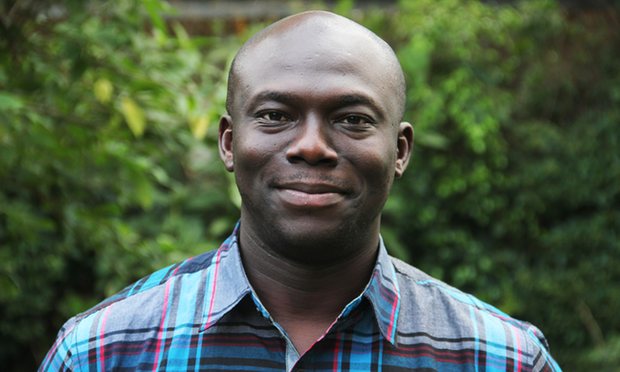
Season of Crimson Blossoms is a novel set in conservative northern Nigeria. It focusses on unusual love affairs between characters, as well as ambiguities in religion and politics. Published by Cassava Republic Press, Season of Crimson Blossoms is Ibrahim’s debut novel. Ibrahim has won the BBC African Performance Prize and the Amatu Braide Prize for Prose. He is a Gabriel Garcia Marquez Fellow (2013) and a Civitella Ranieri Fellow (2015).


More from the press release:Abubakar-Adam-Ibrahim

“The Nigeria Prize for Literature has since 2004 rewarded eminent writers such as Gabriel Okara for his volume of poetry, The Dreamer, His Vision (co-winner 2005 – poetry); Professor Ezenwa Ohaeto, for his volume of poetry, Chants of a Minstrel (co-winner 2005 poetry); Ahmed Yerima (2006 – drama) for his book Hard Ground;  Mabel Segun (co-winner 2007 – children’s literature) for her collection of short plays Reader’s Theatre; Akachi Adimora-Ezeigbo (co-winner 2007 – children’s literature) with her book, My Cousin Sammy; Kaine Agary (2008 – prose) for her novel Yellow Yellow; Esiaba Irobi (2010 – drama) who won the prize posthumously with his book Cemetery Road; Adeleke Adeyemi (2011 – children’s literature) with his book The Missing Clock and Chika Unigwe (2012 – prose), with her novel, On Black Sisters’ Street, Tade Ipadeola (2013 – poetry) with his collection of poems, The Sahara Testaments and Sam Ukala (2014-drama) with his play, Iredi War.”

The eventual winner of the competition will be announced at a World Press Conference in October, 2016.

Congrats to the shortlisted writers.

________

Photo Credit: Bookslive.co.za, GuardianUK, PulseNG

NLNG Releases a Shortlist of 11 for 2016

According to the Advisory Board for The Nigeria Prize for Literature, led by Emeritus Professor Ayo Banjo, 11 Nigerian authors have been shortlisted for this year’s Literature Prize for Prose Fiction, worth $100,000. This initial shortlist was drawn from 173 books.

Here are the authors (resident in the country and outside) and their work in the shortlist:

  • Chika Unigwe (winner of the prize in 2012): Night Dancer (2014).
  • Ogochukwu Promise (author of over fifteen novels): Sorrow’s Joy
  • Yejide Kilanko (a writer of poetry and fiction): Daughters Who Walk This Path.
  • Ifeoma Okoye (a writer and author of children’s literature): The Fourth World
  • Sefi Atta (author of Everything Good Will Come): A Bit of Difference
  • Abubakar Adam Ibrahim (writer and journalist): Season of Crimson Blossoms
  • Ifeoluwa Adeniyi (radio broadcaster): On the Bank of the River
  • Elnathan John (lawyer and writer): Born On A Tuesday
  • Aramide Segun (winner of an ANA Prose Prize): Eniitan Daughter of Destiny
  • Maryam Awaisu (radio presenter): Burning Bright
  • Mansim Chumah Okafor (author of two previous books of fiction): The Parable of the Lost Shepherds

The list was presented by the chairman, panel of judges for this year’s prize, Prof. Dan Izevbaye, well-respected literary critic and a professor of English Language at Bowen University, Iwo. Other members of the panel of judges include Professor Asabe Usman Kabir, Professor of Oral and African Literatures at Usmanu Danfodiyo University Sokoto and Professor Isidore Diala, a professor of African Literature at Imo State University, Owerri and first winner of The Nigeria Prize for Literary Criticism.

“The Nigeria Prize for Literature has, since 2004, rewarded eminent writers such as Gabriel Okara (co-winner, 2004, poetry), Professor Ezenwa Ohaeto (co-winner, 2004, poetry) for The Dreamer, His Vision; Ahmed Yerima (2005, drama) for his play, Hard Ground; Mabel Segun (co-winner, 2007, children’s literature) for her collection of short plays Reader’s Theatre; Professor Akachi Adimora-Ezeigbo (co-winner, 2007, children’s literature) for her book, My Cousin Sammy; Kaine Agary (2008, prose) for her book Yellow Yellow; Esiaba Irobi (2010, drama) who clinched the prize posthumously with his book Cemetery Road; Adeleke Adeyemi (2011, children’s literature) with his book The Missing Clock; Chika Unigwe (2012, prose), with her novel, On Black Sisters Street; Tade Ipadeola (2013, poetry) with his collection of poems, The Sahara Testaments and Professor Sam Ukala (2014, drama) with his play, Iredi War.”

EVENT: Writing a New Nigeria

Representations of Nigeria in contemporary fiction and poetry

  • Time: Saturday 14 November 2015, 4pm – 5.30pm
  • Venue: Freedom Park, Museum Building
  • Admission: Free

Panelists

  • Elnathan John, author of Born on a Tuesday
  • Abubakar Adam Ibrahim, author of Season of Crimson Blossoms and The Whispering Trees
  • Jumoke Verissimo, poet and author of I Am Memory and The Birth of Illusion
  • Dami Ajayi, poet and author of Clinical Blues
  • Toni Kan, author of Nights of the Creaking Bed and the forthcoming Carnivorous City
  • Kólá Túbòsún, linguist and writer, author of Attempted Speech & Other Fatherhood Poems 

Moderator

  • Wana Udobang, journalist, writer and poet

wanaA selection of celebrated contemporary writers and poets discuss representations of Nigeria in fiction and poetry. The panelists will consider how writers are reflecting the issues and concerns of Nigeria today and their role in holding politicians and society to account. They will debate how Nigerians navigate by language, slipping in and out of character, dialect and language according to the circumstances, and the importance of writing and publishing in languages other than English.

The significance of identity and place will be discussed, with two authors bringing a perspective from Northern Nigeria and another who says he couldn’t live – or write –anywhere but Lagos. There will be an opportunity to hear authors read from their works – and for audience discussion.

‘Writing a New Nigeria’ is a 2-part BBC Radio 4 documentary giving a portrait of Nigeria, seen through the eyes of a new generation of writers and poets, presented by Wana Udobang and including contributions from our panelists. Produced in partnership with the British Council as part of UK/Nigeria 2015–16, it will be available on www.bbc.co.uk/radio4 from 28th November 2015.

___

Photo from Lovenwords.com

Fledgling Whispers of a Story – A Review

This week, I discuss my thoughts on Abubakar Adam Ibrahim’s Whispering Trees, the fourth story on the shortlist of the 2013 Caine Prize for African Writing. Many other bloggers are participating in what Aaron Bady spearheaded as a “Blog Carnival”: thoughts and opinions on each of the shortlisted stories. Find the rest of the reviews on twitter via the hashtag #CainePrize.

_____________

Of all the stories I have read since this Caine Prize carnival began, Whispering Trees is one I have read twice fully, from beginning to end. It is a story about Salim, a young man who became disabled, and lost his eyesight, in a car accident and along with it his dignity and prospects, and who eventually finds a different kind of vision staring at “souls” of people, and seeing visions.

I read the story twice not because I particularly enjoyed and understood it all the first time, but because I didn’t fully grasp it and wanted to be sure about the intentions of the author and the character. Many of my thoughts from the first reading were confirmed by a second reading: it is a story about coping with disability, but a little also about faith, and psychic and supernatural outer body experiences, and love. The author doesn’t succeed in developing each of these areas, but we see that it was his intention that we see them. Away from the second reading, I realized that there were no hidden meanings other than the fact of the hero’s disabilities and eventual psychic evolution. It tried very hard to be didactic, but failed at that too. The last line, italicized for effect, read “I realize that happiness lies, not in getting what you want, but in wanting what you have.” I certainly had not come to that conclusion merely by reading the story, and including it as the last line did not drive it in either.

I could be uncharitable and say that Whispering Trees could have borrowed a leaf from the handling of the crises of faith and disability from reading Tope Folarin’s Miracle, or that it could have portrayed the homeliness of young hapless men under a tree deliberately named by reading Elnathan John’s Bayan LayiHeck, it could have done better with romance under pressure by reading Pede Hollist’s Foreign Aid, but that would be assuming that the author wrote the story with the Caine Prize in mind, only after reading these other stories. It is most certainly not the case, so I will only say that whatever moved the author to write this story could most certainly have been better served by a shorter and smarter handling of the plot. There are many issues that can be raised from this story about of the helplessness of disabled people in Nigeria, particularly those wounded as a result of man-made disasters like car accidents. There are also angles of societal neglect and the non-existence of public facilities to make the life of disabled folks much easier. These however are from my own mining of the story’s schizzy fields. The author doesn’t consciously lead me to them.

The part of the story detailing the problems of disability were affecting, but seemed artificial and forced, helped by the tortured use of some figures of speech. The most uncharitable word for these instances of use is “amateurish”, providing a major obstacle to enjoying the story. Here are a few:

Personifications:

Sometimes it worked beautifully: “I remained there until my anger forced tears out of my damaged eyes”, but most times it didn’t: “Silence answered me.”, “Insomnia would claim me every night”, “My mind climbed up to the gates of heaven once more, seeking admittance”, “She would talk and weep until blessed sleep stole her away”, “I heard the trees screaming in agony as they were cut down”, and “But my mind was not very happy about this.” Nobody should ever write like that.

Similes:

There were some passable lines: “Her tears, like rain, fell on the wild fire of anger raging in my heart and extinguished it.” Others were not: “I discovered a whole new world of numbers and was as excited as Columbus must have been when he stumbled upon America” and “She pranced in front of the house calling for Saratu just like Achilles before the walls of Troy.”

Hyperbole:

In describing a rash and angry response of an otherwise reasonable citizen, the following was written: “Faulata fetched some petrol and poured it on the house. She was about to set it ablaze when they seized her. She struggled fiercely and wept because they would not let her burn down the house. Later, Saratu’s parents came to apologise. Neither Faulata nor I said a word to them. Then the elders came and delivered a long, boring lecture about forgiveness and reconciliation and, to get rid of them, I said it was over. So Saratu kept her distance.” The attempted arson described here could as well be the most hurried description I’ve ever read. I am trying to see how Faulata could have poured petrol on the house. The event to which Faulata was responding by trying to set a fire ablaze didn’t also seem to warrant this kind of response either, so I chalked it down as a failed hyperbole regarding plot.

In another part of the story, a character makes an attempt at quoting Oscar Wilde. The original poem, from The Ballad of Reading Gaol, reads:

Yet each man kills the thing he loves
By each let this be heard.
Some do it with a bitter look,
Some with a flattering word.
The coward does it with a kiss,
The brave man with a sword!

In Ibrahim’s story, there was the following:

Hamza and I talked some more until he rose and said, “I must leave now. Now that you are here, I can leave. But see how beautiful this place is, see how pure and full of life it is. Yet, someday, the living will come and destroy everything.” He started off, “Man destroys that which he claims to love.”

In another instance, the author tries to write in Nigerian Pidgin English, yet gave us the following:

The oga’s voice was raucous. “How much you find for ’im body?”

The first man said, “Four thousand naira, sir.”

The oga grumbled, “These ones se’f, them no carry plenty money. Oya, put ‘im body with the others but hide the money before people come.”

Yes, that was ‘im body, se’f, and other unconvincing attempts at Nigerian Pidgin. In pidgin, there would be no apostrophe in any of those words, and “body” would surely have been written as bodi.

I realize then why I found the story hard to enjoy as fiction, or anything other than the writer’s attempt to be profound and didactic with magical realism: it tried too hard, with little skill, and failed (at least as a worthy representative of this year’s shortlist of the best of African fiction. As some have wondered aloud: “thank goodness we won’t have to read the other ninety non-shortlisted pieces!”).

Now, so that this does not end up as a completely disappointed rant against something that Mr. Ibrahim surely put a lot of effort into writing, let me admit that I found the first sentence quite charming and inviting: “It’s strange how things are on the other side of death.” Had the promise of that initial sentence been followed by equally strong and well sustained passages, and had the story been a lot shorter, or at least the characters better developed, we might have had a different offering.

The other paragraph that I found absolutely delightful is as follows:

“The rains came and went. The grasses grew lush green and faded into a pale, hungry brown. I could hear the dry, cold harmattan winds blowing through the starved savannah; I could feel it on my desiccated skin. The weather grew unpleasantly chilly. Everything was cold, including my heart. Faulata was gone”

Unfortunately, gems like this were far in-between, and did not tie the story together as a tale of resurrection, redemption, and a soulful realization of an inner strength and power as the author clearly intended the story to be.

___________

Also published on the NT LitMag