I took my fourth, perhaps fifth, trip to the Lekki Conservation Centre, last weekend. It is located a stone’s throw from Chevron and the second toll gate at around the seventh roundabout on the Lekki-Epe Expressway. The Centre is owned by the Nigerian Conservation Foundation, a charitable foundation sponsored by a number of local and international organisations to preserve forests through the creation and maintenance of conservation parks around the country. Hidden slightly from view, but ostensibly housing a treasure trove of plant and animal specimen and data around a stretch of relaxing eco-park with trees and animal playgrounds, the LCC is a treasure that usually never fails to delight, and surprise, all visiting guests. Created in 1990, the Centre, according to Wikipedia, was established to serve as a biodiversity conservation icon and environment education centre. It stands on 78 hectares of land area consisting of swamp and savannah habitats of the African landscape, and has played host to over 2 million guests from its inception – an impressive feat. According to their website, the Centre was established to serve as a conservation icon of Nigeria’s southwest coastal mangrove resources and an information centre for environmental education and public awareness.
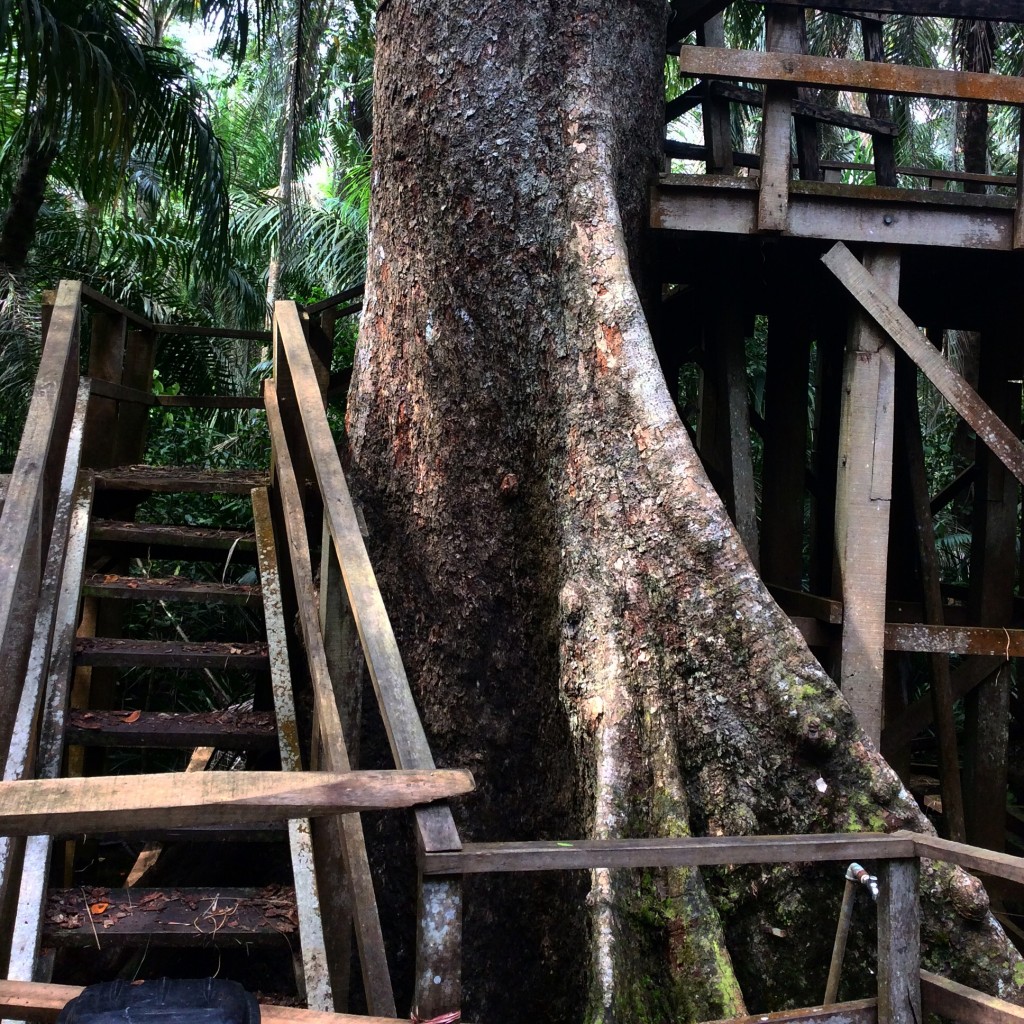
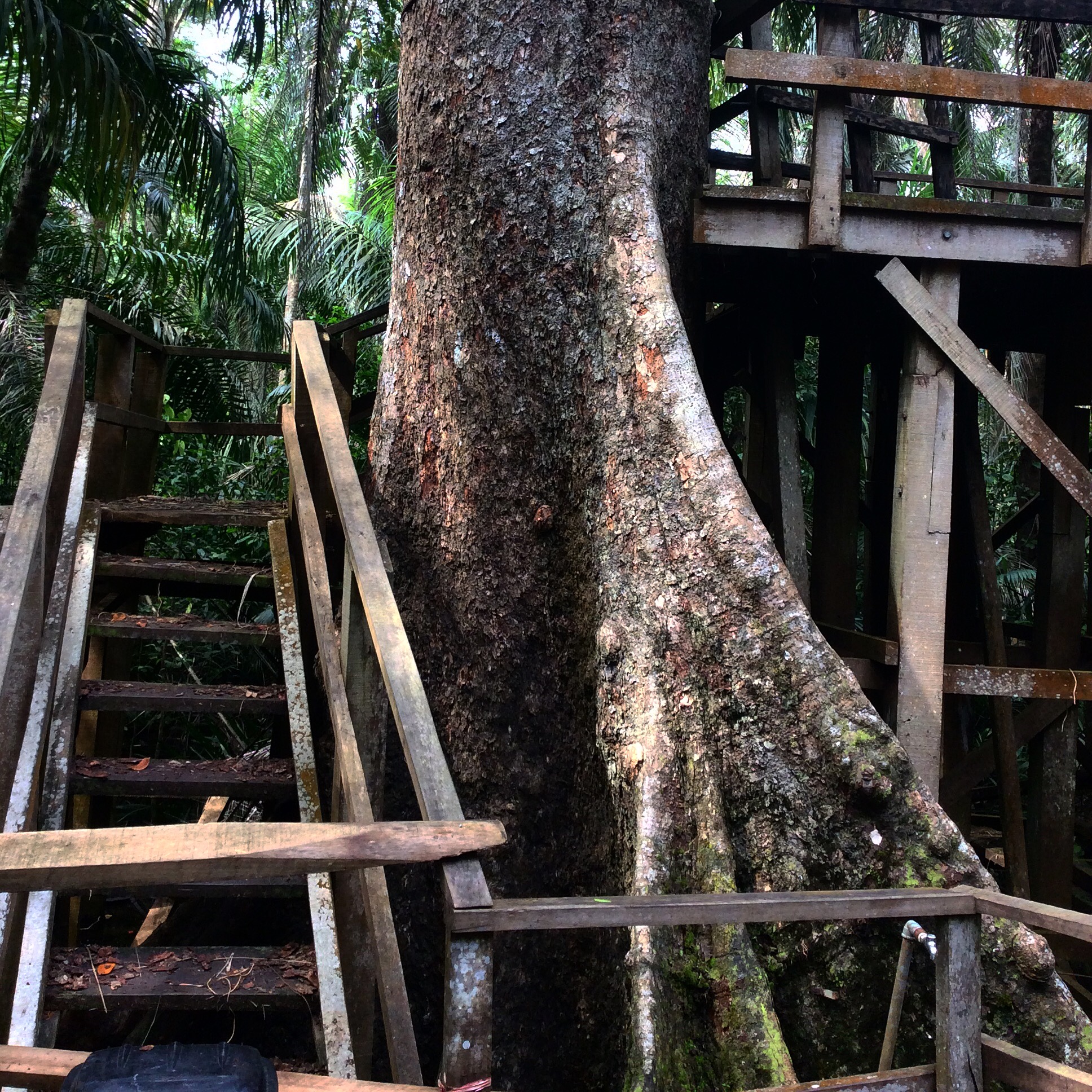
The tree house is now closed to visitors. (Photo taken on October 24, 2015).
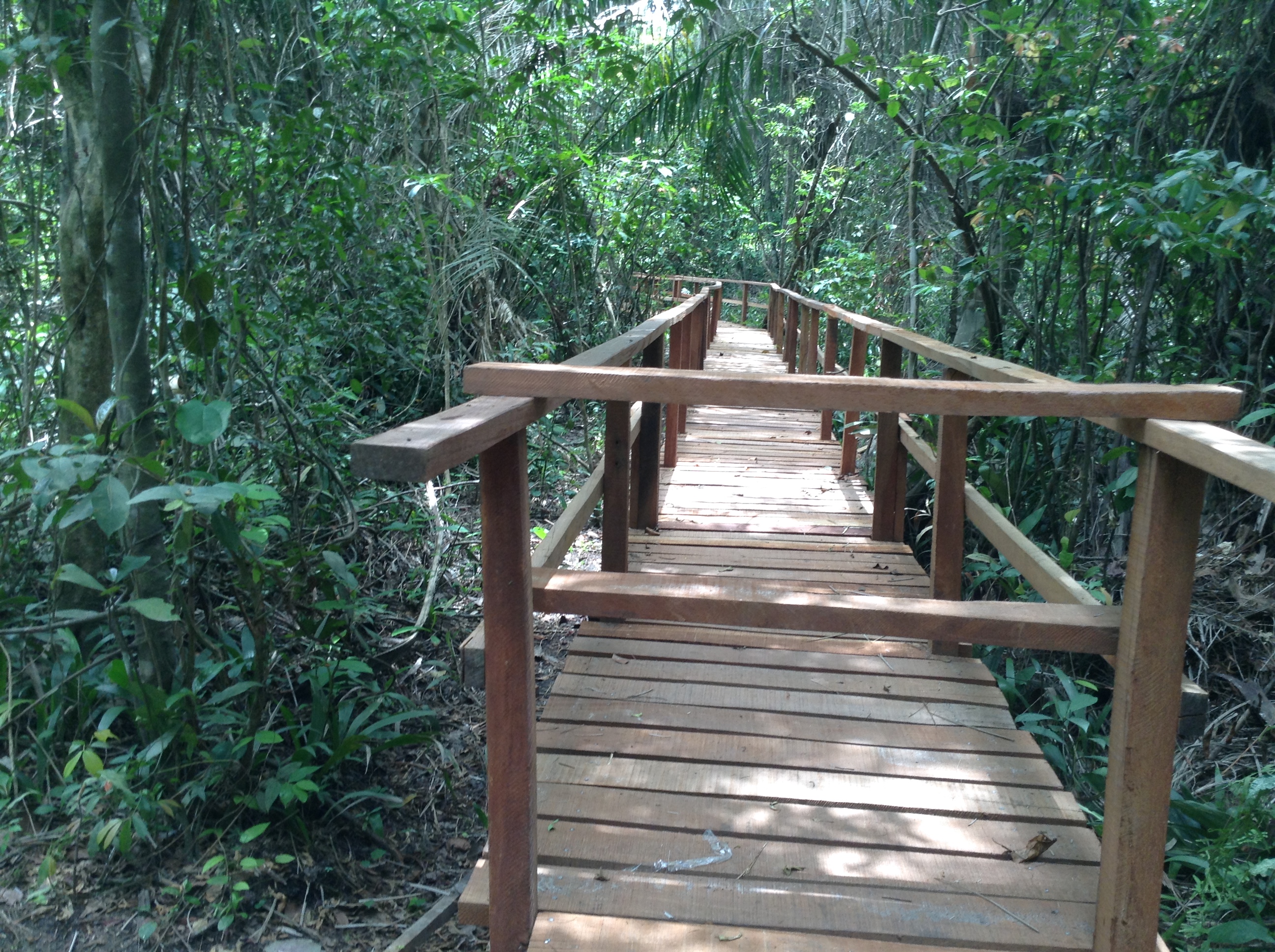
What occurred to me, however, on this trip, was how worse the place seemed to have become after each successive visit. The first visit, just about two years ago, had delighted with fresh greenery, and a nature walk that began at the entrance of the Centre and spiralled through a serene path of woods as if leading towards a magical place. From behind the ticketing office, the path went all the way, for many minutes, on nicely constructed elevated wooden walkways that kept the visitor up from the swampy reality underneath, through trees of a typical African mangrove rainforest to a crocodile and bird observatory, through a few other stops where lovers or friends can sit and chat. It eventually reaches a mid-way point from where one can either keep going forward into a huge playground arena constructed with the help of the state government, or turn right to follow the path back to the original starting point, like an arc, bypassing a large treehouse and other interesting sights along the way. The nature walk path is about 1.8km long, and usually takes about 45 minutes to an hour to complete.
Taken on April 4, 2015. The path was, at the time, still open until one gets here and can go no further.
The step that leads up into the tree house itself. It offered a small comfort for daring guests to sit and observe the park from about 200 metres above the ground. (Photo taken in September 2014).
Not only has it become impossible, over successive visits, to take the complete nature walk anymore, what we found on the last visit was that only half of the walk path is now open to visitors for reasons of safety. I do remember complaining to a friend, during the first visit, that the breakdown of many of the wooden planks of the walking path, without quick replacement – a sign of terrible management -would lead to an eventual state of disrepair. Over time, many more of these small planks have fallen off, rendering the path even less safe for visitors willing to take the walks by themselves, and later even with tour guides. On this current visit, we entered the trail through the exit route, and walked in a counter-clockwise motion towards the centre point.
Some times, the visitor is lucky, as we were on this visit, a friend and me. We arrived early enough, on a Saturday nevertheless, before many people had arrived at the park. Even the ticketing attendant hadn’t arrived yet. Another worker on the premises took our money (N1,500 each) and ushered us to the starting point. Being “lucky” meant having much of the walkways to oneself, except for the little monkeys that found it fit to sit confidently on the wooden handrails, indifferent to any threat from human visitors not yet familiar with the presence simians at such close proximity. In a couple of minutes, we arrived at the tree house now also closed down to visitors. At least twice in my past visits, I had climbed to the top of this tree, sat in the little house built there, looking down at the park with an amazement at the grandeur of the concept, and how much value this brought to a city too consumed by a busy, noisy, and polluted metropolitan experience. One was at least a year ago, and things are no longer what they used to be. As we sadly noticed, also closed was the path that led back to the crocodile observatory where visitors could sit in silence and pick out the few pairs of eyeballs that regularly peep out of the swamps.
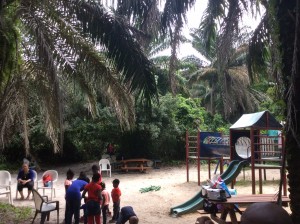
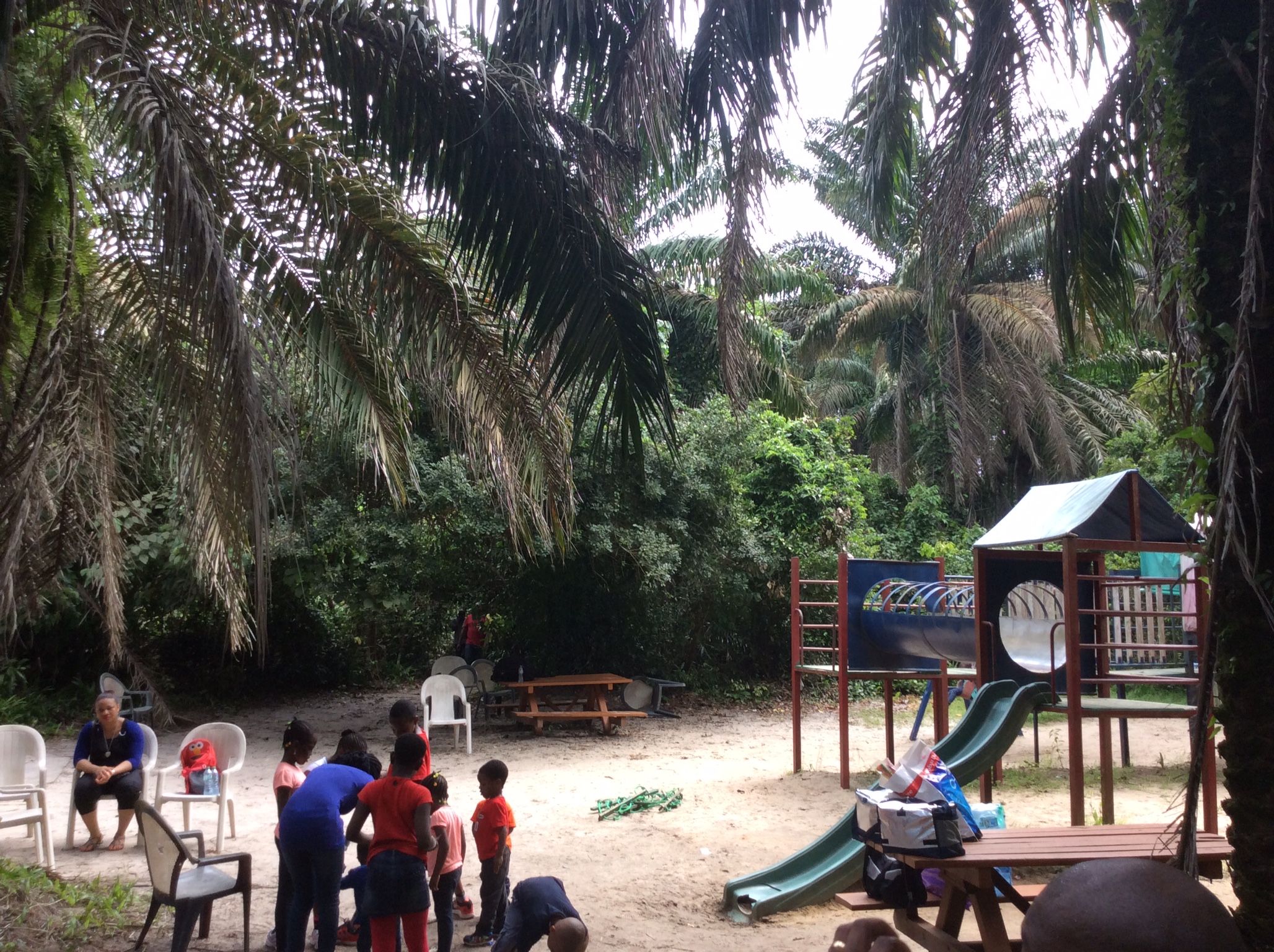
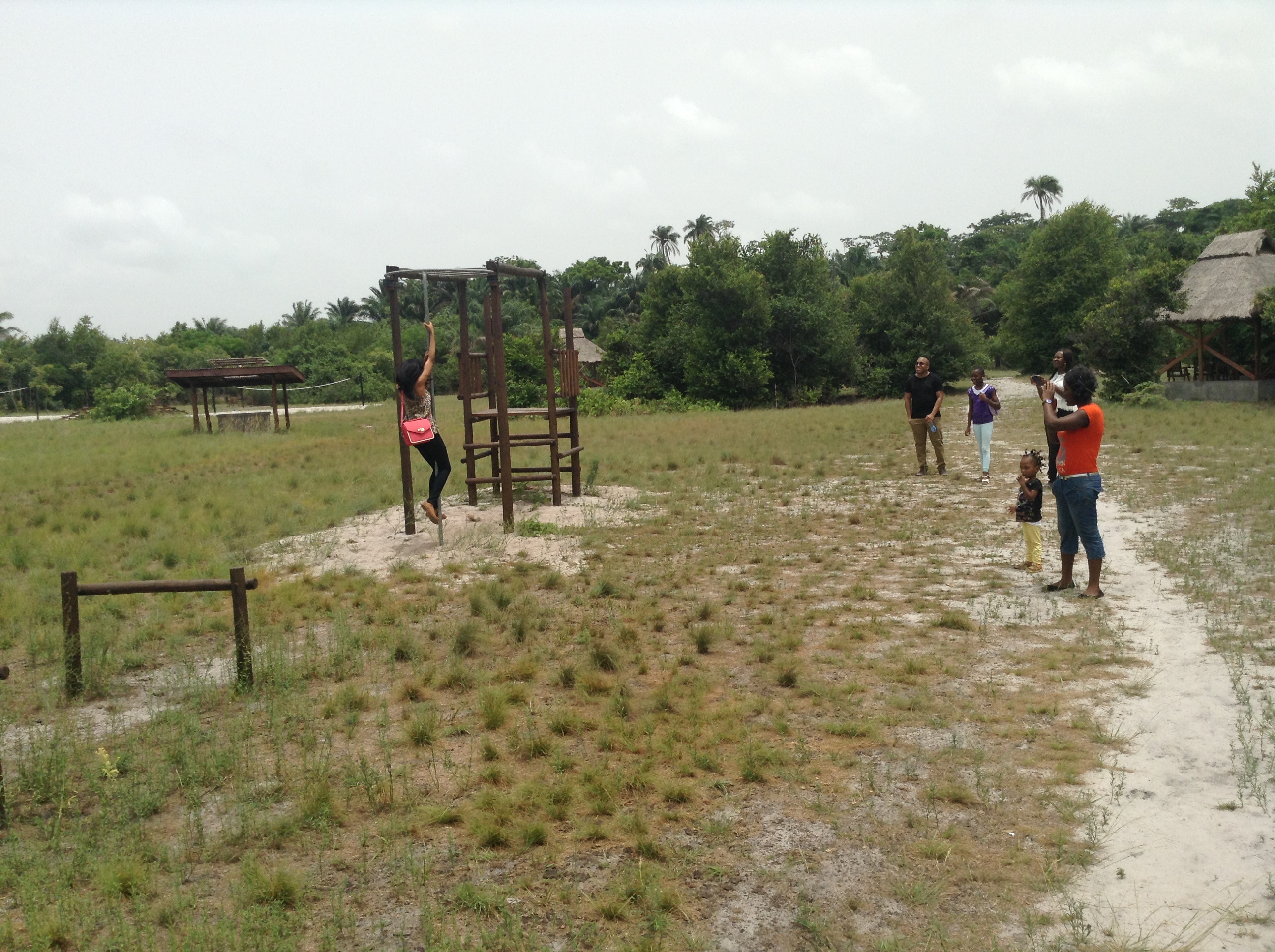
The old children playground, with swings and plastic chairs.
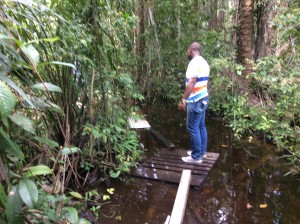
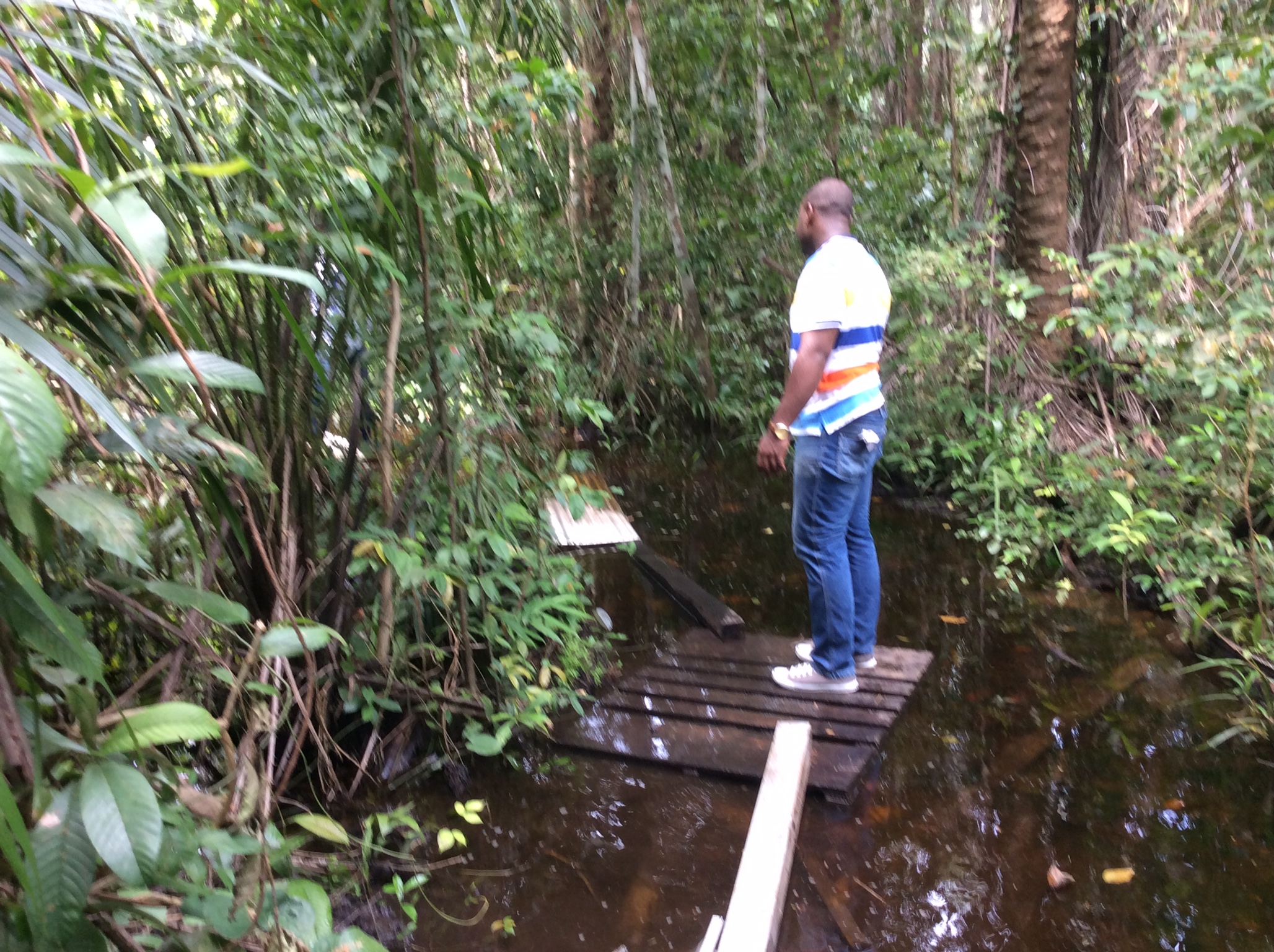
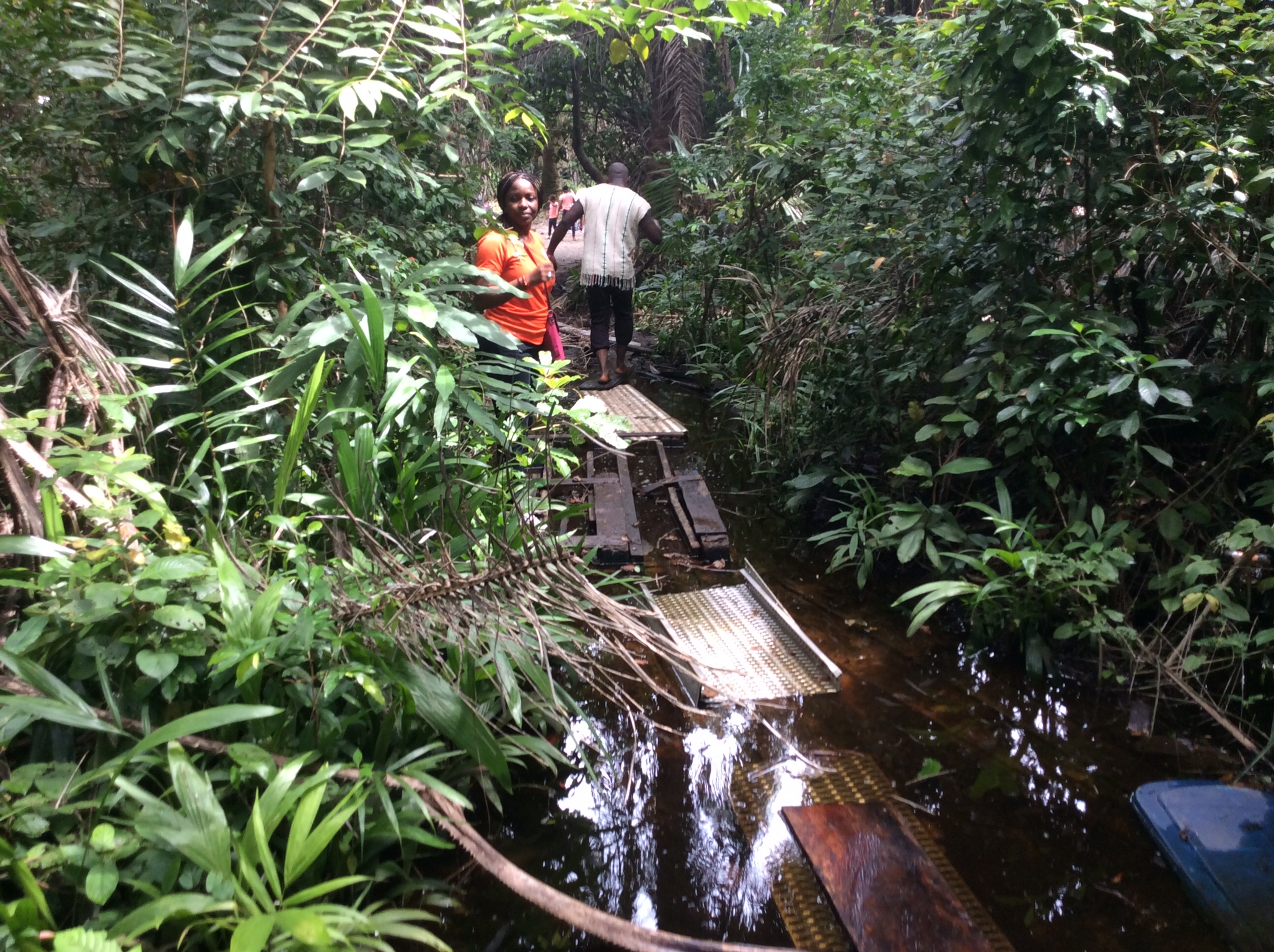
A visitor, today, stranded on a plank, hoping to make his way to the new “Family Park”.
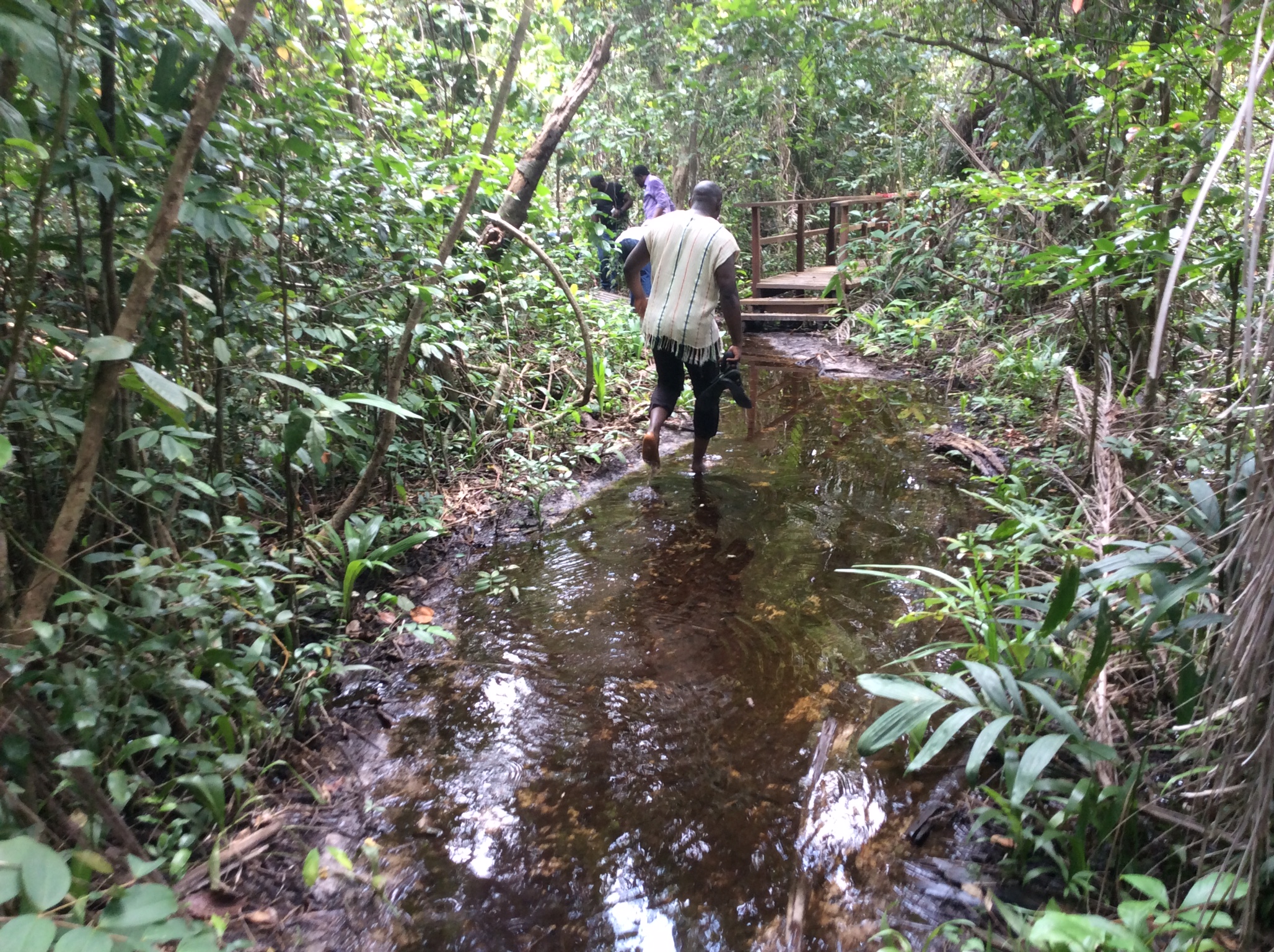
From the tree house, we approached the old playground, located at a centre of the park, where a few families gathered as if on a picnic. Around them were swings made for children all of which bore old and decrepit looks. A bigger arena, called the “Family Park” lay ahead, newly constructed and supported, reportedly by the last Lagos State government of Babatunde Raji Fashola. The governor had, earlier in the year, visited this place to inspect the Canopy Walkway which was reputed to be the longest on the continent, and to offer the support of the government for these conservation and recreational aspirations. That, for many here on this day, was an incentive for visiting. But now the newly constructed Family Park space was beyond reach because flooding from the rain of preceding days had rendered the path to it terribly damaged. You could only go at your own personal risk, we realised, but the visiting parents were not willing to take little children into dirty puddles that may host any kind of dangerous amphibians, so they remained behind. We kept on, wading through the dark swamp, until the green bush opened up finally into this open savannah dotted with cabana of different sizes on the one hand and obstacle courses all around the field on another.
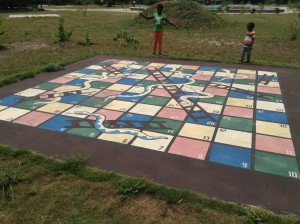
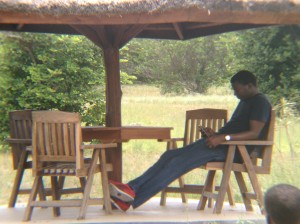
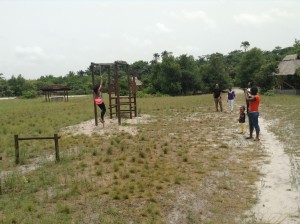
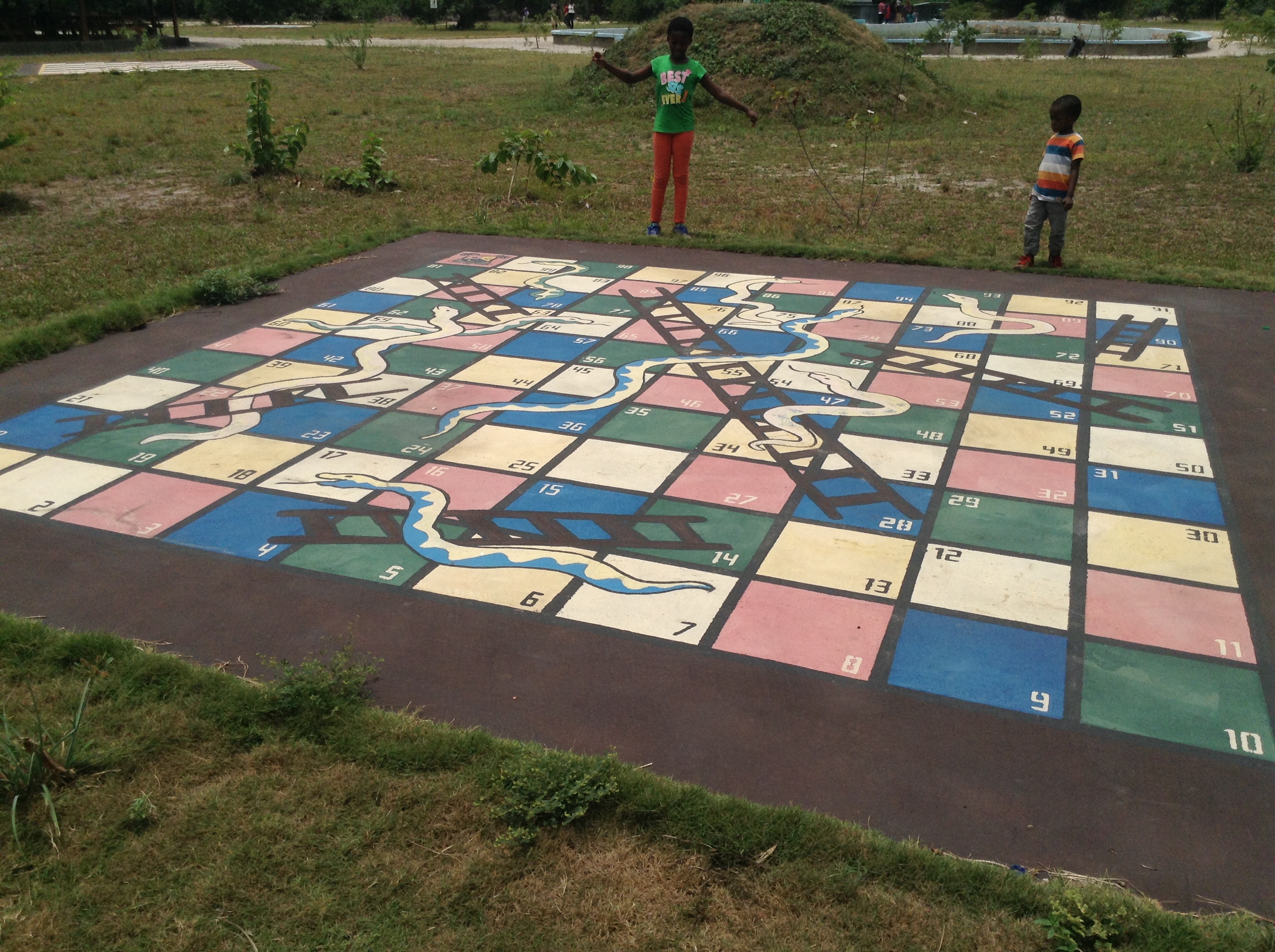
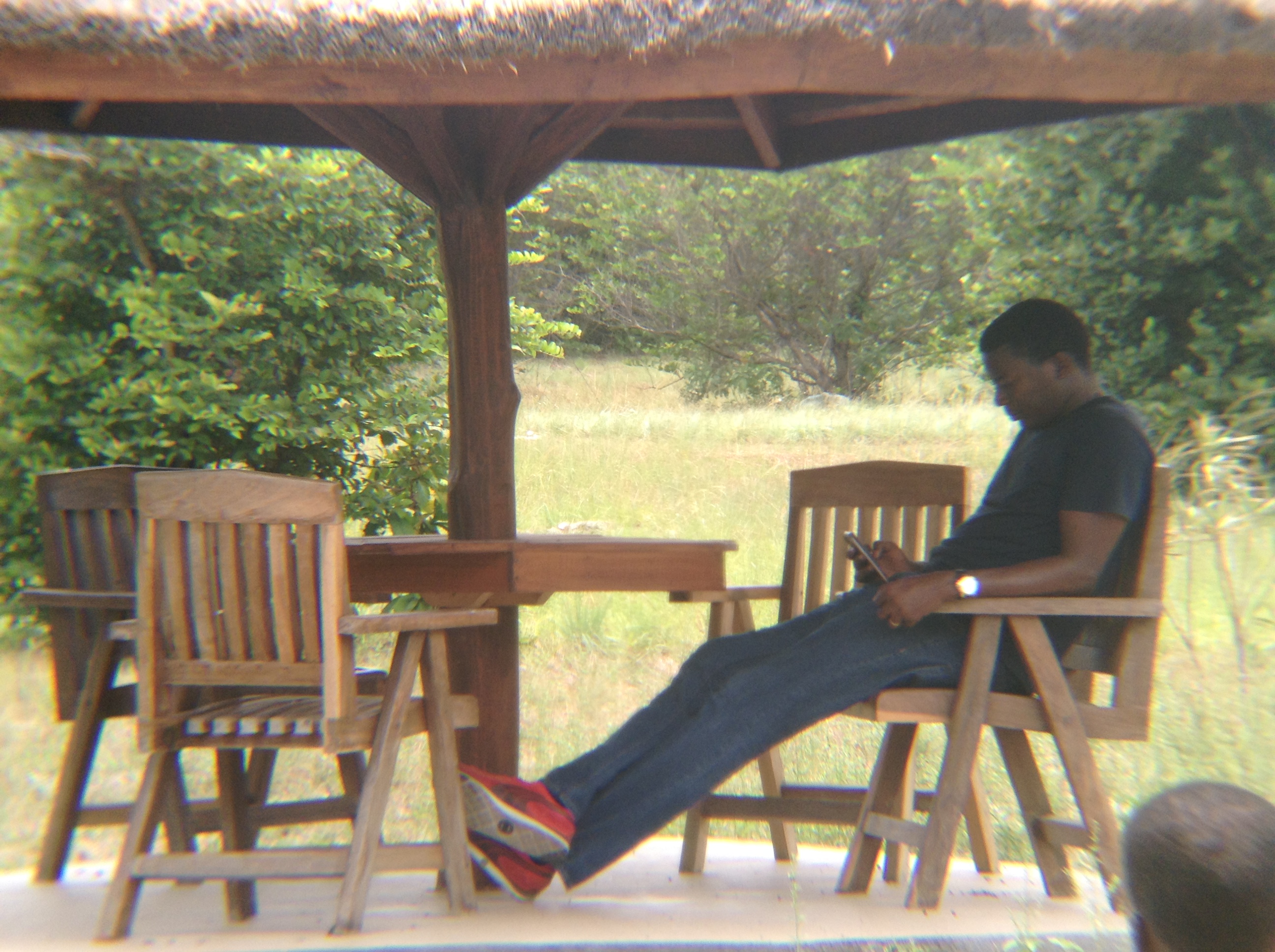
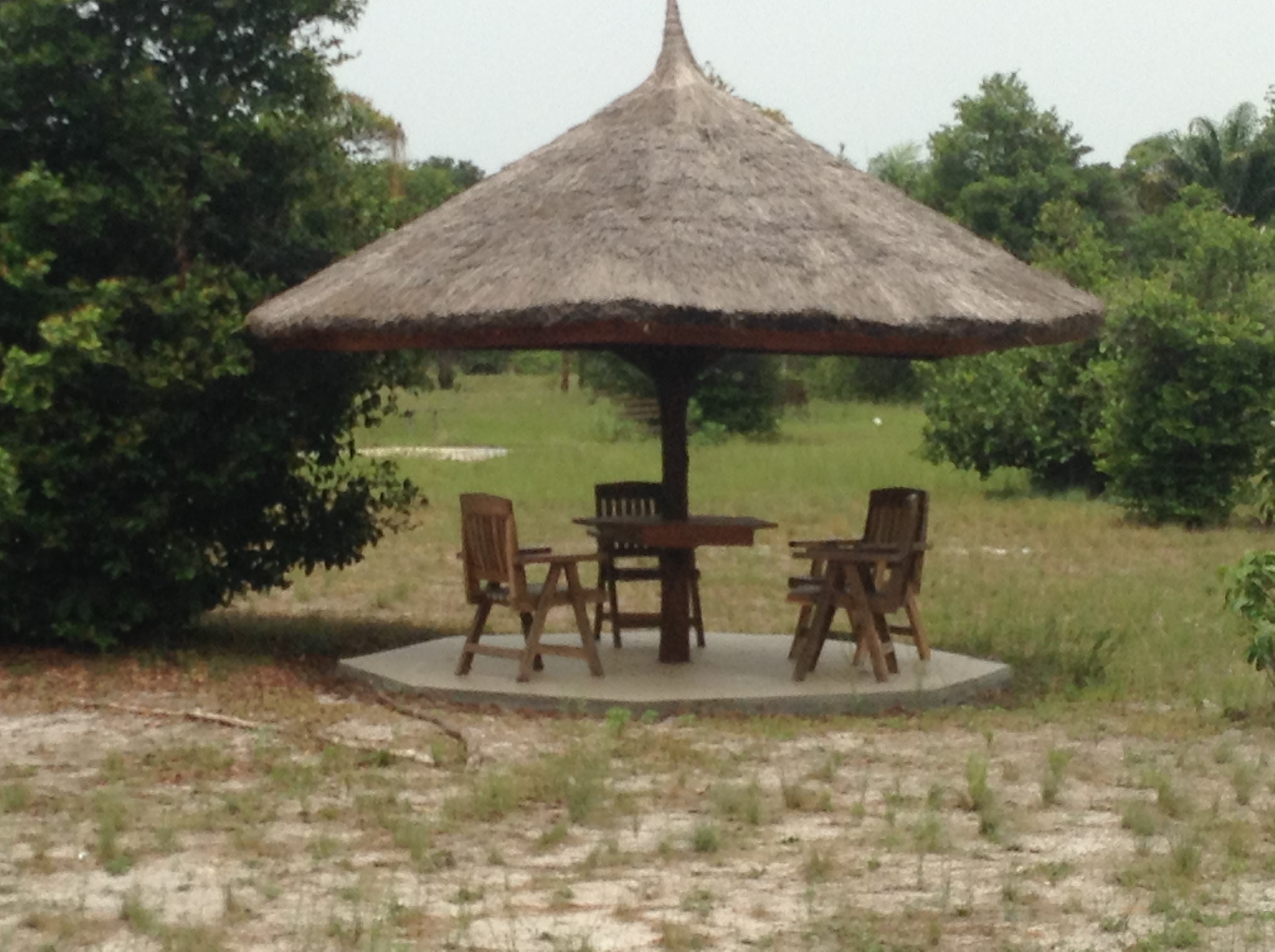
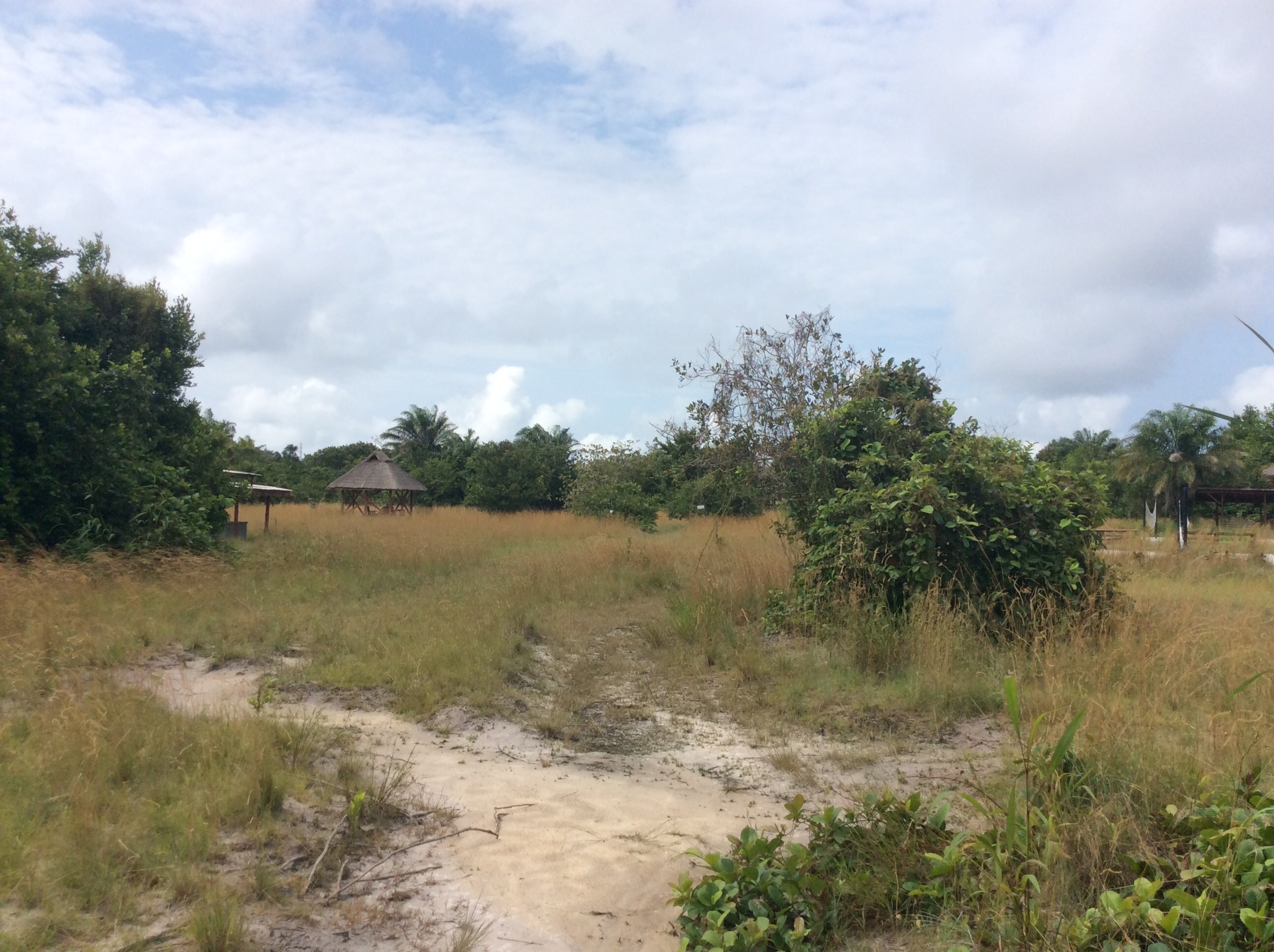
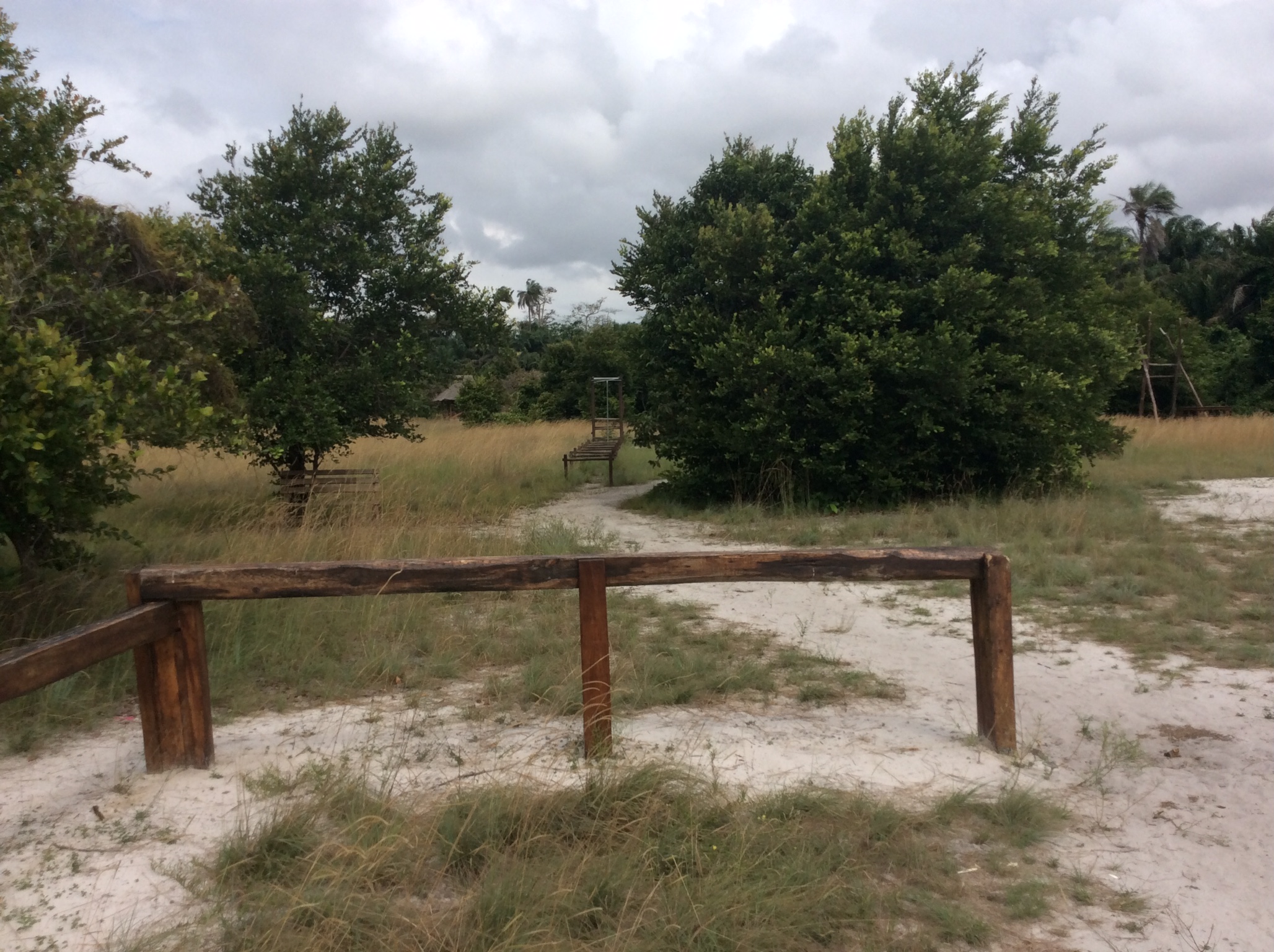
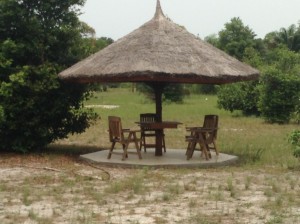 The first time I discovered this part of the park was probably during my third visit in April 2015, (pictures attached, to the right), just out of curiosity. We had, my young cousins and I, arrived at the central playground, and thought the trail had ended. But, seeking more adventure via a small bush path that lay ahead, we walked forward for a few more minutes and ended up in this beautiful open savannah land dotted with promise of adventure. When I inquired about the place on my way out on that day, I was told that it was not yet complete, as astounding as the whole place already looked. But when completed, it would be called the Family Park, meant for family and group entertainment. It had two big fish ponds one with tilapia, and the other with these colourful exotic fish I couldn’t place. It also had, along with the military-type obstacle courses for adventurers, life-size game boards: chess, Snakes & Ladder, ludo, and checkers. When complete, visitors would be able to park their cars at a different location close enough to offer easy access into this new part of the park. At the time also, the place looked quite alive or at least promising. There were many more people around and it seems, as incomplete as it was, to have justified its existence.
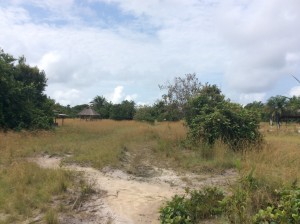
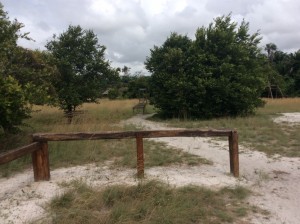
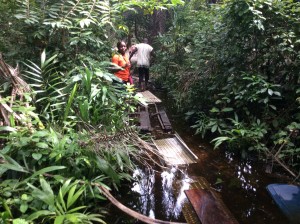
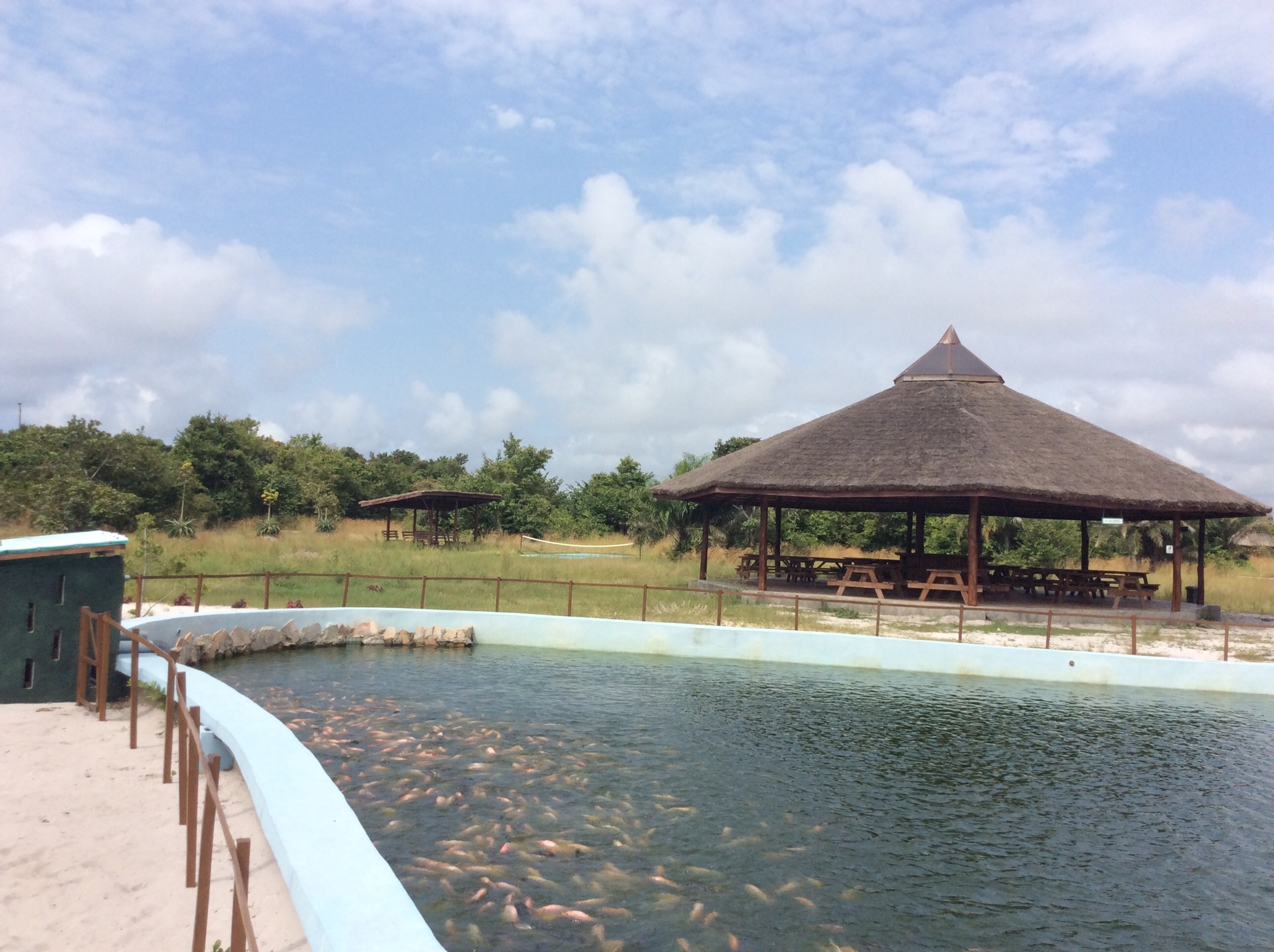
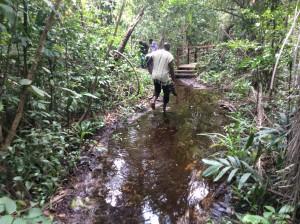 On this latest visit, however (pictures attached to the left), the opposite was the case and the Park was an overgrown shadow of itself. Not only was the flooding much more of an obstacle to accessing the arena, the space now wore a depressive look unworthy of the initial aspirations or of any valuable human contact. The grasses had grown unkempt, and the place lay spread like a giant wasteland, with plastic bottles and bags littering all around. Having braved the dirty stream-puddles to arrive here, we were not just going to retreat, so my friend and I walked around the yard, lamenting the lost promise of such a treasure. The tilapia pond was still there but now filled with a school of fish that looked as excited to finally make contact with human presence as they looked hungry for whatever these visitors bought. They seemed to congregate by each the side of the pool where our voices were the loudest, as if in need of some kind of acknowledgement, which we termed as food. Half of them had turned pink (or probably had been like that all along). I asked my friend if the colouring meant anything about the state of their health, but he had no idea. We’d need to ask a fishery specialist. Maybe they’re really just as hungry as we had thought, absent of a sustained human contact.
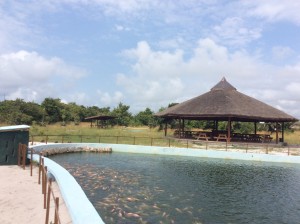
Here, the school of fish congregate to the sound to our voices.
I realised, a while later, how easy it would have been for a mischievous guest here to throw a bait and hook into the pond (or even just a basket, going by how they congregated easily in plain sight) and pick out as many of the tilapia as would satiate his hunger. Many of the idle wood around seemed dry enough to make fire, we were alone, and there was sufficient privacy to keep a clandestine roasting expedition secret for more than a few minutes. For the fish, left alone in such a desolate space for so long, it could as well be a more humane intervention than their hungry life in an isolated pond allowed, we thought. We never did fall for the temptation, though, instead spending spending our time looking around the arena like military spies. And then, bored, we headed out, meeting along the way, through the dirty stream, a few more adult men and women now interested in wading through the puddles to see whatever lay beyond the initial children playground.
The LCC is a serene place, and the big-picture concept of the park as an icon of conservation and relaxation is a promising one; has always been. Deforestation is considered to be one of the main contributing factors to global climate change and desertification, therefore, a place dedicated to preserving nature and reversing a negative trend on a large scale is worthy of public support. Seventy percent of the world’s plants and animals, according to this report, live in forests and are losing their habitats to deforestation and Nigeria possesses the highest rate of deforestation in the world– a dubious honour – according to the FAO and the United Nations. We’re not very free from desertification either as I noted, in pictures, just five years ago. So, If optimism alone were sufficient, this piece would be a celebration of the work so far done, and what the future holds. In the face of modernity and our unsparing exploitation of natural resources, conservation is a real and pressing need. Living in Lagos itself, a city where access to greenery is as much a luxury as access to traffic-free driving on a week day, offers the best justification for such a place as this, and very many more like it. One of the things that mark Nairobi, for me, as a model city is the work done over many years by the late Wangari Maathai in protecting the balance between nature and the needs of the city inhabitants. The resulting effect is a city with many more trees than I’ve found in any other African capital. Not just the trees themselves, but the resulting benefit to health, among many other advantages.
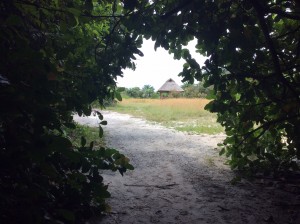
The green opening into the new play arena which, for a while (when this picture was taken), looked like a promising attraction to the LCC with already dwindling number of visitors.
Unfortunately, the realities of the recurring visits to this otherwise magical place in Lagos have set me, and other visitors to the LCC, back to earth. Friends who remember their experience with the place during its most thriving moments recall the presence of a lot more animals, a better-managed park, a real bird observatory where one could actually see creatures of note, better maps for navigation, and a generally more satisfying visit. Until the early 2000s when the housing boom in the Lekki area of Lagos exploded, the current location of the LCC was remote enough to actually be exotic, and perhaps to also be conducive for the fauna it boasted of. The presence, today, of real estate at almost every available surrounding space may have, sadly, contributed to its degeneration and the exodus of the Centre’s most relevant fauna since not many animals thrive on noise and sustained human contact. Land grab is also a pressing problem in the area, threatening the sustenance of such an idea, or of any similar idea that thrives on a free open space that could otherwise bring millions to some ambitious realtor. The only advantage from the park’s closeness to human population now is, perhaps, the accessibility to people who would otherwise not care about conservation and outdoor fun, but now can. But that’s not enough.
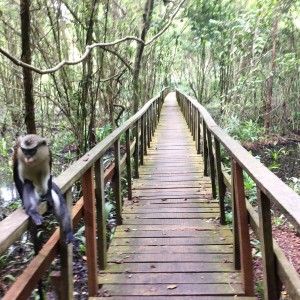
Latest photo, taken on October 24, 2015, shows one of the last animals left in the park, a monkey, relaxing on the handrail, perhaps overexposed by the dying trees.
The NCF will have to take a more hands-on approach in keeping up the standard of this facility for it to achieve its highest potential. So far, it is falling short. A quick trip to Ibadan’s Agodi Gardens – a project of similar aspirations but with different outcomes – may be needed to learn a few things regarding visual appeal, management style, and public perception through marketing and maintenance. A conservation centre that provides value to visitors will get more referrals and more recurrent visits. This translates to more money to manage the place, and more positive outcomes for its conservation aspirations.
The challenges of conservation on the continent are many, including poaching, pressure from real estate developers, and a lack of proper funding and management (as in this instance). But the promise of better outcomes is and should be a more pressing incentive. Left in the hands of poor management, the promised future eludes competent grip, and falters. With the enormous human and material resources that the country can boast of, a failure of this nature is a terrible shame. Alas, in this case, what is at stake is more than the aesthetics of an ever expanding city, but also the future of the planet and its species. That is not worth playing around with!
_________
All photos courtesy of the blogger (2013-2015)
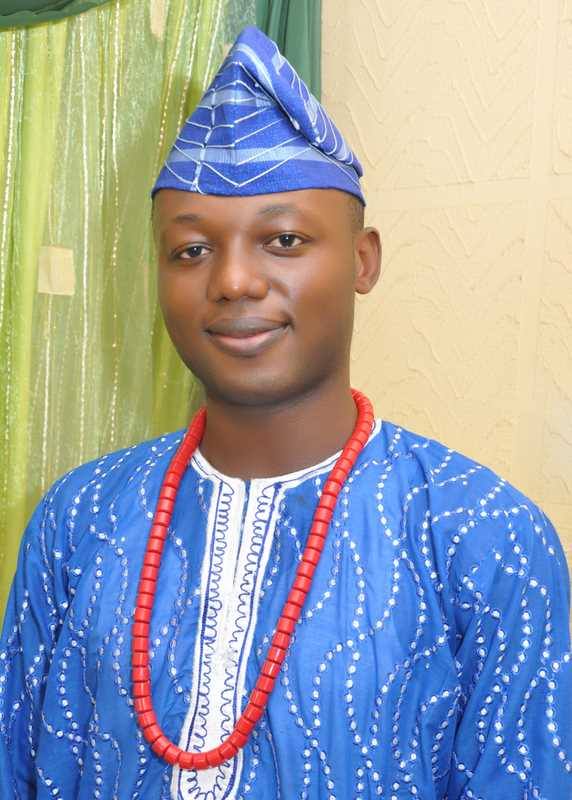 I first “met” Fiyin Onarinde one day in April, 2014, when I called to tell him, in Lagos, that I had once occupied the Fulbright FLTA role that he had by then being selected to fill at my old university. His supervisor, the director of the SIUE International Programmes Office, had sent me a mail and asked me to talk to him, answer some of his questions, and generally make him comfortable about travelling to the US for a new experience. We talked for a while, and he promised to call me back, which he did.