Where Am I?

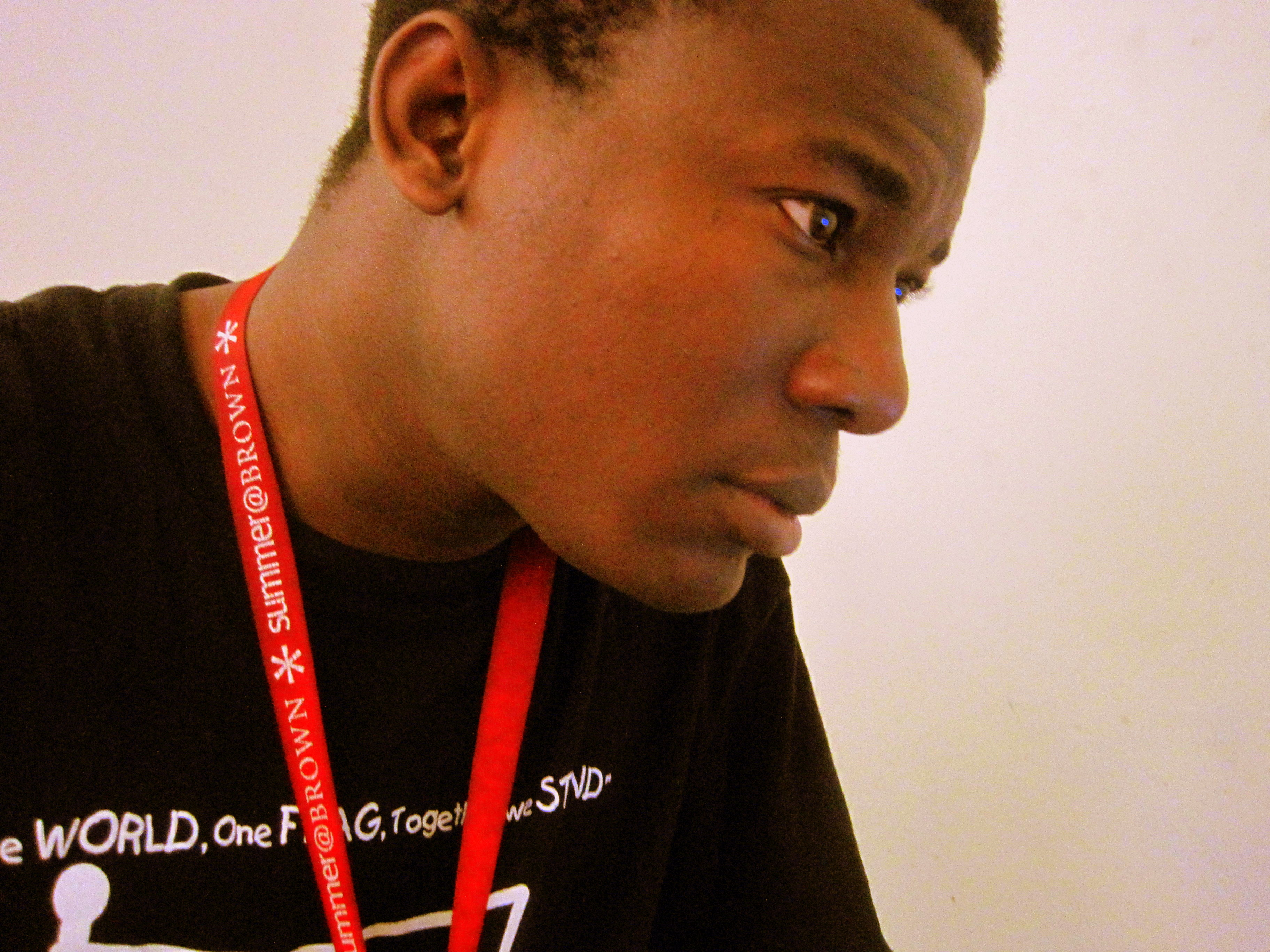
Contrary to what you might think, I’m not lost. I know exactly where I am. I think.

I am in the United States of America, the land of the free… the place where your rights end right where mine begins.

Or not.

You are free to do anything as long as nobody (else) gets hurt. It is a land of rights as well as responsibilities.

This land does not run itself however. It is not on auto-pilot. It is made to work by people who spend their waking hours doing their part of the national chore.

“If everyone sweeps their front yard, the whole city will be clean.”

That is one quote that I’ve always liked, because it takes responsibility of making a society function properly away from the removed distance of “the other”, the government, and places it in the hands of the citizens who must either make it work or not.

The trash cans do not empty themselves. I have seen the guys who move them.

Neither does the snow magically disappear from the roads after a major fall. The woman who drives the snow mobile does so promptly and without fail. Or else how would I be able to ride my bike to school after a major snow fall?

The floor of Peck Hall is not magically clean, nor are its walls, corridors and classroom boards all fine and good looking all by themselves. The men and women who work every day to keep them as they should be also happened not to have more than just two hands. I have seen them.

This expanse of land inherited/taken over by a generation of immigrants is an interesting study. If I were to have won a great expanse of land estate such as this, I would be quite justified to fight for its defense with everything I have. I would be justified to jealously guard it as mine. I would never take it for granted. I would live everyday in the joy of the liberty afforded by such a gift. I would be an American, spending each day in gratitude and in the knowledge of the fragility of such great present, and in the joy of company. Life would be good. I would contribute to make it what it is – a land of order and contentment, if possible. I would not kill fellow citizens because they speak a different language or live in a different part of the nation.

I have seen the bus driver. She smiles at me every time I get on the bus, and we talk back and forth either about the book she is reading at the moment, or about the latest news about Nigeria and my American experiences. The bus comes on schedule. On time, most times. I do not get shoved when I go in, and neither is there noise of horns and a lousy conductor.

I’m not crazy yet, interestingly, within the silence of order and propriety. I am surprised by this. Cacophony beckons within the memories of heat and sweat in a distant city in Western Nigeria, and I sigh. I am still in the United States of America.

Alright, I’m in the Midwest of the USA, but it’s still the same. And sometimes, the calm and order unnerves me! 🙂

Guest Bloggers Welcome

Over the coming weeks, and perhaps for a longer while to come, I will be featuring Guest-Bloggers on this blog. I’ve had the idea for a while now of inviting my favourite bloggers, commenters, or just plain readers to make blog posts here about what concerns them. I like the idea of such interaction of ideas and opinions, and I hope that it will also open up new audiences both for ktravula.com and those bloggers and writers whose writing gets featured. If you are interested in being a guest-blogger on ktravula.com, let me know, send me a mail at kt@ktravula.com and surprise me with your subject of choice. There are no boundaries, I think. 🙂

On the flip side, I am guest-writing for a few blogs I like as well, so all invitations are in order. I would like to write one blogpost for any blogger who asks me to, and the topic would be any of my choice, but mostly along the ideas that I believe the readers of that blog would likely appreciate or respond to. Yesterday was my first guest-writing post, and it is was published on Clarissa’s Blog, entitled “Barking in a Foreign Language”.

Barking In A Foreign Language

This post was first published on Clarissa’s Blog today as part of a guest-writing project. Clarissa a cool Professor of Spanish language and literature at my department will also be a guest-blogger on KTravula.com in the coming days. Watch out.

___________________________________________________

Prompted by two related observations in my mind at the moment…

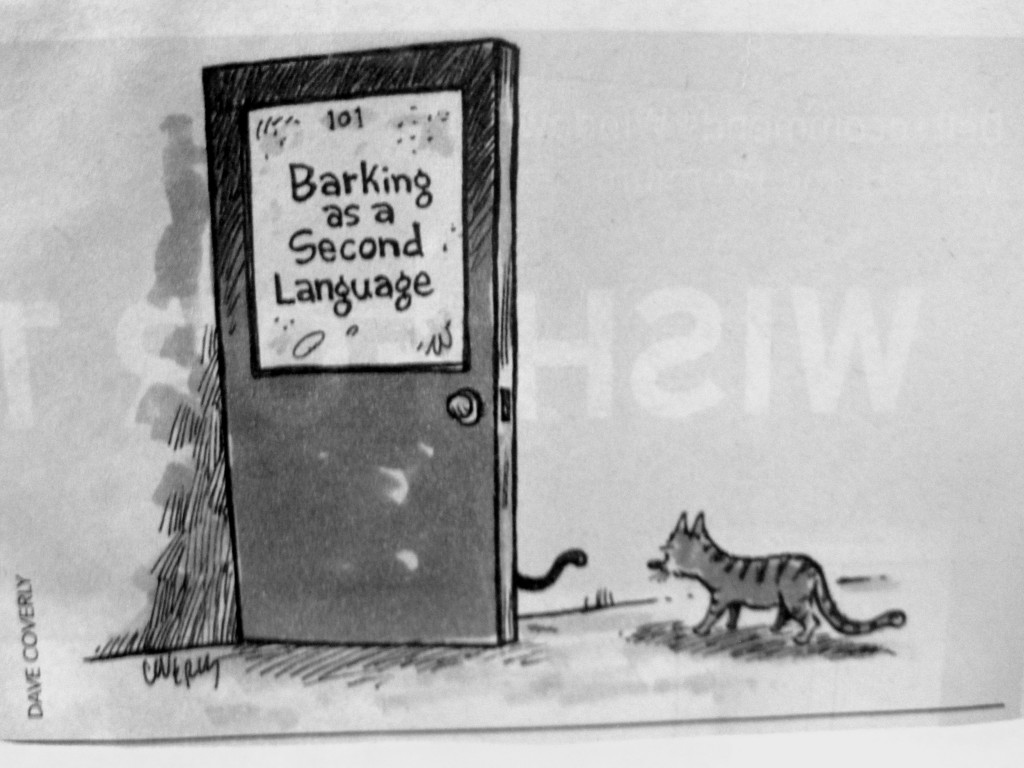
One was the search term in my blog statistics today. Some random person had apparently been directed to my blog by searching for the term “barking in a foreign language”. This is not so strange when I realize that I had once made a blog post about the cartoon that I found on the glass entrance to my department.

The second was this very comprehensive article, and discussion, in the New York times about why, or whether Americans will really, learn Chinese. I enjoyed reading it and picked up a few nuggets, one of which was the fact that the interest of many Americans in learning foreign languages came from political and economic expediencies: They learnt Russian during the Cold War, Arabic after 9/11, Spanish because of their neighbours, and now Chinese in the wake of China’s global economic uprising. Thus said the writers of the article. Not me, even though I have learnt also from a few  interactions on the matter that many American students now study Chinese for the purpose of gaining leverage in the emerging economic world.

The article doesn’t mention Yoruba, Swahili, or any of the other minority world languages being learnt in Universities all over America, but that is not the point – I guess. As much as this point in the article could be seen as a generalization of perhaps a genuine interest of students in expanding their worldviews, I believe that there’s something interesting about the said American foreign language fad. For a fact, the govenment of the United States has shown more interest in languages spoken in parts of the world with some economic, political or cultural relevance to its own survival. At the Fulbright conference in December, I had made friends with a guy called Osama from Yemen, a Fulbrighter on a similar programme. That was before the Christmas Day bombing attempt, and its subsequent link to Yemen. After the terror attempt, I asked a friend if she thought that Yemen will now get a lesser slot in subsequent Fulbright programmes because of the terrorism incendent, and she said NO. Quite the opposite, she said. If this all rings true, then Hausa will also soon become another language of interest for Americans in the coming years, because of the failed bombing attempt of Christmas day. This creed can then be summarized somewhat thusly:

“If he has tried to kick your ass, kick his ass too, and then learn his language. You might understand him more, and thus prevent any further aggression.”

Whether this is true, or whether it ever works as planned in the long term, is of course subject to debate.


The Yoruba Talking Drum

I made this video during the cultural awareness week on the campus of the University of Ibadan in May 2009. The talking drum is a uniquely Yoruba percussion instrument that is peculiar because of its ability to mimic tonal patterns of actual human speech. In this video, I tried to engage the drummer in a little competition of abilities; he on the skill of drumming, and I on the skill of discerning. Enjoy.

I showed it to students in class today, along with some music videos of Lagbaja, once again to illustrate the blend of tradition and modernity in Nigerian contemporary music. I had a reaction to his appearance almost in a similar form to the one I had the first time I showed him in class. My students are supposedly aware of the concept of the masquerade, but apparently, not in this particular shape and form. Let me get back to you after the Mardi Gras, and I’ll let you know what I learn about how American masquerades really look like. I’m guessing that they are not as elaborate, or as “scary”. We also learnt about the concept of Abiku, how different it is from the scientifically verifiable child mortality, and how many children often used it as a weapon against abusive parents.

Books On My Desk

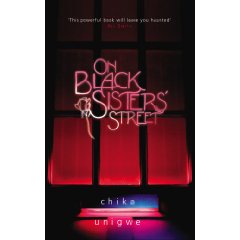
On Black Sisters’ Street by Chika Unigwe. This is a powerful book about the lives of prostitutes from Nigeria in the brothels of Belgium. To write this very moving account of an oft neglected but very crucial social phenomenon, the author had to travel to the red light districts of Belgium and conduct one-on-one interviews with the prostitutes, and record their stories. In a recent interview, she confessed that she was able to earn their trust only because they didn’t believe that she was a writer, but a novice hoping to learn the secrets of the trade by asking around. The author Chika, a Nigerian writer, lives in Beligium with her family. Her first book De Feniks was the first work of fiction to be written by a Flemish author of African origin. Get the books, and read them. As soon as I finish reading it, I hope to come back with a mini-review.

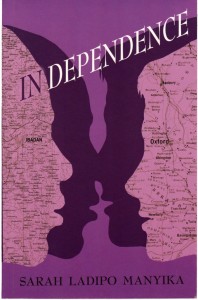
In Dependence by Sarah Ladipo Manyika. In judging this book first by its cover, I give deserved kudos to the artist who placed the map of my home town and the town of Oxford, UK on the two unknown faces that grace the pink cover. The novel itself tells the story of love that spans generations, continents, amidst several obstacles , passion, idealism, courage and betrayal. Of the book, this has been said: “…has the subtle power of a well woven work, nothing is out of place… it is full of surprises” among other nice things by journalists and reviewers.

The first chapter begins thus in a sentence of quite enticing prose: “One could begin with the dust, the heat and the purple bougainvillea. One might eve begin with the smell of rotting mangoes tossed by the side of the road where flies hummed and green-bellied lizards bobbed their orange heads while loitering in the sun.”  So far, it is a very good read.

I can’t explain why I read so many books at once, as I can’t explain why I keep acquiring them. All I know is that some times my mood requires a different kind of literary satisfaction. At some other times, another. I recommend these two good books for their entertainment as well as their literary value.

For my copies of the book, let me thank Tayo who got me an autographed copy from Sarah Manyika, and sent the book to me all the way from Nigeria, and Ikhide who gave me his copy of “On Black Sister’s Street” along with his review notes within its margins. Then Chika Unigwe, the author herself who graciously sent me a copy from Belgium.