Meeting Eshu

Today a well-dressed man with a Sean Connery/Salman Rushdie look, beard, and an eerily similar Wole Soyinka/VS Naipaul voice walked into the language lab. He was accompanied by a colleague in the department who had brought him there to use the computer. I’d heard a little about him from the departmental emails. He is one of the prospective employees brought to take a tour of the department and meet members of staff. He had come earlier before I arrived at work. He stands a chance of being a new addition to our staff so I went to speak with him.

“Where are you from?” He asked after I’d introduced myself.

“Nigeria.”

“Bawo nee.” He said, and I was suprised.

“A dupe. How did you know this. Have you ever lived in Nigeria?”

“No. I’m from Brazil.”

“Wao. I didn’t know that you speak the language there.”

“Yes we do. The Yoruba religion is very big in Brazil. It’s a huge huge thing.”

I knew this, but was still very impressed. Then he went on.

“Do you know Shango?”

“Waoh.”

“And Orisha.”

“I’m impressed.”

“And Oshun.”

“Interesting.”

“And my personal favourite – Eshu*!”

“Hahahahaha.”

“I tell everybody about Eshu, especially the Christians I meet, and they look at me like an evil voodoo priest.”

We went on to talk for a few more minutes, and he then showed me a youtube video of a performance of the Yoruba religious worship in Brazil. The songs are a mixture of Portugese and Yoruba. One could pick out many Yoruba words, phrases and expressions in the song. The costumes however are a mixture of European and African. The drums were distinctly African.

The short conversation has given me a new appreciation of religion being the most enduring bearer of language. We’ve seen it with Latin and Catholicism, Arabic and Islam. Now we’re seeing it with Yoruba and Candomble.

It is was all just very interesting to me.

_____________

* Eshu is the Yoruba god of mischief, lost in the translation of the English bible into Yoruba as the devil himself.

Walking the City

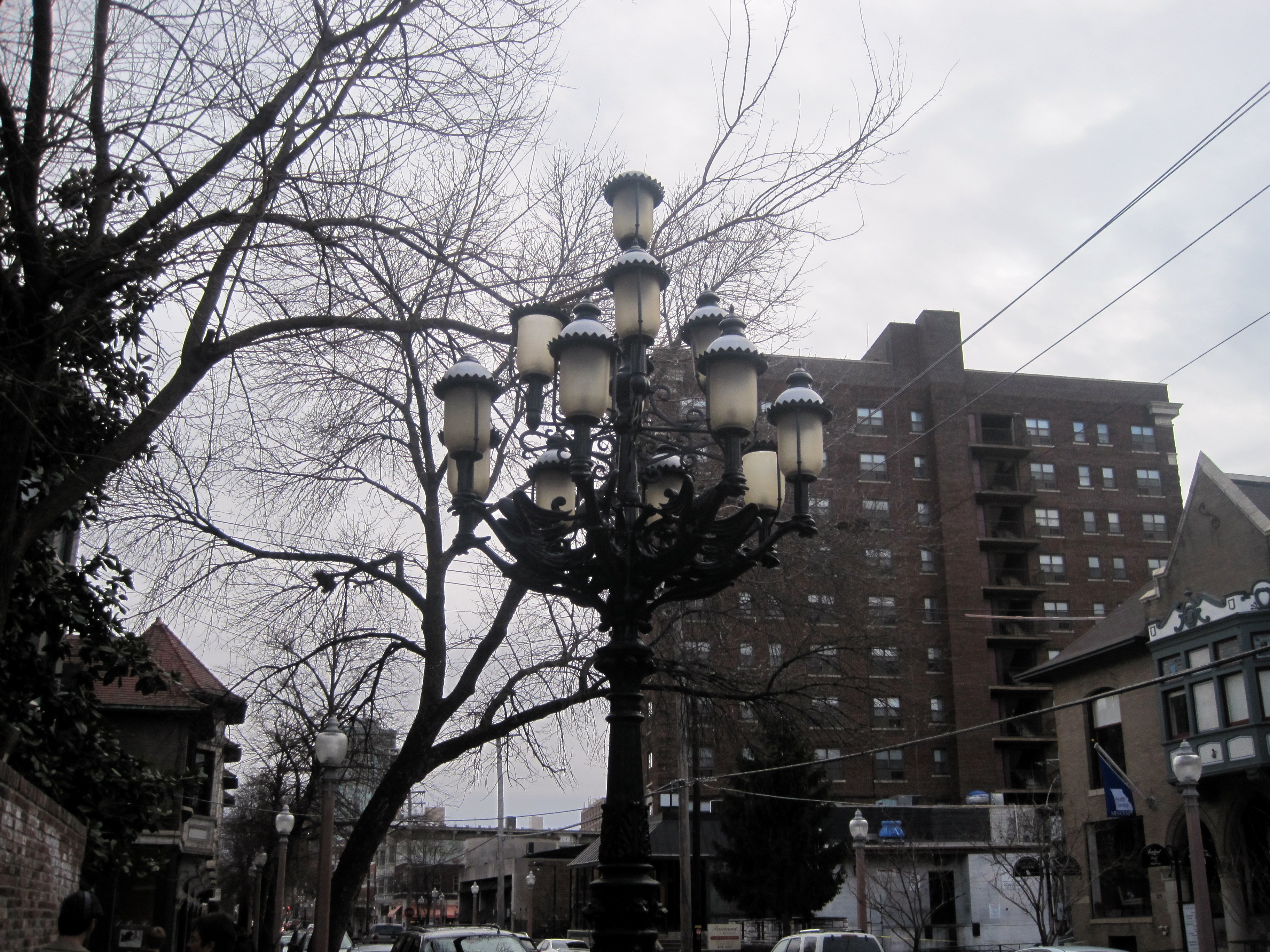
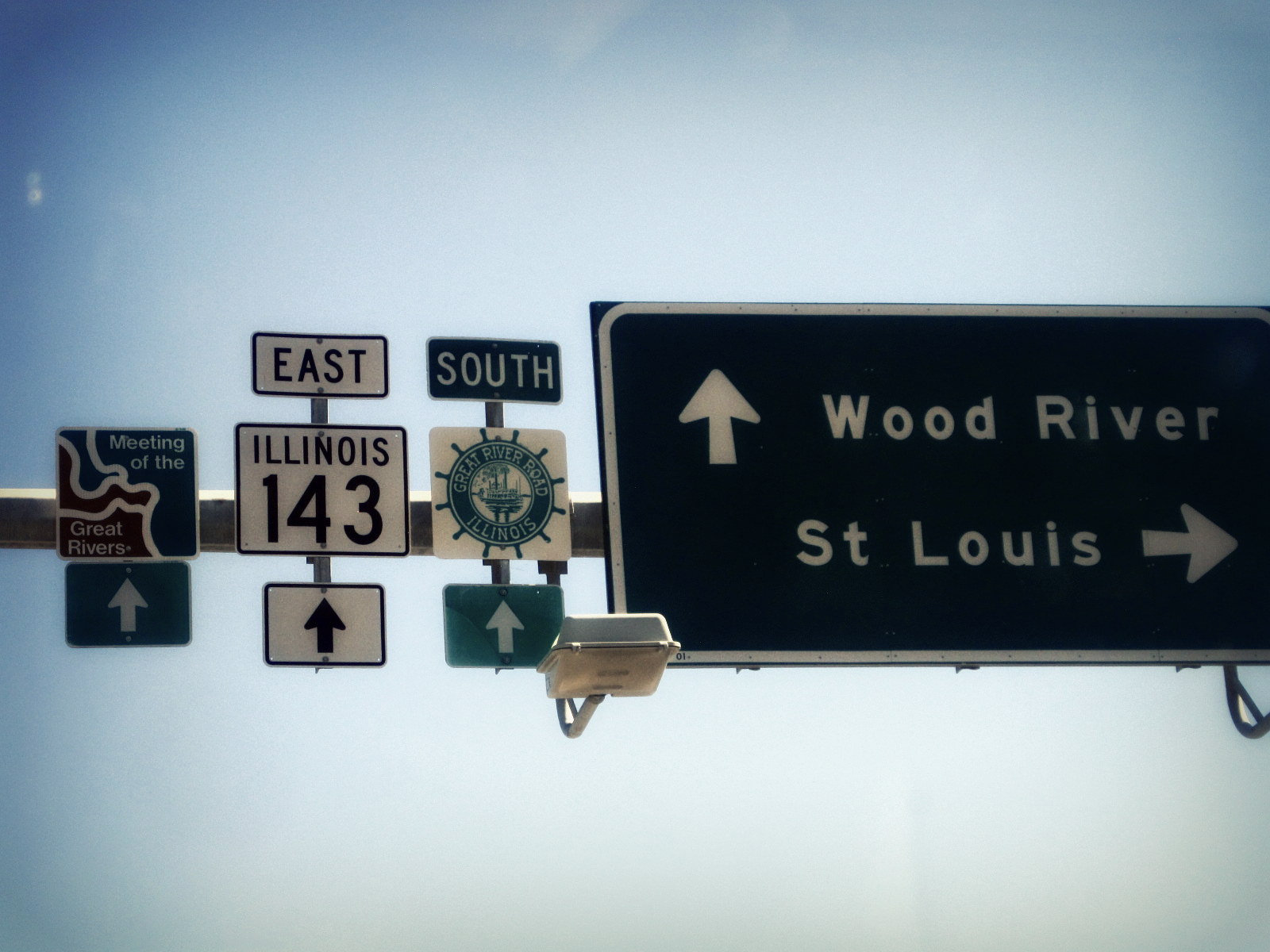
IMG_0282IMG_2023IMG_2565 IMG_4319IMG_4928IMG_5203 IMG_6394 IMG_6396 It is ancient, it is new. It’s cold, it’s warm. It is windy. It is dry, it is bubbly. It surprises like a carnival. It soothes like a feather. It delights. It surprises. It bores. It hugs. It repels: a beautiful half desert land of strange plants and creatures. Ruins. Concrete. Rust. Trees. Tar. Tall remnants of a history that comes back many times to relive itself. City. Town. Relic. St. Louis.

Outdoors

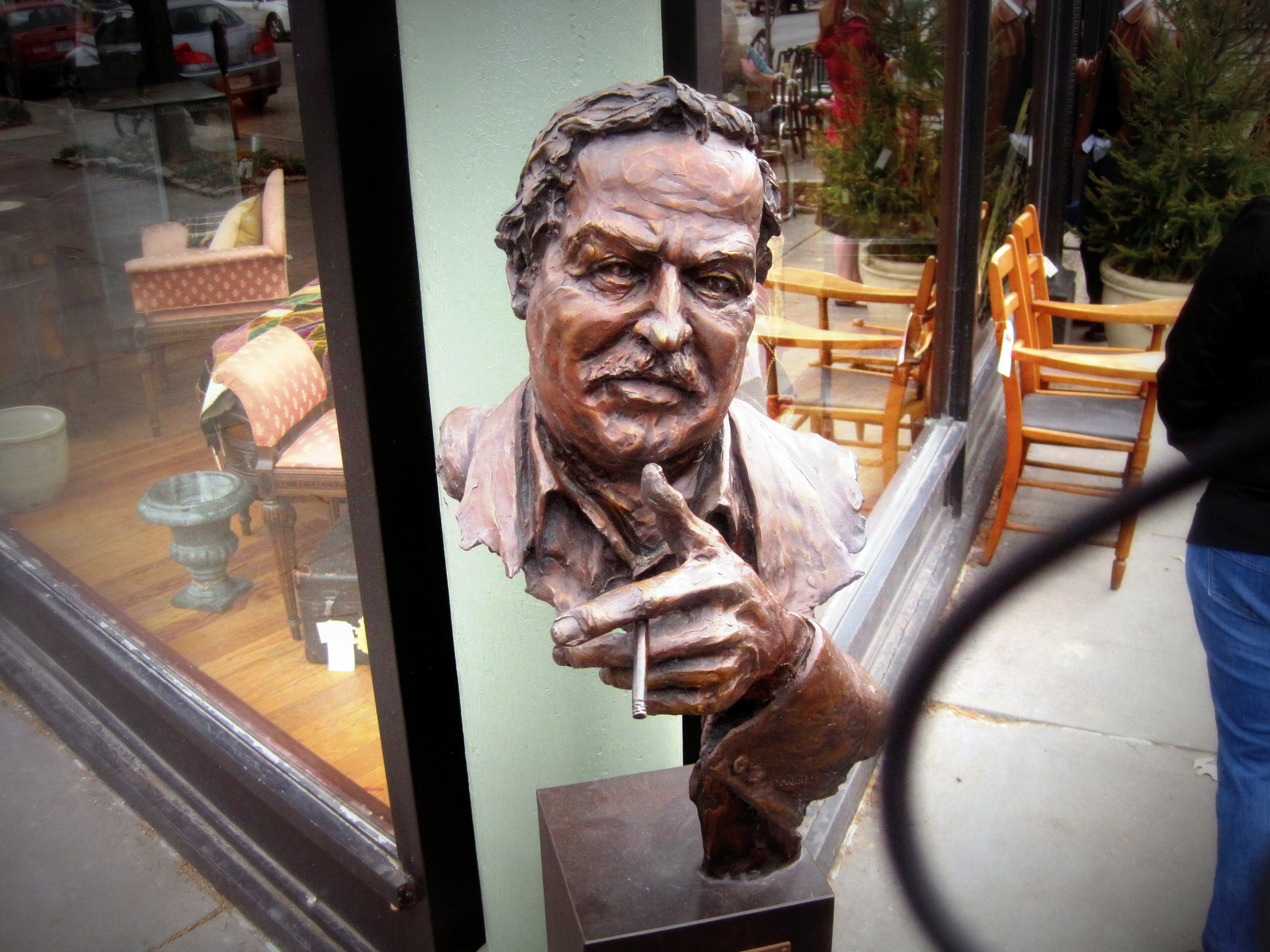
Pictured: Bronze bust of Tennessee Williams, American writer, on Euclid Avenue. Today in St. Louis.

Next, Bahrain!

It cannot be emphasized enough how horrible it is that agents of state in places where citizens are peacefully protesting against misrule are opening fire on them. This is totally heartbreaking, and no words can condemn it enough. I have just seen a few Youtube videos in which totally harmless protesters walking on the streets of the country are shot at with live bullets. Are these soldiers mad? Have governments gone totally demented now? Whose interests are these shooters protecting? What are they trying to say? That protest is illegal and people should merely shut up and comply like goats? The underlying justification for citizen’s protests and revolt becomes even clearer when a simple thing as a peaceful march is met with merciless sadistic force. We should be outraged.

Since Egyptians toppled Mubarak through that sustained popular revolt, the world has once again directed its attention to the prospects of non-violent revolution. Unfortunately, not all governments got the memo. Bahrain is a small country on the Persian Gulf with a population of just over a million people, lying close to Saudi Arabia. It is ruled by a royal family that now seems threatened by a demand for a better way of life. These killings are unacceptable, and will only bring more pain and suffering, not to mention strengthen the citizens’ resolve. Here’s one more dictatorship to go, and as soon as possible. I call on the citizens and governments of the world to stand firmer on core values of human rights, more so now in the face of blatant disregard of the government for dissidence. Same for Libya, and Yemen. Compared to the ruling princes of Bahrain, Hosni Mubarak’s autocratic rule now looks like heaven in hindsight.

MidEast in the MidWest

What does Iran have in common with Egypt and Morocco? A lot more than you think, and a lot less depending on where you look. The language of Iran, Farsi (or Persian as it’s also often called), is written with the Arabic script. Arabic, the language, however is spoken in Morocco and Egypt as official languages. Language and cultural attitudes is also quite different. More women in Egypt still favour the traditional, conservative way of life and dressing as opposed to their counterparts in Iran who show a marked rebellion against what its Islamic government stipulates: head covering, public separation of the genders etc.

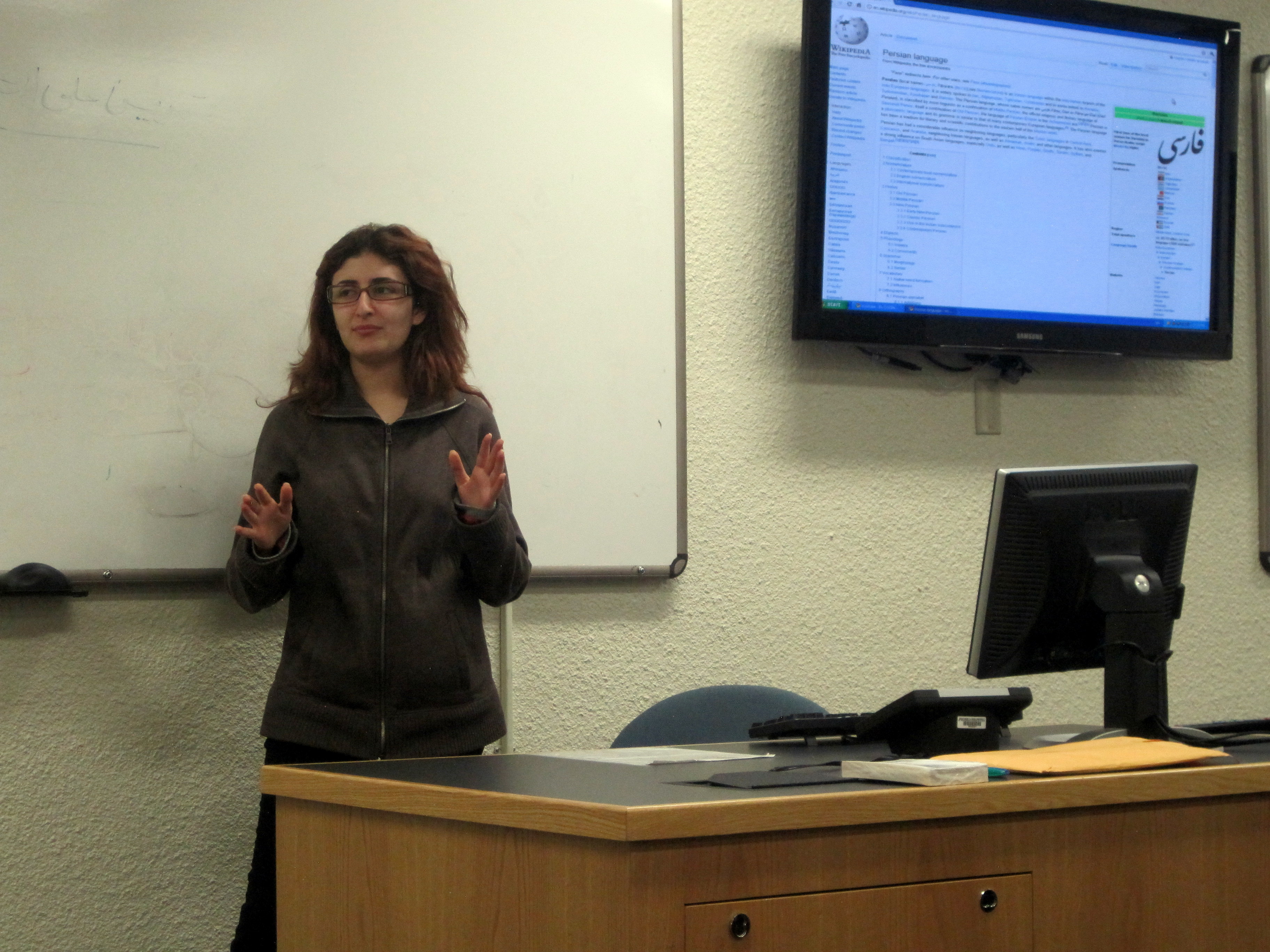
This month in the United States is the Discover Languages Month. One of such activities at my department includes inviting students from different countries and cultures to speak to us about what is important to them, and what we may want to know about their culture and languages. Mohamed spoke about Morocco, its linguistic diversity and cultural influences while Reham spoke about Egypt giving us a view into the everyday life of its citizens. Yesterday, Mojdeh Faraji came to speak about Iran, dedicating a large part of her talk to the artistic contributions of Iranian film makers some of whom are now serving prison terms in the country for speaking out against the government. The Iranian director of the movie Offside was one case in point.

If I do find myself in the Middle East someday – maybe as a teacher of English, where would I rather be? For the food, it might be Morocco. For the view, it will be Egypt. For the weather, the culture and the language, It might be Iran – a freer one of course.