Research

I want to be able to talk about the field of Second Language Acquisition, my encounter with it last semester, and how much the questions it raises are more than the answers it provides. I am back into reading extensive materials in the field many of which didn’t make as much of a dent as they should have during that first encounter. I won’t now, not just because my knowledge is not yet as comprehensive as it should, and that a carry-over from a daunting first encounter is unhelpful in allowing me open up more to its possibilities, but also because I’m afraid of misrepresenting the extent and influence of what I already know. My MA thesis will have very much to do with SLA and I need all the concentration I can get.

But talking about what I’m doing always helps, as I have found out. Having less time to travel around the country discovering places now like I did before, all I have now is my research and the hard work of creating relevance in a field that gives me the freedom to think, and the tools to make a difference.  This time, I’m looking at tonal acquisition. The fact that not much has been done in the area so far is also as positive as it is challenging. So while the research process begins to take shape, let’s see what Krashen and Chomsky have to say again.
On The Strong Breed, Again

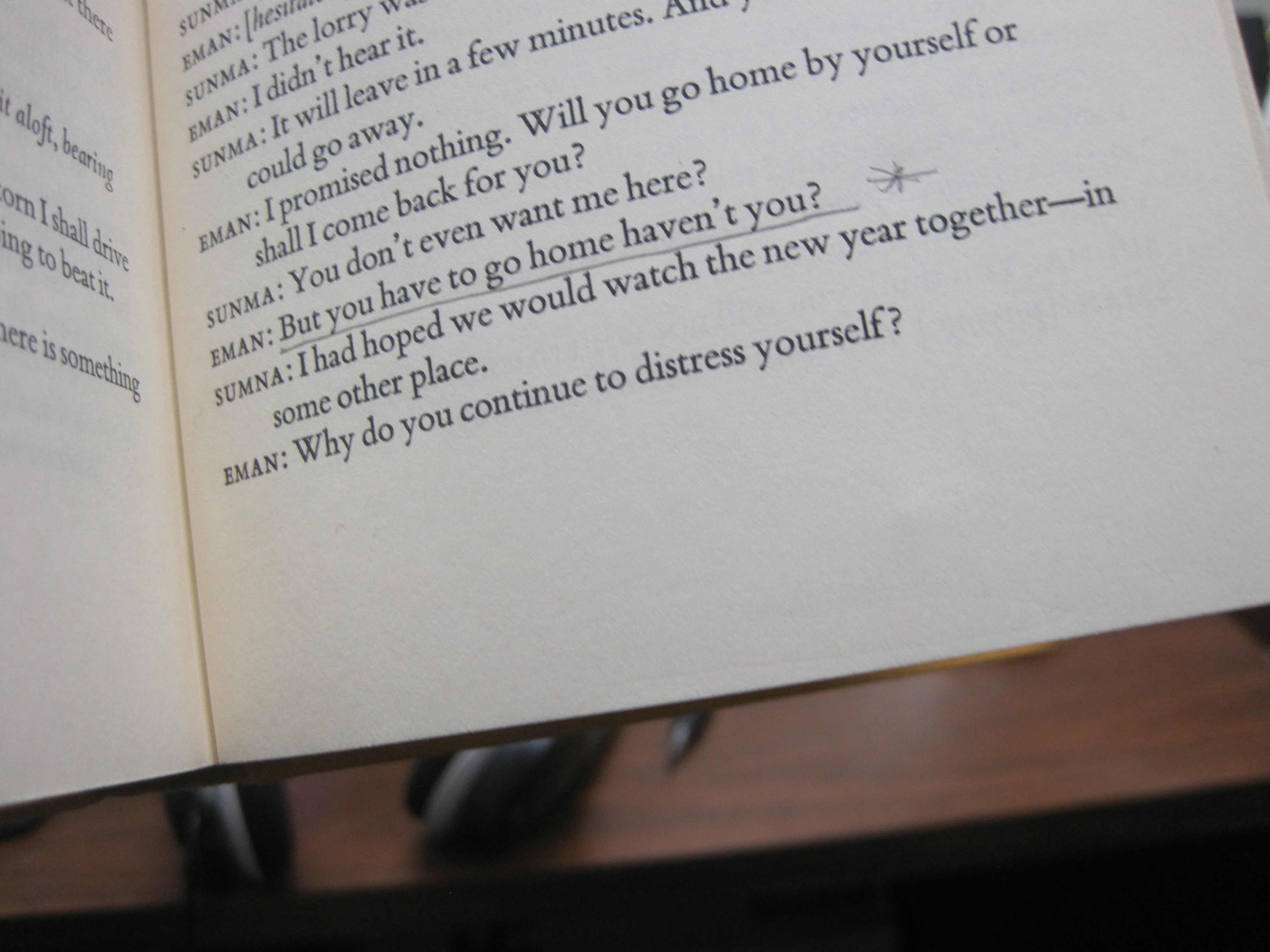
My blog statistics reveals that people who search Google for themes in or discussions about Wole Soyinka’s The Strong Breed often find themselves on my blog, specifically on this page where almost exactly a year ago I had written an unflattering rant/review of Wole Soyinka’s use of a wrong contraction. This is a grammatical flaw that no other publication has pointed out in the many decades that the book has been around, or since.  (Click on the photo below to enlarge and see the error.)

About two months ago when I received a gift box of some African books from the 60s and 70s from a colleague, Wole Soyinka’s The Strong Breed was one of them. There were actually two editions, published by two different publishers at different times. The first thing I did on finding the issues was to look for this error to see if any of the subsequent editions had it corrected in them. The findings: no! I have now examined four different editions of the work and the error remains. (And I believe it’s an error because contractions aren’t formed like that.)

In any case, it is good enough that students of the play who have found themselves on my blog would have taken something crucial away other than the fact that it is one of the playwright’s well known brilliant works examining relationships between ritual, society, and life.  But as you would see as resulting from the comments in the initial postad hominem attacks on my intentions rather than on the merits of my argument dominated the first conversation and prevented a more robust discussion. Maybe this time, it will be better. Or not. Either way, this should be my last word on the matter. Promise.

One shouldn’t spend too much time in the grammar class. 🙁


Be Like the Road

Another excerpt from the reading presentation on campus last month. The poem is “Be Like the Road“, along with a short background story already familiar to regular readers of the blog.


Enjoy

Missing Teaching

Re-reading this post and this one yesterday, I realized how much I miss teaching the language class. My two fun semesters between 2009 and 2010 was filled with a diverse range of students struggling to make sense of a new language and culture while trying to get good grades. And somewhere in-between giving and taking knowledge from each other, we managed to have a swell time every time we met. The Yoruba language classes still remain, but I don’t teach it anymore. I am now a full-time student, and I miss those times.

Oh Fulbright.

I received a spirited email yesterday from someone who had found this blog through search for resources and tips about the Fulbright programme. Here’s an excerpt:

I came across your blog a few days ago when searching for fellow Fulbrighters who were willing to share their experiences on the Web. Either my research sucked big time or there were hardly any note-worthy ones except yours. I loved your posts especially your ’10 Reasons Not To Speak Your Native Language’. Haha..that was hilarious. I can totally relate to that. You see, I’m from Malaysia and our national language is Malay. Obviously it’s an unusual language but it has been quite useful during my stay abroad when we don’t want people to understand us. One day, my friends and I were caught red-handed by a Nigerian who spoke Malay!! Thankfully, we were just commenting on how cute he was. Yes, how about that. Turns out he has lived in Malaysia for quite a bit and he was used to the language. Taught me not to be so obnoxious and use Malay like there was no tomorrow =)

Mails like this make me happy to have – in some way, if only through random observations/rants of daily blog posts – provided resources or stimulus to those who might need them to apply for the Fulbright which I believe is a life-changing experience. It also reminds of why blogging is not such a waste of time after all.  For those that may still stumble on this page looking for resources, let me recommend the following links that might help.

What a Day (June 3, 2010)
A Short History of My Face (January 22, 2010)
Why Fulbright (December 16, 2009)
The Conference (December 11, 2009)
I Was Very Close (December 9, 2009)
The Beginning (August 10, 2009)

and a few others…

Like I said in response to the email, the only other most important criteria needed for applying for the program, along with the required knowledge of language, is curiosity and a sense of adventure, and an open mind.