Browsing the archives for the Uncategorized category.

Lagos by Speedboat

IMG_1269IMG_1274IMG_1275IMG_1277IMG_1281IMG_1291IMG_1319IMG_1324IMG_1300IMG_1305IMG_1587IMG_1602IMG_1615IMG_1619IMG_1311IMG_1581IMG_1591IMG_1316IMG_1304IMG_1302IMG_1603IMG_1608IMG_1613Most IMG_1612of those who have bothered with the matter have concluded, faced daily with incontrovertible evidence of that certitude, that the Lagos of commuters is one of unavoidable stress, distressing heat, grating noise, and rowdiness. Workers spend almost half of their commuting time at a standstill in traffic, most times with sweat and grime of fellow passengers rubbing them at all ends.

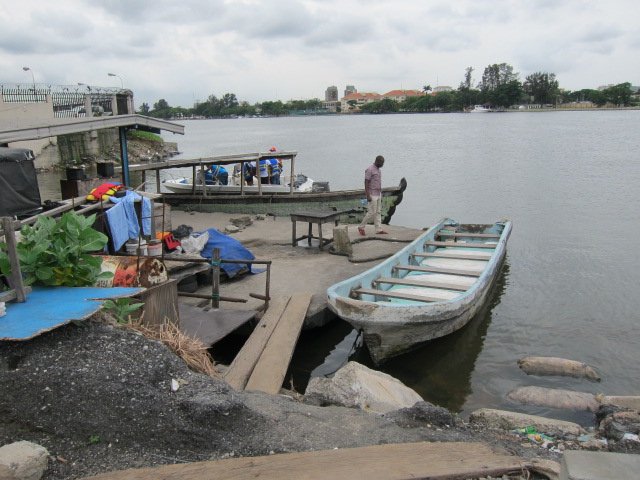
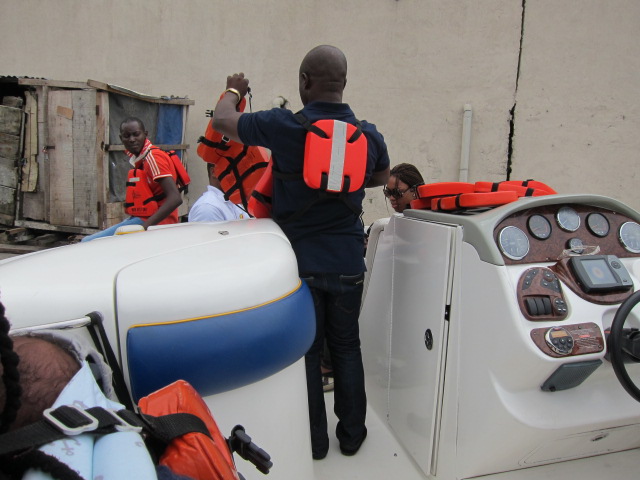
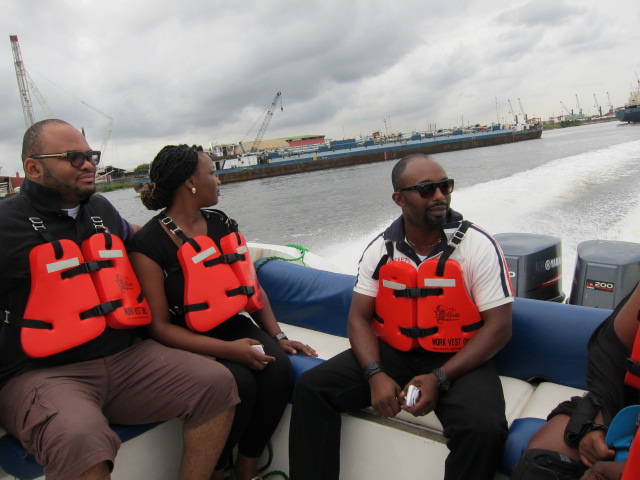
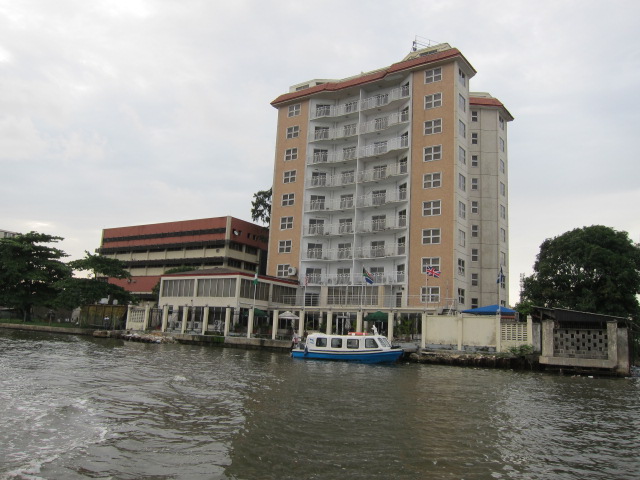
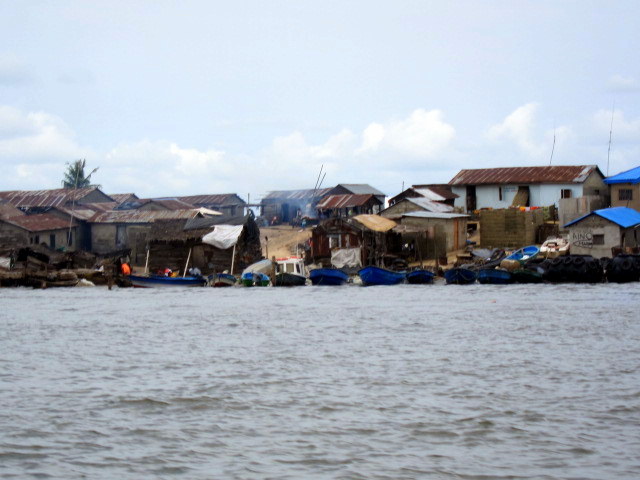
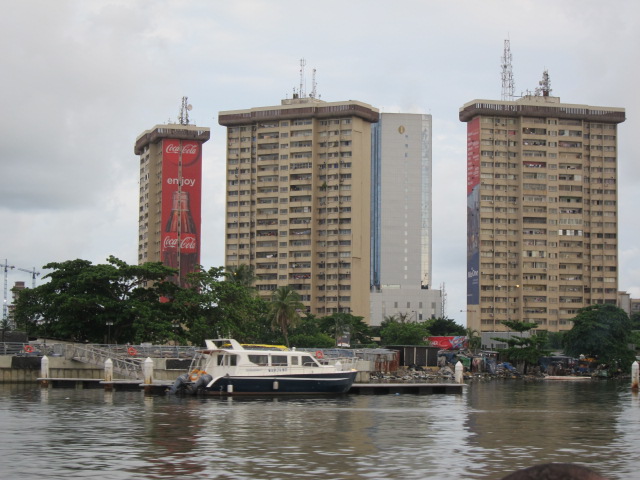
In this post, surrounded by the flourish of that attempted grand locution of mine in the first paragraph, I present photographic evidence of another side of Lagos, a city marked both by its name derived from the Lagoon, and its dynamic ability to constantly remake itself in the eyes of its denizens. This trip, undertaken on Sunday, begins at Sandfill (former Maroko), by speedboat, proceeds through Falomo, to Bonny Camp – all on water – towards Tin Can Island, Apapa, Ajegunle, and Snake Island, before arriving at our destination: a place of sublime beauty called Inagbe Grand Resorts.

(Reports about the resort itself will take a blog post of its own.)

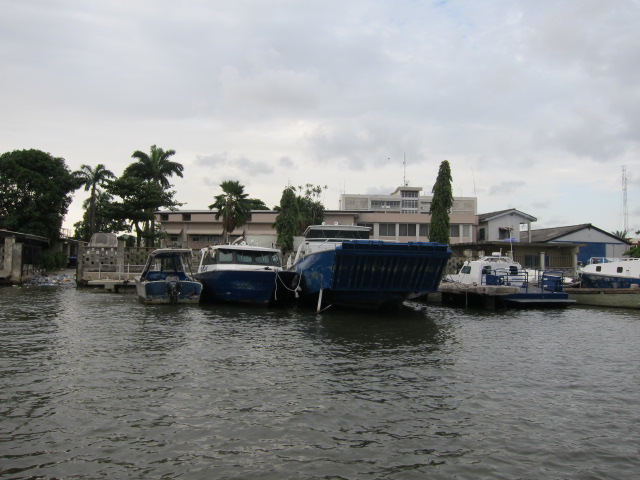
It turns out that regular view isn’t the only side of Lagos that exists, as commuters by boat and other water vessels will testify, whether one rides on an open canoe propelled by paddles of fishermen, or on open speedboats with a private driver; whether one transits, as do many commuters from Ikorodu to Victoria Island everyday, in a large ferry run by businessmen hoping to turn a profit with as many passengers as possible, or whether one sits in comfort – like Aliko Dangote and Femi Otedola whose private speedboats lay beside each other across from the United States embassy at Victoria Island.

There is a view that traces the path of the waters all around the islands and peninsulas that make up Lagos. There, there are no traffic hold-ups, no bodily heat exchange except desired, little noise apart from that made by the engine of the speedboats, and sparse pollution except for whatever ships and those other large vessels emit. In short, to enjoy the city is to experience as many means of transporting oneself as are publicly available – and traveling by boat seems to be a nearest affordable alternative to the fumes and stress of driving.

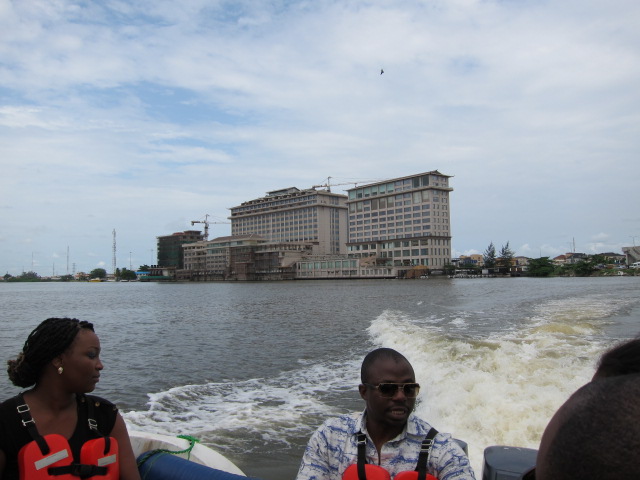
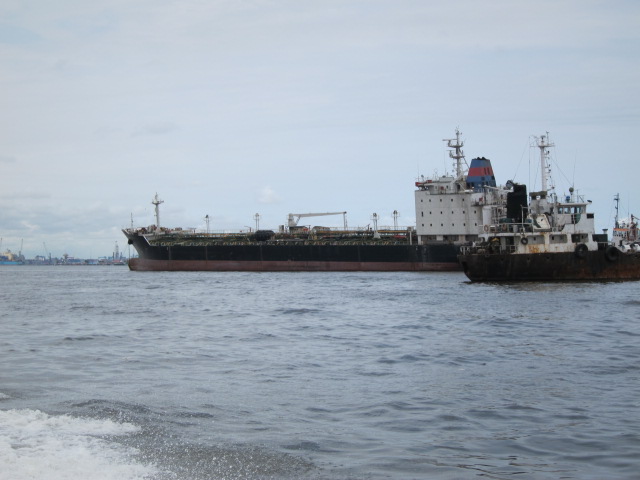
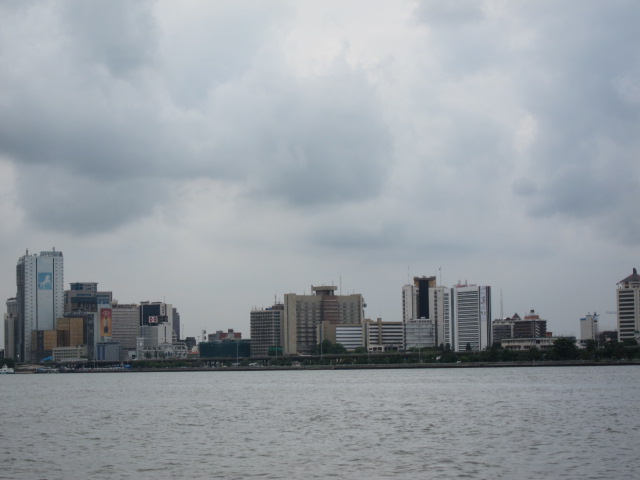
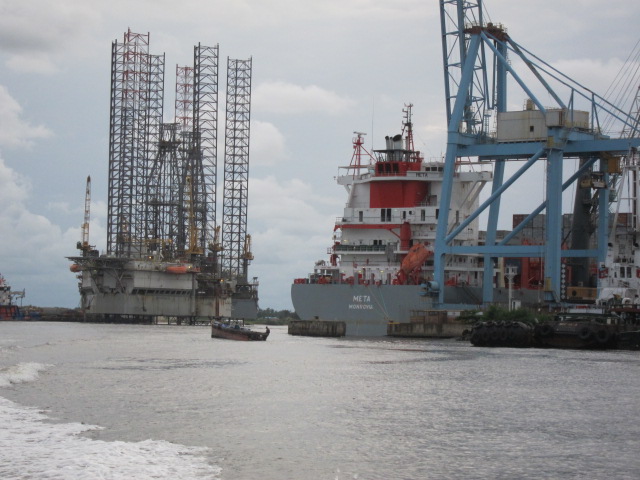
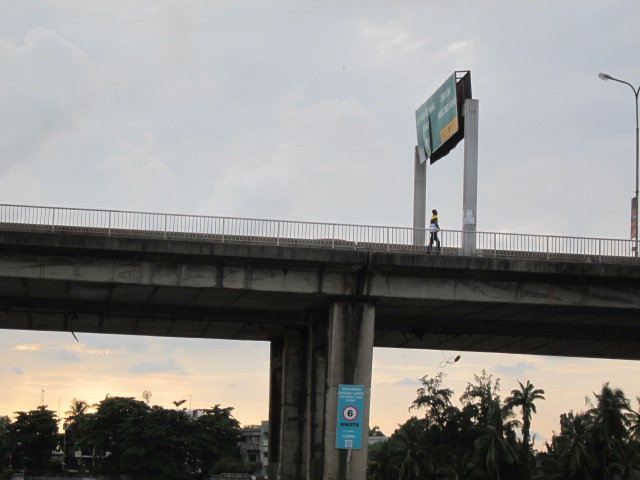
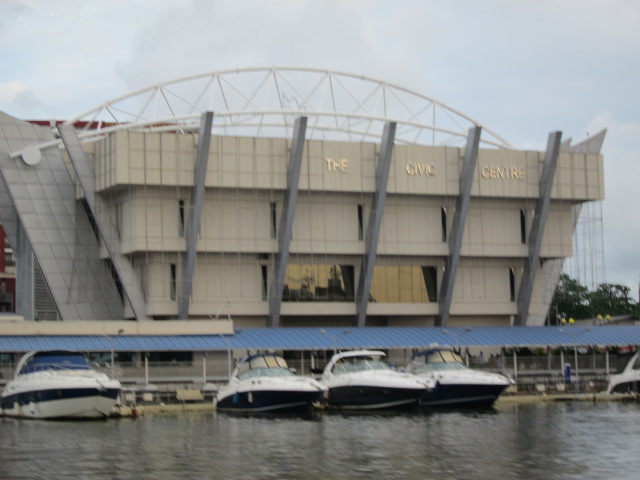
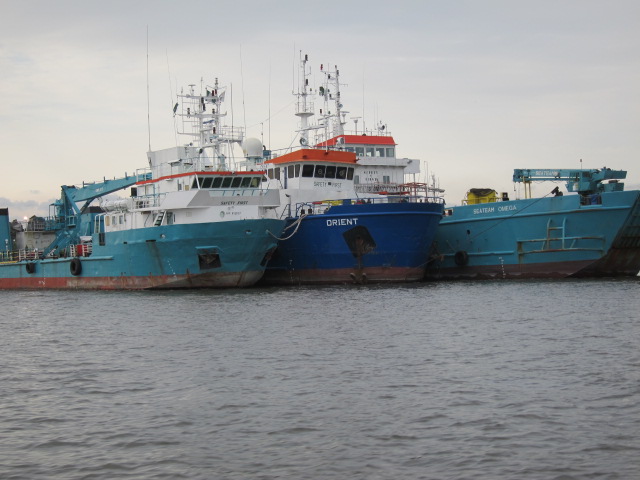
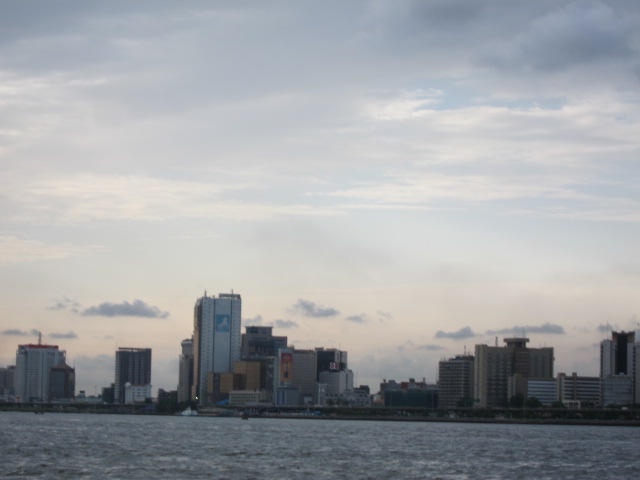
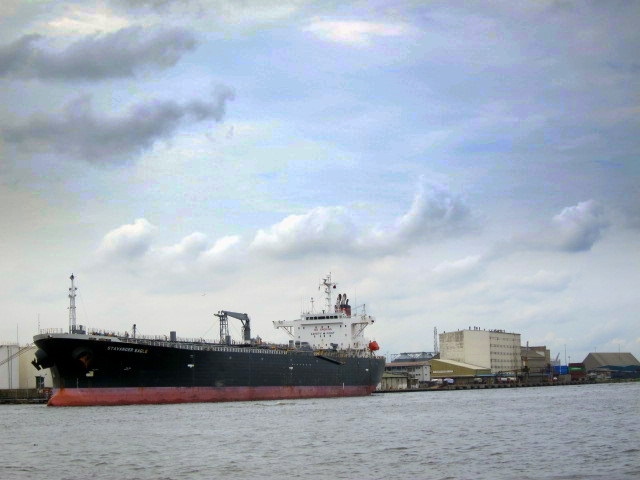
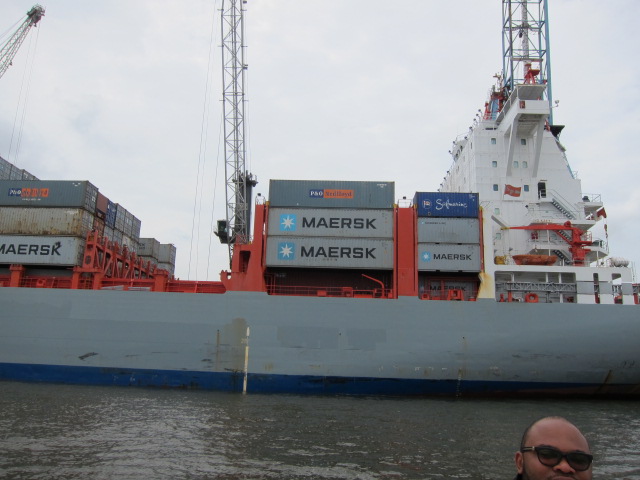
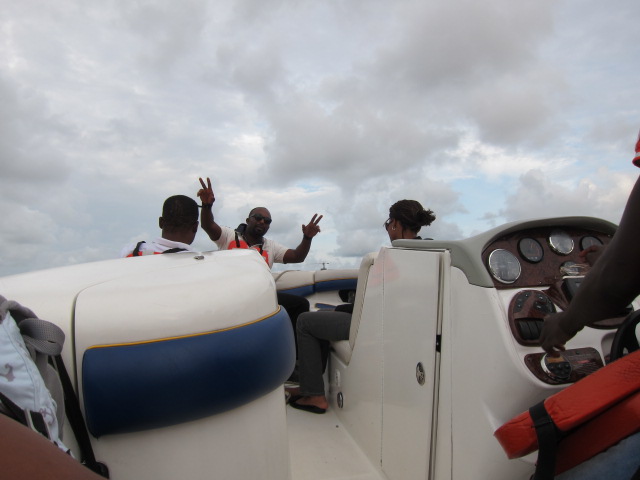
On the way to this resort are splendid views of the city, including a brief but captivating skyline of Marina and much of Lagos Island, as well as a few dozen ships many of which seemed – by their appearance – to have outlived their time and usefulness. On another boat, a far smaller, far inferior vessel in which about seven travelers with flotation devices sat carefully as if afraid that they might fall into the water, one person waves from afar, signalling a type of camaraderie like one between two strangers who suddenly find themselves sharing a mental fellowship of some kind in which the sharing of each other’s fears and exhilaration can be exchanged without ever uttering a word.

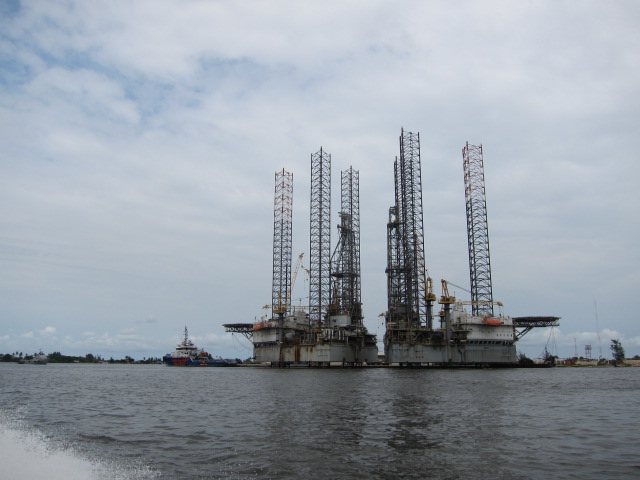
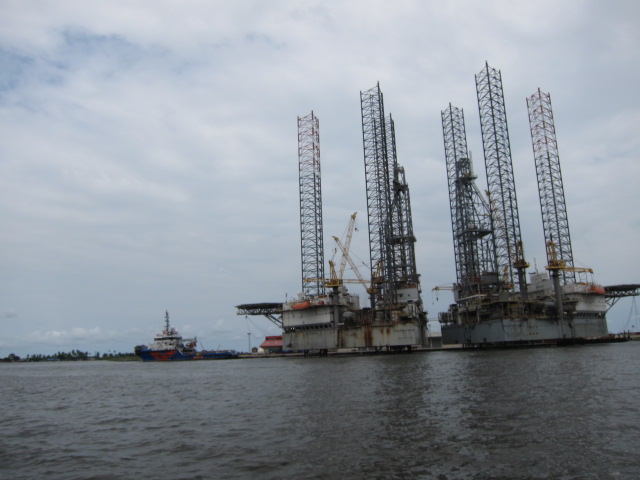
Bridges, more ships and vessels, canoes, speedboats, and an abandoned oil rig; more water frothing behind like the wide liquid smile of the goddess; less and less number of buildings, and a horizon ahead, pregnant with promise. Then we arrive. A destination away from all the troubles of the world… Of that oil rig, my tour guide remarks: “There is a story about that, and how First Bank almost got bankrupt because of a deal that would have made it a stakeholder in the oil and gas business. Powerful interests prevailed and the deal was called off. The rig now lay abandoned in the waters…”

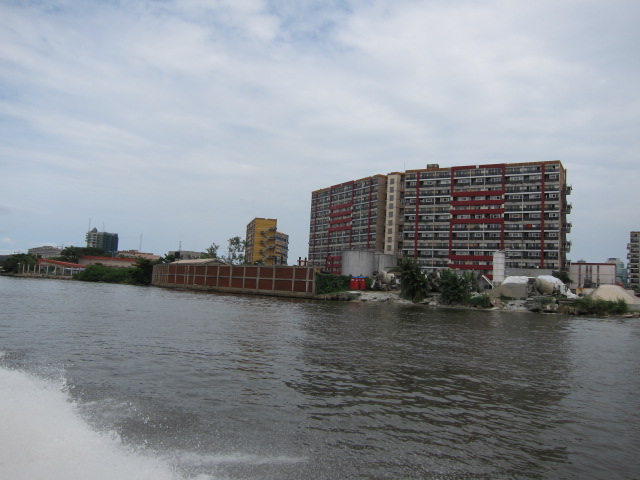
After a few minutes, we pass by what I guess could be Ajegunle, defined from afar by a type of resilient squalor, one that we’ve heard so much about. One that produced great artists like Daddy Showkey and (to a lesser extent) African China, and many more. Brown boats, brown waters, brown coconut trees that sway quietly as if bereft of will, and brown little children by the shoreline running around without any regard for the stranger’s distant gaze. Blue and brown smoke tell of some roasting, and the promise of a nice evening in cheerful company if one would dare such an unscheduled visit.

On return, the views are the same, enhanced this time by the setting sun, slightly tired limbs and a refreshed spirit from having visited one of the finest resorts in the city, many miles into the waters. The city welcomes its children back with concrete and paint, a skyline of Marina in the distance.

It has been a pleasant ride.
Staging the African American Experience

This piece was written after a fascinating experience with the Southern Illinois University Edwardsville’s Black Theatre Workshop, and published on March 6, 2010 in the now defunct 234Next Newspaper, and thus can no longer be found online. I’m reprinting it here for record purposes. The earlier blogpost about it can be found here.

_______________

A Long Time Coming

IMG_5406.JPG - Picasa Photo Viewer 5292014 112447 AM.bmpTheatre seems always justified by catharsis. There is nothing as innately fulfilling as the wonderful sense of exhilaration that comes from seeing a performance of moving art pieces on the live stage. There must be, I am not in doubt, something however close to this in the pleasure of penning said stage work or delivering said lines to an audience of colleagues, friends, visitors, acquaintances and other impressionable young men and women in a packed auditorium in a University campus theatre during Black History month.

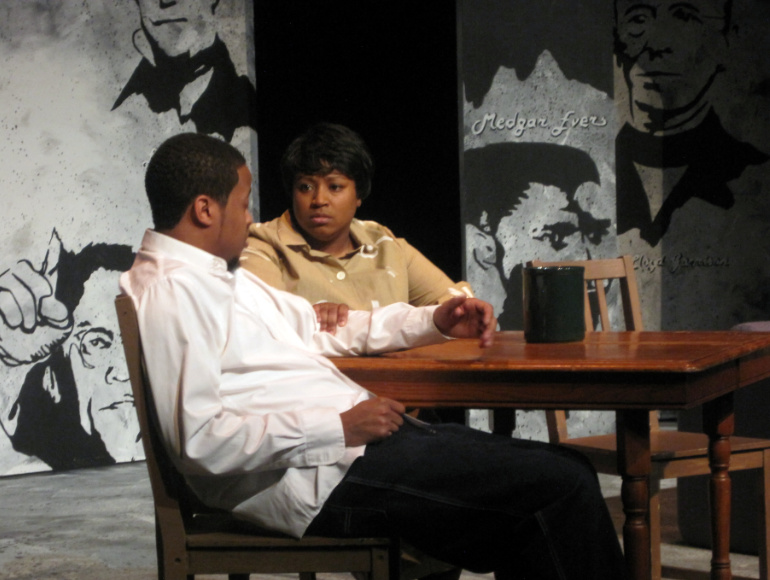
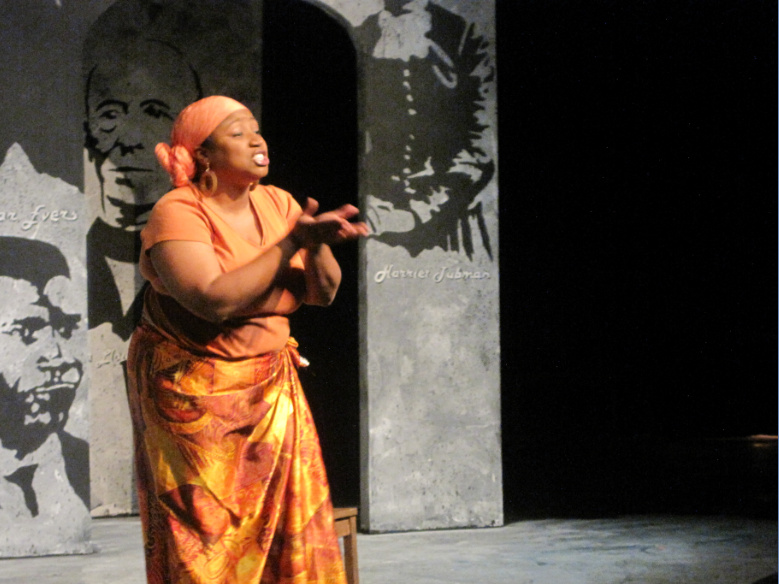
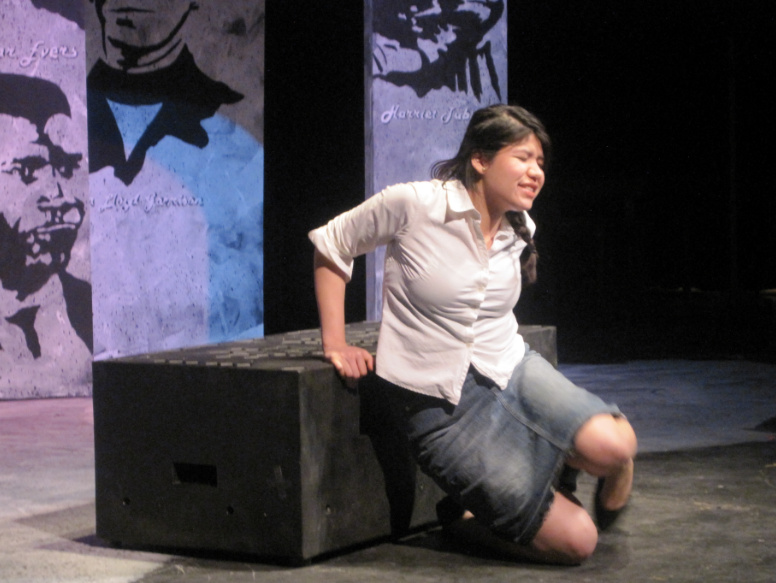
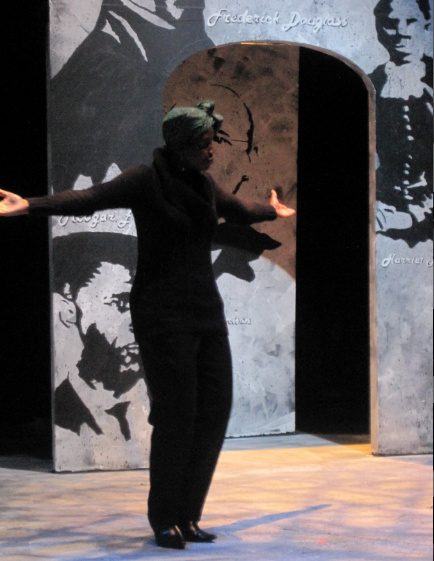
On the door into the theatre was the inscription that warned: “There will be a gun shot during this performance”. The University is the Southern Illinois University Edwardsville, (in the state of Illinois), the date was the night of Friday the nineteenth, the venue was the Metcalf theatre, and the event was a Black Theatre Workshop organized by a bunch of talented volunteers of students, faculty and friends. Themed  “The Journey to Freedom”, this cold night of performance felt the warmest in the cheerful ambience of a most attentive and receptive audience from all races. I sat in the front row, camera in hand, as the hours flew past in the face of each beautiful performance. There were about twenty of them, each lasting between ten to fifteen minutes.

IMG_5415.JPG - Picasa Photo Viewer 5292014 112821 AM.bmpThey all spoke of race, racism and race relations in the United States. The actors did, as well as each performed piece, be it dance, poetry recitation, short drama sketches, miming, comedy, spoken word, among others. The drawings on the set background already conditioned the serious mood of the night. Malcolm X is in a corner pointing straight at the camera in bold typical confrontation. Martin Luther King Junior stands in an opposite corner, pointing, as he delivered the “I Have A Dream” speech, right on top of the image of the most famous white leader in the topic of slavery, Abraham Lincoln. Images almost fade into each other, and the stage lights dim and morph into each other in the colours of different emotions. The gun shot came during the performance of a piece called “Escape” written and directed by Curtis Lewis in which a young African-American man (played by Greg Fenner) was shot by a racist police officer (played by Joe Schultz). Also in that short piece was Olivia Neal, Barry Moton and retired 73 year old Professor from the University Papa Rudy Wilson.

Add New Post ‹ ktravula - a travelogue! — WordPress - Google Chrome 5292014 113309 AM.bmpTheatre induces confrontation to resolve crises of emotion and of conscience, and from the discomfort on the faces of many in the audience when lines were spoken that seem to attack the deepest of human’s prejudicial instincts, inciting the society and the audience as a whole, it was clear that the job was well done. There was a recitation of Daniel Beaty’s powerful spoken-word poem Knock Knock by actor Curtis Lewis, A performance of Ricky Dillard’s If We Faint Not by Jushua Anderson, Candice Doze and Fred Ellision, A storytelling session of Robert D. San Souci’s The Talking Eggs by Papa Rudy Wilson, Greg Fenner’s Old People by Greg Fenner, Curtis Lewis, Barry Moton, and Olivia Neal, and Lorraine Hansberry’s A Raisin in the Sun by Kathryn Bentley, Curtis Lewis and Olivia Neal, among many other soulful performances that drew sighs as well as applause.

IMG_5466.JPG - Picasa Photo Viewer 5292014 113448 AM.bmpThe African-American journey through slavery was a tortuous as well as soulful one, and nothing prepares the audience for the soul journey that they must again encounter in the live confrontation of the stage. It was catharsis. At curtains up, amidst warm hugs, bright lights and cheerful back-pats of pleasant reunion between the actors, the directors and the audience, only the song of Sam Cooke fills the background in his sonorous voice and strings as the night of performance winds to a spectacular end: “And just like the river I’ve been running ever since. It’s been a long time, a long time coming… but I know, a change’s gonna come…”.

  • Kola Tubosun is a Fulbright scholar on an academic exchange, and on tour of sites and festivals in the United States.

_____

About the SIUE Black Theatre Workshop: The SIUE Black Theatre Workshop was founded by Lisa Colbert, an assistant professor in the department of Theatre and Dance, and the artistic director of the Black Theatre Workshop at the time of her death in June 2002. It is comprised of students, and other interested members of the University. The 2010 BTW production was the 11th of such since the programme began.


Writing Process Blog Tour

This idea (modeled around ancient chain letters) through my friend Nwachukwu Egbunike. The idea of the Blog Tour is to give bloggers/writers a chance to talk about their craft and what they are doing at the moment. Then pass it on. Nwachukwu’s own confessions can be found here on his blog. Here now are my answers to the four questions in the Tour, and I’m passing the torch on to Ayodele Olofintuade, Pearl Osibu, and Dami Ajayi. Their bios follow my answers.

1) What am I working on?

I have always worked on many projects at once. This blog is one. From the many times I’ve come close to closing it down, I’ve come to a realisation that it is a work that will continue. And from the response I’ve got (especially from those who come back to read old posts even when I’m not here), it seems that it is doing something in the world that many people wish should continue.

A collection of my latest poems has been sent to editors for feedback but won’t be published until all ts are properly crossed.

Two years ago, I also started a book on collected observations on language and language attitudes, particularly in Nigeria. I have come to the conclusion that our language policy is flawed, and that our current state is influenced by our inability to take new risks and try out new things because of age-old attitudes and untested assumptions, some forced on us by the British colonial rule. Over the last hundred years, a new language and a new identity has formed. We have a choice now to explore who we are (separate from what the colonialists told us we are), in order to evolve a proud and distinct identity that we share with the world. (No publishing offer yet, so here’s your chance, world!)

I’m also translating a contemporary Nigerian novel into Yoruba. I’m done with just one chapter, and that’s because I haven’t given it all my attention.

2) How does my work differ from others of its genre?

Well, the work on this blog is different in that it has helped me pursue a number of research ideas that I may not have thought about, or pursued with as much vigor, if there wasn’t an audience for it. My recent visit to Abeokuta is one of such instances, as is many other travel pieces here that eventually led me to asking relevant questions in concrete directions. They start usually as improptu travel experiences, but always leads to directions that clarify thoughts and opinions, and questions that I have pondered for years.

I’m not alone in using the new media for reaching new audiences, but I like the position that this blog fills, both for me and for those to whom it matters.

In this way, I haven’t fully entered the Nigerian literary pool. But what is this pool anyway? Just books? Printed words on paper? I’ve observed it as thoroughly as I can, from many angles. My poems have been published in places, but I have never intended them to change anything fundamentally. They are just my solo way of interacting with my lived experiences.

My thoughts and projects on language however seem innovative, if I say so myself. Attitude around what currently exists seems to have calcified around complacency: “This is what we have. Why change it?” I find that extremely disturbing. so, if I can change anything, I hope that it is changing current language attitudes, and helping to call attention, and change, to the current limitations of our British experiment.

3) Why do I write what I do?

This is cliche, but I write because I can. However, I have found blogging to be a more liberating medium than paper and pen ever were. In a recent interview with Global Voices (please read it), I argued that the next frontier in literature is electronic publishing. And until we have writers whose sole portal are electronic platforms winning prominent literary prizes (like the Orange, Pulitzer, Nobel, etc), we haven’t made as much progress yet.  I believe this to be true. Writing is writing. The distinction between whether it is printed on a papyrus or published on a wordpress blog shouldn’t be a limiting factor to its appreciation. In any case, the internet now might reach a lot more people.

Those who have followed this blog will agree that it hasn’t been limited to language issues either. My fascination with travel and history is beginning to convince me of future opportunities in larger work in anthropology and historical non-fiction. The History of the Yorubas, by Samuel Johnson, for instance, needs a serious updating. I’m interested in a number of endeavours that bring me close to the treasures of history, language, and literature. In most cases, the demarcations aren’t very clear cut.

4) How does my writing process work?

As erratic as you can imagine. I have moments where I can’t get up from my working desk until I’ve written dozens of pages; when everything works as smoothly as they should, and words come on schedule. And I have weeks when nothing works, and all I do is watching historical documentaries, old musicals, or American comedy shows. What is common with each mood is the unconscious working of the ever active brain. Some people can summon words at will, and produce masterpieces at the first prompting. I’m not like that, but in many cases, I surprise myself – which tells  me that the brain has been working and making the right connections behind my back.

________

I’m passing the torch to the following people. Check them out:

Ayodele Olofintuade

She is the author of Eno’s Story which was shortlisted for the Nigerian Prize for Literature a couple of years ago. She has also spearheaded a number of book reading initiatives meant to bring the printed word to young ones across the country. She blogs at TotallyHawaya-Haywire.blogspot.com

Pearl Osibu

She is a Fashion Designer/Stylist, Nigerian writer and blogger. She runs the blog Fifty Shades of Me where she publishes her short stories and keeps up a commentary on topical, social issues. Elsewhere, her works have been published in Sentinel Nigeria eZine, Jetlife Magazine, Metropole etc. She lives in Lagos, Nigeria. She blogs at Fifty Shades of Me.

Dami Ajayi

He is a medical doctor and poet. He was shortlisted for the Hume Prize for Poetry last year, and has been published in a number of online and print publications. He is the co-founder of Saraba Magazine. He blogs at Mr. Ajayi

_____________

They will all have a week to create their own blog post and answer the four questions, so look them up.

A Modest Proposal: Arm All Nigerians

I have written, on this blog, about the spate of senseless violence in Nigeria for a long time. But at no time have I suggested that the solutions come from anywhere but the government whose earlier inaction and nonchalance led to the current state of events in the first place. Send more military into vulnerable towns? Empower the police to protect the citizens? Do a lot of information and outreach exercises to empower citizens deal with threat?

I have now come to the conclusion that none of them will help, even if done well (and so far they have not). Soldiers, it seems, are  part of the problem. They are either suspiciously absent whenever an attack is about to take place, or, when they eventually act, end up killing innocent civilians instead.

Here is my solution: ARM ALL NIGERIANS.*

I have come to this conclusion not without heavy thinking, and consideration for the unintended consequences: more (accidental) gun deaths, likelihood of mass killings, and an increased difficulty for law enforcement. But, looking at my country today, those are already the reality, and more!

0_0_0_0_225_225_csupload_53746826When 43 (and counting) students were killed in Yobe a couple of days ago, all the president, the commander-in-chief of the nation’s armed forces, could do was to “condemn the attack.” Are you freaking kidding me? Having finally arrived at a state when the state can no longer protect its citizens is to have finally reached the end of the its usefulness. Time to give citizens a chance to defend themselves!

If one must die, there’s honour in doing so gallantly, returning fire for fire with whomever has decided that one’s life is not worth more than a sheet of paper. The upside? The realization by the murdering terrorists that everyone now has a means to fire back will be enough to keep them in check, and even the balance of power in that now extremely precarious environment.

I repeat: the state has failed in its primary duty to protect the lives and property of citizens. And for that, citizens MUST be allowed to do it themselves. It won’t be unprecedented. We already provide our own power (via generators), we already provide for our own security (via unarmed gatemen), and we already provide water for our houses (via pumping machines and pure water bags). And, in most cases, we already provide private funding to tar our streets and clear our sewers. The failure of government is no longer tolerable.

LET CITIZENS DEFEND THEMSELVES! It is way better than having the military return due to a breakdown of law and order.

Now, how does one go about sponsoring such a bill? Any takers?

ÌYÀNDÁ (A Comic Revolution)

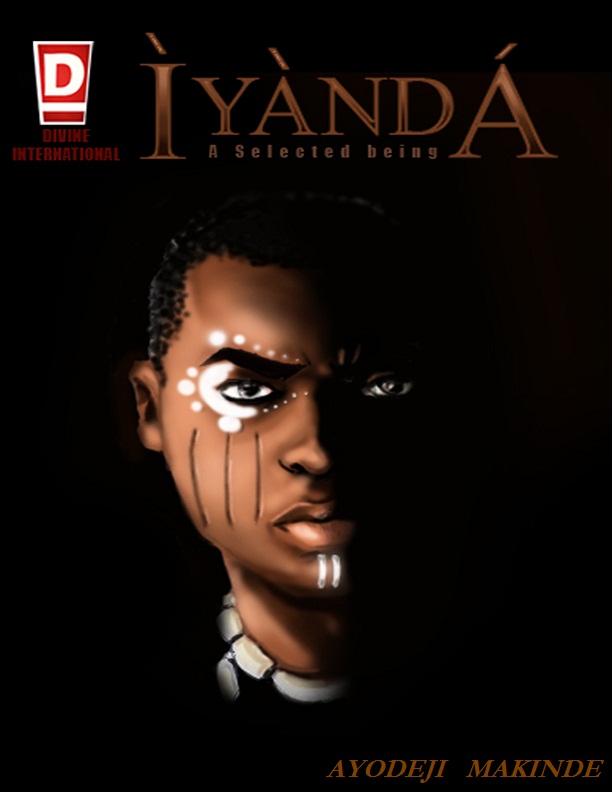
ÌYÀNDÁ COVER DESIGNThis is to introduce ÌYÀNDÁ. Described as a unique work of art that reflects the beauty of culture while amplifying a strong theme  revolving around tradition, ÌYÀNDÁ is a comic artwork that brings art and cultural stories into the new media. The title is a native name belonging to a child born to a Yoruba family in the Southwestern region of Nigeria. It means, ‘A Selected Being’.

It is written by Ayodeji Makinde.

Now published on www.lulu.com, it is available for download across the globe in e-book format. Click here.