Browsing the archives for the Uncategorized category.

Transition

The 60s in Nigeria was perhaps as tumultuous as it was in the US, but only for different reasons. While Nigeria was dealing with its value and governance problems, this one was dealing with race, drug and gang issues. I still hear it spoken of with a tone that suggests an underlying dread of the heaviness of the times, although much of what I glean from reading Lewis Black’s irreverent autobiography Nothing Sacred is that much of those who lived in that decade went through it only through the aid of consciousness-blurring drugs and culture. Much of what I know of the Nigerian equivalent however are still in and around the nation’s politics today, but mostly calcified in Wole Soyinka’s memoirs The Man Died, and (most especially) Ibadan, the Penkelemes Years.
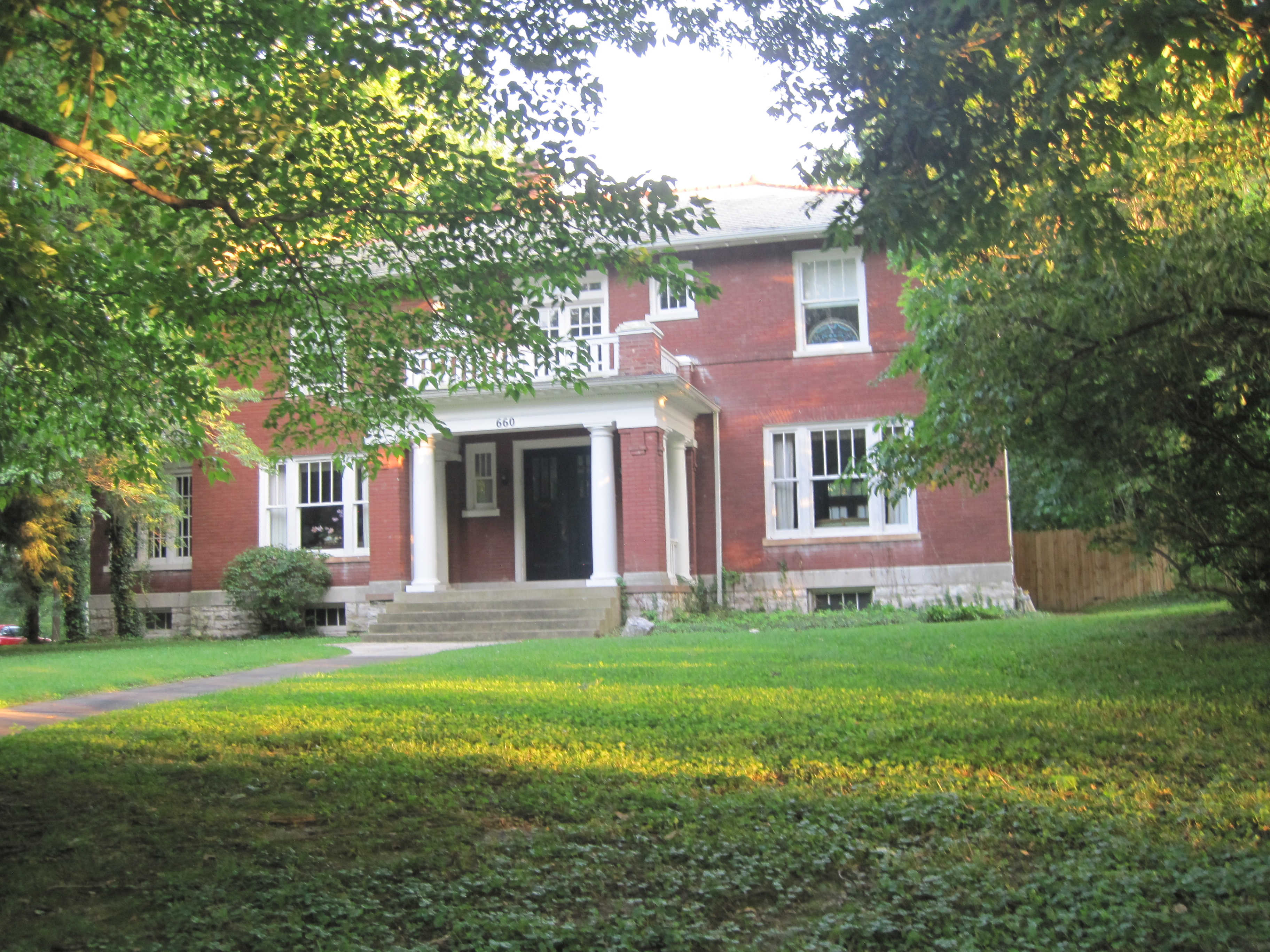
I thought back to an episode tonight on the drive back home from school through the open night surrounding the university town. The young writer – then a professor at one of Nigeria’s new universities – had been kicked out of his campus residence, so he moved his company of thespians into one of the abandoned government buildings at Eleiyele. He simply colonized it, without authorization and without paying rent to anyone, and they lived there for months until the government – responding also, not simply according to principle, but in a political retaliation for the man’s already rebellious reputation in the political terrain – sent in policemen to route them out. It sounded like some really fun times.

What got me thinking about all this, of course, is me wondering what it would be like to do the same here and now, in a country like this, and in this economy. An empty building. A terrible economy. A hungry young professor and a restless entourage of a young colleagues, friends and hangers-on hunting for deer and geese at night and living – for as long as the adventure lasts – in a socialist utopia that actually exists nowhere else. I like the kind of mental tickling I get from thinking about scenarios like this. And then I get to blog about it. 🙂
Reading in Lagos

Join the Jalaa Writers Collective this weekend for a day of reading by some of Nigeria’s most promising writers. Join them as they address questions about publishing in Nigeria and what a Writers’ Collective may offer, what Jalaa Writers Collective offers. The event is FREE!

Date: August 13, 2011

Venue: Freedom Park, Broad Street, Opposite. General Hospital. Lagos.

Readings by:

A. Igoni Barrett, one-time editor of Farafina Magazine is the recipient of a Chinua Achebe Center Fellowship, a Norman Mailer Center Fellowship and a Rockefeller Foundation Bellagio Center Residency. His first book, the story collection “From Caves of Rotten Teeth”, was published in 2005 in Nigeria. His second story collection is forthcoming from Graywolf Press in 2013.

Akachi Adimora-Ezeigbo is a lecturer, writer, novelist, critic, essayist, journalist, and administrator. She has written over twenty books. Her latest work “Roses and Bullets”, published by Jalaa Writers’ Collective is about the Nigerian Civil War. The former winner of the NLNG Prize for Literature, the biggest prize for literature in Nigeria, heads the Prize’s panel of judges this year.

Jude Dibia is the author of “Walking With Shadows”,” Unbridled” (winner of the 2007 NDDC/ANA sponsored Ken Saro-Wiwa Prize for Prose and finalist in the 2007 NLNG Nigeria Prize for Literature) and the newest, “Blackbird”.

Odili Ujubuonu is the award winning author of Pregnancy of the Gods (Winner, 2006 ANA/Jacaranda Prize for Prose), Treasure in the Winds (winner, 2008 ANA/Chevron Prize on Environmental Issues) and the newest, “Pride of the Spider Clan.”

Uche Peter Umez is one of the 24 winners of the 2006 and 2008 Commonwealth Short Story Competition. No, he is not the actor. He is the winner of the 2006 ANA/Funtime Prize for Children Literature for his unpublished novel,” Sam and the Wallet, and 2008 ANA/Funtime Prize for Children Literature . He is the author of Dark through the Delta (poems), Tears in Her Eyes” (short stories) and “Aridity of Feelings” (poems). His latest work “The Runaway Hero” is on the NLNG Prize shortlist for 2011.

More information on Facebook.

Pen for Chickens

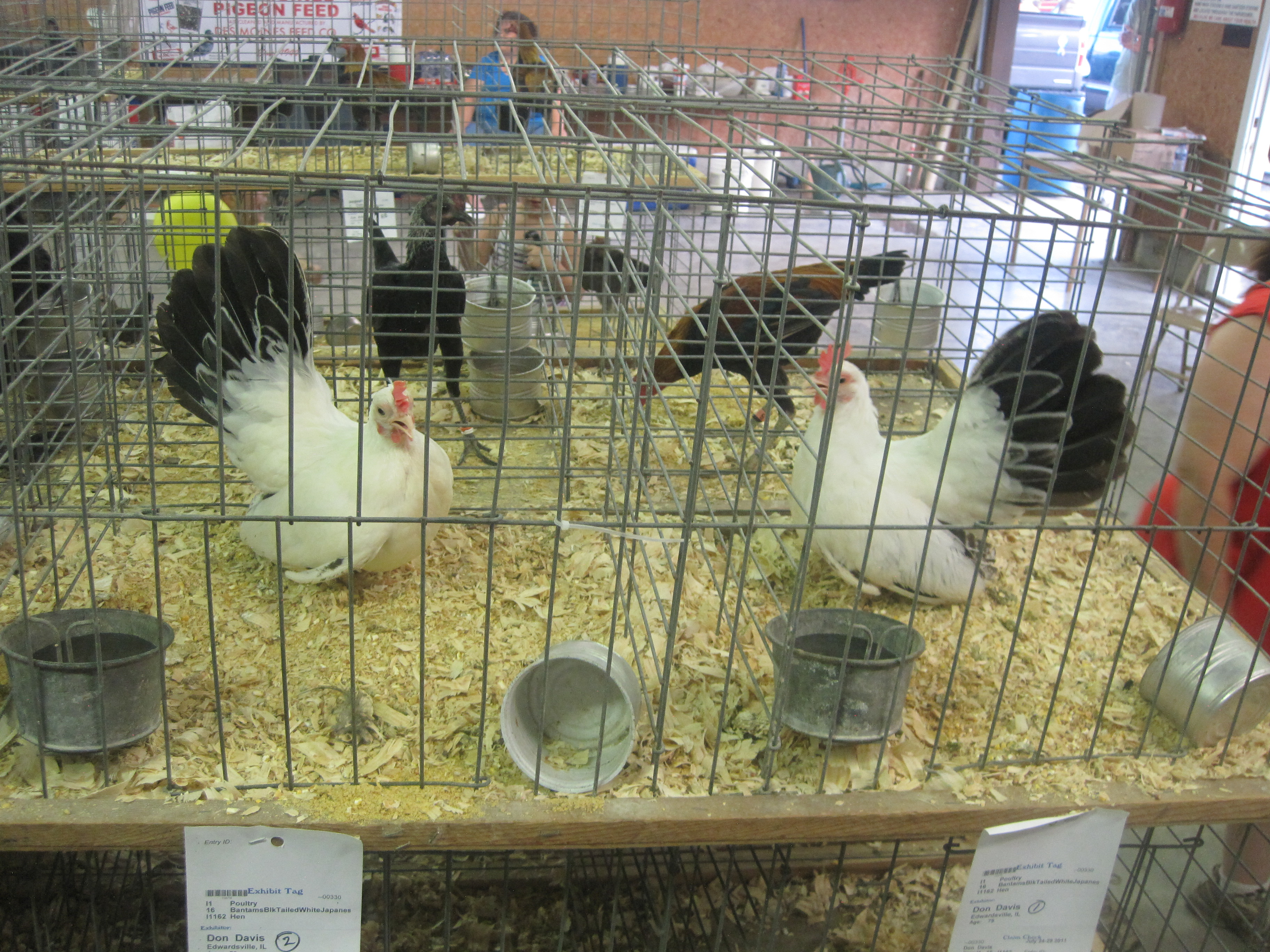
The smell is familiar. Almost every family at one time or the other in South-Western Nigeria has kept a chicken farm. And a farm is usually too serious a name for it. Free range chicken running around the house cackling and providing needed amusement for little children with idle hands. There is a rooster that crows unfailingly at five in the morning, and then there is the hen which lays cute little white eggs and then sits on them for about twenty-one days before little chicks come out looking like tiny little dolls. Get close to them while they waddle around their feisty mother around the large compound of the house and see the wrath of a woman (bird) scorned. An angry mother bird is not a pleasant sight to see.

Grandmother had a theory about predating hawks who found these little chicks a delicious specimen and preyed on them regularly for lunch. Paint them in bright red colours and the hawks and kestrels thought they were dangerous aliens and stayed away. I don’t know how well the theory worked but it was usually funner to see the motherbird walking around with a set of red coloured little chicks hand painted with red ink obtained from a certain leaf… The sight of a hawk swooping to pick up its favourite dinner of little chicks from behind the nursing motherbird is usually a sight too, but it happens usually really fast. One moment you have a piece of boiled yam on the way to the mouth. The other, you are staring at a noisy little battle that lasts just a second. A bigger bird has swooped down and made away with its living lunch and the angry mother is out there in the sun wailing in loud chicken cackles. Some times, the other little chicks are still too frightened to come out of where they had gone to hide at the prompting of the mother.

My first other conscious memory of chicken pens comes from the brown, sometimes black, imported “agric” type ones in fancy cages, fancy feeds and fancy golden eggs. Those lay eggs without mating, get large in no time and usually get slaughtered for Christmas “because they taste good”. But they are never usually allowed to range around the house, staying confined to a specially made pen with saw dust all over its ground which is changed after a few days. Too much work, if only mother cared about that. She was always already too busy worrying about raising us to bother with how much time and effort it took to change dirty saw dust layers on the floor of a large poultry. That, of course, unless we had to do it ourselves. Thinking back to this specific time, it always made it necessary to hope that one didn’t grow old fast enough to be able to take up the responsibility of cleaning a whole room full of chicken dung. It was a hope that never manifested.

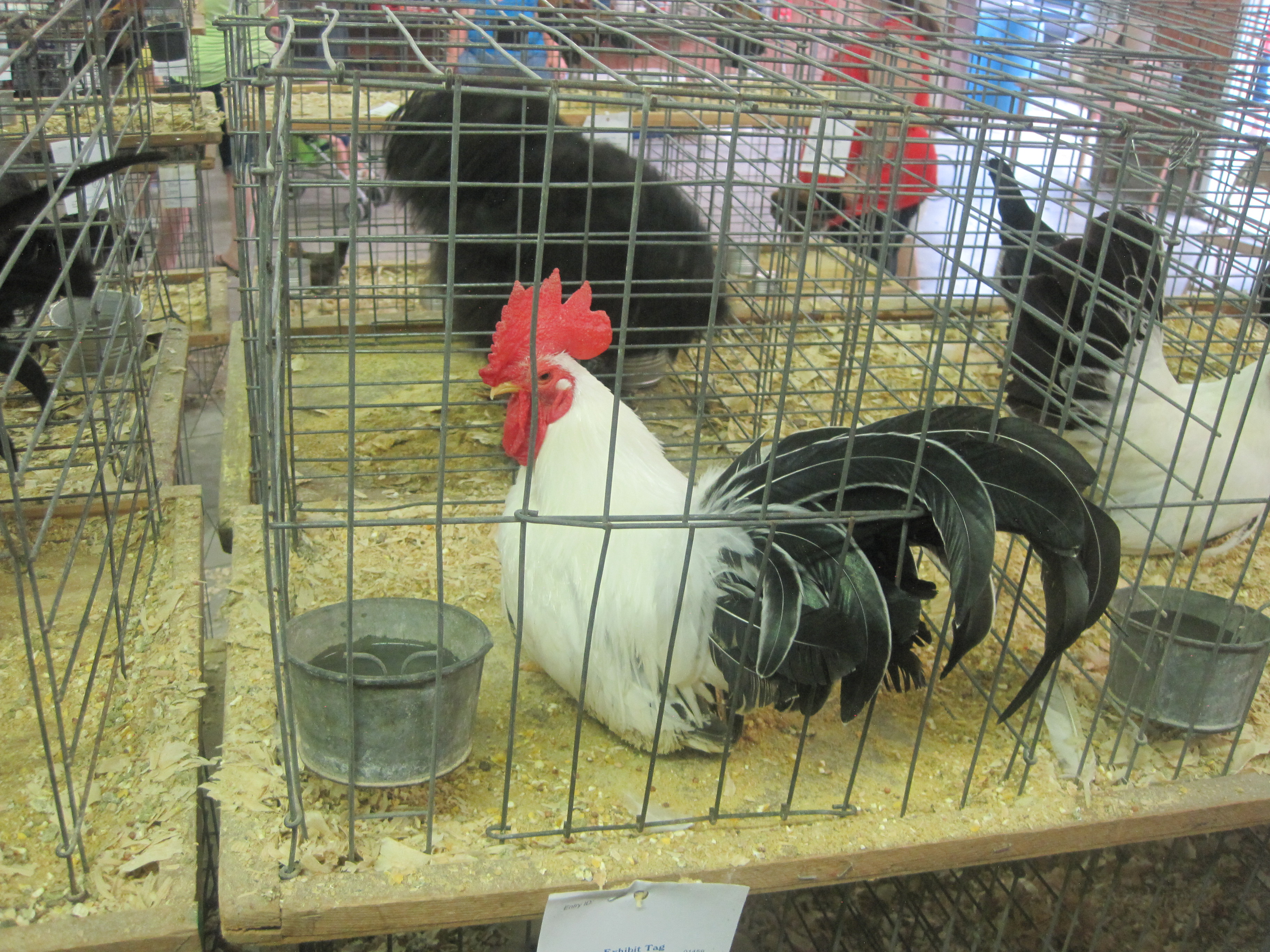
Back to the large smelly room of the county fair in Highland last week was that moment where all that sounded, smelled and surrounded the traveller was a sight from a very distant past. He wasn’t a graduate student travelling with an equally adventurous colleague to check out the “country” side of America in form of a hundred cackling roosters of different shapes and sizes in familiar cages, he was a little boy by his grandmother’s side smelling chicken poo all over the house, discovering the delight in a boiled white egg of a local breeding chicken, crying over the death of one run over by a careless driver, watching her paint little chicks with locally-made crimson dye, running scared of the little white covering around the chicken’s eye whenever it blinks, and wondering with a thousand unanswered questions how chickens always found their way home to roost after such long wanderings around the neighbourhood.

The smell in that room came with a little more than just memories.

Pollution

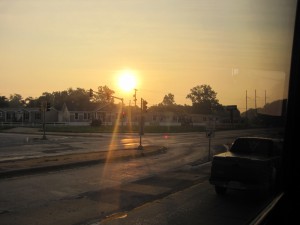
I have just return from Alton, a little town twenty minutes away from my current location. The most dominant news item on the radio was the record heat waves that has got the whole country talking for the last ten days and will continue for the rest of the week. One other prominent feature of that trip was the enduring image of the Alton refineries purring “loud” smokes and fumes into the atmosphere.

I could only ponder the irony of it – on the one hand a deadly record heat all around the country occasioned by gas emissions and other environmental ills, and on the other the sad reality that things won’t change at once just because we wish it to. We can at least still take pictures from inside of air-conditioned vehicles.

Burning Up!

These two statements are very true: America is a very hot place. America is a very cold place. There is one reason however why one of the statements will raise an eyebrow anywhere else across the Atlantic. The most enduring image of this country is that of white flurry snow falling down on lighted trees at Christmas. Somehow, for some strange reason, none of the images of sweating pedestrians, smelly cowboys and dusty roads of Nevada and California survived childhood memories and a transatlantic flight.

The temperature in Edwardsville yesterday was over 100 degrees F (about 37 degrees C). In Minnesota just two days ago, the recorded temperature was 115 degrees F. (That is 46 degrees C for heaven’s sake!!!) Thirteen people have already died from heatwaves. It is very telling that this happened in Minnesota, a usually cold place that still had snow until April when everyone else had already started having sunlight. If there was ever need for anyone to see that climate change is a harrowing reality, this is it. The question is, how do/would people survive the summer here, especially people already used to cold weather for half the year?

This statement is also very true: although coming from sub-saharan Africa, I’ve never been in a hotter or colder weather anywhere else.