It is three days after the end of the world, and another end looms in sight. Depending on the location of the observer, many ends, in fact. The leap into a fiscal cliff all around the USA – an irresponsibly manufactured end to the sanity of the country’s finances. In Kauntan, Malaysia, a different end. Scenes of flooding that I’ve witnessed from pictures posted online, and tweets by concerned denizens of the place, show apprehension for what is to come. If I ever have to worry about an alligator swimming casually into my house on a December morning, I would be very scared too indeed.
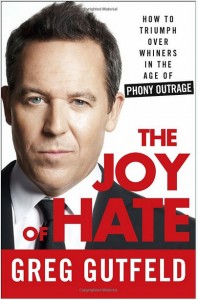 I am currently reading Greg Gutfeld’s “The Joy of Hate“, a fascinating book from what I’ve read so far. It is perhaps one of the few books I’ve enjoyed while disagreeing with most of what it says. Mr. Gutfeld is a co-host and funnyman on one of my favourite TV shows on Fox News: The Five. He also hosts another nightly show called “Red Eye” (to which I owe much of my sleepless nights in Edwardsville). Where we agree is our inherent rebellious streak: “I became a conservative by hanging out with liberals…and I became a libertarian by hanging out with conservatives“, he says. Watching him duel with his co-hosts on “The Five”, it is hard to disagree. But not all the time. By the time the reader is done reading Greg’s tirade on Sandra Fluke (the young Georgetown law student who became the poster child for the inclusion of contraceptive coverage in insurance policy for women in the US), it would be hard to separate him from a fellow right-wing co-host on the channel, Eric Bolling (and other right-wing ideologue you’ve ever heard from). Time and time again, he attacks Ms. Fluke of wanting “free” stuff from the government, sometimes from “all of us”, without noting if only for once that what the young woman was fighting for wasn’t government handout but an insurance system that treated everyone equally without discriminating against customers purely on the basis of their gender. It always took some stepping back to see from among the odium of Cable News chatter, but it was always clear to all who cared about the issue what Ms. Fluke represented. This particular chapter, since I have not gone too far into the book, has unfortunately cemented the reputation of the book in my head as nothing more than the same old, except this time coming from the mouth of an otherwise smart, funny, and generally perceptive personality.
Everything else is fine, as they should be. Movies are showing “Argo”, “Life of Pi”, “1000 Words”, all of which I’ve now seen, and a few other inconsequential ones. When they bring “Lincoln”, “Django Unchained” or “Zero Dark Thirty”, I will have something to be excited about. The Mayans had predicted an end by December 2012. Here in Lagos, Nigeria, there will probably be no end at all, except to all the fireworks that have now taken over the air to celebrate the season. The harmattan haze will be gone, as will the crazy traffic that has become the lot of roads. People will return to work in January and some measure of sanity will return, if only in the form of broke returnees from holiday travels. Until then, a Merry Christmas to you.